Last updated 2026-07-25
TL;DR
There's no single definitive "defensible space book" that covers every state, but CAL FIRE's Defensible Space PRC 4291 guidance, NFPA's Firewise resources, and your state fire marshal's handbook together cover it. California's zone rules (0-5 ft ember-resistant zone) got pushed to a 2026 regulatory update after years of delay; most other "prevent wildfire" advice boils down to the same core actions repeated everywhere.
is there an official defensible space book, or do the rules live somewhere else
There isn't one government-published book you can buy that covers every state's defensible space law cover to cover. What exists instead is a scattered set of PDFs, statutes, and inspection checklists, and most homeowners never find all of them until an insurer sends a non-renewal letter. The closest thing to a national reference is CAL FIRE's "Prepare for Wildfire" defensible space guidance, which lays out the zone system (Zone 0, Zone 1, Zone 2) required under California Public Resources Code 4291. NFPA's Firewise USA program publishes its own home ignition zone guidance that's used as a model in states without their own statute [1]. Oregon, Colorado, and Arizona each have their own state fire marshal pages and county-level codes that layer on top of, or sometimes contradict, the CAL FIRE model. If you want a real "book," the honest answer is: build your own binder. Print the CAL FIRE defensible space checklist, your county's local ordinance (check with your fire district, since requirements vary block to block), and your insurer's inspection form. That three-document stack is more useful than any single glossy guide, because it's what actually gets checked when someone comes to your door with a clipboard. For a structured version of this binder made specifically for insurance documentation, see defensible.
when does the california defensible space law go into effect
California's expanded defensible space requirement, the 0-to-5-foot ember-resistant zone (Zone 0), has been law on paper since 2020 but the actual enforceable regulations have been delayed multiple times. As of this writing, CAL FIRE and the Board of Forestry are still finalizing the Zone 0 regulations required under SB 63 (2021) and earlier AB 3074 (2020), which amended Public Resources Code 4291 [2]. The short version: PRC 4291 itself, covering the broader 100-foot defensible space clearance around homes, has been in effect for years and is enforced now. It's the newer, stricter Zone 0 ember-resistant zone rule that keeps getting pushed back. The Board of Forestry's rulemaking process has targeted adoption dates that have slipped past 2023, 2024, and into 2025-2026 timelines as the agency works through public comment periods [3]. If your homeowner letter references "new state fire rules taking effect in 2026," it's almost certainly this Zone 0 regulation, or a state-specific equivalent your local fire marshal has adopted on a similar timeline. Don't wait for the final rule to act. Insurers doing wildfire risk scoring right now are already using Zone 0-style criteria (no combustible mulch, no wood fencing touching the house, gutters clear) as informal underwriting criteria, regulation or not. Check with your local fire district for the exact local adoption date, since some California counties have moved ahead with their own ember-zone ordinances independent of the state timeline.
what fire safe home rules take effect in 2026
| California | PRC 4291 (100 ft zones), Zone 0 pending | Zone 0 in rulemaking, check CAL FIRE for adoption date [2] | |
|---|---|---|---|
| Oregon | SB 762 wildfire risk map + defensible space code | Revised map reissued 2023, local code adoption ongoing | |
| Colorado | No single statewide law | County/local WUI codes vary, check with county | |
| Arizona | No single statewide law | Handled through county ordinances and state forestry recommendations | The practical move: don't wait on a 2026 date to act. Get your county fire district's current requirement in writing, because that's what an inspector or insurer will use today, not a proposed future rule. |
The rules likely to take effect around 2026 are mostly finalization of existing proposals, not brand-new mandates most homeowners haven't heard of. In California, that's the Zone 0 ember-resistant zone regulation discussed above [2] [3]. In several other wildfire states, 2026 timelines show up in building code adoption cycles rather than defensible space statutes specifically. Oregon's statewide wildfire risk map and defensible space code (under Senate Bill 762, 2021) went through a rocky rollout, with the original map withdrawn in 2022 after public backlash, then reissued with revised methodology. Colorado doesn't have a single statewide defensible space mandate; it operates through county and local wildland-urban interface codes, so "2026 rules" there depend entirely on your county. Here's a comparison of where things actually stand, state by state, as of now: | State | Statewide defensible space law | Status |
why won't people follow the defensible space law in california
Compliance with PRC 4291 is genuinely low in a lot of high-risk areas, and it's not because people don't care about their houses. Cost, labor shortages, and confusion about what's actually required are the three real reasons, in that order. Clearing 100 feet of defensible space around a home on a sloped, brushy lot can run into thousands of dollars if you're hiring a crew, and CAL FIRE inspections have found compliance rates well below universal in surveyed high-hazard zones, though exact statewide compliance numbers aren't tracked in one public dataset, so treat any specific percentage you see cited with caution. Renters and lower-income homeowners often can't afford the labor, and older residents physically can't clear brush themselves. There's also a genuine information gap: many people know they're supposed to "clear brush" but don't know the specific zone distances, what counts as ember-resistant landscaping in Zone 0, or that dead pine needles in a gutter count as a violation. Finally, there's real ambiguity at the boundary. If your neighbor's overgrown lot backs up to your cleared yard, your own defensible space work doesn't fully protect you, and that discourages some homeowners from bothering. CAL FIRE's guidance is explicit that defensible space works best as a shared, community-wide effort, not a single-property fix. That's a genuine limitation of the law, more than an excuse. If enforcement and cost are the two blockers, documentation is the third quiet one. Homeowners who do the clearing often still lose coverage because they never photographed or dated the work, which is where a lot of non-renewal disputes actually start.
how to prevent wildfires around your own home
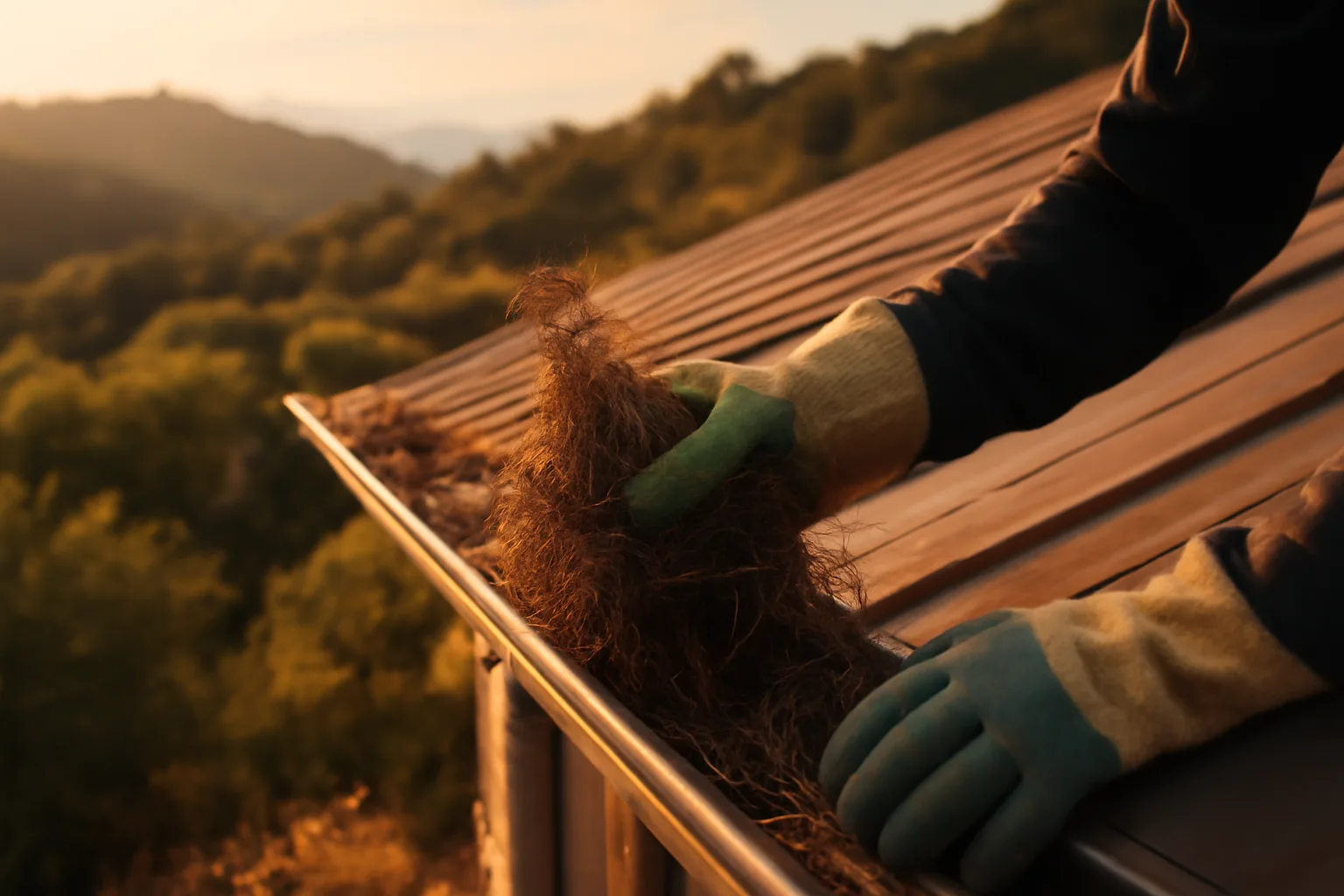
You can't prevent wildfire ignition in the broader landscape, but you can meaningfully reduce the odds your specific house catches fire from embers, which is how most homes are lost, not from direct flame contact. CAL FIRE and NIST research on the 2007-2018 California fires found ember intrusion through vents, gaps, and combustible material touching the house accounts for the majority of home ignitions in wildfire events [4]. The highest-leverage, lowest-cost actions, in rough order of impact per dollar spent: 1. Clear anything combustible within 5 feet of the foundation (Zone 0): mulch, wood piles, dry plants, wood fencing attached to the house. 2. Screen or box in vents with 1/8-inch metal mesh to block ember entry. 3. Clean roof and gutters of dead leaves and needles, seasonally, not once a year. 4. Move firewood stacks at least 30 feet from any structure. 5. Replace wood fencing sections that touch the house with metal or masonry for the first several feet. Notice that none of these require a $20,000 roof replacement. That's the biggest myth in wildfire prep: people think they need a whole-house retrofit before they can do anything useful. Vent screens and gutter cleaning cost under $200 combined and address the two most common ignition paths. Save the roof and siding upgrades for when you have budget, and do the ember-path fixes first. For the broader zone-by-zone breakdown (Zone 0 through Zone 2), see fire safe landscaping california next to house.
how to prepare for a wildfire (evacuation and household readiness)
Preparing for a wildfire means having a go-bag, an evacuation plan, and a documented home inventory ready before you get an evacuation order, not while you're loading the car. Ready.gov's wildfire preparedness guidance recommends assembling an emergency kit, identifying two evacuation routes, and signing up for local emergency alerts before fire season starts [5]. A practical prep list: - Sign up for your county's emergency alert system (most CA counties use systems tied to Cal OES).
- Photograph and video every room of your house, inside and out, including receipts for major renovations. This matters enormously for insurance claims later, and almost nobody does it until after a loss.
- Keep copies of insurance policy documents, ID, and medical records in a fireproof bag or cloud folder.
- Know your Ready, Set, Go status levels if your county uses that system.
- Have a plan for pets and livestock, since most evacuation shelters won't take them. The documentation piece is the one people skip and regret most. An adjuster or insurer reviewing a claim after a fire wants dated photos of your defensible space work and your home's condition before the loss. Nobody, including us, can promise that documentation gets your claim approved or your coverage reinstated; we're not able to deal directly with your insurer on your behalf or file claims for you. What we can say is that a homeowner who shows up with dated, organized proof of mitigation work is in a categorically better position than one who shows up with nothing.
how to prevent forest fires (and how that differs from home protection)
Preventing forest fires at the landscape level is mostly about human-caused ignition sources, since the U.S. Forest Service and National Interagency Fire Center both report that roughly 85-90% of wildfires in the U.S. are human-caused, from things like unattended campfires, downed power lines, equipment sparks, and discarded cigarettes [6]. That's a different problem than protecting your specific house. The Forest Service and Smokey Bear campaign (yes, the actual "Only you can prevent forest fires" messaging) focuses on ignition prevention: fully extinguishing campfires, not parking hot vehicles on dry grass, avoiding outdoor equipment use during red flag warnings, and following local burn ban rules . See only you can prevent wildfires for the origin and current relevance of that campaign. Homeowners sometimes conflate "preventing forest fires" with "protecting my house from forest fires," and the actions are related but not identical. You can't stop a lightning-caused fire ten miles away. You can control whether your home ignites when embers from that fire land on your roof or in your gutters. Defensible space work is entirely about the second problem, not the first.
how to avoid forest fires as an individual (practical rules)
Avoiding forest fires as an individual comes down to a short list of behavioral rules that account for most preventable ignitions, and following them costs nothing. CAL FIRE's campfire and equipment guidance, echoed by most state forestry agencies, boils down to: drown, stir, and feel campfires cold before leaving; avoid mowing dry grass midday during red flag warnings; keep vehicles off dry vegetation; and check local burn restrictions before any outdoor burning . During red flag warning days (issued by the National Weather Service when wind, low humidity, and dry fuel align), avoid any spark-producing outdoor work: welding, grinding, chainsaw use, and target shooting are common ignition sources agencies specifically warn about during these windows. If you live in a wildland-urban interface area, check whether your county has seasonal outdoor burning permits or bans, since many CA and CO counties suspend all outdoor burning, including debris piles, during peak season regardless of what you did last year.
how to prepare for forest fires as a community, more than a household
Community-level preparation matters because a single well-hardened home surrounded by unmanaged brush and neglected neighboring lots is still at serious risk; fire moves through a neighborhood, more than onto an isolated property. CAL FIRE's defensible space guidance explicitly frames Zone 2 (the 30-100 foot zone) as most effective when neighbors coordinate, since fuel breaks work better as continuous strips than isolated patches. Practical community-level actions: organize a neighborhood chipper day (many CA fire districts subsidize these), push your HOA to require defensible space compliance as a condition of good standing, and coordinate with neighbors on shared fence lines so nobody has combustible fencing running unbroken between multiple homes. NFPA's Firewise USA program exists specifically for this: neighborhoods that formally organize under the program get access to grant funding and structured wildfire risk assessments at the community level, more than per-house [1]. If your neighborhood isn't in the program yet, that's worth raising at the next HOA meeting, since it's free to join and often unlocks funding for shared mitigation work.
is santa barbara safe from fire
No part of Santa Barbara County is meaningfully "safe" from wildfire risk; the county has one of the more severe wildfire histories in California, including the 2017 Thomas Fire (at the time the largest wildfire in modern California history) and the subsequent 2018 Montecito debris flow that killed 23 people after the burned hillsides couldn't hold back rain . CAL FIRE's Fire Hazard Severity Zone maps classify large portions of the Santa Barbara foothills and wildland-urban interface as Very High severity zones . That said, risk varies enormously by specific location within the county. Homes in the flat, dense urban core near the beach face materially lower wildfire risk than homes in the foothill communities of Montecito, Mission Canyon, or the San Marcos Pass area, which sit directly against chaparral-covered slopes. If you're evaluating a specific Santa Barbara address, the actual tool to use is CAL FIRE's Fire Hazard Severity Zone Viewer, which maps every parcel in the state by hazard tier . Don't rely on general reputation ('Santa Barbara is fire country' or 'Santa Barbara is fine') because both are true depending entirely on which street you're standing on.
how do I actually build a defensible space and mitigation binder for my insurer
An insurer-ready binder needs three things: dated before/after photos of your defensible space work, a copy of the specific local ordinance you're complying with, and receipts or invoices for any professional clearing or hardening work. This is the practical version of the "book" most homeowners are actually looking for when they search for defensible space guidance. Start with your county fire district's current requirement (check with your local fire district directly, since language and enforcement varies even within the same state), print or save it as a PDF, and treat it as your compliance target. Photograph your property from the same four or five angles every season, dated, so you can show a clear timeline if you ever need to demonstrate ongoing compliance to an insurer or after a loss. This is the gap our $99 Wildfire Insurance Survival Kit is built to close: it's a structured template for organizing exactly this documentation (property photos, mitigation records, local ordinance references) into a single packet, so you're not scrambling to assemble it after a non-renewal letter shows up. We don't file claims, deal with your insurer directly, or promise coverage outcomes; the kit organizes what you send, you send it. Start at /survival-kit-builder. For state-specific clearing contract language, especially relevant outside California, see wildfire defensible space clearing contracts washington state dnr.
what happens after a house fire, and how does defensible space work factor in
After a house fire, insurers and adjusters look backward at whether the home had documented defensible space compliance, and that history can matter for both the immediate claim and future coverage eligibility on a rebuild. This is separate from, and much higher stakes than, routine inspection compliance. If your home has survived a nearby fire or you're rebuilding after a loss, the defensible space standards you rebuild to often get stricter, not the same as before, especially under updated Zone 0 rules once those are finalized. Some California counties now require Chapter 7A ignition-resistant construction standards for any rebuild in a Fire Hazard Severity Zone, which is a building code requirement layered on top of the defensible space vegetation rules . For a full walkthrough of what documentation and steps matter in the aftermath of a residential fire, see house fire and fire at a house.
Frequently asked questions
When does the California defensible space law go into effect?
The core 100-foot defensible space law (PRC 4291) has been enforceable for years. The newer 0-5 foot ember-resistant Zone 0 regulation, amended under SB 63 and AB 3074, is still in Board of Forestry rulemaking as of this writing, with adoption dates repeatedly pushed toward 2025-2026. Check CAL FIRE's site for the current status before assuming any specific date.
Why won't people follow the defensible space law in California?
Cost of clearing (often thousands of dollars on brushy or sloped lots), physical inability for elderly or disabled residents, and confusion about specific zone requirements are the main reasons. There's also a real limitation: your cleared yard doesn't fully protect you if a neighboring lot stays overgrown, which discourages some compliance.
What fire safe home rules take effect in 2026?
Most 2026 references point to California's pending Zone 0 ember-resistant zone regulation finalizing after years of delayed rulemaking, or to Oregon's revised statewide wildfire risk map and county-level code adoption under SB 762. Colorado and Arizona don't have single statewide 2026 mandates; check your specific county.
Is Santa Barbara safe from fire?
No, especially foothill communities like Montecito, Mission Canyon, and San Marcos Pass, which CAL FIRE maps as Very High Fire Hazard Severity Zones. The 2017 Thomas Fire and 2018 Montecito debris flow (23 deaths) illustrate the real risk. Flatter urban areas near the coast carry lower risk, but check the specific parcel, not the city's reputation.
How can we prevent forest fires?
Since roughly 85-90% of U.S. wildfires are human-caused (National Interagency Fire Center), prevention mostly means fully extinguishing campfires, avoiding equipment sparks and mowing dry grass during red flag warnings, following local burn bans, and not parking hot vehicles on dry vegetation.
How do I prevent wildfires from destroying my specific house?
Focus on ember intrusion points, since embers cause most home losses in wildfires, not direct flame. Clear combustibles within 5 feet of the foundation, screen vents with 1/8-inch metal mesh, keep gutters clean, and move firewood 30 feet from structures. These cost far less than roof or siding replacement and address the top ignition paths.
How do I prepare for a wildfire evacuation?
Sign up for your county's alert system, know your two evacuation routes, and assemble a go-bag with ID, medication, and insurance documents. Photograph your entire home, inside and out, before fire season, since dated documentation matters enormously for any post-loss insurance claim.
Is there an actual defensible space book I can buy?
No single official book covers every state's rules from cover to cover. The best approach is building your own reference from CAL FIRE's defensible space guidance, NFPA's Firewise home ignition zone materials, and your specific county fire district's local ordinance, since requirements vary significantly by jurisdiction.
What's the difference between preventing forest fires and protecting my home from wildfire?
Preventing forest fires targets ignition sources you can control (campfires, equipment sparks, burn bans). Protecting your home targets ember intrusion and fuel near your structure regardless of where the fire started. You can't stop a lightning-caused fire ten miles away, but you can control whether your house ignites from it.
Does defensible space work actually affect my insurance coverage?
Insurers increasingly use defensible space compliance and documentation as underwriting criteria, sometimes before state regulations formally require it. We can't promise coverage, discounts, or reinstatement; only your insurer decides that. What helps is dated, organized proof of the mitigation work you've actually done.
How often do gutters and vents need maintenance for wildfire safety?
Seasonally, not annually. Dead leaves and pine needles accumulate fast in fall and after windstorms, and clogged gutters are a documented ember ignition point. Check vent screens (1/8-inch metal mesh) at the same time for damage or gaps that could let embers through.
Do Colorado and Arizona have statewide defensible space laws like California?
No. Neither state has a single statewide defensible space statute equivalent to California's PRC 4291. Both handle it through county and local wildland-urban interface codes, so requirements vary significantly by county. Always check with your specific county or fire district for current rules.
Sources
- NFPA, Firewise USA program: Home ignition zone model used in states without their own statute, and community-level participation program
- California Legislative Information, SB 63 (2021): Statutory basis for the pending Zone 0 ember-resistant zone amendment to PRC 4291
- California Board of Forestry and Fire Protection, Zone 0 rulemaking: Status and timeline of Zone 0 regulation rulemaking process
- National Interagency Fire Center, wildfire statistics: Roughly 85-90% of U.S. wildfires are human-caused
- CAL FIRE, Fire Hazard Severity Zone Viewer: Mapping tool classifying parcels including Santa Barbara County foothill areas as Very High severity zones
- California Office of the State Fire Marshal, Chapter 7A building standards: Ignition-resistant construction standards required for rebuilds in Fire Hazard Severity Zones