Last updated 2026-07-25
TL;DR
Defensible space companies clear vegetation around a home to meet state and local fire codes, typically charging $1,000 to $8,000 depending on lot size and terrain. Vet them by checking contractor license status, asking for zone-by-zone photo documentation, and confirming they know your local fire district's specific rules, which vary even within the same state.
what does a defensible space company actually do
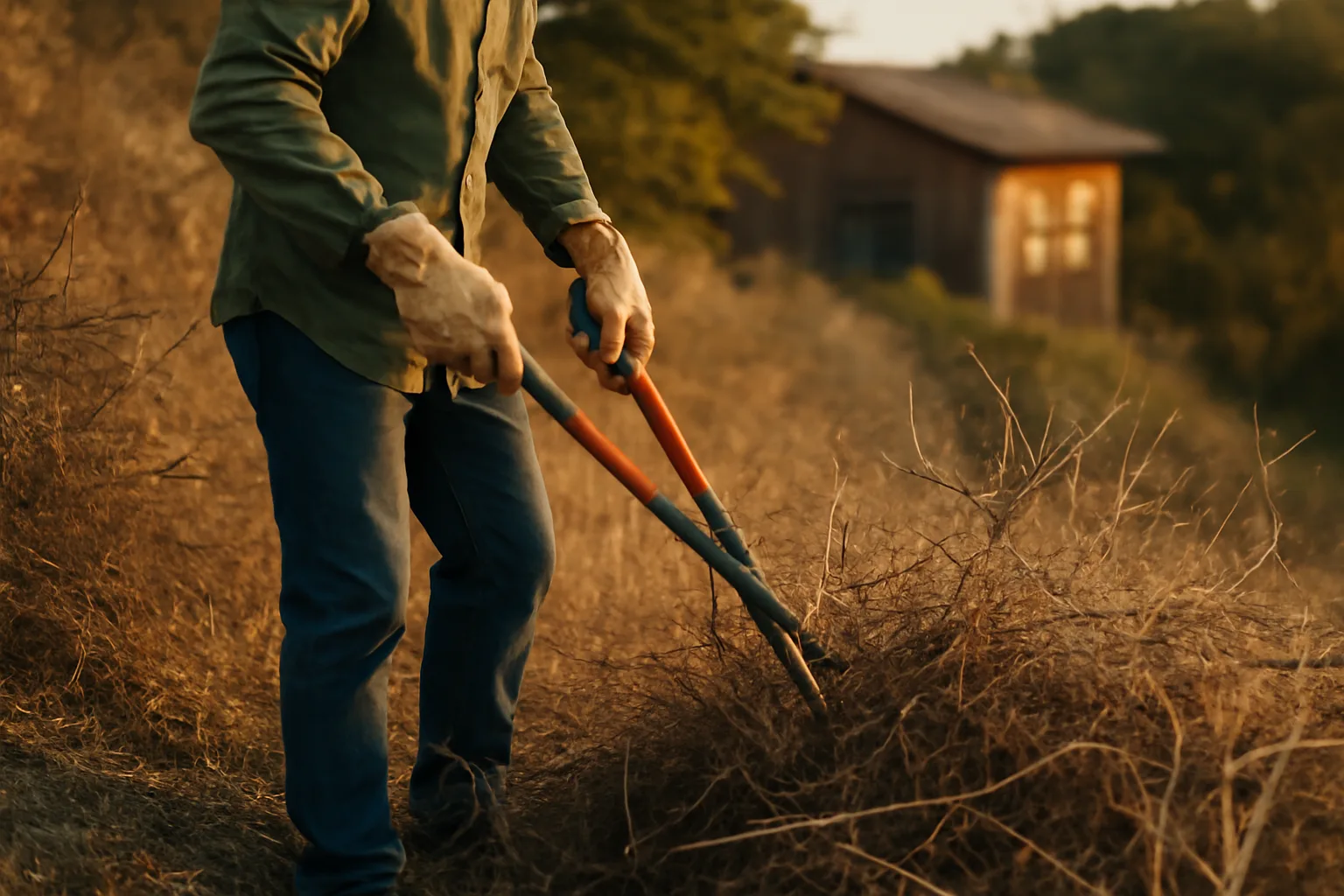
A defensible space company clears and manages vegetation around a structure to slow or stop an approaching wildfire and to give firefighters a safer place to work. That's the whole job, stated plainly. In practice it means cutting dead brush, limbing up trees, removing ladder fuels (the shrubs and small trees that let fire climb from the ground into a canopy), spacing out remaining vegetation, and clearing anything flammable within 5 feet of the house itself. California's defensible space law, Public Resources Code 4291, breaks the work into two zones. Zone 0 is the 0 to 5 foot ember-resistant zone right against the structure. Zone 1 runs from 5 to 30 feet and calls for reducing fuel and separating tree crowns. Zone 2 runs from 30 to 100 feet (or to the property line) and focuses on thinning and removing dead material rather than a clean scrape. Most companies price and staff jobs around these same zone boundaries even outside California, because they map to how fire actually spreads: ember ignition close to the house, then flame contact, then radiant heat from further out. Some companies only do the physical clearing. Others also handle chipping, hauling debris, tree removal permits, and increasingly, photo documentation packages homeowners can hand to an insurer or send with their own appeal after a non-renewal notice. That documentation piece has become a real service line in the last few years, driven by insurers pulling back from wildfire-zone writing in California, Oregon, and Colorado. For the home-hardening side of the equation (ember-resistant vents, Class A roofing, enclosed eaves), you want a different kind of contractor. See fire safe landscaping in California next to your house for how landscaping and structural hardening fit together, since insurers increasingly ask about both.
how much do defensible space companies charge
Expect a range of roughly $1,000 to $8,000 for a typical quarter-acre to one-acre residential lot, with steep-slope, heavy-fuel, or oak-woodland properties running higher. There's no single national price sheet because fuel load, slope, tree density, and local disposal costs all swing the number hard. Most companies price per acre or per hour of crew time rather than a flat quote, especially for first-time clearing on a neglected lot. Ongoing annual maintenance (once the initial heavy clearing is done) usually costs a fraction of the first year, sometimes 20 to 40 percent of the initial job, because you're just knocking back regrowth rather than removing years of accumulated dead fuel. Tree removal, stump grinding, and chipping/hauling are often billed separately and can double a quote if a property has several large dead or diseased trees close to the structure. Ask for an itemized quote broken out by zone and by task (cutting, chipping, hauling, tree work) rather than one lump sum. That itemization is also what you want later if you're building a documentation file for an insurer.
when does the california defensible space law go into effect
California's core defensible space requirement under PRC 4291 is already in effect and has been since a 2005 amendment expanded the clearance distance from 30 to 100 feet. What's newer, and still rolling out, is the Zone 0 ember-resistant zone regulation. The California Board of Forestry and Fire Protection has been developing specific Zone 0 regulations (the 0 to 5 foot zone) under SB 63 (2020) and related statute. CAL FIRE's own guidance describes Zone 0 as requiring homeowners to remove combustible items like mulch, dead plants, and stored materials within 5 feet of the structure. As of this writing the detailed regulatory language for mandatory Zone 0 enforcement has been in a multi-year rulemaking process, and enforcement timelines differ by jurisdiction because local fire agencies implement and inspect under their own authority even when the state sets the baseline standard. This is one of those areas where you should check your own fire district's current adopted rule rather than trust a single statewide date, because implementation has been staggered. [Guided fill-in: confirm your local fire district's current Zone 0 enforcement status and any local deadline before you plan clearing work around this.]
why won't people follow the defensible space law in california
Cost, confusion about the rules, and simple inertia are the three biggest reasons, in that order based on what fire agencies and researchers report. Clearing a neglected lot isn't cheap, the zone boundaries and species rules aren't always intuitive, and a lot of homeowners have lived on the same lot for decades without a fire ever reaching them. CAL FIRE inspection data and county reports have repeatedly found large shares of properties out of compliance in high fire hazard severity zones, though exact non-compliance rates vary widely by county and year and aren't tracked in one consistent statewide dataset. Rural and older homeowners, and those on fixed incomes, are disproportionately represented among non-compliant properties because the labor cost of clearing a full acre or more is real money. There's also a documented gap between believing defensible space matters and actually doing the work. Research on wildfire risk perception (including work summarized by university extension programs) has found that homeowners often overestimate how much they've already done, or assume a neighbor's untended lot poses more risk than their own. Enforcement is uneven too. Some counties issue citations and require compliance before a home sale; others rely mostly on public education and voluntary compliance, which predictably produces spotty results.
how to prevent wildfires around your home
You can't prevent a wildfire from starting elsewhere, but you can dramatically cut the odds it destroys your specific house. The mechanics matter here: most homes in wildfires ignite from wind-blown embers landing in vulnerable spots, not from a wall of flame arriving at the property line. Start with Zone 0. Remove anything combustible within 5 feet of exterior walls: mulch, dead plants, firewood stacks, patio furniture cushions, doormats. CAL FIRE's guidance is direct on this point: keep this zone essentially free of anything that can catch an ember. Then work outward. In Zone 1 (5 to 30 feet), remove dead vegetation, prune tree branches up 6 feet from the ground to prevent ladder fuel, and space shrubs so fire can't jump crown to crown. In Zone 2 (30 to 100 feet), thin trees so crowns aren't touching and clear dead grass and brush, especially uphill or upwind of the house where fire moves fastest. Home-hardening matters just as much as landscaping. Ember-resistant vents, a Class A fire-rated roof, metal gutter guards, and enclosed eaves close off the entry points embers use to get into attics and crawl spaces. Ready.gov's wildfire preparedness guidance recommends clearing leaves and debris from gutters, roofs, and under decks as a baseline action every household in a fire-prone area should take. For the fuller structural checklist, see our guide on defensible space basics and how zones and hardening work together.
how to prepare for a wildfire (before, during, evacuation)
Preparing for a wildfire has three phases: get your property in shape months before fire season, build a go-bag and evacuation plan, and know your specific triggers for leaving. Most of the damage prevention happens in phase one, but phase two is what keeps your family safe if phase one wasn't enough. Ready.gov recommends assembling an emergency kit with water, medications, important documents, and a battery radio, and creating a family communication plan that doesn't depend on cell towers staying up. Photograph your home's exterior, roofline, and defensible space zones before fire season starts. That documentation does double duty: it helps you if you need to file an insurance claim later, and it's evidence of compliance if you're contesting a non-renewal or trying to get reinstated. Know your evacuation zone and at least two routes out, since a single blocked road during a fast-moving fire is a common and dangerous problem. Sign up for your county's emergency alert system directly rather than assuming you'll get a push notification, because coverage gaps are common in rural and canyon terrain. If you've already gotten a non-renewal letter or inspection notice, the practical next step is building a documentation packet: dated photos of each defensible space zone, your clearing invoices, and any vendor certifications. This is exactly the kind of file our $99 Wildfire Insurance Survival Kit is built to help homeowners assemble themselves. It's a documentation tool, not a claims service, and we don't file claims or contact your insurer on your behalf.
how to prevent forest fires (and how they differ from home defense)
Forest fire prevention at the landscape level is mostly about ignition source control and fuel management on public and private wildland, which is a different job than defending an individual house. The practical prevention steps for individuals recreating or living near wildland: fully extinguish campfires (drown, stir, drown again), never park hot vehicles on dry grass, avoid outdoor equipment use like chainsaws or mowers during red flag warning days, and follow local burn permit rules exactly rather than guessing at conditions. At a policy level, prevention includes prescribed burns and mechanical thinning on forest service and state land to reduce accumulated fuel, plus utility vegetation management around power lines. Individual homeowners don't control most of that, which is exactly why defensible space around the structure itself matters so much: it's the piece you can actually control.
how can we prevent forest fires as a community
Community-level fire prevention works best when neighbors coordinate defensible space work together rather than each household acting alone, because fire doesn't respect property lines. A single non-compliant lot with heavy dead brush next to three compliant ones can still put the whole street at risk. Firewise USA, a National Fire Protection Association program, organizes neighborhoods into recognized communities that do joint risk assessments, coordinated chipping days, and shared education. Some insurers and local jurisdictions look favorably on Firewise-recognized communities, though recognition alone doesn't guarantee insurance eligibility or discounts. County-level chipper day programs (common in California, Oregon, and Colorado) let residents drop cut brush at a central point instead of paying for individual hauling, cutting the cost barrier that keeps many people from clearing. Mutual aid on tree removal, shared equipment rental, and group-rate contractor pricing are all things neighborhoods have done informally to bring costs down. If your area has an active Firewise chapter or CWPP (Community Wildfire Protection Plan), that's usually the fastest way to find vetted local defensible space contractors and possibly cost-share programs. [Guided fill-in: check whether your county maintains an active CWPP or Firewise chapter and what cost-share programs, if any, it currently offers.]
what fire safe home rules take effect in 2026
Several states have fire-hardening and defensible space rules phasing in around 2025 and 2026, but the specifics vary enough by state and even by county that you need to check your own jurisdiction rather than assume a single national rule applies. This is genuinely one of the more fragmented areas of wildfire policy right now. In California, the Board of Forestry and Fire Protection's Zone 0 rulemaking under SB 63 has been moving through public comment and adoption stages, with the practical effect that many California homeowners in high fire hazard severity zones should expect stricter ember-resistant zone requirements to become enforceable on a rolling basis rather than one fixed date. Colorado's legislature passed wildfire mitigation and insurance-related bills in recent sessions affecting FAIR Plan access and defensible space disclosure at time of home sale, administered through the Colorado Division of Insurance. Oregon's statewide wildfire risk map and defensible space code requirements, tied to Senate Bill 762 (2021), have gone through their own multi-year rollout with revisions after public pushback on the risk classifications. Because these dates keep shifting and differ by state, the honest answer is: confirm directly with your state fire marshal's office and county fire district what specific rule takes effect for your address in 2026, rather than relying on a general article (including this one) for a firm date. [Guided fill-in: your state fire marshal's current 2026 defensible space or home-hardening rule, if any, and its effective date for your county.]
is santa barbara safe from fire
No location in coastal or foothill Santa Barbara County can be called fully safe from fire risk; the county has burned repeatedly in major fires (Thomas Fire 2017, Jesusita Fire 2009, Tea Fire 2008 among others) and much of the wildland-urban interface there is mapped by CAL FIRE as a Very High Fire Hazard Severity Zone [1]. Risk varies enormously within the county itself. Homes tucked against the foothills in Montecito, Mission Canyon, or the San Roque area sit in or near steep chaparral terrain that burns readily and has a documented fire history. Flatter areas closer to the coast or well within the urbanized city grid carry meaningfully lower wildfire risk, though not zero, since ember cast from a foothill fire can travel over a mile under strong wind conditions like the Sundowner winds the region is known for. If you're evaluating a specific Santa Barbara address, CAL FIRE's Fire Hazard Severity Zone viewer is the actual source to check rather than general reputation, since hazard zone designation (not neighborhood name) is what insurers and local building codes reference [1]. A property a half mile from another can carry a very different official hazard rating.
how to vet and hire a defensible space company
Check contractor licensing first. In California, tree and landscape work above a certain dollar threshold requires a Contractors State License Board (CSLB) license, and you can verify any contractor's license status directly on the CSLB website before signing anything [2]. Unlicensed operators are common in this space, especially after major fires when demand spikes, and hiring one leaves you with no real recourse if the work is bad or someone gets hurt on your property. Ask for zone-specific line items on the quote (Zone 0, Zone 1, Zone 2) rather than one number, and ask whether they document completed work with dated photos. That documentation matters twice: for your own insurance file, and for compliance if your county requires proof of defensible space work. Get at least two quotes for any job over a few thousand dollars, since pricing on brush clearing varies more than most home services due to labor-intensity differences crews don't always disclose upfront. Ask specifically whether they carry liability insurance and workers' comp, since clearing steep, fuel-heavy lots is genuinely dangerous work and you don't want liability landing on you. Finally, ask if they know your specific local fire district's rules. A company that only knows the state-level PRC 4291 basics but not your county's stricter local ordinance (many coastal and foothill counties have adopted stricter local standards) will do work that technically misses what your inspector actually wants. [Guided fill-in: your local fire district's specific clearance distances and species restrictions, since these commonly exceed the state minimum.]
what to do if you already got a non-renewal or inspection letter
Read the letter closely for the specific deficiency cited, since insurers and fire districts increasingly issue notices tied to a particular defensible space zone or a specific hazard (dead tree, roof condition, vent type) rather than a blanket "too much brush" statement. Fixing the exact cited issue and documenting it is more useful than a general cleanup. Photograph everything before and after any clearing work, from multiple angles, with a visible date. Keep every invoice from your defensible space company itemized by zone and task. If you're contesting a non-renewal or requesting reconsideration, insurers generally want to see documented, dated proof of specific corrective action, not a verbal assurance that "we cleared the brush." We built the $99 Wildfire Insurance Survival Kit around exactly this gap: a structured way for homeowners to organize photos, invoices, and zone-by-zone documentation into a packet they can send themselves. To be clear about what that is and isn't: we don't contact your insurer on your behalf, file claims, or promise reinstatement or a discount. You prepare and send your own documentation; we just help you organize it well. For the underlying compliance work itself, our guides on house fire risk factors and fire at a house case patterns walk through what inspectors and insurers are actually looking for.
Frequently asked questions
When does the California defensible space law go into effect?
The core requirement, PRC 4291, is already in effect and was expanded from 30 to 100 feet of clearance around structures back in 2005. Newer Zone 0 (0-5 foot ember-resistant zone) rules from the Board of Forestry and Fire Protection are in a rolling multi-year rulemaking process; check your county fire district for its specific current enforcement status rather than assuming one national date.
Why won't some homeowners follow California's defensible space law?
Cost of clearing, confusion about which zone rules apply where, and the fact that many properties haven't burned in decades are the main reasons. CAL FIRE inspection reports have found significant non-compliance in high hazard zones, and university extension research shows homeowners often overestimate how much clearing they've actually done.
How much does hiring a defensible space company cost?
Expect roughly $1,000 to $8,000 for initial clearing on a quarter-acre to one-acre lot, depending on slope, fuel load, and tree density. Annual maintenance after the first clearing is usually cheaper, often 20 to 40 percent of the initial cost, since crews are managing regrowth rather than years of accumulated brush.
How do I prevent a wildfire from destroying my house specifically?
Clear Zone 0 (0-5 feet from the house) of anything combustible, thin and space vegetation out to 100 feet, and harden the structure with ember-resistant vents, a Class A roof, and enclosed eaves. Most home losses come from wind-blown embers entering small gaps, not direct flame contact, so sealing entry points matters as much as landscaping.
How do I prepare for a wildfire evacuation?
Build a go-bag with water, medications, and documents, know your evacuation zone and at least two routes out, and sign up directly for your county's alert system rather than relying on push notifications. Ready.gov recommends a family communication plan that doesn't depend on cell service staying up.
How can individuals help prevent forest fires?
Fully extinguish campfires, avoid outdoor equipment use on red flag warning days, follow local burn permit rules exactly, and never park a hot vehicle on dry grass. A large share of U.S. wildfires are human-caused, so individual ignition-source discipline matters a lot.
What new fire-safe home rules take effect in 2026?
Several states have wildfire-hardening rules phasing in around 2025-2026, including California's Zone 0 regulations under SB 63 and Oregon's SB 762 wildfire risk map requirements, but exact effective dates vary by county. Check your state fire marshal's office and local fire district directly for your address's specific 2026 requirement.
Is Santa Barbara, California safe from wildfire risk?
No part of Santa Barbara County is fully fire-safe; the region has a documented history of major fires (Thomas Fire 2017, Jesusita 2009) and much of the foothill wildland-urban interface is CAL FIRE-mapped as Very High Fire Hazard Severity Zone. Risk varies block to block, so check CAL FIRE's hazard zone viewer for a specific address.
What's the difference between Zone 0, Zone 1, and Zone 2 defensible space?
Zone 0 is 0-5 feet from the structure and should be nearly free of combustibles. Zone 1 runs 5-30 feet and focuses on removing dead vegetation and separating tree crowns. Zone 2 runs 30-100 feet and focuses on thinning and removing dead fuel rather than a full clear. These zones come from California Public Resources Code 4291.
Do defensible space companies help with insurance non-renewal appeals?
Some now offer photo documentation packages homeowners can use in their own appeal, but the company itself doesn't contact your insurer for you. You (or a licensed public adjuster) handle the actual claim or appeal; the contractor's job is the physical clearing and dated proof it happened.
How do I verify a defensible space contractor is licensed?
In California, check the Contractors State License Board (CSLB) website directly using the contractor's license number before signing anything. Confirm they carry liability insurance and workers' comp too, since brush clearing on steep or heavily fueled lots is physically dangerous work.
How often do I need to redo defensible space clearing?
Most fire districts expect annual maintenance, since grass and brush regrow within a single season in most climates. Initial heavy clearing is the expensive part; annual upkeep afterward is typically 20-40 percent of that first-year cost if you stay on top of it.
Sources
- Congressional Research Service, Wildfire Statistics (IF10244): The large majority of U.S. wildfires are human-caused rather than started by lightning
- CAL FIRE, Fire Hazard Severity Zone viewer: Santa Barbara County foothill areas mapped as Very High Fire Hazard Severity Zone
- California Contractors State License Board, license lookup: Homeowners can verify a contractor's license status directly before hiring
- CAL FIRE: California's defensible space law (PRC 4291) requires 100 feet of defensible space clearance around homes in State Responsibility Areas.
- CAL FIRE: CAL FIRE guidance details the ember-resistant zone (Zone 0) requirements planned to take effect for California homes near wildfire-prone areas.
- California Legislative Information: Public Resources Code Section 4291 establishes the legal basis for defensible space requirements around structures in California.
- CAL FIRE Ready for Wildfire: Defensible space is divided into zones around a home, each with specific vegetation clearance and maintenance requirements.
- CAL FIRE Ready for Wildfire: Homeowners should prepare a wildfire action plan covering before, during, and evacuation phases of a wildfire event.
- Santa Barbara County Fire Department: Santa Barbara County's fire department provides local wildfire risk information and defensible space inspection programs.
- California Department of Insurance: Insurance non-renewals related to wildfire risk are addressed through state regulations, including options after receiving a non-renewal notice.