Last updated 2026-07-25
TL;DR
The biggest wins are cheap and boring: clear the 5 feet next to your walls, cover vents with 1/8-inch metal mesh, clean gutters, and keep grass under 4 inches. Combine home hardening with defensible space zones, a go-bag, and your own insurer-ready documentation. No single fix stops a wildfire; the combination is what changes outcomes.
What actually mitigates wildfire damage to a home?
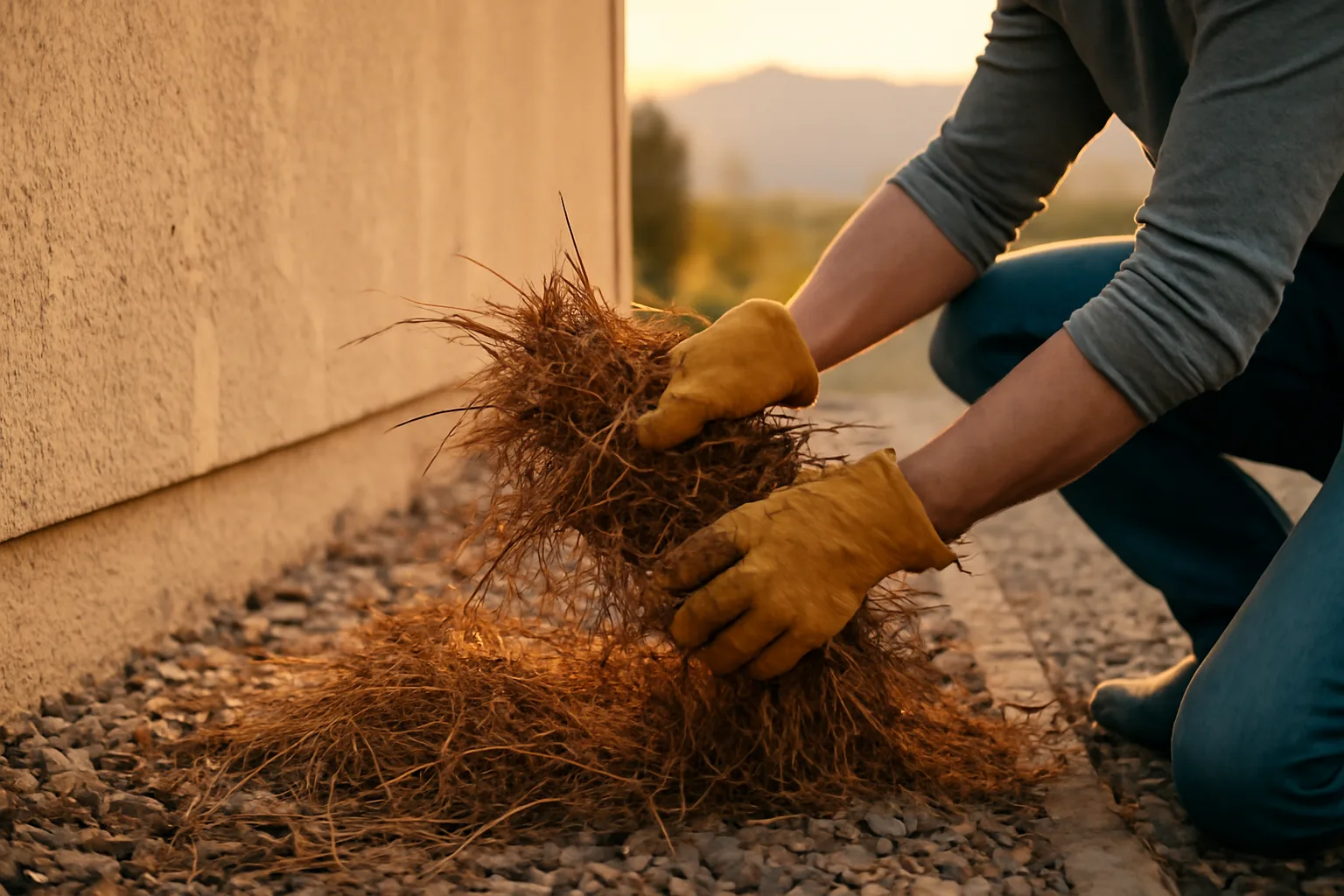
Three things matter more than anything else: what your house is made of, what's touching it, and what's within 100 feet of it. Research from the Insurance Institute for Business & Home Safety (IBHS) and CAL FIRE both point to the same conclusion, most homes don't burn from a wall of flame rolling through. They ignite from embers landing on or near the structure, sometimes minutes or hours after the fire front has passed. That means your mitigation dollars go furthest on ember-resistant details: metal mesh over vents, enclosed eaves, tempered glass windows, and a 5-foot noncombustible buffer around the foundation. CAL FIRE calls this the "ember-resistant zone" and it's now written into state regulation as Zone 0. After that, defensible space (the 30-foot lean-and-green zone and the 30-to-100-foot reduced fuel zone) buys firefighters room to work and slows a fire's approach. Neither hardening nor clearing alone gets you there. IBHS testing found homes with both noncombustible siding and cleared vegetation survived ember storms that destroyed neighboring homes with just one or the other. If you want the fuller breakdown of what's expected in each ring around your house, our defensible space zones guide walks through it property line by property line.
When does the California defensible space law go into effect?
California's existing defensible space law (Public Resources Code 4291) has been in effect for years and requires 100 feet of defensible space clearance around structures in State Responsibility Areas and some Local Responsibility Areas [1]. That part isn't new. What's newer, and what causes confusion, is Zone 0. Assembly Bill 3074 (2020) directed the Board of Forestry to adopt ember-resistant zone regulations for the 0-to-5-foot area around structures. As of early 2025, CAL FIRE and the Board of Forestry have been working through the regulatory process, with the state's own materials describing an anticipated effective date that has been pushed multiple times. Check the Board of Forestry's current rulemaking page directly before you budget for it, because the date has moved before and could move again. Here's the honest state of play: the general defensible space requirement is already enforceable now. The specific Zone 0 ember-resistant zone rule (no combustible mulch, no wood fencing attached to the house, no combustible furniture within 5 feet) is in the adoption pipeline but isn't uniformly enforced everywhere yet. Insurers, however, aren't waiting for the regulation to finalize. Many are already asking about Zone 0 compliance on inspection forms. [FILL IN: confirm current Zone 0 effective date and applicability with your local CAL FIRE unit or fire district, since implementation timelines vary by county and defensible space law enforcement is locally administered.]
What fire-safe home rules take effect in 2026?
Several California wildfire-related building and disclosure rules have effective dates clustering around 2025-2026, and homeowners in high-risk zones should expect more, not fewer, of these over time. Senate Bill 63 (2024) expanded the "high fire-hazard severity zone" defensible space and home hardening disclosure requirements for home sales, with provisions phasing in through 2025 and 2026 depending on the transaction type [2]. Some local jurisdictions are also moving up their own vegetation management and defensible space inspection cycles to annual, rather than complaint-driven, checks. Rather than guess at a single national or even statewide date, treat 2026 as the year to assume your local fire district will be checking harder, not softer. Insurance non-renewal notices already reference defensible space compliance as a factor in underwriting decisions in wildfire-prone ZIP codes. [FILL IN: your local fire district's specific 2025-2026 inspection cycle, defensible space ordinance updates, and any new home-hardening code adoption dates, since these are set at the county or fire protection district level, not statewide.] If you're rebuilding or doing major renovation in a high-hazard zone, California's Chapter 7A building code (ignition-resistant construction) already applies in most State Responsibility Areas and many Wildland-Urban Interface zones, and it's the baseline insurers and inspectors reference most often [3].
Why won't people follow the defensible space law in California?
Cost, confusion, and competing priorities. That's the honest answer, not laziness. A 2020 study from UC Cooperative Extension and related CAL FIRE outreach research found that homeowners cite cost of vegetation removal and disposal, uncertainty about what specifically counts as compliant, and difficulty hiring contractors during peak fire season as the top barriers to completing defensible space work [4]. Rural and lower-income households are hit hardest, since clearing 100 feet around a home on a wooded lot can run into thousands of dollars in labor and green waste disposal. There's also a real disconnect between what the law requires and what a homeowner can picture. "100 feet of defensible space" sounds abstract until you walk it off with a tape measure. Many people genuinely don't know their oak tree canopy overhangs the roofline, or that the woodpile against the garage wall is a Zone 0 violation waiting to happen. And some people just don't believe the fire will reach them. That's the psychological piece research keeps finding: perceived risk drops the farther a resident lives from the last major fire, even in the same fire hazard severity zone [4]. None of that changes what an inspector or an insurer will find. If you got a non-renewal letter, the fastest fix isn't debating the law, it's doing the walk-through yourself before someone else does it for you. Our guide on fire safe landscaping next to a house is a decent starting checklist.
How to prevent wildfires from starting in the first place
Most wildfires are human-caused, not lightning-caused. CAL FIRE and federal data consistently show that around 85-90% of wildfires nationally are caused by people, whether through unattended campfires, equipment sparks, downed power lines, or debris burning. At the household level, prevention looks unglamorous: don't mow dry grass on a hot windy afternoon (mower blades hitting rocks throw sparks), keep chainsaws and equipment with spark arrestors, never park a hot vehicle on dry grass, and check local burn permit rules before any debris burning. Ready.gov's wildfire page specifically flags equipment use and debris burning as common ignition sources homeowners can control directly [5]. If you live near powerlines, report sagging lines or trees touching them to your utility immediately. Utility equipment has been the confirmed cause of some of the most destructive fires in California history, including the 2018 Camp Fire, per Cal Fire's investigation findings [6]. On public land, the "Only You Can Prevent Wildfires" message (yes, that's a real, still-active Smokey Bear campaign) exists because it's still true: campfire negligence and vehicle-related sparks are preventable causes. Our piece on only you can prevent wildfires covers the history and the specific outdoor habits that matter most.
How can we prevent forest fires and wildfires at a community level?
Individual defensible space work matters less if your neighbor's overgrown lot sits 20 feet from your fence line. Fire doesn't respect property boundaries, and neither should your mitigation planning. Communities that actually reduce fire spread do a few specific things: coordinated fuel breaks along ridgelines and roads, shared chipping days so vegetation removal isn't cost-prohibitive for any single household, and Firewise USA program participation, which the National Fire Protection Association runs in partnership with the U.S. Forest Service and state forestry agencies [7]. Firewise-recognized communities commit to an annual risk assessment and a documented action plan, and some insurers do consider Firewise status a positive underwriting signal, though the effect on any individual policy varies by carrier and isn't something you can count on in advance. Proscribed burns and mechanical thinning on adjacent public land also matter more than most homeowners realize. The Forest Service's own research indicates that fuel treatments (thinning plus prescribed fire) reduced fire severity in treated areas during several major California fires, including parts of the 2021 Caldor Fire footprint [1]. If you're in a subdivision or HOA, ask whether there's a Community Wildfire Protection Plan on file. Many counties require or strongly encourage them, and they identify shared escape routes and hazard zones that individual defensible space work can't fix alone.
How do I prepare for a wildfire before one starts?
Preparation splits into three buckets: the house, the documents, and the people. For the house: complete defensible space clearing in the 5-foot, 30-foot, and 100-foot zones, clean gutters and roof valleys of dead leaves and needles, and store firewood at least 30 feet from structures, per CAL FIRE's defensible space guidance. Move propane tanks and anything flammable away from exterior walls. For the documents: this is the part people skip and regret. Before any fire threat, walk your property with a phone camera and record a video inventory of every room, your roof material, your vent screens, and any recent hardening upgrades (new roof, ember-resistant vents, cleared brush). Insurers process claims faster with dated, timestamped proof of what existed and what you'd already done to reduce risk. This is also where a Wildfire Insurance Survival Kit helps, it's a one-time $99 structured template for organizing that documentation before you need it, not after. We don't file claims on your behalf; you prepare and send your own records, and the kit just keeps you from scrambling during an evacuation window. For the people: build a go-bag per person (medications, copies of ID, chargers, a change of clothes), agree on two meeting points (one in-neighborhood, one out-of-town), and sign up for your county's emergency alert system. Ready.gov's wildfire action guide recommends practicing your evacuation route at least twice a year, since roads you'd normally take may be closed during an actual fire [5].
How to prepare for forest fires when you live near wildland areas
If your property backs onto national forest, state land, or an undeveloped canyon, your risk profile is different from a suburban lot with a neighbor on every side, and your prep should reflect that. Check whether your land falls in a State Responsibility Area (SRA), since that determines which agency handles fire response and which defensible space rules apply. CAL FIRE's SRA maps are public and worth five minutes to check your actual designation rather than assuming [1]. Extend your thinking past the 100-foot defensible space line. Wildland-adjacent homes benefit from a wider look, tree spacing, ladder fuel removal (the shrubs and low branches that let ground fire climb into tree canopy), and a cleared access road wide enough for fire engines. The National Fire Protection Association's Firewise guidance recommends at least a 12-foot vertical clearance between the ground and the lowest tree branches in the defensible space zone [7]. Also plan for smoke, more than flame. Homes near wildland fire risk often deal with weeks of poor air quality even when the fire itself stays miles away. A HEPA filter and a sealed "clean room" in the house is a cheap, often-overlooked prep step.
Is Santa Barbara safe from fire?
No California coastal or foothill community is fully "safe" from wildfire, and Santa Barbara County has a documented history that argues against complacency. The 2017 Thomas Fire, which started in Ventura County and burned into Santa Barbara County, was at the time the largest wildfire in modern California history by acreage, and it directly preceded the January 2018 Montecito debris flow that killed 23 people, a disaster caused by burned, denuded hillsides unable to absorb heavy rain . Much of Santa Barbara County, including foothill neighborhoods in Montecito, Santa Barbara, and Goleta, sits in a CAL FIRE-designated Very High Fire Hazard Severity Zone . That designation isn't cosmetic; it drives defensible space enforcement, building code requirements, and increasingly, insurance underwriting decisions. If you live in or near Santa Barbara's wildland-urban interface, the practical answer is: assume moderate-to-high ongoing risk, check your specific parcel's hazard zone designation on CAL FIRE's map viewer, and treat defensible space compliance as insurance protection, not bureaucratic box-checking. Coastal fog and marine layer reduce fire risk on some days of the year, but Santa Ana and sundowner wind events (the same wind pattern behind the Thomas Fire's rapid spread) can override that protection fast.
What should be in a wildfire go-bag and evacuation plan?
| Year-round | Defensible space clearing, ember-resistant vents, document inventory | Ongoing, recheck each spring | |
|---|---|---|---|
| Fire season starts | Test go-bags, confirm meeting points, sign up for alerts | Before red flag warnings begin | |
| Red flag warning issued | Load go-bags in vehicle, move outdoor furniture inside, close all windows | Same day | |
| Evacuation order | Leave immediately via planned route | Do not wait for a second warning | Practice matters more than the gear itself. A go-bag you've never tested weighs more than expected and someone always forgets the chargers. |
Ready.gov recommends every household keep a basic emergency kit with water (one gallon per person per day for several days), non-perishable food, a battery or hand-crank radio, flashlight, extra batteries, and a first aid kit, then layer wildfire-specific items on top [5]. For wildfire specifically, add: N95 masks for smoke, a list of medications and dosages, copies of insurance policy documents and ID, a portable phone charger, pet carriers and food if you have animals, and a printed (more than digital) copy of your evacuation route in case cell service drops. Here's a simple table of what most emergency management agencies recommend by timeframe: | Prep stage | What to do | Timing |
How does home hardening fit into all of this?
Home hardening is the structural half of mitigation, and it's the half that actually determines whether embers ignite your house once a fire is nearby. IBHS research consistently finds that Class A fire-rated roofing, metal or 1/8-inch mesh vent screens, dual-pane tempered glass windows, and noncombustible siding materials dramatically reduce ignition probability during ember exposure, which is how most homes are lost in wildfire, not direct flame contact. Priority order, if you're budgeting this over a few years: vents first (cheapest, highest ember-risk item), then the 5-foot zone around the foundation, then roof and gutter maintenance, then siding and window upgrades if you're due for replacement anyway. You don't need to redo your whole exterior in one season. If you've already had a fire incident or partial loss, our guide on fire at a house and house fire recovery basics cover what documentation and next steps matter most, separate from the pre-fire mitigation this article focuses on. For larger properties needing contractor-grade vegetation clearing, some states have structured programs. Washington's Department of Natural Resources, for instance, runs defensible space clearing contract programs that homeowners in that state can access directly.
Frequently asked questions
When does the California defensible space law go into effect?
The core 100-foot defensible space requirement under Public Resources Code 4291 is already in effect and has been for years. The newer Zone 0 ember-resistant zone rule (0 to 5 feet from structures) is still moving through CAL FIRE's Board of Forestry rulemaking process; check the Board's current rulemaking page for the latest applicability date before assuming it applies to you yet.
Why won't people follow the defensible space law in California?
Cost of vegetation removal and disposal, confusion about what specifically qualifies as compliant, and difficulty hiring contractors during peak season are the top barriers UC Cooperative Extension research identifies. Many homeowners also underestimate their personal risk, especially if they haven't lived through a nearby fire, which lowers motivation even when the legal requirement is clear.
How do I prevent wildfires from starting near my property?
Avoid mowing dry grass in hot, windy conditions since blades striking rocks throw sparks, keep equipment fitted with spark arrestors, never park hot vehicles on dry grass, and follow local burn permit rules for any debris burning. Roughly 85-90% of wildfires are human-caused, according to federal wildfire data, so equipment and ignition-source habits matter more than most people assume.
What's the fastest way to prepare for a wildfire this season?
Clear the 5-foot zone around your foundation of anything combustible, clean gutters and roof valleys, and build a go-bag per household member. Then record a video inventory of your home and any hardening upgrades you've made. That documentation matters as much as the physical prep if you ever need to show an insurer what existed before a fire.
What fire-safe home rules take effect in 2026?
California's SB 63 disclosure expansions and Zone 0 ember-resistant zone regulations are both moving toward broader enforcement around 2025-2026, though exact dates vary by jurisdiction and are still being finalized. Local fire districts are also tightening inspection cycles. Confirm your specific county or fire protection district's 2026 schedule directly, since none of this is set at a single statewide date.
Is Santa Barbara safe from fire?
No, not fully. Much of Santa Barbara County's foothill and wildland-urban interface areas are CAL FIRE-designated Very High Fire Hazard Severity Zones, and the county experienced the 2017 Thomas Fire, one of the largest in modern California history at the time, followed by a deadly 2018 debris flow. Check your parcel's specific hazard zone rather than assuming coastal proximity protects you.
How can we prevent forest fires at the neighborhood or community level?
Coordinate fuel breaks and shared vegetation-clearing days so cost isn't a barrier for any single household, and consider joining the Firewise USA program run by the National Fire Protection Association, which requires an annual community risk assessment and action plan. Ask your county whether a Community Wildfire Protection Plan already exists for your area.
What is the 5-foot ember-resistant zone (Zone 0)?
Zone 0 is the area within 5 feet of a structure's exterior walls, and CAL FIRE guidance calls for it to be free of combustible mulch, stored firewood, wood fencing attached to the house, and combustible outdoor furniture. It's the highest-priority zone because most home ignitions during wildfire come from windblown embers landing close to or against the structure, not direct flame.
How do I prepare for a forest fire if I live in a rural, wildland-adjacent area?
Confirm your State Responsibility Area designation on CAL FIRE's map, extend fuel reduction beyond the standard 100 feet where terrain allows, remove ladder fuels (low branches and shrubs) under trees, and make sure access roads are wide enough for fire engines. Also prepare for weeks of smoke exposure, more than direct flame risk, with a HEPA filter and a sealed clean room.
What should go in a wildfire evacuation go-bag?
Water, non-perishable food, a flashlight, a battery or hand-crank radio, medications and dosage lists, copies of ID and insurance documents, N95 masks, a portable charger, and pet supplies if applicable, per ready.gov's emergency kit guidance. Test the bag's weight and contents twice a year, and keep a printed copy of your evacuation route in case cell service fails.
Does home hardening or defensible space matter more?
Both matter, and testing from the Insurance Institute for Business & Home Safety found homes combining noncombustible siding, ember-resistant vents, and cleared vegetation survived ember exposure that destroyed neighboring homes missing either piece. If you can only afford one step this year, ember-resistant vent screens and the 5-foot zone around your foundation give the best return per dollar.
How much does defensible space clearing typically cost?
Costs vary widely by lot size, vegetation density, and whether you hire a contractor or do it yourself, and no single national figure applies reliably; UC Cooperative Extension research on adoption barriers cites cost and green-waste disposal as the top reasons homeowners delay compliance. Get at least two local quotes and ask your fire district about chipping day programs that can offset disposal costs.
Sources
- CAL FIRE, State Responsibility Area (SRA) Viewer: SRA and Fire Hazard Severity Zone designations determine applicable defensible space rules
- California Legislative Information, SB 63 (2024): SB 63 expands defensible space and home hardening disclosure requirements phasing in through 2025-2026
- California Building Standards Commission, Chapter 7A: Chapter 7A ignition-resistant construction standards apply in State Responsibility Areas and WUI zones
- National Interagency Fire Center / U.S. Forest Service Wildfire Causes Data: Roughly 85-90% of wildfires nationally are human-caused
- CAL FIRE, Camp Fire Incident Investigation: Utility equipment was determined the cause of the 2018 Camp Fire
- National Fire Protection Association, Firewise USA Program: Firewise USA program requirements including annual risk assessment and vertical clearance guidance
- USDA Forest Service, Caldor Fire Fuel Treatment Research: Fuel treatments reduced fire severity in treated portions of the Caldor Fire footprint