Last updated 2026-07-25
TL;DR
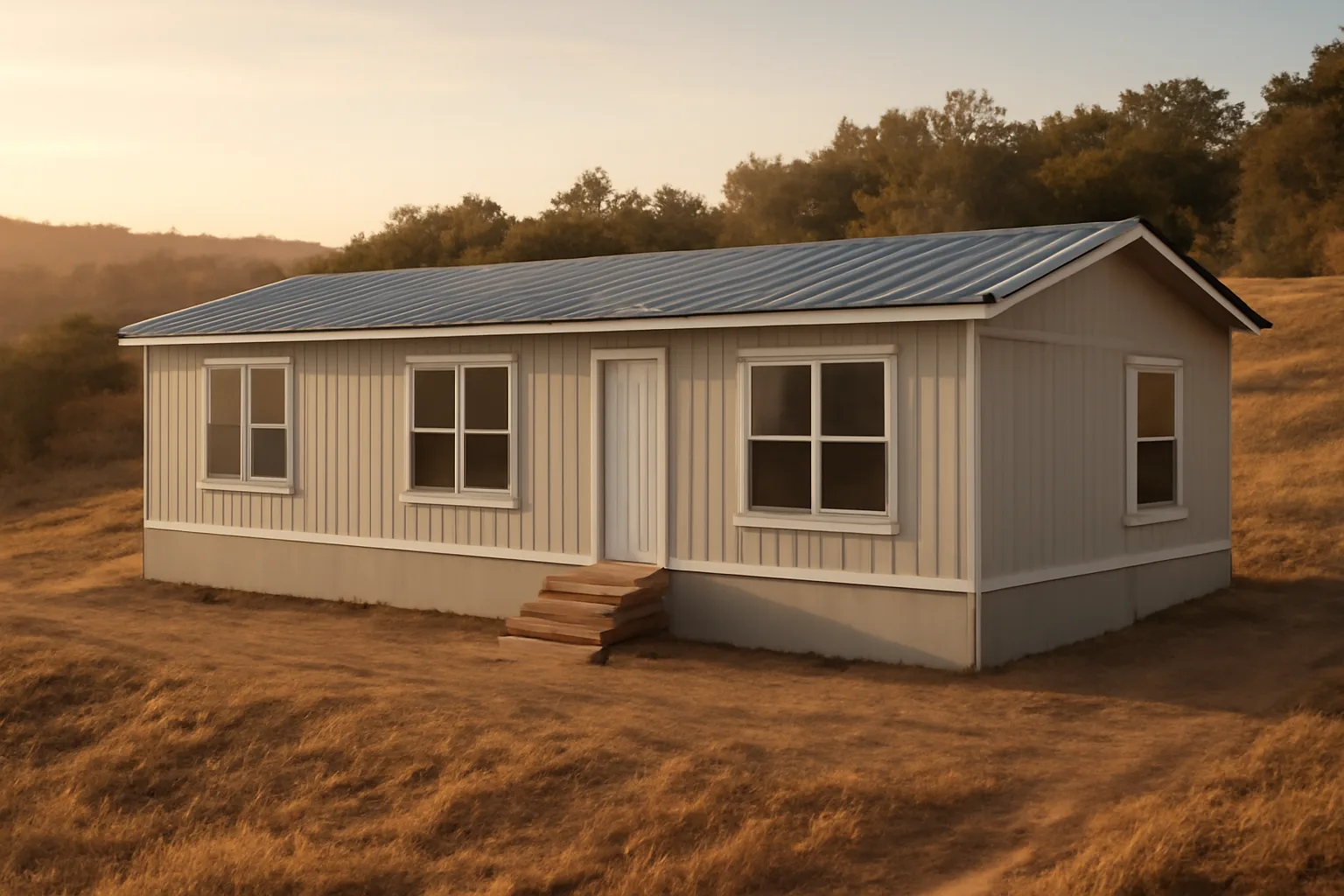
Fire resistant manufactured homes combine ignition-resistant materials (Class A roofing, metal or fiber-cement siding, ember-blocking vents) with defensible space. No manufactured home is fireproof, but HUD-code homes built after the 2023 wind zone updates plus 100 feet of cleared space around them survive dramatically more often than older single-wides with open skirting and wood decks touching flammable landscaping.
What makes a manufactured home fire resistant?
A fire resistant manufactured home is one built with materials and details that slow or stop ember ignition, combined with a lot clear enough that flames never reach the structure. There's no single "fireproof mobile home" product on the market. What exists is a combination of Class A fire-rated roofing, noncombustible or fire-treated siding, ember-resistant vents, and enclosed (not open-lattice) skirting, sitting on a parcel with defensible space maintained to local code. CAL FIRE's own guidance is blunt about this: homes ignite mostly from embers landing on or near the structure, not from direct flame contact with a wall of fire. That's why the roof, vents, and the first five feet around the foundation matter more than almost anything else. Manufactured homes have a specific vulnerability older stick-built houses often don't: the underbelly and skirting. Many older single-wides and double-wides sit on piers with open or lattice skirting, which lets wind-driven embers collect underneath the home, ignite insulation and wiring, and burn the structure from below. Enclosed, fire-rated skirting with ember-blocking vents closes that gap. HUD regulates manufactured housing construction nationally through the HUD Code (24 CFR Part 3280), and updated wind zone and thermal standards took effect for homes built starting in 2023, tightening structural and fastening requirements in high-wind, high-fire regions. [1] Older HUD-code homes (pre-1976, before the code existed at all, or early-code homes from the 1980s and 90s) generally lack these upgrades and are the ones insurers are refusing to renew first.
What roofing, siding, and vents actually resist fire?
| Roof | Wood shake, low-slope with debris buildup | Class A asphalt, metal, or tile |
|---|---|---|
| Siding | Vinyl, untreated wood | Fiber-cement, stucco, metal |
| Vents | Standard 1/4-inch mesh screen | Ember-resistant, 1/8-inch mesh (Chapter 7A listed) [2] |
| Skirting | Open lattice, missing panels | Enclosed, fire-rated skirting with ember baffles |
| Decking | Wood attached directly to structure | Composite or metal, detached or with noncombustible gap |
Class A roofing (asphalt shingles rated Class A, metal roofing, or concrete/clay tile) is the single highest-leverage upgrade for any manufactured home in a fire zone. Class A is the top of the three-tier fire rating system (A, B, C) used in the International Building Code and referenced by CAL FIRE's home hardening guidance; it means the roof covering resists severe fire exposure from outside the structure. For siding, fiber-cement board (brand names like HardiePanel), stucco, or metal siding all outperform vinyl or untreated wood siding, which can melt, warp, or ignite directly from radiant heat even without flame contact. Vinyl siding on manufactured homes is a known weak point: it can deform and pull away from framing at surprisingly low heat, opening gaps for embers. Vents are the detail most homeowners miss. Standard vent screens (1/4 inch mesh) let embers and firebrands through. California's Chapter 7A building code, which applies to new construction in state-designated Fire Hazard Severity Zones, requires ember- and flame-resistant vents with 1/8 inch mesh or a listed ember-resistant vent product for eaves, foundations, and attics. [2] If you're retrofitting an existing manufactured home, swapping standard vents for WUI-rated (wildland-urban interface rated) vents is one of the cheaper high-impact fixes, typically a few hundred dollars per vent installed versus thousands for a full siding replacement. | Component | High-risk (older/standard) | Fire resistant option |
Are manufactured homes more likely to burn down in a wildfire?
Yes, older manufactured homes burn at higher rates than comparable site-built homes in wildfires, mainly because of underbelly ventilation gaps, lighter-gauge materials, and their tendency to sit on lots with less defensible space (rural parks, older subdivisions). There isn't a single national dataset that isolates "manufactured home survival rate" cleanly, and anyone who tells you an exact percentage without a named study is guessing. What we do have: CAL FIRE and the U.S. Forest Service have both documented that home ignition in wildfires happens overwhelmingly through embers entering vulnerable openings (vents, eaves, gaps under decks and around skirting) rather than through direct wall-of-flame contact. [3] Manufactured homes historically have more of exactly those vulnerable openings than newer site-built construction, which is why insurers and fire marshals treat them as higher-risk by default, sometimes regardless of actual condition. The honest takeaway: age and retrofit status matter more than the fact that a home is manufactured. A 2024-built HUD-code home with Chapter 7A-equivalent materials and 100 feet of defensible space is a very different risk than a 1985 single-wide with open skirting sitting against dry brush.
When does the California defensible space law go into effect?
California's core defensible space law, Public Resources Code 4291, has been in effect for decades and currently requires 100 feet of defensible space clearance around structures in State Responsibility Areas and some Local Responsibility Areas, a change from the old 30-foot standard that was expanded to 100 feet by legislation in 2005. [4] The zones are split into an ember-resistant zone (0-5 feet from structures) and two vegetation management zones out to 100 feet, with specific spacing and fuel-reduction rules in each. The part homeowners keep asking about, a new statewide "Zone 0" ember-resistant zone regulation requiring noncombustible materials within 5 feet of structures, has been delayed multiple times. CAL FIRE's Board of Forestry has been developing Zone 0 regulations under SB 63 and related legislation, and as of CAL FIRE's most recent published guidance, the ember-resistant zone requirement for existing homes has not yet taken full legal effect statewide; check CAL FIRE's defensible space page for the current status before you assume a specific date, because it has moved. [5] Bottom line for right now: the 100-foot defensible space clearance rule under PRC 4291 is active law today, and it's enforced during CAL FIRE's routine inspections. The Zone 0 five-foot ember-resistant zone is the next major shoe to drop, and homeowners in State Responsibility Areas should plan for it even before it's mandatory, since insurers are already asking about it informally.
Why won't people follow the defensible space law in California?
Cost, labor shortage, and confusion about what actually counts as compliant are the three biggest reasons compliance lags, based on what CAL FIRE inspectors and county fire departments report anecdotally in public meetings and guidance documents; there's no single national survey that ranks these reasons with hard percentages, so treat this as informed observation rather than settled data. Clearing 100 feet of brush, thinning trees, and removing ladder fuels on a rural or semi-rural lot is genuinely expensive if you're hiring it out, often running into the thousands of dollars for a larger parcel, and it's recurring work, not a one-time fix. Vegetation grows back. Many homeowners, especially older residents on fixed incomes or absentee landowners, simply defer it. There's also a real education gap. Defensible space rules are technical: different clearance distances for grass versus shrubs versus trees, spacing requirements between plants, rules about horizontal and vertical fuel continuity. A homeowner who mows the lawn and calls it done may not realize their overgrown junipers against the house or the pine needles in their gutters are the actual violation. Finally, enforcement varies enormously by jurisdiction. Some counties do aggressive annual inspections with fines; others are stretched thin and rarely follow up unless there's a complaint. That inconsistency teaches some homeowners that the law is more suggestion than requirement, until an insurer's own inspector shows up and non-renews the policy over exactly the same violations CAL FIRE would have flagged. For a walkthrough of what's actually required in each zone, see our guide on defensible space rules.
What fire-safe home rules take effect in 2026?
Several states and California specifically have fire-hardening requirements phasing in around 2025-2026, but the details vary a lot by state and even by fire district, so treat any specific date as a guided fill-in you should verify locally: [check your county/fire district website for the current effective date and specific requirements before relying on this]. What's publicly documented: California's Chapter 7A building code already applies to new construction and major remodels in Fire Hazard Severity Zones, requiring ember-resistant vents, Class A roofing, and dual-pane or tempered glass windows, among other items. [2] The state's Zone 0 ember-resistant zone regulation, which would require noncombustible materials within 5 feet of existing homes, has been through multiple legislative and regulatory cycles (originally targeted for 2023, pushed back repeatedly) and CAL FIRE's Board of Forestry and Fire Protection is the authority to check for the current implementation timeline. [5] Oregon has its own defensible space and home hardening code developments tied to SB 762 (2021), which directed the Oregon Department of Forestry and State Fire Marshal to develop a statewide wildfire risk map and defensible space standards; implementation and mapping have been contested and revised, so Oregon homeowners should check the Oregon State Fire Marshal's wildfire page directly for current status. [6] Rather than chasing a single national "2026 rule," the practical move is to check three things locally: your state fire marshal's office, your county or fire protection district's building department, and your insurer's own hardening requirements, since insurers in California, Oregon, and Colorado increasingly require Chapter-7A-equivalent upgrades or defensible space certificates as a condition of binding or renewing a policy, independent of what state law technically mandates yet.
How do I prepare for a wildfire if I live in a manufactured home?
Preparing a manufactured home for wildfire means hardening the structure itself, clearing the defensible space zones around it, and having an evacuation plan you've actually practiced, in that order of priority for anyone starting from zero. Start with the ember-entry points: clean gutters and roof valleys of pine needles and leaves (a task worth doing twice a year in fire season states), install ember-resistant vent screens if you have standard mesh, and check that skirting is fully enclosed with no gaps where embers could blow underneath. These are weekend projects, not major renovations, and they close the gaps that cause most home ignitions according to CAL FIRE's own findings on ember-driven fire spread. Next, work through the defensible space zones systematically: the first 5 feet around the home should have no combustible mulch, stored firewood, or dry vegetation; the 5-30 foot zone should have well-spaced, low, irrigated plants; the 30-100 foot zone should have thinned trees and no continuous dry grass or brush. Ready.gov's wildfire preparedness guidance recommends keeping this maintained continuously through fire season, more than once before an inspection. Finally, build a go-bag and a family evacuation plan before you need one. Ready.gov specifically recommends knowing at least two evacuation routes from your neighborhood, since a single blocked road during a fast-moving fire has trapped residents in past fires. Keep copies of insurance documents, ID, and photos of your property's fire-hardening work somewhere you can grab them in five minutes, because that documentation matters later if you're disputing a non-renewal or filing a claim. If you're assembling this documentation and prep work from scratch, DefensibleHome's $99 Wildfire Insurance Survival Kit is built around exactly this: a structured way to photograph and log your hardening work, defensible space compliance, and property details in the format insurers actually ask for. We don't negotiate with insurers or file claims for you; the kit helps you organize and send your own documentation.
How do I prevent wildfires from starting near my home?
Most wildfires near homes are human-caused, not lightning-caused, which means the biggest prevention lever is controlling ignition sources on your own property and in the surrounding landscape. The U.S. Forest Service and CAL FIRE both attribute the large majority of wildfires nationally to human activity: equipment sparks, unattended campfires, downed power lines, vehicle exhaust on dry grass, and debris burning that gets away from the operator. On your own property, the highest-value habits are simple: never use gas-powered mowers or trimmers on dry grass during red flag warning days, keep chainsaws and other spark-producing equipment away from dry vegetation, fully extinguish any outdoor fire (drown, stir, drown again) rather than assuming it's out, and don't park or idle vehicles over dry grass, since catalytic converters run hot enough to ignite it. Fire departments in California and Colorado have documented numerous roadside and rural fires starting exactly this way. Beyond your own habits, defensible space work doubles as fire prevention for your neighborhood: a well-maintained, thinned property is much less likely to carry a fire from your land onto a neighbor's, and vice versa. This is why some fire districts frame defensible space less as personal protection and more as a community obligation. See our guide on fire safe landscaping in California for plant-by-plant guidance on what to remove versus keep near a structure.
How can we prevent forest fires and avoid forest fires spreading to communities?
Preventing forest fires and stopping them from spreading into communities are two different problems: prevention is about ignition sources, and community protection is about fuel breaks and structure hardening at the wildland-urban interface. Smokey Bear's long-running "only you can prevent wildfires" message exists precisely because the majority of forest fire ignitions are human-caused and therefore preventable in a way lightning fires aren't; see our piece on only you can prevent wildfires for the full history and current relevance of that campaign. At the individual level, the same rules apply whether you're camping, doing yard work, or driving through a forested area: fully extinguish fires, avoid parking on dry grass, follow local burn bans, and report unattended fires immediately. Ready.gov maintains current guidance on safe outdoor burning and fire prevention practices by state. At the community level, the tools that actually slow forest fire spread into neighborhoods are fuel breaks (strips of thinned or cleared vegetation, often maintained by state forestry agencies or through contracted clearing work), defensible space compliance across many properties (a single unmaintained lot can undermine a whole street's protection), and coordinated evacuation planning. Washington State's Department of Natural Resources, for example, runs defensible space clearing contract programs that homeowners and small landowners can access; see our overview of wildfire defensible space clearing contracts through Washington State DNR if you're in a state with a similar program. None of this makes a community fireproof. It changes the odds and the speed, which is often the difference between a fire that firefighters can hold at a road or ridge line versus one that jumps into a neighborhood faster than evacuation orders can go out.
Is Santa Barbara safe from fire?
No location in California's wildfire-prone foothills and canyons is "safe" from fire risk, and Santa Barbara County specifically has a documented history of major, destructive wildfires, so residents there should treat defensible space and home hardening as a standing requirement, not a one-time task. The Thomas Fire (2017) burned into Santa Barbara County and was followed by the Montecito debris flow disaster, and the county has had multiple other significant fires (the Jesusita Fire in 2009, the Sherpa Fire in 2016, among others) driven by its combination of steep terrain, chaparral fuel, and seasonal Santa Ana/sundowner wind events. Much of Santa Barbara County, particularly the foothill communities along the Santa Ynez range and areas bordering Los Padres National Forest, falls within CAL FIRE-designated Fire Hazard Severity Zones, which trigger Chapter 7A building code requirements for new construction and defensible space obligations under PRC 4291 for existing homes. [2] [4] You can check your specific parcel's zone designation on CAL FIRE's Fire Hazard Severity Zone viewer rather than relying on general reputation about a neighborhood. The honest framing: "safe" isn't really the right question for anywhere in the wildland-urban interface in California. The better question is whether your specific structure and lot are hardened and cleared to current standards, because that's the variable you actually control, regardless of which fire hits the region next.
What's the difference between a fire-resistant manufactured home and a fireproof one?
There's no such thing as a fireproof home, manufactured or otherwise; "fire resistant" means a structure and its materials slow ignition and burn-through long enough for embers to die out or firefighters to intervene, not that the home can withstand direct, sustained flame contact indefinitely. Vendors and even some contractors sometimes use "fireproof" loosely in marketing, but no residential building material rated for normal construction budgets is actually immune to fire under worst-case conditions (direct flame contact for extended periods at high intensity). What fire-resistant construction buys you is time and reduced ignition probability. A Class A roof under ember shower conditions might resist ignition entirely where a wood shake roof would catch within minutes. Ember-resistant vents block most firebrands that would otherwise enter and ignite insulation. Enclosed, fire-rated skirting prevents the classic manufactured-home failure mode of underbelly ignition. None of these guarantee survival in a direct, sustained wildfire front; they shift the odds substantially in the home's favor during the more common scenario of ember showers and radiant heat exposure from a fire burning nearby, not through the property. If a contractor or salesperson describes a manufactured home as "fireproof," that's a marketing claim to be skeptical of. Ask instead what specific components are rated (Class A roof, Chapter 7A vents, ignition-resistant siding) and to what standard, then verify those ratings independently rather than taking the label at face value.
Frequently asked questions
When does the California defensible space law go into effect?
The core 100-foot defensible space requirement under Public Resources Code 4291 is already active law and has been enforced for years in State Responsibility Areas. The newer statewide Zone 0 ember-resistant zone rule (5 feet of noncombustible material around structures) has been delayed multiple times; check CAL FIRE's defensible space page for the current implementation status before assuming a specific date.
Why won't people follow the defensible space law in California?
Cost of hiring clearing crews, the recurring nature of the work (vegetation regrows every season), confusion about technical zone requirements, and inconsistent enforcement across counties are the commonly cited reasons, based on CAL FIRE and county fire department reporting. There's no single hard-data survey ranking these causes precisely.
How do I prevent wildfires from starting on or near my property?
Avoid using spark-producing equipment on dry vegetation during red flag warnings, fully extinguish outdoor fires (drown, stir, drown again), never park or idle vehicles over dry grass, and maintain defensible space so a fire can't easily spread from your land to a neighbor's or vice versa. Most wildfires are human-caused, not lightning-caused.
How should I prepare for a wildfire if I live in a manufactured home?
Harden ember-entry points first (Class A roof, ember-resistant vents, enclosed skirting), clear all three defensible space zones out to 100 feet, and build a practiced evacuation plan with at least two known routes, per Ready.gov guidance. Keep insurance documents and photos of hardening work accessible for five-minute grab-and-go evacuation.
How can we prevent forest fires from spreading into neighborhoods?
Individual fire-safe habits (extinguishing fires fully, avoiding ignition sources on dry vegetation) prevent starts; community-scale fuel breaks, widespread defensible space compliance, and coordinated evacuation planning slow spread once a fire starts. A single unmaintained property can undermine an entire street's fire protection.
What fire-safe home rules take effect in 2026?
There's no single nationwide 2026 rule; requirements vary by state and fire district. California's Chapter 7A code already applies to new construction in Fire Hazard Severity Zones, and its Zone 0 ember-resistant rule has been repeatedly delayed. Check your state fire marshal and local fire district for the specific, current effective dates in your area.
Is Santa Barbara safe from fire?
No part of Santa Barbara County's wildland-urban interface is fire-safe by default; the county has a documented history of major fires including the Thomas Fire (2017) and Jesusita Fire (2009). Foothill areas often fall in CAL FIRE Fire Hazard Severity Zones requiring Chapter 7A construction standards and defensible space compliance.
Are manufactured homes more fire-prone than site-built homes?
Older manufactured homes tend to have more fire vulnerabilities (open skirting, standard vents, lighter materials) than modern site-built homes, but there's no single reliable national statistic comparing burn rates directly. Age and retrofit status matter more than the fact that a home is manufactured; a hardened 2024 HUD-code home is a very different risk than a 1985 single-wide.
What roofing material is best for a fire-resistant manufactured home?
Class A rated roofing, which includes metal roofing, concrete or clay tile, and Class A-rated asphalt shingles, offers the highest resistance to ember ignition and is the top tier in the standard fire rating system referenced by CAL FIRE and most state building codes. Wood shake roofs are the highest-risk option and are restricted in many Fire Hazard Severity Zones.
Do ember-resistant vents actually make a difference?
Yes. Standard 1/4-inch mesh vent screens let embers and firebrands pass through into attics and crawlspaces, a leading cause of home ignition during wildfires per CAL FIRE. Ember-resistant vents with 1/8-inch mesh or listed WUI-rated designs, required under California's Chapter 7A code in Fire Hazard Severity Zones, block most of that ember intrusion.
What's the difference between defensible space Zone 0, Zone 1, and Zone 2?
Zone 0 (0-5 feet from structures) requires noncombustible materials and no vegetation contact; Zone 1 (5-30 feet) requires well-spaced, low-growing irrigated plants; Zone 2 (30-100 feet) requires reduced fuel continuity and thinned trees. These distances come from CAL FIRE's defensible space guidance under PRC 4291.
Can I get insurance for a manufactured home in a wildfire zone?
It's harder but not impossible; insurers increasingly require documented defensible space compliance and hardening upgrades (Class A roof, ember-resistant vents, enclosed skirting) before binding or renewing coverage in high-risk zones. Some homeowners end up in state FAIR Plan programs when standard insurers decline; check your state's FAIR Plan eligibility rules directly.
How often do I need to redo defensible space clearing?
At least once a year, typically before fire season starts, since grass, brush, and leaf litter regrow continuously. Many California counties conduct annual defensible space inspections and can issue violations or fines for lapsed compliance, so treat clearing as recurring maintenance, not a one-time project.
Sources
- HUD, 24 CFR Part 3280 Manufactured Home Construction and Safety Standards: HUD regulates manufactured home construction nationally, with updated wind zone standards affecting homes built starting in 2023
- California Building Code, Chapter 7A (Materials and Construction Methods for Exterior Wildfire Exposure): Chapter 7A requires ember-resistant vents, Class A roofing, and specific window standards for new construction in Fire Hazard Severity Zones
- USDA Forest Service, Wildland Urban Interface research: Ember intrusion through vulnerable openings is a primary mechanism of home ignition during wildfires
- California Public Resources Code Section 4291: California requires 100 feet of defensible space clearance around structures in State Responsibility Areas, expanded from 30 feet by 2005 legislation
- CAL FIRE, Board of Forestry and Fire Protection, Defensible Space Zone 0 regulations: The statewide Zone 0 ember-resistant zone regulation has been in development and delayed, with current status tracked by the Board of Forestry
- Oregon State Legislature, Senate Bill 762 (2021): Oregon's SB 762 directed development of a statewide wildfire risk map and defensible space standards