Last updated 2026-07-23
TL;DR
Home hardening means upgrading a house's roof, vents, siding, windows, and the 5 feet around the foundation so wind-blown embers can't ignite it. Ember intrusion, not flame contact, causes most home losses in wildfires (CAL FIRE). California's Zone 0 ember-resistant zone rule is still pending final adoption as of mid-2026; check CAL FIRE and your local fire district before assuming it's in effect.
what does home hardening actually mean
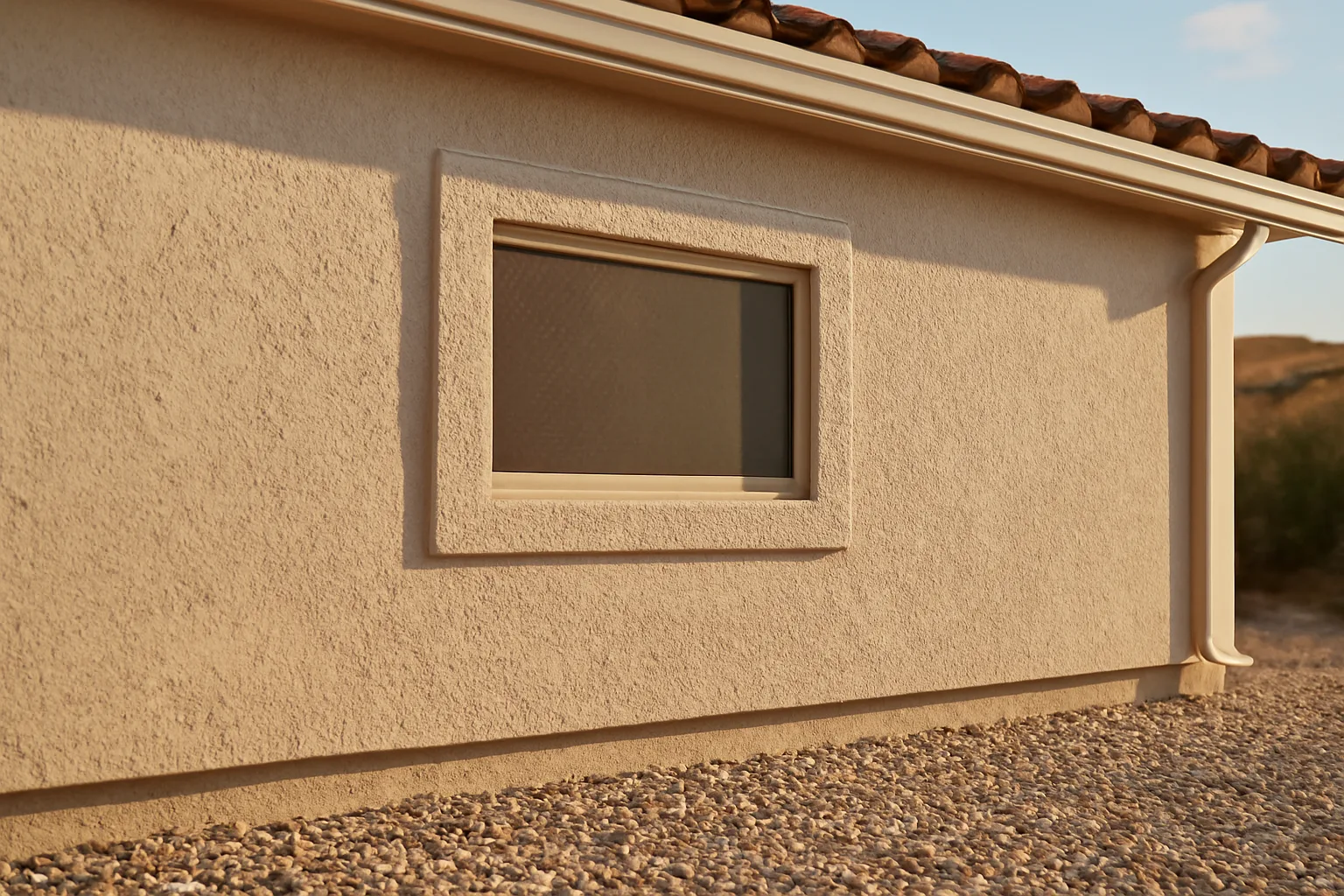
Home hardening is the practice of upgrading the materials and small gaps on a structure so it resists ignition from embers, radiant heat, and direct flame contact during a wildfire. It is not landscaping. Defensible space (the vegetation clearance around a house) and home hardening are two different jobs that work together, and insurers now ask about both separately. CAL FIRE puts it plainly: "Embers are a primary cause of home ignitions during wildfires" [1]. That single fact should reorder your entire priority list. A wall of flame 100 feet away rarely burns a house down directly. A single ember landing in a dry gutter, a mesh-free attic vent, or a gap under a wood deck does it instead, often hours after the main fire front has passed. The core hardening zones, moving outward from the structure, are the roof, vents, gutters, siding and eaves, windows and doors, decks, and the 0-5 foot zone touching the foundation (sometimes called Zone 0). Each has its own vulnerability and its own fix, and none of them is optional if you want a defensible structure on paper for an insurance underwriter. For the vegetation side of this equation, see fire safe landscaping California next to house. For what actually happens physically when a structure catches, house fire and fire at a house walk through ignition sequences in more detail.
when does the California defensible space law go into effect
California's core defensible space law (Public Resources Code 4291, enforced through Government Code 51182 for local jurisdictions) has been in effect for years and requires 100 feet of defensible space clearance around structures in State Responsibility Areas and designated Wildland-Urban Interface areas [2]. That part is not new and not pending. What is new, and still moving through rulemaking, is the "Zone 0" ember-resistant zone rule, the 0-5 foot area immediately touching the home. The California Board of Forestry and Fire Protection has been developing this regulation since a 2020 legislative mandate (SB 63 and related statute), and it has been delayed multiple times. As of the most recent Board of Forestry updates, Zone 0 rulemaking was still in the formal regulatory process, not finalized into an enforceable statewide requirement [3]. Here's the honest state of play: don't assume a hard statewide Zone 0 deadline is locked in. Check CAL FIRE's Board of Forestry page and your specific fire district before you spend money assuming a fixed date. Local jurisdictions (some cities in Southern California, parts of the East Bay) have already adopted their own stricter noncombustible-zone ordinances ahead of the state rule, so your actual deadline depends entirely on [fill in: your city/county fire department or fire protection district]. That inconsistency is intentional in the framing of the law: the state sets a floor, and locals can go further. One dependable answer for planning purposes: if you're near a house, treat the 5 feet touching your foundation as noncombustible now. Gravel, pavers, concrete, bare soil. No bark mulch, no wood fencing attached to the house, no potted plants on wood decking. Do it before the rule is final, not after, because retrofitting under deadline pressure costs more and insurers reward proactive documentation regardless of what's legally mandated yet.
what fire-safe home rules take effect in 2026
There is no single nationwide "2026 fire-safe home" law. What's actually happening in 2026 is a patchwork: California's Zone 0 regulation continuing through Board of Forestry rulemaking, insurer-specific "Safer from Wildfires" discount programs expanding under California Department of Insurance oversight, and several county-level building codes tightening ember-resistant vent and roofing requirements on new construction and major remodels. The California Department of Insurance's Safer from Wildfires regulation (effective since 2022, still being implemented by insurers on a rolling basis) requires insurers to give premium credit for specific mitigation actions, including Zone 0 compliance, ember-resistant vents, and multi-attribute community-level certification like Firewise USA [4]. If your carrier hasn't reflected these credits on your renewal, that's worth raising with your agent directly, though we don't file claims or handle discussions with your insurer on your behalf, you send your own documentation. For a hard 2026 date, the most concrete one on the books is California's continued phase-in of stricter WUI building code requirements (Chapter 7A of the California Building Code) for new construction and additions in high-and-very-high fire hazard severity zones. This code has been active since 2008 and gets periodically updated; it's not a single 2026 event but an ongoing baseline for anything you build or majorly renovate. Bottom line: don't wait for a single magic date. [fill in: check your county building department and fire marshal page for the current local WUI code cycle] and treat hardening as continuous maintenance, not a one-time compliance deadline.
why won't people follow the defensible space law in California
Compliance with defensible space and hardening rules is genuinely low in many high-risk counties, and it's worth being honest about why, because shaming doesn't fix it. Cost is the biggest one. Removing brush, thinning trees, and replacing vents and gutters on an older home easily runs $3,000 to $15,000 or more depending on lot size and existing conditions; full hardening with new roofing and windows can run far higher. For a retiree on fixed income or a family already squeezed by a rising insurance bill, that's not a small ask. Second, enforcement is inconsistent. CAL FIRE and local fire departments do inspections, but staffing is thin relative to the number of parcels in the wildland-urban interface, so a lot of properties simply never get a formal inspection, and there's no perceived urgency without one. Third, there's a knowledge gap. Homeowners often don't know which specific tasks matter (ember-resistant vents, gutter guards) versus which are cosmetic. Many think clearing a few bushes near the porch counts as done, when the state standard covers 100 feet in concentric zones with different rules for each. Fourth, and this matters for older or historic homes: some hardening measures conflict with architectural style or HOA rules (wood shake roofs, wood fencing touching the house). Resolving that takes time and sometimes a variance request, which discourages people from starting at all. None of this means the law doesn't apply to you. It means if you're behind, you're not alone, and the fix is to start with the highest-impact, lowest-cost items first (see the priority table below) rather than trying to do everything at once.
how to prevent wildfires
At the household level, wildfire prevention is mostly about not being the ignition source and not letting your property become fuel for a fire that starts elsewhere. About 85% of wildfires in the U.S. are human-caused, according to National Park Service data compiled from federal wildfire records [5], so individual behavior matters more than people assume. The practical list: never leave debris burns unattended, avoid using power equipment (mowers, chainsaws, grinders) during red flag warning days, make sure trailer chains don't drag sparks on pavement, park vehicles off dry grass (catalytic converters run over 500 degrees Fahrenheit), and maintain spark arrestors on any equipment with an internal combustion engine. At the property level, prevention blends into hardening and defensible space: keeping gutters clear of dry leaves, keeping the area under decks free of stored combustibles, and maintaining the 100-foot defensible space zone so any fire that does start has less to feed on. Only you can prevent wildfires covers the human-behavior side of this in more depth, and it's a genuinely useful companion piece to hardening work, since a hardened house next to a neglected, debris-choked yard is still a house at high risk.
how to prepare for a wildfire (before, during, after)
Preparation splits into three phases, and most families only think about the first one. Before a fire is imminent: harden the structure, maintain defensible space, and build a go-bag with the essentials FEMA and Ready.gov recommend, including copies of insurance documents, medications, a battery radio, and a family communication plan [6]. This is also when you photograph and document every mitigation step you've done, because that documentation is what you'll need if your insurer ever questions a claim or a renewal decision later. This is genuinely the single most overlooked step: insurers and adjusters respond to dated photos and receipts, not memory. During an active wildfire threat: know your evacuation zone and route before you're told to leave, not after. Ready.gov recommends monitoring official emergency alerts and leaving early rather than waiting for a mandatory order, since roads clog fast and visibility drops to near zero in heavy smoke [6]. After: even if your home survives, document everything, exterior and interior, dated, before any cleanup begins. If you're rebuilding or repairing, that's the moment to actually implement Zone 0 and vent upgrades, since you're already disturbing the site. A structured way to organize all of this, the documentation, the go-bag checklist, the mitigation photos, is exactly the gap our $99 Wildfire Insurance Survival Kit is built for. It's a one-time purchase, not a subscription, and it's meant to give you an organized packet you send yourself. We don't file claims or handle communication with your insurer for you; you stay in control of your own documentation.
how to prevent forest fires and how to avoid forest fires
These questions usually come from people thinking about camping, recreation, or land they own beyond their home lot, so the guidance is a bit different from home hardening, but it overlaps at the edges. CAL FIRE's core forest fire prevention guidance for landowners and recreational users: fully extinguish campfires with water, more than dirt, until they're cool to the touch; check local burn permit status before any outdoor burning, since permits are suspended entirely during high fire danger periods; and keep vehicles off dry grass [1]. The U.S. Forest Service adds that debris burning and equipment use (chainsaws, grinders, target shooting) account for a large share of preventable ignitions on forested land, alongside campfires and discarded cigarettes. For landowners with acreage adjacent to forest, thinning and fuel breaks matter at a larger scale than defensible space around a house. Washington State's Department of Natural Resources runs cost-share and contractor programs for exactly this kind of larger-parcel clearing work; see wildfire defensible space clearing contracts Washington State DNR if you're managing forested acreage rather than a standard residential lot. The honest answer to "how do we prevent forest fires" at a societal level involves forest management policy, fuel load reduction, and climate factors well beyond any single homeowner's control. What you can control is your own ignition sources and your own property's fuel load, which is where hardening and defensible space actually matter.
how to prepare for forest fires (property owners near wildland)
If your property borders forested or wildland acreage rather than a suburban lot, preparation looks similar to standard home hardening but scaled up, with more emphasis on fuel breaks and access. First, confirm your Fire Hazard Severity Zone designation through CAL FIRE's mapping tool, since this determines which defensible space and building code rules apply to you specifically [2]. Rural parcels are frequently in "Very High" zones even when the surrounding community isn't. Second, make sure fire apparatus can actually reach your house. Driveway width, turnaround space, and address visibility (a reflective, road-visible house number) are small items that repeatedly show up in post-fire assessments of homes that survived versus didn't, according to CAL FIRE's structure survival studies of past major fires. Third, if you have a well or water storage, confirm it's accessible and that firefighters would know it's there; some rural fire districts maintain dry hydrant or water source maps specifically for this. Fourth, treat your defensible space zones (0-5, 5-30, 30-100 feet) as maintenance, not a one-time project. Grass regrows, pine needle drop refills gutters, and a single dry season can undo a spring clearing job by fall. [fill in: check your local fire district's seasonal clearance deadline, since many require completion by a specific date each year, commonly May or June].
is Santa Barbara safe from fire
No location in California's wildland-urban interface is "safe" from fire risk in an absolute sense, and Santa Barbara County has a documented history that makes this concrete rather than theoretical. The 2017 Thomas Fire burned over 280,000 acres across Ventura and Santa Barbara counties and was, at the time, the largest wildfire in modern California history by acreage [7]. The following winter, the Montecito debris flow, triggered by rain falling on the Thomas Fire's burn scar, killed 23 people, a stark reminder that wildfire risk doesn't end when the flames go out; burned hillsides create landslide and mudflow risk for years afterward. Santa Barbara County is mapped with extensive Very High Fire Hazard Severity Zone areas in the foothill and wildland-urban interface communities (Montecito, Mission Canyon, the San Marcos foothills), per CAL FIRE's official hazard severity maps [2]. Coastal-adjacent parts of the city proper carry lower direct wildfire exposure but are not exempt from smoke impact, insurance market effects, or evacuation disruption during regional fires. The practical takeaway for anyone asking this about Santa Barbara, or really any similar coastal-adjacent California community: check your specific parcel's Fire Hazard Severity Zone designation rather than relying on the city's general reputation. A property two miles inland in the foothills faces materially different risk than one near the beach, even within the same zip code.
the priority list: what to harden first if you're on a budget
| 1 | Ember-resistant vent screens (1/8 inch metal mesh, no fiberglass) | $150-$600 per vent set | Vents are a top ember entry point into attics and crawlspaces | |
|---|---|---|---|---|
| 2 | Clear gutters + install metal gutter guards | $200-$1,500 | Dry leaf-filled gutters are a common first ignition point | |
| 3 | Zone 0 (0-5 ft noncombustible ring) | $500-$5,000 | Closest fuel to the structure; highest ignition impact per dollar | |
| 4 | Class A fire-rated roofing (if replacing anyway) | $8,000-$25,000+ | Roofs are large, exposed surface area for ember landing | |
| 5 | Dual-pane or tempered windows | $300-$1,000 per window | Radiant heat can shatter single-pane glass, letting embers in | |
| 6 | Enclosed eaves and soffits | $1,000-$6,000 | Open eaves trap rising hot air and embers | |
| 7 | Deck: noncombustible or ignition-resistant material | $3,000-$15,000+ | Decks touching the house are common flame bridges | If you can only do three things this year: vents, gutters, Zone 0. They're the cheapest per dollar of risk reduction and they're exactly what a savvy insurance underwriter or fire inspector looks for first. |
Not every hardening task carries equal weight, and if money or time is tight, order matters. This is roughly how CAL FIRE's own structure hardening guidance ranks impact relative to cost [1], combined with typical retrofit pricing ranges homeowners report. | Priority | Item | Typical cost | Why it matters |
how do you document hardening work for your insurer
This is the step almost everyone skips, and it's the one that actually determines whether your mitigation work does anything for your insurance situation. Take dated, timestamped photos before and after each task: the old vent versus the new mesh screen, the cleared 5-foot zone, the new gutter guards installed. Keep every receipt, contractor invoice, and material spec sheet (the mesh size on your vents, the Class rating on your roofing). Insurers and their underwriters generally accept photo-and-receipt documentation packets more readily than verbal claims of work done. Organize it by the same zones your fire district or CAL FIRE inspector would check: Zone 0, Zone 1 (5-30 ft), Zone 2 (30-100 ft), and structure-specific items (vents, roof, gutters, windows). If your local fire department offers a voluntary defensible space inspection, request one and keep the inspection report; a passed inspection is one of the strongest pieces of documentation you can hand an insurer. This is precisely the packet our $99 one-time Wildfire Insurance Survival Kit is built to help you assemble at /survival-kit-builder. It's a self-serve documentation tool, not a claims service; we don't file anything on your behalf or promise reinstatement or discounts. You do the sending, we help you get organized before you need to.
where mitigation rules actually differ by your specific fire district
Everything in this article describes the general framework, but the exact clearance distances, allowed materials, and inspection cadence vary by local fire protection district, county, and even by Fire Hazard Severity Zone tier within the same county. There is no way to give you one universal number that's accurate everywhere. Before you spend money, confirm three things with your specific district: [fill in: your local fire department or fire protection district's current defensible space ordinance], [fill in: whether your county has adopted a Zone 0 or noncombustible-zone rule ahead of the state timeline], and [fill in: your jurisdiction's seasonal clearance deadline, if one exists]. CAL FIRE's Fire Hazard Severity Zone viewer and Ready for Wildfire program are the right starting points for California parcels [2], and your county's building or fire department will have the enforceable local layer on top of that state floor. For the vegetation-specific rules that pair with hardening, defensible covers the concentric-zone clearance system in more depth.
Frequently asked questions
When does the California defensible space law go into effect?
California's core 100-foot defensible space law (Public Resources Code 4291) has been in effect for years already. The newer Zone 0 (0-5 foot ember-resistant zone) rule was still in Board of Forestry rulemaking as of mid-2026 and hadn't been finalized statewide, so check CAL FIRE's site and your local jurisdiction before assuming a fixed enforcement date applies to you.
Why won't people follow the defensible space law in California?
Cost, inconsistent enforcement, and low awareness of which specific tasks count. Full compliance can run thousands of dollars, staffing shortages mean many parcels never get inspected, and homeowners often mistake minor cosmetic clearing for meeting the actual 100-foot, multi-zone state standard, so noncompliance persists even where the law is clear.
How do you prevent wildfires as a homeowner?
Avoid outdoor equipment use and debris burning on red flag warning days, keep spark arrestors maintained, park off dry grass, and maintain your defensible space zones and hardened vents/gutters year-round. Roughly 85% of U.S. wildfires are human-caused according to National Park Service data, so behavior and property maintenance both matter.
How do you prepare for a wildfire?
Harden your home's vents, roof, and Zone 0 area, maintain defensible space clearance, build a go-bag with insurance documents and medications per Ready.gov guidance, know your evacuation zone and route in advance, and photograph your property and mitigation work before fire season so you have dated proof of conditions.
How do you prevent forest fires?
Fully extinguish campfires with water until cool to the touch, check local burn permit status before any outdoor burning, avoid power equipment use during high fire danger, and keep vehicles off dry grass, since catalytic converters can exceed 500°F. Most forest fires are started by preventable human activity, not lightning.
How do you avoid forest fires while camping or on rural land?
Use designated fire rings only, never leave a fire unattended, drown and stir campfire ash until cold, and confirm current burn restrictions with the local ranger district or CAL FIRE unit before lighting anything, since permits are suspended entirely during high fire danger periods regardless of season.
How do you prepare for forest fires if your property borders wildland?
Confirm your CAL FIRE Fire Hazard Severity Zone designation, ensure fire apparatus can reach your driveway with adequate width and turnaround space, post a reflective address number, maintain accessible water sources if you have them, and treat all three defensible space zones as ongoing seasonal maintenance, not a one-time project.
What fire-safe home rules take effect in 2026?
There's no single nationwide 2026 rule. California continues phasing in Chapter 7A WUI building code requirements and Board of Forestry Zone 0 rulemaking, while insurer mitigation-credit programs under the state's Safer from Wildfires regulation keep expanding. Check your county building department and fire marshal for the specific local code cycle that applies to you.
Is Santa Barbara safe from fire?
No, not in an absolute sense. Santa Barbara County includes extensive Very High Fire Hazard Severity Zone areas in foothill communities, and the 2017 Thomas Fire burned over 280,000 acres there, followed by a deadly debris flow in Montecito. Risk varies hugely by specific parcel location, so check your address's CAL FIRE hazard zone directly.
How can we prevent forest fires at a community or policy level?
Beyond individual behavior, prevention involves forest fuel-load management, prescribed burns, utility infrastructure hardening, and building code enforcement in wildland-urban interface zones. Individual homeowners can't control forest management policy, but they can control their own ignition sources and defensible space, which is the realistic scope of personal impact.
What is Zone 0 and is it required yet?
Zone 0 is the 0-5 foot area immediately touching a structure, required to be nearly noncombustible (gravel, pavers, bare soil, no mulch or wood fencing touching the house). California's statewide Zone 0 regulation was still moving through Board of Forestry rulemaking as of 2026, not yet finalized, though some local jurisdictions have adopted similar rules already.
What's the cheapest, highest-impact home hardening task?
Ember-resistant vent screens (1/8 inch metal mesh replacing fiberglass or open vents), typically $150 to $600 per vent set, plus clearing and guarding gutters. Vents and gutters are consistently cited by CAL FIRE as major ember entry points, and both are far cheaper than roof or window replacement.
Does home hardening actually lower insurance premiums?
It can factor into eligibility and credits under California's Safer from Wildfires regulation, which requires insurers to give mitigation credit for specific verified actions. Results vary by carrier and aren't guaranteed. Document every step with dated photos and receipts and send that documentation to your agent yourself; we don't file claims or handle insurer communication on your behalf.
Sources
- CAL FIRE, "Home Hardening" (Wildfire Preparedness): Embers are a primary cause of home ignitions during wildfires, and structure hardening priorities
- CAL FIRE, Fire Hazard Severity Zones Viewer: 100-foot defensible space requirement and Fire Hazard Severity Zone mapping
- California Board of Forestry and Fire Protection, Zone 0 rulemaking docket: Status of Zone 0 ember-resistant zone rulemaking
- California Department of Insurance, Safer from Wildfires regulation (10 CCR 2644.9): Insurer mitigation premium credit regulation requirements
- National Park Service, "Wildfire Causes and Evaluations": Approximately 85% of wildfires in the U.S. are human-caused
- CAL FIRE, Thomas Fire incident record: 2017 Thomas Fire burned over 280,000 acres across Ventura and Santa Barbara counties
- California Public Resources Code Section 4291: Statutory basis for the 100-foot defensible space clearance requirement around structures in State Responsibility Areas