Last updated 2026-07-25
TL;DR
KB Home builds new houses to California's Chapter 7A wildland-urban interface code (ignition-resistant materials, vents, roofing) in required fire hazard zones. That's construction only. It does not replace defensible space clearing, ongoing yard maintenance, or the documentation insurers want before renewal. Both pieces matter for coverage.
Is KB Home actually fire resistant, or is that a marketing claim?
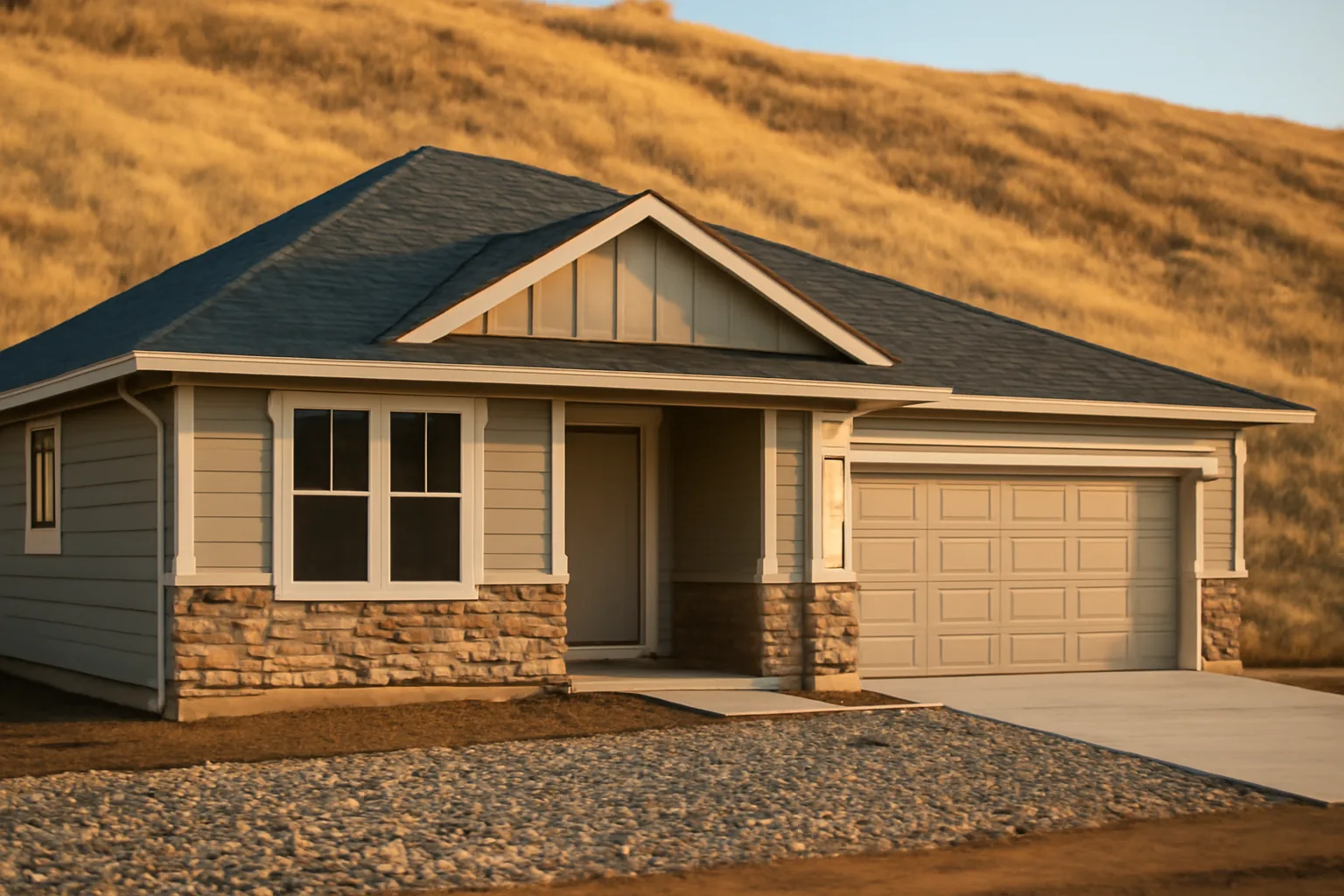
KB Home builds many of its California communities to Chapter 7A of the California Building Code, the state's wildland-urban interface (WUI) fire standard. That's not a KB Home invention. It's a state requirement for new construction in designated Fire Hazard Severity Zones, and any builder working in those zones has to meet it. So when KB Home markets a house as fire resistant, it usually means the structure has ignition-resistant roofing, tempered or multi-pane windows, enclosed eaves, ember-resistant vents, and non-combustible siding or cladding in the areas the code requires. [1] That's a real and meaningful set of features. Homes built to ember-resistant standards survive wildfires at dramatically higher rates than older homes nearby. A widely cited CAL FIRE and insurance-industry analysis of the 2018 Camp Fire found that homes built after 2008, when California's WUI code took effect statewide, survived at roughly double the rate of older homes in the same fire path. But "fire resistant" doesn't mean fireproof, and it doesn't mean the yard is safe. A Chapter 7A home surrounded by dry brush, a wood fence touching the siding, and stored firewood under the deck is still a structure that can ignite from radiant heat or direct flame contact, no matter how good the vents are. Construction and defensible space are two separate jobs. KB Home (or any production builder) handles one of them. You still own the other, for the life of the house. For a plain-language rundown of what actually makes a house harder to burn, structurally, see house fire and fire at a house.
What does California's Chapter 7A code actually require?
Chapter 7A applies to new construction and some remodels in Fire Hazard Severity Zones (Very High in state responsibility areas, and High or Very High in some local jurisdictions that have adopted the standard). The code covers the building envelope: roof assembly, vents, eaves, exterior walls, windows, doors, and decks. [2] Key requirements include Class A fire-rated roof coverings, ember- and flame-resistant vents (often with 1/8-inch mesh or intumescent baffles), dual-pane or tempered glass windows, and non-combustible or ignition-resistant siding within specified distances of grade and adjacent structures. Decks attached to the home must use ignition-resistant materials or be enclosed. None of this is optional in a covered zone. It's enforced through the local building permit and inspection process, not something a builder can skip to save cost. [2] What Chapter 7A does not regulate is the land around the house once it's sold. Vegetation clearance, defensible space zones, and ongoing maintenance fall under a separate law, Public Resources Code 4291, which is the homeowner's responsibility, not the builder's. [3]
When does the California defensible space law go into effect?
California's defensible space requirement under Public Resources Code 4291 is already in effect and has been law since it was substantially updated in 2020 to require 100 feet of defensible space (or to the property line, whichever is closer) around structures in State Responsibility Areas and designated Very High Fire Hazard Severity Zones. [3] The confusion homeowners run into is usually about the *ember-resistant zone* rule, sometimes called "Zone 0," which is a newer, more specific requirement for the 5 feet immediately around a structure. That rule was authorized by Assembly Bill 3074 (2020) and directs the State Board of Forestry and Fire Protection to adopt regulations for ember-resistant zones. [4] As of this writing, CAL FIRE and the Board of Forestry have been working through the formal rulemaking process, and the Board has indicated a target implementation window in the 2025 to 2026 range, though the exact effective date depends on when the regulation clears the state's formal rulemaking steps (public comment, Office of Administrative Law review). Check CAL FIRE's defensible space page for the current status before assuming a specific date applies to your property. So: the 100-foot defensible space law is in effect now. The stricter 5-foot ember zone rule is the one still finalizing its effective date, and that's the one people mean when they ask "what fire-safe rule takes effect in 2026."
What fire-safe rules for homes take effect in 2026?
The rule most likely to take effect in the 2025 to 2026 window is the Zone 0 ember-resistant zone standard for the 5 feet closest to a home, authorized under AB 3074. Once finalized, it's expected to restrict combustible mulch, wood fencing attached to the structure, and dense vegetation directly against exterior walls, based on the draft framework CAL FIRE has circulated. [4] Separately, some insurers and the California Department of Insurance have been moving on their own track. The Safer from Wildfires regulation, adopted in 2022, requires insurers to give discounts or premium credit for specific home-hardening and defensible space actions, and updates to that framework have continued to roll out. [5] That's a discount/incentive rule for insurers, not a construction mandate for homeowners, but it's part of the same wave of 2025 to 2026 changes homeowners are hearing about. Because the exact regulatory language and enforcement date for Zone 0 can shift during rulemaking, treat any specific "2026" date you see online as provisional until CAL FIRE's own defensible space page confirms it.
Why won't people follow the defensible space law in California?
Compliance with PRC 4291 is uneven, and it's not usually about ignorance of the rule. Cost, labor availability, and enforcement gaps all factor in, and CAL FIRE's own inspection data backs that up: statewide defensible space inspections have repeatedly found large shares of properties out of compliance, particularly on the first pass before a reinspection. A few real reasons show up over and over. Clearing 100 feet of brush on a sloped, half-acre lot is physical labor that costs real money if you hire it out, often several hundred to a few thousand dollars depending on lot size and vegetation density, and many homeowners simply put it off. Elderly or disabled homeowners on fixed incomes may not be physically able to do the clearing themselves and can't afford a contractor. Some homeowners genuinely don't know their parcel is inside a Fire Hazard Severity Zone until they get a letter. And enforcement varies a lot by county: some fire districts do annual inspections with real penalties for noncompliance, others are stretched thin and rely on complaint-driven follow-up. None of that changes the legal obligation. PRC 4291 states that a person who owns, leases, controls, operates, or maintains a building in a State Responsibility Area "shall maintain... a firebreak" cleared of flammable vegetation for the required distance. [3] Violating it can mean citations from the local fire authority and, separately, can affect your insurer's willingness to renew, since carriers increasingly ask for defensible space documentation before writing or renewing a wildfire-zone policy. For the specific plant selection and placement rules that make this work practically (more than as a code checkbox), see fire safe landscaping california next to house and the general concept explainer at defensible.
How do you actually prevent wildfires from starting in the first place?
Most wildfires in the US, roughly 85 to 90 percent by federal estimates, are human-caused, not lightning-caused, which means most of them are preventable at the individual level. [6] The Ready.gov wildfire prevention guidance and the U.S. Forest Service's Smokey Bear program both center on a short list of practical habits, and they're worth taking literally rather than as a slogan. Don't burn debris, leaves, or trash on windy days or during a burn ban, and always have water and a shovel on hand if you do burn under permit. Make sure trailer chains don't drag on pavement (a common spark source on rural roads). Douse campfires completely, stir the ashes, and touch the cold remains before you leave, since "looks out" is not the same as "is out." Keep vehicles off dry grass, since a hot catalytic converter can ignite grass in minutes. Maintain equipment, chainsaws, mowers, generators, so they don't throw sparks near dry vegetation, and avoid mowing dry grass in the heat of the day. At the community level, "how can we prevent forest fires" also means supporting prescribed burn programs and fuel reduction projects on public land near your community, since decades of fire suppression have left many forests with unnaturally heavy fuel loads that burn hotter and faster than historical fire regimes. The U.S. Forest Service's own wildfire crisis strategy explicitly names fuel buildup as a driver of increased fire severity.
How do you prepare for a wildfire before one starts?
Wildfire preparation has three separate layers, and skipping any one of them is where people get hurt or lose their homes: defensible space around the structure, home hardening of the structure itself, and a household evacuation plan with the documents and supplies ready to go. Ready.gov's wildfire guidance recommends creating and maintaining defensible space, using fire-resistant building materials where possible, and assembling a go-bag with medications, copies of insurance documents, a battery radio, and a change of clothes for each household member. [7] CAL FIRE breaks defensible space into zones: Zone 0 (0-5 feet, the ember-resistant zone), Zone 1 (5-30 feet, lean and clean), and Zone 2 (30-100 feet, reduced fuel). On the paperwork side, this is where a lot of homeowners get caught flat-footed after a fire or a non-renewal letter: they don't have dated photos of their defensible space work, receipts for hardening upgrades, or a home inventory, and reconstructing all of that under stress (or after a total loss) is brutal. A $99 one-time kit like the Wildfire Insurance Survival Kit exists for exactly that gap: it gives you a structured way to document your home's condition, hardening upgrades, and defensible space work before you need it, so you're not scrambling to prove compliance to an insurer or rebuilding a claim from memory. It doesn't file anything for you and it isn't a substitute for your own insurance paperwork, it's just a way to have your own records organized ahead of time.
How do you prevent forest fires and avoid them spreading near your community?
Preventing forest fires and avoiding their spread are really two different problems: stopping ignition, and slowing spread once something is burning. Both matter for a homeowner near wildland. On ignition prevention, the causes worth targeting are the ones humans control directly: unattended campfires, debris burning, equipment sparks, and, increasingly, power line failures during high wind events (which is why utilities in California, Oregon, and Colorado now run Public Safety Power Shutoffs during red flag conditions). Check local burn permit status before any outdoor burning; most rural counties post daily burn status online through the local fire district or air quality agency. On spread avoidance, the community-level tools are fuel breaks, prescribed burns, and defensible space compliance across a neighborhood, more than your own lot. A single unmaintained lot on a street of otherwise-hardened homes can act as a fuel ladder that carries fire into a neighborhood that would have otherwise been defensible. This is part of why some fire districts have moved toward neighborhood-wide inspection sweeps rather than complaint-only enforcement, and why insurers are increasingly looking at community-level wildfire risk scores, more than individual parcels, when deciding whether to renew a whole zip code.
Is Santa Barbara safe from fire risk?
No coastal California community is "safe" from wildfire in an absolute sense, and Santa Barbara County has a documented history that makes this concrete: the Thomas Fire (2017) burned over 281,000 acres and was, at the time, the largest wildfire in modern California history, followed within weeks by the Montecito debris flow that killed 23 people. [8] The area has also seen the Jesusita Fire (2009) and Tea Fire (2008) burn into residential neighborhoods in the Santa Barbara foothills. What makes Santa Barbara higher risk isn't bad luck, it's geography: steep, chaparral-covered hillsides directly adjacent to dense residential development, combined with seasonal Sana Ana/sundowner wind events that can push fire downslope at extreme speed. CAL FIRE's Fire Hazard Severity Zone maps classify large portions of the Santa Barbara foothills and South Coast as Very High, the top tier. That doesn't mean don't live there, it means the defensible space and home-hardening obligations under PRC 4291 and Chapter 7A apply with real teeth to properties in those zones, and insurers price and underwrite accordingly. If you're in a Very High zone anywhere in the state, more than Santa Barbara, assume your insurer will ask for documentation of both defensible space and hardening before renewal.
How does KB Home construction compare to older homes on fire survivability?
| Feature | Pre-2008 typical home | KB Home / Chapter 7A new build | |
|---|---|---|---|
| Roof | Often untreated wood shake or older composite | Class A fire-rated assembly required [2] | |
| Vents | Open mesh, ember-prone | Ember- and flame-resistant vents [2] | |
| Windows | Single-pane common | Dual-pane or tempered glass [2] | |
| Eaves | Often open/unenclosed | Enclosed, ignition-resistant [2] | |
| Siding | Wood common in older stock | Non-combustible or ignition-resistant near grade [2] | |
| Defensible space | Owner responsibility, same as new builds | Owner responsibility, same as older homes [3] | The construction gap is real and the Camp Fire data backs it up: homes built after the 2008 WUI code survived at roughly double the rate of pre-2008 homes in the same fire path, according to analysis cited by CAL FIRE and building-industry researchers. But the last row of that table is the one people miss. A new KB Home in a Very High zone with a neglected yard is not automatically safer in practice than an older, well-hardened home with excellent defensible space, because ember ignition through vegetation and debris accounts for a huge share of home losses regardless of the structure's age. |
What should you actually do if you got a non-renewal or inspection letter?
Start with the letter itself: most non-renewal or inspection notices name a specific concern (vegetation clearance, roof condition, deck material, distance to wildland fuel) and give a deadline, often 30 to 75 days depending on the insurer and state. Read it for the specific defect cited, more than the general topic, because insurers vary in what they flag. Next, walk your own property using CAL FIRE's zone framework even if you're not in California, since Oregon and Colorado's state forestry agencies use comparable zone concepts: clear Zone 0 (0-5 feet) completely of combustible mulch, debris, and anything touching the structure; thin Zone 1 (5-30 feet) to "lean, clean, and green"; reduce fuel load in Zone 2 (30-100 feet). Document each zone with dated photos before and after the work. Then build a paper trail: receipts for any hardening work (vents, roofing, gutter guards), dated photos of defensible space compliance, and a basic home inventory. This is the exact gap the Wildfire Insurance Survival Kit is built to close, a one-time $99 tool to organize that documentation into something you can hand an insurer or adjuster without digging through years of receipts. To be clear: neither the kit nor this article files claims, negotiates with your insurer, or promises reinstatement. You send your own documentation to your own carrier; this just helps you get it organized. For state-specific vegetation clearing contractor rules outside California, see wildfire defensible space clearing contracts washington state dnr, and for a broader hardening checklist see only you can prevent wildfires.
Frequently asked questions
When does the California defensible space law go into effect?
The core 100-foot defensible space requirement under Public Resources Code 4291 is already in effect and has been since a 2020 update. The stricter 5-foot ember-resistant "Zone 0" rule, authorized by AB 3074, is still finalizing through CAL FIRE and the Board of Forestry's rulemaking process, with an expected 2025-2026 implementation window. Check fire.ca.gov for the confirmed date.
Why won't people follow the defensible space law in California?
Mostly cost, labor, and awareness gaps, not defiance. Clearing 100 feet of brush on a sloped lot can cost hundreds to thousands of dollars, elderly or disabled homeowners often can't do the physical work themselves, and enforcement varies a lot by county, so some properties go years without an inspection. The legal obligation exists regardless.
How can I prevent wildfires from starting near my home?
Never burn debris on windy or red-flag days, fully douse and stir campfires until cold, keep vehicles off dry grass, maintain mowers and chainsaws so they don't spark, and check local burn permit status before any outdoor fire. Roughly 85-90% of US wildfires are human-caused, so individual habits matter statistically.
How do I prepare for a wildfire if I live in a high-risk zone?
Build three layers: defensible space clearing (CAL FIRE's Zone 0/1/2 model), home hardening (Class A roof, ember-resistant vents, dual-pane windows), and a household go-bag with medications, insurance documents, and a battery radio per Ready.gov guidance. Document all of it with dated photos before you need to prove it to an insurer.
What fire-safe rules for homes take effect in 2026?
The main one pending is California's Zone 0 ember-resistant zone standard for the 5 feet around a structure, authorized by AB 3074, expected to finalize in the 2025-2026 window through CAL FIRE rulemaking. Insurance-side changes under the Safer from Wildfires regulation are also rolling out on a separate but related timeline.
Is Santa Barbara safe from wildfire?
No area with steep chaparral hillsides next to dense housing is fully safe. Santa Barbara County has had the Thomas Fire (2017, 281,000+ acres), Jesusita Fire (2009), and Tea Fire (2008) burn into residential areas. Large parts of the foothills and South Coast are mapped Very High Fire Hazard Severity Zone by CAL FIRE.
Does KB Home use fireproof materials?
No home is fireproof. KB Home builds to California's Chapter 7A code in required zones, which mandates ignition-resistant materials: Class A roofing, ember-resistant vents, dual-pane windows, and non-combustible siding near grade. These reduce ignition risk significantly but don't eliminate it, especially if defensible space around the home is neglected.
Is Chapter 7A construction the same as defensible space?
No, they're separate legal requirements. Chapter 7A governs how a structure is built (roofing, vents, windows, siding) and applies to new construction in fire hazard zones. Defensible space, under Public Resources Code 4291, governs vegetation clearance around an existing structure and is an ongoing homeowner obligation regardless of when the house was built.
How can we prevent forest fires at the community level?
Support prescribed burn and fuel reduction programs on nearby public land, since decades of fire suppression left many forests with heavy fuel loads that burn hotter than historical norms. At the neighborhood level, push for consistent defensible space compliance across all lots, since one unmaintained property can act as a fuel ladder into an otherwise hardened block.
What's the difference between forest fire prevention and wildfire prevention?
They're largely the same practices applied at different scales. "Forest fire prevention" often emphasizes recreational and public-land behaviors (campfires, debris burning, equipment sparks in wildland), while "wildfire prevention" for homeowners centers on property-level defensible space and home hardening. Both rely on the same root cause data: most ignitions are human-caused and preventable.
Will a KB Home in a Very High Fire Hazard Zone still need defensible space work?
Yes. Chapter 7A construction standards apply to the structure only. Public Resources Code 4291 requires the homeowner to maintain defensible space around any home in a State Responsibility Area or Very High Fire Hazard Severity Zone, regardless of the builder or construction year. Skipping this can affect both fire risk and insurance renewal.
What documents should I have ready if my insurer sends a wildfire inspection letter?
Dated photos of your defensible space zones (0-5, 5-30, 30-100 feet), receipts or records for any home hardening upgrades (roofing, vents, siding), and a basic home inventory. Insurers increasingly want this documented before renewal, and having it organized ahead of an inspection letter saves significant scramble time.
Sources
- California Building Standards Commission, 2022 California Building Code Chapter 7A summary: Chapter 7A sets ignition-resistant construction requirements for new buildings in wildland-urban interface fire areas
- California Office of the State Fire Marshal, Wildland-Urban Interface Building Standards: Specific Chapter 7A construction requirements for roofs, vents, windows, eaves, and siding
- California Public Resources Code Section 4291: Defensible space maintenance requirement of 100 feet around structures in State Responsibility Areas
- California Assembly Bill 3074 (2020): Authorizes the Board of Forestry to adopt ember-resistant zone (Zone 0) regulations for the 5 feet around structures
- California Department of Insurance, Safer from Wildfires regulation: Insurers must provide premium discounts for specific home hardening and defensible space actions
- USDA Forest Service, Wildfire Crisis Strategy: Decades of fire suppression have led to heavy fuel accumulation that increases wildfire severity
- CAL FIRE, Thomas Fire incident archive: The Thomas Fire burned more than 281,000 acres in Santa Barbara and Ventura counties in 2017
- CAL FIRE, Fire Hazard Severity Zone Viewer: Portions of Santa Barbara County are mapped as Very High Fire Hazard Severity Zone