Last updated 2026-07-25
TL;DR
California funds wildfire mitigation help mainly through the California Wildfire Mitigation Financial Assistance Program (individual grants historically $0 to $8,600) and the CAL FIRE Fire Prevention Grants program for community projects. Zone 0 (ember-resistant zone within 5 feet of structures) was set by SB 63/AB 3074 to take effect for existing homes, though CAL FIRE has delayed final regulation adoption past its original 2023 target into 2025-2026.
What is the California Wildfire Mitigation Financial Assistance Program?
The California Wildfire Mitigation Financial Assistance Program (CWMFAP) is a state-funded reimbursement and direct-assistance program that has helped homeowners pay for home hardening work like ember-resistant vents, non-combustible skirting, and defensible space debris removal. It grew out of Assembly Bill 38 (2019), which directed the state to create low-income home hardening assistance for households in high fire-risk areas. The program has run in phases, funded through the state budget and administered by the state's Office of Planning and Research alongside CAL FIRE. Grant amounts in past cycles have topped out around $8,600 per household for full retrofits, though many awards were smaller depending on scope of work and available funding that cycle [1]. Funding has not been continuous or guaranteed year to year, so availability depends entirely on the current state budget cycle. If you got a non-renewal letter, do not wait on a grant application to start your own hardening work. Grant cycles open and close, sometimes with only a few weeks' notice, and the waitlist can outlast your insurer's patience. Start with what you can document and pay for yourself now, and treat any grant money as a bonus, not a plan. Separately, CAL FIRE's Fire Prevention Grants Program funds larger community-level and jurisdiction-level projects (fuel breaks, chipping programs, vegetation management), not individual homeowner retrofits. If your HOA or fire safe council wants to apply for shared roadside clearance work, that's the program to look at, not CWMFAP.
How do I apply for wildfire mitigation grants in California?
Applications for individual homeowner assistance route through CAL FIRE's Office of the State Fire Marshal and regional partners, usually requiring proof of income eligibility, a property in a designated high or very-high fire hazard severity zone, and a scope of work tied to CAL FIRE's home hardening guidance. Check fire.ca.gov directly before assuming a program is open, because funding windows close. Most cycles have prioritized: low-income households, seniors, people with disabilities, and homes in Fire Hazard Severity Zones mapped by CAL FIRE [2]. You'll typically need a copy of your Fire Hazard Severity Zone designation (available through CAL FIRE's FHSZ viewer), a recent tax return or income documentation, and photos or a contractor estimate for the retrofit work. For community-scale grants (fuel breaks, chipper days, defensible space cost-share for a whole neighborhood), your local Fire Safe Council or Resource Conservation District usually runs the application, not the individual homeowner. If you don't know your local Fire Safe Council, your county's CAL FIRE unit office can point you to it. [Your fire district's specific homeowner assistance contact and current cycle status: fill in here]
When does the California defensible space law go into effect?
California's core defensible space law, Public Resources Code 4291, has been in effect for years and currently requires 100 feet of defensible space clearance around structures in State Responsibility Areas and some Local Responsibility Areas designated as very-high fire hazard zones. That part isn't new. What's newer is Zone 0, the ember-resistant zone within 0 to 5 feet of a structure. Assembly Bill 3074 (2020) directed the Board of Forestry and Fire Protection to develop regulations for this zone, and Senate Bill 63 (2025) reinforced and adjusted the timeline and scope, expanding the ember-resistant zone requirement to more structure types and clarifying enforcement pathways [3] [4]. As of this writing, CAL FIRE and the Board of Forestry have not finalized the Zone 0 regulation text into enforceable code for existing homes; the original statutory target was regulations by January 1, 2023, but that date came and went without final adoption, and the state has continued rulemaking into 2025 and 2026 [3]. Practically: assume Zone 0 rules (no combustible mulch, no wood fencing directly attached to the house, gravel or hardscape instead of bark within 5 feet) will become enforceable for existing homes sometime in 2026, but confirm the exact effective date and any grace period with your local building department, because implementation timing has already slipped once. Don't wait for the final rule to start Zone 0 work. Nearly everything in the proposed Zone 0 standard (clearing combustible mulch, moving woodpiles, non-combustible gutter guards) is cheap to do now and insurers are already asking about it in inspection letters.
What fire safe rules for homes take effect in 2026?
The rule most homeowners are asking about for 2026 is Zone 0, the ember-resistant zone requirement under AB 3074 and SB 63, which would require non-combustible material within 5 feet of the structure once final regulations take effect [3] [4]. This is separate from the 100-foot defensible space requirement, which is already in force. Separately, California's Building Code has continued to phase in Chapter 7A requirements (ignition-resistant construction: ember-resistant vents, dual-paned tempered glass windows, Class A roofing) for new construction and additions in Wildland-Urban Interface Fire Areas, under the California Building Standards Code triennial update cycle [5]. The 2025 California Building Code cycle takes effect January 1, 2026 for new construction, so if you're rebuilding or adding on, check with your local building department on which version applies to your permit. Insurers have started referencing these standards in their own underwriting criteria even ahead of full state enforcement, particularly through the Safer from Wildfires framework jointly issued by the California Department of Insurance and other agencies, which recognizes specific mitigation actions (Zone 0 material choices, ember-resistant vents, Class A roofing) for potential premium consideration [6]. That framework is guidance for insurers, not a guarantee of a discount, and every insurer applies it differently. [Your fire district's local Zone 0 enforcement timeline and permit requirements: fill in here]
Why won't people follow the defensible space law in California?
Cost, labor, and enforcement gaps are the three real reasons compliance lags, not ignorance of the rule. A full 100-foot defensible space clearance on a sloped, brush-heavy lot can run into the thousands of dollars for professional clearing, and many homeowners in fire-prone rural areas are already stretched by rising insurance costs and general cost of living. CAL FIRE's own compliance messaging acknowledges the gap is partly structural: many properties are large, steep, or adjacent to unmanaged wildland where a single homeowner's clearing gets undone by neighboring vegetation or public land within a season. There's also confusion about which zone rules apply where, since Zone 1 (30 feet) and Zone 2 (30 to 100 feet) have different vegetation spacing and height requirements that are hard to interpret without a site visit. Enforcement itself is uneven. Local fire agencies conduct defensible space inspections, but staffing varies wildly county to county, and a written notice of non-compliance doesn't always lead to a follow-up citation. That inconsistency creates a real incentive problem: homeowners who see neighbors skip clearance without consequence are less likely to spend money on it themselves. Finally, some homeowners genuinely don't know the specifics of what counts as compliant. "Defensible space" sounds like clearing everything, but CAL FIRE's actual guidance calls for zone-based vegetation management, not bare dirt, which surprises people who assumed compliance meant removing every tree. If you want a walkthrough of what each zone actually requires, see defensible space zones.
How to prevent wildfires around your home
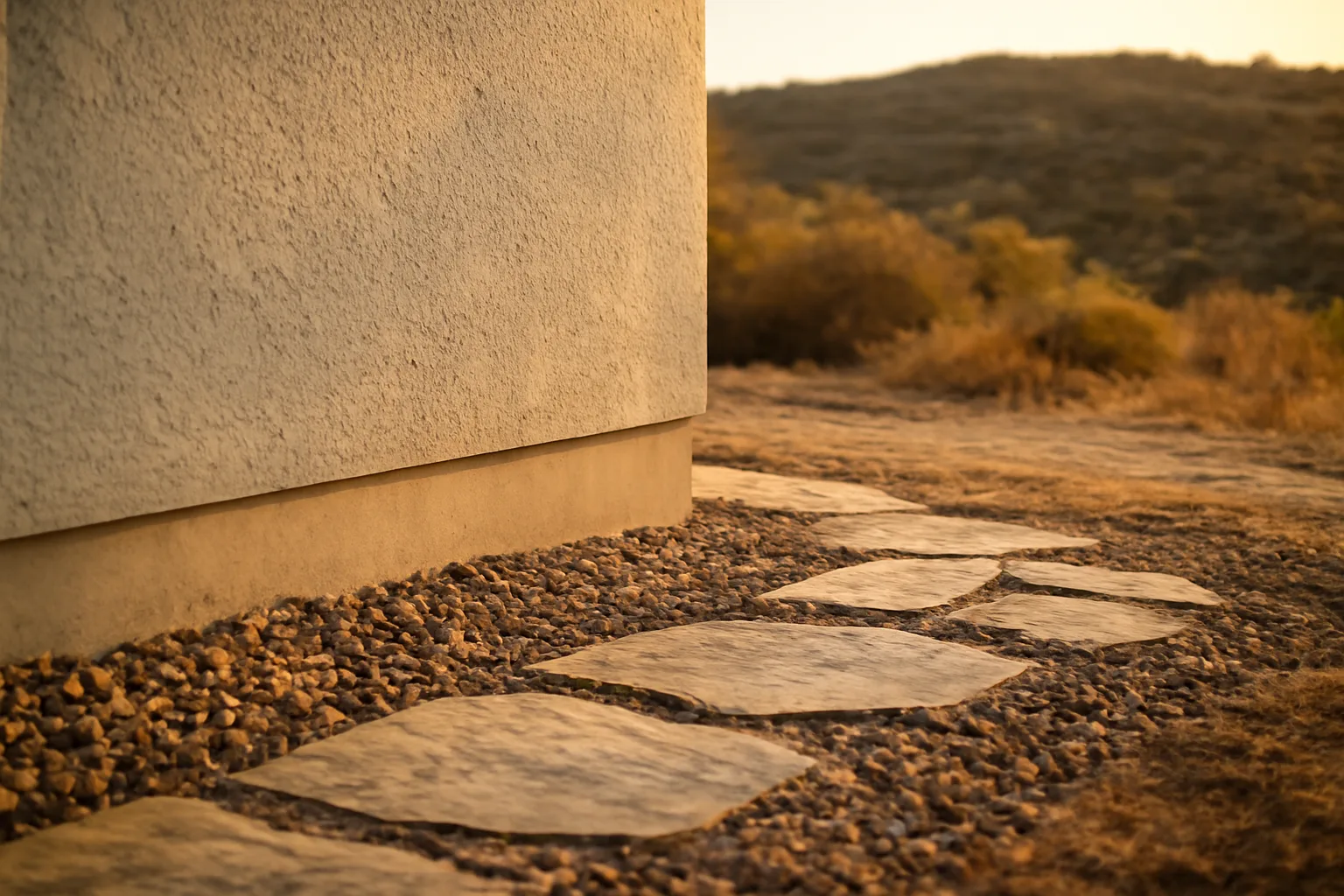
The single highest-leverage move is eliminating the ember-catching material within 5 feet of your house, because most homes that burn in wildfires ignite from wind-blown embers landing on or near the structure, not from direct flame contact with the main fire front, according to research cited by the Insurance Institute for Business & Home Safety and referenced in CAL FIRE's home hardening guidance. Practical priorities in order of cost-effectiveness: - Clear combustible mulch, dead leaves, and pine needles within 5 feet of the foundation, replacing with gravel, pavers, or bare mineral soil.
- Screen or replace vents with 1/8 inch ember-resistant mesh (regular window screen mesh is too coarse and lets embers through).
- Move firewood stacks, propane tanks, and wooden fencing at least 5 feet away from the structure, or better, 30 feet for firewood.
- Clean gutters and roof valleys of debris; a dry-leaf-filled gutter next to a wood fascia is a common ignition point.
- Trim tree branches so nothing overhangs the roof and there's at least 10 feet of vertical separation between ground vegetation and tree canopies ("ladder fuel" reduction). For landscaping specifically, plant choice matters less than plant placement and maintenance; a well-watered, well-spaced ornamental can be lower risk than a neglected "fire-resistant" plant choked with dead thatch. See fire safe landscaping next to a house for species-level guidance.
How to prepare for a wildfire (evacuation and home readiness)
Preparing for a wildfire means two separate tracks: getting your household ready to evacuate safely, and getting your structure ready to survive without you there, since most homes burn hours after residents have already left. Ready.gov's wildfire preparedness guidance recommends creating a go-bag, establishing two evacuation routes, and signing up for local emergency alerts before fire season starts, not during an active warning. For the home itself: close all windows and doors but leave them unlocked for firefighter access, remove flammable outdoor furniture cushions, shut off gas at the meter if instructed, and move any vehicles out of the garage and pointed toward your evacuation route. CAL FIRE's "Ready, Set, Go!" framework breaks this into stages so you're not making these decisions for the first time under smoke and sirens. Documentation matters just as much as physical prep. Insurers ask for proof of pre-fire condition and mitigation work during claims and renewal reviews, and that's much easier to produce if you photographed your defensible space, saved contractor receipts, and kept a running list of hardening upgrades before anything happened. This is exactly the gap the $99 Wildfire Insurance Survival Kit is built for: a structured way to document your property's mitigation work and condition so you have something concrete to hand your insurer or adjuster, not a way to negotiate your claim or guarantee coverage. You still file your own claim and talk to your own agent; the kit just organizes what you'll need to show them. For a broader look at what a home fire actually does to structures and why documentation before the fact matters so much, see house fire and fire at a house.
How to prevent forest fires (and how the causes differ from home ignition)
Most forest fires start from human activity, not lightning: the National Interagency Fire Center and US Forest Service research have repeatedly found that roughly 85 to 90 percent of wildland fires nationally are human-caused, including unattended campfires, equipment sparks, and debris burning [7]. Preventing forest fires at the individual level mostly means controlling ignition sources in wildland-adjacent areas. Basic forest fire prevention practices: fully extinguish campfires with water (more than dirt) until they're cold to the touch, avoid driving or parking on dry grass where a hot catalytic converter can ignite it, follow local burn permit rules and red flag warning restrictions, and maintain equipment (chainsaws, mowers, ATVs) to reduce spark risk during dry, windy conditions. Many California counties suspend all outdoor burning during red flag warning days, and violating a burn ban carries real citation risk on top of the fire risk itself. The "Smokey Bear" style prevention message ("only you can prevent forest fires") holds up statistically: since the vast majority of ignitions are human-caused, individual behavior during high-risk weather windows genuinely moves the needle on ignition counts, even if it can't control fire spread once started. For more on this framing, see only you can prevent wildfires.
How to avoid forest fires when recreating or living near wildland
Avoiding forest fires as a person recreating or living near wildland comes down to timing, equipment, and awareness of local restrictions, since most ignitions happen during specific high-risk conditions rather than randomly. Check your local Red Flag Warning status through the National Weather Service before any outdoor burning, off-road driving, or equipment use in dry vegetation. Key habits: carry a shovel and water when doing any spark-producing outdoor work in wildland areas, avoid target shooting on days with high winds and dry grass (a documented ignition source in multiple California wildfires), check and follow county-specific burn permit requirements before debris burning, and report unattended campfires or suspicious smoke immediately by calling 911 rather than assuming someone else already has. If you live at the edge of wildland (the classic wildland-urban interface), avoiding forest fire spread onto your property is really a defensible space and Zone 0 problem, covered in the sections above. The forest fire and the home ignition are related but distinct problems: one is about preventing the ignition source, the other is about making sure your structure can survive a fire that starts somewhere else.
How to prepare for forest fires if you live near wildland
Preparing for forest fires when you live at the wildland edge means combining the evacuation and documentation prep covered earlier with wildland-specific steps: know your county's evacuation zone number and how it's communicated (many California counties now use zone-based alerts through systems like Genasys or Everbridge), keep a battery-powered radio since cell networks and power can fail during fire events, and identify at least one evacuation route that doesn't rely on a single road that could be blocked by fire or traffic. CAL FIRE's Ready for Wildfire program recommends creating a wildfire action plan specific to your property: where the shutoffs are for gas and power, where your emergency water source is if you have one (pool, tank, pond), and a written list of what to grab in the first five minutes if you get a short-notice evacuation order. Practice this the way you'd practice a home fire drill, because the actual event gives you far less time to think than you'd expect. If your property backs up to national forest or state land, check whether your local Fire Safe Council has fuel break or shaded fuel break projects planned nearby; these community-scale mitigation projects (funded partly through CAL FIRE's Fire Prevention Grants) can meaningfully change fire behavior before it reaches your defensible space zone.
Is Santa Barbara safe from fire?
No coastal California community, including Santa Barbara, is "safe" from wildfire in the sense of being exempt from risk; Santa Barbara County has experienced multiple major destructive wildfires in the last two decades, including the 2017 Thomas Fire (which burned into January 2018 and was, at the time, the largest wildfire in modern California history by acreage) and the subsequent Montecito debris flow disaster that followed the burn scar in January 2018 [8]. Parts of Santa Barbara city and county fall within CAL FIRE-designated Fire Hazard Severity Zones, particularly in the foothill and wildland-urban interface areas along the base of the Santa Ynez Mountains; you can check a specific address against CAL FIRE's current FHSZ maps directly [2]. Coastal fog and marine layer moisture do reduce fire risk somewhat in immediate beachfront neighborhoods compared to inland or foothill areas, but that protection is partial and seasonal, not a guarantee, especially during Santa Ana or sundowner wind events that have historically driven the region's worst fires. If you're evaluating a property in or near Santa Barbara for fire risk, the FHSZ designation and your specific distance from wildland vegetation matter far more than the general reputation of the city as coastal and mild.
What's the difference between state mitigation grants and insurer mitigation credits?
| CWMFAP grants | Reimburses/funds home hardening for eligible low-income households | State (OPR/CAL FIRE) | No | |
|---|---|---|---|---|
| CAL FIRE Fire Prevention Grants | Funds community fuel breaks, chipping, vegetation projects | CAL FIRE, via local Fire Safe Councils | No | |
| Safer from Wildfires framework | Recognizes specific mitigations insurers may factor into pricing | CA Dept. of Insurance + agencies | No, guidance only [6] | |
| FAIR Plan | Coverage of last resort for non-renewed properties | State-mandated insurer pool | Provides coverage, at higher cost, not a discount | If you were non-renewed and are now on the California FAIR Plan or shopping the admitted market again, your best move is documenting every mitigation step (photos, dated receipts, contractor invoices) so you have something concrete to submit to any insurer's underwriting review, current or future. We don't file claims or negotiate with insurers on your behalf; you send your own documentation to your own agent or insurer. See defensible space zones for the zone-by-zone breakdown insurers most often ask about. |
State mitigation grants (like CWMFAP) give you money to do the work; insurer mitigation credits are premium adjustments or underwriting considerations an insurer may apply after you've done it, and the two are not connected in any automatic way. Getting a state grant does not guarantee your insurer will give you a discount, reinstate a policy, or even acknowledge the work in underwriting. | Program type | What it does | Who runs it | Guarantees coverage? |
Frequently asked questions
When does the California defensible space law go into effect?
The 100-foot defensible space requirement under Public Resources Code 4291 is already in effect and has been for years. The newer Zone 0 ember-resistant zone rule (0-5 feet from structures) under AB 3074 and SB 63 has not been finalized into enforceable regulation as of this writing; expect rollout language and dates into 2026, confirmed through CAL FIRE and your local fire district.
Why won't people follow the defensible space law in California?
Mainly cost and enforcement gaps. Full 100-foot clearance on brush-heavy or sloped lots can cost thousands, enforcement varies widely by county, and some homeowners misunderstand the rule as requiring bare dirt rather than zone-based vegetation management. Neighboring unmanaged land also undoes individual clearing efforts within a season, reducing the incentive to comply repeatedly.
How do I prevent wildfires from starting near my property?
Control ignition sources: fully extinguish campfires with water, avoid parking on dry grass, maintain spark-producing equipment, and follow local burn bans during red flag warnings. Around your structure, remove combustible mulch and debris within 5 feet, since most home ignitions come from wind-blown embers rather than direct flame contact, per CAL FIRE and IBHS research.
How do I prepare for a wildfire if I get an evacuation warning?
Have a go-bag and two evacuation routes planned before fire season starts. When a warning hits, close windows and unlocked doors, move vehicles out of the garage, remove flammable outdoor cushions, and follow your county's zone-based alert system. Ready.gov and CAL FIRE's Ready, Set, Go! program both offer staged checklists to use ahead of time, not during the event.
How can we prevent forest fires as individuals?
Since roughly 85-90% of wildland fires are human-caused according to National Interagency Fire Center data, individual behavior matters: extinguish campfires fully, follow burn permit and red flag restrictions, maintain spark-producing equipment, and report unattended fires immediately. This won't stop lightning-caused fires, but it addresses the majority of actual ignition sources.
What fire safe rules for homes take effect in 2026?
The Zone 0 ember-resistant zone rule (non-combustible materials within 5 feet of structures) is expected to become enforceable for existing homes around 2026, though the exact date has slipped from its original 2023 target. Separately, the 2025 California Building Code cycle, including Chapter 7A ignition-resistant construction standards, takes effect January 1, 2026 for new construction and additions.
Is Santa Barbara safe from fire?
No. Santa Barbara County has had major destructive wildfires, including the 2017 Thomas Fire and the 2018 Montecito debris flow that followed it. Foothill and wildland-interface neighborhoods fall within CAL FIRE Fire Hazard Severity Zones. Coastal fog reduces but doesn't eliminate risk, especially during sundowner or Santa Ana wind events.
What is the California Wildfire Mitigation Financial Assistance Program (CWMFAP)?
CWMFAP is a state program, created following Assembly Bill 38 (2019), that has funded home hardening retrofits (ember-resistant vents, non-combustible skirting, defensible space work) for eligible low-income households in high fire-risk areas. Past awards have gone up to about $8,600 per household, but funding cycles are not continuous and depend on the state budget each year.
How do I apply for California wildfire mitigation grants?
Check fire.ca.gov and your county CAL FIRE unit office for current cycle status, since funding windows open and close. You'll typically need proof of income eligibility, your property's Fire Hazard Severity Zone designation, and a contractor estimate or scope of work. Community-scale grants for fuel breaks or chipping usually route through your local Fire Safe Council instead.
Does getting a state mitigation grant guarantee lower insurance or reinstatement?
No. State grants and insurer decisions are entirely separate. Completing hardening work may support an underwriting review under frameworks like California's Safer from Wildfires guidance, but no program guarantees a discount, reinstatement, or new coverage. You still need to submit your own documentation to your own insurer or agent.
What's the difference between Zone 0, Zone 1, and Zone 2 defensible space?
Zone 0 is 0-5 feet from the structure and requires ember-resistant, non-combustible materials (pending final state regulation). Zone 1 covers 5-30 feet with reduced fuel and spaced vegetation. Zone 2 covers 30-100 feet with more general fuel reduction. All fall under Public Resources Code 4291's 100-foot defensible space requirement.
What should I document before a wildfire for insurance purposes?
Photograph your defensible space zones, save dated contractor invoices for hardening work (vents, roofing, clearing), keep a running list of upgrades, and photograph the exterior and interior of your home periodically. This documentation supports your own claim submission or underwriting review later; it doesn't replace filing your own claim with your insurer.
Sources
- California State Legislature, Assembly Bill 38 (2019): AB 38 (2019) directed creation of low-income home hardening financial assistance in high fire-risk areas
- CAL FIRE, Fire Hazard Severity Zones Maps: Fire Hazard Severity Zone designation determines eligibility for defensible space law application and grant prioritization
- California State Legislature, Assembly Bill 3074 (2020): AB 3074 directed Board of Forestry to create ember-resistant Zone 0 regulations with an original 2023 target date
- California State Legislature, Senate Bill 63 (2025): SB 63 (2025) reinforced and expanded Zone 0 ember-resistant zone requirements and scope
- California Building Standards Commission, 2025 California Building Code Chapter 7A: 2025 California Building Code cycle, including Chapter 7A ignition-resistant construction standards, takes effect January 1, 2026 for new construction
- California Department of Insurance, Safer from Wildfires: Safer from Wildfires framework recognizes specific mitigation actions insurers may factor into underwriting, without guaranteeing discounts
- National Interagency Fire Center / US Forest Service wildfire cause statistics: Roughly 85-90 percent of wildland fires nationally are human-caused
- CAL FIRE, Thomas Fire incident information: The 2017 Thomas Fire in Santa Barbara/Ventura counties was the largest wildfire in modern California history by acreage at the time