Last updated 2026-07-25
TL;DR
"Clore wildfire defense" covers the same core work as any defensible space plan: clearing fuel around structures, hardening the home, and prepping before fire season. California's ember-resistant zone rule (Zone 0, the 0-5 foot area) is set to become enforceable in 2026 for many jurisdictions, though the exact date has slipped before and depends on your local fire district finalizing regulations.
What does "defensible space" actually mean, and why does it matter for prevention?
Defensible space is the buffer between a structure and the grass, brush, or trees around it, maintained so a wildfire has less fuel to grow into a home-destroying event. CAL FIRE defines it as the required space, generally within 100 feet of a structure (or to the property line, whichever is closer), where vegetation is modified to reduce wildfire threat and give firefighters a safer area to defend the home. The 100-foot standard comes from California Public Resources Code Section 4291, which requires anyone who owns, leases, controls, or maintains a building in a State Responsibility Area (or certain Wildland-Urban Interface areas) to maintain defensible space around it [1]. This isn't a suggestion. It's state law, and it's been on the books in some form since the 1960s, expanded and tightened multiple times since. Why it matters for prevention specifically: research from the Insurance Institute for Business & Home Safety and CAL FIRE's own after-action reports on fires like the 2018 Camp Fire and 2021 Caldor Fire consistently point to embers, not the flame front, as the primary way homes ignite. Embers can travel a mile or more ahead of a fire. That means defensible space isn't just about stopping a wall of flame. It's about removing the small stuff, the dry leaves in the gutter, the mulch touching the siding, the woodpile against the fence, that lets a single ember turn into a house fire. If you want the fuller picture on how a structure fire actually starts and spreads once ignition happens, see our piece on house fire risk factors.
When does the California defensible space law go into effect?
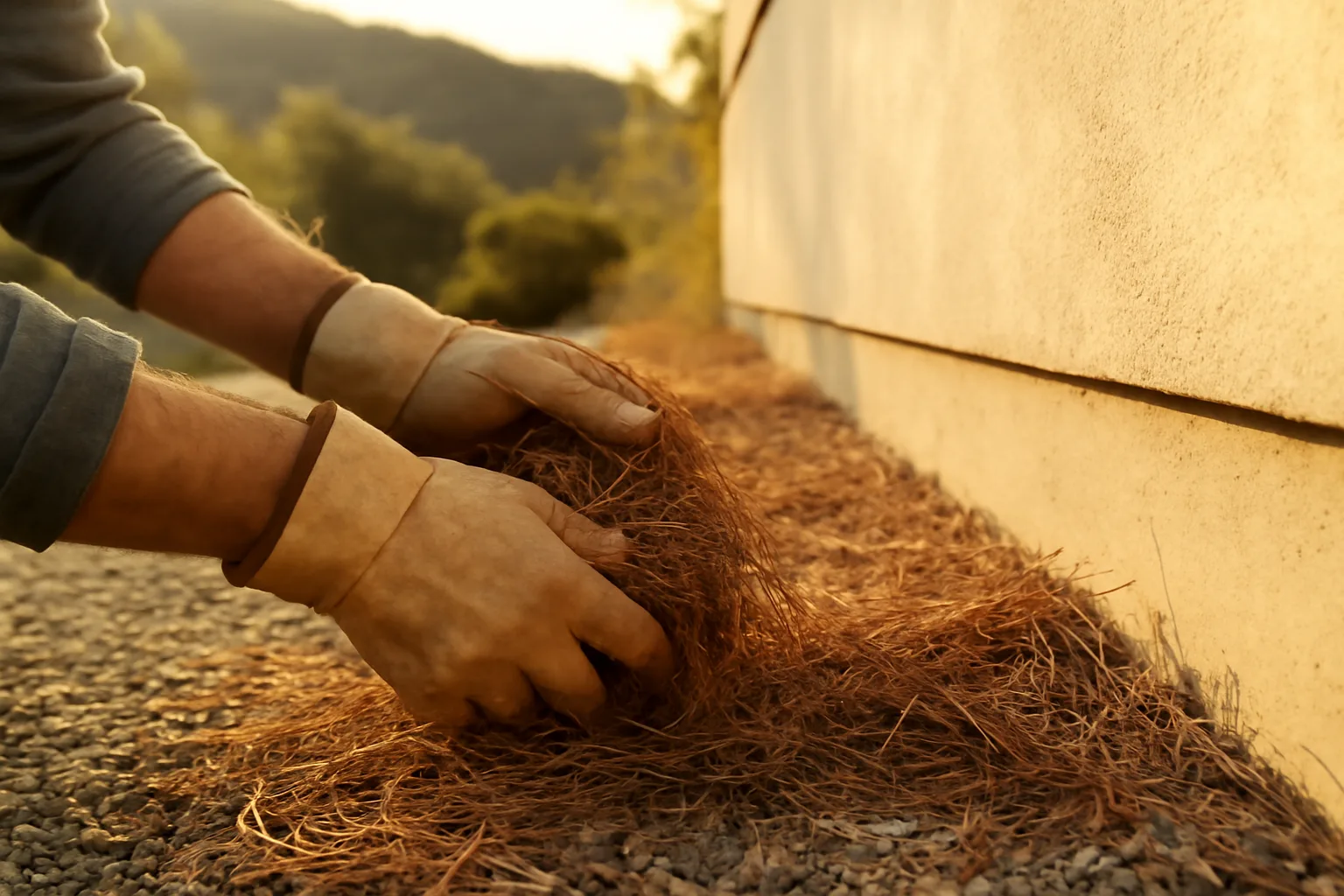
The core defensible space requirement under PRC 4291 is already in effect and has been enforced for years. What's changing is the new "Zone 0" ember-resistant zone rule, the 0 to 5 foot area immediately touching the house, which California directed the Board of Forestry and Fire Protection to develop regulations for under SB 63 (2023) and earlier AB 3074 (2020) [2]. As of this writing, the Board of Forestry has been through multiple rulemaking rounds, and the timeline has moved. Earlier guidance pointed to a 2023 effective date; that slipped, and more recent state communications have referenced 2025 and 2026 as target windows for the regulation to be finalized and then enforceable, with local jurisdictions given time to adopt it [3]. If you've seen "fire safe home rules take effect in 2026" referenced somewhere, this Zone 0 regulation is almost certainly what's being described, but treat the exact date as fluid until your local fire authority confirms it. Here's the honest uncertainty: nobody outside the Board of Forestry's rulemaking staff has a locked date right now, and the effective date has already moved once. The practical move is to check directly with CAL FIRE's Zone 0 page and your county or city fire marshal before you assume a hard deadline [2] [3]. [Guided fill-in: confirm your local fire district's specific Zone 0 adoption date and enforcement timeline here.] Once Zone 0 is enforceable in your jurisdiction, the general concept is: no combustible mulch, no dry vegetation, no stored combustibles (firewood, propane tanks, wood fencing attached to the house) within 5 feet of any structure. Gravel, pavers, or bare mineral soil are the safe bets for that zone.
Why won't people follow the defensible space law in California?
This is a real, documented problem, more than anecdote. Compliance inspections in high-risk counties routinely find failure rates between 30 and 60 percent depending on the year and region, and CAL FIRE's own inspection data from recent years shows a meaningful share of properties failing on first inspection. So why, when the law has existed for decades and the stakes are a burned house? Cost is the biggest one. Removing mature trees, thinning brush on a slope, or replacing wood mulch with gravel across a large lot can run from a few hundred dollars for a small suburban yard to $10,000 or more for larger rural parcels with heavy vegetation, and that's before you get into structural hardening like vent screens or roof replacement. Many homeowners, especially retirees on fixed incomes in fire-prone foothill communities, simply don't have that money sitting around. Second is enforcement inconsistency. Defensible space is legally required, but actual inspection and citation practices vary enormously by county and by fire district. Some jurisdictions do annual inspections with real follow-through; others are stretched thin and inspect on complaint only. When people don't see consequences, compliance drops. That's basic human behavior, not a California-specific quirk. Third, there's a genuine information gap. Homeowners aren't always sure what "100 feet, three zones" actually requires on their specific lot, especially on irregular terrain, and vague guidance breeds procrastination. Fourth, some people just don't believe it'll happen to them, or they've lived somewhere 20 years without a fire and don't update their risk model. None of these are good reasons to skip it, but they're the real reasons, and any prevention strategy that ignores cost and clarity gaps is going to keep failing.
How to prevent wildfires (and how to prevent forest fires) at the source
Most wildfires in the US, including nearly all of California's largest fires in the last decade, are human-caused: unattended campfires, dragging trailer chains that spark on asphalt, downed power lines, equipment use during red flag conditions, and arson. Ready.gov and the U.S. Forest Service both point to human activity as the dominant ignition source in the wildland-urban interface, though lightning remains a major cause in more remote forested areas. At the individual level, preventing wildfires and preventing forest fires come down to the same handful of habits: never leave a campfire unattended, drown and stir campfire ashes until they're cold to the touch, avoid outdoor equipment use (mowers, grinders, welding) during red flag warning days, don't park or idle a vehicle over dry grass (catalytic converters run over 500°F), and check local burn ban status before any debris burning. At the community and policy level, prevention means funding for fuel breaks, prescribed burns to reduce accumulated fuel loads, utility infrastructure hardening (undergrounding lines or upgrading to covered conductor in high-risk zones), and enforcing defensible space law with real inspections. CAL FIRE's Fire Prevention program and the U.S. Forest Service's hazardous fuels reduction work are the two biggest institutional levers, and both are chronically underfunded relative to the acreage that needs treatment. If you're asking "how can we prevent forest fires" at a systemic level rather than a personal one, the honest answer involves decades of fire suppression policy that let fuel loads build up in Western forests, combined with more people building homes deeper into fire-prone wildland. Reversing that is a generational project of prescribed fire, mechanical thinning, and land-use policy change, not something any single homeowner action fixes.
How to prepare for a wildfire (and how to prepare for forest fires) before it starts
Wildfire prep splits into three buckets: the property, the go-bag, and the paperwork. Most guides focus only on the first two. The paperwork is what actually protects you financially if the worst happens, and it's the piece people skip. Property prep starts with the three defensible space zones CAL FIRE defines: Zone 0 (0-5 feet, ember-resistant, noncombustible materials only), Zone 1 (5-30 feet, well-spaced and maintained vegetation, no dead plant material), and Zone 2 (30-100 feet, reduced fuel volume, mowed dry grass, thinned trees). Work outward from the house, not the other way around; the 5-foot zone matters more per square foot than the 100-foot zone because that's where embers land and structures ignite. For plant choices that reduce fuel load without stripping your yard bare, see fire safe landscaping California next to house. Ready.gov recommends every household build an emergency supply kit with at least a 3-day supply of water (one gallon per person per day) and non-perishable food, plus a battery or hand-crank radio, flashlight, first aid kit, medications, and copies of important documents. For wildfire specifically, add N95 masks for smoke, a change of clothes in natural fibers (synthetics melt), and a car kit since evacuation often means sitting in traffic for hours. The paperwork bucket is where most people are unprepared: proof of your home's construction materials and defensible space maintenance, a room-by-room inventory with photos or video, and copies of your insurance policy declarations page stored somewhere other than the house (cloud storage, a safety deposit box, or a relative's place). If your insurer sends a non-renewal or inspection notice, having this documentation ready before you need it is the difference between a fast, factual response and scrambling. This is exactly the gap our $99 Wildfire Insurance Survival Kit is built to close: a structured way to document your defensible space work, home hardening, and property condition in the format insurers actually want to see. We don't file claims or make coverage promises on your behalf; you send your own documentation, we just help you build it right the first time.
How to avoid forest fires as a visitor, camper, or rural landowner
If you're recreating in fire country rather than living there, avoiding forest fires is mostly about discipline during red flag conditions. Check the National Weather Service red flag warning status and your state's current fire restrictions before any trip; many national forests post real-time fire danger levels and campfire restrictions on their individual forest websites. Specific habits that matter: use only designated fire rings, keep campfires small, never leave a fire unattended even for a few minutes, and fully extinguish with water (more than dirt) until it's cold enough to touch. Don't discharge fireworks in wildland areas; this is illegal in most national forests and many counties year-round, more than during fire season. If towing a trailer, make sure chains aren't dragging on pavement, since sparks from metal-on-asphalt contact have started numerous roadside fires in California and Oregon. Rural landowners have an added layer: agricultural burning, debris pile burning, and equipment use all require checking with your local air district and fire agency for burn permits and current burn day status. A permit that was valid last week can become invalid overnight if conditions shift.
What fire-safe home rules take effect in 2026?
The most significant one is California's Zone 0 ember-resistant zone regulation, which the Board of Forestry and Fire Protection has been developing under SB 63 and AB 3074, with a 2026 timeframe referenced in state materials for enforceability once finalized and locally adopted [2] [3]. This would require homeowners in high and very high fire hazard severity zones to keep the 5 feet closest to their homes clear of combustible mulch, vegetation, and stored materials. Separately, some individual counties and fire districts have been rolling out their own accelerated timelines or stricter local ordinances ahead of the state deadline, particularly in Southern California counties that have had major recent fire losses. This is where the guided fill-in matters most: [Guided fill-in: check your specific fire district's 2025-2026 ordinance calendar for local Zone 0 or vegetation management deadlines], because state-level regulation sets a floor, not a ceiling, and local jurisdictions can move faster. On the insurance side, California's Safer from Wildfires regulation (effective 2022) already requires insurers to give discounts or credits for documented mitigation actions like defensible space compliance and home hardening, administered through the California Department of Insurance [4]. That's separate from the Zone 0 building regulation but often gets confused with it; one is about what you must do to your property, the other is about what your insurer must offer in exchange for doing it. Neither guarantees you keep your policy or that a specific insurer will reinstate coverage; that's a case-by-case underwriting decision. For the structural side of hardening, most of what's coming in 2026 builds on California's existing Chapter 7A building code requirements for new construction and remodels in Wildland-Urban Interface Fire Areas: ember-resistant vents, Class A fire-rated roofing, and non-combustible siding within specific distances of the structure [5]. If you're evaluating what to prioritize on an older home that predates these codes, our guide on defensible space priorities walks through where to spend limited hardening dollars first.
Is Santa Barbara safe from fire?
No area in California's coastal or foothill wildland-urban interface is "safe" from fire risk in an absolute sense, and Santa Barbara County has direct experience proving it: the 2017 Thomas Fire burned over 281,000 acres and was, at the time, the largest wildfire in modern California history, followed within weeks by the Montecito debris flow that killed 23 people [6]. The 2018 Whittier Fire and the 1990 Painted Cave Fire (which destroyed over 400 structures in a matter of hours) are earlier reminders that the Santa Barbara foothills sit in one of the more fire-exposed landscapes in the state. Santa Barbara's specific risk factors are geography-driven: steep chaparral-covered slopes that haven't burned in decades hold heavy fuel loads, the Santa Ana and sundowner wind patterns can push fire at extreme speed downslope toward populated areas, and long dry summers with minimal rainfall until late fall create an extended fire season. CAL FIRE's Fire Hazard Severity Zone maps classify large portions of the Santa Barbara foothills and adjacent unincorporated areas as "Very High" hazard [7]. That said, "not safe" doesn't mean "equally at risk everywhere." Homes further from wildland vegetation, on flatter terrain, with maintained defensible space and hardened construction, are measurably less likely to ignite than homes tucked against unmaintained chaparral on a slope. If you live in or near Santa Barbara's foothill communities (Montecito, Mission Canyon, San Roque, the Riviera), defensible space compliance and Zone 0 prep aren't optional extras; they're the highest-leverage things you control given the terrain and wind exposure you can't change.
How do the three defensible space zones compare, and what does each actually require?
| Zone | Distance from structure | Primary requirement | Common violations | |
|---|---|---|---|---|
| Zone 0 | 0-5 feet | Noncombustible surface, no mulch/vegetation touching structure | Wood mulch, stored firewood, dry leaves in gutters | |
| Zone 1 | 5-30 feet | Well-spaced, low, irrigated plants; no ladder fuels | Overgrown shrubs under trees, dead branches | |
| Zone 2 | 30-100 feet | Reduced fuel volume, mowed grass under 4 inches, thinned trees | Tall dry grass, unmanaged brush, dense tree canopy | Source: CAL FIRE, Defensible Space (300 Feet). Zone 0 specifics are the subject of pending regulation under SB 63 [2]. The practical takeaway from this table: effort and money spent closer to the house buy more risk reduction per dollar than the same effort spent at 100 feet. A lot of homeowners intuitively want to clear the back forty first because it feels like the scary wildland edge. The data on ember ignition says the 5-foot zone right against your siding is actually doing more of the structural damage in most home losses. |
What should I document for my insurer before or after a non-renewal notice?
If you've gotten a non-renewal or inspection letter, or you're watching neighbors lose coverage and want to get ahead of it, documentation is the one lever fully within your control. Photograph and date-stamp your defensible space zones (all three), your roof material and condition, vent screening, siding material, gutter condition, and any recent hardening work (new roof, ember-resistant vents, gutter guards). Keep receipts and contractor invoices for any vegetation clearing, tree removal, or hardening work, since these are what substantiate a claim of compliance if an insurer or the state's Safer from Wildfires credit program asks for proof [4]. Note the date of your most recent professional defensible space inspection if your fire district offers one, and keep the inspection report. We don't file claims or promise coverage, discounts, or reinstatement, and no legitimate service can guarantee those outcomes for you. What you can do is send your own insurer a clear, organized, dated documentation packet that shows the actual condition of your property, rather than letting an automated aerial imagery assessment (which is increasingly how insurers flag properties for non-renewal) be the only data point they have. Our $99 Wildfire Insurance Survival Kit is built specifically for this: a structured template so you're not building this packet from scratch under deadline pressure. It's a documentation tool, not a claims or legal service.
What's the fastest, highest-impact defensible space work if I'm short on time or money?
If you can only do three things this season, do these in order. First, clear the 5 feet closest to your house (Zone 0): pull mulch, dead leaves, and anything combustible away from siding, and clean gutters and roof valleys of debris. This is often a weekend of labor and costs under $200 in materials (gravel or pavers) if you do it yourself. Second, screen or replace vent openings with 1/8-inch (or finer, per current code guidance) noncombustible mesh; embers entering attic and crawlspace vents are a well-documented ignition pathway, and retrofitting vents typically runs a few hundred dollars for a full house done by a handyman, more if you hire a licensed contractor for code-compliant ember-resistant vents [5]. Third, move firewood stacks, propane tanks, and anything flammable at least 30 feet from the structure, and trim tree branches that overhang the roof or come within 10 feet of the chimney. None of this requires a permit or a big budget, and all three directly address the top ignition pathways CAL FIRE has documented in post-fire structure assessments. For a broader look at where a fire actually starts once it reaches a property line, see fire at a house.
Frequently asked questions
When does the California defensible space law go into effect?
The core 100-foot defensible space requirement under Public Resources Code 4291 is already law and has been enforced for years. The newer Zone 0 ember-resistant 5-foot rule is still in rulemaking through the Board of Forestry, with 2025-2026 referenced as the target enforcement window, though the date has shifted before, so confirm with your local fire district.
Why won't people follow the defensible space law in California?
Mainly cost (clearing and hardening can run from a few hundred to several thousand dollars), inconsistent enforcement across counties, confusion about what exactly the three zones require on their specific lot, and normalcy bias after years without a fire. None of these excuse skipping it, but they're the documented reasons compliance rates lag.
How to prevent wildfires from starting in the first place?
Never leave campfires unattended and drown ashes cold, avoid outdoor equipment use during red flag warnings, don't tow with dragging chains, check burn permit status before any debris burning, and report downed power lines immediately. Most wildfires in fire-prone Western states are human-caused, so individual behavior is a real prevention lever.
How to prepare for a wildfire if I live in a high-risk zone?
Maintain the three defensible space zones (0-5, 5-30, 30-100 feet), build a Ready.gov-standard emergency kit with 3 days of water and food, keep insurance documents and a property inventory backed up off-site, and know your evacuation routes in advance. Do the paperwork prep before a non-renewal notice arrives, not after.
How to prevent forest fires as a hiker or camper?
Use designated fire rings only, keep fires small, never leave them unattended, and extinguish fully with water until cold to the touch. Check red flag warning status and forest-specific burn restrictions before your trip, and never use fireworks in wildland areas.
How to avoid forest fires when driving or towing in rural areas?
Don't park or idle over dry grass since catalytic converters can exceed 500°F and ignite vegetation. Make sure trailer chains aren't dragging on pavement, since metal-on-asphalt sparks have started multiple roadside wildfires in California and Oregon.
How to prepare for forest fires if I own rural or agricultural land?
Check with your local air district and fire agency for current burn permits before any debris or agricultural burning, since permit validity can change overnight with weather conditions. Maintain fuel breaks and defensible space around structures and equipment sheds, more than the house.
What fire-safe home rules take effect in 2026?
California's Zone 0 ember-resistant zone regulation (the 0-5 foot area around structures) is the major one in development under SB 63 and AB 3074, targeted for finalization and enforceability around 2025-2026. Local jurisdictions may adopt stricter or earlier timelines, so check your specific fire district.
Is Santa Barbara safe from fire?
No; Santa Barbara County has very high fire hazard severity zones per CAL FIRE mapping and a documented history including the 2017 Thomas Fire (281,000+ acres) and the 1990 Painted Cave Fire. Homes on steep chaparral slopes near unmaintained wildland face materially higher risk than flatter, cleared parcels.
How can we prevent forest fires at a community or policy level?
Fund prescribed burns and mechanical fuel thinning to reduce decades of accumulated fuel load, harden utility infrastructure to prevent power-line ignitions, and enforce existing defensible space law with real inspections rather than complaint-only follow-up. This is a multi-decade land management project, not a single fix.
What is Zone 0 and how is it different from the other defensible space zones?
Zone 0 is the 0-5 foot area immediately touching a structure, requiring noncombustible surfaces (gravel, pavers, bare soil) instead of mulch or vegetation. It's the newest and most specific requirement, distinct from Zone 1 (5-30 feet, spaced plants) and Zone 2 (30-100 feet, reduced fuel volume), and it's still going through state rulemaking.
Does clearing defensible space guarantee my insurer won't drop me?
No. Defensible space compliance can qualify you for discounts under California's Safer from Wildfires regulation and may reduce underwriting risk, but no mitigation work guarantees renewal or coverage; that decision remains the insurer's underwriting call. Document your work thoroughly and send it yourself; that's the honest limit of what preparation can promise.
Sources
- California Legislative Information, Public Resources Code Section 4291: Legal requirement to maintain 100 feet of defensible space in State Responsibility Areas
- California Legislative Information, SB 63 (2023): Legislative basis for the Zone 0 ember-resistant zone rulemaking
- CAL FIRE, Zone 0 Ember-Resistant Zone: Status and target timeline for Zone 0 regulation enforceability
- California Department of Insurance, Safer from Wildfires Regulation: Insurer requirement to provide discounts or credits for documented wildfire mitigation actions
- California Building Standards Commission, Chapter 7A, California Building Code: Wildland-Urban Interface construction requirements including ember-resistant vents and Class A roofing
- CAL FIRE, Thomas Fire Incident Archive: 2017 Thomas Fire acreage and historical significance for Santa Barbara County
- CAL FIRE, Fire Hazard Severity Zone Maps: Very High Fire Hazard Severity Zone classification for Santa Barbara foothill areas