Last updated 2026-07-25
TL;DR
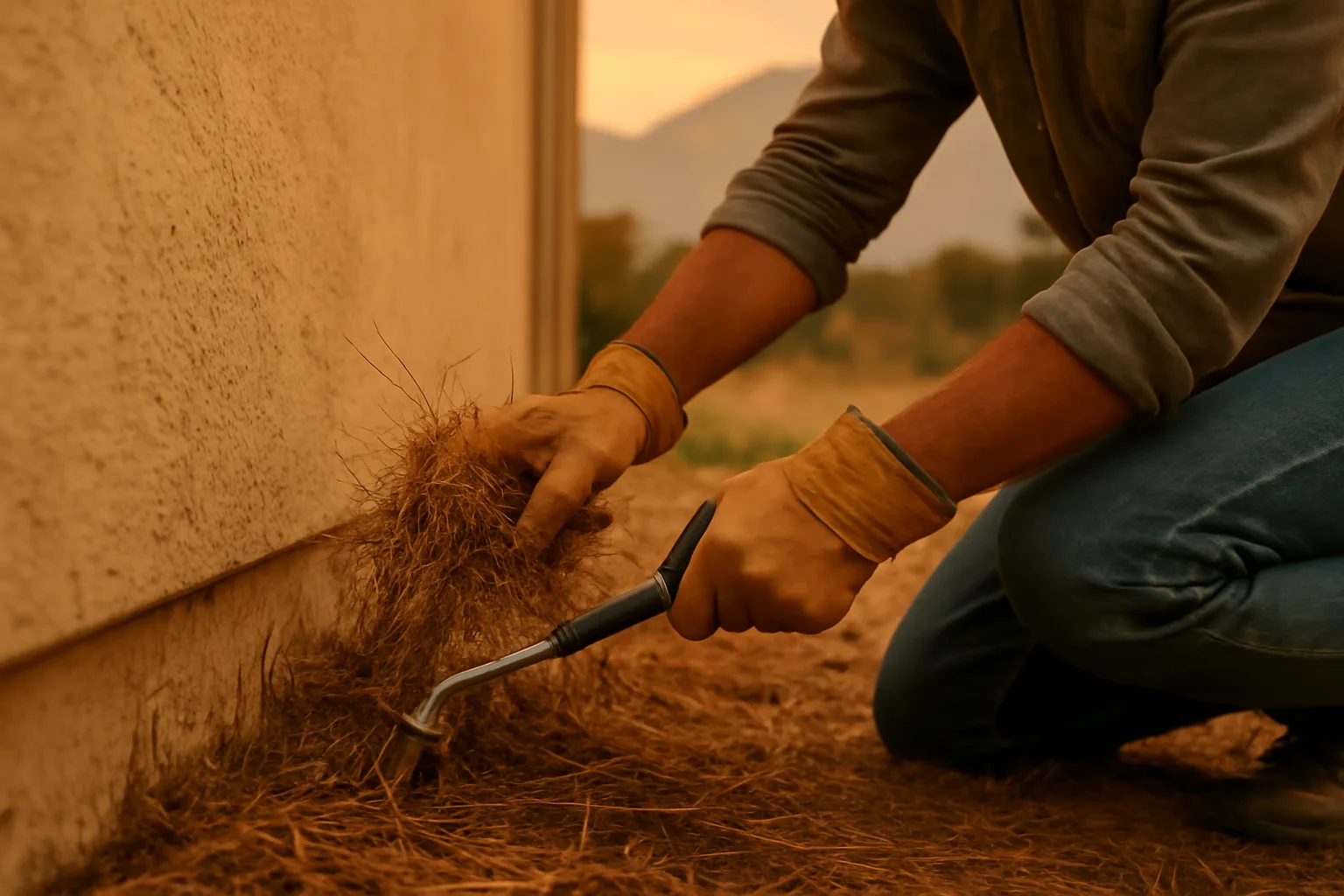
A fire in home settings usually starts from cooking, heating equipment, or embers during wildfire, not dramatic wall-of-flame scenarios. Prevention means fixing the first 5 feet around your house (Zone 0), maintaining smoke alarms, and documenting your mitigation work before insurers ask. California's expanded defensible space law (SB 63/AB 3074 ember zone rules) is expected to phase in starting 2026, with exact enforcement dates still being finalized by CAL FIRE.
What actually causes a fire in home settings?
Most house fires have nothing to do with wildfire at all. The National Fire Protection Association's most-cited home fire data (compiled from U.S. Fire Administration and NFPA reporting) points to cooking equipment as the leading cause of home fires, followed by heating equipment, electrical distribution issues, and intentionally set fires [1]. Wildfire-driven home ignition is a separate but related problem, and it's the one most relevant if you've gotten a non-renewal notice. Here's the distinction that matters for wildfire-zone homeowners. In a wildland-urban interface fire, most homes don't burn because a wall of flame rolls through. They burn because embers, sometimes traveling over a mile ahead of the fire front, land on something ignitable near or on the structure. CAL FIRE's own defensible space guidance says "maintaining defensible space and hardening your home can increase the chance of your home surviving a wildfire", and federal research from the USDA Forest Service's Missoula Fire Sciences Lab has documented ember showers as a primary mechanism of structure loss in WUI fires. So when people say "how do I prevent a fire in my home," there are really two different questions bundled together: everyday fire safety (smoke alarms, cooking, electrical) and wildfire home-ignition prevention (defensible space, ember-resistant materials, vent screening). Both matter. Insurers increasingly care about the second one specifically, because it's the one driving non-renewals in California, Colorado, Oregon, and Arizona right now.
How do I prevent wildfires from starting in the first place?
Most wildfires are human-caused, not lightning-caused. CAL FIRE and the National Interagency Fire Center both track this: roughly 85-90% of wildfires nationally are attributed to human activity according to U.S. Forest Service data, including unattended campfires, debris burning, equipment sparks, and downed power lines [2]. Preventing wildfires starts upstream of your property line. The practical version: never leave a campfire unattended. Drown and stir ashes until cold before leaving. Avoid mowing dry grass during red flag warnings, since mower blades hitting rock can throw a spark that ignites cured grass in seconds. Keep vehicles off dry grass (a hot catalytic converter is a known ignition source), and check local burn permit rules before doing any debris burning. Many fire districts suspend all outdoor burning during declared fire weather watches. If you're asking "how can we prevent forest fires" at a community level rather than just your own yard, this is mostly a policy and funding question (fuel breaks, prescribed burns, power line hardening, faster ignition detection) that's outside what any single homeowner controls. Your real point of control is your own five-foot zone and your own outdoor behavior. That's the part CAL FIRE's home hardening guidance and most fire-adapted community programs focus on, because it's the part that's actually actionable.
How do I prepare for a wildfire before it happens?
Preparation splits into three timelines: what you do months ahead, what you do during fire season, and what you grab in the final hours. Ready.gov's wildfire preparedness guidance recommends creating a household evacuation plan, assembling a go-bag with medications and important documents, and signing up for local emergency alerts before fire season starts [3]. Months ahead: clear Zone 0 (the first 5 feet around your home, per CAL FIRE's updated ember-zone guidance), remove dead vegetation, clean gutters and roof debris, and confirm your smoke alarms have working batteries. This is also the point to photograph and document your defensible space work, because insurers and FAIR Plan inspectors increasingly want dated proof, more than a verbal assurance. During fire season: keep your car fueled, know two evacuation routes out of your neighborhood (more than one), and pack a go-bag that includes copies of your insurance policy declarations page, ID, medications, and an inventory of belongings (photos or video walkthrough count). Ready.gov specifically recommends keeping "important documents in a fireproof and waterproof container" [3]. Final hours: if you get an evacuation warning, don't wait for the mandatory order if you have kids, pets, medical needs, or a long drive out. Close all windows and doors, leave lights on so your house is visible in smoke, and shut off gas at the meter if instructed by local authorities. For a full walkthrough of go-bag contents and documentation checklists, see our guide on preparing for a house fire.
How do I prepare for forest fires living near wildland?
If you're in a forested or brush-heavy WUI zone, preparation looks similar to general wildfire prep but with more emphasis on access and water. Make sure your address is clearly visible from the road (reflective numbers help firefighters find you fast), keep driveways wide enough for fire engines, and maintain a water source (pool, tank, or hydrant) that crews can access if needed. CAL FIRE's defensible space standard breaks the property into zones: Zone 0 (0-5 feet, near-zero combustibles), Zone 1 (5-30 feet, reduced and spaced vegetation), and Zone 2 (30-100 feet, fuel reduction). In dense forest settings, Zone 2 work often means thinning ladder fuels (low branches and small trees that let fire climb into the canopy), not clear-cutting. Contact your local fire district or CAL FIRE unit before doing large-scale vegetation removal near property lines, since some jurisdictions require permits for tree removal over a certain diameter. One honest caveat: defensible space reduces risk. It doesn't eliminate it. In extreme wind-driven fires like the 2018 Camp Fire or 2021 Marshall Fire, ember storms overwhelmed even well-prepared properties. Defensible space and home hardening shift the odds meaningfully in your favor, but no guide, including this one, can promise a specific outcome.
How do I avoid forest fires as a hiker, camper, or landowner?
For recreational users: check current fire restrictions before you go (many national forests post real-time restriction levels), only build campfires in established rings where legal, never leave a fire unattended even for a few minutes, and carry water or a shovel to fully extinguish embers. A fire is not out until it's cold to the touch. For landowners doing agricultural or debris burning: check with your local air district and fire department for burn permit requirements, avoid burning on windy days, and keep a hose or water source at hand. Many California counties suspend permitted burning entirely during peak fire season regardless of individual permit status. For equipment use: chainsaws, mowers, and grinders can all throw sparks capable of igniting dry grass. Some fire districts restrict this kind of work during red flag warning days. Check your county fire department's current restrictions page before doing yard equipment work in high fire season.
When does the California defensible space law go into effect?
California's core defensible space requirement, Public Resources Code 4291, has been in effect for years and currently requires 100 feet of defensible space clearance around structures in State Responsibility Areas and designated Wildland-Urban Interface zones [4]. What's newer, and what people are actually asking about, is the ember-resistant Zone 0 rule. California's Assembly Bill 3074 (2020) directed the Board of Forestry and Fire Protection to develop regulations for "ember-resistant zones" within 5 feet of structures (Zone 0). As of this writing, the Board has been working through the formal rulemaking process, and CAL FIRE's public materials have referenced an intended effective timeline tied to 2026 for enforcement in high fire-hazard severity zones, though the exact regulatory language and compliance date has moved during rulemaking [5]. Homeowners should check the Board of Forestry's current rulemaking status directly, since this is exactly the kind of date that can shift by months as regulations go through public comment. The honest answer to "what fire safe rules for homes take effect in 2026": the Zone 0 ember-resistant zone standard is the regulation most closely associated with a 2026 timeline, but treat any specific date as provisional until CAL FIRE or the Board of Forestry publishes final adopted regulation text. Check fire.ca.gov or your county fire department for the current status before assuming a compliance deadline has passed or arrived.
Why won't people follow the defensible space law in California?
Compliance with PRC 4291 is inconsistent, and there are a few real reasons behind that, more than laziness. Cost is the biggest one: removing mature vegetation, especially trees, can run into the thousands of dollars, and low-income and elderly homeowners on fixed incomes often can't absorb that cost even when they understand the risk. A second reason is confusion about what's actually required. Defensible space rules vary by local fire district on top of the state baseline, and homeowners genuinely don't always know whether their specific 5-30-100 foot zones match their district's exact enforcement standard. A third reason is aesthetic and emotional attachment. Mature trees and established landscaping took decades to grow, and cutting them back for a fire risk that feels abstract until it isn't is a hard sell, especially for people who've lived through prior fire seasons without losing a home. CAL FIRE's own enforcement approach leans on inspections and correction notices rather than immediate fines in most cases, which means the practical consequence of non-compliance for many homeowners has historically been a letter, not a citation. That's shifting as insurers start using defensible space compliance (or lack of it) as underwriting criteria directly, which raises the real-world stakes even where local enforcement is soft.
Is Santa Barbara safe from fire?
No location in California's wildland-urban interface is "safe" from fire in an absolute sense, and Santa Barbara County has a documented history that argues against complacency. The Thomas Fire (2017) burned over 280,000 acres across Ventura and Santa Barbara counties and was, at the time, the largest wildfire in modern California history , and the subsequent Montecito debris flow in January 2018, triggered by rain on the burn scar, killed 23 people . The Jesusita Fire (2009) and Tea Fire (2008) also burned through Santa Barbara's foothill neighborhoods. What this means practically: Santa Barbara's coastal core is lower-risk than the foothill and canyon neighborhoods (Montecito, San Roque, the Riviera, upper State Street areas) that back up against chaparral-covered slopes. If you live in or near those interface zones, defensible space and home hardening matter as much there as anywhere else in the state, regardless of the ocean view. The same logic applies to any specific city or neighborhood question people ask ("is [town] safe from fire"). The honest framework is: check your parcel's Fire Hazard Severity Zone designation on CAL FIRE's FHSZ viewer, not the town's general reputation. A house two blocks apart can sit in entirely different hazard zones depending on slope, aspect, and vegetation.
What fire-safe home rules take effect in 2026?
Beyond California's Zone 0 rulemaking, a few other regulatory threads are worth tracking if you're trying to plan renovation or landscaping work around a 2026 timeline. None of these should be treated as locked-in without checking the current source, since wildfire regulation has moved on rolling, multi-year timelines in most states. California: the Board of Forestry and Fire Protection's ember-resistant Zone 0 regulations, tied to AB 3074, are the most significant pending change, with CAL FIRE materials referencing phased implementation beginning with high fire-hazard severity zones [5]. Check the Board of Forestry's rulemaking page directly for the current adopted text and effective date, since draft language has been revised multiple times. Other states: Colorado, Oregon, and Arizona each handle wildfire building and defensible space codes at the state or county level differently, and none currently mirrors California's Zone 0 approach exactly. Oregon's Senate Bill 762 (2021) created a statewide wildfire risk map and defensible space code framework administered by the Oregon Department of Forestry, with implementation phased over several years following legal challenges to the initial risk map . If you're in Oregon, check the Oregon Department of Forestry's current wildfire risk map status directly, since the original 2022 map was withdrawn and reissued.
What should I actually document before my insurer asks?
This is the part most homeowners skip until they get a non-renewal letter, and by then it's harder to prove retroactively that you'd already done the work. Insurers and FAIR Plan underwriters are increasingly asking for dated photo evidence of defensible space zones, more than a checkbox form. What to capture: wide shots of all four sides of the house showing the 5-foot Zone 0 perimeter, close-ups of vent screening (should be 1/8 inch mesh per CAL FIRE hardening guidance), roof condition, gutter cleanliness, and any spacing you've created between shrubs and structures. Date-stamp everything and keep a written log of vegetation removal, contractor invoices, and any inspection correction notices you've resolved. This is exactly the gap the DefensibleHome Wildfire Insurance Survival Kit is built to close: a $99 one-time toolkit that walks you through building the documentation packet insurers and adjusters actually want to see, organized the way underwriters expect it. To be clear about what it isn't: it doesn't file claims on your behalf, contact your carrier for you, or promise reinstatement or a discount. You prepare the documentation and send it yourself. It just makes sure you're not showing up to that conversation empty-handed. For a broader look at hardening priorities beyond documentation, see our guides on fire-safe landscaping next to the house and defensible space basics.
What's the difference between defensible space and home hardening?
Defensible space is about vegetation and clearance around the structure. Home hardening is about the materials and construction details of the structure itself. Both matter, and insurers increasingly ask about both separately. Defensible space work: clearing Zone 0-2, spacing shrubs, removing dead plant material, keeping grass mowed short, and maintaining tree canopy clearance from rooflines. Home hardening work: ember-resistant vents, Class A fire-rated roofing, enclosed eaves, dual-pane tempered glass windows, and non-combustible siding within the first several feet of grade, per CAL FIRE's home hardening standards. The research backing this split comes largely from post-fire structure loss studies by the Insurance Institute for Business & Home Safety (IBHS) and the USDA Forest Service, which found that ember intrusion through vents and small gaps, not direct flame contact, accounts for a large share of home ignitions in WUI fires. That's why a house with excellent defensible space but an unscreened attic vent can still ignite, and why insurers now ask about both.
What should I do first if I already got a non-renewal letter?
Read the letter carefully for the stated reason. Insurers in California are required under existing regulation to provide the specific reason for non-renewal in most cases, and that reason often points directly at a defensible space or hardening deficiency you can actually fix. Next, check whether your insurer or your state's FAIR Plan offers any mitigation credit or reinspection process. California's FAIR Plan and several admitted carriers have piloted programs that consider completed defensible space and hardening work in underwriting decisions, though availability and criteria vary by carrier and change often, so confirm current terms directly with your insurer or agent rather than assuming. Then do the work, document it thoroughly, and submit it yourself through your insurer's stated process. Nobody, including us, can promise a specific carrier will reinstate or discount your policy based on documentation. What dated, organized documentation does is give you the strongest possible starting position for that conversation, and it's the same packet you'd want on hand anyway if a fire actually reaches your neighborhood.
Frequently asked questions
When does the California defensible space law go into effect?
The core 100-foot defensible space requirement (PRC 4291) is already in effect. The newer Zone 0 ember-resistant zone rule from AB 3074 has been referenced by CAL FIRE with a 2026 implementation timeline for high fire-hazard zones, but exact dates have shifted during rulemaking. Check the Board of Forestry's current rulemaking page for the adopted text before assuming a specific date is final.
Why won't people follow the defensible space law in California?
Mainly cost (tree and vegetation removal can run thousands of dollars), confusion over which local rules apply on top of the state standard, and emotional attachment to mature landscaping. Enforcement has historically relied on correction notices rather than fines, which reduced urgency, though insurer underwriting is now raising the practical stakes.
How do I prevent wildfires from starting?
Most wildfires are human-caused. Never leave campfires unattended, drown and stir ashes cold, avoid mowing dry grass during fire weather, keep vehicles off dry grass, and follow local burn permit rules. Community-level prevention (fuel breaks, power line hardening) is largely a policy issue outside individual control.
How do I prepare for a wildfire?
Months ahead: clear Zone 0-2 defensible space, harden vents and roofing, document everything with photos. During season: keep your car fueled, know two evacuation routes, sign up for local alerts. In final hours: don't wait for a mandatory order if you have kids, pets, or medical needs; pack your go-bag and leave early.
How do I prevent forest fires while camping or hiking?
Check current fire restrictions before you go, only build fires in established rings where legal, never leave a fire unattended, and fully extinguish with water until cold to the touch. Avoid vehicle or equipment use on dry grass, since hot catalytic converters and mower sparks are common ignition sources.
How do I avoid forest fires as a landowner doing yard work?
Check local burn permit rules and red flag warning status before doing any debris burning or equipment work. Chainsaws, mowers, and grinders can throw sparks that ignite dry grass; many fire districts restrict this work during high fire danger days regardless of individual permit status.
What fire-safe home rules take effect in 2026?
California's Zone 0 ember-resistant zone regulation (from AB 3074) is the rule most associated with 2026 implementation for high fire-hazard severity zones, though the final adopted date should be confirmed directly with CAL FIRE or the Board of Forestry. Other states like Oregon have separate, differently-timed wildfire code frameworks.
Is Santa Barbara safe from fire?
No part of California's wildland-urban interface is fully safe from fire risk. Santa Barbara County has a documented history including the 2017 Thomas Fire (over 280,000 acres) and the 2018 Montecito debris flow that killed 23 people. Foothill and canyon neighborhoods carry meaningfully higher risk than the coastal core; check your parcel's Fire Hazard Severity Zone directly.
What's the difference between defensible space and home hardening?
Defensible space is vegetation clearance and spacing around your home (Zones 0, 1, and 2). Home hardening is building material choices: ember-resistant vents, Class A roofing, enclosed eaves, and tempered windows. Both matter because most WUI home losses come from ember intrusion, not direct flame contact.
What is Zone 0 and why does it matter for insurance?
Zone 0 is the 5-foot ember-resistant zone immediately around a structure, defined in CAL FIRE guidance and formalized under pending Board of Forestry regulations tied to AB 3074. It matters for insurance because underwriters increasingly ask for photo documentation of this specific zone when evaluating renewal risk.
What should I put in a wildfire go-bag?
Ready.gov recommends copies of ID and insurance documents in a fireproof, waterproof container, medications, a phone charger, cash, a change of clothes, and a household emergency plan card. Add a home inventory (photos or video) and your policy declarations page if you're in an active non-renewal situation.
Can I get my insurance reinstated after doing defensible space work?
Some insurers and California's FAIR Plan have piloted mitigation credit programs, but criteria and availability change often and vary by carrier. Documentation you prepare and submit yourself is the strongest starting point; no service, including ours, can promise reinstatement, a discount, or a specific underwriting outcome.
How much defensible space clearance does California require?
Public Resources Code 4291 requires 100 feet of defensible space around structures in State Responsibility Areas and designated WUI zones, broken into Zone 1 (0-30 feet) and Zone 2 (30-100 feet), plus the newer 5-foot Zone 0 ember-resistant standard closest to the structure.
Sources
- CAL FIRE, Defensible Space (PRC 4291): Defensible space and home hardening zone definitions and ember-resistant vent screening standard
- California Public Resources Code Section 4291: 100-foot defensible space clearance requirement around structures in SRA/WUI zones
- California Board of Forestry and Fire Protection, Ember-Resistant Zone rulemaking (AB 3074): Zone 0 ember-resistant zone regulation development and referenced 2026 implementation timeline
- CAL FIRE, Thomas Fire incident information: Thomas Fire burned over 280,000 acres across Ventura and Santa Barbara counties in 2017
- Oregon Legislature, Senate Bill 762 (2021): Oregon's statewide wildfire risk map and defensible space code framework established by SB 762