Last updated 2026-07-25
TL;DR
Fire mitigation near Denver means clearing vegetation in zones around your home (typically 0-5, 5-30, and 30-100 feet), hardening your roof and vents, and documenting it all for your fire district and insurer. Rules vary by jurisdiction (Denver Fire Department, Jefferson County, Boulder County, etc.), so check your local wildland-urban interface code before you start. Most homeowners spend $1,000 to $5,000 on DIY-level clearing and $3,000 to $15,000+ if hiring contractors for structural hardening.
What does "fire mitigation" mean for a Denver-area home?
Fire mitigation is the work you do to reduce the chance your house ignites during a wildfire, either from direct flame contact or from embers landing on or near it. For homes in the Denver metro's wildland-urban interface (the foothills communities in Jefferson, Boulder, Douglas, and El Paso counties especially), that means two separate but related jobs: defensible space (clearing and spacing vegetation around the structure) and home hardening (upgrading the parts of the house that catch embers, like vents, roofs, and decks). Colorado doesn't have one single statewide defensible space law the way California does. Instead, mitigation requirements come from your local fire protection district or county, often adopted from the International Wildland-Urban Interface Code (IWUIC) or a local variant. Denver itself has limited wildfire exposure compared to the foothills, but neighborhoods near the western edge of the metro area, and unincorporated areas in Jefferson and Douglas counties, fall under real wildfire risk maps and, in many cases, mandatory mitigation ordinances. Colorado State Forest Service guidance on home ignition zones describes a structure built around three zones extending out from a home: an ember-resistant zone within 5 feet, a lean-and-clean zone from 5 to 30 feet, and a reduced-fuel zone from 30 to 100 feet (or to the property line) [1]. That structure mirrors what CAL FIRE recommends in California, though Colorado's guidance isn't a single enforceable statute statewide, it's a recommendation that individual counties and fire districts turn into local code with varying specifics. [fill in: your specific fire district name and its mitigation code section]
What are the defensible space zones and what do I actually do in each one?
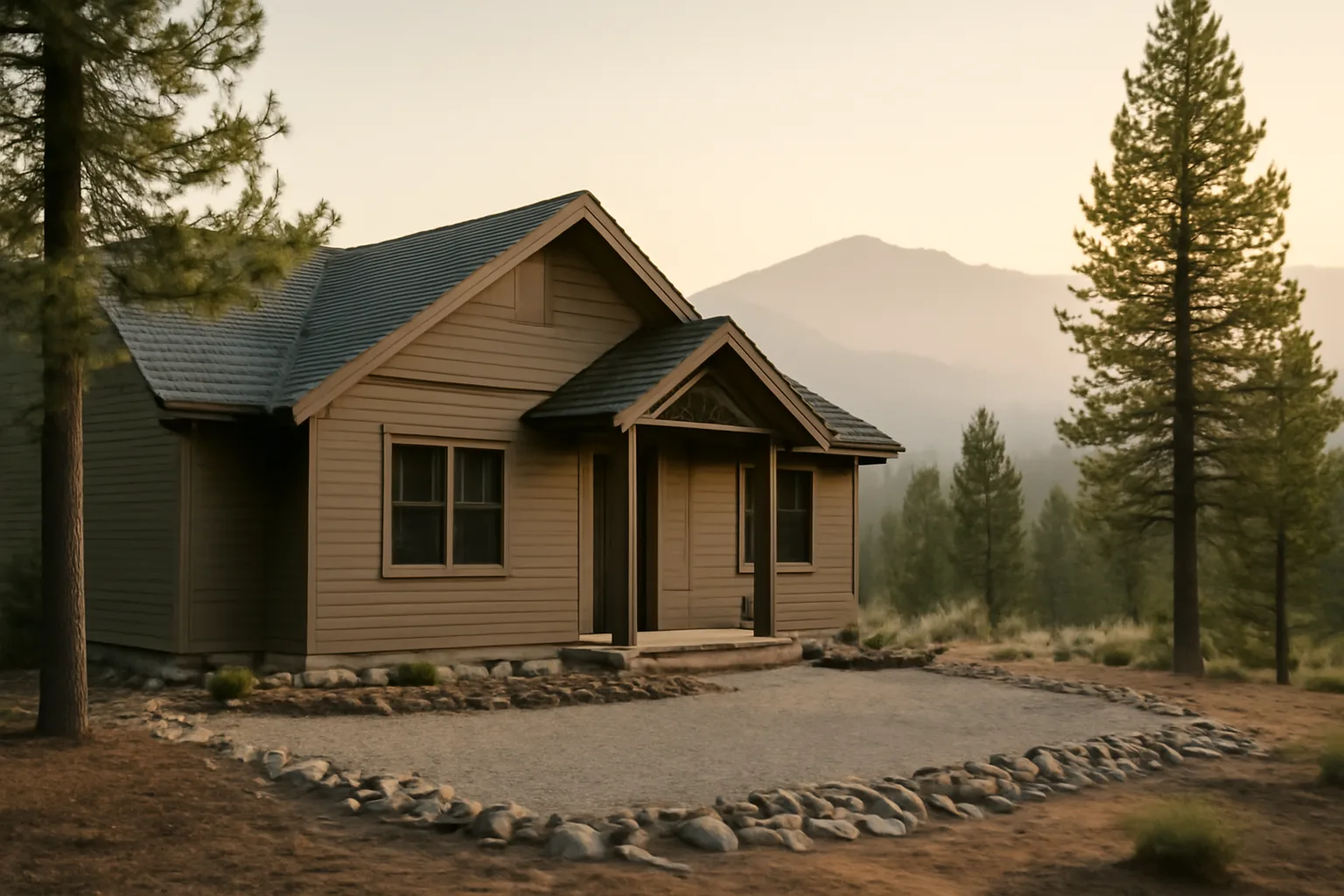
Zone 0 (0-5 feet from the structure) needs to be nearly bare: no wood mulch, no shrubs touching siding, no stored firewood, nothing flammable within arm's reach of the walls. This is the zone where ember ignition risk is highest, since wind-blown embers can travel well ahead of a fire front and this is where they land and smolder against your house [1]. Zone 1 (5-30 feet) is the "lean, clean, and green" zone. Grass should be mowed short (generally under 4-6 inches), trees need to be limbed up 6-10 feet from the ground, and shrubs should be spaced so fire can't easily jump from one to the next to the house. Remove dead branches and needle litter regularly, this is ongoing maintenance, not a one-time job. Zone 2 (30-100 feet, or to your property line) allows more natural vegetation but still needs thinning. Tree canopies should generally be spaced 10-20 feet apart depending on slope, and understory brush that acts as a ladder fuel (small shrubs and saplings that let fire climb from ground level into tree canopy) should be reduced. Here's the part that trips people up: these zone widths and specific spacing numbers are guidance, not universal law. Jefferson County, Boulder County, and individual fire protection districts each write their own wildfire mitigation ordinances, and the enforced distances, penalties, and inspection triggers differ. Before you spend a weekend cutting brush, pull your specific jurisdiction's code. [fill in: link to your county or fire district's defensible space ordinance PDF] For a broader look at how these zone concepts translate to landscaping choices, see fire safe landscaping in California, next to the house, which covers plant selection principles that apply regardless of state.
Is there a Denver-specific fire mitigation law, and when does it take effect?
There isn't a single Denver city ordinance called "fire mitigation law" the way people sometimes search for a California-style statewide law. What exists instead is a patchwork: the Colorado State Forest Service defensible space guidelines (advisory), plus binding local codes from individual fire protection districts and counties in the wildland-urban interface. This is different from California, where Senate Bill 63 (2025) directed CAL FIRE and the Board of Forestry to develop a new "ember-resistant zone" standard for the 0-5 foot area around homes in high fire severity zones, with regulations expected to phase in through 2026 and beyond [2]. California's existing defensible space law (Public Resources Code 4291) has been in effect for decades and requires 100 feet of defensible space clearance around structures in State Responsibility Areas, but the new zone 0 ember-resistant standard is the piece still being finalized by CAL FIRE's Board of Forestry and Fire Protection [2] [3]. Colorado homeowners sometimes ask about this because they're comparing notes with California relatives or following wildfire news nationally. If you own property in Colorado, the California zone-0 rule doesn't apply to you, but your local Colorado jurisdiction may have adopted something structurally similar. Ask your fire district whether they've adopted IWUIC provisions and whether a local ember-resistant zone requirement exists or is planned. [fill in: whether your specific Colorado county has adopted IWUIC, and its effective date]
Why won't people follow the defensible space rules, even when they exist?
The honest answer: cost, time, and a belief that "it won't happen to me." Survey-based wildfire risk mitigation research out of the University of Colorado's Natural Hazards Center has repeatedly found that homeowner compliance with defensible space recommendations is inconsistent even in high-risk WUI communities, and that perceived cost and labor, not lack of awareness, are among the most commonly cited barriers to full compliance. There's also a real disagreement-with-aesthetics problem. People move to the foothills specifically for tree cover and privacy screening. Being told to remove trees within 30 feet of the house, or to cut canopy spacing to 10-20 feet, feels like it undoes the reason they bought the property. That's not irrational, it's a genuine tradeoff, and mitigation guidance doesn't always acknowledge it. Enforcement is spotty too. Unless your fire district does active inspections (some do, especially after a nearby fire event raises visibility), there's often no one checking. Insurance companies are increasingly the actual enforcement mechanism: several major carriers in Colorado and California have shifted to using aerial imagery and third-party wildfire risk scores (like those from Zesty.ai or Verisk) to flag properties for non-renewal based on visible vegetation density, not local code compliance. That's the practical reality for most readers here: your fire district might not require anything, but your insurer's underwriting model might non-renew you anyway based on satellite images of your roof and treeline. Mitigation work matters even where it isn't legally mandated.
How do I prepare for a wildfire, beyond just clearing brush?
Defensible space reduces ignition risk. Preparedness is what keeps you and your family safe if a fire happens anyway, and the two overlap less than people assume. Ready.gov's wildfire preparedness guidance recommends building a go-bag with at least three days of supplies, knowing two exit routes from your neighborhood, and signing up for local emergency alerts before fire season, not during an active evacuation order. In Colorado, that means registering for your county's emergency notification system (most counties run their own, separate from any statewide system) and knowing whether your area uses reverse-911 calls, text alerts, or both. Home hardening rounds out the physical side: ember-resistant vents (1/8 inch mesh, no larger), Class A fire-rated roofing, enclosed eaves, and dual-pane or tempered glass windows all reduce the chance that wind-blown embers ignite your house even if the fire itself never reaches your property line. The National Fire Protection Association's Firewise USA program identifies embers, alongside direct flame contact, as a leading cause of home losses in wildfires [4]. Document what you have and what you fix. Insurers increasingly ask for proof of mitigation work (photos, contractor invoices, before/after dates) when deciding on renewal, and having that paperwork organized before a non-renewal letter arrives puts you in a far stronger position than scrambling after the fact. This is the gap a lot of homeowners hit: they do the work but can't produce documentation an underwriter will accept. For a broader look at what happens structurally once a fire does reach a home, see house fire and fire at a house.
What does home hardening cost, and what should I prioritize first?
| DIY brush clearing, zone 1-2 | $0-$500 (your labor + tool rental) | High, do first | |
|---|---|---|---|
| Ember-resistant vent retrofits | $50-$150 per vent, several per home | High | |
| Gutter guards / debris removal | $300-$1,500 | High | |
| Metal roof replacement | $10,000-$25,000+ | Medium, big spend | |
| Class A asphalt shingle re-roof | $8,000-$15,000 | Medium | |
| Deck replacement (ignition-resistant material) | $5,000-$20,000 | Medium | |
| Professional tree thinning/removal | $500-$3,000 per large tree | Medium, depends on density | |
| Window upgrades (tempered/dual-pane) | $300-$1,000 per window | Lower priority unless replacing anyway | These are broad national ranges pulled from state extension and industry mitigation cost guidance, not a Denver-specific quote; get local contractor bids since Front Range labor costs run higher than rural mountain-community rates. If you're working with a limited budget, prioritize in this order: clear zone 0 first (it's free or cheap and addresses the highest-risk area), retrofit vents second (cheap, high ember-risk reduction), then tackle the roof only when it needs replacing anyway rather than as a standalone project unless your current roof is wood shake, which several Colorado insurers now flag as an automatic non-renewal trigger. |
Cost ranges vary enormously depending on your home's existing construction, but rough figures from state forestry extension programs and contractor estimates commonly cited in Colorado and California mitigation guides look like this: | Mitigation item | Typical cost range | Priority |
How do I prevent forest fires from starting in the first place?
Most wildfires near Denver and across Colorado are human-caused, not lightning-caused. State forestry and federal wildland fire agencies both attribute the large majority of wildfire ignitions nationally to human activity: unattended campfires, vehicle exhaust or dragging chains sparking dry grass, debris burning that escapes control, and fireworks. Ready.gov's wildfire prevention guidance is specific and practical: never leave a campfire unattended, drown and stir campfire ashes until they're cold to the touch, avoid parking vehicles on dry grass (catalytic converters can ignite it), and check local burn ban status before any outdoor burning. Colorado counties issue stage 1 and stage 2 fire bans seasonally, usually announced by county sheriff's offices or fire districts, and violating an active ban carries real fines (often several hundred dollars, sometimes more for repeat or negligent violations, depending on county ordinance). On your own property, the fire-prevention version of mitigation is maintenance: keep gutters clear of dry leaves and pine needles, don't store firewood against the house, mow dry grass before it cures to a fire-ready state (usually before late June in Front Range foothills communities), and don't run mowers or trimmers on dry vegetation during red flag warning days, since a single spark from metal-on-rock contact has started real fires. [fill in: your county's current burn ban status and where to check it]
Is Santa Barbara safe from fire, and how does that compare to Denver-area risk?
No California or Colorado community in the wildland-urban interface is "safe" from fire in an absolute sense, and Santa Barbara is a useful comparison precisely because it illustrates that point. Santa Barbara County has experienced some of the most destructive fire-and-debris-flow events in California history, including the 2017 Thomas Fire (at the time the largest wildfire in modern California history by acreage) followed by the January 2018 Montecito debris flow that killed at least 21 people after burned hillsides lost their ability to hold soil during heavy rain [5]. That sequence, fire followed by mudslide, is a risk pattern specific to steep chaparral terrain with a wet season following a burn, and it's part of why Santa Barbara County has some of the most detailed defensible space and hillside-development regulation in the state. Denver-metro foothills communities share some risk factors with Santa Barbara (steep terrain, seasonal dry vegetation, wind events) but not the debris-flow-after-fire dynamic tied to Southern California's specific rainfall patterns following long dry seasons. Front Range risk is driven more by red flag wind events (specifically downslope chinook winds), extended summer/fall dry seasons, and pine beetle-killed forest stands that add dead fuel load. Comparing the two isn't about which place is "safer" in some fixed sense, it's about understanding that both regions carry real, well-documented, but differently-shaped wildfire risk, and both require ongoing mitigation rather than a one-time fix.
What is the new fire-safe home standard taking effect in 2026?
The most concrete near-term regulatory change is happening in California, not Colorado. California's SB 63, signed in 2025, directs the Board of Forestry and Fire Protection, in coordination with CAL FIRE, to adopt a new ember-resistant "zone 0" building standard for the 0-5 foot area immediately around homes in high and very high fire hazard severity zones [2]. The rulemaking and phase-in timeline extends into 2026 and beyond, and specifics (what materials qualify, enforcement timing, whether it applies to existing homes or just new construction first) were still being finalized through the Board of Forestry's regulatory process as of this writing. Colorado doesn't have an equivalent statewide mandate scheduled for 2026. If you're seeing headlines about a "2026 fire-safe home standard" and you live in the Denver area, that's very likely California-focused coverage, not a Colorado requirement. Check with the Colorado Division of Fire Prevention and Control directly for any state-level rule changes, since local fire districts sometimes adopt California or national model code language with a lag. [fill in: whether your fire district has announced plans to adopt an equivalent zone-0 standard] For readers comparing states, defensible covers the general concept across jurisdictions, and wildfire defensible space clearing contracts, Washington State DNR shows how a third state structures contractor-based clearing programs, useful context even if you're not in Washington.
How do I document mitigation work so insurers actually take it seriously?
This is where most homeowners lose ground they've actually earned. You clear the brush, harden the vents, replace the roof, and then get a non-renewal letter anyway because you never sent proof, or sent it in a format the underwriter's system couldn't use. What insurers generally want (confirm exact requirements with your specific carrier, since formats vary): dated before-and-after photos of cleared zones, contractor invoices with the scope of work described specifically (more than "landscaping," but "removed vegetation within 5 feet of structure, thinned canopy 30-100 feet"), receipts for ember-resistant vent installation naming the mesh size, and if you've had a wildfire risk assessment done by your fire district or a certified contractor, the written report. The practical problem is timing. Homeowners usually start collecting this documentation only after receiving a non-renewal or inspection letter, when it's already late in the underwriting cycle. Building the file before you're asked for it, organized by zone and dated, puts you in a much stronger position when your renewal comes up or when you're shopping for a new carrier after non-renewal. That's the specific gap DefensibleHome's $99 Wildfire Insurance Survival Kit is built around: a structured way to organize photos, contractor documentation, and zone-by-zone mitigation records into the kind of file an underwriter can actually use, without you having to guess at formatting. We don't negotiate with insurers, file claims on your behalf, or promise any coverage outcome, discount, or reinstatement; you prepare the documentation and send it yourself. If you're already doing the mitigation work, start building your file at /survival-kit-builder rather than waiting for the next inspection letter to figure out what to send.
Frequently asked questions
When does the California defensible space law go into effect?
California's core defensible space law, Public Resources Code 4291, requiring 100 feet of clearance around structures in State Responsibility Areas, has been in effect for decades. The newer zone-0 ember-resistant standard under SB 63 (2025) is being developed by CAL FIRE's Board of Forestry with phase-in expected through 2026; exact enforcement dates were still being finalized as of this writing [2][3].
Why won't people follow defensible space laws even where they exist?
Cost and labor are among the most commonly cited barriers in homeowner surveys, not lack of awareness. Natural Hazards Center research has found perceived expense, time burden, and aesthetic tradeoffs (losing tree cover and privacy) drive non-compliance more than ignorance of the rules. Enforcement is also inconsistent, so many homeowners simply never get inspected.
How do I prevent wildfires from starting near my property?
Keep unattended campfires fully drowned and cold, avoid parking on dry grass, follow local burn bans, and maintain defensible space so a stray ember can't easily ignite your property. Ready.gov notes most wildfires are human-caused, meaning basic fire-source discipline prevents far more fires than most people assume [4].
How do I prepare for a wildfire if I live in a high-risk area?
Build a go-bag with at least three days of supplies, know two evacuation routes, sign up for your county's emergency alert system before fire season starts, and harden your home's vents and roofline against embers. Preparedness and mitigation are different jobs, both matter, and Ready.gov's wildfire guidance covers the household side in detail [4].
What's the difference between preventing forest fires and preparing for one?
Prevention is stopping ignition sources (campfires, sparks, debris burns) from starting a fire. Preparation is what you do assuming a fire happens anyway: evacuation plans, go-bags, alert registration, and a hardened, defensible home. You need both; doing only one leaves a real gap.
What fire-safe home standards take effect in 2026?
California's SB 63 directs a new zone-0 ember-resistant building standard for the 0-5 foot area around homes, with Board of Forestry rulemaking and phase-in extending into 2026 [2]. Colorado has no equivalent statewide 2026 mandate; check your specific fire district for any local code adoption.
Is Santa Barbara safe from wildfire?
No community in California's wildland-urban interface is fully safe from fire. Santa Barbara County saw the 2017 Thomas Fire followed by the deadly 2018 Montecito debris flow that killed at least 21 people, a fire-then-mudslide pattern specific to steep burned terrain and heavy rain [6]. Ongoing mitigation reduces risk; it doesn't eliminate it.
How can we prevent forest fires as a community, more than individually?
Community-level prevention includes coordinated fuel reduction across property lines (since one unmitigated lot can undermine a whole block's defensible space), shared chipper days, local burn ban enforcement, and Firewise USA community certification programs that organize neighborhood-scale mitigation rather than relying on individual homeowners acting alone.
Does Denver have a mandatory fire mitigation ordinance?
Denver proper has limited wildfire exposure, but foothills communities in Jefferson, Boulder, Douglas, and El Paso counties often fall under local fire district or county wildfire mitigation ordinances, frequently based on the International Wildland-Urban Interface Code. Requirements vary significantly by district, so check your specific jurisdiction's code directly.
What are the three defensible space zones around a home?
Colorado State Forest Service guidance describes zone 0 (0-5 feet, near-bare, ember-resistant), zone 1 (5-30 feet, lean and clean with limbed-up trees and mowed grass), and zone 2 (30-100 feet, thinned canopy and reduced ladder fuels) [1]. Local jurisdictions may adjust exact distances in their own codes.
How much does home hardening cost near Denver?
Costs range widely: DIY brush clearing can cost near $0-$500 in your own labor, ember-resistant vent retrofits run $50-$150 each, and a full metal roof replacement can run $10,000-$25,000 or more. Get local contractor bids, since Front Range labor costs typically exceed rural mountain-community rates.
Will my insurer actually check if I've done mitigation work?
Increasingly yes, often through aerial imagery and third-party wildfire risk scoring rather than an in-person inspection. Some carriers also request documentation directly (photos, invoices, contractor scope-of-work) before renewal decisions. Organizing that proof before you're asked puts you in a stronger position than scrambling after a non-renewal letter.
What causes most wildfires, humans or lightning?
The large majority of U.S. wildfires are human-caused, according to federal and state wildland fire data, stemming from unattended campfires, equipment sparks, debris burning, and vehicle-related ignition sources rather than lightning. That's why basic fire-source discipline (drowning campfires, avoiding dry-grass parking) prevents a meaningful share of ignitions.
Sources
- Colorado State Forest Service, "Living With Fire" home ignition zone guidance (Quick Guide FIRE 2012-1): Three defensible space zones (0-5 ft, 5-30 ft, 30-100 ft) and ember ignition risk description
- California Legislature, SB 63 (2025): New zone-0 ember-resistant home hardening standard directed for development, phase-in through 2026
- California Public Resources Code Section 4291: Existing California defensible space law requiring 100 feet of clearance around structures in State Responsibility Areas
- National Fire Protection Association, Firewise USA: Embers, alongside direct flame contact, are identified as a leading cause of home ignition in wildfires
- USGS, "Postfire Debris-Flow Hazards" fact sheet on the Thomas Fire and January 2018 Montecito debris flow (USGS Fact Sheet 2018-3010): 2018 Montecito debris flow following the Thomas Fire killed at least 21 people