Last updated 2026-07-25
TL;DR
The exterior materials that stop home ignition are Class A roofing, dual-pane tempered windows, ember-resistant vents, noncombustible siding, and a 5-foot rock or bare-dirt zone against the foundation. California's Zone 0 ember-resistant zone rule (SB 63/AB 3074) is still pending final regulations, with enforcement expected no earlier than 2026 for most homes.
What actually makes a home's exterior fire resistant?
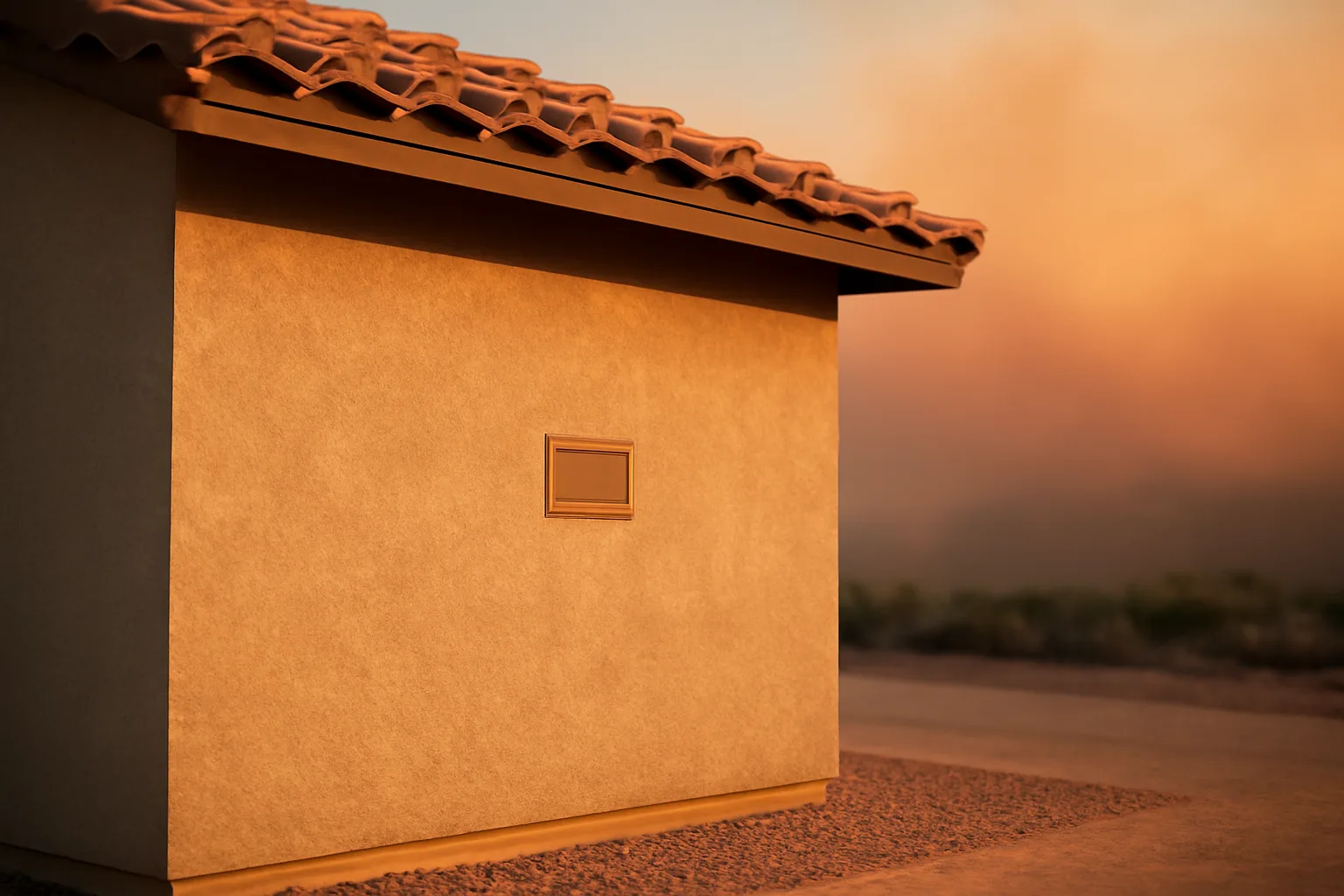
A fire resistant exterior is built so embers, not flame fronts, can't find anything to grab onto. Research from the Insurance Institute for Business & Home Safety (IBHS) and the U.S. Forest Service's Missoula Fire Sciences Lab has shown for decades that most homes lost in wildland fires ignite from wind-blown embers landing on or near the structure, not from a wall of flame rolling through. That changes the whole strategy. You're not trying to build a bunker. You're trying to remove the small stuff embers can catch on: dry leaves in a gutter, a wood fence touching siding, an open attic vent, old mulch against the foundation. The highest-value exterior upgrades, in the order I'd actually spend money on them, are: a Class A roof assembly, ember-and-flame-resistant vents, dual-pane windows with tempered outer panes, noncombustible or ignition-resistant siding, and a 5-foot noncombustible buffer at the base of the walls. CAL FIRE's own guidance on wildfire mitigation puts roofs, vents, and the zone right next to the house at the top of the list because that's where ember accumulation does the most damage. None of this is exotic. It's mostly stuff any competent roofer or contractor has installed before, just applied with wildfire in mind instead of ignored. For a broader walkthrough of what a full hardening project looks like room by room and system by system, see house fire prevention basics and how they map onto exterior work.
Which roofing materials actually resist wildfire embers?
Class A fire-rated roofing (asphalt composition shingles, concrete or clay tile, metal, and some treated wood products) is the standard almost every wildfire-zone building code now requires for new construction and major reroofs. California's building code (Chapter 7A of the California Building Code, and Section R327 for wildland-urban interface areas) requires Class A roof coverings in designated Fire Hazard Severity Zones [1]. Class A doesn't mean the material can't burn. It means it passed a standardized test (ASTM E108 or UL 790) simulating burning brands, flame spread, and intermittent flame exposure, and it resisted ignition and spread better than Class B or C materials. Untreated wood shakes are Class C or unrated, and they're one of the single worst roofing choices in a wildfire-prone area, full stop. The part people miss: the roof-wall intersection and any gaps under tile roofing are where embers actually get in. Tile roofs need bird-stops or foam closures at the eaves. Otherwise you've got a Class A field with an ember-sized gap at every course. A roofer who's never worked wildfire zones will often skip this because it's not required by generic roofing code, just wildfire code. Roof valleys, skylight curbs, and where a roof meets a chimney also collect debris fast. If you're not cleaning gutters and roof valleys twice a year in a fire-prone area, that's a bigger risk than most people think, regardless of what the roofing material is rated for.
What siding actually stops fire from spreading to walls?
Noncombustible or ignition-resistant siding matters most in the first several feet above grade and near any attached fence, deck, or planting bed. Options that perform well: stucco, fiber cement board (like HardiePlank), brick, stone veneer over noncombustible backing, and metal siding. Vinyl siding softens and can melt away from radiant heat well before flame contact, exposing the wall sheathing underneath, so it's a weak choice for the ground floor even if it's common in lower-risk regions. Wood siding, board-and-batten, and cedar shingles are common in the exact mountain and foothill communities facing non-renewals right now, and they're also some of the most flammable claddings you can put on a house. If a full re-side isn't in the budget, the highest-leverage partial fix is treating or replacing just the bottom 3 to 5 feet of wall material, plus anywhere siding meets a deck, fence, or attached structure. The gap behind siding matters too. Any vented rainscreen or air gap behind combustible siding needs ember-resistant mesh (typically 1/8-inch, noncombustible) at the top and bottom, or embers can work their way in behind the cladding and smolder unseen for hours. See fire safe landscaping California next to house for how to handle the planting beds that usually sit right against this same wall.
Do fire resistant windows and doors actually make a difference?
Yes, and it's one of the cheaper high-impact fixes if you're already replacing windows for any reason. Single-pane windows fail from radiant heat alone, sometimes before flame ever reaches the glass, because the pane cracks and then the wood or vinyl frame ignites the room's contents. Dual-pane windows with a tempered outer pane resist that initial thermal shock significantly longer. IBHS testing and CAL FIRE's wildfire home-hardening guidance both recommend dual-pane windows with at least one tempered pane, and multi-pane assemblies rated for wildfire exposure where you can get them. Metal or fiberglass frames outperform vinyl, which softens and drops the whole assembly out of the opening under heat. Exterior doors matter less than people assume, structurally, but the garage door is a real weak point: many garage doors are thin steel or fiberglass over foam, with big gaps at the bottom and sides where embers collect against dry storage inside. A solid-core door, weatherstripped tight, with no gap at the threshold, is a cheap fix relative to what's stored in most garages.
What are ember-resistant vents, and why do they matter so much?
Ember-resistant vents (sometimes called WUI vents or CAL FIRE-listed vents) use fine metal mesh or intumescent material to block embers from entering attic, crawlspace, and foundation vents while still allowing airflow. Standard hardware-store vents typically use 1/4-inch mesh, which is fine for keeping out rodents but does nothing to stop wind-driven embers, which can be smaller than a grain of rice and still ignite dry insulation or debris once inside. California's Chapter 7A building code requires vents in new construction and remodels in Fire Hazard Severity Zones to be either ember- and flame-resistant listed products, or protected with 1/8-inch corrosion-resistant metal mesh at minimum [1]. Retrofitting existing vents on an older home usually costs a few hundred dollars total for a typical house, which makes it one of the best-value fixes on this whole list. A vent that's rusted, bent, or missing its screen entirely is an open door for embers, and it's shockingly common on homes over 20 years old. Walk your own roofline and foundation and actually look at every vent up close. Don't assume.
What is the 5-foot noncombustible zone, and is it required now?
The 5-foot zone (often called Zone 0 or the ember-resistant zone) is the ground and any structures within 5 feet of the home's exterior walls, and it's supposed to have no combustible mulch, no dry vegetation, no woodpiles, and ideally no attached wood fencing. CAL FIRE's defensible space guidance describes this as the most important zone because it's where ember accumulation directly threatens the structure itself. California passed SB 63 and AB 3074, which direct the state Board of Forestry and Fire Protection to adopt ember-resistant zone regulations for Zone 0, but as of this writing the specific regulatory language and mandatory compliance timeline have not been finalized and adopted into the state fire code. The Board of Forestry's public process has been ongoing, and CAL FIRE has stated it intends to bring a defined Zone 0 standard through rulemaking, but homeowners asking when it takes effect are asking a fair question with a genuinely moving answer right now. Check the Board of Forestry and Fire Protection's regulatory update page directly before assuming a hard deadline. Until a final rule is adopted and a compliance date set, treat the 5-foot zone as strongly recommended, not yet a statewide mandate for existing homes. Many local fire districts already require some version of it for new construction or as a condition of an inspection sign-off, so check your local fire district's specific Zone 0 or 5-foot clearance requirement, since enforcement varies by jurisdiction.
When does the California defensible space law go into effect?
California's core defensible space law, Public Resources Code Section 4291, already requires 100 feet of defensible space clearance around structures in State Responsibility Area and some Local Responsibility Area lands, and it has been in effect in various forms since it was expanded in 2005 [2]. That part isn't new and isn't pending. What's still pending is the newer Zone 0 (0-5 foot ember-resistant zone) requirement created by SB 63 (2023) and related legislation, which directs the Board of Forestry to write specific regulations for that inner zone. As of now, no statewide mandatory compliance date has been finalized for Zone 0 on existing homes; the Board of Forestry's rulemaking process is ongoing and CAL FIRE has indicated a phased rollout is likely, starting with the highest-risk Fire Hazard Severity Zones first. If you got a defensible space inspection notice from CAL FIRE or your local fire department, that's almost always enforcing the existing 100-foot Section 4291 requirement, not the new Zone 0 rule. Read your notice closely; it should say which statute or local ordinance it's citing.
What fire safe rules for homes take effect in 2026?
No single nationwide "2026 rule" exists, and I'd be cautious of anyone claiming a firm national date. What's realistic: California's Zone 0 ember-resistant zone regulations, once the Board of Forestry finalizes them, are widely expected to phase in starting with the highest Fire Hazard Severity Zones, and 2026 has been floated informally as an early target in state discussions, but that is not yet locked into adopted regulatory text as of this writing. Confirm the actual adopted date on the Board of Forestry and Fire Protection's rulemaking page before you plan around it. Separately, insurers operating under California's Sustainable Insurance Strategy reforms (finalized by the California Department of Insurance in 2024-2025) are required to expand wildfire coverage availability in higher-risk areas in exchange for being allowed to use forward-looking catastrophe modeling in their rate filings, with implementation continuing through 2025 and into 2026 [3]. That's a rate and availability change, not a building-code mandate on homeowners, but it's directly why some non-renewed homeowners may see new offers reappear as the reforms phase in. Local jurisdictions in Colorado, Oregon, and Arizona each set their own wildfire building and defensible space codes on different timelines. Check your specific county or fire district's current wildfire building code adoption date, since these vary.
Why won't people follow the defensible space law in California?
Cost, labor shortages, and enforcement gaps are the honest answer, not ignorance. A full 100-foot defensible space clearance on a wooded lot can run from a few hundred dollars in DIY labor to several thousand dollars for professional clearing on steep or heavily forested parcels, and many homeowners simply don't have that cash sitting around, especially after already absorbing an insurance non-renewal. CAL FIRE itself has acknowledged compliance is inconsistent: statewide defensible space inspection data has repeatedly shown a meaningful share of inspected properties fail on first inspection, often for fixable but neglected items like dead vegetation near structures or wood piles against fences [4]. Some of that is procrastination. A lot of it is genuinely not knowing the specific rule applies to their parcel, especially for people who bought a home years before their area was reclassified into a higher Fire Hazard Severity Zone. There's also a real enforcement gap. Local fire agencies conduct defensible space inspections, but staffing varies enormously by county, and a first-time violation typically results in a re-inspection notice, not an immediate fine. That soft first step means some homeowners deprioritize it until they get a second notice, or until an insurer's own inspection flags it first. If you got a non-renewal notice specifically citing brush or vegetation, treating that as your real deadline, regardless of what any government inspection cycle says, is the practical move. For the vegetation side of this problem specifically, fire safe landscaping California next to house covers plant selection and spacing in more depth.
How do you prepare for a wildfire as a homeowner, beyond the exterior?
Preparing for a wildfire is really three separate jobs: hardening the structure, clearing defensible space, and having a documented evacuation and insurance plan ready before you need it. Ready.gov's wildfire preparedness guidance recommends assembling a go-bag, knowing two evacuation routes, and signing up for local emergency alerts well before fire season starts, not when you smell smoke. On the documentation side, which is where a lot of non-renewed homeowners get stuck later, take dated exterior photos of your roof, vents, siding, and the 5-foot zone now, before any incident, and keep receipts for any hardening work. If you ever need to show an insurer or adjuster what mitigation work you completed, a folder of dated photos and invoices is worth far more than your memory of what you did in 2022. This is also where a prebuilt resource can save real time under pressure: DefensibleHome's $99 one-time Survival Kit Builder walks through exactly which photos, receipts, and mitigation records insurers and fire districts actually ask for, organized so you're not scrambling to find them during an active evacuation or a claims dispute. We don't file claims on your behalf; you prepare and send your own documentation, and it's not legal or insurance advice, just organization. For the broader emergency-prep side beyond the house itself, defensible covers the zone-by-zone clearance requirements in more detail.
How do you actually prevent wildfires, forest fires, and house fires from starting?
Most wildfires in the U.S. are human-caused, not lightning-caused. Research cited by the U.S. Forest Service and multiple peer-reviewed fire science studies has found human activity accounts for the large majority of wildfire ignitions nationally, driven by things like unattended campfires, equipment sparks, downed power lines, and debris burning [5]. Preventing forest fires at the community level mostly comes down to eliminating those specific ignition sources: fully extinguishing campfires (drown, stir, drown again), avoiding outdoor equipment use during red flag warnings, not parking hot vehicles on dry grass, and following local burn permit rules exactly. At the individual home level, "preventing" a wildfire from destroying your specific house is really the defensible space and hardening work covered throughout this article: it's not about stopping the fire in the forest, it's about making sure your structure can't ignite when embers from that fire arrive, sometimes from a mile or more away. CAL FIRE's "Ready, Set, Go" program frames this exactly that way: you can't control the wildland fire, but you can control whether your home is the kind of structure embers can ignite. Smokey Bear's "Only You Can Prevent Wildfires" campaign, run by the USDA Forest Service since 1944, exists because that human-ignition-source math is real and campfire and debris-burning negligence remains a leading cause year after year [6]. See only you can prevent wildfires for more on the human-caused ignition side specifically, and fire at a house and house fire for structure-specific ignition prevention indoors and out.
Is Santa Barbara safe from fire?
No coastal California community, including Santa Barbara, is meaningfully safe from wildfire risk, and the area's own fire history proves it directly. The 2017 Thomas Fire burned over 281,000 acres across Ventura and Santa Barbara counties and was, at the time, the largest wildfire in modern California history, and it was followed within weeks by the deadly Montecito debris flow that killed 23 people when rain hit the fire-scarred hillsides [7]. The 1990 Painted Cave Fire and 2009 Jesusita Fire also burned directly into Santa Barbara neighborhoods, destroying hundreds of homes combined. Santa Barbara County is largely mapped within CAL FIRE's Very High and High Fire Hazard Severity Zones in the foothill and wildland-urban interface areas, particularly in Montecito, Mission Canyon, and the hillside neighborhoods above the city . Homes closer to the coastal flats have somewhat lower direct wildfire exposure but aren't zero-risk, especially given how far wind-driven embers travel in a Santa Ana or sundowner wind event, which is the specific wind pattern that drove the Thomas Fire's rapid spread. If you live anywhere in Santa Barbara County's foothill or canyon communities, the same hardening priorities in this article apply directly to you, and checking your specific parcel's Fire Hazard Severity Zone designation on CAL FIRE's map is worth five minutes.
Frequently asked questions
When does the California defensible space law go into effect?
The core 100-foot defensible space requirement (Public Resources Code 4291) has been in effect since a 2005 expansion and applies now. The newer Zone 0 (0-5 foot ember-resistant zone) rule from SB 63 is still in the Board of Forestry's rulemaking process, with no finalized statewide compliance date yet. Check the Board of Forestry's site for the current status before assuming a deadline.
Why won't people follow the defensible space law in California?
Mostly cost and inconsistent enforcement, not ignorance. Clearing brush on a wooded lot can run from a few hundred dollars in DIY labor to several thousand for professional clearing, and first-time violations typically get a re-inspection notice rather than an immediate fine, so many homeowners deprioritize it until a second notice or an insurance inspection forces the issue.
How do you prevent wildfires?
Most wildfires are human-caused, so prevention means fully extinguishing campfires, avoiding outdoor equipment use during red flag warnings, following local burn permit rules, and maintaining vehicles and power equipment to avoid sparking dry vegetation. USDA Forest Service data has consistently found human activity, not lightning, causes the majority of wildfire ignitions nationally.
How do you prepare for a wildfire?
Harden your home's exterior (Class A roof, ember-resistant vents, dual-pane windows, noncombustible zone within 5 feet), clear defensible space per your local fire district's rules, and build an evacuation plan with two routes and a go-bag, per Ready.gov guidance. Also photograph and document all mitigation work before fire season for insurance purposes.
How do you prevent forest fires?
Extinguish campfires completely (drown, stir, drown again), never leave a fire unattended, avoid using chainsaws, generators, or off-road vehicles on dry grass during red flag warnings, and follow local burn permit rules for debris burning. These human-ignition sources account for the large majority of wildfire starts nationally, according to Forest Service research.
How do you avoid forest fires as a hiker or camper?
Check current fire restrictions and red flag warnings before heading out, use only designated fire rings, never leave a campfire unattended even briefly, and carry water or a shovel to fully extinguish coals. Avoid parking vehicles with hot undercarriages on dry grass, since catalytic converters and exhaust systems are a documented ignition source.
What fire safe rules for homes take effect in 2026?
No firm nationwide 2026 rule exists yet. California's Zone 0 ember-resistant zone regulations are expected to phase in starting with the highest Fire Hazard Severity Zones, with 2026 discussed informally as an early target, but the Board of Forestry has not finalized adopted regulatory text or a hard compliance date as of this writing.
Is Santa Barbara safe from fire?
No. Santa Barbara County has burned repeatedly, including the 2017 Thomas Fire (over 281,000 acres) and the 1990 Painted Cave and 2009 Jesusita fires, which destroyed hundreds of homes. Much of the foothill and canyon area is mapped as Very High or High Fire Hazard Severity Zone by CAL FIRE, so hardening and defensible space still matter there.
How can we prevent forest fires as a community?
Community-level prevention means enforcing local burn bans during red flag conditions, maintaining power line clearance (a documented ignition source in several major California fires), funding defensible space inspections, and public education on campfire and equipment safety, since human activity causes most ignitions rather than natural causes like lightning.
What's the single best exterior upgrade for wildfire resistance?
Ember-resistant vents, dollar for dollar, because they're cheap (often a few hundred dollars total) and close off a direct entry point for embers into the attic and crawlspace, which is a common ignition path CAL FIRE's hardening guidance specifically flags. A Class A roof matters more in total risk reduction, but usually costs far more to retrofit.
Does vinyl siding work in a wildfire zone?
Not well for the ground floor or near vegetation. Vinyl softens and can melt away from radiant heat before flame contact, exposing the wall sheathing underneath. Fiber cement, stucco, brick, or metal siding perform significantly better, especially in the first several feet above grade where ember accumulation is heaviest.
Is the 5-foot Zone 0 rule mandatory right now in California?
Not yet as a finalized statewide mandate for existing homes. SB 63 directed the Board of Forestry to write Zone 0 regulations, but the rulemaking is still in progress. Some local fire districts already require a version of it for new construction, so check your specific jurisdiction rather than assuming it's optional or mandatory statewide.
What roof material is required in California wildfire zones?
Class A fire-rated roofing (per Chapter 7A and Section R327 of the California Building Code) is required in designated Fire Hazard Severity Zones. That includes asphalt composition shingles, concrete or clay tile, metal roofing, and certain treated products, all tested under ASTM E108 or UL 790 for ember and flame resistance.
Sources
- California Building Standards Commission, Chapter 7A: Class A roofing and ember-resistant vent standards required in Fire Hazard Severity Zones
- California Public Resources Code Section 4291: 100-foot defensible space clearance requirement around structures in State Responsibility Areas
- California Department of Insurance, Sustainable Insurance Strategy: 2024-2025 reforms require insurers to expand wildfire coverage in exchange for using catastrophe modeling in rate filings
- CAL FIRE, Defensible Space Inspection Program: A significant share of inspected properties fail defensible space inspections on first visit for fixable vegetation issues
- USDA Forest Service, Human-Started Wildfires Research: Human activity accounts for the large majority of wildfire ignitions in the United States
- USDA Forest Service, Smokey Bear Campaign History: Only You Can Prevent Wildfires campaign has run since 1944 targeting human-caused ignition
- CAL FIRE, Fire Hazard Severity Zone Maps: Santa Barbara County foothill and canyon communities are mapped in Very High and High Fire Hazard Severity Zones