Last updated 2026-07-25
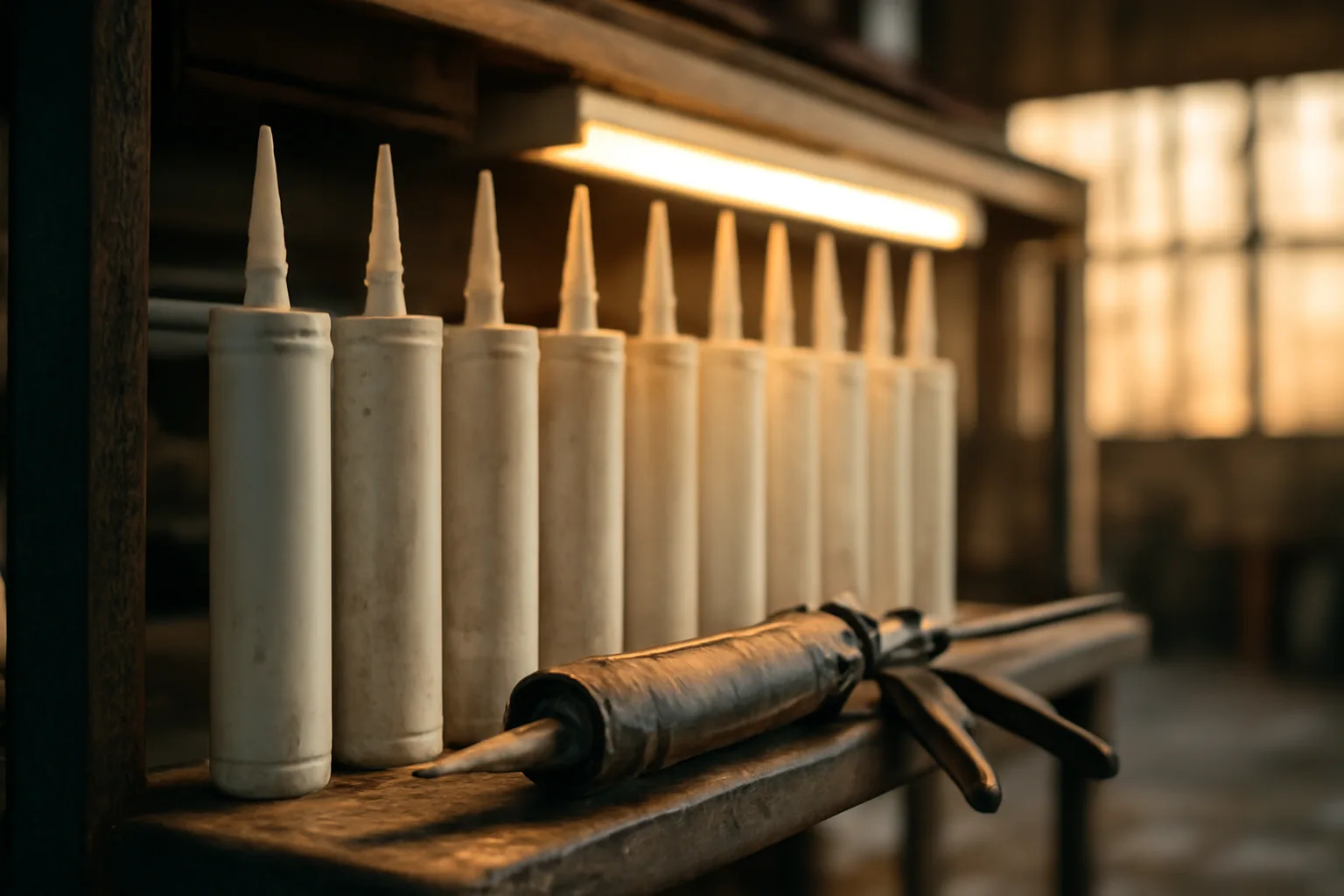
TL;DR
Home Depot carries fire-rated caulks (3M Fire Barrier, Hilti CP 606, DAP FIRESTOP) tested to ASTM E814 for stopping flame spread through wall penetrations, not wildfire ember intrusion. For wildfire hardening, use them to seal gaps around vents, siding, and eaves as one piece of a defensible space plan, alongside ember-resistant vents and Class A roofing.
what does 'fire resistant caulk' actually mean at Home Depot
Walk the fire-stopping aisle at Home Depot and you'll see products labeled "fire barrier," "fire block," or "firestop caulk." These are almost always tested to ASTM E814 (the standard fire test for firestop systems) or UL 1479, which measure how long a sealed penetration in a wall, floor, or ceiling resists flame and smoke passage during an interior structure fire [1]. That's a different test than what matters for wildfire. Products like 3M Fire Barrier Sealant CP 25WB+, Hilti CP 606 Flexible Firestop Sealant, and DAP FIRESTOP Sealant are rated in hours (commonly 1-hour, 2-hour, or 3-hour ratings) for how long they hold back fire spreading between rooms or floors through pipe penetrations, electrical boxes, and joints [2]. None of these products carry a wildfire-specific ember intrusion rating, because that rating basically doesn't exist for caulk as a standalone product category. What does exist is the California State Fire Marshal's list of Building Materials Listing (BML) products tested under the WUI (wildland-urban interface) provisions of Chapter 7A of the California Building Code, which covers vents, siding, decking, and eaves as assemblies, not caulk in isolation. So when you're standing in the Home Depot aisle, the honest answer is: buy a fire-rated caulk for the specific job (sealing a penetration, closing a gap), but don't expect a tube of caulk alone to make your home wildfire-resistant. It's one small piece of a much bigger system covered in our defensible space guide.
which Home Depot caulk products are rated for fire, and what do the ratings mean
| 3M Fire Barrier Sealant CP 25WB+ | ASTM E814 / UL 1479 | Pipe, cable, conduit penetrations | Up to 3 hrs (assembly-dependent) | |
|---|---|---|---|---|
| Hilti CP 606 Flexible Firestop Sealant | ASTM E814 / UL 1479 | Movement joints, penetrations | Up to 2 hrs (assembly-dependent) | |
| DAP FIRESTOP Sealant | ASTM E814 | Small gaps, penetrations under 4 inches | Up to 2 hrs | |
| Red Devil Fire Stop Sealant | ASTM E814 | Residential penetrations | 1 hr typical | The rating number (1-hour, 2-hour, 3-hour) is not a standalone caulk property. It applies to a tested assembly, meaning the caulk plus the specific wall type, penetration size, and backing material it was tested with. Swap any part of that assembly and the rating technically no longer applies, per the listing requirements most manufacturers publish in their UL or Intertek certificate documentation [2]. For wildfire hardening specifically, none of these products are marketed as WUI-compliant caulk, because Chapter 7A doesn't have a caulk category. It regulates vents, eaves, siding, and windows as tested assemblies. Caulk shows up as a supporting material, used to close small gaps that could otherwise let embers or hot gases in around a vent frame or siding joint. |
Here's a rundown of what's commonly stocked, based on manufacturer spec sheets available through Home Depot's product listings and the manufacturers' own technical data sheets. | Product | Rating basis | Typical use | Fire-rated hours |
where should you actually use fire-rated caulk on a home in a wildfire zone
The realistic use cases for fire-rated caulk in wildfire prep are sealing gaps, not creating a fire-resistant barrier from scratch. CAL FIRE's home hardening guidance repeatedly emphasizes closing gaps as small as 1/8 inch, since embers can enter through surprisingly small openings. Good uses: sealing the gap where siding meets a window or door frame, closing gaps around vent housings before installing an ember-resistant vent cover, sealing joints where a deck ledger board meets the house, and filling gaps in soffit and eave transitions. These are all spots CAL FIRE identifies as common ember entry points. Bad uses: relying on caulk alone over an unrated vent, using caulk to "fireproof" old wood siding, or assuming a fire-rated tube makes non-compliant materials suddenly code-compliant. Caulk doesn't change the ignition resistance of the substrate it's applied to. If you're working through a punch list after an insurance non-renewal or inspection letter, sealing gaps with a quality exterior fire-rated or high-temp silicone caulk is a cheap, fast win, usually under $15 a tube at Home Depot, that insurers and inspectors do notice during a defensible space walkthrough. It won't replace vent upgrades or siding replacement, but it closes the small stuff fast.
how much does fire-rated caulk cost and is it worth it compared to other hardening
A tube of 3M Fire Barrier Sealant or DAP FIRESTOP typically runs $10 to $20 at Home Depot, depending on size and formulation. That's inexpensive compared to almost every other line item on a wildfire hardening list. For comparison, ember-resistant vents (which actually carry WUI/Chapter 7A ratings) run $30 to $150 per vent depending on size and brand, and a full Class A roof replacement can run $8,000 to $25,000+ for an average home depending on material and square footage. Caulk is the cheapest item on the list, but it only closes small gaps. It's not a substitute for the big-ticket items. The honest cost-benefit take: spend the $50 to $100 on a few tubes of fire-rated caulk to seal obvious gaps around vents, siding, and trim as a same-weekend project. Then put your real hardening budget toward vents, roofing, and the 5-foot noncombustible zone around the foundation, which CAL FIRE's Zone 0 guidance treats as the highest-priority defensible space area [3].
when does the california defensible space law take effect
California's core defensible space law, requiring 100 feet of vegetation clearance around structures in State Responsibility Areas (and many Local Responsibility Areas with a Very High Fire Hazard Severity Zone designation), has been in effect since 2005 under Public Resources Code Section 4291 [4]. It's not new; it's been enforceable for two decades, though enforcement intensity varies a lot by county and fire district. What's newer and still evolving is Zone 0, the ember-resistant zone within 5 feet of a structure. The California Board of Forestry and Fire Protection has been developing Zone 0 regulations under SB 63 (2023) and earlier authorizing legislation, but as of this writing, the specific Zone 0 regulations for existing homes have faced repeated delays in rulemaking and have not been finalized into enforceable statewide regulation for all structures. CAL FIRE's public materials describe Zone 0 as recommended best practice while the formal regulatory process continues [3]. Because the exact effective date and enforcement mechanism for Zone 0 depends on the final regulatory text adopted by the Board of Forestry, and your local fire district's implementation timeline, check your specific district's requirements directly. [Fill in: local fire district Zone 0 enforcement date and defensible space inspection schedule]
why don't people follow the defensible space law in california
Compliance with defensible space rules is uneven, and the reasons aren't mysterious: cost, labor availability, unclear enforcement, and simple procrastination. Clearing 100 feet of vegetation on a sloped, wooded lot can cost hundreds to thousands of dollars in contractor labor, and CAL FIRE inspections historically have been inconsistent from county to county, meaning many homeowners never get a visit or a citation. There's also a real disconnect between what the law requires and what homeowners believe protects their house. Defensible space is about reducing flame contact and radiant heat, not eliminating every plant. Some homeowners resist clearing because they value privacy screening, shade, or landscaping aesthetics more than they weigh the fire risk, especially if they haven't personally experienced a close call. Enforcement penalties also vary. Violating PRC 4291 can result in citations and, in some jurisdictions, the fire agency performing the clearance and billing the property owner, but the process differs by Local Responsibility Area and the specific fire district's ordinance. [Fill in: local fire district's defensible space citation process and fine schedule] If you've gotten an insurance non-renewal letter tied to defensible space, treat the underlying law as the floor, not the ceiling. Insurers increasingly want photo documentation that goes beyond what CAL FIRE requires. Our guide on fire safe landscaping in California next to the house covers the plant-by-plant specifics.
how to prepare for a wildfire (the short version)
Preparing for a wildfire has three overlapping tracks: harden the structure, clear the defensible space zones, and have an evacuation plan ready before you need it. Ready.gov's wildfire preparedness guidance breaks this down into before, during, and after actions, and recommends assembling a go-bag and family communication plan well ahead of fire season [5]. Structure hardening priorities, in rough order of ember-entry risk: vents (ember-resistant, meeting Chapter 7A where applicable), roof (Class A material, clean of debris), eaves and soffits (enclosed, no gaps), windows (dual-pane or tempered glass reduces radiant heat cracking), and decking (noncombustible or ignition-resistant material near the structure). Defensible space priorities: Zone 0 (0-5 feet, ember-resistant, minimal combustibles), Zone 1 (5-30 feet, spaced and pruned vegetation), and Zone 2 (30-100 feet, reduced fuel load) [3] [4]. Documentation matters too, especially if you're trying to avoid or reverse a non-renewal. Photograph your hardening work, keep receipts for vent upgrades and roofing, and log your defensible space clearance dates. This isn't legal or insurance advice, and we don't file claims or negotiate with insurers on your behalf, but a homeowner showing up with dated photos and a maintenance log is in a stronger position when an inspector or underwriter reviews the property.
how to prevent wildfires (what actually reduces ignition risk)
Most wildfires in the U.S. are human-caused, not lightning-caused. Research from the U.S. Forest Service found that humans start roughly 84% of wildfires nationally, largely through debris burning, equipment use, campfires, and arson [6]. That statistic reframes prevention: it's mostly about how people behave outdoors, more than forest conditions. Practical prevention steps: never leave a campfire unattended and fully extinguish it (drown, stir, drown again) per Forest Service guidance; avoid mowing dry grass midday when equipment sparks are more likely to ignite fuel; maintain vehicle and equipment mufflers and spark arrestors; and follow local burn permit rules and red flag warning restrictions, which vary by county and are usually posted by the local fire district. [Fill in: local fire district's burn permit and red flag warning restrictions] At the home level, prevention overlaps heavily with hardening: reducing dry vegetation contact with the structure, keeping gutters clear of debris, and using ember-resistant vents all reduce the odds that an ember landing near your home turns into a structure fire. See our only you can prevent wildfires piece for the outdoor-behavior side of this.
how to prevent forest fires and avoid forest fires (same idea, different setting)
Preventing forest fires uses the same core behaviors as preventing wildfires near homes, just applied in wildland recreation settings. The Forest Service's Smokey Bear program, which has run public wildfire prevention messaging since 1944, centers on a few repeatable actions: fully extinguish campfires, never leave a fire unattended, check local fire restrictions before burning anything, and be careful with vehicles and equipment in dry grass [6]. Campfire safety specifics that actually matter: build fires only in designated rings or pits where available, keep them small, and use the "drown, stir, drown" method until the ash is cool to the touch, more than smoke-free. A fire that looks out is often still hot enough to reignite hours later if wind picks up embers. Debris burning is another major cause. Many wildfires start from residents burning yard waste on windy or dry days in violation of local burn bans. Checking your county's current burn status before lighting anything is a five-minute step that prevents a meaningful share of ignitions. [Fill in: local fire district's current burn ban status and permit contact]
how can we prevent forest fires at a community or policy level
Individual behavior matters, but community-level prevention adds another layer: fuel reduction projects, prescribed burns, and coordinated defensible space enforcement across a neighborhood, more than individual lots. CAL FIRE's Fire Prevention Grants program funds community fuel breaks, vegetation management, and evacuation route clearing specifically because isolated compliance (one homeowner clearing brush while three neighbors don't) provides limited protection when fire behavior is driven by landscape-scale fuel continuity [7]. HOAs and fire-safe councils play a real role here. Coordinated chipper days, shared contractor rates for vegetation clearance, and neighborhood-wide Zone 1/Zone 2 compliance pushes tend to move the needle more than individual effort alone, because embers and radiant heat don't respect property lines. If your neighborhood doesn't have a Firewise USA or local fire-safe council chapter, starting one is a realistic, low-cost step that insurers sometimes recognize favorably during underwriting review. At the policy level, prescribed burning and mechanical fuel treatment on public land adjacent to communities reduces the fuel load that turns a small ignition into a large fire. This is slower-moving and outside individual homeowner control, but it's worth knowing your state forestry agency's current prescribed burn schedule for your area. [Fill in: state forestry agency's prescribed burn schedule for your region]
what fire safe home requirements take effect in 2026
There's been real confusion about a supposed "2026 fire safe home law," and the honest answer is that no single nationwide or even statewide law with that exact framing has a confirmed 2026 effective date as of this writing. What's actually happening: California's Zone 0 ember-resistant zone regulations, developed under SB 63 and related rulemaking by the Board of Forestry and Fire Protection, have been in an extended rulemaking process, with various proposed effective dates discussed publicly that have shifted over time. Rather than repeat an unconfirmed date, the responsible move is to check the California Board of Forestry and Fire Protection's current regulatory status page directly, since proposed effective dates for Zone 0 and related WUI building code updates have moved before and could move again. [Fill in: current Zone 0 regulation effective date per CA Board of Forestry, checked at publication] Separately, some insurers are moving faster than regulators. Several California insurers participating in the state's Safer from Wildfires framework already give underwriting credit for Zone 0-style hardening (ember-resistant zone within 5 feet, enclosed eaves, ember-resistant vents) regardless of whether it's yet a legal mandate. That means doing the work early, before any 2026 deadline is confirmed, can help with insurance access even ahead of a regulatory requirement. If you're organizing your own hardening documentation for an insurer, a structured kit like DefensibleHome's $99 Wildfire Insurance Survival Kit can help you assemble photo-dated proof of vents, roofing, defensible space clearance, and caulking/sealing work in the format underwriters actually want to see, though we don't file claims or negotiate with insurers on your behalf.
is santa barbara safe from fire
No coastal California city is "safe" from wildfire risk in an absolute sense, and Santa Barbara County has a documented history of major fires, including the 1990 Painted Cave Fire and the 2017 Thomas Fire, which at the time was the largest wildfire in modern California history by acreage before being surpassed by later fires [8]. The Thomas Fire also triggered the deadly Montecito debris flow in January 2018, a reminder that wildfire risk compounds with secondary hazards like post-fire mudslides on burned, denuded slopes. Santa Barbara's risk is driven by its wildland-urban interface geography: dense chaparral hillsides, Santa Ana/sundowner wind events, and homes built directly against steep, fuel-loaded terrain. CAL FIRE's Fire Hazard Severity Zone maps classify significant portions of Santa Barbara County's hillside and foothill communities as Very High or High severity zones . That doesn't mean every property in Santa Barbara faces equal risk. Homes with strong defensible space, ember-resistant construction, and distance from dense chaparral fare measurably better in fire studies than similar homes without those features. The city and county have active defensible space inspection and enforcement programs, and homeowners can check their specific parcel's Fire Hazard Severity Zone designation through CAL FIRE's mapping tool .
how does fire-rated caulk fit into the bigger insurance documentation picture
If you're facing a non-renewal letter, the caulk itself is a minor line item, but the documentation habit it represents matters a lot. Insurers reviewing wildfire risk increasingly want to see dated evidence of specific hardening actions, more than a general claim that "we did some brush clearing." A simple, useful documentation approach: photograph before-and-after shots of every sealed gap, vent upgrade, and cleared zone, keep the receipts for materials (yes, including that $12 tube of DAP FIRESTOP), and log the date. This builds a paper trail that mirrors what CAL FIRE's own home hardening checklist recommends homeowners track for defensible space compliance. We're not a public adjuster, we don't negotiate with insurers, file claims, or promise coverage or reinstatement. What we do is help homeowners organize their own documentation so it's ready when an inspector, underwriter, or agent asks for it. If your home recently had a fire nearby or you're rebuilding trust with your carrier after a scare, having organized proof of every hardening step, caulk included, is worth the hour it takes to compile.
Frequently asked questions
Is fire-rated caulk from Home Depot the same as wildfire-resistant materials required by California's Chapter 7A code?
No. Fire-rated caulk (ASTM E814/UL 1479 rated) is tested for interior fire-stopping through wall and floor penetrations. California's Chapter 7A wildland-urban interface code rates vents, siding, roofing, and decking as tested assemblies, and doesn't have a standalone wildfire caulk category. Use fire-rated caulk to seal gaps, not as a substitute for Chapter 7A-rated components.
When does the California defensible space law go into effect?
The core 100-foot defensible space requirement under Public Resources Code Section 4291 has been in effect since 2005. The newer Zone 0 (0-5 foot ember-resistant zone) regulation is still in rulemaking through the Board of Forestry and Fire Protection; check their current regulatory status page for the finalized effective date, since proposed dates have shifted.
Why don't more people follow California's defensible space law?
Mainly cost, inconsistent enforcement across counties, and a gap between what the law requires and what homeowners believe protects their property. Clearing 100 feet of vegetation can cost hundreds to thousands of dollars in labor, and many properties never receive a CAL FIRE inspection, so compliance often depends on the homeowner's own initiative.
How can I prepare for a wildfire if I just got a non-renewal letter?
Prioritize ember-resistant vents, a Class A roof kept debris-free, enclosed eaves, and defensible space clearance in Zones 0, 1, and 2 per CAL FIRE guidance. Photograph and date every improvement. Pack a go-bag per Ready.gov's wildfire checklist. This documentation helps if you're trying to get reconsidered by your carrier, though you should send it yourself; we don't file claims or negotiate coverage.
What actually prevents wildfires, since most aren't caused by lightning?
The U.S. Forest Service estimates humans cause roughly 84% of wildfires nationally, through debris burning, unattended campfires, equipment sparks, and arson. Prevention centers on fully extinguishing campfires (drown, stir, drown), checking local burn restrictions before burning debris, and maintaining spark arrestors on equipment used in dry vegetation.
How do I prevent forest fires when camping or doing yard work?
Fully extinguish campfires until cool to the touch, never leave fire unattended, and check current local burn restrictions before burning yard debris. For yard work, avoid mowing dry grass during peak heat and keep equipment mufflers and spark arrestors maintained, since equipment sparks are a documented ignition source.
What fire-safe home requirements take effect in 2026?
No confirmed single 2026 nationwide law exists as of this writing. California's Zone 0 ember-resistant zone rulemaking under SB 63 has discussed various proposed effective dates that have shifted during the regulatory process. Check the California Board of Forestry and Fire Protection's current rulemaking status directly rather than relying on a fixed 2026 date.
Is Santa Barbara safe from wildfire?
No California hillside community is fully safe from wildfire. Santa Barbara County has a history of major fires, including the 2017 Thomas Fire, and CAL FIRE maps classify significant portions of its foothill areas as Very High Fire Hazard Severity Zones. Risk varies sharply by specific parcel, defensible space, and construction hardening.
Can caulking gaps around vents replace installing ember-resistant vents?
No. Caulk can seal small gaps around a vent frame, but it doesn't change the vent's ember-resistance rating. Chapter 7A-compliant vents are tested as assemblies for ember intrusion resistance; an unrated vent with caulked edges is still an unrated vent. Replace with a rated vent, then use caulk to seal the surrounding gap.
How much does fire-rated caulk cost at Home Depot?
Typically $10 to $20 per tube for products like 3M Fire Barrier Sealant, Hilti CP 606, or DAP FIRESTOP, depending on size and formulation. It's the cheapest item on most wildfire hardening lists, useful for sealing small gaps around vents, siding, and trim, but not a substitute for vent, roof, or siding upgrades.
What's the difference between Zone 0, Zone 1, and Zone 2 in defensible space?
Zone 0 is 0-5 feet from the structure, requiring minimal combustibles and ember-resistant landscaping. Zone 1 is 5-30 feet, requiring spaced and pruned vegetation. Zone 2 is 30-100 feet, requiring reduced fuel load. All three are described in CAL FIRE's defensible space guidance under PRC 4291.
Does Home Depot sell products specifically labeled for wildfire defensible space compliance?
Home Depot sells individual components that support wildfire hardening, fire-rated caulk, ember-resistant vents from certain brands, and Class A roofing materials, but there's no single "wildfire defensible space kit" product line. Homeowners typically need to select and combine several separately-rated products to meet Chapter 7A or local fire district requirements.
Sources
- ASTM International, E814 Standard Test Method for Fire Tests of Penetration Firestop Systems: Fire-rated caulk products are tested to ASTM E814 for fire-stopping through penetrations, not wildfire ember intrusion
- California Department of Forestry and Fire Protection, Building Materials Listing Program: Chapter 7A WUI code compliance is tested and listed at the assembly level for vents, siding, decking and eaves, not for standalone caulk products
- California Public Resources Code Section 4291: California defensible space law requiring 100 feet of vegetation clearance has been in effect since 2005
- California Department of Insurance, Safer from Wildfires framework: Some California insurers give underwriting credit for Zone 0-style hardening actions ahead of any final regulatory mandate
- U.S. Forest Service, human-caused wildfire research: Humans start roughly 84 percent of wildfires in the United States
- CAL FIRE, Fire Prevention Grants Program: CAL FIRE funds community-level fuel reduction and defensible space projects because isolated individual compliance has limited effect at landscape scale
- CAL FIRE, Thomas Fire incident information: The 2017 Thomas Fire was, at the time, the largest wildfire in modern California history by acreage
- CAL FIRE, Fire Hazard Severity Zone Viewer: CAL FIRE maps classify portions of Santa Barbara County's hillside communities as Very High Fire Hazard Severity Zones