Last updated 2026-07-25
TL;DR
Fire-resistant home materials work by blocking embers and radiant heat at the roof, vents, siding, and windows, the places NIST and CAL FIRE research shows homes actually ignite. Class A roofing, 1/8-inch metal mesh vents, ignition-resistant siding, and dual-pane tempered windows are the four upgrades with the strongest evidence behind them.
What actually makes a home 'fire resistant'?
A fire-resistant home is not a home wrapped in fireproof material. Almost nothing is truly fireproof under wildfire conditions. What separates a home that survives from one that doesn't is whether embers can find a way in, and whether radiant heat from nearby flames can ignite something before the fire front even arrives. Research from the Insurance Institute for Business & Home Safety (IBHS) and the National Institute of Standards and Technology (NIST) on post-fire investigations (including the 2018 Camp Fire and 2017 Tubbs Fire) consistently finds the same failure points: open eave vents, combustible roofing, gaps under decks, and vegetation touching the structure. NIST's investigation into the Camp Fire specifically flagged embers entering attic and foundation vents as a repeated ignition path [1]. So 'fire resistant' really means: a roof that won't hold an ember long enough to smolder, vents small enough to keep embers out, siding that won't flash-ignite from radiant heat, and windows that won't shatter from heat before the fire even touches the house. That's the whole game. Get those four things right and you've addressed most of the documented failure modes. This matters more than ever if you've gotten a non-renewal notice or an inspection letter. Insurers underwriting in CA, CO, OR, and AZ increasingly ask specific questions about roof class, vent type, and defensible space, more than general 'is your house wildfire safe.' Documentation of the materials you actually have (with photos, receipts, and spec sheets) is what turns a mitigation project into evidence an insurer or state-backed plan can act on.
Which roofing materials actually resist wildfire?
| Asphalt/composition shingle (Class A rated) | Class A | $400-$550 | Most common; must be specifically rated Class A, not all are | |
|---|---|---|---|---|
| Concrete or clay tile | Class A | $700-$1,200 | Very durable; check underlayment, tiles alone don't stop embers from gaps | |
| Metal (standing seam) | Class A | $800-$1,400 | Long lifespan; embers can still lodge in valleys/debris | |
| Untreated wood shake | Class C or unrated | $600-$900 | Banned or restricted in many WUI zones; avoid | Costs above are rough national ranges per roofing square (100 sq ft) as of the past few contractor-reported cycles; get local bids, since CA/CO labor costs run higher than national averages. A Class A roof alone doesn't finish the job. Embers collect in roof valleys, gutters, and where the roof meets a wall. Keeping gutters clear and using metal (not plastic) gutter guards matters as much as the shingle rating itself, based on IBHS ember-storm testing of ignition points [2]. |
Class A roofing assemblies are the standard for wildfire-prone construction, and CAL FIRE's Chapter 7A building standards effectively require them in California's Wildland-Urban Interface (WUI) fire hazard severity zones. Class A is a fire rating from ASTM E108 / UL 790 testing, not a specific material, so several material types can qualify. Here's how the common roofing options compare: | Material | Fire rating (typical) | Approx. cost per sq. (installed) | Notes |
What vent type actually keeps embers out?
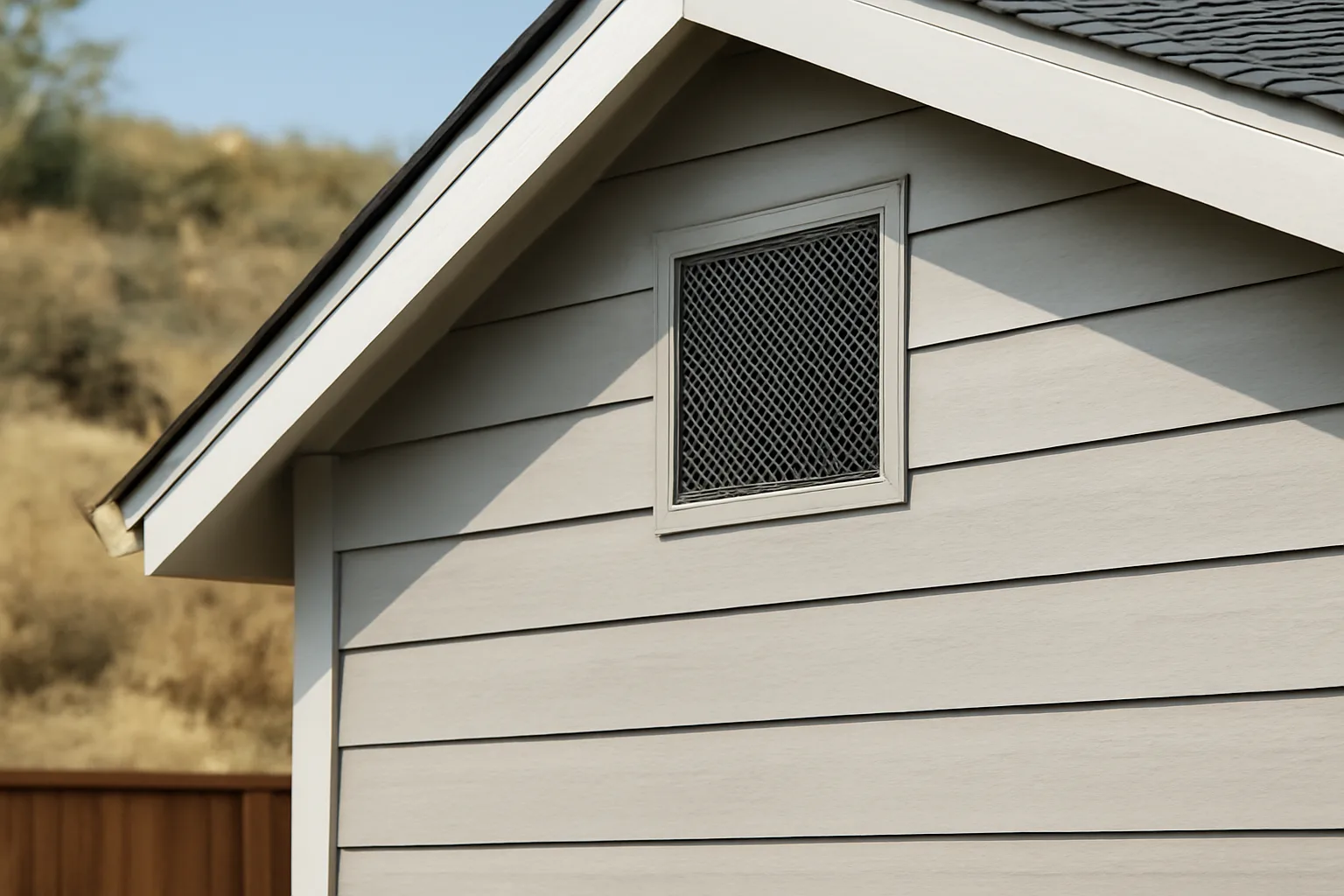
Standard vents with 1/4-inch mesh do not stop embers. Embers as small as a few millimeters can pass through standard attic and foundation vents and ignite insulation or debris inside. This is one of the best-documented ignition paths in post-fire structure loss studies. California's Chapter 7A (Title 24, Part 2) requires vents in new construction and remodels in WUI zones to either use 1/8-inch or smaller corrosion-resistant metal mesh, or be listed and tested as ember-and-flame-resistant under SFM 12-7A-1. Retrofitting existing vents with 1/8-inch metal mesh, or replacing them with tested ember-resistant vent products, is one of the cheaper, higher-leverage upgrades a homeowner can do, often $15-$40 per vent in materials if you're comfortable doing it yourself, more if you hire it out. Don't use fiberglass or plastic mesh. It melts. Don't assume 'vented' means 'safe' either; check the actual opening size. A lot of older CA and CO homes built before Chapter 7A took effect (原 for new construction starting 2008, expanded over time) still have the old wide-mesh vents. If you're working through a full hardening project, our guide on defensible space clearing and structural prep walks through how vent retrofits fit into a broader work order you can hand to a contractor or document for an insurer.
What siding materials resist ignition best?
Ignition-resistant siding stops radiant heat and direct flame contact from igniting the wall assembly, and the material matters less than eliminating gaps, ledges, and combustible trim near the ground. Fiber cement, stucco, and treated/rated wood products all pass ignition-resistance testing under the right assembly, but installation detail (no gaps at the base, no vinyl trim pieces that melt and expose sheathing) is where most real-world failures happen. Fiber cement siding (like HardiePlank) is inherently non-combustible and one of the most common upgrades homeowners make specifically for wildfire risk, generally running $6-$12 per sq ft installed. Stucco is also non-combustible and common in CA/AZ new construction. Vinyl siding is not recommended in WUI zones; it can soften and expose the wall cavity well before actual flame contact, based on IBHS ignition-resistant construction guidance [2]. The often-missed detail: it's more than the wall material, it's the first 6 inches above grade. Combustible mulch, wood fencing that attaches directly to the house, and gaps under siding at the foundation line are common ignition points regardless of what the upper wall is made of. If you're planning landscaping changes alongside a siding upgrade, see our breakdown of fire-safe landscaping right next to the house for the specific plant and mulch choices that don't undercut the siding work.
Do fire-resistant windows actually matter?
Yes. Single-pane windows can crack or shatter from radiant heat well before flames reach the glass, creating an opening for embers and heat straight into the living space. This is a documented failure mode, not a theoretical one. Dual-pane windows with at least one tempered glass pane perform significantly better under radiant heat exposure than single-pane assemblies. Chapter 7A requires this multi-pane, tempered-glass-on-one-side standard for new construction and additions in California WUI zones. Full-frame replacement isn't cheap, often $600-$1,200 per window installed depending on size and region, so many homeowners prioritize windows facing the highest-risk direction (typically the slope side, or the side facing the densest vegetation) rather than replacing every window in the house at once. If full replacement isn't in the budget this year, a cheaper interim step is exterior metal shutters or fire-rated screens for the highest-risk windows, though these are less standardized and less tested than the glass upgrade itself. Don't rely on curtains or interior blinds; they can ignite from radiant heat transmitted through cracked glass.
What about decks, fences, and attachments?
Anything wood that touches the house (deck, fence, pergola) gives fire a direct path to the structure, and this is one of the most consistently cited failure points in post-fire investigations. A fire-resistant roof and siding package doesn't help much if a wood fence runs straight into the exterior wall and carries flame right to it. CAL FIRE's home hardening guidance specifically calls out replacing the first 5 feet of fencing attached to the house with non-combustible material (metal, or a masonry/metal transition section) as a low-cost, high-impact change [3]. Composite decking rated for ignition resistance (tested under CBC/Chapter 7A deck standards) is preferable to raw wood decking, and enclosing the underside of a deck to prevent ember accumulation is as important as the decking material itself. This is the category where a lot of well-intentioned homeowners spend money on the wrong thing. Replacing a deck with composite boards while leaving a gap-free underside of dry leaf litter doesn't solve the actual ignition risk. If a fire has already reached your property line, our piece on what happens during a fire at a house covers how these attachment points behave under real fire exposure, based on documented case investigations.
When does the California defensible space law go into effect?
California's core defensible space law, Public Resources Code 4291, has been in effect since it was substantially amended in 2005, requiring 100 feet of defensible space clearance (or to the property line, whichever is less) around structures in State Responsibility Areas and some Local Responsibility Areas [4]. This isn't a future date, it's current law that CAL FIRE and local fire agencies actively enforce through inspections. What is changing is the new 'ember-resistant zone' requirement for the first 5 feet around a structure (sometimes called 'Zone 0'). California's SB 63 (2024) directs the Board of Forestry to adopt Zone 0 regulations, and the state's own timeline has slipped past its original target; as of the most recent Board of Forestry updates, the regulation was still in the rulemaking process rather than finalized and enforceable statewide. Homeowners should check directly with their local fire district or the Board of Forestry's current rulemaking page, because the exact effective date has moved more than once and enforcement will likely start with new construction before applying broadly to existing homes. Don't wait for the exact effective date to act on Zone 0 principles. Insurers are already asking about noncombustible material within 5 feet of the foundation on inspection forms in several states, regardless of what the state regulation's final effective date turns out to be.
What fire-safe home rules take effect in 2026?
There is no single nationwide '2026 fire-safe homes' rule; what's changing is a mix of state-level Zone 0 rulemaking, updated building codes, and insurer-specific inspection standards, and homeowners should verify the current status with their state fire marshal rather than assume a fixed date. California's Zone 0 (ember-resistant zone) regulation, authorized by SB 63, has been in an extended rulemaking process, and as of recent Board of Forestry communications, a final statewide effective date for existing homes had not been locked in. Separately, some jurisdictions adopt updated versions of the International Wildland-Urban Interface Code (IWUIC) on their own local timelines, and Colorado, Oregon, and Arizona each handle WUI building code adoption at the state or county level rather than through one uniform date. This is genuinely a 'check locally' situation: mitigation rules vary by fire district, and the same address can fall under different requirements depending on whether it sits in a state responsibility area, a local fire protection district, or an unincorporated county zone. If you got a non-renewal or inspection letter referencing a 2026 requirement, ask the insurer or your local fire marshal's office to name the specific code section. 'Fire-safe standards taking effect in 2026' is being used loosely in a lot of consumer content right now, sometimes correctly, sometimes as a rough guess. Get the citation before you spend money reacting to it.
Why won't some homeowners follow the defensible space law?
The honest answer, based on CAL FIRE's own compliance messaging and general enforcement patterns, is a mix of cost, labor availability, misunderstanding of the requirement, and simple procrastination, not defiance of the law itself. Clearing 100 feet of defensible space on a sloped, heavily wooded lot can run into the thousands of dollars if a homeowner hires it out, and CAL FIRE inspections in some counties find non-compliance rates high enough that agencies run repeat public awareness campaigns rather than assuming one notice will fix it. Some homeowners also misunderstand the rule, thinking 100 feet means a bare dirt clearing, when the actual guidance describes zone-based thinning and spacing, not full vegetation removal. Others simply don't know their property falls inside a State Responsibility Area until an inspection letter arrives. There's also a real access problem in some areas: senior homeowners, absentee owners, and people managing large wooded parcels alone may not have the physical capacity or contractor access to do the clearing work themselves, even when they understand and want to comply. This is part of why several California counties now offer chipper day programs and cost-share assistance through CAL FIRE and local fire safe councils, rather than relying on enforcement alone.
How do I prepare for a wildfire at home?
Wildfire preparation has two tracks that need to happen together: hardening the structure itself, and getting your household and documentation ready to evacuate on short notice. Ready.gov's wildfire preparedness guidance recommends creating a household evacuation plan, an emergency supply kit, and a defensible space plan well before fire season, not once smoke is visible [5]. On the structure side, CAL FIRE's home hardening checklist covers the material upgrades in this article (roof, vents, siding, windows, decks) plus keeping gutters clear, storing firewood at least 30 feet from the house, and moving flammable items away from under decks and against exterior walls [3]. On the household side, ready.gov recommends a 'go bag' with copies of insurance policies, identification, medications, and a communication plan for family members who may not be together when an evacuation order comes [5]. Documentation matters more than most people realize until they need to file a claim. Photos and receipts of the fire-resistant upgrades you've made (roof invoice, vent replacement receipts, siding permit) give you something concrete to hand an insurer during underwriting review or after a loss. We built a $99 Wildfire Insurance Survival Kit specifically to help homeowners organize that documentation, room by room and upgrade by upgrade, into something an insurer or adjuster can actually use. To be clear, we don't negotiate with insurers, file claims on your behalf, or promise coverage or reinstatement. We help you prepare your own paperwork so you're not scrambling for it after the fact. Roughly every homeowner in a WUI zone should also know their evacuation zone designation and sign up for local emergency alerts before fire season starts, since many counties use opt-in systems rather than automatic enrollment.
How can homeowners help prevent wildfires and forest fires?
Most wildfires that threaten homes are human-caused, and the specific prevention actions that matter most for homeowners are around debris burning, equipment sparks, and vehicle/equipment maintenance, not abstract 'be careful' advice. The U.S. Forest Service and CAL FIRE both cite unattended or improperly extinguished campfires and debris burns, dragging trailer chains, mower blade strikes on rock, and faulty equipment as leading ignition sources in wildland areas [6]. Practical prevention steps that hold up under scrutiny: never burn debris on windy days or under a burn ban, keep mowing to early morning when temperatures and wind are lower, maintain vehicles and equipment so they aren't dragging metal or throwing sparks, and fully extinguish (more than douse, actually stir and feel for heat) any campfire or debris pile before leaving it. CAL FIRE's 'One Less Spark' campaign specifically targets these everyday ignition sources rather than large-scale forest management, because homeowner behavior really does move the needle on the human-caused share of wildfire starts [6]. The 'only you can prevent forest fires' message (from the long-running Smokey Bear campaign) isn't just a slogan; the U.S. Forest Service estimates roughly 85-90% of wildland fires nationally are human-caused, a figure that has stayed in that range for years across multiple Forest Service and Interagency reports [7]. Preventing forest fires at the community level, beyond individual homeowner behavior, generally means supporting prescribed burn programs and fuel reduction projects on adjacent public lands, since untreated fuel buildup on nearby forest service or state land is a major driver of fire behavior once a fire starts, regardless of what any individual homeowner does on their own lot. Our only you can prevent wildfires piece goes deeper into the behavioral side of prevention if that's the angle you're after.
Is Santa Barbara safe from wildfire risk?
No area in California's wildland-urban interface, including Santa Barbara and the surrounding foothill communities, is considered free of wildfire risk, and CAL FIRE's Fire Hazard Severity Zone maps classify significant portions of Santa Barbara County as Moderate, High, or Very High severity zones . The 2017 Thomas Fire, which burned into Santa Barbara County and was followed by the deadly Montecito debris flow, is one of the more documented examples of how fire risk and its aftermath (mudslides on burn scars) compound in this specific region . 'Safe' isn't really the right frame for any WUI community; the better question is what hazard severity zone a specific address falls into, and what defensible space and hardening requirements apply there. CAL FIRE's FHSZ viewer lets homeowners look up their specific parcel rather than relying on a citywide generalization, and Santa Barbara addresses in the foothills tend to carry meaningfully higher zone ratings than flatter coastal parcels closer to the water . If you're in Santa Barbara or a similar coastal-adjacent WUI community and got an inspection letter or non-renewal notice, treat it the same way you would in Paradise, CA or Boulder, CO: check your specific FHSZ rating, confirm your local fire district's defensible space clearance requirements (they vary by district), and document your existing hardening before assuming your coastal location makes you exempt.
How does this connect to insurance non-renewal letters?
Insurers in CA, CO, OR, and AZ increasingly use specific, checkable criteria (roof material and age, vent type, defensible space clearance, deck material) when deciding whether to renew a wildfire-zone policy, and documenting the fire-resistant materials you've already installed is the single most useful thing you can hand back to them. This isn't guesswork; California's FAIR Plan and several admitted insurers have adopted wildfire risk scoring models that explicitly weight roof class and vegetation clearance, which is part of why CAL FIRE and the state have pushed the Zone 0 and Chapter 7A standards discussed above. A non-renewal letter usually cites general risk factors rather than specific deficiencies on your property, which puts the burden on you to proactively document what you've done. Photos of your Class A roof label, receipts for vent mesh replacement, before/after defensible space clearing photos, and a dated timeline all give an insurer's underwriting team something concrete instead of a generic risk score. We're not a public adjuster or an insurance broker, and we don't file claims, negotiate settlements, or promise a reinstated policy. What a documentation kit does is put your own evidence in the format underwriters and adjusters actually ask for, which is on you to send. If a neighbor lost coverage over the same wildfire risk factors you're facing, the material upgrades in this article (roof, vents, siding, windows, deck attachments) are the specific things worth photographing and filing before your own renewal date comes up, not after.
Frequently asked questions
When does the California defensible space law go into effect?
California's core defensible space law, Public Resources Code 4291, has been in effect since a major 2005 amendment requiring 100 feet of clearance around structures in State Responsibility Areas. It's current law, not a future date. What's still being finalized is the newer Zone 0 (ember-resistant 5-foot zone) rule under SB 63, which remained in Board of Forestry rulemaking as of recent updates.
Why won't some people follow California's defensible space law?
Mostly cost, labor access, and confusion about scope, not defiance. Clearing 100 feet on a sloped wooded lot can cost thousands if hired out, some homeowners don't realize their parcel is in a State Responsibility Area, and others mistakenly think the rule requires bare dirt rather than thinned, spaced vegetation. Several counties now run chipper day and cost-share programs to address the access problem.
What fire-safe home standards take effect in 2026?
There's no single confirmed nationwide 2026 rule. California's Zone 0 ember-resistant zone regulation (SB 63) has been in extended Board of Forestry rulemaking without a locked statewide effective date as of recent updates, and other states handle WUI code adoption locally. Ask your insurer or fire marshal to name the specific code section behind any 2026 claim.
How do I prevent wildfires from starting near my home?
Avoid debris burning on windy days or burn bans, keep mowing to cooler morning hours, maintain vehicles and equipment so they don't drag chains or throw sparks, and fully extinguish campfires by stirring and checking for heat, more than dousing. The U.S. Forest Service and CAL FIRE cite these everyday ignition sources as leading causes of human-caused wildfires.
How do I prepare for a wildfire if I live in a high-risk zone?
Harden your structure (Class A roof, 1/8-inch ember-resistant vents, non-combustible siding near grade, dual-pane tempered windows), maintain defensible space clearance per your local fire district, and build a ready.gov-style go bag with insurance documents, medications, and an evacuation plan. Do both tracks together; hardening without an evacuation plan, or vice versa, leaves a real gap.
How can we prevent forest fires at a community level?
Individual homeowner prevention (safe burning, equipment maintenance, extinguishing campfires) addresses the roughly 85-90% of wildland fires that are human-caused, per Forest Service estimates. Community-level prevention also depends on prescribed burn programs and fuel reduction on adjacent public land, since untreated fuel buildup drives fire behavior regardless of what happens on individual private lots.
Is Santa Barbara safe from wildfire?
No, significant portions of Santa Barbara County, especially foothill areas, fall into CAL FIRE's Moderate, High, or Very High Fire Hazard Severity Zones. The 2017 Thomas Fire and the subsequent Montecito debris flow show the compounded risk in this region. Check your specific parcel on CAL FIRE's FHSZ viewer rather than assuming a coastal city is exempt.
What roofing material is best for wildfire resistance?
Any material tested and rated Class A under ASTM E108/UL 790, including many asphalt composition shingles, concrete or clay tile, and standing-seam metal, qualifies. California's Chapter 7A effectively requires Class A roofing in WUI fire hazard zones. Untreated wood shake is Class C or unrated and is restricted in most WUI jurisdictions.
Do fire-resistant vents really make a difference?
Yes. Standard 1/4-inch mesh vents let embers through; this is one of the most documented ignition paths in NIST's Camp Fire investigation. California's Chapter 7A requires 1/8-inch or smaller corrosion-resistant metal mesh, or listed ember-resistant vents, in WUI zones. Retrofitting existing vents often costs $15-$40 per vent in materials.
Does vinyl siding work in wildfire-prone areas?
It's not recommended. Vinyl siding can soften and expose the wall cavity from radiant heat before flames even reach it, according to IBHS ignition-resistant construction research. Fiber cement, stucco, and rated wood assemblies with proper gap-free installation near grade perform better under the same radiant heat exposure.
What's Zone 0 and does it apply to my house yet?
Zone 0 is the proposed 5-foot ember-resistant zone immediately around a structure, requiring noncombustible material and no attached combustible fencing or mulch. California's SB 63 directs the Board of Forestry to finalize this rule, but as of recent updates it remained in rulemaking without a confirmed statewide enforcement date for existing homes. Check your local fire district for current status.
How much does it cost to make a house fire resistant?
It varies hugely by scope. Vent retrofits run $15-$40 per vent in materials. Fiber cement siding runs roughly $6-$12 per sq ft installed. Class A roofing runs about $400-$1,400 per roofing square depending on material. Full window replacement runs $600-$1,200 per window. Prioritizing roof, vents, and the first 5 feet around the house gets the most documented risk reduction per dollar.
Sources
- CAL FIRE, Building Materials List / Chapter 7A Standards: Class A roofing assemblies are required under Chapter 7A in WUI fire hazard severity zones
- California Office of the State Fire Marshal, SFM 12-7A-1 Standard for Vents: Chapter 7A requires 1/8-inch metal mesh or tested ember-resistant vents and dual-pane tempered windows in WUI zones
- California Public Resources Code Section 4291: California requires 100 feet of defensible space clearance around structures in State Responsibility Areas
- California Board of Forestry and Fire Protection, Zone 0 / Ember-Resistant Zone Rulemaking (SB 63): California's Zone 0 ember-resistant zone regulation was still in rulemaking without a finalized statewide effective date
- CAL FIRE, One Less Spark Wildfire Prevention Campaign: CAL FIRE identifies debris burning, equipment sparks, and unattended campfires as leading preventable ignition sources
- USDA Forest Service, Wildfire Causes and Evaluations: Roughly 85-90% of wildland fires nationally are human-caused according to Forest Service estimates
- CAL FIRE, Fire Hazard Severity Zone Viewer: CAL FIRE's FHSZ maps classify parts of Santa Barbara County as Moderate, High, or Very High severity zones