Last updated 2026-07-25
TL;DR
Defensible space means clearing and modifying vegetation in three zones out to 100 feet (Zone 0 at 0-5 feet, Zone 1 to 30 feet, Zone 2 to 100 feet) so a home can survive an approaching wildfire without a fire crew standing there. California requires it under Public Resources Code 4291; Zone 0 ember-resistant rules are being phased in with a compliance deadline CAL FIRE has pushed to 2025-2026.
What is defensible space, exactly?
Defensible space is the buffer between your house and any wildland vegetation, cleared and modified so firefighters have a survivable place to work and so the house itself is less likely to ignite from radiant heat or wind-blown embers. CAL FIRE breaks it into three zones measured from the structure: Zone 0 (0-5 feet), Zone 1 (5-30 feet), and Zone 2 (30-100 feet). It is not the same thing as home hardening, though the two work together. Defensible space is about the landscape; hardening is about the building materials (vents, roofing, siding, windows). You can have a perfectly hardened house and still lose it if embers land in a mulch bed pressed against the siding. For the hardening side of this, see fire safe landscaping in California next to the house. Most California building code and insurance underwriting now treats the two as a single package: no credit for hardening without the clearance, and vice versa.
When does the California defensible space law go into effect?
The underlying defensible space requirement, Public Resources Code Section 4291, has been law since long before the current wildfire crisis; it requires 100 feet of defensible space (or to the property line) around structures in State Responsibility Areas and now in some Local Responsibility Areas with very high fire hazard severity zones [1]. What's new is Zone 0. Assembly Bill 3074 (2020) directed the Board of Forestry to write ember-resistant zone regulations for the 0-5 foot area immediately next to the home. That rulemaking process ran long. CAL FIRE and the Board of Forestry have said the Zone 0 regulation is targeted for adoption with a compliance window that has repeatedly slipped; as of the most recent public timeline, the Board of Forestry expects the ember-resistant zone regulation to be finalized with defensible space inspections and enforcement phased in around 2025-2026, not a single hard date [2]. If you own in a State Responsibility Area, don't wait for the final rule text. Bare mineral soil, gravel, pavers, or non-combustible hardscape in that first 5 feet, with nothing flammable touching the siding, is already the direction every draft has pointed.
What fire-safe rules take effect in 2026?
Nobody outside the Board of Forestry has a locked date, and I won't pretend otherwise. The honest answer: Zone 0 ember-resistant zone requirements have been discussed for a 2025 or 2026 compliance timeline in Board of Forestry meeting materials, tied to the eventual adoption of 14 CCR sections implementing AB 3074 [2]. Separately, California's insurance commissioner finalized new wildfire mitigation regulations in 2024 requiring insurers to give discount or underwriting credit for meeting the Safer from Wildfires standards, which reference Zone 0 and defensible space compliance [3]. Practically, that means two 2025-2026 tracks are converging: a regulatory compliance deadline for the physical 5-foot zone, and an insurance-credit framework that rewards documenting it. If you're doing the work anyway to keep or get coverage, do it to the Zone 0 standard now rather than the older Zone 1 minimum, because the retrofit cost later (ripping out bark mulch, wood fencing attached to the house, etc.) is higher than doing it right the first time.
How do I create defensible space, zone by zone?
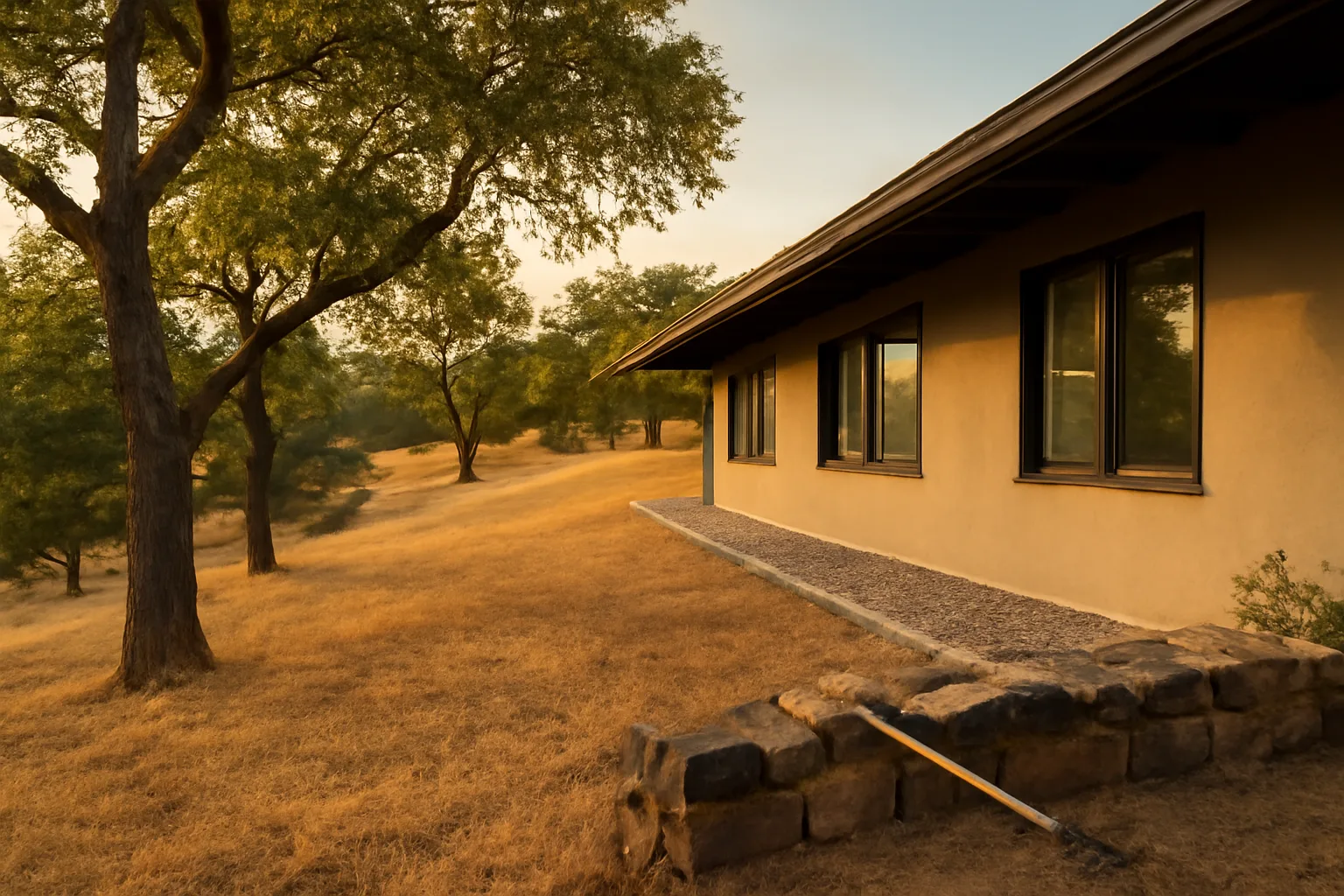
Start at the house and work outward. This is the order CAL FIRE inspectors actually check, and it's the order that matters for survivability. Zone 0 (0-5 feet from the structure). Remove all combustible mulch, dead plants, stored firewood, and anything wood-based touching the house. Replace with gravel, rock, pavers, or bare soil. Trim any tree branches that overhang the roof or come within 10 feet of the chimney. No flammable furniture cushions, no dry leaves in gutters, no wood fencing that runs directly into the wall (attach a metal gate section instead). Zone 1 (5-30 feet). Space trees so mature canopies are at least 10 feet apart. Remove "ladder fuels," the shrubs and low branches that let a ground fire climb into tree canopies. Keep grass mowed to 4 inches or less. Move propane tanks and woodpiles out of this zone entirely if you can, or at minimum 10 feet from any structure. Zone 2 (30-100 feet). Thin vegetation so there's horizontal and vertical space between plants and tree crowns; CAL FIRE's rule of thumb is triple the shrub height for spacing between shrub clusters on flat ground, more on slopes. Remove dead vegetation and fallen branches. This zone doesn't need to look bare; it needs to look interrupted, so fire can't run continuously toward the house. For plant selection inside these zones, the fire safe landscaping guide covers species and spacing in more detail than fits here.
Why won't people follow the defensible space law in California?
This gets asked a lot, and the honest answer isn't laziness. Three things come up over and over in CAL FIRE inspection data and community wildfire protection planning docs. Cost is the biggest one. Clearing 100 feet of mature brush on a hillside lot can run several thousand dollars if you hire it out, and many rural and fixed-income homeowners simply don't have that in a given year. Second, enforcement has historically been light: PRC 4291 gives local fire officials authority to inspect and order compliance, but actual citations and follow-through vary enormously by county and fire district. Third, people misjudge risk on their own property, especially if they haven't seen a fire move through similar terrain, or they've lived there 20 years without an incident and assume that pattern holds. There's also a real tension homeowners raise about mature trees and privacy screening they don't want to lose, and that's a legitimate tradeoff, more than noncompliance. CAL FIRE's guidance tries to address this by emphasizing spacing and pruning over wholesale removal wherever it's structurally sound to do so.
How do I prevent wildfires from starting near my home?
Most wildfires near homes start from something specific and preventable: equipment sparks, unattended debris burns, dragging trailer chains, dry vegetation under a parked car's hot exhaust, or fireworks. Ready.gov and CAL FIRE both point to human activity as the cause of the large majority of wildfires nationally. Practical steps: mow before 10 a.m. in fire season, keep a shovel and water nearby when using power equipment on dry grass, never park a hot vehicle on dry grass, check local burn permit rules before any outdoor burning, and keep chains and equipment maintained so they don't drag or spark. If you have a generator or outdoor grill, keep it well clear of anything combustible, ideally in that cleared Zone 0 area. None of this is glamorous. It's mostly discipline around ordinary yard tasks during red flag warning days, which your local fire district or National Weather Service office will announce.
How do I prepare for a wildfire before it happens?
Preparation splits into three buckets: the property, the documentation, and the evacuation plan. On the property, defensible space and hardening come first (see the zone breakdown above). Ready.gov recommends every household build a go-bag with water, medications, copies of important documents, and a communication plan that doesn't depend on cell towers staying up. Sign up for your county's emergency alert system; most California counties run one separate from federal Wireless Emergency Alerts, and it's often opt-in. Documentation matters more than people expect, especially once insurance gets involved. Photograph your defensible space work, your roof, vents, and the address numbers visible from the street. Insurers increasingly want to see dated proof of a Zone 0/1/2 clearing job, more than a claim that you did it. This is the gap the Wildfire Insurance Survival Kit is built for: a $99 one-time packet that helps you organize and photograph your mitigation work into the format insurers and adjusters actually ask for, so you're not scrambling for paperwork after a non-renewal letter or during a claim. We don't file claims or handle communications with your insurer; you send your own documentation, we just help you build it right. Finally, know two routes out of your neighborhood, not one, and agree on a family meeting point outside the immediate area.
How do I prevent forest fires and avoid forest fires when I'm outdoors?
Forest fire prevention for recreational use comes down to a short list CAL FIRE and the U.S. Forest Service repeat every summer: fully drown and stir campfires until cold to the touch, never leave a fire unattended, check local fire restrictions before towing chains or using off-road vehicles in dry grass, and avoid parking on dry vegetation. To avoid getting caught in one, check red flag warnings before hiking or camping, carry a battery radio or a phone with offline maps since cell service fails first in a fire, and tell someone your route and expected return time. If you smell smoke or see an unusual glow, leave the way you came in rather than pushing forward to see what it is. A lot of forest fire starts trace back to something mundane: a campfire someone thought was out, a vehicle's catalytic converter over dry grass, an illegal fireworks show. The prevention list is boring because the causes are boring.
How can we prevent forest fires at the community level?
Individual defensible space work matters, but fire moves through neighborhoods, not single lots. A Community Wildfire Protection Plan (CWPP), often coordinated through county fire safe councils, coordinates fuel breaks, evacuation routes, and shared vegetation management across many properties at once, which is more effective than isolated compliance [4]. If your neighbor's overgrown lot backs up to your cleared Zone 2, your work is worth less. Some counties and fire districts run chipper day programs or cost-share grants for defensible space work; check with your local fire safe council or county fire marshal's office for what's available where you live. At minimum, talk to neighbors about coordinating clearing schedules, especially on shared fence lines and easements where nobody clearly owns the fuel load.
Is Santa Barbara safe from fire?
No coastal California city is "safe" from wildfire in any absolute sense, and Santa Barbara County has a documented history that argues against complacency: the 1990 Painted Cave Fire and the 2017 Thomas Fire (which at the time was the largest wildfire in modern California history, burning over 281,000 acres) both burned into and around Santa Barbara-area communities, and the Thomas Fire's burn scar contributed directly to the deadly January 2018 Montecito debris flow [5]. Parts of the city and county sit in Very High Fire Hazard Severity Zones as mapped by CAL FIRE, particularly the foothill communities against the Santa Ynez range [6]. Insurance non-renewals have hit Santa Barbara County hillside properties in recent years alongside similar areas statewide. The honest framing: Santa Barbara has better fire weather odds than, say, inland Shasta or Butte County on a given red flag day, because of marine layer moisture, but "better odds" is not "safe," and the terrain (steep canyons funneling wind-driven fire toward dense neighborhoods) is exactly the kind CAL FIRE flags as highest risk.
How does defensible space affect my home insurance?
California's FAIR Plan and most admitted carriers now ask about defensible space compliance directly in underwriting questionnaires, and the state's 2024 Safer from Wildfires regulation requires insurers to factor in Zone 0 and broader mitigation work when setting rates and eligibility [3]. The regulation states insurers must give "discounts, premium reductions, or eligibility credits" for a defined list of wildfire mitigation actions homeowners can document [3]. The catch: documentation is on you. An inspector or agent isn't going to take your word for it that you cleared 100 feet of brush two years ago. Dated photos, receipts from a licensed clearing contractor, and a copy of any local fire department inspection sign-off are what actually move the underwriting needle. If you're facing a non-renewal letter, building that paper trail before you call your agent, not after, changes the conversation. See house fire and fire at a house for more on what happens when mitigation gaps meet an actual event, and defensible for a broader look at the standard itself.
What does it cost to create defensible space, and who can help?
Costs vary enormously by lot size, slope, and vegetation density, and there's no single trustworthy national figure; local tree services and clearing contractors are the only reliable price check for your specific lot. Rough ranges reported by California fire safe councils and county programs run from a few hundred dollars for a small, mostly-grass lot's annual maintenance up to several thousand dollars for a heavily wooded acre-plus hillside parcel needing tree thinning and chipping. Some states have formal cost-share or contractor programs; Washington's Department of Natural Resources, for example, runs defensible space clearing contract programs homeowners can access directly (see wildfire defensible space clearing contracts, Washington State DNR for how that model works, useful even for California readers comparing options). California doesn't have one uniform statewide program; check your county fire safe council and CAL FIRE unit office for local grants, chipper days, and veteran or senior assistance funds. DIY is realistic for Zone 0 and most of Zone 1 on a typical suburban lot; a weekend with loppers, a rake, and a truck bed of gravel covers it. Zone 2 tree thinning on a slope is where I'd hire a licensed contractor, both for safety and because improper pruning can kill mature trees you wanted to keep.
What's the fastest way to get inspection-ready if I already got a non-renewal letter?
Work backward from what the letter or inspection notice actually flagged, not from a generic checklist. Most non-renewal and inspection letters cite specific items: overhanging vegetation, wood mulch against the foundation, a woodpile too close to the structure, or vents without ember-resistant mesh. Fix the cited items first and photograph each one, dated, before and after. Then work outward through Zone 0, 1, and 2 in that order, since that's the order most insurance mitigation checklists and the CAL FIRE inspection form both follow. Keep every receipt from contractors and every chipper-day drop-off slip. This is exactly the gap between doing the physical work and having proof of it that an underwriter will accept, which is the whole reason the $99 Wildfire Insurance Survival Kit exists: it's a one-time tool to organize your defensible space photos, contractor receipts, and hardening upgrades into a packet formatted the way insurers and adjusters ask for it. We're not a public adjuster and we don't file claims or handle coverage discussions on your behalf; you send your own documentation to your own insurer. It just helps make sure what you send actually lands.
Frequently asked questions
When does the California defensible space law go into effect?
The core defensible space requirement under Public Resources Code 4291, requiring up to 100 feet of clearance in State Responsibility Areas, has been law for years. The newer Zone 0 ember-resistant zone rule from AB 3074 is still moving through Board of Forestry rulemaking, with compliance discussions pointing to 2025-2026, not a single finalized date as of this writing.
Why won't people follow the defensible space law in California?
Cost, inconsistent local enforcement, and underestimating personal risk are the three drivers that show up repeatedly. Clearing a hillside lot can cost thousands, enforcement of PRC 4291 varies by county and fire district, and many longtime residents assume past safety predicts future safety, which wildfire behavior doesn't support.
How do I prevent wildfires from starting on my own property?
Keep equipment maintained so it doesn't spark or drag chains, never park hot vehicles on dry grass, mow before 10 a.m. in fire season, follow local burn permit rules, and keep grills or generators in your cleared Zone 0 area away from anything combustible. Most wildfires trace back to human activity, per Ready.gov and CAL FIRE.
How do I prepare for a wildfire if I get an evacuation warning?
Have a go-bag ready with water, medications, and document copies, know two evacuation routes, and pick a family meeting point outside the area. Sign up for your county's emergency alert system in advance since it's often opt-in separately from federal alerts, per Ready.gov guidance.
How do I prevent forest fires while camping or hiking?
Drown and stir campfires until cold to the touch, never leave a fire unattended, check local fire restrictions before using off-road vehicles or dragging chains in dry grass, and avoid parking on dry vegetation where a hot exhaust or catalytic converter can ignite it.
How can we prevent forest fires as a community, more than individually?
Coordinate through a county fire safe council or Community Wildfire Protection Plan so vegetation clearing, fuel breaks, and evacuation routes work across neighboring properties, not in isolated pockets. One cleared lot next to an overgrown one still burns; fire moves through neighborhoods.
What fire-safe rules take effect in 2026?
California's Zone 0 ember-resistant zone requirement (from AB 3074) has been discussed for a 2025-2026 compliance window in Board of Forestry materials, alongside 2024 insurance regulations requiring carriers to credit documented wildfire mitigation. No single locked statewide deadline exists yet; check your local CAL FIRE unit for the current status.
Is Santa Barbara safe from fire?
No. Santa Barbara County has burned significantly before, including the 2017 Thomas Fire, which was over 281,000 acres at the time and contributed to the deadly 2018 Montecito debris flow. Foothill communities sit in CAL FIRE-mapped Very High Fire Hazard Severity Zones, so defensible space and hardening matter there as much as inland.
What are the three defensible space zones and their distances?
Zone 0 runs 0-5 feet from the structure and should be ember-resistant (gravel, bare soil, no combustibles). Zone 1 runs 5-30 feet with spaced, pruned vegetation. Zone 2 runs 30-100 feet with thinned, interrupted fuel. CAL FIRE defines all three in its defensible space guidance.
Does defensible space actually lower my insurance premium?
California's 2024 Safer from Wildfires regulation requires insurers to give discounts, premium reductions, or eligibility credit for documented mitigation actions, which include Zone 0 and broader defensible space compliance. The amount varies by carrier; documentation (photos, contractor receipts, inspection sign-offs) is what makes the credit collectible.
How much does creating defensible space cost?
There's no single reliable number; it depends on lot size, slope, and vegetation density. Small grass lots may need a few hundred dollars a year in maintenance, while heavily wooded hillside acreage needing professional tree thinning can run several thousand dollars. Check local fire safe council grants and chipper day programs before assuming you'll pay full price.
Can I do defensible space work myself or do I need a contractor?
Zone 0 (0-5 feet) and most of Zone 1 (5-30 feet) are realistic DIY projects with basic tools. Zone 2 tree thinning on slopes is worth hiring a licensed arborist or clearing contractor for, both for safety and because improper pruning can kill trees you wanted to keep.
What happens if I don't comply with defensible space requirements?
Local fire officials can inspect under PRC 4291 authority and order compliance, with potential citations, though enforcement intensity varies widely by county and fire district. Separately, insurers can deny renewal or coverage for uninspected or non-compliant properties, regardless of whether local enforcement ever occurs.
Sources
- California Public Resources Code Section 4291: Legal requirement for up to 100 feet of defensible space around structures in State Responsibility Areas
- California Board of Forestry and Fire Protection, Zone 0 Ember-Resistant Zone Rulemaking: Status and timeline of AB 3074 Zone 0 ember-resistant zone regulation development
- California Department of Insurance, Safer from Wildfires Regulation: Insurers must give discounts, premium reductions, or eligibility credit for documented wildfire mitigation actions
- CAL FIRE, Fire Prevention and Community Wildfire Protection Plans: Community Wildfire Protection Plans coordinate fuel breaks and vegetation management across properties
- CAL FIRE, Thomas Fire Incident Information: Thomas Fire (2017) burned over 281,000 acres and was the largest wildfire in modern California history at the time
- CAL FIRE, Fire Hazard Severity Zone Maps: Santa Barbara County foothill areas are mapped in Very High Fire Hazard Severity Zones