Last updated 2026-07-25
TL;DR
You help prevent wildfires by cutting ignition sources (equipment sparks, debris burning, downed power lines), maintaining defensible space in the zones closest to your home, and hardening your house against embers, which cause most home losses. CAL FIRE reports roughly 95% of wildfires in California are human-caused [1]. Prevention is both a community habit and a construction standard.
How to prevent wildfires: what actually causes them
Most wildfires start because a person did something, not because of lightning. CAL FIRE states that human activity causes about 95% of wildfires in California, including equipment use, vehicle sparks, unattended campfires, arson, and power line failures [1]. Nationally, the U.S. Forest Service and National Park Service both cite similar figures, putting human-caused ignitions at roughly 85-90% of wildfires across the country. That means prevention starts with boring stuff: don't drag trailer chains on pavement, don't mow dry grass at 2pm in August, don't park a hot car on dead vegetation. Catalytic converters can reach 1,200+ degrees Fahrenheit. A single mower blade hitting a rock throws sparks that ignite cured grass in seconds. The other half of prevention has nothing to do with stopping ignitions. It's making sure that when a fire does start (and in fire country, one eventually will), it doesn't take your house with it. That's where defensible space and home hardening come in, and it's the part homeowners actually control once a fire is already burning miles away and embers are raining down.
How to prepare for a wildfire: the homeowner checklist
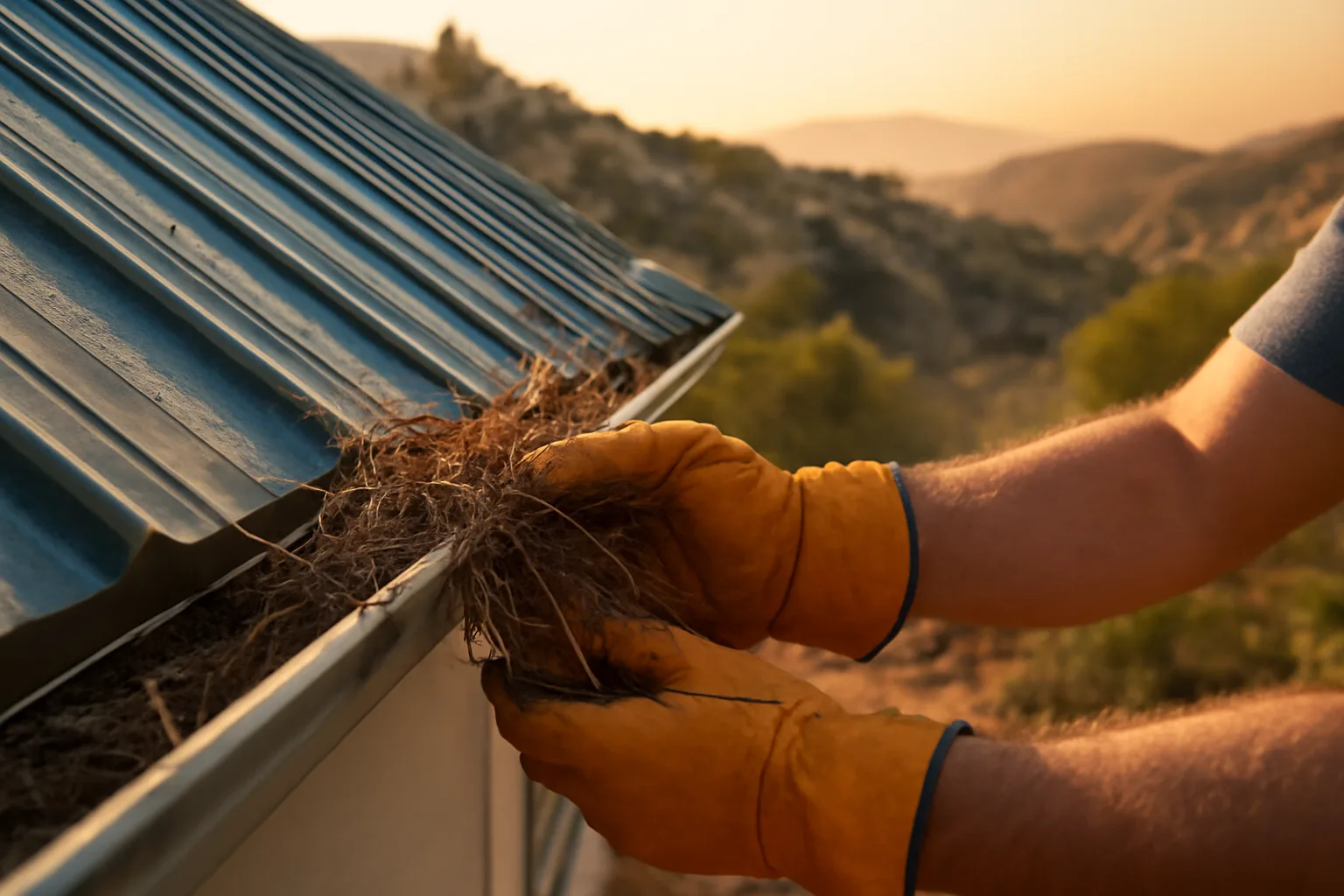
Preparing for a wildfire means doing the work before fire season, not during a red flag warning. Ready.gov's wildfire preparedness guidance centers on three actions: build an emergency kit, make a family evacuation plan, and prepare your home to resist embers [2]. Here's the order that actually matters, based on how homes ignite: 1. Clear the first 5 feet around your foundation (Zone 0) of anything combustible: mulch, wood piles, dry plants, patio furniture cushions. 2. Clean gutters and roof valleys of pine needles and leaves. Embers land here first. 3. Install 1/8-inch metal mesh over vents to block ember intrusion. 4. Move firewood stacks at least 30 feet from structures. 5. Trim tree limbs so they don't overhang the roof or touch the chimney. 6. Pack a go-bag with medications, documents, and chargers, per Ready.gov's checklist [2]. 7. Photograph and video every room and the exterior of your house, dated, before fire season starts. This becomes your baseline if you ever need to document a loss. That last step gets skipped constantly and it's the one insurers ask for after a fire. If you want a structured way to organize that documentation alongside your defensible space records, DefensibleHome's $99 Wildfire Insurance Survival Kit walks through what to photograph and how to log the dates, though you can absolutely do this yourself with a phone and a folder.
How to prevent forest fires (and how it differs from home prevention)
Preventing forest fires is mostly about not creating an ignition source in wildland areas: fully extinguish campfires (drown, stir, drown again, until it's cold to the touch), don't shoot fireworks or exploding targets in dry vegetation, and check local burn bans before any debris burning. The National Park Service notes that unattended or improperly extinguished campfires are a recurring cause of wildland fires [3]. Forest fire prevention is a public land management issue as much as a personal habit. State and federal agencies do prescribed burns and mechanical thinning to reduce fuel loads, which lowers the intensity of fires that do start. If you live adjacent to national forest or state trust land, check with your local ranger district or state forestry agency about prescribed burn schedules and defensible space requirements that may extend beyond your property line. The honest answer to "how can we prevent forest fires" is that individuals can eliminate their own ignition risk (campfires, equipment, fireworks) but can't control lightning strikes, which cause the remaining 5-15% of fires depending on region and year [1]. What you can control is whether a forest fire becomes a home-loss event, and that's a defensible space and hardening question, not a forest question.
How to avoid forest fires when you're recreating outdoors
Avoiding forest fires while camping, hiking, or working outdoors comes down to a short list of rules that get ignored constantly. Check the local fire danger rating before you go (many national forests post daily ratings at trailheads and ranger stations). Never leave a campfire unattended, even for five minutes. Carry a shovel and water if you're doing any spark-producing activity like welding, grinding, or target shooting on wildland. Red flag warnings from the National Weather Service mean low humidity, high wind, and warm temperatures are combining to create extreme fire risk. During a red flag warning, many jurisdictions suspend all outdoor burning permits and some close trails entirely. If you see one issued for your area, that's not a suggestion, it's the day fires spread fastest. Off-highway vehicles are a specific, underrated risk: a hot exhaust or spark arrestor failure against dry grass has started fires in Arizona, Colorado, and California in past seasons. Some states legally require spark arrestors on OHVs and chainsaws used on public land; check your state forestry or state parks page before you go.
When does the California defensible space law take effect?
California's defensible space requirement isn't new. Public Resources Code Section 4291 has required 100 feet of defensible space around structures in State Responsibility Areas since it was expanded in 2005 (up from 30 feet) [4]. So if you're asking when it "goes into effect," the baseline 100-foot requirement is already in force and has been for close to two decades. What's newer, and still being finalized, is the ember-resistant Zone 0 rule. California passed AB 3074 in 2020, directing the State Board of Forestry and Fire Protection to develop regulations for an ember-resistant zone within 5 feet of structures. As of this writing, the Board has been through multiple rulemaking drafts; check the Board of Forestry's current rulemaking page for the finalized effective date and compliance timeline before assuming a specific year, because it has moved. Zone 0 will require removing combustible mulch, most plants, and stored items within that 5-foot ring once it's finalized and adopted into the state fire code. Homeowners in State Responsibility Areas should watch for the official adoption notice rather than relying on any single blog's date, since rulemaking timelines shift.
What fire-safe home rules take effect in 2026?
This is genuinely a moving target and varies significantly by state and fire district, so treat any specific 2026 date with caution until you confirm it on your state fire marshal's site or local building department page. Here's the honest framework: California's Zone 0 ember-resistant zone regulation (from AB 3074) has been in active rulemaking, and various draft timelines have floated an effective date in the 2025-2026 range for State Responsibility Area properties, but the Board of Forestry's rulemaking page is the only reliable source for the confirmed date. Don't take a firm year from a secondhand source, including this one, without checking that page directly. Oregon's statewide wildfire risk map and defensible space code requirements, created under Senate Bill 762 (2021), have also gone through revision cycles after the original 2022 map drew public pushback and was withdrawn for rework [5]. Check the Oregon State Fire Marshal's wildfire risk page for the current status in your county. [[GUIDED FILL-IN: Insert your specific fire district's 2026 code adoption date here, confirmed via your county building department or local fire protection district, since requirements vary by jurisdiction even within the same state.]] The practical move: don't wait for a mandate. Harden your home and clear Zone 0 now, because insurers are already asking for this in underwriting and inspection letters, regardless of when the state law formally kicks in.
Why won't people follow the defensible space law in California?
Noncompliance isn't usually about defiance. It's cost, confusion, and enforcement gaps. Cost is real. Removing mature trees, replacing wood mulch with gravel, and thinning brush across a 100-foot radius on a sloped, wooded lot can run into thousands of dollars, and low-income and elderly homeowners in rural State Responsibility Areas are disproportionately affected. CAL FIRE and local fire districts do offer defensible space inspections and, in some counties, chipper programs or cost-share grants, but availability is inconsistent county to county. Confusion is the second driver. The 100-foot rule under PRC 4291 has different specifics depending on slope, vegetation type, and whether you're within 30 feet (the "lean, clean, and green" zone) versus 30 to 100 feet (reduced fuel, not bare dirt) [4]. Homeowners often don't know they're supposed to thin, not clear-cut, and end up either doing too little or destroying landscaping they didn't need to remove. Enforcement is uneven. CAL FIRE and local fire agencies do conduct defensible space inspections, and failure to comply can result in citations, but the agency's own inspection reports have historically found a meaningful share of properties out of compliance on first inspection, particularly in the 30-100 foot zone where clearing is more labor intensive and less visible from the road. There's also a psychological piece: people who haven't personally experienced a wildfire often underestimate how fast defensible space failure translates into home loss, especially compared to the visible cost of tree removal today.
Is Santa Barbara safe from fire?
No California coastal community is "safe" from fire in an absolute sense, and Santa Barbara County has direct experience proving it. The Thomas Fire (December 2017) burned over 281,000 acres and was, at the time, the largest wildfire in modern California history, followed weeks later by the Montecito debris flow that killed 23 people when rain hit the burn scar [6]. The 2009 Jesusita Fire and 2008 Tea Fire also burned into Santa Barbara's urban-wildland interface, destroying homes in foothill neighborhoods. Santa Barbara's geography, dry chaparral hillsides, Santa Ana/sundowner wind events, and homes built directly against wildland, creates one of the more exposed wildfire interfaces in the state. The sundowner winds specific to the Santa Ynez range can push fire downslope into residential areas with very little warning, which is part of why the Thomas Fire spread so fast. If you own property in Santa Barbara's foothill neighborhoods (Mission Canyon, Riviera, San Roque, the Montecito foothills), you're in a high fire hazard severity zone by CAL FIRE's own mapping, and defensible space compliance plus home hardening isn't optional risk reduction, it's the difference homeowners in the Thomas Fire's path point to when explaining why some homes on a block survived and others didn't. Check your specific parcel against CAL FIRE's Fire Hazard Severity Zone viewer rather than relying on general reputation about the area.
How do defensible space zones actually work?
| Zone 0 (ember-resistant, pending finalization) | 0-5 ft | Remove combustible mulch, most plants, stored items | |
|---|---|---|---|
| Zone 1 | 5-30 ft | "Lean, clean, and green": remove dead vegetation, space plants, clear roof/gutter debris [4] | |
| Zone 2 | 30-100 ft | Reduce fuel volume, thin (not clear-cut) trees and brush, remove ladder fuels [4] | The zone-by-zone approach exists because embers, not flame fronts, ignite most homes in wildfires. Embers can travel over a mile ahead of a fire front. If your Zone 0 is clean but your gutters are full of pine needles, an ember can still ignite your roof edge. If you want the specific plant lists and spacing guidance for each zone, fire safe landscaping next to your house covers species selection and spacing distances in more detail than a general checklist can. |
Defensible space isn't one ring, it's layered zones with different rules for each, and mixing them up is the single most common homeowner mistake. | Zone | Distance from structure | What's required |
What home-hardening upgrades matter most?
Home hardening addresses the building itself, assuming embers reach your property regardless of how good your landscaping is. The Insurance Institute for Business & Home Safety's wildfire research consistently points to a short list of vulnerabilities: vents, roofs, decks, and windows . Priority order, roughly by cost-effectiveness: 1. Vent screens: 1/8-inch metal mesh, no larger, over all attic and foundation vents. Embers get sucked into vents by pressure differentials and ignite insulation from the inside. 2. Roof material and maintenance: Class A fire-rated roofing where possible; if replacement isn't in the budget, keep debris out of valleys and gutters, which is nearly free. 3. Decking: replace or box in the underside of wood decks with ember-resistant material, since debris and wind-blown embers collect underneath. 4. Dual-pane windows: the outer pane can crack from radiant heat, but a second pane holds up longer, buying time before flame or ember entry. 5. Siding: ignition-resistant materials (fiber cement, stucco) beat exposed wood siding, especially within the first few feet of grade. None of this is cheap all at once. If you're triaging with a limited budget, vent screens and gutter maintenance cost the least and address the most common ignition pathway (ember intrusion), so start there before a full roof or siding replacement. For more on which upgrades insurers specifically look for during inspections, see defensible space and hardening standards.
What should you do if you got a non-renewal or inspection letter?
If your insurer sent a non-renewal notice or a defensible space inspection letter, don't panic, but do move fast and document everything. Most letters give you a window (often 30-75 days depending on the carrier and state) to complete specific mitigation work and report back with evidence. The practical sequence: read the letter for the exact deficiencies cited (more than "clear brush", look for specifics like "remove vegetation within 5 feet of structure" or "trim tree limbs overhanging roof"). Do the work. Photograph before and after, dated, from the same angles. Keep receipts for any contractor work, tree removal, or vent screening installed. Some states have started requiring insurers to give credit for mitigation work. Check your state department of insurance page for specifics rather than assuming a national standard, because this varies significantly and is evolving; California's FAIR Plan and admitted market rules differ from Colorado's or Oregon's. A word on scope: neither this article nor DefensibleHome negotiates with your insurer, files claims on your behalf, or promises reinstated coverage or discounts. What we (and you) can control is producing clear, dated documentation of the mitigation work completed, which you then submit yourself. If you'd rather not build that packet from scratch, the Wildfire Insurance Survival Kit ($99, one-time) gives you a structured template for organizing photos, receipts, and a mitigation log by zone, matched to how inspectors and underwriters actually read these submissions.
How does defensible space compare across CA, CO, OR, and AZ?
| California | 100 ft (PRC 4291), Zone 0 pending finalization | CAL FIRE / Board of Forestry [4] | |
|---|---|---|---|
| Colorado | No single statewide mandate; county/local wildland-urban interface codes vary | Colorado Division of Fire Prevention and Control | |
| Oregon | Statewide wildfire risk map + defensible space code under SB 762, under revision | Oregon State Fire Marshal [5] | |
| Arizona | County-level; many counties follow International Wildland-Urban Interface Code | Arizona State Forestry Division | The takeaway: check your specific county or fire protection district page, more than your state's headline law, since a lot of the actual enforcement and specifics (inspection frequency, penalty structure, grant programs) happen at the county or district level even in states with statewide statutes. |
Requirements aren't uniform across wildfire-prone states, and homeowners moving between them (or owning property in more than one) get tripped up assuming California's rules apply everywhere. | State | Core defensible space rule | Governing authority |
How can we prevent forest fires as a community, more than individually?
Community-level prevention outperforms individual action alone, because a single non-compliant lot in a dense wildland-urban interface neighborhood can put every neighbor's defensible space work at risk. Fire doesn't respect property lines; it spreads from the worst-prepared house on the block. Firewise USA, a National Fire Protection Association program, organizes neighborhoods to do coordinated fuel reduction, share chipper programs, and get community-level recognition (and in some cases, insurance consideration) . Joining or starting a Firewise community is one of the highest-leverage things a homeowner can do beyond their own property line. Other community actions that matter: supporting local prescribed burn programs (they reduce fuel loads but need public buy-in since smoke complaints often kill them), reporting unattended campfires or illegal debris burning, and pushing local utilities on power line maintenance in high-risk corridors, since utility equipment has caused some of the largest and most destructive California wildfires in the past decade, including the 2018 Camp Fire. If you're building out a full mitigation plan for your property, Washington State DNR's defensible space clearing contract guidance is a useful model even outside Washington, since it lays out how professional clearing contracts should be scoped and priced.
Frequently asked questions
When does the California defensible space law go into effect?
The core 100-foot defensible space requirement under Public Resources Code 4291 has been in effect since 2005. The newer Zone 0 ember-resistant zone rule (5 feet from structures) was directed by AB 3074 in 2020 and has been in multi-year rulemaking; check the Board of Forestry and Fire Protection's rulemaking page for the finalized effective date before assuming a specific year.
Why won't people follow the defensible space law in California?
Mostly cost and confusion, not defiance. Clearing 100 feet of brush on a wooded lot can cost thousands, low-income and rural homeowners are disproportionately affected, and many don't understand the difference between Zone 1 (clear) and Zone 2 (thin, not clear-cut), leading to under- or over-clearing.
How do I prevent wildfires?
Eliminate ignition sources: maintain equipment, fully extinguish campfires, avoid mowing dry grass midday, and check for red flag warnings before any outdoor spark-producing activity. CAL FIRE attributes about 95% of California wildfires to human activity, so most prevention is behavioral, not technical.
How do I prepare for a wildfire?
Follow Ready.gov's three pillars: build an emergency kit, make an evacuation plan, and prepare your home to resist embers. Practically, that means clearing Zone 0 (5 feet from your foundation), screening vents with 1/8-inch mesh, packing a go-bag, and photographing your property before fire season starts.
How do I prevent forest fires specifically, as opposed to home fires?
Forest fire prevention centers on eliminating wildland ignition sources: drown and stir campfires until cold, avoid fireworks or exploding targets in dry vegetation, and check burn bans before debris burning. Home fire prevention is a separate problem involving defensible space and ember-resistant construction around your structure.
How do I avoid forest fires while camping or hiking?
Check the local fire danger rating before heading out, never leave a campfire unattended even briefly, carry water and a shovel for full extinguishing, and heed red flag warnings, which signal conditions (low humidity, high wind) where fires spread fastest and outdoor burning is often suspended.
What fire-safe home rules take effect in 2026?
This varies by state and is still being finalized in several places. California's Zone 0 ember-resistant zone rule has floated 2025-2026 effective dates in draft rulemaking; Oregon's SB 762 defensible space code has also gone through revision. Confirm the current status on your state fire marshal's or Board of Forestry's page rather than relying on a fixed date.
Is Santa Barbara safe from fire?
No. Santa Barbara County has experienced major wildfires including the 2017 Thomas Fire (over 281,000 acres) and the 2018 Montecito debris flow that followed it, plus the 2009 Jesusita and 2008 Tea fires. Foothill neighborhoods sit in CAL FIRE-mapped high fire hazard severity zones.
How can we prevent forest fires as a neighborhood or community?
Join or start a Firewise USA community through the National Fire Protection Association, coordinate fuel reduction with neighbors, support local prescribed burn programs, and report unattended campfires or illegal burning. A single non-compliant property can undermine an entire block's defensible space work.
What's the difference between defensible space and home hardening?
Defensible space is landscaping and vegetation management around your home, done in zones (0-5 ft, 5-30 ft, 30-100 ft). Home hardening is upgrading the structure itself: vent screens, fire-rated roofing, ember-resistant decking, dual-pane windows. You need both; embers can ignite a hardened landscape's unprotected house, or vice versa.
What should I do first if my insurer sends a defensible space inspection letter?
Read it for the specific deficiencies cited, not general language. Complete the listed work, photograph before and after with dates, and keep contractor receipts. Submit your own documentation directly; this is paperwork you prepare and send, not something a public adjuster or third party files on your behalf.
Do all wildfire-prone states have the same defensible space rules?
No. California has a statutory 100-foot statewide requirement (PRC 4291). Colorado's rules are mostly county-level with no single statewide mandate. Oregon has a statewide risk map and code under SB 762, under revision. Arizona's requirements are largely county-level, often following the International Wildland-Urban Interface Code.
Sources
- CAL FIRE, Wildfire Prevention: About 95% of wildfires in California are caused by human activity
- California Public Resources Code Section 4291: 100 feet of defensible space required around structures in State Responsibility Areas, with distinct zone requirements
- California Board of Forestry and Fire Protection, Ember-Resistant Zone (Zone 0) Rulemaking: AB 3074 directed development of an ember-resistant Zone 0 regulation within 5 feet of structures, currently in rulemaking
- Insurance Institute for Business & Home Safety, Wildfire Ready Home: Vents, roofs, decks, and windows are the primary vulnerabilities for ember ignition of homes
- Arizona Department of Forestry and Fire Management, Firewise Program: Arizona wildfire mitigation and defensible space guidance is coordinated through county-level programs and the state forestry division
- National Fire Protection Association, Firewise USA: Firewise USA organizes neighborhood-level coordinated fuel reduction and wildfire risk recognition