Last updated 2026-07-25
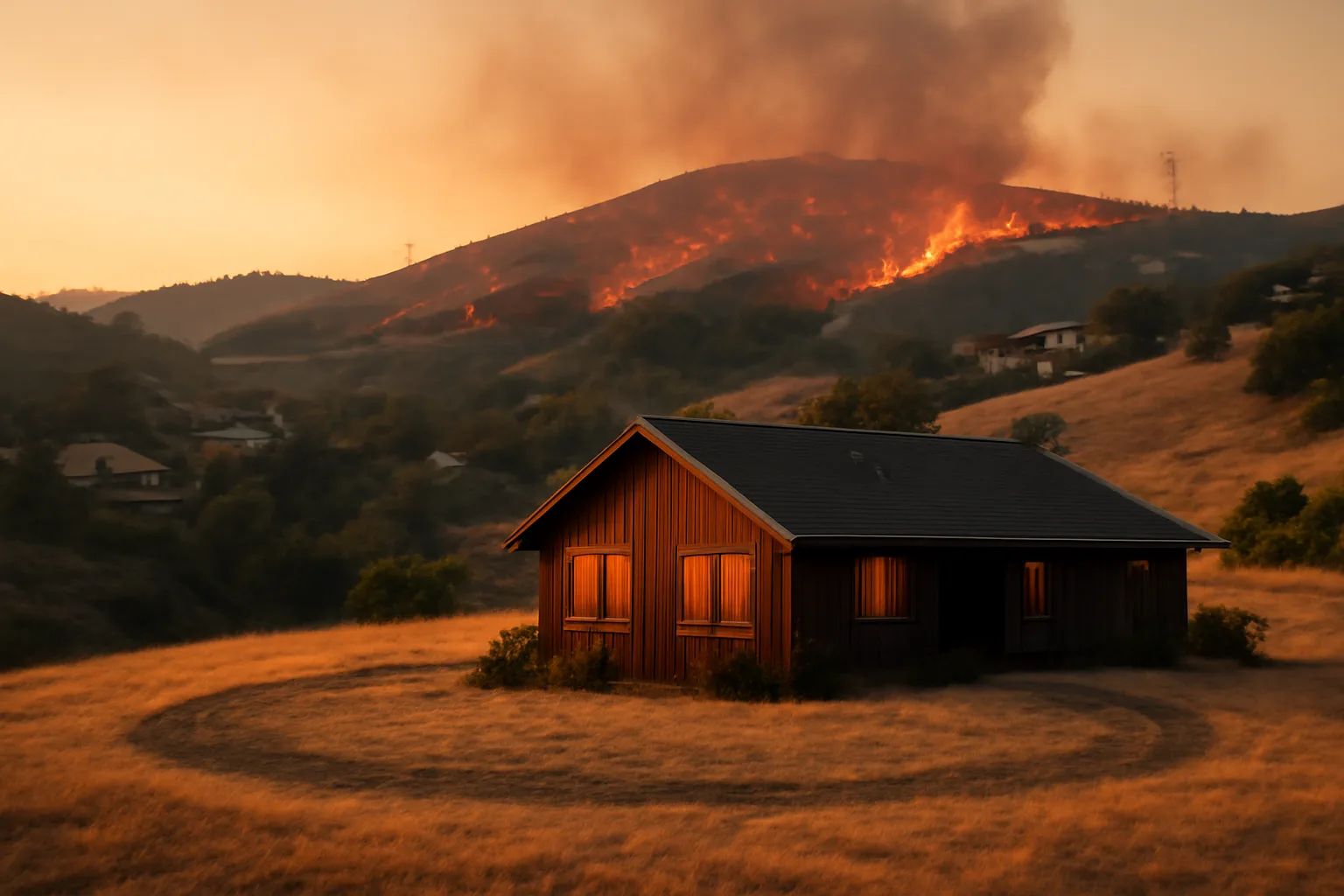
TL;DR
PG&E's 2020 Wildfire Mitigation Plan committed to inspecting 685,000 utility poles, undergrounding and covering thousands of miles of line, and expanding Public Safety Power Shutoffs in high fire-threat districts. It set the template California utilities still use, but it's a grid document, not a home-hardening plan. Your defensible space and insurance eligibility depend on separate CAL FIRE and state rules, covered below.
What was in PG&E's 2020 wildfire mitigation plan?
PG&E filed its 2020 Wildfire Mitigation Plan with the California Public Utilities Commission (CPUC) as part of a requirement created after the 2017 and 2018 fire seasons, when utility equipment was found to have caused some of the deadliest fires in state history, including the 2018 Camp Fire. The plan laid out how PG&E intended to reduce ignition risk from its own equipment in what the state calls Tier 2 and Tier 3 High Fire-Threat Districts (HFTDs). The core commitments included inspecting roughly 685,000 distribution and transmission poles in high-risk areas, expanding vegetation clearance beyond the standard minimums, installing weather stations and high-definition cameras across its service territory, and continuing to build out its Public Safety Power Shutoff (PSPS) program as an emergency tool of last resort [1]. PG&E also committed to undergrounding select high-risk line segments and wrapping other segments in covered (insulated) conductor, both aimed at cutting ignition risk from vegetation contact and equipment failure. The CPUC's Wildfire Safety Division reviewed and approved the plan under Senate Bill 901 (2018), which requires every electric investor-owned utility in the state to file an annual wildfire mitigation plan covering inspection protocols, vegetation management, and situational awareness technology [2]. This isn't a one-time document. PG&E, along with Southern California Edison and San Diego Gas & Electric, refiles and updates these plans every year, and by 2023 the CPUC moved to three-year plan cycles with annual updates instead of full annual refilings [3]. If you're a PG&E customer trying to figure out why your neighborhood lost power during a red flag warning, or why a utility crew is clearing brush near a transmission line you don't own, this plan (and its later versions) is the paper trail behind those decisions. What this plan does NOT do is tell you what CAL FIRE or your insurer expects from your own property. Those are separate rulebooks, and conflating them is one of the most common and costly mistakes homeowners make when they get a non-renewal notice.
How is a utility wildfire mitigation plan different from my home's defensible space requirements?
A utility mitigation plan governs the grid: poles, lines, transformers, vegetation clearance around utility infrastructure, and shutoff protocols. Your defensible space requirement governs your house, your yard, and the 100 feet (or to your property line) around your structure, under California Public Resources Code Section 4291 [4]. These two systems interact but don't overlap much. PG&E clearing brush 10 feet around a power pole on an easement doesn't satisfy your own zone 1 and zone 2 defensible space obligations. Insurers evaluating your policy for renewal look at your property's own hardening and clearance, not PG&E's grid investments, though a well-mitigated utility corridor in your area can factor into broader community wildfire risk scores that some insurers and the FAIR Plan use. If you got a non-renewal letter, the utility's plan isn't your defense. Your own defensible space documentation is. See our guide on defensible space requirements for the specifics that actually matter to an inspector or underwriter.
When does the California defensible space law go into effect?
California's defensible space law under PRC 4291 has been in effect since 1965 in its earlier form, with major amendments over the decades expanding the requirement from 30 feet to 100 feet in 2005 [4]. It is already active law, not a future deadline. If your property is in a State Responsibility Area (SRA) or a Very High Fire Hazard Severity Zone within a Local Responsibility Area, you are required right now to maintain defensible space out to 100 feet from any structure, or to your property line, whichever is closer. The confusion around a '2026 defensible space law' usually traces back to Assembly Bill 3074 (2020), which directed CAL FIRE and the Board of Forestry to develop a new 'ember-resistant zone' standard for the 0 to 5 foot area immediately around structures, often called Zone 0 [5]. As of this writing, CAL FIRE and the Board of Forestry have been developing draft Zone 0 regulations, and the state's own materials have referenced a target implementation timeline that has shifted more than once. Homeowners should check the current status directly on the CAL FIRE defensible space page [6] rather than relying on a fixed date, because the timeline has moved and enforcement mechanisms (including any insurance tie-ins) are still being finalized at the state level as of mid-2025 rulemaking activity. What's certain: the 100-foot, two-zone structure (0-30 feet cleared of flammable vegetation touching the home; 30-100 feet thinned and spaced) is current, enforceable law today under PRC 4291, checked during CAL FIRE and local fire department inspections.
What fire-safe home rules take effect in 2026?
Nobody has a fully locked answer to this yet, and any article claiming certainty on a specific 2026 date should be read skeptically. Here is what's actually documented: AB 3074 authorized the Board of Forestry to adopt Zone 0 ember-resistant zone regulations, and the Board's rulemaking process has been ongoing, with draft language circulated for public comment in 2023 and 2024 [5] [6]. Separately, California's building code already requires Chapter 7A ignition-resistant construction (vents, roofing, siding, decking) for new construction and remodels in Wildland-Urban Interface Fire Areas, under Title 24 of the California Code of Regulations [7]. That's existing law for new builds, not a 2026 change. What you should actually do: check your county's building department and CAL FIRE Unit page for the specific local timeline, because implementation dates for Zone 0 enforcement have been pushed by the Board of Forestry more than once and vary by whether your jurisdiction adopts local ordinances ahead of the state mandate. Treat any specific 2026 date you read elsewhere as provisional until you confirm it on fire.ca.gov or your state fire marshal's page directly. Local rule check: ask your fire district for their current defensible space and Zone 0 enforcement timeline: ______________ (fire district name), ______________ (current inspection cycle), ______________ (Zone 0 local ordinance status, if any).
Why won't people follow the defensible space law in California?
Cost, confusion, and enforcement gaps are the three real reasons, not laziness. A 2021 study from the University of California's Cooperative Extension and related CAL FIRE compliance survey work found that many homeowners in high-risk zones either don't know the specific 100-foot, two-zone requirement exists, or believe (often incorrectly) they've already met it with routine yard maintenance. Cost is real. Removing mature trees, regrading slopes, and replacing wood fencing near a home can run into the thousands of dollars, and lower-income and elderly homeowners in fire-prone rural areas are disproportionately unable to absorb that cost without assistance. Some counties and CAL FIRE units offer chipper days, cost-share vegetation programs, or defensible space grants, but availability is inconsistent and often undersubscribed relative to need. Enforcement is also uneven. PRC 4291 gives local fire authorities the ability to issue inspection notices and, in some cases, citations or work orders, but staffing for proactive inspections varies enormously by county. Some fire districts inspect a large share of high-risk parcels annually; others rely almost entirely on complaint-driven or post-fire inspections. That unevenness means two neighbors with identical risk can have very different real-world compliance pressure. Finally, there's a psychological piece that shows up in wildfire social science research: people who haven't personally experienced a close call tend to underweight the risk, even when they intellectually know the statistics. This is well documented in disaster preparedness literature generally, not unique to wildfire.
How do I prevent wildfires around my own property?
You can't control lightning strikes or a downed line two miles away, but you can meaningfully cut the odds your property becomes a fire's next victim (or its next fuel source). CAL FIRE's own guidance breaks this into structure hardening and defensible space, and both matter roughly equally in ember-driven fires, which cause the majority of home losses in wildland-urban interface fires [6]. Zone 0 (0-5 feet from the structure): remove all flammable vegetation, mulch, and stored items touching or near the house. This is the zone most correlated with structure survival in post-fire damage assessments, because wind-blown embers landing here ignite siding, vents, and eaves directly. Zone 1 (5-30 feet): keep grass mowed to under 4 inches, space tree canopies, remove dead branches and 'ladder fuels' that let ground fire climb into tree crowns. Zone 2 (30-100 feet): thin vegetation, remove dead plant material, maintain wider spacing between shrub clusters and trees. On the structure itself, ember-resistant vents, a Class A fire-rated roof, and enclosed eaves make an outsized difference relative to their cost, according to research from the Insurance Institute for Business & Home Safety on wildfire-resistant construction. For landscaping choices that actually reduce risk instead of just looking tidy, see fire safe landscaping California next to house. If you want a structured way to walk your own property zone by zone and build the documentation an inspector or insurer will actually want to see, that's exactly what our $99 Wildfire Insurance Survival Kit is built for. It's a one-time purchase, not a subscription, and it won't file anything with your insurer for you. You do that part yourself, with better documentation in hand.
How do I prepare for a wildfire if one is already threatening my area?
Preparation splits into two phases: the weeks-before-fire-season prep, and the hours-before-evacuation prep. Both matter, and conflating them is how people end up scrambling. Weeks before: sign up for your county's emergency alert system, know your evacuation zone designation, and build a go-bag with medications, copies of insurance documents, and chargers. Ready.gov recommends assembling a kit with at least a three-day supply of food and water per person, though for wildfire-prone areas where evacuation routes can be blocked, extending that to a week is reasonable given documented evacuation delays in past California fires [8]. Hours before: if you're under an evacuation warning (not yet an order), move vehicles to face outward, close all windows and doors, remove flammable patio furniture and doormats, and shut off gas at the meter if instructed by your utility or fire department. Document your home's exterior and interior with photos or video before you leave. This single step, done in under ten minutes, is what makes post-fire insurance claims dramatically faster and less contentious, because you have dated proof of your property's condition and contents right before the loss. During an actual PSPS event tied to red flag conditions, treat it like a mini dress rehearsal: check that your battery backups work, that your car has gas, and that you know your route out without relying on GPS, since cell towers can be affected by both the shutoff and the fire itself.
How do I prevent forest fires and avoid contributing to one?
Most wildland fires in the U.S. are human-caused, not lightning-caused. National Interagency Fire Center data cited by the U.S. Forest Service attributes roughly 85-90% of wildfires to human activity, including unattended campfires, equipment sparks, and vehicle-related ignitions [9]. That statistic gets thrown around loosely online, so it's worth being precise: it refers to ignition cause, not acreage burned, since a small number of large lightning-caused fires in remote areas can still account for a large share of total acreage in a given year. The practical prevention list is boring but effective: fully extinguish campfires (drown, stir, drown again, until cold to the touch), don't park or drive vehicles on dry grass (catalytic converters routinely start roadside fires), avoid using power tools like chainsaws or mowers during red flag warning conditions, and never leave charcoal grills or fire pits unattended, even briefly. If you tow anything with chains that can drag on pavement, secure them; dragging chains are a documented ignition source for roadside fires in multiple state investigations. Smokey Bear's message, the one behind only you can prevent wildfires, holds up because human ignition sources really are the majority cause, and they're the part of the equation individuals can actually control.
Is Santa Barbara safe from fire?
No coastal or inland California community can be called fully safe from fire, and Santa Barbara County has direct experience with this: the 2017 Thomas Fire burned over 281,000 acres across Ventura and Santa Barbara counties and was, at the time, the largest wildfire in modern California history, followed within weeks by the deadly Montecito debris flow that killed 23 people when rain hit the burn scar [10]. Much of Santa Barbara County, including hillside communities in Montecito, Mission Canyon, and the Santa Ynez foothills, sits within CAL FIRE-designated Very High Fire Hazard Severity Zones, meaning defensible space and Chapter 7A construction rules apply there under the same state framework as inland fire-prone counties [6]. The city of Santa Barbara itself, being more urbanized and closer to the coast, carries somewhat lower direct wildfire exposure than the unincorporated foothill and canyon communities, but 'somewhat lower' is not the same as safe, particularly given Santa Ana and sundowner wind events that have historically driven the county's worst fires. If you own property anywhere in Santa Barbara County's hillside or canyon zones, treat your defensible space and hardening obligations as seriously as anyone in the Sierra foothills or the Oregon Cascades. Insurers increasingly do.
How does PG&E's plan connect to my insurance non-renewal?
Indirectly, but the connection is real. Insurers use wildfire risk models that factor in utility infrastructure risk, community-level fire history, and vegetation density, alongside your specific property's hardening status. A well-executed utility mitigation program in your service area (undergrounded lines, covered conductor, fewer PSPS events) can modestly improve a community's aggregate risk score over time, but it will not offset a property with a wood shake roof, unenclosed eaves, and dry brush touching the siding. The California Department of Insurance's Safer from Wildfires framework, adopted in 2022, actually requires insurers to give homeowners discounts or improved underwriting consideration for documented mitigation actions like defensible space compliance and Zone 0 preparation, home hardening upgrades, and community-level Firewise USA recognition . That regulation is about your actions and your community's collective actions, not PG&E's grid investments directly, though a community with strong Firewise recognition often also benefits from utility infrastructure improvements happening in parallel. If you received a non-renewal notice, the fastest path back to coverage eligibility (through your existing insurer or the FAIR Plan) runs through documented defensible space compliance and structure hardening, photographed and dated, not through pointing at your utility's wildfire mitigation filing.
What should I actually do this week if I got a non-renewal letter?
Start with the letter itself: most non-renewal notices cite a specific reason (defensible space deficiency, roof material, brush density, distance to wildland vegetation). Address that specific reason first, not a general cleanup. Then walk your property in the same zone order an inspector would: Zone 0 out to 5 feet, Zone 1 out to 30 feet, Zone 2 out to 100 feet, per CAL FIRE's defensible space standard [6]. Photograph everything, dated, from multiple angles, before and after any work you do. Check whether your fire district offers a free defensible space inspection or a compliance checklist; many do, and having an official inspection report in hand strengthens any documentation you send to your insurer. Finally, know that you are the one who submits documentation to your insurer or the FAIR Plan; no third party negotiates that for you unless you hire a licensed public adjuster, which is a different service entirely. Our own $99 Wildfire Insurance Survival Kit is built to help you organize that documentation (photos, receipts, inspection reports, before/after records) into the format insurers actually ask for. It doesn't file claims, negotiate coverage, or guarantee reinstatement. It just helps you get your paperwork in order so your own submission is as strong as it can be. Local rule check: confirm with your specific fire district before you finalize a defensible space plan: ______________ (fire district name), ______________ (inspection request contact), ______________ (any local ordinance stricter than PRC 4291).
Frequently asked questions
When does the California defensible space law go into effect?
It's already in effect. PRC 4291 has required defensible space around structures in State Responsibility Areas since 1965, with the current 100-foot, two-zone standard in place since a 2005 amendment. There's no future start date for the base law; only the newer Zone 0 (0-5 foot ember-resistant zone) rules are still in active rulemaking.
Why won't people follow the defensible space law in California?
Mostly cost, confusion about the specific 100-foot requirement, and uneven enforcement across fire districts. Some homeowners assume routine yard care already satisfies the law when it doesn't. Vegetation removal near mature trees or on slopes can cost thousands of dollars, which is a real barrier for lower-income and elderly property owners in high-risk areas.
How do I prevent wildfires from starting on or near my property?
Fully extinguish campfires and cigarettes, don't drive or park on dry grass (hot exhaust and catalytic converters ignite fires routinely), secure dragging trailer chains, and avoid power tools during red flag warnings. Roughly 85-90% of U.S. wildfires are human-caused according to National Interagency Fire Center data cited by the U.S. Forest Service, so individual behavior matters more than most people assume.
How do I prepare for a wildfire if one is threatening my area?
Sign up for local emergency alerts, know your evacuation zone, and build a go-bag with medications and document copies well before fire season. When a warning is issued, photograph your home inside and out, close windows, move vehicles to face outward, and remove flammable items from against the house before you evacuate.
What fire-safe home rules take effect in 2026?
There's no confirmed, locked-in 2026 statewide rule yet. CAL FIRE and the Board of Forestry have been developing Zone 0 ember-resistant zone regulations under AB 3074, with implementation timelines that have shifted more than once. Check fire.ca.gov directly for the current status rather than relying on a fixed date from a secondary source.
Is Santa Barbara safe from fire?
No. Santa Barbara County experienced the 2017 Thomas Fire, which burned over 281,000 acres, and much of the county's hillside and canyon area is designated Very High Fire Hazard Severity Zone by CAL FIRE. The urbanized coastal city core has somewhat lower direct exposure than foothill communities, but no part of the county is fire-safe by any official designation.
How can we prevent forest fires as a community, more than individually?
Community-level prevention includes coordinated defensible space compliance, Firewise USA recognition programs, shared chipper days for vegetation disposal, and pressure on local fire districts for proactive inspection funding. Individual actions matter, but California's insurance regulators now explicitly reward community-level mitigation status under the Safer from Wildfires framework.
Does PG&E's wildfire mitigation plan affect my home insurance rates?
Indirectly. Insurers' risk models can factor in community-level utility infrastructure risk, but PG&E's grid investments don't substitute for your own property's defensible space and hardening status, which is what insurers and the FAIR Plan actually evaluate when deciding on renewal or rates.
What is a Public Safety Power Shutoff (PSPS) and why does PG&E do it?
A PSPS is a preemptive power shutoff PG&E and other California utilities use during extreme fire weather (high wind, low humidity, dry fuel) to prevent their equipment from sparking a fire. It's described in PG&E's CPUC-approved wildfire mitigation plans as a last-resort tool, not a routine measure, though it has affected hundreds of thousands of customers during major wind events.
What's the difference between Zone 0, Zone 1, and Zone 2 defensible space?
Zone 0 is 0-5 feet from the structure and requires removal of nearly all flammable material. Zone 1 is 5-30 feet, requiring mowed grass and spaced vegetation. Zone 2 is 30-100 feet, requiring thinned vegetation and reduced ladder fuels. All three are part of CAL FIRE's defensible space standard under PRC 4291.
Can I get a discount on my insurance for doing defensible space work?
California's Safer from Wildfires regulation, adopted by the Department of Insurance in 2022, requires insurers to factor in documented mitigation actions like defensible space compliance and home hardening when underwriting. Ask your insurer directly what documentation they require and whether a discount or improved terms applies to your policy.
Who enforces defensible space law in California, and what happens if I don't comply?
Local fire departments and CAL FIRE units enforce PRC 4291 through inspections, which can result in a notice to comply, and in some jurisdictions, citations or fines if violations aren't corrected within a given timeframe. Enforcement intensity varies significantly by county depending on inspection staffing and local ordinance strictness.
Sources
- PG&E 2020 Wildfire Mitigation Plan (CPUC filing): PG&E's 2020 plan commitments on pole inspections, vegetation management, and PSPS program expansion
- California Senate Bill 901 (2018): State law requiring electric utilities to file annual wildfire mitigation plans
- California Public Resources Code Section 4291: 100-foot defensible space requirement around structures in State Responsibility Areas
- California Assembly Bill 3074 (2020): Authorization for Board of Forestry to develop ember-resistant Zone 0 regulations
- CAL FIRE, Defensible Space (PRC 4291): Current zone-by-zone defensible space standard and Very High Fire Hazard Severity Zone designations
- California Building Standards Commission, Title 24 Part 2 Chapter 7A: Ignition-resistant construction requirements for Wildland-Urban Interface Fire Areas
- UC Cooperative Extension / CAL FIRE compliance research on defensible space awareness: Homeowner confusion and low awareness of specific defensible space requirements
- USDA Forest Service, wildfire cause statistics citing National Interagency Fire Center: Roughly 85-90% of U.S. wildfires are human-caused
- CAL FIRE, Thomas Fire incident record: 2017 Thomas Fire burned over 281,000 acres in Ventura and Santa Barbara counties
- California Department of Insurance, Safer from Wildfires regulation: Requirement that insurers factor documented wildfire mitigation actions into underwriting