Last updated 2026-07-25
TL;DR
Proof of fire mitigation means dated photos, contractor receipts, inspection reports, and a written defensible-space log that shows what you did, when, and to what standard. Insurers and CAL FIRE inspectors don't accept verbal claims. Build the file before you get a non-renewal notice, not after, and keep updating it every year since vegetation grows back.
What counts as "proof of fire" mitigation to an insurer?
"Proof of fire" isn't an official term, but it's what homeowners start searching for the moment an insurer threatens non-renewal or an adjuster shows up asking hard questions. What you actually need is documentation that a reasonable inspector would accept without a site visit: dated photographs, contractor invoices, a defensible-space checklist, and (where your area has one) a fire department or CAL FIRE inspection certificate. Most insurers in California, Colorado, Oregon, and Arizona aren't asking you to prove a fire didn't happen. They're asking you to prove the property is a lower risk than the model says it is. That's a paperwork problem as much as a physical one. A house with a Class A roof, cleared gutters, and 100 feet of managed vegetation can still get non-renewed if nobody documented any of it. The baseline package that holds up: before/after photos of defensible space zones 1 and 2, a copy of any local fire marshal inspection, receipts for vegetation removal or roofing work, and a one-page summary letter. None of this requires a lawyer or a public adjuster. You're not negotiating your policy or filing a claim here, you're building a factual record you send yourself. If you want a structured starting point, defensible space guidance walks through the zone-by-zone requirements most California and Colorado programs use.
When does the California defensible space law go into effect?
California's core defensible space law, Public Resources Code 4291, has been in effect for decades and currently requires 100 feet of defensible space clearance around structures in State Responsibility Areas and some Local Responsibility Areas classified as Very High Fire Hazard Severity Zones [1]. That's not new. What's changing is the zone 0 ember-resistant buffer. Assembly Bill 3074 (2020) directed the Board of Forestry and Fire Protection to develop regulations for an ember-resistant zone within 5 feet of structures, commonly called "zone 0" [2]. As of early 2025, the Board had not finalized the zone 0 regulation text, and CAL FIRE's own program page notes the ember-resistant zone requirement takes effect only after the regulation is adopted and a compliance date is set, which the agency has signaled could land in 2025 or 2026 depending on rulemaking timing [3]. So the honest answer: the 100-foot defensible space rule is already law and enforced now. The stricter 5-foot zone 0 rule is written into statute but its enforcement start date depends on regulations CAL FIRE and the Board of Forestry still had to finalize as of this writing. Check your county's fire safe landscaping requirements page or your local fire district directly, because implementation timelines get pushed.
What fire-safe home rules take effect in 2026?
Nobody should tell you a specific 2026 date with total confidence right now, because zone 0 rulemaking in California has moved slower than the original AB 3074 timeline suggested. The law directed the Board of Forestry to adopt regulations, and CAL FIRE has stated implementation would follow adoption, not precede it [2] [3]. What's more concrete: several California counties and cities already run their own defensible space inspection cycles on annual schedules, independent of the state zone 0 timeline. If your property sits in a Very High Fire Hazard Severity Zone, your local fire department likely already conducts an annual PRC 4291 inspection, and that inspection is what most insurers actually reference in non-renewal decisions today, not the future zone 0 rule. Colorado, Oregon, and Arizona each have their own separate frameworks. Oregon's defensible space and home hardening standards trace back to Senate Bill 762 (2021), with the Oregon Department of Forestry maintaining wildfire risk maps and standards guidance [1]. None of these states currently have a single unified "2026 fire-safe home" law comparable to what's floated for California's zone 0. Treat any specific 2026 date you see online with caution until your state fire marshal's office confirms it in writing, and check your [state-rules hub] region page for updates since these dates shift.
Why won't people follow the defensible space law in California?
This gets asked a lot, and the honest answer is a mix of cost, confusion, and enforcement gaps, more than stubbornness. CAL FIRE's own defensible space compliance surveys have historically found substantial noncompliance rates in inspected VHFHSZ parcels, with local fire agencies citing cost of tree removal, disagreement over what counts as "compliant," and confusion about property lines with neighbors as recurring reasons. Money is the biggest barrier for a lot of people. Removing large trees, thinning brush on a slope, or replacing wood fencing near a house easily runs into the thousands of dollars, and PRC 4291 doesn't come with a state-funded contractor program in most counties. Some counties do offer chipper days or cost-share grants, but availability is inconsistent and awareness is low. There's also a real disconnect between what homeowners think "clearing" means and what the statute actually requires. PRC 4291 doesn't mean bare dirt for 100 feet. It means removing flammable vegetation, spacing plants, and managing fuel ladders, while keeping erosion control in mind. A lot of noncompliance is really just misunderstanding the standard, not defiance of it. Finally, enforcement varies wildly by county. Some fire departments issue citations and follow up; others send a notice and move on because they don't have staff for reinspection. If enforcement is inconsistent, compliance follows the same pattern.
How to prevent wildfires: what actually reduces risk (and what's mostly hype)
Preventing wildfires at the property level comes down to a short list of things with real evidence behind them, and a longer list of stuff that sounds good but doesn't move the needle much. What works, according to CAL FIRE and post-fire structure studies: removing vegetation within 5 feet of the structure (zone 0), keeping gutters and roof valleys clear of dead leaves and needles, using ember-resistant vents, and maintaining Class A fire-rated roofing [1] [4]. The Institute for Business & Home Safety's post-fire assessments repeatedly find embers, not direct flame contact, ignite most homes in wildland-urban interface fires, which is why the 5-foot zone and vent screening matter more than people assume [4]. What's overrated: expensive whole-property "fireproofing" landscaping packages that promise total protection. No landscaping makes a home fireproof. Reducing ignition probability is the realistic goal, not elimination of risk. Prescribed burns and fuel breaks matter at the landscape level too, but that's a land management question, not something an individual homeowner controls. If you're asking how to prevent forest fires broadly (more than protect your house), that's mostly a public land management and human-caused-ignition problem. Roughly 85 to 90% of wildfires nationally are human-caused according to National Park Service data compiled from federal wildfire statistics, covering things like unattended campfires, equipment sparks, and debris burning. Preventing forest fires at scale means preventing ignition sources, which is a behavior and enforcement issue as much as a vegetation one.
How to prepare for a wildfire (before the notice, not after)
Preparing for a wildfire has two tracks that get confused constantly: preparing your house to survive one, and preparing your family to evacuate one. You need both, and the documentation for each is different. For the house: Ready.gov's wildfire preparation guidance recommends creating and maintaining defensible space, using fire-resistant building materials, and keeping an emergency supply kit ready before fire season starts, not during an active warning [5]. That includes a go-bag, copies of insurance documents, and a family communication plan. For the paperwork: this is the part homeowners skip and then regret. Before fire season, take dated photos of your roof, vents, gutters, and the full perimeter of your property showing vegetation clearance. Save every receipt for tree removal, gutter guards, or roofing work. If your local fire district or CAL FIRE unit does an inspection, keep the report. This isn't about filing a claim yet, it's about having the file ready if you get a non-renewal letter or a claim dispute later. If you already got a non-renewal notice, this is exactly the moment to assemble that file, because most insurers give you a limited window to respond or appeal before the policy lapses. The Wildfire Insurance Survival Kit is built around exactly this gap: a $99 one-time template system for organizing the photos, receipts, and inspection records into the format insurers actually look for. It doesn't negotiate your policy or file anything on your behalf, it just gets your documentation organized before you need it.
How to prevent forest fires vs. how to avoid forest fires: is there a difference?
People search both phrases and mean slightly different things. "How to prevent forest fires" usually means public behavior: don't leave campfires unattended, don't discard cigarettes on dry ground, check local burn bans before debris burning. "How to avoid forest fires" more often means personal safety: staying out of red flag warning areas, checking CAL FIRE's incident map before hiking or camping in high-risk zones, and heeding evacuation warnings early [1]. Both matter, but if you're a homeowner in a wildfire-prone zone, the more useful framing is neither of these. It's "how do I keep an ignition source from reaching my structure," which is a defensible-space and home-hardening question, not a forest-behavior question. A responsibly managed forest three miles away can still send embers a mile or more ahead of the fire front during wind events; ember cast, not direct flame front contact, is the dominant ignition pathway for structures in WUI fires according to IBHS research [4]. That's why zone 0 and roof/vent hardening get so much attention: they address the actual mechanism, more than the forest fuel load.
How to prepare for forest fires as a community, more than a household
Forest fire preparation at the community level looks different from individual home prep, and insurers increasingly care about both. Community Wildfire Protection Plans (CWPPs), fuel breaks maintained by local fire safe councils, and coordinated evacuation routes all factor into how CAL FIRE and county planning departments assess area-wide risk. If your neighborhood has an active Firewise USA recognition (a National Fire Protection Association program), that's worth documenting too, since some insurers and state programs reference community-level mitigation status alongside individual property compliance. Firewise USA sites report their site assessments and annual work hours through the NFPA program directly [6]. For an individual homeowner, the practical move is finding out if your HOA, fire safe council, or county has a CWPP and whether your property falls inside a designated fuel break or shaded fuel break zone. That context helps when you're writing a non-renewal appeal letter, because it shows your risk isn't isolated, it's part of a managed landscape.
Is Santa Barbara safe from fire?
No California coastal community, including Santa Barbara, is "safe" from fire in any absolute sense, and CAL FIRE's own hazard severity zone maps for Santa Barbara County show large portions of the foothill and wildland-urban interface areas (Montecito, San Roque, the Riviera, the hills above the Mission) mapped as Very High Fire Hazard Severity Zones . Santa Barbara County has had multiple destructive wildfires in the past two decades, including the Thomas Fire (2017-2018), which at the time was the largest wildfire in modern California history by acreage and was followed by the January 2018 Montecito debris flow that killed 23 people, a disaster directly tied to the burned watershed above town . That sequence is a reminder that wildfire risk in this area compounds with post-fire flood and debris flow risk, more than direct flame exposure. If you own property in the Santa Barbara foothills or similar terrain elsewhere, check your parcel against CAL FIRE's Fire Hazard Severity Zone viewer directly rather than relying on general reputation of the area. Being near the coast doesn't offset hillside vegetation, canyon wind exposure, or WUI zoning. For homeowners in these zones dealing with a fire at a house scenario or an insurance letter, the documentation steps are the same regardless of how scenic the neighborhood is.
How can we prevent forest fires at scale? What the data actually shows
At the landscape scale, forest fire prevention is mostly about reducing human-caused ignitions and reducing fuel load, and the data on both is fairly clear even if the politics around fuel treatment funding isn't. On ignitions: federal wildfire cause data compiled by the National Park Service attributes roughly 85 to 90% of wildfires nationwide to human causes, meaning campfires, equipment use, arson, and debris burning, versus lightning. That means public education, campfire restrictions, and equipment spark-arrester requirements during red flag conditions do measurably reduce ignition frequency, even though they can't touch lightning-caused fires. On fuel load: prescribed burning and mechanical fuel treatment reduce fire intensity and spread rate in treated areas, which is why CAL FIRE and the U.S. Forest Service both run active prescribed fire programs, though funding and staffing constraints limit how much acreage gets treated each year relative to what agencies say is needed. None of this is something an individual homeowner controls directly. What you control is your own parcel: defensible space compliance, ember-resistant construction details, and keeping your documentation current so that when your insurer or a public agency asks "did you do this," you have an answer with photos and dates attached, more than your word.
How to build a proof-of-mitigation file that actually holds up
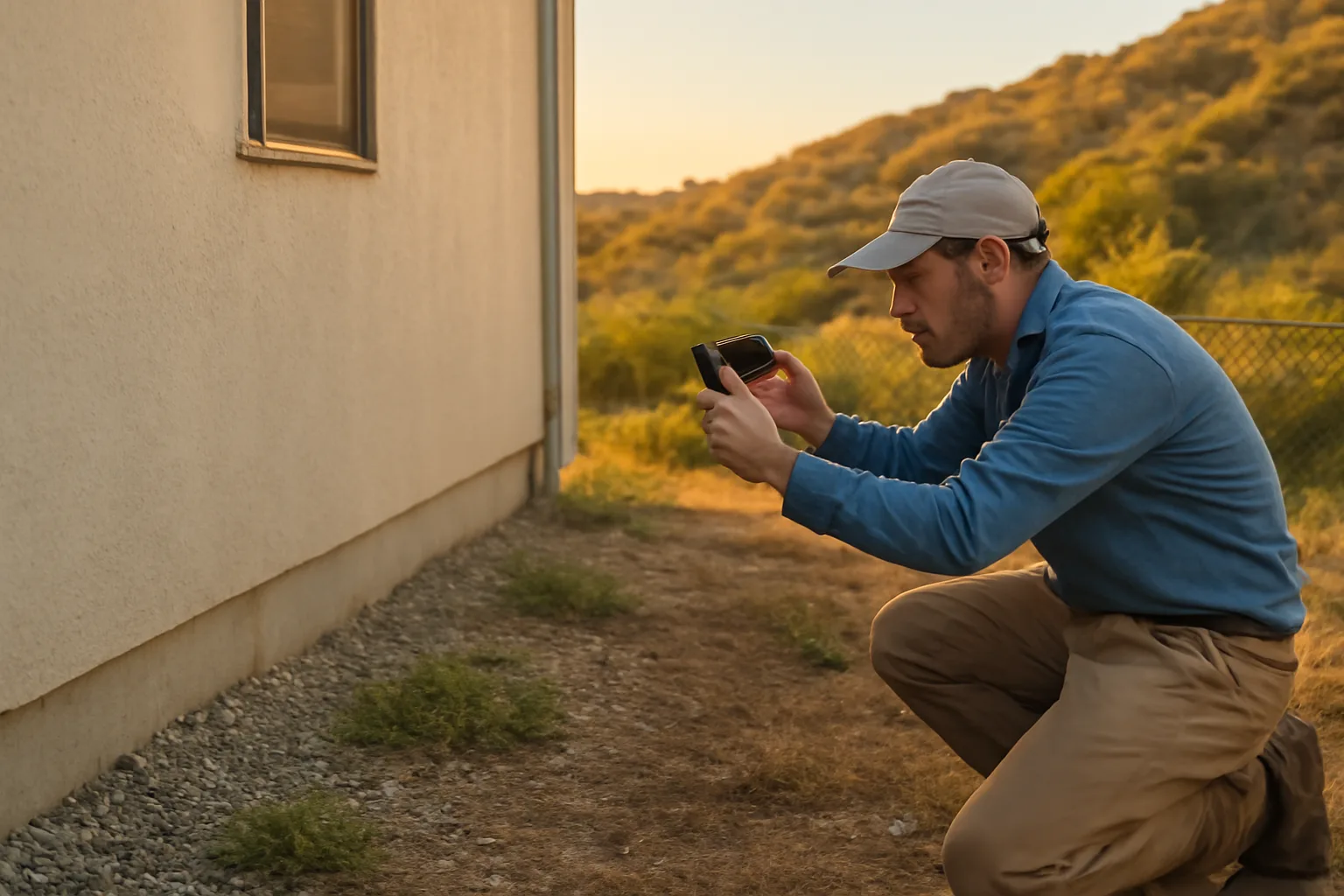
Here's the practical checklist, in the order an insurer or inspector actually wants to see it. 1. Dated wide-angle photos of all four sides of the house, showing roofline, vents, and the ground within 5 feet of the foundation. 2. Photos of zones 1 and 2 (typically 5-30 feet and 30-100 feet from structure, though your local fire district sets exact distances) showing vegetation spacing and clearance. 3. Contractor invoices for any vegetation removal, tree trimming, roof replacement, vent screening, or gutter guard installation, with dates. 4. A copy of your most recent local fire department or CAL FIRE defensible space inspection, if one was conducted. 5. A one-page cover summary listing what was done, when, by whom, and referencing the applicable code section (PRC 4291 for California, or your state's equivalent). Redo steps 1 and 2 every year, ideally right before fire season starts, since vegetation grows back and a two-year-old photo won't satisfy an inspector or an underwriter. If you got a non-renewal letter, this file is what you attach to your written response or appeal request to the insurer, not a phone call. Insurers work off documents, and a well-organized file with dates beats a longer file with none.
Frequently asked questions
When does the California defensible space law go into effect?
The 100-foot defensible space requirement under Public Resources Code 4291 is already in effect and has been for years in State Responsibility Areas and Very High Fire Hazard Severity Zones. The newer 5-foot "zone 0" ember-resistant rule from AB 3074 is written into law but its enforcement start date depends on Board of Forestry regulations that were still being finalized as of this writing.
Why won't people follow the defensible space law in California?
Cost is the biggest reason: removing large trees or brush on steep terrain can run thousands of dollars with no guaranteed state subsidy. Confusion over what "clearing" actually requires and inconsistent enforcement across counties also contribute, according to CAL FIRE compliance survey findings on noncompliance in inspected VHFHSZ parcels.
How do I prevent wildfires around my own house?
Focus on the 5-foot ember-resistant zone around your foundation, clear gutters and roof valleys of debris, use ember-resistant vent screens, and maintain a Class A rated roof. These reduce ignition probability from embers, which cause most WUI home losses, more effectively than general landscaping changes.
How do I prepare for a wildfire if I already got a non-renewal notice?
Build a documentation file immediately: dated photos of your defensible space zones, contractor receipts for mitigation work, and any fire department inspection reports. Send this with a written response to your insurer within whatever appeal window they specify. This isn't a claim, it's evidence supporting your case for coverage.
How can we prevent forest fires as a society, more than individually?
Since roughly 85 to 90% of wildfires nationally are human-caused according to National Park Service data, public education on campfire safety, equipment spark restrictions, and burn bans during high-risk periods reduce ignition frequency. Prescribed burning and fuel treatment programs reduce fire intensity in treated forest areas, though funding limits how much acreage gets treated annually.
How do I avoid forest fires when hiking or camping in a high-risk area?
Check CAL FIRE's incident and red flag warning maps before you go, follow posted burn bans, fully extinguish campfires with water (more than dirt), and avoid parking vehicles on dry grass where a hot exhaust or catalytic converter can ignite vegetation.
What fire-safe home rules take effect in 2026?
No single confirmed 2026 rule applies statewide yet. California's zone 0 ember-resistant zone regulation (from AB 3074) is still in rulemaking, and CAL FIRE has not published a confirmed statewide compliance date. Check your local fire district and the state fire marshal's office directly, since county-level inspection cycles often move faster than state rulemaking.
Is Santa Barbara safe from fire?
No. Large parts of Santa Barbara County's foothill and wildland-urban interface areas, including Montecito and the hills above downtown, are mapped by CAL FIRE as Very High Fire Hazard Severity Zones. The area has had major fires including the 2017-2018 Thomas Fire, followed by a deadly debris flow tied to the burned watershed.
What documents do insurers actually want as proof of mitigation?
Dated photos of defensible space zones and structure details (roof, vents, gutters), contractor invoices for mitigation work, and any official fire department or CAL FIRE inspection report. A one-page summary letter referencing the applicable code section makes the file easier for an underwriter to review quickly.
How often should I update my defensible space documentation?
Redo photos and inspection records annually, ideally right before fire season starts each year. Vegetation regrows, roofing and vents degrade, and a photo file more than a year or two old generally won't satisfy an insurer or inspector asking for current proof.
Does defensible space compliance guarantee my insurance won't be cancelled?
No. Compliance reduces risk and gives you documentation to support an appeal, but insurers weigh regional wildfire model scores, prior claims history, and broader market conditions alongside your mitigation record. Mitigation proof strengthens your case; it doesn't guarantee reinstatement or renewal.
What's the difference between zone 0, zone 1, and zone 2 in defensible space?
Zone 0 is roughly the 0-5 foot ember-resistant buffer immediately around the structure. Zone 1 typically covers 5-30 feet with reduced/spaced vegetation. Zone 2 typically covers 30-100 feet with fuel reduction and fewer clearance restrictions. Exact distances and requirements vary by local fire district, so confirm with yours.
Sources
- CAL FIRE, Defensible Space PRC 4291: 100-foot defensible space requirement around structures in State Responsibility Areas and VHFHSZ
- California Legislature, AB 3074 (2020): Directs Board of Forestry to develop ember-resistant zone (zone 0) regulations within 5 feet of structures
- CAL FIRE, Zone 0 Ember-Resistant Zone program page: Zone 0 implementation depends on regulations still being finalized by the Board of Forestry
- National Park Service, Wildfire Causes and Evaluation: Roughly 85-90% of wildfires nationally are human-caused
- National Fire Protection Association, Firewise USA: Firewise USA sites report site assessments and annual work hours through the NFPA program
- CAL FIRE, Fire Hazard Severity Zone Viewer: Mapping of Very High Fire Hazard Severity Zones including Santa Barbara County foothill areas