Last updated 2026-07-25
TL;DR
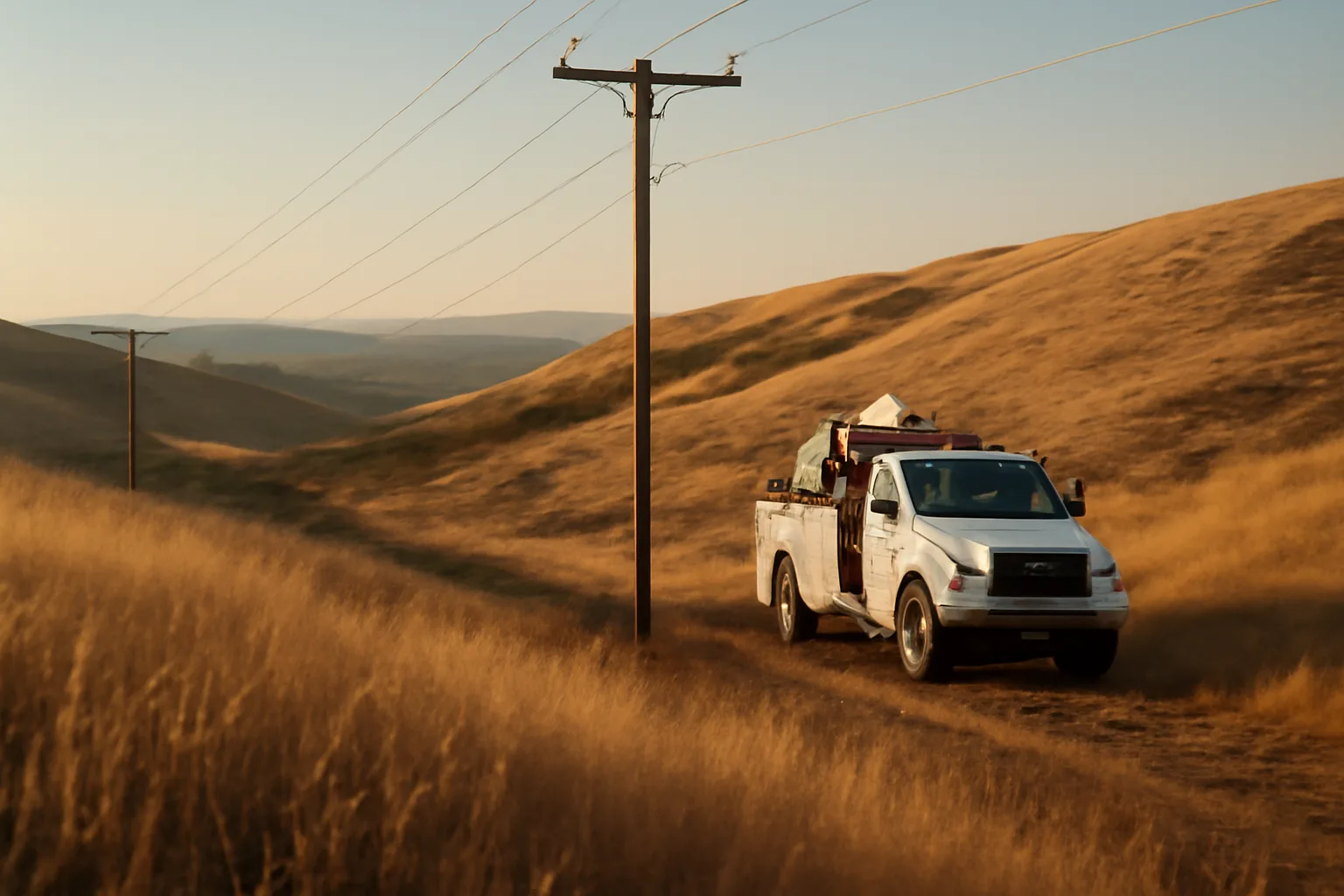
Utility wildfire mitigation means power companies inspecting lines, clearing vegetation, hardening equipment, and sometimes shutting off power (PSPS) during extreme fire weather. Rules come from state utility commissions, not a single federal law, and vary a lot by state and even by utility service territory.
What is utility wildfire mitigation, exactly?
Utility wildfire mitigation is the set of things a power company does to keep its own equipment from starting a fire, and to reduce damage if one starts anyway. That includes inspecting and replacing aging poles and conductors, clearing brush and trees near lines, installing sensors that detect faults, and in some cases cutting power on purpose during dangerous wind and dryness (a Public Safety Power Shutoff, or PSPS). This isn't a homeowner program. It's a utility obligation, usually enforced by a state public utilities commission or a state fire marshal's office. But it affects homeowners directly: if your utility's lines start a fire near your house, that shapes your fire risk and your insurance company's view of your address, whether or not your own defensible space is perfect. California has the most developed system. Under Senate Bill 901 (2018) and Assembly Bill 1054 (2019), the state's three big investor-owned utilities (PG&E, Southern California Edison, San Diego Gas & Electric) must each file an annual Wildfire Mitigation Plan with the California Public Utilities Commission (CPUC), covering vegetation management, grid hardening, and situational awareness [1]. Smaller utilities and rural electric cooperatives file similar plans but with less state oversight. Colorado created its own framework after the 2021 Marshall Fire, requiring electric utilities to file wildfire mitigation plans with the Colorado Public Utilities Commission under rules adopted in 2021. Oregon passed Senate Bill 762 in 2021, which directs utilities to develop wildfire protection plans reviewed by the Oregon Public Utility Commission [2]. Arizona doesn't have a single statewide mandate like California's; utility wildfire plans there are handled more through Arizona Corporation Commission rate cases and utility-specific filings.
What does a utility wildfire mitigation plan actually include?
| Vegetation management | Clearing trees/brush near lines beyond legal minimums | CPUC, CAL FIRE | |
|---|---|---|---|
| Grid hardening | Covered conductor, undergrounding, stronger poles | CPUC | |
| Weather stations | Real-time wind/humidity sensors along risk corridors | Utility, verified by CPUC | |
| PSPS protocols | Rules for when and how power gets shut off | CPUC | |
| Inspection cycles | How often lines and poles get physically checked | CPUC, state fire marshal | PG&E, for example, has reported spending billions on "undergrounding" (burying power lines) in its highest-risk service areas, a strategy it says nearly eliminates ignition risk from that equipment but costs roughly $3 million per mile according to PG&E's own public filings discussed in CPUC proceedings. That cost is why undergrounding happens in small targeted stretches, not everywhere. If you want to know what your specific utility is required to do, check your state's utility commission website and search for your utility's name plus "wildfire mitigation plan." [Guided fill-in: enter your utility name and county here to find the applicable plan.] Rules genuinely differ by fire district and utility territory, so don't assume your neighbor's utility program matches yours even in the same state. |
Every state's plan looks a little different, but the core pieces repeat: vegetation clearance around power lines, equipment upgrades, weather monitoring, and shutoff protocols. Here's the rough breakdown of what CAL FIRE and the CPUC expect California utilities to report on each year [1]. | Component | What it means | Who checks it |
What is a Public Safety Power Shutoff (PSPS) and when does it happen?
A PSPS is a utility-initiated power outage meant to prevent electrical equipment from sparking a fire during extreme wind, heat, or dryness. Utilities in California, Oregon, and parts of Colorado use this tool, and it can affect tens of thousands of customers at once. The trigger conditions vary by utility but generally combine sustained wind speed (often above 25-45 mph depending on the area), low relative humidity, and dry fuel conditions confirmed by on-the-ground crews or weather stations [1]. PG&E's PSPS program, for instance, considers wind gusts, humidity below roughly 20%, and dry fuel moisture readings together, not any single threshold alone. This matters for wildfire prep in a very practical way: a PSPS can last anywhere from several hours to multiple days, and it often coincides with the exact weather conditions (hot, dry, windy) that make evacuation more urgent. If you live in a PSPS-prone area, treat every red flag warning as a possible power-and-water event, more than a fire risk. Backup power for well pumps, medical equipment, and communication is part of preparing for a wildfire, not an afterthought. Check your utility's outage map and sign up for PSPS alerts directly through their customer portal. This is one of the few things that is genuinely utility-specific and worth five minutes of setup before fire season starts.
When does the California defensible space law go into effect?
California's core defensible space requirement (Public Resources Code Section 4291) is already in effect and has been since it was last substantially amended in 2005, requiring 100 feet of defensible space clearance around structures in State Responsibility Areas and some Local Responsibility Areas [3]. That part isn't new. What is new, or rather delayed, is the "Zone 0" ember-resistant zone rule. Assembly Bill 3074 (2020) directed the California Board of Forestry and Fire Protection to develop regulations for a 0-to-5-foot zone immediately around structures where no combustible materials, mulch, or vegetation would be allowed. As of this writing, CAL FIRE and the Board of Forestry have not finalized the Zone 0 regulation; it has been delayed multiple times, and CAL FIRE's own defensible space page notes the ember-resistant zone requirement is still in development, not yet enforceable statewide. So if someone tells you "Zone 0 kicks in this year," verify it directly against CAL FIRE's current defensible space guidance before you spend money assuming a firm deadline. Rules in progress can slip, and enforcement timelines depend on final regulatory text plus local fire agency adoption. [Guided fill-in: check your local fire district's current defensible space ordinance and enforcement date here.]
Why won't people follow the defensible space law in California?
Cost, confusion about the rules, and inconsistent enforcement are the three biggest reasons defensible space compliance lags, based on CAL FIRE's own inspection data and public reporting from state audits. It's not usually that people don't care about fire. Clearing 100 feet of defensible space on a sloped, wooded lot can cost real money: tree removal, brush clearing, and disposal easily run into thousands of dollars for larger properties, and low-income and elderly homeowners in rural areas often can't front that cost even when they understand the risk. CAL FIRE inspections have found non-compliance rates vary widely by county, and enforcement historically has been complaint-driven or tied to permit renewals rather than universal annual inspection, meaning a lot of properties simply never get checked. There's also a real disagreement in some communities about what "defensible space" requires versus what feels like stripping a lot bare. Homeowners in wooded areas sometimes push back on removing mature trees they value, even when a registered professional forester or defensible space inspector explains the fire-behavior reasoning. And renters, absentee owners, and properties in probate or dispute simply have no one actively managing the land. None of this means the law is wrong. It means compliance requires money, clear guidance, and someone checking, and California doesn't consistently have all three in every county yet.
What fire-safe home rules take effect in 2026?
There isn't one single nationwide "2026 fire-safe home" law; what's changing in 2026 depends on your state and county, and some California rules that were expected by 2025 have already slipped. The most concrete near-term change to watch is California's Zone 0 ember-resistant zone regulation, which the Board of Forestry has been developing since AB 3074 passed in 2020, with various proposed effective dates discussed in board meetings, none of which is final as of this writing. Separately, California's Chapter 7A building code (the wildland-urban interface fire hardening standard for new construction, covering ignition-resistant roofing, vents, siding, and windows) already applies to new construction and major remodels in designated Fire Hazard Severity Zones under the California Building Code, and local jurisdictions periodically update their adopted version of the state code on their own cycles [4]. Colorado, Oregon, and Arizona each have their own building code and defensible space timelines set at the state or county level, and none of them mirrors California's schedule exactly. If you got a non-renewal letter referencing a specific 2026 requirement, ask your insurer or fire district to name the exact code section, because "2026 rules" gets thrown around loosely in advertising and even some contractor pitches. [Guided fill-in: enter your county and fire district to check locally adopted 2026 code changes.] If you're hardening your home ahead of any of these rules, the practical priorities (ember-resistant vents, Class A roofing, enclosed eaves, tempered glass windows) are the same regardless of which specific regulation eventually locks in the date. Waiting for a final rule number before starting the work costs you a fire season you didn't need to risk.
How to prevent wildfires (what actually works, ranked by evidence)
Preventing wildfires at the source means reducing ignition points, which is mostly a mix of utility equipment maintenance, human behavior around debris burning and equipment sparks, and land management, not any single fix. CAL FIRE reports that the large majority of California wildfires are human-caused, including equipment use, arson, and unattended campfires and debris burns, alongside utility-caused ignitions during extreme weather [5]. The things with real evidence behind them: keeping outdoor equipment (mowers, chainsaws, generators) away from dry grass during red flag conditions, never burning debris on high-wind days, maintaining vehicle exhaust systems and dragging chains (a documented ignition source on rural roads), and utilities actually executing their vegetation clearance schedules rather than deferring them. At the community level, fuel breaks, prescribed burns, and mechanical thinning done by land management agencies reduce fire intensity and spread rate, according to U.S. Forest Service research on fuel treatment effectiveness, though results depend heavily on treatment size, weather at time of fire, and maintenance over years. A fuel break that isn't retreated after five years largely stops functioning as one. What doesn't move the needle much: symbolic gestures like clearing one shrub near your porch while ignoring the roof vents and the wood fence touching the house. Prevention has to be systemic (utility, agency, and household layers working together) or single efforts get overwhelmed.
How to prevent forest fires and how to avoid forest fires
Preventing forest fires specifically (as opposed to fires that start at structures) comes down to reducing ignition sources in wildland areas and keeping fuel loads manageable through active land management. This is less about your house and more about behavior in forested and rural land. The U.S. Forest Service and Smokey Bear campaign (a genuinely federal program run jointly with the National Association of State Foresters and the Ad Council since 1944) puts the core rules simply: fully extinguish campfires by drowning, stirring, and feeling for heat before leaving; never leave a fire unattended; check local fire restrictions before burning debris; and avoid parking or driving over dry grass with a hot undercarriage [6]. Ready.gov reinforces the same basics under its wildfire preparedness guidance, adding that during red flag warnings, outdoor burning and equipment use should stop entirely regardless of local permits [7]. Forest fire avoidance at the land-management level (thinning overstocked stands, prescribed burning during safe windows, maintaining access roads for suppression equipment) is mostly a public land agency function, but private forest and rangeland owners in Colorado, Oregon, and parts of California can access cost-share programs through their state forestry agency or NRCS for fuel reduction work. Ask your state forester's office directly; program names and funding levels change year to year and don't have a stable national equivalent worth citing here.
How to prepare for a wildfire (and how to prepare for forest fires near you)
Preparing for a wildfire means having an evacuation plan, a go-bag, defensible space around structures, and a way to get alerts before conditions turn, according to Ready.gov's wildfire preparedness checklist [7]. The order matters: alerts and evacuation planning come first because they save lives; defensible space and hardening reduce property loss but take longer to execute. Ready.gov's specific guidance includes signing up for community alert systems, knowing at least two evacuation routes from your neighborhood, keeping a battery-powered radio (since cell networks and power can fail together during a PSPS or fire), and preparing an emergency supply kit with water, medications, and copies of important documents [7]. For forest-adjacent properties specifically, that also means clearing needles from gutters and roofs before fire season, not during a red flag warning when it's too late to matter. Documentation matters just as much as physical prep, especially if you're dealing with an insurance non-renewal. Photograph your defensible space work, keep dated receipts for vegetation clearance and any home hardening (vent screens, roof work, fence replacement near the house), and keep copies of any fire district inspection reports. If your insurer denies renewal citing wildfire risk, you want a paper trail showing what you actually did, more than what you remember doing. This is exactly the gap the Wildfire Insurance Survival Kit is built to close: a $99 one-time tool for organizing that documentation yourself. We don't negotiate with insurers, file claims on your behalf, or promise reinstatement; you prepare the record and send it yourself. For structure-level prep specifically, see our guides on fire safe landscaping next to the house and general defensible space planning, which cover the zone-by-zone clearance work in more detail than utility policy can.
Is Santa Barbara safe from fire?
No coastal or foothill community in California is "safe" from fire in any absolute sense, and Santa Barbara County has a documented history of major, damaging wildfires, including the 1990 Painted Cave Fire and the 2017 Thomas Fire, which at the time was the largest wildfire in modern California history by acreage before being surpassed by later fires [8]. The Thomas Fire also triggered the deadly Montecito debris flow in January 2018, a reminder that fire risk in this area compounds with post-fire mudslide risk on steep, burned terrain. Much of Santa Barbara County, particularly foothill and canyon communities like Montecito, Mission Canyon, and the San Marcos Pass area, sits within CAL FIRE-designated Very High Fire Hazard Severity Zones . You can check the exact zone designation for any specific address using CAL FIRE's Fire Hazard Severity Zone viewer, which is the authoritative source rather than general reputation or news coverage . That said, "high hazard zone" doesn't mean a fire is imminent this year; it means the combination of vegetation, topography, and weather patterns creates elevated long-term risk, which is exactly why insurers use these zone maps when deciding on non-renewals. If you live in or near Santa Barbara and got a non-renewal letter, check your specific parcel's zone designation first: it usually explains the insurer's reasoning even if the letter itself doesn't spell it out.
How can we prevent forest fires at the community level?
Community-level forest fire prevention combines utility accountability, coordinated defensible space enforcement, and shared fuel-reduction projects, because individual household efforts get overwhelmed if the utility infrastructure or neighboring properties aren't also managed. This is the layer most homeowners have the least visibility into but the most to gain from paying attention to. Firewise USA, a National Fire Protection Association program, organizes neighborhoods into recognized communities that commit to annual fuel-reduction days, shared risk assessments, and coordinated defensible space work across property lines, something individual compliance can't achieve alone . Joining or starting a Firewise group in your neighborhood is one of the few prevention actions where the whole genuinely exceeds the sum of individual efforts, because fire doesn't respect property lines and one uncleared lot next door can undo your own work. At the policy level, showing up to your county fire district or CPUC-adjacent public comment periods when utility wildfire mitigation plans are up for renewal is a real lever most homeowners never use. These plans get filed annually or on multi-year cycles and are, at least in California, subject to public comment before the CPUC approves them [1]. If your utility has been slow to clear vegetation near your neighborhood's lines, that comment period is the direct venue to say so. For households already dealing with a non-renewal notice, our guides on house fire response and fire at a house documentation cover what to do after an incident, while only you can prevent wildfires covers the individual behavior side in more depth.
Frequently asked questions
When does the California defensible space law go into effect?
The core 100-foot defensible space requirement under Public Resources Code Section 4291 has been in effect since its 2005 amendment. The newer Zone 0 ember-resistant zone rule (from AB 3074, passed 2020) is still being finalized by the Board of Forestry and CAL FIRE and does not yet have a confirmed statewide enforcement date.
Why won't people follow California's defensible space law?
Mostly cost and enforcement gaps, not disregard for fire risk. Clearing 100 feet on a wooded or sloped lot can cost thousands of dollars, inspections are often complaint-driven rather than universal, and some rural and low-income homeowners can't afford compliance even when they understand the danger.
What fire-safe home rules take effect in 2026?
There's no single nationwide 2026 rule. California's Zone 0 ember-resistant zone regulation has been in development since 2020 with no final confirmed date as of this writing. Check your county's adopted building code and your fire district directly rather than relying on general '2026 rule' claims.
Is Santa Barbara safe from fire?
No. Much of Santa Barbara County, including Montecito and foothill areas, sits in CAL FIRE's Very High Fire Hazard Severity Zone. The county has a documented history of major fires, including the 2017 Thomas Fire. Check your specific address on CAL FIRE's zone viewer rather than relying on general reputation.
What is a PSPS and how do I know if my utility does it?
A Public Safety Power Shutoff is a utility-initiated outage to prevent equipment from sparking a fire during extreme wind and dryness. PG&E, SCE, and SDG&E in California use it; some Oregon utilities do too. Check your utility's website directly and sign up for outage alerts before fire season.
How to prevent wildfires from utility equipment specifically?
Utilities reduce ignition risk through vegetation clearance around lines, replacing aging equipment, installing weather sensors, and using PSPS shutoffs during extreme conditions. These obligations come from state wildfire mitigation plans filed with utility commissions in California, Colorado, and Oregon, not from homeowner action.
How to prepare for a wildfire if I live in a PSPS-prone area?
Treat every red flag warning as a possible combined power-and-fire event. Keep backup power for medical equipment and well pumps, a battery radio, at least two known evacuation routes, and a go-bag ready year-round, per Ready.gov's wildfire preparedness guidance.
How to prevent forest fires when camping or working outdoors?
Fully extinguish campfires by drowning, stirring, and checking for heat before leaving. Never leave fires unattended, avoid outdoor equipment use and debris burning during red flag warnings, and check local fire restrictions first. These are the core Smokey Bear and Forest Service prevention rules.
How to avoid forest fires caused by vehicles or equipment?
Avoid driving or parking on dry grass with a hot exhaust or undercarriage, maintain trailer safety chains so they don't drag and spark, and stop outdoor power equipment use during high wind and low humidity days. Equipment-caused ignitions are a documented and preventable category tracked by CAL FIRE.
How can we prevent forest fires at the neighborhood level?
Join or start a Firewise USA group through the National Fire Protection Association, which coordinates shared fuel-reduction days and risk assessments across property lines. Individual defensible space work loses effectiveness if a neighboring untreated lot still carries heavy fuel load next to shared risk.
Does clearing defensible space guarantee my insurance won't be cancelled?
No. Defensible space reduces risk and gives you documentation to show insurers, but no state or CAL FIRE program guarantees renewal or reinstatement. Insurers make their own underwriting decisions. Keep dated records of your work in case you need to submit them yourself.
Are utility wildfire mitigation plans public record?
Yes, in California. Utilities file annual Wildfire Mitigation Plans with the CPUC, which are subject to public review and comment before approval. Colorado and Oregon have similar public filing requirements under their own utility commission rules, though review cycles differ by state.
Sources
- California Public Utilities Commission, Wildfire Mitigation Plans: California requires utilities to file annual Wildfire Mitigation Plans covering vegetation management, grid hardening, and PSPS protocols
- Oregon Public Utility Commission, Wildfire Protection Plans: Oregon Senate Bill 762 (2021) directs utilities to develop wildfire protection plans reviewed by the state PUC
- California Building Standards Commission, Chapter 7A: Chapter 7A of the California Building Code sets wildland-urban interface fire hardening standards for new construction
- USDA Forest Service, Fuel Treatment Effectiveness Research: Fuel breaks and mechanical thinning reduce fire intensity and spread rate, but effectiveness depends on maintenance over time
- Smokey Bear / USDA Forest Service, Wildfire Prevention Tips: Core wildfire prevention rules include fully extinguishing campfires and avoiding outdoor burning during red flag conditions
- CAL FIRE, Top 20 Largest California Wildfires: The 2017 Thomas Fire was the largest wildfire in modern California history by acreage at the time it occurred
- CAL FIRE, Fire Hazard Severity Zone Maps: CAL FIRE and the Office of the State Fire Marshal designate Very High Fire Hazard Severity Zones including parts of Santa Barbara County
- National Fire Protection Association, Firewise USA Program: Firewise USA organizes neighborhoods into recognized communities that coordinate shared fuel-reduction and risk-assessment work