Last updated 2026-07-25
TL;DR
You need three things: defensible space (100 feet around your home, per CAL FIRE), home hardening (ember-resistant vents, Class A roofing, enclosed eaves), and a documented evacuation plan with a go-bag. Insurers now check all three before renewing a policy, so treat this as compliance work, more than safety work.
What do you actually need to prepare for a wildfire?
You need four things, in this order: defensible space around the structure, hardened materials on the structure itself, an evacuation plan with a packed go-bag, and paper documentation proving you did all three. Skip the documentation and none of the physical work counts when an insurer or inspector asks for proof. CAL FIRE's standard is 100 feet of defensible space around a home, broken into two zones. Zone 0 (0 to 5 feet from the structure) requires no combustible materials at all, no mulch, no wood piles, no plants directly against siding. Zone 1 (5 to 30 feet) requires lean, clean, and green vegetation with spacing between plants. Zone 2 (30 to 100 feet) allows more growth but still needs cut grass and thinned brush. For the structure, the priority list is roof, vents, eaves, and windows, in that order, because embers cause most home ignitions in a wildfire, not direct flame contact. A 2013 study for the Insurance Institute for Business & Home Safety found that embers and small flames account for the large majority of structures lost in wildland urban interface fires, not the wall of fire itself. For evacuation, Ready.gov recommends a go-bag with water, medications, copies of documents, and a family communication plan built before a fire starts, not during one. Waiting until you smell smoke is how people leave without the one folder of paperwork they actually needed.
How do you prevent wildfires from starting near your home?
Most wildfires near homes start from something avoidable: a mower hitting a rock, a dragging trailer chain, a cigarette, an unattended debris burn, or a spark from equipment on a red flag warning day. CAL FIRE's public messaging is blunt about this, which is where the old Smokey Bear line comes from: prevention is mostly about not creating the spark in the first place. Practical steps that actually reduce ignition risk: mow before 10am and never on dry, windy afternoons; keep a shovel and water source near any outdoor equipment work; don't park hot vehicles on dry grass; check local burn permit rules before any debris burning, since many counties suspend permits entirely during fire season; and maintain equipment so it isn't throwing sparks or dragging metal. The only you can prevent wildfires messaging exists because roughly 85% of wildfires in the U.S. are human-caused according to National Interagency Fire Center data cited by the U.S. Forest Service, covering everything from campfires to arson to equipment sparks. That number moves around by year and region, but the pattern holds: the ignition source is usually a person, not lightning.
How do you prevent forest fires when you live near wildland?
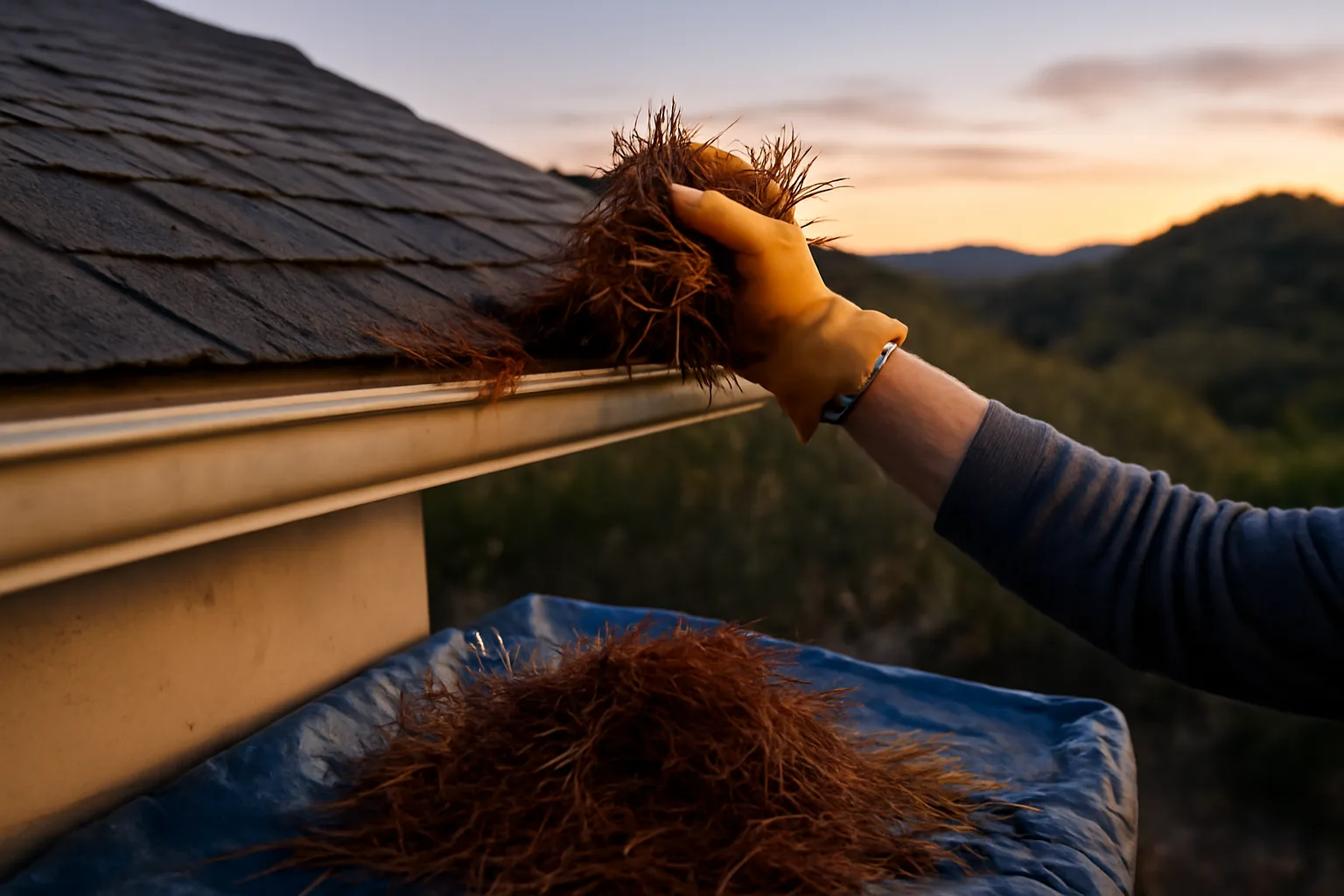
If your property backs up to forest or open wildland, forest fire prevention and home defense become the same job. The goal is breaking the chain between wildland fuel and your structure, and that chain has three links: ladder fuels (low brush and branches that let fire climb into tree canopy), continuous fuel (unbroken vegetation that lets fire run), and ember-catching debris (dry leaves in gutters, needles on roofs, mulch against walls). CAL FIRE's guidance for the 30 to 100 foot zone calls for removing dead plant material, thinning trees so canopies don't touch, and removing lower tree branches up to 6 feet from the ground to break the ladder fuel path. If you're near a slope, extend clearance further downhill, since fire moves faster uphill and can outrun standard clearance distances. If your land backs onto state or federal forest, check with your local fire district or state forestry agency before doing major vegetation removal. Some clearing near forest boundaries requires permits or coordination, and rules vary significantly by district and by state (Washington State DNR, for example, runs formal wildfire defensible space clearing contracts for larger parcels). Check your specific fire district's requirements before starting work, since a defensible space plan that's compliant in one county may fall short in the next one over.
When does the California defensible space law go into effect?
California's defensible space requirement under Public Resources Code 4291 has been in effect for years, requiring 100 feet of clearance around structures in State Responsibility Areas and some Local Responsibility Areas. What's newer, and still being phased in, is the Zone 0 ember-resistant zone regulation. The State Board of Forestry and Fire Protection has been developing Zone 0 regulations (the 0 to 5 foot ember-resistant zone) under SB 63 and related legislation, with an original statutory target for state fire agencies to adopt regulations by January 1, 2023, and enforcement was expected to phase in afterward [1]. As of this writing, Zone 0 regulations have faced repeated delays in formal rulemaking, and CAL FIRE's own defensible space page continues to describe Zone 0 as an emerging requirement homeowners should get ahead of rather than a fully enforced statewide mandate on a fixed date. The honest answer: the base 100-foot defensible space law under PRC 4291 is already in force and has been for years. The stricter Zone 0 ember-resistant rule is in an active but slow rulemaking process, and specific enforcement timing depends on your local fire district adopting and enforcing it. Don't wait for the final regulation to clear Zone 0. Insurers are already asking about it now.
What fire safe home rules take effect in 2026?
There is no single nationwide "2026 fire code" that applies to every home. What's changing is a patchwork of state and local rules, mostly built around Zone 0 ember-resistant zones, WUI (wildland urban interface) building codes for new construction, and insurer-mandated hardening standards tied to programs like California's Safer from Wildfires framework. California's Safer from Wildfires regulation, adopted by the Department of Insurance in 2022, requires insurers to give discounts or otherwise recognize specific mitigation actions, including Zone 0 clearance, ember-resistant vents, and multi-story hardening, once those actions are verified [2]. Insurers have been rolling out recognition of these standards on staggered timelines since adoption, and some carriers are still updating their underwriting models to fully reflect the rule. Rather than chase a specific year number that keeps shifting in rulemaking, treat 2026 as a planning deadline you set for yourself: get Zone 0 done, get ember-resistant vents installed, and get it all documented, because whenever your specific state or local rule does lock in, you want to already be compliant rather than scrambling. Check your state fire marshal's office directly for the current adoption status in your area, since this is one of the fastest-moving areas of wildfire regulation.
Why won't people follow the defensible space law in California?
Cost, labor, and aesthetics are the three real reasons, and none of them are irrational. Clearing 100 feet of defensible space on a wooded lot can mean removing mature trees people planted decades ago, and vegetation management contractors aren't cheap, especially in high-demand fire seasons when everyone needs the same crews at once. There's also an enforcement gap. PRC 4291 gives local fire agencies authority to inspect and require compliance, but inspection capacity varies enormously by county, and many rural areas simply don't have enough inspectors to check every property every year. A property owner who's never been inspected has less pressure to act, even if the law technically applies to them. There's a documented perception problem too. Research from the University of California's wildfire programs and CAL FIRE's own public messaging both point to a common pattern: homeowners often believe their property is defensible when it isn't, because they're comparing it to a neighbor's worse lot rather than to the actual 100-foot standard. And some homeowners genuinely don't know the rule exists until an insurance non-renewal letter or a fire district notice shows up. The fix isn't complicated, it's just unglamorous: get an actual defensible space inspection, follow the defensible space checklist zone by zone, and document what you did with dated photos, because "I meant to" doesn't help you with an insurer and doesn't help a fire crew either.
How do you prepare for a wildfire before it happens?
Preparation splits into three timeframes: right now (documentation and go-bag), this season (defensible space and hardening), and ongoing (maintenance and re-inspection). Most people only do the first one, under pressure, days before a fire. Ready.gov's wildfire guidance centers on making a family communication plan, packing an emergency kit with at least three days of supplies, and knowing two ways out of your neighborhood before you need them. Add to that: photograph your home's exterior and interior room by room, save those photos somewhere off your property (cloud storage, more than your phone), and keep a copy of your insurance declarations page somewhere you can grab it in five minutes. This is also the moment to check your policy's dwelling coverage limit against actual local rebuild costs, not the number your insurer quoted you five years ago. Rebuild costs in wildfire-affected regions of California, Colorado, and Oregon have risen sharply since 2020, and a policy that hasn't been updated can leave you significantly underinsured even if it renews. A structured approach here matters more than a scattered one. If you're not sure where to start, the DefensibleHome Wildfire Insurance Survival Kit is a $99 one-time tool built specifically to help homeowners organize this documentation, defensible space records, and hardening proof into the format insurers actually ask for. It doesn't file claims or negotiate coverage for you (we don't do either), it just helps you build the paper trail before you need it.
How do you avoid forest fires while doing outdoor work or recreating?
Avoiding forest fires as an individual comes down to controlling the few things that actually start them: heat sources, sparks, and unattended fire. Fully extinguish campfires by drowning, stirring, and drowning again, since a campfire that looks out isn't necessarily out below the surface. Never leave a fire, grill, or fire pit unattended, even for a few minutes. Check local fire danger ratings and red flag warnings before doing any spark-producing activity outdoors, including welding, grinding, chainsaw use, or target shooting, all of which have caused documented wildfire starts. Many fire districts legally restrict or ban these activities during high fire danger days, and violating a burn ban can carry real fines in addition to the fire risk itself. On the vehicle side, don't drive or park on dry grass, since catalytic converters and exhaust systems run hot enough to ignite dry vegetation in seconds. This is a surprisingly common ignition source for wildland fires near roads and trailheads, especially in late summer.
Is Santa Barbara safe from fire?
No area in the Santa Barbara region can be called safe from fire risk, and the record backs that up directly. The Thomas Fire in December 2017 burned over 281,000 acres across Ventura and Santa Barbara counties and was, at the time, the largest wildfire in modern California history [3]. The Jesusita Fire (2009) and the Tea Fire (2008) both burned through Santa Barbara's foothill neighborhoods and destroyed homes in areas many residents considered low-risk. Santa Barbara County sits in a classic high-risk configuration: steep chaparral-covered foothills, frequent Sundowner winds that can push fire downslope at high speed, and dense residential development directly against wildland. CAL FIRE's Fire Hazard Severity Zone maps classify large portions of the foothill communities (Montecito, Mission Canyon, the Riviera, upper State Street areas) as Very High Fire Hazard Severity Zones [4]. If you own property in or near these zones, defensible space and hardening aren't optional extras, they're the main thing standing between your house and the next Sundowner-driven fire. Check your specific address against CAL FIRE's Fire Hazard Severity Zone viewer rather than relying on neighborhood reputation, since hazard zone boundaries don't always match where people assume the risk starts and stops.
How can communities help prevent forest fires together?
Individual defensible space only works fully when neighbors do it too, because embers don't respect property lines. A single neglected lot with dry brush and wood piles can undermine an entire block's hardening work, since a structure fire on one property routinely ignites the next one downwind. Firewise USA, a program run through the National Fire Protection Association in partnership with the U.S. Forest Service and state forestry agencies, organizes neighborhoods into recognized communities that commit to shared defensible space standards, joint brush removal days, and community wildfire protection plans [5]. Getting your HOA or neighborhood association enrolled is one of the highest-leverage things a group of homeowners can do, and some insurers now ask about Firewise status as part of underwriting. At the local level, attending fire district and county planning meetings on defensible space enforcement, chipper day programs, and fuel break maintenance actually moves the needle, since these programs are often underfunded relative to the acreage they're supposed to cover. A neighborhood that organizes a group rate for a vegetation clearing contractor also tends to get materially better pricing than individual homeowners calling around one at a time.
What should go in a wildfire go-bag and documentation folder?
Split your go-bag into two categories: physical survival items and paper (or digital) documentation, because insurers and disaster recovery programs need proof, more than intentions. Ready.gov's baseline kit includes water (one gallon per person per day for several days), non-perishable food, a battery or hand-crank radio, flashlight, first aid kit, medications, phone chargers, and cash, since ATMs and card readers may not work during an evacuation. The documentation folder matters just as much and gets overlooked constantly: insurance policy and declarations page, photo or video inventory of your home's contents and structure, copies of ID and property deed, a list of prescription medications and dosages, and if applicable, records of defensible space work and hardening upgrades you've completed, since this is what supports any future insurance conversation about your property's risk profile. "Make a family emergency communication plan" is Ready.gov's specific language for one part of this process, and it means designating an out-of-area contact, agreeing on a meeting point, and making sure every family member, including kids, knows both. Practice it once a year, the same way you'd test a smoke detector.
What hardening upgrades give you the most protection for the money?
| Ember-resistant vents | $200 to $600 per vent | Blocks the most common ember entry point into attics and crawlspaces | |
|---|---|---|---|
| Zone 0 clearance (0-5 ft) | $500 to $3,000 (DIY to contractor) | Removes the fuel embers need to ignite right next to the wall | |
| Gutter guards | $1,000 to $3,000 for a typical home | Stops ember-igniting debris buildup at the roofline | |
| Class A roof upgrade (if replacing anyway) | $8,000 to $25,000+ | Highest single fire-resistance jump, but only cost-effective at replacement time | |
| Dual-pane or tempered windows | $400 to $1,200 per window | Reduces radiant heat breakage that lets embers and flame inside | These ranges are general national estimates and vary heavily by region, contractor availability, and home size; get local quotes rather than budgeting off a national average. For fire safe landscaping in California next to a house, the same principle applies: spend first on the material closest to the structure, since that's where embers do the most damage, not on the outer perimeter. |
If you have a fixed budget, spend it in this order: ember-resistant vents first, then Zone 0 clearance, then gutter guards and roof debris removal, then window upgrades. This ordering follows ember exposure risk, since vents and Zone 0 debris are the two most common ignition points documented in post-fire structure loss studies. | Upgrade | Typical cost range | Why it matters |
How does this connect to keeping or getting home insurance?
Insurers in California, Colorado, Oregon, and Arizona have all tightened wildfire underwriting significantly since 2020, and several major carriers paused new homeowner policies in high-risk California zip codes starting around 2023. The practical result: documented mitigation work is now a factor in both getting a new policy and keeping an existing one at renewal. California's Safer from Wildfires regulation requires insurers to factor in specific mitigation steps, including defensible space compliance and home hardening actions, when setting rates or making underwriting decisions [2]. That means the same defensible space work you'd do for safety reasons now doubles as evidence for an insurance conversation, but only if you document it properly with dated photos, receipts, and a clear zone-by-zone record. If you've already gotten a non-renewal letter, or watched it happen to a neighbor, the fastest thing you can do isn't more physical work, it's organizing what you've already done into a format an underwriter can actually read. A single blurry photo of a cleared yard doesn't do much. A dated, zone-labeled record with before-and-after photos and receipts does. That's the specific gap the DefensibleHome Wildfire Insurance Survival Kit is built to close, a $99 one-time tool for organizing your own documentation, not a claims service and not a guarantee of coverage or discounts.
Frequently asked questions
When does the California defensible space law go into effect?
The base 100-foot defensible space requirement under Public Resources Code 4291 has been in effect for years already. The newer Zone 0 ember-resistant zone rule has been in active rulemaking by the Board of Forestry and Fire Protection with statutory targets around January 2023, but formal adoption and enforcement dates have shifted; check CAL FIRE's defensible space page for current status.
Why won't people follow the defensible space law in California?
Cost of clearing mature vegetation, limited contractor availability, low local inspection rates that reduce enforcement pressure, and a common misconception that a lot is defensible just because it looks better than a neighbor's. Many homeowners also simply don't learn the rule applies to them until an inspection notice or insurance non-renewal letter arrives.
How do you prevent wildfires from starting?
Most wildfires are human-caused, so prevention means controlling ignition sources: mow dry grass only in early morning, keep equipment maintained and spark-free, never leave campfires or debris burns unattended, don't park on dry grass, and follow local burn permit and red flag warning restrictions.
How do you prepare for a wildfire if you live in a high-risk zone?
Build 100 feet of defensible space in CAL FIRE's zone structure, harden vents and eaves against embers, pack a go-bag with water, medication, and cash per Ready.gov guidance, and assemble a documentation folder with insurance papers and home photos stored off-property, ideally in cloud storage.
How do you prevent forest fires near your property?
Break the fuel chain between wildland and your home: remove ladder fuels (low branches and brush), thin tree canopies so they don't touch, clear dead vegetation in the 30-100 foot zone, and coordinate with your local fire district before major clearing near forest boundaries, since permit rules vary.
How can we prevent forest fires as a community?
Join or start a Firewise USA recognized community through the National Fire Protection Association, coordinate group vegetation removal days, attend local fire district planning meetings, and push for consistent defensible space enforcement across the neighborhood, since one uncleared lot can undermine everyone else's hardening work.
What fire safe home rules take effect in 2026?
There's no single national 2026 fire code. What's changing is state-level, mostly California's Zone 0 ember-resistant zone rulemaking and insurer recognition timelines under the Safer from Wildfires regulation. Treat 2026 as your own planning deadline to finish hardening and documentation, and check your state fire marshal for local adoption status.
Is Santa Barbara safe from fire?
No. Santa Barbara County has burned repeatedly, including the 2017 Thomas Fire (over 281,000 acres) and the 2009 Jesusita and 2008 Tea fires that hit residential foothill neighborhoods directly. Large parts of the county's foothill communities are mapped as Very High Fire Hazard Severity Zones by CAL FIRE.
What's the single most important thing to do first for wildfire prep?
Clear Zone 0, the 0-5 foot area right against your home's walls. Embers cause most home ignitions in wildfires, and combustible material touching the structure (mulch, wood piles, dry plants) is the most direct path for an ember to become a house fire.
How much defensible space clearance does California require?
100 feet total, split into Zone 0 (0-5 feet, no combustibles), Zone 1 (5-30 feet, lean/clean/green spacing), and Zone 2 (30-100 feet, thinned brush and cut grass), per CAL FIRE's official defensible space guidance under Public Resources Code 4291.
Does defensible space work actually help with insurance?
It can, but only if documented. California's Safer from Wildfires regulation requires insurers to factor in mitigation steps like defensible space and hardening when underwriting. A dated, photo-backed record of the work is far more useful to an insurer than the work alone with no proof attached.
What goes in a basic wildfire go-bag?
Ready.gov recommends water (one gallon per person per day), non-perishable food, medications, flashlight, battery or hand-crank radio, first aid kit, phone chargers, and cash. Add copies of your insurance policy, ID, and a home inventory, since documentation is as important as physical supplies.
Sources
- California Department of Insurance, Safer from Wildfires Regulation: Insurers must recognize wildfire mitigation actions including defensible space and hardening in underwriting
- CAL FIRE, Thomas Fire Incident Archive: Thomas Fire burned over 281,000 acres across Ventura and Santa Barbara counties in December 2017
- CAL FIRE, Fire Hazard Severity Zone Maps: Santa Barbara County foothill communities are classified as Very High Fire Hazard Severity Zones
- National Fire Protection Association, Firewise USA: Firewise USA program organizes neighborhoods into recognized communities with shared defensible space standards
- California Public Resources Code Section 4291: Statutory basis requiring 100 feet of defensible space clearance around structures in State Responsibility Areas