Last updated 2026-07-25
TL;DR
A wildfire mitigation advisor inspects your property against defensible space zones and home-hardening standards, then gives you a prioritized, documented plan. Costs run free (fire district) to $300-$800 (private consultant). They don't negotiate insurance, but their report becomes the evidence you send to an insurer to fight a non-renewal.
what does a wildfire mitigation advisor actually do?
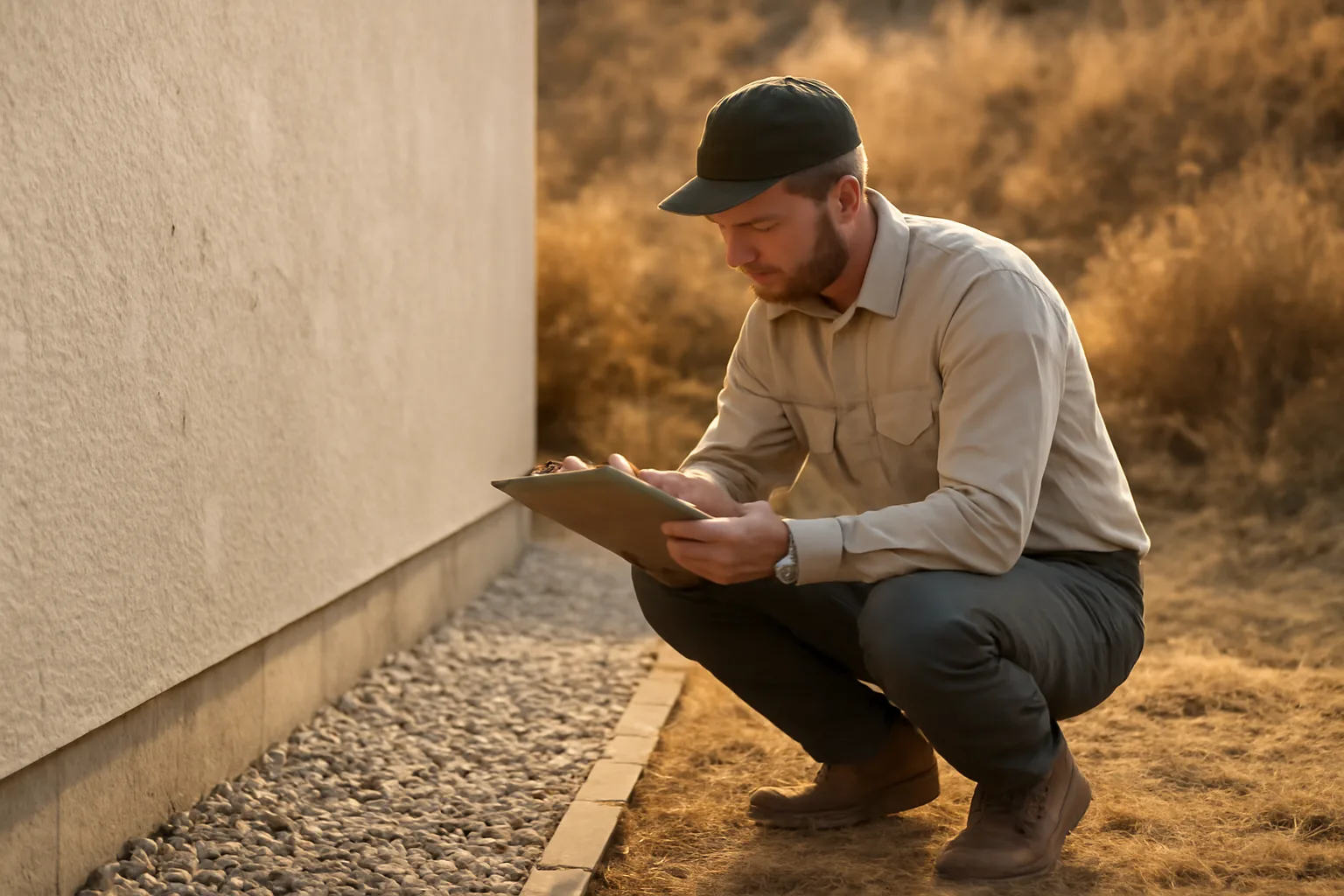
A wildfire mitigation advisor walks your property, compares what's there against defensible space and home-hardening standards, and hands you a written list of gaps ranked by risk. Some work for your local fire district or CAL FIRE unit and do this for free. Others are private consultants, arborists, or contractors who charge for a formal report. The good ones check three things in order: the zone right against your house (0 to 5 feet), the middle zones out to 100 feet or your property line, and the building itself (roof, vents, siding, windows, decking). California's regulation calls these Zone 0, Zone 1, and Zone 2, and CAL FIRE's own guidance describes Zone 0 as the "ember-resistant zone" immediately surrounding the structure [1]. What you get at the end matters more than the walk-through itself. A real advisor gives you dated photos, measurements, and a written scope, not a verbal "looks pretty good." That document is what you'd send to an insurer or an underwriter reviewing your policy, and it's the same kind of packet a defensible space clearing contract in Washington State would require from a licensed contractor. One thing advisors won't do: negotiate with your insurance company, file a claim on your behalf, or promise a discount or reinstated policy. If someone offers that, they're not doing mitigation consulting, they're doing something closer to public adjusting, which requires a different license in most states.
when does the california defensible space law go into effect?
California's core defensible space law (Public Resources Code 4291) has been in effect since the 1965 wildfire era and was substantially amended in 2020 to require clearance up to 100 feet from structures in State Responsibility Areas and designated Wildland-Urban Interface zones [2]. The part homeowners ask about most, the Zone 0 ember-resistant zone rule (0-5 feet from structures), is different: it was authorized by AB 3074 in 2020 but CAL FIRE has not yet finalized the implementing regulations. As of this writing, CAL FIRE's Office of the State Fire Marshal has been working through the rulemaking process for Zone 0, and the agency's own site notes the regulation is still in development, with enforcement dates to be set once it's adopted [1]. Homeowners in high fire severity zones should not wait for the ink to dry. Insurers are already scoring properties against Zone 0 concepts (bare ground or hardscape within 5 feet, no combustible mulch, no wood fencing attached to the house) well ahead of any enforcement deadline. So the honest answer is: the general 100-foot defensible space law is already active and has been enforced for years, but the specific 0-5 foot ember zone rule is pending final regulation. Check your county or fire district's local ordinance too, because many jurisdictions layer stricter rules on top of the state minimum. Fire-safe landscaping rules near the house already reflect where Zone 0 is heading, even before it's codified everywhere.
what fire-safe home rules take effect in 2026?
The honest answer is that no single nationwide "2026 rule" exists, and anyone claiming a hard national deadline is getting ahead of the actual regulatory record. What's real: California's Zone 0 ember-resistant zone regulation has been in the rulemaking pipeline since AB 3074 passed in 2020, and the State Fire Marshal's office has targeted finalizing it in stages, with some drafts referencing 2025-2026 as a rough enforcement horizon for new construction and eventually retrofits in Very High Fire Hazard Severity Zones [1] [2]. Oregon's statewide wildfire risk map and defensible space code (under Senate Bill 762) has also been moving through revisions after backlash over its original 2022 map, with the state re-releasing risk classifications and tying future building code updates to those maps [3]. Colorado doesn't have a single statewide defensible space mandate; it's handled county by county and by local fire protection districts, so "2026 rules" there depend entirely on where you live. The practical move: don't wait for a specific date. Check your county planning department or fire district's ordinance page directly, because these effective dates shift with each legislative session. Treat any hardening work you do now (Zone 0 clearing, vent screening, ember-resistant siding) as insurance against whatever the final rule says, since compliant now almost always means compliant later.
why won't people follow the defensible space law in california?
Cost, labor, and disagreement about what "compliant" even looks like are the three real reasons, not laziness. Clearing 100 feet of vegetation on a sloped, brushy lot can run $3,000 to $15,000 depending on terrain and vegetation density, and that's a bill many homeowners simply don't have sitting around, especially after paying more for insurance or losing it entirely. There's also a trust problem. CAL FIRE conducts defensible space inspections in State Responsibility Areas, and its own reporting has shown compliance rates vary widely by county and that many inspected parcels fail on the first pass, often for issues homeowners didn't know were violations, like a woodpile against a fence line or dead vegetation they hadn't gotten to yet. When the first contact with the law is a citation rather than guidance, people get defensive instead of compliant. Age and mobility matter too. A lot of defensible space work is physical labor, cutting brush, hauling debris, trimming trees 40 feet up. Older homeowners on fixed incomes in rural WUI areas often can't do the work themselves and can't afford to hire it out every year, because most of this isn't a one-time job. Grass and brush grow back. Annual maintenance is the actual requirement, not a single clearing event, and that ongoing cost is what breaks compliance for a lot of people. Finally, some homeowners genuinely disagree with parts of the rule, particularly around removing mature trees or specific ornamental plants they've had for decades. That's a real tension between defensible space science and the emotional and financial value of established landscaping, and it doesn't resolve just because the law says so.
how to prevent wildfires (and what's actually in your control)
You can't stop a wildfire from starting somewhere else, but you can dramatically cut the odds that it destroys your specific house. That distinction matters. Wildfire prevention at the landscape level (fuel breaks, prescribed burns, power line maintenance) is mostly a government and utility job. Wildfire prevention at the parcel level is yours. The US Forest Service and CAL FIRE both point to the same top human-caused ignition sources: unattended campfires, debris burning, equipment sparks (mowers, chainsaws, grinders on dry vegetation), and downed power lines. Ready.gov's wildfire page recommends avoiding outdoor burning on red flag warning days and keeping equipment away from dry grass, since a lawnmower blade striking a rock is a documented ignition source in multiple state fire investigations [4]. At the home level, prevention means removing the fuel and ignition points around your structure: dead vegetation within 5 feet, mulch replaced with gravel or hardscape near the foundation, gutters cleared of leaves and needles, and any wood piles moved at least 30 feet from the house. None of this stops a wildfire. All of it reduces the chance embers landing near your house find something to ignite.
how to prepare for a wildfire (the actual checklist)
Preparation splits into three buckets: the property, the go-bag, and the plan. Skipping any one of them is how people end up evacuating with nothing or losing a house that had a fighting chance. Property: complete defensible space clearing per your zone requirements, harden vents with 1/8-inch metal mesh, clear roof and gutter debris, and move flammable items (patio furniture cushions, doormats, propane tanks) away from the structure before fire season, not during a red flag warning. Go-bag: Ready.gov recommends a kit with water (one gallon per person per day for several days), non-perishable food, a flashlight, a battery or hand-crank radio, medications, copies of ID and insurance documents, and a change of clothes, kept somewhere you can grab it in under two minutes [4]. Plan: know two evacuation routes out of your neighborhood (not one), designate a meeting point outside the fire zone, and sign up for your county's emergency alert system before fire season starts, not after you smell smoke. Photograph every room and your exterior (all four sides, roof if you can) before fire season each year. That documentation is what makes an insurance claim defensible if the worst happens, and it's the same baseline evidence a mitigation advisor's report builds on. If you want a structured way to organize all of this into one packet, the Wildfire Insurance Survival Kit is a $99 one-time tool built for exactly this: photo documentation, inventory, and a mitigation checklist in one place, not insurance advice, just organization.
how to prevent forest fires / how to avoid forest fires
Most forest fires start from human activity, not lightning, and the US Forest Service has stated that roughly 85-90% of wildland fires nationally are human-caused, from campfires, debris burning, discarded cigarettes, and equipment use [5]. That means the single biggest lever for preventing forest fires is behavior on days and in places where the risk is highest. Concretely: fully extinguish campfires (drown, stir, drown again, and feel for heat before leaving), never burn debris on windy or red flag days, keep vehicles off dry grass (catalytic converters can ignite vegetation), and follow local burn ban notices, which most county fire departments post directly on their websites during dry seasons. If you're a landowner near forested land, maintaining fuel breaks and following your state forestry agency's guidance on prescribed burning or mechanical thinning contributes to broader fire prevention beyond your own parcel. But for most homeowners, the honest scope of what you control is your own ignition sources and your own defensible space, not the forest itself.
how to prepare for forest fires as a homeowner near wildland
Preparing for a forest fire near your home means treating the wildland edge as an active threat zone, not scenery. The 100-foot defensible space zone under California law exists specifically because that's the distance research has shown matters most for reducing structure ignition from radiant heat and embers [2]. Beyond clearing vegetation, check your evacuation timeline honestly. If you live at the end of a single-lane dirt road with forest on both sides, your effective evacuation window is shorter than someone on a paved through-street, and you should plan (and leave) earlier, not later. CAL FIRE's ReadyForWildfire program pushes a specific message here: don't wait for an evacuation order if conditions look bad, because roads clog and visibility drops fast once a fire is moving [1]. Home hardening matters as much as landscaping near forest boundaries. Ember storms can travel over a mile ahead of a fire front, landing on roofs and in vents long before flames arrive. A metal or Class A fire-rated roof, ember-resistant vents, and dual-pane tempered glass windows change the odds significantly more than an extra 20 feet of cleared brush once you're past the 100-foot mark.
is santa barbara safe from fire?
No coastal California community is "safe" from wildfire risk, and Santa Barbara County has direct experience proving it: the 2017 Thomas Fire burned over 280,000 acres and was, at the time, the largest wildfire in modern California history, followed days later by the Montecito debris flow that killed 23 people, an indirect but devastating consequence of the fire stripping hillside vegetation [6]. The 2018 Thomas Fire aftermath and 2020's Cave Fire near San Marcos Pass are further evidence that the wildland-urban interface around Santa Barbara is an active fire zone, not a low-risk exception. CAL FIRE's Fire Hazard Severity Zone maps classify large portions of the hills above Santa Barabara, Montecito, and Goleta as High or Very High Fire Hazard Severity Zones, which is the same classification tier used to trigger defensible space enforcement and insurer non-renewal decisions statewide [7]. If your property falls in one of those zones, you're subject to the same 100-foot clearance rule as any other California WUI homeowner, regardless of how the coastline or ocean views make the area feel. The practical answer for a Santa Barbara homeowner: check your specific parcel against the CAL FIRE FHSZ viewer rather than relying on general reputation. Coastal fog and ocean proximity reduce some fire risk in specific microclimates, but the hillside canyons that define much of Santa Barbara's terrain are some of the highest-risk topography in the state for wind-driven fire spread.
how can we prevent forest fires at the community level?
Individual defensible space work only goes so far if your neighbors haven't done theirs, because embers and radiant heat don't respect property lines. Community-level prevention works through a few concrete mechanisms: Firewise USA recognition (a National Fire Protection Association program that requires neighborhood-wide risk assessments and coordinated mitigation, more than individual compliance), shared fuel break maintenance on common land, and coordinated debris removal days that lower the cost per household through bulk contractor rates. Local fire districts often run free chipper day programs during fire season, where residents pile cut vegetation curbside and the district hauls it away at no charge, which removes one of the biggest excuses (disposal cost and hauling logistics) for not doing defensible space work. Check with your specific fire district for dates, since this varies enormously by jurisdiction. [Fire district specific note: insert local chipper day schedule, defensible space inspection contact, and county ordinance number here.] At a broader level, community wildfire protection plans (CWPPs), required under the Healthy Forests Restoration Act of 2003 for communities seeking certain federal fuel reduction funding, formalize this coordination and identify priority fuel treatment areas across jurisdictional lines [8]. If your county has a CWPP, it's public and worth reading, because it tells you exactly where local officials think the highest risk areas are, which usually correlates with where insurers are pulling coverage first.
how much does a wildfire mitigation advisor cost, and is it worth it?
| Fire district / CAL FIRE inspection | Free | Compliance check, violation notice, basic guidance | |
|---|---|---|---|
| Private wildfire mitigation consultant | $150-$400 | Written assessment, photos, priority list | |
| Certified consultant + full report | $300-$800 | Detailed scope, contractor cost estimates, insurer-ready packet | |
| DIY self-assessment (CAL FIRE checklist) | Free | Good baseline, no third-party documentation | Whether it's worth paying for one depends on your goal. If you just want to be compliant and safer, the free fire district inspection is enough for most people. If you're fighting a non-renewal or trying to get reinstated coverage and need third-party documentation an insurer will take seriously, a paid report with dated photos and specific measurements carries more weight than a homeowner's own notes. Either way, the advisor's report is a starting point, not a guarantee; insurers make their own underwriting decisions and no consultant can promise a specific outcome. |
Free options exist and are worth using first. Most CAL FIRE units and many county fire departments offer free defensible space inspections, particularly if you're in a State Responsibility Area. These inspections check compliance with Public Resources Code 4291 and give you a written notice of any violations along with a reasonable timeline to fix them [2]. Private consultants and certified wildfire mitigation specialists typically charge $150 to $400 for a standard residential assessment, and $300 to $800 for a more detailed report that includes photo documentation, a prioritized scope of work, and cost estimates for contractors, according to rates commonly listed by ISO-certified wildfire mitigation firms and arborist consultants operating in California and Colorado (pricing varies significantly by region and property size; get at least two quotes). | Advisor type | Typical cost | What you get |
what should you do with a mitigation advisor's report?
Treat it as evidence, organize it, and send it yourself. Insurers reviewing non-renewal appeals or new applications in wildfire zones generally want to see dated photos of the specific hardening and clearance items (Zone 0 clearance, vent screening, roof material, gutter condition), not a general description of "we did some work." Build a simple packet: the advisor's written report, before-and-after photos with dates, receipts for any contractor work, and a cover letter stating what was done and when. Keep a copy for yourself and send a copy to your agent or insurer directly. Some insurers have specific mitigation credit programs (California's Safer from Wildfires framework requires insurers to offer premium discounts for verified mitigation under Zone 0, ember-resistant vents, and Class A roofing, per California Department of Insurance regulations adopted in 2022) , so ask your agent specifically whether your documented work qualifies. We don't negotiate with insurers, file claims on your behalf, or promise coverage, discounts, or reinstatement. What we (and any legitimate mitigation advisor) can do is help you document the work accurately and completely so you're the one presenting a strong case, not hoping an adjuster takes your word for it. For background on what insurers are actually scoring against, see defensible space and how it intersects with a house fire risk profile more broadly.
Frequently asked questions
When does the California defensible space law go into effect?
The core 100-foot defensible space law (Public Resources Code 4291) has been active for years and was expanded in 2020. The specific Zone 0 (0-5 feet) ember-resistant zone rule, authorized by AB 3074, is still in CAL FIRE's rulemaking process and hasn't been formally enforced yet as of this writing. Check CAL FIRE's site for the current status.
Why won't people follow the defensible space law in California?
Cost is the biggest reason: clearing 100 feet of brush on a sloped lot can run $3,000-$15,000, and it's an annual task, not a one-time job. Trust issues (surprise citations instead of guidance), physical labor demands on older or fixed-income homeowners, and disagreement over removing mature trees also drive noncompliance.
How do I prevent wildfires around my home?
Remove dead vegetation within 5 feet of your structure, replace mulch with gravel near the foundation, clear gutters of debris, move woodpiles at least 30 feet away, and avoid outdoor burning or equipment use on dry, windy days. You can't stop wildfires from starting, but you control what fuel is near your house.
How do I prepare for a wildfire?
Complete defensible space clearing, harden vents with metal mesh, pack a go-bag (water, food, meds, flashlight, documents) per Ready.gov guidance, know two evacuation routes, and photograph your property before fire season starts. Sign up for your county's emergency alert system now, not once you smell smoke.
How can we prevent forest fires?
About 85-90% of wildland fires are human-caused, per US Forest Service data, mostly from campfires, debris burning, and equipment sparks. Fully extinguish campfires, avoid burning on red flag days, keep vehicles off dry grass, and follow local burn bans. Community fuel breaks and coordinated debris removal help beyond your own parcel.
What fire-safe home rules take effect in 2026?
There's no single confirmed nationwide 2026 rule. California's Zone 0 ember-resistant zone regulation has been in rulemaking since 2020 and some drafts reference a 2025-2026 enforcement horizon, but it isn't finalized. Oregon's wildfire risk map and code updates are also evolving. Check your specific state fire marshal's site for the current timeline.
Is Santa Barbara safe from fire?
No. The 2017 Thomas Fire burned over 280,000 acres in the Santa Barbara area, and much of the surrounding hillside terrain is classified High or Very High Fire Hazard Severity Zone by CAL FIRE. Check your specific parcel on CAL FIRE's Fire Hazard Severity Zone viewer rather than assuming coastal location means low risk.
What does a wildfire mitigation advisor actually check?
A thorough advisor checks Zone 0 (0-5 feet from the structure), Zone 1 and 2 (out to 100 feet or your property line), and the home itself: roof material, vent screening, siding, windows, and decking. You should get a written, dated report with photos, more than a verbal opinion.
How much does a wildfire mitigation assessment cost?
Fire district inspections through CAL FIRE or your county are typically free. Private consultants charge roughly $150-$400 for a standard assessment and $300-$800 for a detailed report with photo documentation and contractor cost estimates. Get at least two quotes since pricing varies by region.
Can a mitigation advisor get my insurance reinstated?
No, and be wary of anyone who claims they can. Mitigation advisors document your property's condition; they don't negotiate with insurers, file claims, or guarantee coverage, discounts, or reinstatement. You (or a licensed public adjuster, a different role entirely) send the documentation to your insurer yourself.
How to prepare for forest fires if I live near wildland?
Complete full 100-foot defensible space clearing, harden vents and roofing against embers (which can travel over a mile ahead of a fire front), and plan an earlier evacuation timeline if you're on a single-lane or dead-end road. Don't wait for an official evacuation order if conditions look dangerous.
How to avoid forest fires when camping or working outdoors?
Fully drown, stir, and re-drown campfires until cold to the touch before leaving. Avoid debris burning or power equipment use on dry, windy, or red flag warning days. Keep vehicles off dry grass, since hot catalytic converters are a documented ignition source in multiple state fire investigations.
Does a mitigation report help with an insurance non-renewal appeal?
It can serve as documentation, though it's not a guarantee of any outcome. A written report with dated photos of completed Zone 0 clearance, vent screening, and roofing gives your insurer specific evidence rather than a general claim that you 'did work.' Send it directly to your agent yourself.
Sources
- CAL FIRE, Defensible Space (Zone 0): Zone 0 ember-resistant zone concept and rulemaking status
- California Public Resources Code Section 4291: 100-foot defensible space clearance requirement in State Responsibility Areas
- CAL FIRE, Defensible Space Inspections Program: CAL FIRE conducts defensible space compliance inspections in State Responsibility Areas
- USDA Forest Service, Wildfire Causes and Evaluations: Majority of wildland fires are human-caused
- InciWeb / Santa Barbara County, Thomas Fire incident record: 2017 Thomas Fire size and Montecito debris flow aftermath
- CAL FIRE, Fire Hazard Severity Zone Maps: Fire Hazard Severity Zone classification used for defensible space and insurance risk designation
- USDA Forest Service, Healthy Forests Restoration Act Community Wildfire Protection Plans: Community Wildfire Protection Plans required under the Healthy Forests Restoration Act of 2003
- California Department of Insurance, Safer from Wildfires Regulation: Insurers required to offer premium discounts for verified wildfire mitigation actions