Last updated 2026-07-25
TL;DR
Zone 1 of defensible space runs from your home's exterior wall out to 30 feet (or to your property line, whichever comes first), per CAL FIRE's zone system. It's the strictest zone: no combustible mulch, dead plants, or fuel ladders near the structure, with an even tighter 0 to 5 foot ember-resistant zone closest to the walls.
Where exactly is Zone 1 located around a house?
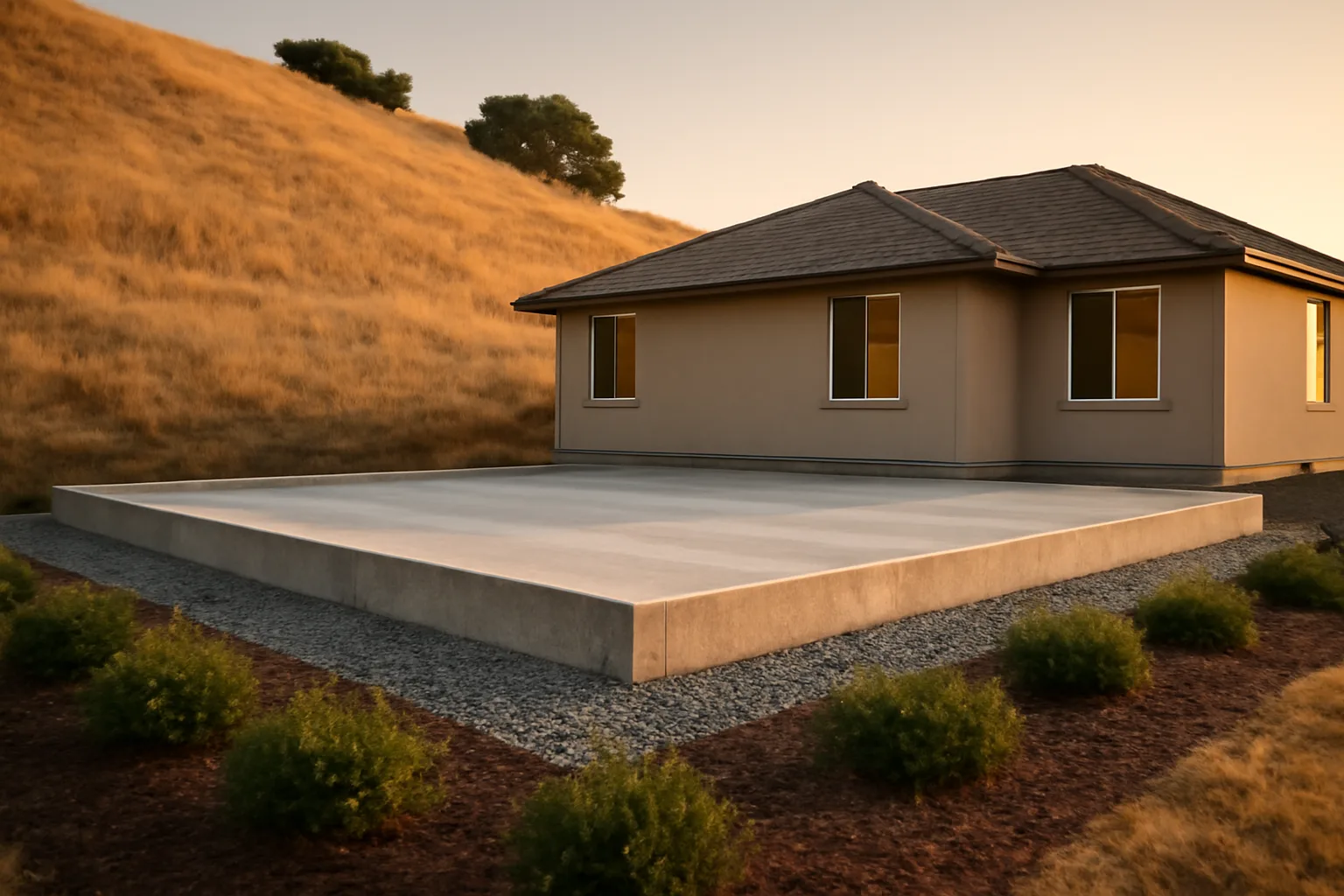
Zone 1 starts at your home's exterior wall, deck edge, or attached structure, and extends out to 30 feet, or to your property line if that's closer. CAL FIRE calls this the "Lean, Clean and Green Zone" in its defensible space guidance. Inside Zone 1, CAL FIRE's standard is to remove all dead plants, grass, and weeds; keep trees trimmed with branches at least 10 feet from other trees and from your chimney; and remove anything that could act as a fuel ladder from ground vegetation up into tree canopy. Zone 1 sits closer to the house than Zone 2 (30 to 100 feet, the "Reduced Fuel Zone") and is governed by tighter rules because it's the zone embers land in first during a wildfire. Many California properties, and an increasing number in Colorado, Oregon, and Arizona jurisdictions, also carve out an even stricter sub-zone within the first 5 feet of the structure. CAL FIRE and the California State Fire Marshal have been developing a formal "ember-resistant zone" standard for this 0 to 5 foot ring, sometimes called Zone 0 [1]. Nothing combustible belongs there: no bark mulch, no stored firewood, no dry leaves in gutters, no wood fencing that touches the house. One practical note: 30 feet isn't universal. Local fire districts and county ordinances can require more, especially on steep slopes or in areas with heavy vegetation. Check your specific fire district's rules before you assume the state minimum applies to your parcel.
What does CAL FIRE actually require inside Zone 1?
Inside Zone 1, CAL FIRE's defensible space checklist requires removing dead vegetation, keeping grass mowed to a maximum height (commonly cited as 4 inches in local ordinances), and maintaining vertical and horizontal spacing between plants and trees so fire can't climb from ground fuel into a canopy. Specific, checkable items include: tree limbs trimmed to keep at least 10 feet of clearance from other trees, and at least 10 feet of clearance from any chimney or stovepipe outlet. Remove tree branches that hang over your roof or come within 10 feet of it. Keep firewood stacks out of this zone entirely, they belong further out, in Zone 2 or beyond, and never stacked against the house. Decks and the space underneath them count as Zone 1 too. CAL FIRE guidance flags the area under decks and stairs as a common ignition point because debris accumulates there unnoticed. Enclose the underside or keep it completely clear. CAL FIRE's own language: defensible space is "the buffer you create between a building on your property and the grass, trees, shrubs, or any wildland area that surround it". Zone 1 is the innermost, most heavily managed part of that buffer, precisely because it's closest to where a house actually catches fire, either from direct flame contact or from wind-blown embers landing on or near combustible material touching the structure. For guidance on what building materials and details matter most in this zone, see our fire safe landscaping California next to house breakdown and the related defensible space overview.
When does the California defensible space law go into effect?
California's core defensible space law, Public Resources Code Section 4291, has been in effect for years and currently requires 100 feet of defensible space (or to the property line) around structures in State Responsibility Areas and some Local Responsibility Areas classified as Very High Fire Hazard Severity Zones [2]. That 100-foot standard, expanded from 30 feet by legislation in 2004, is already active, not pending. What's newer and still being finalized is the Zone 0 (0 to 5 feet) ember-resistant zone standard. Senate Bill 63 (2023) directed the Board of Forestry and Fire Protection to develop regulations for this ember-resistant zone, and the Board's rulemaking process has continued through 2024 and 2025 [1] [3]. As of this writing, Zone 0 requirements are in the regulatory development and public comment phase, not yet mandatory statewide, though homeowners in high-risk zones are strongly encouraged to adopt the ember-resistant practices now rather than wait for enforcement. If you got a non-renewal or inspection letter, don't wait on the Zone 0 rule to finalize. Insurers and CAL FIRE inspectors are already scoring properties against ember-resistant practices in that first 5 feet, informally, ahead of any formal mandate.
What fire-safe home rules take effect in 2026?
The honest answer here requires a caveat: California's Zone 0 ember-resistant zone regulation, which the Board of Forestry and Fire Protection has been developing under SB 63, has moved through public comment periods with proposed effective dates that have shifted more than once. Check the Board of Forestry and Fire Protection's official rulemaking page directly for the current status and effective date before making assumptions, because timelines for this kind of regulation commonly slip [1]. Separately, California's building code applies stricter wildfire-resistant construction standards (Chapter 7A of the California Building Code) to new construction and major remodels in Wildland-Urban Interface Fire Areas, covering things like ignition-resistant siding, dual-pane tempered windows, and ember-resistant vents [4]. These aren't new for 2026, they've applied to new construction since 2008, but enforcement and insurer scrutiny of existing homes for Chapter 7A-equivalent features has intensified. Outside California, Colorado, Oregon, and Arizona each have their own timelines. Oregon's statewide wildfire risk map and defensible space code requirements under Senate Bill 762 went through a contentious rollout, were paused, then reworked; check Oregon Department of Forestry's current guidance for where that stands. Colorado and Arizona largely leave defensible space requirements to county and local fire district ordinances rather than a single statewide law, so "what takes effect in 2026" is genuinely a guided fill-in you need to check with your specific fire district or county.
Why won't people follow the defensible space law in California?
Nobody has a clean national survey on this, but the reasons that come up consistently in CAL FIRE compliance data and local reporting are cost, labor, and a belief the risk doesn't apply to them personally. Cost is real. Clearing 100 feet of defensible space on a sloped, brush-heavy lot can run into several thousand dollars if you hire it out, and DIY clearing takes real weekends of physical labor that many homeowners, especially older residents, can't do themselves. CAL FIRE's own inspection data shows compliance rates vary widely by county, and enforcement has historically been inconsistent, county fire inspectors don't have the staffing to inspect every parcel every year. There's also a genuine disconnect between how people perceive risk and what the data shows. A property that hasn't burned in 40 years feels safe, even if it sits in a Very High Fire Hazard Severity Zone on CAL FIRE's official maps [5]. And some homeowners simply don't know the law applies to them until they get a notice, an insurance non-renewal letter, or watch a neighbor's house burn. The practical fix isn't complicated even if the compliance problem is: get your specific parcel's defensible space requirement in writing from your local fire department, do the clearing in phases starting with Zone 1 (it matters most and costs least), and document what you've done with dated photos, because that documentation is what insurers and inspectors actually want to see.
How do I prevent wildfires from starting near my home?
Most wildfires near homes start from human sources: unattended campfires, equipment sparks, downed power lines, and debris burning, not lightning. Ready.gov's wildfire preparedness guidance emphasizes clearing dead vegetation and flammable materials from around structures as the highest-leverage single action a homeowner can take. Specific things that reduce ignition risk: never burn debris on windy or dry days; keep any outdoor equipment (mowers, chainsaws, grinders) away from dry grass, since a single spark from metal-on-rock contact can ignite a fire; maintain spark arrestors on chimneys and outdoor equipment; and report downed power lines immediately rather than assuming someone else already did. At the property level, the actions that matter most are the same as Zone 1 defensible space work: clear dead vegetation, maintain the ember-resistant zone closest to the house, and keep gutters free of dry leaves and pine needles. Embers, not direct flame contact, ignite the majority of homes lost in wildfires, according to research cited by the Insurance Institute for Business & Home Safety and echoed in CAL FIRE's own guidance. That's why Zone 1's ember-focused rules (no combustible mulch near the house, screened vents, clear gutters) do more to protect the structure than broader wildland fuel reduction ever will alone.
How do I prepare for a wildfire, step by step?
Preparation splits into two tracks: property hardening (defensible space, home materials) and personal readiness (evacuation plan, documentation, go-bag). Ready.gov recommends starting both well before fire season, not during a red flag warning. For the property: complete Zone 1 clearing first since it's the cheapest and highest-impact work, then Zone 2, then address home hardening details like vent screens, gutter guards, and any exposed wood decking. CAL FIRE's defensible space checklist is a good starting document to work through room by room, or in this case, zone by zone. For personal readiness: build a go-bag with medications, copies of insurance documents, and a change of clothes; know two evacuation routes out of your neighborhood, more than one; and sign up for your county's emergency alert system. If you're already facing an insurance non-renewal, start documenting your property's condition now, dated photos of cleared brush, trimmed trees, and any home hardening upgrades are exactly what you'll want on hand if you ever need to show an insurer or adjuster what you've done. We built a $99 one-time Wildfire Insurance Survival Kit at survival-kit-builder specifically to organize that kind of documentation into something you can hand over or attach to correspondence yourself; we don't file claims or negotiate with insurers, but having your own organized record matters when you're trying to keep or regain coverage. For a broader look at what happens once fire reaches structures, see house fire and fire at a house.
How do I prevent forest fires and avoid starting them accidentally?
Forest fire prevention, as distinct from home defensible space, is mostly about behavior in wildland areas: fully extinguish campfires (drown, stir, drown again, until they're cool to the touch), never leave a fire unattended even briefly, and check local fire restrictions before any outdoor burning, since many counties ban campfires and debris burning entirely during red flag conditions. Smokey Bear's campaign, run by the U.S. Forest Service, exists because human-caused ignition is the dominant source of wildfires nationally, not lightning, in most regions and most years. Vehicles matter too: parking on dry grass lets a hot catalytic converter or exhaust pipe ignite vegetation in minutes, a documented cause of numerous wildland fires. If you're a landowner adjacent to forest or wildland, coordinated fuel reduction work with neighbors, sometimes through programs like Washington's DNR clearing contracts, is far more effective than one property clearing brush in isolation. See wildfire defensible space clearing contracts Washington State DNR if you're in a state with a formal cost-share or contractor program like this.
Is Santa Barbara safe from fire risk?
No California community bordering wildland vegetation is fully "safe" from fire risk, and Santa Barbara County has a documented history that argues against complacency: the Thomas Fire (2017), at the time one of the largest in California history, burned over 280,000 acres and was followed within weeks by the Montecito debris flow that killed 23 people, a disaster directly linked to the burned, denuded hillsides left by the fire . CAL FIRE's Fire Hazard Severity Zone maps classify large portions of the hillside and foothill areas around Santa Barbara and Montecito as Very High Fire Hazard Severity Zones [5]. That classification isn't cosmetic, it triggers the 100-foot defensible space requirement under PRC 4291 and stricter building codes for new construction under Chapter 7A [2] [4]. What this means practically: if you own property in or near Santa Barbara's wildland-urban interface, especially in the foothills, you should assume you're in a Very High Fire Hazard Severity Zone unless your county parcel viewer or fire department tells you otherwise, and you should treat defensible space compliance as a given, not optional. Check CAL FIRE's FHSZ viewer for your specific parcel, since zone boundaries follow terrain and vegetation, not neighborhood names.
How can we prevent forest fires at a community level?
Individual defensible space work matters, but wildfire behavior in wildland-urban interface areas is a community problem: one neglected lot with dry brush can ignite a neighbor's well-maintained property through radiant heat or ember transport, regardless of how well that neighbor followed the rules. Communities that reduce fire loss most effectively tend to combine several things: coordinated fuel breaks along shared property lines, Firewise USA program participation (a National Fire Protection Association program that helps neighborhoods organize collective mitigation), and consistent local ordinance enforcement rather than relying on individual compliance alone. For homeowners, the most useful individual contribution beyond your own property is showing up to local fire district meetings and pushing for consistent enforcement, since inconsistent enforcement is one of the most commonly cited reasons compliance stays low countywide. Encouraging or helping an elderly or lower-income neighbor complete Zone 1 clearing on their property protects your own house more than almost any other single action you could take with that same time, because ember and radiant heat exposure from an adjacent unmanaged lot can defeat even excellent defensible space on your own parcel.
What's the difference between Zone 1, Zone 2, and Zone 0?
| Zone | Distance from structure | Primary rule | Governing standard | |
|---|---|---|---|---|
| Zone 0 (ember-resistant zone) | 0 to 5 feet | No combustible materials touching structure | SB 63 rulemaking, in development [1] | |
| Zone 1 (Lean, Clean, Green) | 5 to 30 feet (or property line) | Remove dead vegetation, space trees, clear fuel ladders | CAL FIRE PRC 4291 [2] | |
| Zone 2 (Reduced Fuel Zone) | 30 to 100 feet (or property line) | Reduce fuel volume, maintain spacing between trees/shrubs | CAL FIRE PRC 4291 [2] | Zone 1 is where the enforceable, well-established CAL FIRE rules concentrate, and it's also the zone most insurers photograph or ask about directly when reviewing a policy for renewal. Zone 0 is stricter but newer and still being formalized into binding statewide regulation [1]. Zone 2 covers the largest area but has more flexible standards, since its job is fuel volume reduction rather than the near-structure ember protection Zone 1 and Zone 0 focus on. If your total lot is smaller than 100 feet from house to property line, which is common in denser subdivisions, your defensible space requirement simply extends to the property line, you're not required to clear a neighbor's land. |
Frequently asked questions
How far from my house does Zone 1 defensible space extend?
Zone 1 extends from your home's exterior wall or attached deck out to 30 feet, or to your property line, whichever is closer. Within that space, CAL FIRE requires removing dead vegetation, spacing trees at least 10 feet apart, and keeping tree limbs 10 feet from chimneys, per its defensible space guidance [1].
Is Zone 1 the same everywhere in California?
The state minimum under PRC 4291 sets a 100-foot total defensible space requirement, split into zones, but local fire districts can require stricter clearing distances based on slope, vegetation type, and local ordinance. Always confirm your specific district's requirement rather than assuming the state standard is the ceiling.
When does the California defensible space law go into effect?
The core 100-foot defensible space law (PRC 4291) is already in effect and has been since a 2004 expansion from the original 30-foot standard. The newer Zone 0 ember-resistant zone rule (SB 63, 2023) is still in regulatory development through the Board of Forestry and Fire Protection as of this writing [2][3].
Why won't people follow the defensible space law in California?
Cost, physical labor demands, inconsistent local enforcement, and a personal sense that "it won't happen here" are the most commonly cited reasons. CAL FIRE compliance rates vary widely by county, partly because inspection staffing can't cover every parcel every year, and homeowners often don't act until they receive a notice or non-renewal letter.
What fire-safe home rules take effect in 2026?
California's proposed Zone 0 ember-resistant zone regulation has been in development under SB 63 with effective dates that have shifted; check the Board of Forestry and Fire Protection's official page for the current status. Chapter 7A wildfire building code requirements have already applied to new construction in WUI areas since 2008.
How do I prevent wildfires from starting near my property?
Clear dead vegetation from around your home, keep equipment and mowers off dry grass, fully extinguish any outdoor fires, maintain chimney spark arrestors, and report downed power lines immediately. Ready.gov identifies vegetation clearing around structures as the highest-leverage individual action homeowners can take [7].
How do I prepare for a wildfire if I've already gotten a non-renewal letter?
Complete Zone 1 clearing first since it's cheapest and matters most, document your property with dated photos, build a personal go-bag and evacuation plan, and keep organized records of every mitigation step you've taken. Insurers and inspectors respond to documented evidence, not verbal claims about what you've done.
How can we prevent forest fires as individuals?
Fully extinguish campfires, avoid parking on dry grass, check local burn restrictions before any outdoor fire, and maintain spark arrestors on equipment and chimneys. The U.S. Forest Service's Smokey Bear program exists because most wildfires are human-caused, not lightning-caused, in the majority of regions and years.
Is Santa Barbara at high risk for wildfire?
Large portions of Santa Barbara County's foothill and hillside areas are mapped as Very High Fire Hazard Severity Zones by CAL FIRE, and the county has a documented history including the 2017 Thomas Fire, which burned over 280,000 acres [6][8]. Check CAL FIRE's FHSZ viewer for your specific parcel's classification.
What's inside Zone 0 versus Zone 1?
Zone 0 covers the first 0 to 5 feet from the structure and requires removing all combustible material, no mulch, no firewood, no dry leaves touching the house. Zone 1 covers 5 to 30 feet and focuses on removing dead vegetation and spacing trees to prevent fire from climbing into canopy.
Does Zone 1 apply if my lot is smaller than 30 feet?
Yes, but the requirement extends only to your property line, not onto a neighbor's land. If your house sits close to a property boundary, your defensible space obligation is effectively capped at that boundary, though coordinating with neighbors on shared fuel reduction still helps everyone.
Who enforces defensible space rules, the state or local fire department?
Enforcement typically happens at the local level, county fire departments or fire protection districts conduct inspections and issue compliance notices, even though the underlying statute (PRC 4291) is state law. Enforcement intensity and inspection frequency vary significantly by county due to staffing constraints.
Sources
- California Board of Forestry and Fire Protection, Ember-Resistant Zone (Zone 0) Rulemaking: Zone 0 ember-resistant zone regulation status and SB 63 rulemaking progress
- California Public Resources Code Section 4291: 100-foot defensible space requirement in State Responsibility Areas and Very High FHSZ
- California Senate Bill 63 (2023): Legislative directive establishing the ember-resistant zone regulation development
- California Building Code, Chapter 7A: Wildfire-resistant construction standards for new construction in Wildland-Urban Interface Fire Areas since 2008
- CAL FIRE Fire Hazard Severity Zone Maps: Very High Fire Hazard Severity Zone classification for hillside areas including Santa Barbara County