Last updated 2026-07-25
TL;DR
Steel container walls won't burn, but that doesn't make the home fire resistant. Roofs, windows, doors, decks, insulation, and vegetation clearance matter more, and most container homes fail those unless you build to Chapter 7A standards. Steel also conducts heat fast, so interior finishes can ignite even when the shell survives.
Are shipping container homes fire resistant?
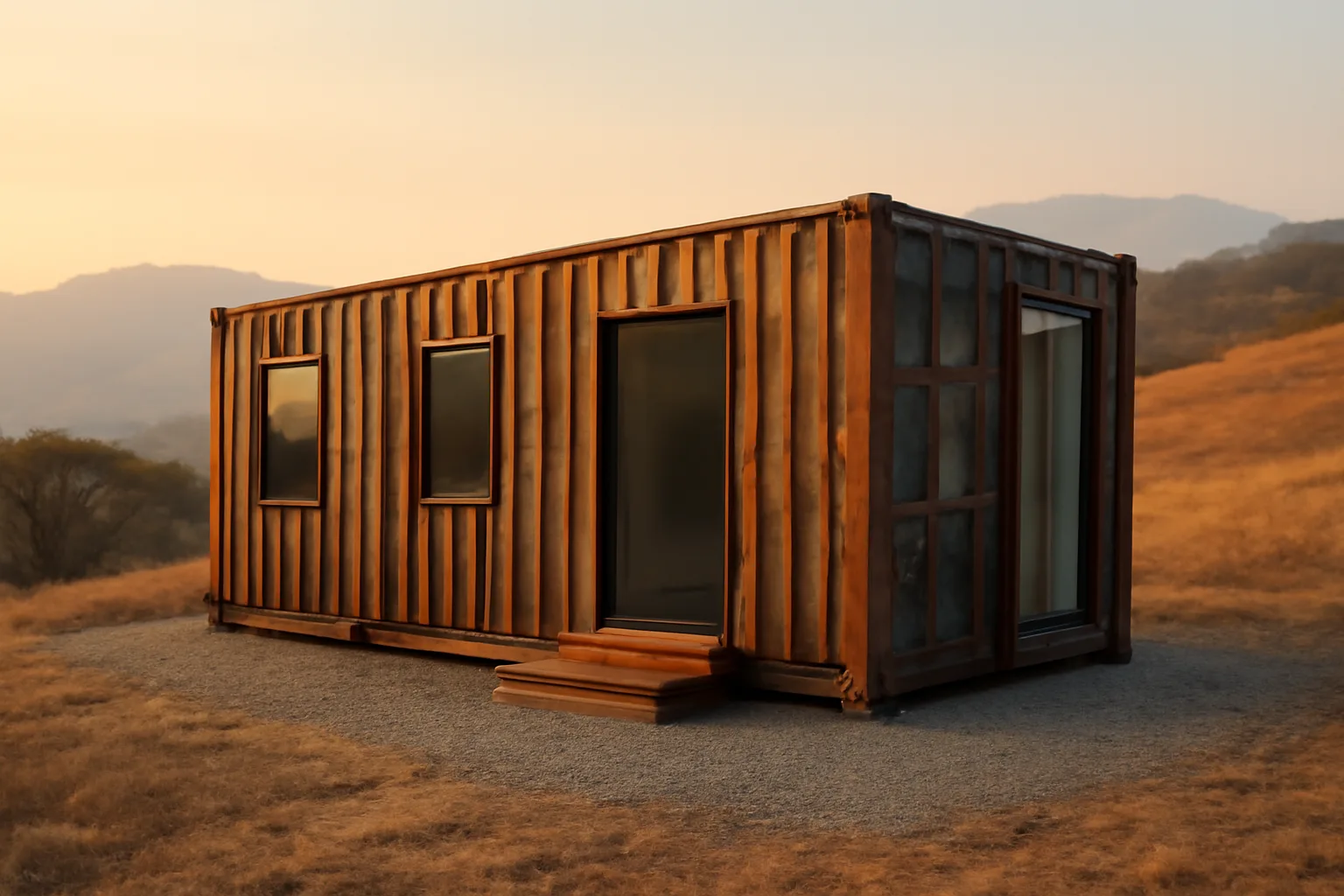
No, not automatically. The corten steel shell resists direct flame and won't combust, but a shipping container home's actual fire performance depends on the roof material, window and vent openings, insulation type, and how close it sits to vegetation, not on the steel box itself. CAL FIRE's Chapter 7A building standards (California Code of Regulations Title 24, Part 2) exist because the 2018 Camp Fire and other major wildfires showed that homes ignite mainly through embers entering vents, gaps, and combustible eaves, not from direct flame contact with walls. A steel wall blocks flame contact just fine. It does nothing to stop an ember from sliding under a container home built on exposed pilings, catching the wood decking or foam insulation underneath, and burning the house from below. Steel is also a fast heat conductor. In a sustained wildfire exposure, a container wall can transfer heat to interior finishes, insulation, and stored items well before the steel itself deforms. Structural steel starts losing significant strength around 1,000°F to 1,100°F, per National Institute of Standards and Technology testing on steel behavior in fire, and prolonged wildfire radiant heat can approach or exceed that in defensible-space failures. So the honest answer: the shell resists ignition better than wood framing, but the assembly as typically built (with foam insulation, standard windows, and non-Class-A roofing) does not meet wildfire-zone fire resistance standards without real modification.
What actually makes a home fire resistant in a wildfire zone?
Fire resistance in WUI (wildland-urban interface) construction comes down to five assemblies: roof, vents, windows, decks, and the 5-foot ember-resistant zone around the foundation. Steel walls are not on that list because walls rarely start ignition in real wildfire losses. CAL FIRE's home hardening guidance lists roofing as the single highest-priority upgrade, requiring Class A fire-rated roofing assemblies in Wildland-Urban Interface Fire Areas. Vents need corrosion-resistant, ember-resistant mesh no larger than 1/8 inch, per the same standard. Windows need dual-pane glass with at least one tempered pane, since single-pane glass can crack from radiant heat and let embers and flame directly into the structure. A container home with a standard asphalt shingle roof, unscreened ridge vents, and single-pane sliders is not fire resistant regardless of the steel walls underneath. Retrofit the roof, vents, and glazing, and add noncombustible skirting around any raised foundation, and you get much closer to actual wildfire resistance. For a full breakdown of what CAL FIRE inspectors actually check, see our house fire risk factors guide and the ember-entry specifics in defensible space planning.
When does the California defensible space law go into effect?
California's expanded defensible space requirement, the "ember-resistant zone" within 5 feet of structures (Zone 0), was authorized by Assembly Bill 3074 (2020) and is being implemented through Board of Forestry rulemaking. CAL FIRE's own timeline states the Zone 0 regulation is under development with an anticipated effective date, but as of early 2026 it has not been finalized into enforceable statewide regulation; check CAL FIRE's defensible space page for the current status before assuming it's in force [1]. The existing 100-foot defensible space requirement (Public Resources Code Section 4291) is already in effect and enforced annually, typically with inspection notices going out each spring and compliance deadlines before peak fire season, usually June 1 in most jurisdictions. That law requires two zones: 0-30 feet (lean, clean, and green) and 30-100 feet (reduced fuel volume), and it applies regardless of your build type, container home or conventional. Because Zone 0 enforcement dates and local adoption vary by county and fire district, [fill in your local fire district's specific Zone 0 or defensible space deadline here], and confirm directly with your local CAL FIRE unit or fire marshal's office.
What fire-safe home rules take effect in 2026?
There is no single nationwide "2026 fire code" flipping on for all wildfire states. Instead, 2026 is a checkpoint year because California's 2025 Title 24, Part 2 (California Building Code) triennial update cycle brings updated Chapter 7A wildfire-urban interface provisions into local adoption, and many jurisdictions phase in enforcement over the following year. Separately, CAL FIRE's Zone 0 ember-resistant zone regulation, still in rulemaking as of this writing, has been publicly discussed with target implementation dates that have shifted more than once since AB 3074 passed in 2020. Homeowners in high or very high Fire Hazard Severity Zones should watch for the final adopted regulation rather than planning around a specific 2026 date, since CAL FIRE's own tracking page is the authoritative source for the current timeline [1]. Colorado, Oregon, and Arizona each set their own wildfire building codes at the state or county level, often tied to Wildland-Urban Interface Code adoption (International WUIC) rather than a single fixed year. [Fill in your state fire marshal's specific 2026 code adoption date here] before assuming a rule applies to your address.
Why won't people follow the defensible space law in California?
Cost, labor shortages, and unclear enforcement are the three most cited reasons homeowners fall out of compliance, according to CAL FIRE inspection data and state legislative analyses of defensible space compliance rates. Clearing 100 feet of defensible space on a sloped, wooded lot can run from a few hundred dollars for a small flat yard to several thousand dollars for steep terrain with mature trees needing limbing and removal. Many older or fixed-income homeowners simply can't absorb that cost every year, since brush and grass regrow annually and the work isn't a one-time expense. Enforcement is also inconsistent. Public Resources Code Section 4291 gives local fire officials authority to inspect and issue violation notices, but staffing varies enormously by county, and rural areas with the highest fire risk often have the fewest inspectors per parcel. A homeowner who's never received a notice may reasonably (if incorrectly) assume they're not required to comply. There's also a perception gap: some homeowners believe clearing brush and thinning trees hurts property aesthetics or ecological value, or they distrust that the work meaningfully changes fire outcomes. CAL FIRE and multiple post-fire investigations (including analyses after the 2018 Camp Fire and 2017 Tubbs Fire) have repeatedly found that structures with adequate defensible space survived at meaningfully higher rates than those without, but that research doesn't always reach the homeowners who need to see it.
How to prevent wildfires from starting near your home
Most wildfires near homes start from human causes: equipment sparks, unattended debris burns, vehicle exhaust on dry grass, and downed power lines, not lightning. The U.S. Forest Service and National Interagency Fire Center both attribute the large majority of wildfires nationally to human activity rather than natural ignition. At the property level, prevention means keeping mowing and trimming equipment away from dry grass during red flag warning days, never parking or idling a vehicle over dry vegetation, and checking with your local fire district before any outdoor burning, since burn permits and restrictions change seasonally and by county. Ready.gov's wildfire preparedness guidance recommends clearing leaves and debris from gutters, roofs, and around propane tanks, since these accumulate embers and fuel during fire weather events even when the main fire is still miles away [2]. If you're near powerlines or in a Public Safety Power Shutoff zone, keeping vegetation trimmed back from lines and reporting sagging or damaged lines to your utility promptly is one of the few prevention actions an individual homeowner can take that affects ignition risk beyond their own parcel.
How to prepare for a wildfire before it reaches you
Preparing for a wildfire means having your evacuation plan, go-bag, and home hardening done before a fire is reported, not during. Ready.gov recommends assembling an emergency kit with at least a three-day supply of food, water, medications, and important documents, plus a family communication plan agreed on in advance [2]. For the home itself, the priority order according to CAL FIRE's home hardening guidance is: Class A roof, ember-resistant vents, dual-pane tempered windows, noncombustible siding within 5 feet of the ground, and enclosed eaves. If you're doing one thing this year, do the vents and roof first, since those are the two highest-frequency ember entry points found in post-fire damage assessments. Documentation matters too. Before fire season, photograph or video your home's exterior, interior, and any hardening upgrades (new vents, roof replacement, cleared defensible space) with a timestamp. If you ever need to show an insurer or adjuster that you completed mitigation work, having your own dated records, not a promise that the work was done, is what actually helps. This is the exact gap our $99 Wildfire Insurance Survival Kit is built to close: it's a documentation tool, not a claims service. We don't negotiate with insurers, file claims for you, or promise reinstatement or discounts; the kit just helps you organize your own defensible-space photos, receipts, and hardening records into something an insurer or adjuster can actually review.
How to prevent forest fires and avoid forest fires when recreating
The Smokey Bear campaign's core rules still hold: fully extinguish campfires by drowning, stirring, and feeling for heat, never leave a fire unattended, and check local fire restrictions before any outdoor burning. The U.S. Forest Service states that campfires and debris burning together account for a large share of human-caused wildfire starts on national forest land [3]. To avoid starting a forest fire while driving or working outdoors, avoid dragging trailer chains on pavement (a documented ignition source), don't park hot vehicles over dry grass, and keep spark-producing equipment like chainsaws and mowers away from dry vegetation during red flag warning conditions. If you're camping or hiking, drown campfires completely, pack out cigarette butts rather than grinding them into dirt (embers can smolder for hours), and check current fire restriction levels with the local ranger district before your trip, since restrictions change week to week during fire season.
How to prepare for forest fires if you live near wildland
If your home borders forest or wildland, defensible space and structure hardening matter more than almost anything else you can control. CAL FIRE's Ready for Wildfire program recommends the standard two-zone approach: Zone 1 (0-30 feet, "lean, clean, and green") and Zone 2 (30-100 feet, reduced fuel and spacing between trees). Beyond vegetation, know your evacuation routes before you need them, since forest and canyon roads can have only one or two ways out, and those routes can close fast if fire crosses them. Sign up for your county's emergency alert system in advance; most California, Colorado, Oregon, and Arizona counties operate opt-in reverse-911 style alert systems that won't reach you automatically. Our guide on fire-safe landscaping next to the house covers plant selection and spacing specifics for that critical 0-30 foot zone, and wildfire defensible space clearing contracts in Washington State is useful if you're hiring out the work and want to know what a legitimate contract should include.
Is Santa Barbara safe from fire?
No area in California's wildland-urban interface is fully safe from fire, and Santa Barbara County has a documented history of major wildfire events, including the 1990 Painted Cave Fire, the 2008 Tea Fire, and the 2017 Thomas Fire, which at the time was the largest wildfire in modern California history by acreage before being surpassed by later fires [4]. CAL FIRE's Fire Hazard Severity Zone maps classify large portions of Santa Barbara County's foothill and canyon communities (Montecito, Mission Canyon, the Riviera, San Roque) as High or Very High Fire Hazard Severity Zones, which triggers mandatory defensible space compliance and, for new construction, Chapter 7A building requirements [5]. The honest framing for any homeowner asking "is my city safe from fire": check your specific parcel's Fire Hazard Severity Zone designation on CAL FIRE's public map rather than relying on the city's general reputation, since risk varies block by block depending on slope, vegetation, and proximity to wildland, more than city limits.
How can we prevent forest fires as a community, more than individually
Community-level prevention works better than individual action alone because fire doesn't respect property lines; a neighbor's overgrown lot or unmaintained easement can undo your own defensible space work. Firewise USA, a National Fire Protection Association program, organizes neighborhoods into recognized communities that coordinate fuel reduction, shared evacuation planning, and mutual accountability on defensible space . Local fire safe councils, common across California, Colorado, and Oregon, often coordinate chipper days, group vegetation removal contracts (cheaper per-parcel than hiring individually), and community wildfire protection plans that identify shared risk areas like dead-end roads or single-access neighborhoods. Reporting hazards matters at the community level too: downed power lines, illegal burning, abandoned campfires, and unmaintained vacant lots are often the actual ignition points that individual home hardening can't fix. If your neighborhood doesn't have an organized fire safe council or Firewise USA recognition, starting one is genuinely one of the highest-leverage prevention actions available, more effective per dollar than most individual homeowner spending.
Should you build or buy a shipping container home in a wildfire zone?
If you're set on a container home in a high or very high Fire Hazard Severity Zone, plan the wildfire retrofits into the build budget from day one rather than treating the steel shell as sufficient protection. Budget for a Class A roofing assembly, ember-resistant vents, dual-pane tempered windows, and noncombustible skirting if the container sits on raised piers, since exposed undersides are a major ember-entry point that conventional container designs often ignore. Get your local building department and fire marshal involved early. Many jurisdictions require a Wildland-Urban Interface Fire Area compliance review for new construction regardless of wall material, and a container home doesn't get an exemption just because steel doesn't burn. Compare container construction against other alternative builds (rammed earth, ICF/insulated concrete form, and standard stucco-over-wood-frame) using our comparisons hub if you're still deciding on construction type, since fire resistance is only one factor against cost, permitting complexity, and insurability. Finally, talk to your insurer or a licensed broker before you build, not after. Some carriers in California's FAIR Plan or admitted market treat unconventional construction types with extra scrutiny during underwriting, and getting that answer during design saves a costly retrofit later.
Frequently asked questions
Are shipping container homes more fire resistant than wood-frame homes?
The steel walls resist direct flame better than wood framing, but overall fire resistance depends on the roof, vents, windows, and foundation skirting, not wall material. A container home with a standard roof and unscreened vents can be just as vulnerable to ember ignition as a wood-frame house with the same weak points.
Can a shipping container home burn down in a wildfire?
Yes. While the steel shell itself won't combust, interior finishes, insulation, furniture, and any wood decking or skirting can ignite from embers or radiant heat, and the fire can burn out the interior while leaving the steel shell standing but structurally compromised.
When does the California defensible space law go into effect?
The existing 100-foot defensible space requirement (Public Resources Code Section 4291) is already active and enforced annually. The newer Zone 0 (5-foot ember-resistant zone) rule from AB 3074 is still in CAL FIRE rulemaking as of early 2026; check CAL FIRE's defensible space page for the current adopted date.
Why won't people follow the defensible space law in California?
Cost of annual brush clearing, inconsistent local enforcement staffing, and low awareness of inspection requirements are the most commonly cited reasons. Rural, high-risk areas often have the fewest inspectors relative to parcels, so many homeowners never receive a compliance notice at all.
What fire-safe home rules take effect in 2026?
There's no single national 2026 rule. California's 2025 Title 24 triennial code cycle phases in updated Chapter 7A wildfire construction standards through 2026 local adoption, and CAL FIRE's Zone 0 ember-resistant zone regulation remains in rulemaking with a shifting target date. Check your state fire marshal for local specifics.
Is Santa Barbara safe from fire?
No California wildland-urban interface community is fully safe from fire. Santa Barbara County has had major fires including the 2017 Thomas Fire and 2008 Tea Fire, and CAL FIRE maps large parts of its foothill communities as High or Very High Fire Hazard Severity Zones.
How do I prevent wildfires from starting on my property?
Keep mowing and spark-producing equipment away from dry grass, never park hot vehicles over vegetation, check local burn restrictions before any debris burning, and clear leaves and pine needles from gutters and roofs. Most wildfires nationally are human-caused, not lightning-caused.
What's the single best thing to do to prepare for a wildfire?
Assemble a go-bag with a three-day supply of water, food, and medications, and harden your roof and vents first, since those are the top two ember-entry points found in post-fire damage studies. Do this before fire season starts, not during an active evacuation warning.
Does insulation in a shipping container home increase fire risk?
It can. Standard spray foam insulation is combustible and can ignite from interior heat transfer through the steel walls during sustained fire exposure. Mineral wool or other noncombustible insulation options reduce this risk but cost more and aren't always used in prefab container builds.
Do shipping container homes meet California's Chapter 7A wildfire building code?
Not automatically. Chapter 7A requires specific roof, vent, window, and siding assemblies regardless of wall material, so a container home must add those components to comply. Steel walls alone don't satisfy Chapter 7A's requirements for Wildland-Urban Interface Fire Areas.
How can communities help prevent forest fires beyond individual home hardening?
Organizing through Firewise USA or a local fire safe council lets neighborhoods coordinate fuel reduction, shared evacuation planning, and group contracts for vegetation removal, which is often cheaper and more effective than isolated individual efforts, since fire risk doesn't stop at property lines.
What roof type is required for fire safety in California wildfire zones?
CAL FIRE's home hardening standards require Class A fire-rated roofing assemblies in designated Wildland-Urban Interface Fire Areas. This applies to all construction types including container homes, and it's typically the single highest-priority upgrade for reducing ember ignition risk.
Sources
- USDA Forest Service, Wildfire Causes and Behavior: Majority of U.S. wildfires are human-caused rather than naturally ignited
- CAL FIRE, Thomas Fire Incident Information: 2017 Thomas Fire was the largest wildfire in modern California history at the time
- CAL FIRE, Fire Hazard Severity Zone Maps: Santa Barbara County foothill communities mapped as High or Very High Fire Hazard Severity Zones
- National Fire Protection Association, Firewise USA: Firewise USA program organizes neighborhoods for coordinated fuel reduction and evacuation planning
- California Public Resources Code Section 4291: 100-foot defensible space requirement with two-zone structure