Last updated 2026-07-25
TL;DR
A fire resistive home combines a Class A roof, ember-resistant vents, noncombustible siding and decking, and a 5-foot noncombustible zone around the foundation. California's new Zone 0 ember-resistant zone rule (SB 63, formerly SB 3) takes effect for high-risk areas in 2026 once the Board of Forestry finalizes regulations. Retrofits run $2,000 to $50,000+ depending on scope; new construction in WUI zones must meet Chapter 7A of the California Building Code.
What does it actually mean to build a fire resistive home?
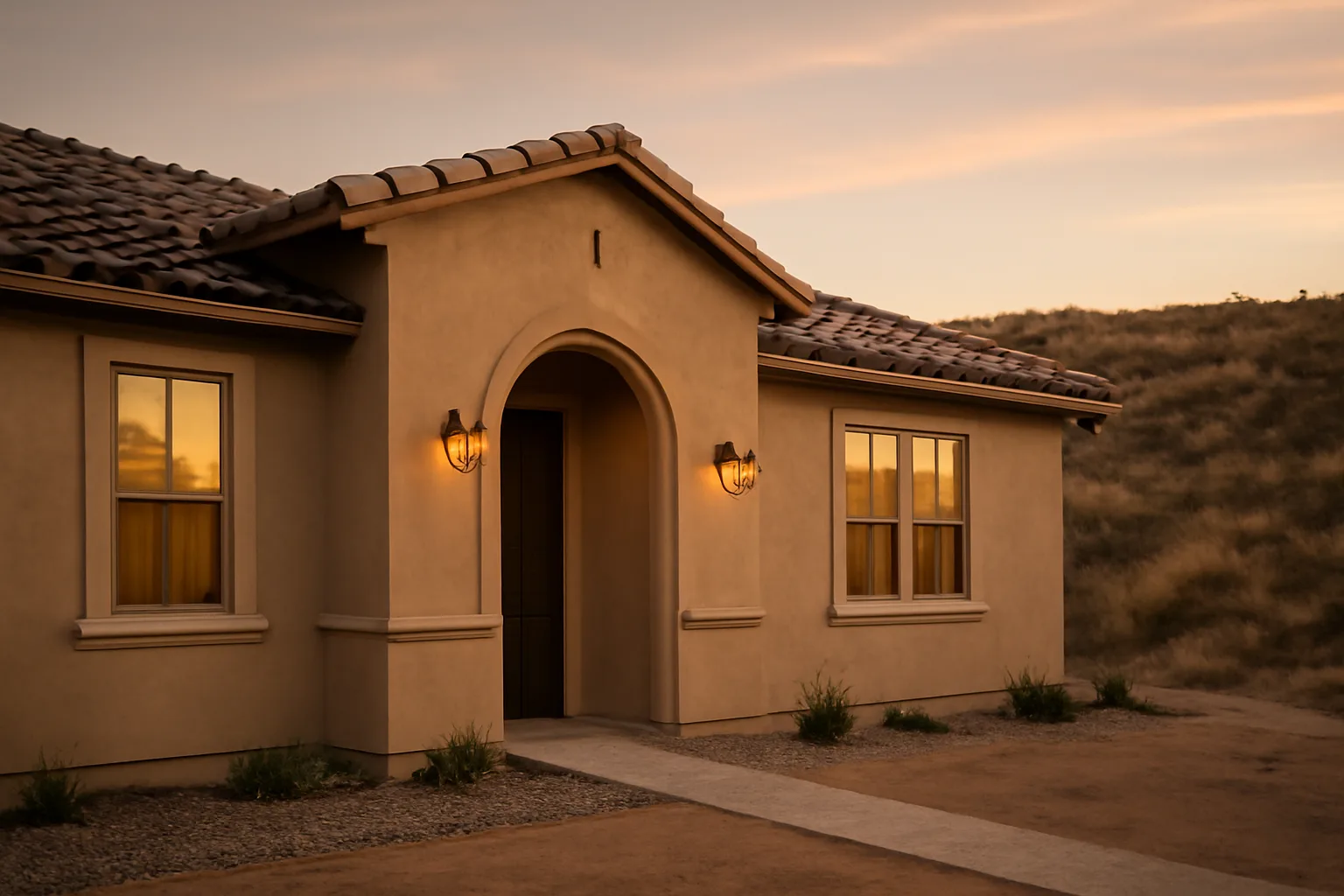
A fire resistive home is built and maintained so embers, radiant heat, and direct flame contact can't easily ignite it. That's the whole game. Wildfires don't usually burn houses down by marching a wall of flame into your living room. Most home losses in wildfires come from embers, tiny burning bits of bark and vegetation that can travel a mile or more ahead of the fire front, landing in gutters, on roofs, under decks, and in vent openings. CAL FIRE's own research and post-fire assessments after events like the 2018 Camp Fire and 2017 Tubbs Fire found that homes with noncombustible roofing, screened vents, and cleared zones near the foundation survived at dramatically higher rates than homes without those features, even when neighboring houses burned. That's the core insight behind every modern fire-hardening code: you're not fighting a wall of flame, you're stopping embers from finding fuel. So a genuinely fire resistive home has a few non-negotiables: a Class A fire-rated roof, ember-resistant or mesh-screened vents (typically 1/8 inch metal mesh, no bigger), noncombustible or ignition-resistant siding, dual-pane tempered glass windows, and a 5-foot zone right around the foundation with zero combustible material. Everything past that gets progressively less strict as you move outward through the defensible space zones. If you want the full zone-by-zone breakdown, see our guide on defensible space requirements.
How do I prepare for a wildfire before it happens?
Preparing for a wildfire means doing the hardening and clearing work months or years before a fire, not during an evacuation warning. Ready.gov's wildfire guidance breaks it into three buckets: harden your home, clear defensible space, and have an evacuation plan with a go-bag ready. Start with the roof and vents, because that's where embers get in. Then move to the 5-foot zone around your foundation, clearing mulch, dead leaves, stored firewood, and anything combustible. Next, look at your deck and any attached fencing (a wood fence that touches your house is basically a fuse). Finally, handle the broader landscaping in the 30-foot and 100-foot zones. On the planning side, ready.gov recommends every household have a family communication plan, a go-bag with medications and documents, and a way to get emergency alerts even if the power's out. Keep copies of your insurance policy, an inventory of your home's contents (photos and video help), and any fire-hardening documentation somewhere you can grab it fast or store digitally. This documentation matters even more now, because insurers in wildfire zones are increasingly asking for proof of mitigation work before they'll renew a policy.
When does the California defensible space law go into effect?
California's core defensible space law, Public Resources Code 4291, has been in effect since it was last substantially amended in 2020, requiring 100 feet of defensible space clearance around structures in State Responsibility Areas and some Local Responsibility Areas [1]. That part isn't new and it isn't changing. What is new, and what people mean when they ask this question in 2025 and 2026, is the ember-resistant Zone 0 rule. California passed SB 63 (which built on the earlier SB 3, itself a rename of AB 3074) requiring a noncombustible "ember-resistant zone" within 5 feet of structures in the highest fire hazard severity zones [2]. The law directed the Board of Forestry and Fire Protection to adopt implementing regulations, and as of early 2025 those regulations were still moving through rulemaking, with the Board targeting adoption that would make the requirement enforceable starting in 2026 for many high-hazard zones, though exact enforcement dates vary by local jurisdiction adoption schedules [2]. Here's the honest uncertainty: the Board of Forestry's rulemaking timeline has shifted before, and enforcement depends partly on individual cities and counties adopting compatible local ordinances. If you're in a State Responsibility Area or a Very High Fire Hazard Severity Zone, don't wait for a hard deadline. Check your specific fire district's current requirement, because [mitigation rules vary by fire district: confirm your local Fire Hazard Severity Zone designation and any local ember-resistant zone ordinance with your county or city fire marshal's office before you plan spending].
What fire-safe home rules take effect in 2026?
The headline 2026 change is California's Zone 0 ember-resistant zone requirement, but it's not the only one worth tracking. Zone 0 requires the 5 feet immediately surrounding a home, deck, and attached structures to be free of combustible mulch, vegetation touching the structure, and stored combustibles like firewood piles [2]. Separately, California's Chapter 7A building code (Title 24, Part 2) already requires ignition-resistant construction for new homes built in Wildland-Urban Interface Fire Areas: Class A roofing, ember- and flame-resistant vents, ignition-resistant exterior walls, and multi-pane tempered glass [3]. Chapter 7A doesn't have a 2026 sunset or new trigger date itself, but it's the backdrop every new-construction fire-safe home in a WUI zone has been built to since 2008, with periodic updates on the three-year building code cycle. Oregon and Colorado are on different, generally slower timelines. Oregon's SB 762 wildfire risk map and defensible space code work has faced delays and political pushback, with the state repealing and redoing its risk map process after backlash in 2022. Colorado doesn't have a statewide defensible space mandate at all; it's handled county by county, so a homeowner in Boulder County faces different rules than one in El Paso County. Because these dates and thresholds shift with rulemaking and local adoption, treat this section as a starting point and verify with your state fire marshal's office and county fire authority.
Why won't people follow the defensible space law in California?
Cost, confusion, and enforcement gaps are the three biggest reasons people don't comply with California's defensible space law, even though PRC 4291 has been on the books for decades. CAL FIRE inspectors report widespread noncompliance in wildfire-prone counties, and it's rarely because people don't care about their homes. Cost is the obvious one. Clearing 100 feet of defensible space on a sloped, brush-covered lot can run into thousands of dollars if you hire a contractor, and many homeowners, especially retirees on fixed incomes in places like the Sierra foothills, simply don't have that kind of cash sitting around. Some counties and fire districts offer chipper days or cost-share programs, but availability is inconsistent. Confusion is the second. The rules genuinely are complicated: three different zones, different requirements depending on slope, different rules for State Responsibility Areas versus Local Responsibility Areas versus incorporated cities. A lot of homeowners don't know which rules apply to their specific parcel, and the burden is on them to find out. Enforcement is the third, and it's uneven. Some counties do annual defensible space inspections and issue citations for noncompliance. Others don't have the staff to inspect every parcel every year, so enforcement becomes reactive, happening only after a complaint or after a fire has already exposed the gap. That inconsistency means a homeowner might go years without any real pressure to comply, until a fire happens or an insurer sends a non-renewal letter citing overgrown vegetation.
How much does it cost to make a home fire resistive?
| Ember-resistant vent replacement | $50-$300 per vent, plus labor | Often the highest-value fix per dollar | |
|---|---|---|---|
| Class A roof replacement (asphalt shingle to Class A) | $8,000-$25,000+ for average home | Cost depends heavily on roof size and material choice | |
| Noncombustible gutter guards | $1,000-$3,500 | Reduces ember ignition in gutters full of debris | |
| Deck replacement with ignition-resistant material | $5,000-$20,000 | Composite or noncombustible decking | |
| 5-foot Zone 0 clearing and hardscaping | $500-$5,000 DIY to contractor | Gravel, pavers, or bare mineral soil around foundation | |
| Dual-pane tempered window replacement | $400-$1,000 per window | Full-home replacement adds up fast | |
| Full defensible space clearing (100 ft, brushy lot) | $1,500-$10,000+ | Highly dependent on terrain and vegetation density | These are general U.S. ranges pulled from typical contractor and home-improvement cost reporting, not a single certified source, so treat them as planning estimates, not quotes. Get at least two local bids before committing to major work, since labor costs in wildfire-prone regions (where demand for hardening work has spiked) can run higher than national averages. If you're triaging where to spend first, vents and the 5-foot zone around the house usually deliver the most risk reduction per dollar, because that's where ember ignition most often starts according to post-fire structure assessments. |
Fire hardening costs vary enormously depending on whether you're doing new construction, a full retrofit, or targeted fixes, and depending on what your home already has. Here's a rough breakdown based on typical component costs homeowners and contractors report in wildfire-prone states. | Upgrade | Typical cost range | Notes |
How can we prevent wildfires and forest fires from starting?
Most wildfires in the U.S. are human-caused, not lightning-caused, which means individual behavior actually matters. National Interagency Fire Center data and CAL FIRE reporting consistently show that the large majority of wildfires, often cited around 85-90% depending on year and region, start from human activity: unattended campfires, downed power lines, vehicle sparks, debris burning, and arson [4]. Practical prevention steps that make a real difference: never leave a campfire unattended and always drown it completely (more than smother it, actually soak it until it's cold to the touch). Avoid parking or driving vehicles on dry grass, since hot exhaust systems and catalytic converters are a documented ignition source. Don't do debris burning on windy or Red Flag Warning days. If you're using power equipment like chainsaws or mowers on dry vegetation, do it in early morning when humidity is higher and wind is lower. At the community level, utilities in high fire-risk areas increasingly do Public Safety Power Shutoffs during extreme wind events specifically to prevent power line ignitions, which have caused some of the most destructive fires in California history, including the 2018 Camp Fire. Supporting or at least understanding your local utility's PSPS program is part of prevention too, even though it's inconvenient.
How do I prepare for a forest fire if I live near wildland?
Preparing for a forest fire near your home means treating your property like the first and last line of defense, because in a fast-moving fire, firefighters may not be able to reach every structure. That's not a scare tactic, it's operational reality that CAL FIRE and other agencies state directly: firefighting resources get triaged, and homes that are already hardened and cleared are the ones crews can safely defend. The practical checklist: maintain your defensible space zones annually (vegetation grows back, so this isn't a one-time job), keep gutters and roof valleys clear of pine needles and leaves, store firewood and propane tanks at least 30 feet from structures, and make sure your address is visible from the road for responding crews. On the personal preparedness side, ready.gov recommends signing up for local emergency alerts, knowing at least two evacuation routes out of your neighborhood, and keeping your vehicle's gas tank at least half full during fire season. Households should also do a practice evacuation drive, because during an actual evacuation order, roads clog and visibility can drop to near zero from smoke.
Is Santa Barbara safe from fire, and what does 'safe' mean here?
No location in California's wildland-urban interface is fully safe from fire risk, and Santa Barbara County has a documented history of major wildfires including the 2017 Thomas Fire, which was, at the time, the largest wildfire in modern California history at over 281,000 acres burned, and the subsequent Montecito debris flow that killed 23 people in January 2018 [5]. Santa Barbara city itself sits partly in a Fire Hazard Severity Zone as mapped by CAL FIRE, with foothill neighborhoods (Mission Canyon, the Riviera, San Roque foothills) rated at higher risk than the flatter, more urbanized parts of the city closer to the coast [6]. If you're evaluating a specific address, the honest answer is to check CAL FIRE's Fire Hazard Severity Zone viewer for that exact parcel rather than relying on the city's general reputation, because risk varies block by block depending on slope, vegetation, and distance to wildland fuel. What 'safe' really means for any home in a fire-prone region is relative risk reduction: a hardened home in a Very High severity zone can be meaningfully safer than an unhardened home in a Moderate zone. Location sets your baseline exposure, but construction and defensible space determine how much of that exposure actually turns into loss.
What's the difference between fire-resistant and fire-resistive construction?
'Fire-resistant' and 'fire-resistive' get used interchangeably in casual conversation, but building codes draw a real distinction, and it matters when you're picking materials or reading a spec sheet. Fire-resistive typically refers to materials and assemblies rated to withstand fire exposure for a specific time period under standardized testing (like a 1-hour or 2-hour fire-rated wall assembly). Ignition-resistant, the term California's Chapter 7A code actually uses for WUI construction, means a material or assembly is designed to resist ignition from radiant heat and embers specifically, which is a different (and for wildfire purposes, more relevant) standard than a fire-resistance time rating meant for structural fire containment [3]. In plain terms: a fire-resistive wall assembly is built to contain an internal building fire for a set number of hours. An ignition-resistant wildfire assembly is built to stop embers and radiant heat from an external wildfire from starting a fire on your home in the first place. Chapter 7A blends both concepts but its testing standards (like the SFM 12-7A series) are specifically about ember and radiant heat exposure, not internal fire containment [3]. If a contractor tells you a product is 'fire-resistant,' ask specifically whether it's tested to a Chapter 7A / SFM standard or a general building fire-rating standard. They're not the same thing and one is what actually matters for wildfire defense.
Where do documentation and insurance non-renewal fit into all this?
Insurers in California, Colorado, Oregon, and Arizona increasingly base renewal decisions on documented mitigation work, more than your address's risk score, which is why keeping records of every hardening project matters as much as doing the work itself. California's Safer from Wildfires regulation, adopted by the Department of Insurance, requires insurers to give discounts or otherwise account for wildfire mitigation actions like defensible space compliance and home hardening when setting rates, and the state's FAIR Plan is meant to be a market of last resort, not a first choice [7]. But getting credit for your mitigation work usually requires you to proactively document it: dated photos of your Zone 0 clearing, receipts for ember-resistant vents, a copy of your defensible space inspection if your county does them. This is where a lot of homeowners get stuck after a non-renewal letter arrives. They've done real work, but they don't have it organized in a form an insurer or underwriter can quickly review. If you're in that spot, our $99 Wildfire Insurance Survival Kit is built specifically to help you organize that documentation, defensible space records, hardening receipts, before-and-after photos, into a package you send yourself. We don't negotiate with insurers, file claims on your behalf, or promise any discount or reinstatement. You're preparing your own record; we just help you build it faster.
What should I prioritize first if I'm on a limited budget?
If money is tight, prioritize in this order: ember-resistant vents, the 5-foot Zone 0 clearing, and roof/gutter debris removal, because these three address the way most homes actually catch fire during wildfires, which is embers finding an entry point, not direct flame contact. Vents first, because a $50-$300 vent screen retrofit is cheap relative to almost anything else on this list and directly blocks one of the most common ember entry points into attics and crawl spaces. Zone 0 clearing second, because it's mostly labor (moving mulch, trimming plants back from the foundation, removing stored combustibles) rather than expensive materials, so a motivated homeowner can often do a meaningful chunk of it themselves in a weekend. Roof and gutter debris removal third, because pine needles and dry leaves sitting in a gutter or roof valley are essentially pre-positioned kindling waiting for one wind-blown ember. After those three, move to bigger-ticket items: roof replacement if you're not already Class A rated, and deck material if your deck is older wood construction. For related decisions about what to plant and what to remove near your home, see fire safe landscaping California next to house.
Frequently asked questions
When does the California defensible space law go into effect?
The base defensible space law, PRC 4291, requiring 100 feet of clearance, has been in effect since its last major 2020 amendment. The newer Zone 0 ember-resistant zone rule under SB 63 is in Board of Forestry rulemaking, with enforcement expected to phase in for high-hazard zones starting in 2026, though exact dates depend on your local jurisdiction's adoption.
Why won't people follow the defensible space law in California?
Cost, confusion about which rules apply to their parcel, and inconsistent enforcement are the main reasons. Clearing 100 feet of brush can cost thousands of dollars, the zone rules are genuinely complicated across SRA/LRA boundaries, and many counties lack staff to inspect every property annually, so compliance often isn't checked until after a fire or insurance inspection.
How do I prevent wildfires from starting on or near my property?
Never leave campfires unattended and drown them completely with water. Avoid parking on dry grass since hot exhaust systems can ignite it. Don't burn debris on windy or Red Flag Warning days. Most wildfires are human-caused, so individual behavior around fire sources, vehicles, and equipment genuinely reduces ignition risk.
How do I prepare for a wildfire if I get an evacuation warning?
Have a go-bag with medications, documents, and chargers ready before fire season starts. Know at least two evacuation routes, sign up for local emergency alerts, and keep your gas tank half full during high-risk months. Ready.gov recommends practicing an evacuation drive so the route is familiar under stress.
How can we prevent forest fires at a community level?
Community prevention includes utility Public Safety Power Shutoffs during extreme wind events (since power lines have caused some of the most destructive California fires), coordinated defensible space enforcement, and public education about campfire and debris-burning restrictions during dry, windy conditions.
What fire-safe home rules take effect in 2026?
California's Zone 0 ember-resistant zone requirement (5 feet of noncombustible clearance around structures) is expected to become enforceable in high fire hazard severity zones starting in 2026, pending final Board of Forestry regulations. Chapter 7A ignition-resistant construction rules for new WUI homes are already in effect and don't have a 2026-specific change.
Is Santa Barbara safe from fire?
No area in California's wildland-urban interface is fully fire-safe, and Santa Barbara County has had major fires including the 2017 Thomas Fire. Risk varies significantly by neighborhood: foothill areas face higher exposure than flatter coastal parts of the city. Check CAL FIRE's Fire Hazard Severity Zone map for your specific address.
What is the single most effective fire hardening upgrade for the money?
Ember-resistant vent screens, typically $50 to $300 per vent, are usually the best value because embers entering attics and crawl spaces through unscreened vents are a leading cause of home ignition in wildfires, according to CAL FIRE post-fire structure assessments.
Do I need a Class A roof if I already have a tile or metal roof?
Tile and metal roofing materials are typically already Class A rated, but the assembly underneath (underlayment, edge details, and whether embers can get under tiles into the attic) matters just as much as the surface material. Check with a roofing contractor familiar with Chapter 7A requirements.
How often do I need to redo defensible space clearing?
Defensible space isn't a one-time project. Vegetation regrows, leaves and needles accumulate in gutters, and mulch settles. Most fire districts expect annual maintenance, and some counties conduct yearly inspections specifically because year-old clearing can be substantially degraded by the next fire season.
Does defensible space work guarantee my insurance will be renewed?
No. Defensible space and hardening work can support a renewal decision and may qualify you for mitigation-related consideration under California's Safer from Wildfires regulation, but no contractor, document, or checklist can guarantee an insurer's underwriting decision. Documentation helps your case; it doesn't obligate the insurer.
What's the difference between Zone 0, Zone 1, and Zone 2 defensible space?
Zone 0 is the 5-foot ember-resistant zone immediately around structures, requiring noncombustible material. Zone 1 extends to 30 feet with reduced and spaced vegetation. Zone 2 extends to 100 feet with wider spacing and reduced fuel load. Requirements vary by slope and local fire district.
Are ignition-resistant building materials required for existing homes, or just new construction?
Chapter 7A of the California Building Code applies primarily to new construction and major additions/alterations in Wildland-Urban Interface Fire Areas. Existing homes aren't automatically required to retrofit to Chapter 7A standards, but the new Zone 0 ember-resistant zone rule under SB 63 does apply to existing structures in covered high-hazard zones.
Sources
- California Public Resources Code Section 4291: 100 feet of defensible space clearance requirement around structures in State Responsibility Areas
- California SB 63 (2023-2024), Wildfire prevention: fire-hazard defensible space: Ember-resistant Zone 0 requirement within 5 feet of structures in high fire hazard severity zones, subject to Board of Forestry rulemaking
- California Building Code, Chapter 7A (Title 24, Part 2): Ignition-resistant construction requirements including Class A roofing, ember-resistant vents, and tempered multi-pane windows for new WUI construction
- National Interagency Fire Center / CAL FIRE, wildfire cause statistics: Majority of wildfires nationally are human-caused rather than lightning-caused
- CAL FIRE, Thomas Fire Incident Archive: 2017 Thomas Fire burned over 281,000 acres and was the largest wildfire in modern California history at the time
- CAL FIRE, Fire Hazard Severity Zone Viewer: Fire Hazard Severity Zone maps show risk varies by neighborhood, including within Santa Barbara County
- California Department of Insurance, Safer from Wildfires regulation: Insurers required to account for wildfire mitigation actions like defensible space and home hardening when setting rates