Last updated 2026-07-25
TL;DR
Open eaves trap wind-blown embers against the underside of your roofline, one of the top three ways homes ignite in wildfires. Boxing them in with ignition-resistant soffit material, sealing gaps, and pairing that with ember-resistant vents cuts this risk more than almost any other single retrofit under $5,000.
why do eaves catch fire before anything else does
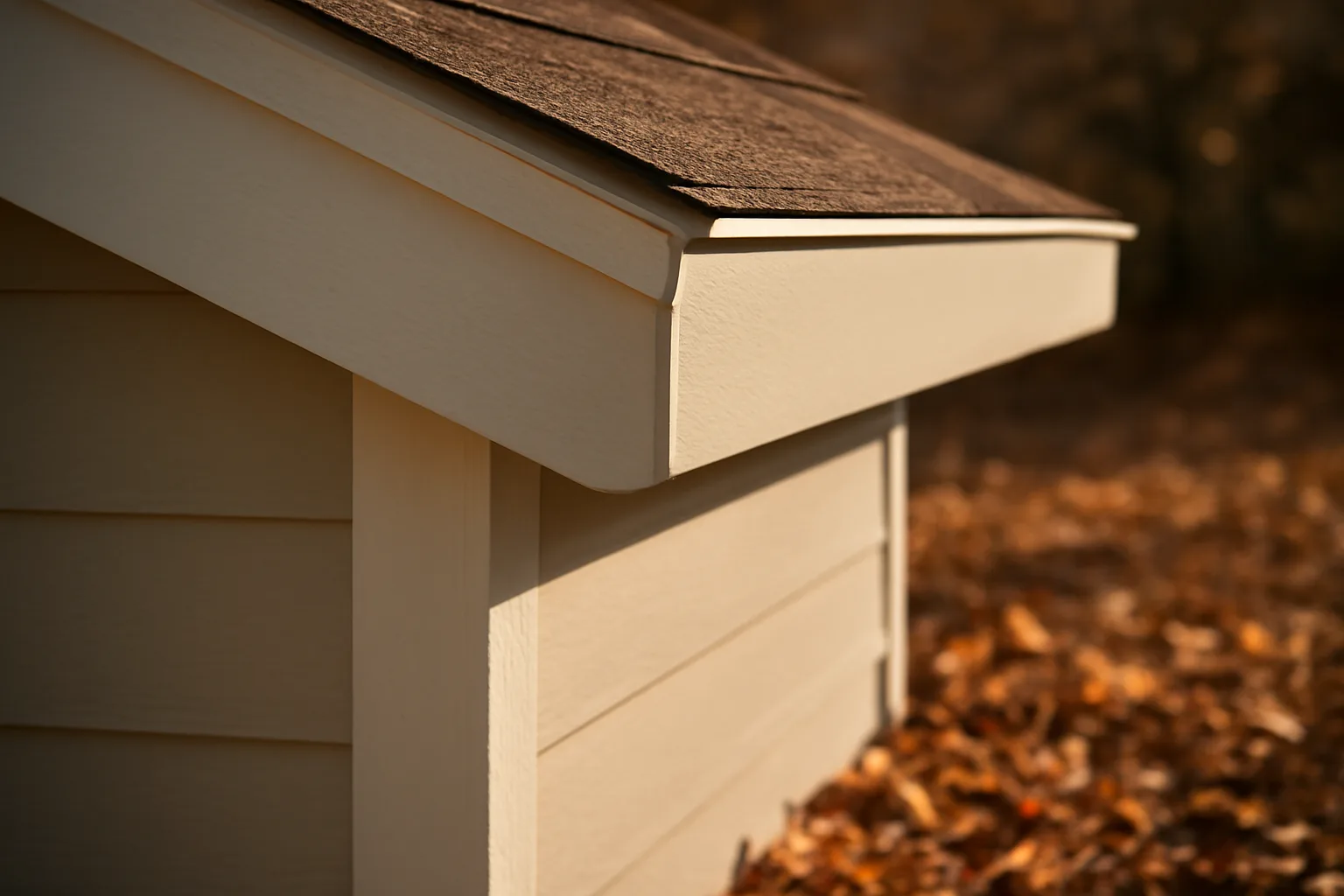
Eaves are the overhang where your roof meets your exterior wall. Open eaves expose the rafter tails and the underside of the roof deck directly to the air. During a wildfire, that open cavity acts like a catcher's mitt for embers. CAL FIRE's post-fire structure assessments have repeatedly found that homes ignite from embers entering through vents, gaps, and combustible eaves long before direct flame contact ever happens. The agency's wildfire structure vulnerability work identifies embers, not the flame front, as the dominant cause of home loss in wildland-urban interface fires. Here's the mechanical reason eaves are so bad. Wind pushes embers sideways and upward along a building's exterior. When they hit the underside of an open eave, they get trapped in a pocket with dead air and, often, dry leaf litter, cobwebs, or old nesting material. That's an ignition setup: fuel plus an ember plus a still pocket to smolder in. Once the eave framing or fascia catches, fire runs straight into the attic through the vents or the roof deck itself. Boxed (soffited) eaves with ignition-resistant material remove that pocket. There's still a horizontal surface, but it's flat, tighter, and if it's fiber-cement or fire-rated gypsum, it won't sustain a smolder the way exposed wood rafter tails will.
open eaves vs boxed eaves, which is actually worse
| Open/exposed rafter tails | High | High (ember pockets between rafters) | N/A (existing) | |
|---|---|---|---|---|
| Boxed with wood soffit | Low-moderate | Low, but soffit itself can ignite | $8-15/linear ft | |
| Boxed with fiber-cement or fire-rated soffit | Very low | Low | $12-25/linear ft | Costs above are rough contractor ranges reported by wildfire retrofit programs in California and Colorado and vary a lot by region, roof height, and whether old material has to be removed first. Get three local quotes before you budget anything specific. The honest caveat: boxing in eaves doesn't fix everything. If your attic vents are still standard mesh screen or plastic, you've closed one entry point and left another wide open. Eave work and vent work should happen together, not one without the other. |
Open (exposed) eaves are worse. Every major wildfire home-hardening guide, including CAL FIRE's, ranks eave design as a top structural vulnerability alongside roofing material and vents. The comparison isn't close once you look at the mechanism. Open eaves expose bare rafter tails and roof sheathing, often untreated wood, to direct ember contact and radiant heat. Boxed eaves with a soffit cover eliminate that exposed wood and give you a surface you can build fire resistance into. | Eave type | Exposed combustible wood | Ember trapping | Typical retrofit cost |
what does chapter 7A actually require for eaves
California's Chapter 7A (Building Code, Title 24, Part 2) governs construction in Wildland-Urban Interface Fire Areas and sets material standards for eaves, soffits, and vents in new construction and major remodels in those zones. It requires exterior wall coverings, eave and soffit materials, and vents to resist ignition from flame and radiant heat exposure, tested under standards like SFM 12-7A-1 through 12-7A-3 [1]. The California State Fire Marshal's Office publishes the specific testing and material standards referenced by Chapter 7A, including standards for ignition-resistant construction materials used on eaves and soffits [2]. In plain terms: in a designated Fire Hazard Severity Zone, new eaves generally need to use noncombustible or ignition-resistant materials, fully enclosed soffits (no open rafter tails), and any vents built into them have to meet ember-resistant standards. Chapter 7A applies to new construction and, in many jurisdictions, to substantial remodels, not automatically to every existing home. That's the catch a lot of homeowners miss. Your 1985 ranch house with open eaves is very likely grandfathered in unless you're doing a major addition or rebuild. Retrofitting anyway is still one of the highest-value fire-hardening moves you can make, code requirement or not. Mitigation rules differ by local fire district and county, so check with your specific Fire Safe Council or county fire marshal for the exact enclosure and material rules that apply to your parcel before you hire a contractor.
what fire safe home rules take effect in 2026
California's Zone 0 ember-resistant zone rule (the 0-to-5-foot combustible-free perimeter around structures) was mandated by SB 63 (2020) and Assembly Bill 3074, with the State Board of Forestry and Fire Protection tasked with adopting the specific regulations. As of this writing, the Board has been working through the regulatory process, and enforcement/effective dates have shifted more than once; the most recent public timeline pointed to regulations taking effect in 2026 for existing homes in the highest-severity zones, phased in over time [3]. Because this keeps moving, don't take any single date as final. Check the California Board of Forestry and Fire Protection's Zone 0 rulemaking page directly for the current adopted effective date and compliance deadline for your zone before you plan renovation timing around it [3]. Eaves interact with Zone 0 directly: if your roof overhang shades or drops debris into that 5-foot perimeter, an ember-resistant zone technically also depends on you keeping gutters, roof valleys, and the ground beneath the eave clear of leaf litter and mulch. A perfectly hardened eave over a bed of dry bark mulch still gives embers a place to land and climb. Oregon and Colorado don't have an identical statewide Zone 0 mandate as of now, but both states have wildfire building code provisions tied to local jurisdiction wildfire risk maps; Oregon's Senate Bill 762 created a statewide wildfire risk map and defensible space framework administered through Oregon Department of Forestry, with local building code implications still being finalized county by county [4].
when does the california defensible space law go into effect
California's core defensible space law, Public Resources Code 4291, has been in effect for years and currently requires 100 feet of defensible space clearance around structures in State Responsibility Areas, split into an ember-resistant zone near the structure and a reduced-fuel zone further out. This isn't new; it's been the operative statute since it was expanded from 30 feet to 100 feet by legislation in 2005. What's newer, and what people usually mean when they ask about a defensible space law 'going into effect,' is the Zone 0 ember-resistant zone regulation discussed above. That's the piece still working through rulemaking, and it will layer onto, not replace, the existing 100-foot requirement under PRC 4291 [3]. CAL FIRE's own defensible space guidance breaks the 100 feet into two zones: Zone 1 (0-30 feet, lean/clean/green) and Zone 2 (30-100 feet, reduced fuel volume), with Zone 0 as a proposed tighter sub-zone within the first 5 feet. If you got a defensible space inspection notice, it's almost certainly citing PRC 4291 compliance, not the still-pending Zone 0 rule. For a broader walkthrough of how these zones work together, see our defensible space zones guide.
why won't people follow the defensible space law in california
Compliance gaps come down to cost, labor availability, and enforcement gaps, not indifference. Clearing 100 feet of vegetation around a rural property, especially on a sloped or heavily wooded parcel, can run into thousands of dollars in contractor labor, and many rural counties have a shortage of vegetation management crews relative to demand. There's also an enforcement reality: PRC 4291 inspections are typically done by CAL FIRE or local fire agencies, and while non-compliance can result in citations and, in some cases, fines, actual enforcement varies widely by county and available staffing. A property owner in a remote area might go years between inspections. That's not an excuse to skip it, since the actual fire risk doesn't care about enforcement schedules, but it does explain the gap between law and practice. Another real factor: some homeowners genuinely don't know their exact zone requirements, or they clear once and assume they're done, when defensible space is an annual maintenance task, not a one-time project. Grass regrows, leaf litter accumulates, and a property compliant in April can be overgrown by August. Finally, some resistance is aesthetic or ecological. People don't want to cut mature trees or clear native habitat near their home. That's a real tension, and CAL FIRE's guidance tries to address it by emphasizing spacing and pruning over wholesale removal, not clear-cutting a property.
how to prevent wildfires around your own property
You can't prevent wildfires from starting in the broader landscape, but you can dramatically cut the odds that a wildfire becomes a home-loss event on your specific parcel. The two levers that matter most are defensible space (the vegetation around your home) and home hardening (the materials your home is built from). Start with the 5-foot Zone 0 perimeter even before it's formally mandated in your area: no mulch, no shrubs, no stored firewood, no combustible items within 5 feet of any exterior wall, including under eaves and decks [3]. Then work outward through Zone 1 and Zone 2 per PRC 4291's 100-foot standard. On the structure itself, prioritize in this order based on where embers actually get in: roof and roof valleys, vents, eaves and soffits, then windows and siding. CAL FIRE's home hardening fact sheets rank ember entry points in roughly that order of vulnerability. If you're at the planning stage rather than the execution stage, a written, prioritized retrofit plan matters more than people think. Insurers increasingly want documentation, more than a verbal assurance that you did the work. That's the gap our $99 Wildfire Insurance Survival Kit is built to close: a structured way to document what you've already done to your eaves, vents, and defensible space zones, in the format insurers and adjusters actually want to see, without us touching your claim or your policy. You do the retrofit and the documentation; we don't handle claims or promise coverage outcomes. Get it at /survival-kit-builder.
how to prepare for a wildfire before it starts
Preparation splits into two tracks that run on different timelines: the structure/property work that takes weeks to months, and the go-bag/evacuation planning that takes an afternoon. Both matter, and a lot of homeowners only do one. On the property side: harden eaves and vents, clear Zone 0 and Zone 1 per CAL FIRE's defensible space guidance, and keep gutters and roof valleys clear of leaf litter year-round, especially before fire season peaks. Ready.gov recommends creating a household disaster plan that includes two evacuation routes out of your neighborhood, since a single-exit route can become blocked by fire, traffic, or emergency vehicles [5]. On the personal side, Ready.gov's wildfire guidance specifically recommends packing a go-bag with medications, important documents, N95 masks, and a battery radio, and signing up for local emergency alerts before fire season, not during an active evacuation order [5]. Waiting until smoke is visible from your window is too late for most of this. Document your home's condition and your hardening work before fire season, not after a loss. Photos of your ember-resistant vents, your cleared defensible space, and your boxed eaves, dated and organized, are exactly the kind of evidence insurers ask for when reviewing a policy or after a claim. For more on how home-hardening choices interact with your insurance standing, our fire safe landscaping guide covers the vegetation side in more depth.
how to prevent forest fires from starting in the first place
Most wildfires, more than forest fires specifically, are human-caused. The National Interagency Fire Center and multiple state fire agencies report that the large majority of wildfires nationally are started by human activity rather than lightning, including unattended campfires, equipment sparks, downed power lines, and debris burning. The practical prevention steps for individuals: fully extinguish campfires (drown, stir, drown again, and feel for heat before leaving), avoid parking or driving vehicles over dry grass (catalytic converters can ignite it), don't tow chains that can spark on pavement, and check local burn permit rules before any debris burning, since permits and burn bans vary by county and season. CAL FIRE's 'One Less Spark' campaign specifically targets equipment-caused fires: mowing dry grass mid-day in high heat, dragging trailer chains, and using power tools without a spark arrestor are common, preventable ignition sources during fire season. If you're doing yard work in a Fire Hazard Severity Zone during red flag conditions, doing it early morning when humidity is higher and wind is lower cuts risk meaningfully. Power utility equipment is another major ignition source in some regions. California utilities operate Public Safety Power Shutoff programs specifically to de-energize lines during extreme fire weather, which is itself a form of forest fire prevention at the grid level.
how to avoid forest fires when you're out in fire-prone areas
If you're recreating, working, or living near wildland, the avoidance playbook is mostly about eliminating ignition sources during high-risk windows. Check the local red flag warning status before any outdoor burning, off-road vehicle use, or equipment work; red flag warnings are issued by the National Weather Service when wind, low humidity, and dry fuels combine to create high fire spread risk. Campfires need a cleared area down to mineral soil, a ring or pit if available, and should never be left unattended, even for a few minutes. Most agency-caused-fire data points to abandoned or improperly extinguished campfires as a recurring, preventable source of wildland ignition. If you smoke, don't discard cigarettes from a vehicle window or on dry ground. This sounds obvious, but it remains a documented ignition source in fire investigation reports across multiple states. For property owners specifically, avoiding forest fires that start on your land and spread outward means the same defensible space and hardening work discussed above, since an ignition on your parcel that reaches your neighbor's fenceline is functionally the same event as one that starts in wildland and reaches you.
how to prepare for forest fires as a household
Household forest fire preparation has three parts: a documented evacuation plan, a hardened structure, and a communication plan for household members who might not be together when an evacuation order comes. Ready.gov's wildfire page recommends practicing your evacuation route at least twice a year and designating an out-of-area contact person, since local phone networks can get congested during an active evacuation [5]. Keep your vehicle's gas tank at least half full during fire season. Evacuation routes can back up, and running out of fuel in a fire zone is a documented cause of people abandoning vehicles during evacuations. Structurally, the preparation overlaps entirely with home hardening: ember-resistant vents, boxed and ignition-resistant eaves, Zone 0 clearance, and a Class A fire-rated roof if you're due for a replacement anyway. None of these guarantee your home survives; they shift the odds meaningfully in your favor, which is the most honest way to describe what hardening actually does. Our house fire guide and fire at a house resource go deeper into what to do in the moments during and immediately after a structure fire, which is worth reading even if your focus right now is prevention.
is santa barbara safe from fire, and how do i check my own risk
No area of Santa Barbara County, or most of coastal and inland California, can be called categorically 'safe' from fire; the county has experienced multiple major wildfires in the past two decades, including fires that burned into residential areas in the hills above the city. Risk varies block by block based on Fire Hazard Severity Zone designation, terrain, and vegetation, not by city name alone. CAL FIRE publishes Fire Hazard Severity Zone maps by address, viewable through its FHSZ viewer, which is the actual authoritative source for whether a specific Santa Barbara address sits in a Moderate, High, or Very High zone . This matters practically because Chapter 7A construction requirements and PRC 4291 defensible space obligations are triggered by FHSZ designation in State Responsibility Areas and, in some cases, Local Responsibility Areas that have adopted equivalent local ordinances. The honest answer to 'is X city safe' questions generally: check your specific parcel's FHSZ status rather than relying on a city-wide reputation, since a home in the Santa Barbara foothills and a home downtown near the harbor face very different exposure even though they share a zip code.
how can we prevent forest fires as a community, more than a household
Community-level prevention works through coordinated defensible space, more than individual compliance, because embers don't respect property lines. A single non-compliant parcel with dry brush and open eaves can ignite and spread to hardened neighbors during high-wind conditions, which is part of why Firewise USA, the National Fire Protection Association's community recognition program, focuses on neighborhood-wide risk reduction rather than individual homes alone. Local Fire Safe Councils, which exist across most California counties, coordinate community chipper days, group vegetation clearing, and grant funding for lower-income homeowners who can't afford defensible space work alone. Checking whether your area has an active Fire Safe Council is worth the ten minutes it takes; some offer free or subsidized brush clearing for qualifying households. Community ignition prevention also includes basic things like reporting downed power lines immediately, not burning debris during red flag conditions even if your neighbor is doing it, and supporting local burn ban enforcement rather than treating it as an inconvenience. A wildfire started by one household's mistake becomes a shared loss extremely fast in dense wildland-urban interface neighborhoods.
what does a good eave retrofit actually look like, step by step
A properly executed eave retrofit follows a specific sequence, and skipping steps is where a lot of DIY jobs fail inspection or fail to actually reduce risk. First, remove any existing debris, nests, or accumulated leaf litter from the eave cavity; this alone eliminates a chunk of the ignition fuel that's currently sitting there. Second, box in the open rafter tails with an ignition-resistant soffit material. Fiber-cement board is the most common choice cited in wildfire retrofit guidance because it's noncombustible and holds up to weather better than fire-treated wood over the long term, though fire-rated gypsum and certain treated wood products also meet Chapter 7A material standards in some applications [1] [2]. Third, seal every gap where the soffit meets the fascia and the wall. This is the step people skip most often, and it's the one that determines whether embers can still work their way behind the new material. Fourth, if the eave cavity contains vents (a common design for passive attic ventilation), replace them with ember-resistant vents meeting SFM 12-7A-1 testing standards, with openings no larger than 1/8 inch mesh in most ember-resistant vent products, though exact mesh and baffle requirements are set by the specific tested product, not a single universal number [2]. Fifth, clear anything combustible from the ground and airspace directly beneath the new eave work, tying this back into your Zone 0 perimeter. A perfect eave retrofit above a pile of dry leaves or a woodpile is a wasted retrofit.
Frequently asked questions
When does the California defensible space law go into effect?
The core 100-foot defensible space requirement under Public Resources Code 4291 is already in effect and has been since it expanded from 30 to 100 feet in 2005. The newer Zone 0 ember-resistant 5-foot perimeter rule is still working through Board of Forestry rulemaking, with the most recent public timeline pointing to 2026 for phased enforcement; check the Board's current rulemaking page for the confirmed date.
Why won't people follow the defensible space law in California?
Mostly cost, contractor availability, and inconsistent enforcement, not indifference. Clearing 100 feet on a wooded or sloped rural parcel can cost thousands, many counties have limited vegetation crews, and PRC 4291 inspections aren't universally staffed or scheduled every year, so compliance gaps persist even though the underlying fire risk doesn't wait for enforcement.
How to prevent wildfires around my own home?
Focus on the two things you control: defensible space (clear vegetation in the 5, 30, and 100-foot zones per CAL FIRE guidance) and home hardening (ember-resistant vents, boxed ignition-resistant eaves, Class A roofing). These two categories account for most documented home-ignition mechanisms in wildfire structure loss assessments.
How to prepare for a wildfire if I live in a high-risk zone?
Build an evacuation plan with two routes, pack a go-bag with medications and documents per Ready.gov guidance, sign up for local emergency alerts, and harden your structure's eaves, vents, and roof. Do this before fire season, since preparation done during an active evacuation warning is far less effective.
How to prevent forest fires from human causes?
Fully extinguish campfires (drown, stir, drown, check for heat), avoid driving or parking on dry grass, check local burn permit and burn ban status before any debris burning, and avoid equipment sparks like trailer chains dragging on pavement. Most wildfires nationally are human-caused, not lightning-caused, according to federal fire agency data.
What fire-safe home rules take effect in 2026?
California's Zone 0 ember-resistant zone regulation, a mandatory 5-foot combustible-free perimeter around structures in high fire-severity zones, has a currently projected 2026 phased effective date, but the Board of Forestry and Fire Protection's rulemaking has shifted timelines before. Confirm the current adopted date on the Board's official rulemaking page before planning around it.
Is Santa Barbara safe from fire?
No specific city can be called categorically safe from fire; risk in Santa Barbara County varies block by block based on Fire Hazard Severity Zone designation, terrain, and vegetation. Check your exact address on CAL FIRE's FHSZ viewer rather than relying on the city's general reputation.
What's the difference between open eaves and boxed eaves for fire safety?
Open eaves expose bare rafter tails and roof sheathing to embers, creating pockets where embers get trapped and smolder. Boxed eaves cover that cavity with a flat soffit, and when that soffit is ignition-resistant material like fiber-cement, it removes both the exposed wood and the ember-trapping geometry.
Does Chapter 7A require me to retrofit my existing eaves?
Not automatically. Chapter 7A of California's Building Code generally applies to new construction and substantial remodels in Wildland-Urban Interface Fire Areas, so most existing homes are grandfathered unless doing major work. Retrofitting anyway is still one of the highest-value, code-independent things you can do to reduce ember ignition risk.
How much does it cost to retrofit eaves for fire resistance?
Contractor estimates from wildfire retrofit programs generally range $8 to $25 per linear foot depending on material choice (wood versus fiber-cement or fire-rated gypsum), whether old material needs removal, and roof height/access. Get at least three local quotes since regional labor costs vary significantly.
How can we prevent forest fires as a whole community?
Coordinate defensible space across property lines through programs like Firewise USA or a local Fire Safe Council, since embers don't stop at fences and one non-compliant parcel can threaten hardened neighbors. Community chipper days, shared grant funding, and consistent burn-ban compliance matter as much as individual household prep.
What vent standard applies to ember-resistant eave vents in California?
Ember-resistant vents used in eaves and elsewhere on Chapter 7A-regulated structures are tested under State Fire Marshal standard SFM 12-7A-1, among related 12-7A series standards. Exact mesh size and baffle design vary by tested product; check the specific product's SFM listing rather than assuming a universal spec.
Do I need a permit to box in my eaves for fire safety?
Likely yes for structural or exterior modification work, but requirements vary by city and county building department. Since mitigation and permitting rules differ by local fire district, contact your county building department and local fire marshal to confirm requirements before starting eave work.
Sources
- California Building Standards Commission, California Building Code Chapter 7A: Chapter 7A sets ignition-resistant material requirements for eaves, soffits, and vents in Wildland-Urban Interface Fire Areas
- California State Fire Marshal, Building Materials Listing Program (SFM 12-7A standards): SFM 12-7A-1 through 12-7A-3 govern testing standards for ignition-resistant eave, soffit, and vent materials
- California Board of Forestry and Fire Protection, Zone 0 rulemaking page: Zone 0 ember-resistant zone regulations are in the rulemaking process with a projected 2026 phased effective timeline
- California Public Resources Code Section 4291: Requires 100 feet of defensible space clearance around structures in State Responsibility Areas
- CAL FIRE, One Less Spark wildfire prevention campaign: Equipment use like mowing dry grass and dragging trailer chains is a documented preventable wildfire ignition source