Last updated 2026-07-25
TL;DR
A fire-resistant home builder in Los Angeles should build to California's Chapter 7A wildland-urban interface code, use ignition-resistant materials (Class A roofing, ember-resistant vents, tempered dual-pane windows), and coordinate with your local fire district's defensible space rules. No builder can promise a home won't burn, but Chapter 7A construction has shown measurably better survival odds in post-fire studies from the Insurance Institute for Business & Home Safety.
What makes a home builder in Los Angeles actually "fire-resistant"?
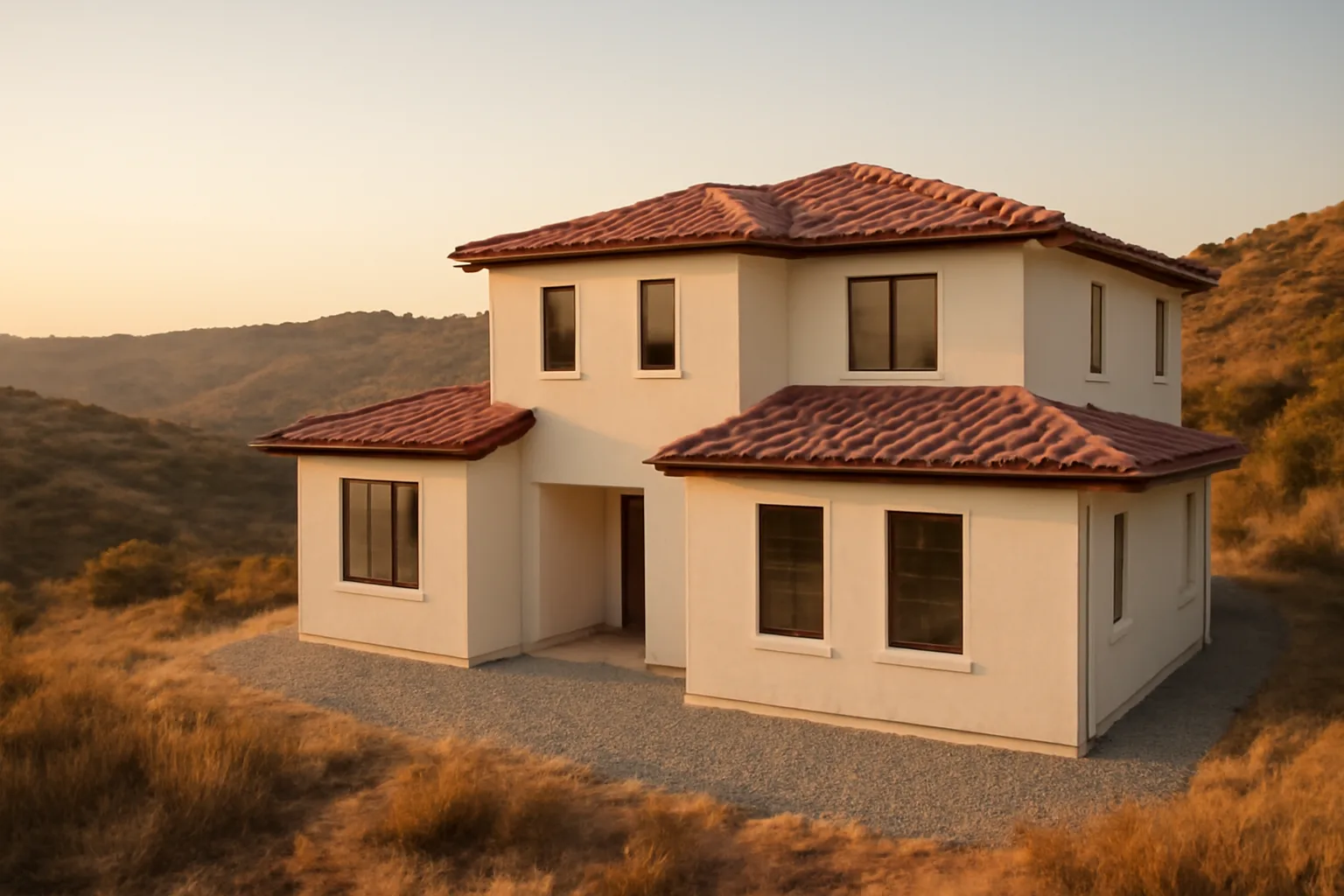
A fire-resistant home builder in the LA area is one who builds to (or beyond) California's Chapter 7A of the building code, which covers construction in designated Wildland-Urban Interface (WUI) Fire Areas. That means Class A fire-rated roofing, ember- and flame-resistant vents, ignition-resistant siding, tempered or dual-paned windows, and enclosed eaves. It's not a marketing label. It's a specific set of code sections (California Building Code Chapter 7A, and the corresponding California Residential Code sections) that a licensed contractor either follows or doesn't [1]. Most of Los Angeles County's foothill and canyon communities, Malibu, the Verdugo Mountains edge, parts of Altadena and the San Gabriel foothills, sit inside a state-mapped Fire Hazard Severity Zone or a locally designated WUI area. If your parcel is in one of those zones, Chapter 7A isn't optional for new construction or major remodels. CAL FIRE maintains the official Fire Hazard Severity Zone maps that determine whether your address triggers these requirements [2]. A good builder will pull your specific zone designation before drawing plans, not after. Ask for it in writing. If a contractor can't tell you whether your lot sits in a Very High Fire Hazard Severity Zone, that's a red flag, not a small detail. Beyond code minimums, some builders go further with ignition-resistant decking materials, non-combustible fencing near the structure, and 5-foot ember-resistant zones right against the foundation, which state law (California Public Resources Code Section 4291) increasingly treats as its own defensible space category separate from the broader 100-foot clearance [3].
When does the California defensible space law go into effect?
California's core defensible space law, Public Resources Code Section 4291, has been in effect since the 1990s and currently requires 100 feet of vegetation management around structures in State Responsibility Areas and some local jurisdictions [3]. What's changing is the "ember-resistant zone" (Zone 0), the 0-to-5-foot ring immediately around a home, which the legislature authorized CAL FIRE and the Board of Forestry to define through regulation. As of this writing, Zone 0 regulations have not been finalized as enforceable statewide rules. The Board of Forestry and Fire Protection has been working through rulemaking, and CAL FIRE has published draft guidance, but the formal regulatory adoption timeline has slipped multiple times. Homeowners should check the current status directly with the Board of Forestry and Fire Protection's rulemaking page, because this is a moving target and any date you read today may already be outdated [4]. What is settled: the 100-foot defensible space requirement under PRC 4291 already applies now, split into two zones. Zone 1 is the nearer 30 feet, requiring removal of dead vegetation and spacing between plants. Zone 2 (30 to 100 feet) allows more vegetation but requires reduced fuel loads and mowed grass. CAL FIRE's defensible space guidance lays out specific spacing formulas by slope and vegetation type [5]. Don't wait for Zone 0 to become law before doing that work. If you're already dealing with a non-renewal notice, showing an insurer you've cleared the existing 100-foot zone right now matters more than anticipating a rule that isn't finalized yet.
What fire-safe home rules take effect in 2026?
Several California wildfire-related building and disclosure rules are scheduled to phase in around 2026, though exact effective dates for some (particularly Zone 0 enforcement) remain pending final adoption. Here's what's actually confirmed versus still in process. The state's Low Cost Retrofit List, developed under Assembly Bill 38, requires point-of-sale disclosure in Very High Fire Hazard Severity Zones about home hardening retrofits, and enforcement mechanisms have been phasing in through the mid-2020s [6]. Separately, the Department of Insurance's "Safer from Wildfires" regulation, finalized in 2022, requires insurers to give homeowners discounts for completing specific mitigation actions like Zone 0 clearance, ember-resistant vents, and Class A roofing, and insurers have been updating their rating plans to comply through 2024 to 2026 [7]. If you're a homeowner trying to plan renovation timing around 2026 changes, the honest answer is: don't build your schedule around a single date. Check the Board of Forestry's current regulatory status page and your county building department before assuming any specific 2026 deadline applies to your project [4]. A fire-resistant home builder who stays current on this will tell you plainly what's locked in versus what's still proposed. Be suspicious of anyone who cites a specific 2026 Zone 0 enforcement date as settled fact right now.
Is Santa Barbara safe from fire?
No coastal or foothill California community is "safe" from fire in an absolute sense, and Santa Barbara County has burned repeatedly, including the 2017 Thomas Fire (which burned over 281,000 acres across Ventura and Santa Barbara counties) and the debris flow that followed in Montecito in January 2018, killing 23 people. Large parts of Santa Barbara County, especially the foothill communities along the Santa Ynez range, sit within CAL FIRE's Very High Fire Hazard Severity Zone designation. That said, "safe" isn't binary. Structures built to Chapter 7A standards with maintained defensible space survive wildfires at meaningfully higher rates than older, non-hardened homes in the same fire footprint. Post-fire assessments by the Insurance Institute for Business & Home Safety have found that ember exposure, not direct flame contact, is the dominant cause of home ignition in most WUI fires, which is exactly what hardening measures like ember-resistant vents and Zone 0 clearance are designed to address [8]. If you live in or near Santa Barbara's foothill communities (Montecito, Mission Canyon, San Roque), the honest framing is: your risk is real and documented, but a hardened, defensible home in that same location is dramatically less likely to ignite than an unhardened one. That's the whole logic behind insurer mitigation credits.
How to prevent wildfires (what's actually in your control)
Roughly 95% of wildfires in California are human-caused, according to CAL FIRE, through causes like unattended campfires, equipment sparks, downed power lines, and arson [9]. Preventing wildfires at the individual level mostly means eliminating ignition sources on your own property and reporting hazards you see elsewhere. Practical steps: never operate string trimmers, mowers, or grinding equipment on dry grass during Red Flag Warning days. Keep vehicles off dry grass (catalytic converters routinely start roadside fires). Maintain spark arrestors on ATVs, chainsaws, and generators. Report downed power lines immediately rather than assuming someone else will. Extinguish and drown campfires completely, more than until the flames look out. At the community level, the U.S. Forest Service's Smokey Bear campaign exists because most fire prevention still comes down to individual behavior, not policy. If you want to look at broader defensible space obligations for your property, defensible covers what "defensible space" legally requires versus what's just good practice.
How to prepare for a wildfire (a real checklist, not a vague one)
Preparing for a wildfire means doing the work months before smoke is visible, not during an evacuation warning. Ready.gov's wildfire preparedness guidance breaks this into three buckets: home hardening, evacuation planning, and go-bag readiness [10]. Home hardening: clear the 5-foot zone against your foundation of anything combustible (mulch, wood piles, dry plants). Clean gutters and roof valleys of leaf litter. Install 1/8-inch metal mesh over vents to block embers. Move firewood stacks at least 30 feet from structures. Evacuation planning: know two routes out of your neighborhood, not one. Sign up for your county's emergency alert system (most CA counties run a reverse-911 style system separate from federal alerts). Decide now where you'd go and who you'd call, because deciding during an evacuation order wastes minutes you don't have. Documentation: photograph every room, your roof, your hardening upgrades, and your defensible space work before fire season starts. This isn't about proving anything to an insurer during a claim (we're not involved in claims and don't negotiate coverage on your behalf), it's about having your own record. This is genuinely the one place where a simple structured checklist, like the $99 Wildfire Insurance Survival Kit, saves people from scrambling for photos and receipts after the fact instead of before. Go-bags: water, medications, copies of ID and insurance declarations pages, phone chargers, a change of clothes, and pet supplies if applicable. Ready.gov recommends keeping this packed year-round in fire-prone areas, not assembled reactively [10].
How to prevent forest fires (and how that differs from home fires)
Forest fire prevention operates at a landscape scale that individual homeowners can't control directly: fuel breaks, prescribed burns, and forest thinning are managed by agencies like the U.S. Forest Service and CAL FIRE, not homeowners. But homeowners in forested WUI areas do influence ignition risk directly through their own land management. CAL FIRE's Vegetation Management Program supports prescribed burning and fuel reduction on private and state land, and property owners adjacent to forested public land can request cooperative fuel treatment through their local CAL FIRE unit [11]. If your property borders national forest land, check with your regional U.S. Forest Service office about ongoing fuel treatment projects nearby, since those projects change your actual defensible space math over time. The most common individual-level forest fire causes remain equipment use, campfires, and vehicle-related ignitions on dry roadside grass, the same causes as broader wildfire ignition generally [9]. Preventing forest fires and preventing wildfires near homes overlap almost completely at the behavior level; the difference is mostly about scale of consequence, not cause.
How to avoid forest fires and prepare for them at the same time
Avoiding forest fires as an individual means controlling what you can (ignition sources, defensible space, fuel near structures) while accepting that fire will eventually move through most California wildland at some interval, prescribed or wild. CAL FIRE's own framing treats defensible space less as fire prevention and more as survivability engineering: the goal isn't stopping the fire, it's giving your structure and firefighters a chance when fire arrives [5]. That reframing matters for how you plan. Spend your money and time on the things that change survivability odds: the 5-foot ember zone, vent screening, roof material, gutter maintenance, and the first 30 feet of vegetation clearance. Spend less time worrying about things outside your control, like whether a distant forest fire will reach your specific parcel this season. If you're evaluating a specific property's landscaping risk before buying or building, fire safe landscaping California next to house covers plant selection and spacing specifics that matter more than people expect.
Why won't people follow the defensible space law in California?
Non-compliance with PRC 4291 is common, and the reasons aren't usually ignorance. Cost, labor availability, aesthetic preferences (people like their oak trees and dense landscaping), and simple lack of enforcement all contribute. CAL FIRE inspections happen, but capacity is limited relative to the number of parcels in State Responsibility Areas, and enforcement historically has leaned toward notice-and-correction rather than immediate penalties [5]. There's also a real cost barrier. Clearing 100 feet of defensible space on a sloped, densely vegetated lot can run into the thousands of dollars for tree removal, chipping, and hauling, and that's before ongoing annual maintenance. For homeowners already facing insurance non-renewal and premium increases, that upfront cost competes directly with other financial pressures. Some homeowners also genuinely don't know the rule applies to them, particularly renters, absentee landlords, or people in areas newly reclassified into Very High Fire Hazard Severity Zones after a mapping update. CAL FIRE updates these maps periodically, and a parcel that wasn't regulated five years ago may be now [2]. The honest answer for anyone reading this because they got a non-renewal letter: compliance with PRC 4291 is one of the few concrete, documentable actions you control right now, and it directly maps to what insurers are asking about in the Safer from Wildfires program [7]. If your neighbor lost coverage over defensible space and you haven't cleared yours, that's the highest-leverage hour you can spend this month.
How do local fire districts vary on mitigation rules?
California's baseline defensible space law is statewide, but enforcement specifics, additional local ordinances, and inspection timing vary by fire district and county. Some counties (Los Angeles County Fire Department's Forestry Division, for instance) run their own brush clearance inspection programs with local deadlines layered on top of the state 4291 requirements. [Guided fill-in: check with your specific local fire district, e.g., Los Angeles County Fire Department Forestry Division, Ventura County Fire Protection District, Santa Barbara County Fire Department, for their current brush clearance deadline, inspection schedule, and any additional local ordinance beyond the state 100-foot requirement.] Because these vary, a fire-resistant home builder working across LA County, Ventura, and Santa Barbara counties should be explicitly tracking each jurisdiction's local rules, more than the state code. Ask any builder or contractor directly: "which local fire district ordinances apply to this specific parcel, beyond Chapter 7A and PRC 4291?" A builder who can answer that specifically, with the district named, knows the terrain. One who shrugs doesn't.
What should you ask a fire-resistant home builder before hiring them?
Ask for their Chapter 7A project history specifically, more than general remodeling experience. Ask whether they've pulled your parcel's Fire Hazard Severity Zone designation and can show you the CAL FIRE map reference [2]. Ask which roofing assembly they'd use (Class A rated, and specifically which product) and whether they're installing ember-resistant vents rated to the current California State Fire Marshal's approved products list . Ask how they'd handle the 5-foot ember-resistant zone against the foundation, since this is where most retrofit projects fall short even when the rest of the build is code-compliant. Ask for references from other WUI-zone clients specifically, not general remodel references. Finally, ask what happens after construction: who handles the ongoing defensible space maintenance, and do they document the work in a way that would hold up if you ever needed to show a timeline of hardening upgrades to an insurer. We don't file claims or negotiate with insurers on your behalf, and no builder should promise that hardening guarantees renewed coverage or a lower premium, but documented, dated hardening work is the only lever homeowners actually have.
Frequently asked questions
When does the California defensible space law go into effect?
The core 100-foot defensible space requirement under Public Resources Code Section 4291 has been in effect since the 1990s and applies now in State Responsibility Areas. The newer "Zone 0" ember-resistant zone (0 to 5 feet from structures) is still in the regulatory adoption process through the Board of Forestry and Fire Protection; check their current rulemaking status page for the latest timeline.
Why won't people follow the defensible space law in California?
Cost, labor shortages, aesthetic attachment to landscaping, and inconsistent enforcement all contribute. Clearing 100 feet of vegetation on a sloped lot can cost thousands of dollars, and CAL FIRE's inspection capacity is limited relative to the number of parcels in State Responsibility Areas, so enforcement often leans toward notices rather than immediate penalties.
How to prevent wildfires?
About 95% of California wildfires are human-caused, per CAL FIRE. Prevention means avoiding equipment sparks on dry grass, maintaining spark arrestors, drowning campfires fully, keeping vehicles off dry vegetation, and reporting downed power lines immediately rather than waiting for someone else to.
How to prepare for a wildfire?
Ready.gov recommends home hardening (ember-resistant zones, vent screens, clean gutters), evacuation planning (two known routes, county alert sign-up), and a packed go-bag with medications, ID copies, and insurance documents. Do this before fire season, not during an evacuation warning.
How to prevent forest fires?
At scale, agencies like CAL FIRE and the U.S. Forest Service manage forest fire risk through prescribed burns and fuel breaks. Individual landowners near forested land can request cooperative fuel treatment through their local CAL FIRE unit and control their own ignition sources, which cause the large majority of fires.
How to avoid forest fires?
Avoid operating spark-producing equipment on dry vegetation, especially during Red Flag Warning conditions. Keep vehicles off dry grass. Fully extinguish campfires. Beyond individual behavior, avoiding forest fire damage to your home comes down to defensible space and structure hardening, since some ignition in wildland areas is inevitable over time.
How to prepare for forest fires?
Preparation mirrors general wildfire preparedness: harden your structure (Class A roof, ember-resistant vents, cleared 5-foot zone), maintain 100 feet of defensible space per California Public Resources Code Section 4291, plan two evacuation routes, and keep a go-bag ready year-round if you're in a forested WUI area.
What fire-safe home rules take effect in 2026?
Several mitigation-related insurance and disclosure rules are phasing in around 2026, including aspects of the Department of Insurance's Safer from Wildfires regulation and AB 38 point-of-sale retrofit disclosures. Zone 0 ember-resistant zone enforcement is still pending final regulatory adoption; check the Board of Forestry's current status page rather than assuming a fixed date.
Is Santa Barbara safe from fire?
No. Santa Barbara County has experienced major wildfires, including the 2017 Thomas Fire and the deadly Montecito debris flow that followed in January 2018. Much of the county's foothill area is a CAL FIRE-designated Very High Fire Hazard Severity Zone. Hardened, defensible homes there survive at higher rates, but the underlying risk is real and documented.
How can we prevent forest fires?
Collectively, prevention relies on agency-managed fuel reduction (prescribed burns, thinning) plus widespread individual compliance with basic fire-safe behavior: no equipment sparks on dry grass, fully extinguished campfires, maintained spark arrestors, and prompt reporting of downed power lines or unattended fires.
Does a fire-resistant builder guarantee my home won't burn?
No, and any builder who claims this isn't being straight with you. Chapter 7A construction and defensible space measurably improve survival odds in post-fire studies, but no home is fireproof. The goal is reducing ignition probability and improving odds if fire reaches the structure, not eliminating risk entirely.
What is Chapter 7A and does it apply to my LA home?
Chapter 7A is the section of the California Building Code covering construction requirements in designated Wildland-Urban Interface Fire Areas: fire-rated roofing, ember-resistant vents, ignition-resistant siding, and tempered windows. It applies to new construction and major remodels in mapped Fire Hazard Severity Zones; check your parcel against CAL FIRE's official maps.
How much does defensible space clearing typically cost in LA-area terrain?
Costs vary widely by slope, vegetation density, and access, and no single statewide figure is reliable; get quotes from local contractors for your specific parcel. Sloped, densely vegetated lots generally cost more due to hauling and access difficulty. Check with your local fire district for any subsidized clearance programs available in your area.
Sources
- California Building Standards Commission, California Building Code Chapter 7A: Chapter 7A sets construction requirements for Wildland-Urban Interface Fire Areas including roofing, vents, and siding
- CAL FIRE, Fire Hazard Severity Zone Maps: CAL FIRE maintains official maps designating Fire Hazard Severity Zones that trigger Chapter 7A and defensible space requirements
- California Legislature, Public Resources Code Section 4291: State law requires 100 feet of defensible space clearance around structures in State Responsibility Areas
- California Board of Forestry and Fire Protection, Rulemaking: Zone 0 ember-resistant zone regulations are in the rulemaking process and not yet finalized as enforceable statewide rules
- CAL FIRE, Defensible Space (PRC 4291) Guidance: CAL FIRE's defensible space guidance defines Zone 1 (0-30 ft) and Zone 2 (30-100 ft) clearance requirements by slope and vegetation type
- California Legislature, Assembly Bill 38 (2019): AB 38 established requirements for point-of-sale disclosure of low-cost wildfire retrofit measures in Very High Fire Hazard Severity Zones
- California Department of Insurance, Safer from Wildfires Regulation: Insurers must provide discounts for completed wildfire mitigation actions including Zone 0 clearance, ember-resistant vents, and Class A roofing
- CAL FIRE, Wildfire Prevention: Approximately 95% of wildfires in California are caused by human activity
- USDA Forest Service, Smokey Bear Wildfire Prevention Program: Federal wildfire prevention outreach targets human-caused ignition behavior as the primary lever available to the public
- CAL FIRE, Vegetation Management Program: CAL FIRE supports prescribed burning and fuel reduction on private and state land through its Vegetation Management Program
- California State Fire Marshal, Building Materials Listing Program: The State Fire Marshal maintains an approved products list for fire-rated building materials including ember-resistant vents