Last updated 2026-07-25
TL;DR
Home Depot carries cement fiber board, gypsum sheathing, and some Class A rated siding products that can help harden a home against embers, but it does not sell a single item labeled "fire resistant panel" that satisfies California's Chapter 7A code on its own. You need assemblies (board plus proper fasteners, joints, and vents) tested to specific standards, not one product off a shelf.
does home depot sell fire resistant panels for houses
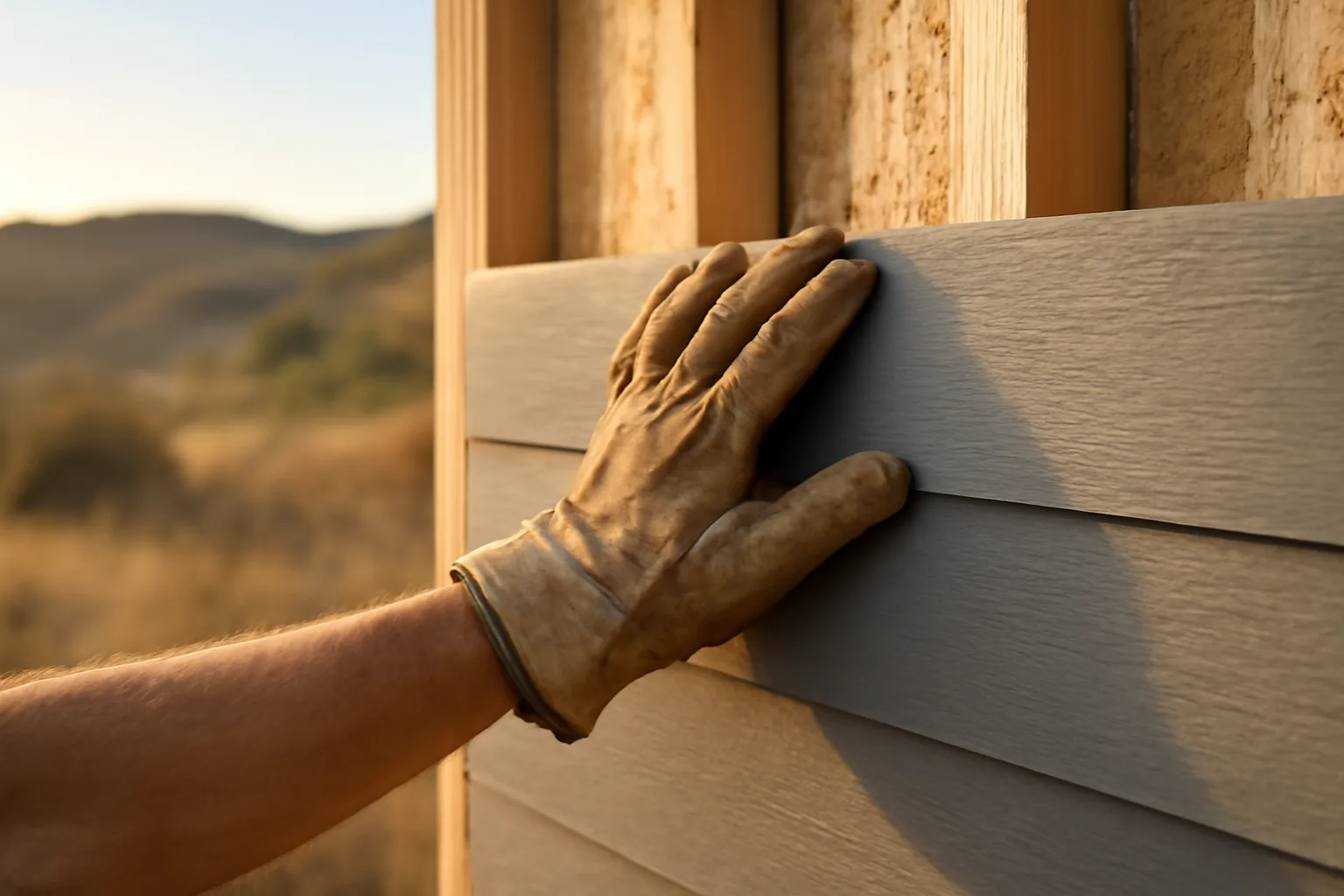
Yes, but not under that exact name, and not as a single fix. Home Depot stocks cement fiber board (brands like James Hardie), fire-rated gypsum sheathing, fiber cement siding panels, and some ignition-resistant soffit and vent products. These materials show up in wildfire hardening because they don't ignite the way wood siding or untreated OSB does. What you won't find is a product labeled "fire resistant panel" that alone satisfies a wildfire building code. Codes like California's Chapter 7A test whole assemblies, meaning the siding plus the underlayment plus the fasteners plus how the seams are sealed, more than the board itself [1]. A pallet of Hardie board from a big box store is a good start. It is not a permit-ready wall assembly by itself. If you're rebuilding or retrofitting in a high fire hazard severity zone, ask your inspector or contractor for the specific tested assembly number before you buy, not after. Home Depot associates are not going to know your local fire district's requirements, and they shouldn't be your only source on this.
what actually counts as fire resistant siding material
Materials that resist ignition and slow flame spread include fiber cement board, stucco, brick, concrete block, and some fire-treated wood products with a Class A or B fire rating. Vinyl siding and most untreated wood siding do not meet Chapter 7A requirements in California's WUI (wildland urban interface) zones [2]. Cement fiber board (Hardie board is the common brand) is probably the single most common upgrade homeowners make, and Home Depot sells it in multiple profiles. It won't burn the way wood does, and it holds up fine in most climates. Cost runs roughly $2 to $12 per square foot installed depending on region and profile, though I'd treat that as a rough range, not a quote; local labor costs move this a lot. Stucco and masonry are the higher end for fire resistance but cost more and aren't always practical as a retrofit over existing wood-frame walls. If you're starting from scratch, either is a stronger choice than cement board. If you're retrofitting an existing house, cement board over the existing sheathing is usually the more realistic project. One detail people miss: it's more than the wall panel. Ember intrusion happens most at joints, eaves, vents, and where siding meets the roofline. A perfect wall of fire resistant panels with a gap at the soffit is still a vulnerability. See our guide on fire safe landscaping in California next to the house for how the same ember-intrusion logic applies to plants near your siding.
when does the california defensible space law go into effect
California's core defensible space law (Public Resources Code 4291) already requires 100 feet of defensible space clearance around homes in State Responsibility Areas and has for years; it's not a future law, it's current and enforced by CAL FIRE and local fire agencies [3]. What's changing is the more detailed "ember-resistant zone" rule for the first 5 feet around structures (often called Zone 0). CAL FIRE and the Board of Forestry have been developing Zone 0 regulations under SB 63 (2020) and related statute, and the intent is to require noncombustible material within 5 feet of the home, no combustible mulch, no wood fencing directly attached to the house, that kind of thing. As of this writing, CAL FIRE's own defensible space page describes Zone 0 as an emerging regulatory area, with local fire districts and CAL FIRE still finalizing specific enforcement timelines that vary by jurisdiction. Here's the honest answer: the exact statewide enforcement date for Zone 0 specifics has shifted before, and different fire districts are rolling out compliance guidance on their own schedules. Don't rely on a blog post (including this one) for the current effective date. Check directly with your local fire department or CAL FIRE's defensible space page for your zone's current requirement, and confirm with your county's building department if you're near a code deadline. [Guided fill-in: confirm your local fire district's specific Zone 0 enforcement date before making purchases based on a compliance deadline.]
what fire safe home rules take effect in 2026
Multiple states are tightening wildfire building codes on rolling timelines, and California's Zone 0 rule is the most-watched one heading toward broader applicability. Some reporting and CAL FIRE communications have referenced a 2026 target for stricter Zone 0 enforcement in high hazard zones, but the specific effective date and scope (new construction only vs. existing homes, which zones, what triggers inspection) has not been locked into a single, universally cited final rule as of this writing. This is a case where I'd rather tell you honestly that I don't have a single confirmed statewide date than make one up. What I can tell you: local fire districts, insurance companies, and county building departments are all watching this closely, and if you got a non-renewal letter, your insurer may already be applying stricter standards than the state minimum. [Guided fill-in: your local fire marshal's office can confirm whether any 2026 rule applies to your specific parcel and zone.] Oregon has its own parallel process under Senate Bill 762 (2021), which directed the state to develop a statewide wildfire hazard map and defensible space / building code standards for homes in high-risk zones; implementation has been contentious and delayed multiple times after the initial hazard maps drew public pushback [4]. Colorado and Arizona don't have a single statewide equivalent to California's Chapter 7A; most of their wildfire building requirements are set at the county or fire district level, so "what applies to me" genuinely depends on your specific jurisdiction. [Guided fill-in: check your county planning department for locally adopted wildfire building codes.]
why won't people follow the defensible space law in california
Cost, confusion, and enforcement gaps are the three real reasons, and it's not because people don't care about their homes burning down. Clearing 100 feet of defensible space, replacing wood fencing, and hardening vents and siding can run from a few hundred dollars in DIY labor to tens of thousands of dollars for a full retrofit, and a lot of homeowners simply don't have that kind of cash sitting around, especially after other cost-of-living pressure. Confusion is real too. Defensible space rules differ by zone (Zone 0, Zone 1, Zone 2), differ by whether you're in a State Responsibility Area or Local Responsibility Area, and differ further by local fire district amendments. A homeowner in unincorporated San Diego County and one in the Sierra foothills may face genuinely different requirements even under the same state statute, which makes generic advice (including a lot of what's online) less useful than it sounds. Enforcement is uneven. CAL FIRE and local fire departments do conduct defensible space inspections and can issue violation notices under PRC 4291, but the volume of parcels versus available inspectors means a lot of noncompliant properties simply don't get flagged in a given year [3]. That's not an argument for ignoring the law, it's just an honest description of why it happens. If you got an inspection letter, that means you're now on someone's list, and it's worth treating it as the trigger to actually do the work rather than assume the letter was random. Our guide on defensible space work in general breaks down the zone-by-zone requirements in more detail if you want the specifics before you start buying materials.
how to prepare for a wildfire before it happens
| Clear gutters, roof debris | Free to $150 | High | |
|---|---|---|---|
| Ember-resistant vents | $20-60 per vent | High | |
| Remove mulch/combustibles within 5 ft | Free to $300 | High | |
| Trim vegetation 30 ft clearance | $200-1500 (DIY vs contractor) | High | |
| Cement board siding retrofit | $2-12/sq ft installed | Medium-high, long-term | |
| Ember-resistant deck | $1500-8000+ | Medium | Documentation matters too, separate from physical prep. Photograph your defensible space work, keep receipts for materials and contractor invoices, and date-stamp everything. If your insurer sends a non-renewal or inspection letter, having your own paper trail of what you've done is the thing that actually helps you respond, not a verbal assurance that you cleared the brush last spring. This is the kind of organized documentation our $99 Wildfire Insurance Survival Kit is built around: a structured way to log what you did, when, and with what materials, so you have something concrete to send back to an insurer or inspector. We don't negotiate with insurers or file claims on your behalf; the kit just helps you build the record yourself. |
The single highest-leverage move is hardening the first 5 feet around your house (Zone 0) and clearing the next 30 feet of anything that can carry an ember-driven fire to your structure, according to CAL FIRE's defensible space guidance [3]. This matters more than most people think, because most homes in wildfires don't burn from a wall of flame reaching them; they burn from wind-blown embers landing in gutters, vents, mulch beds, or under decks, sometimes from a fire miles away. Ready.gov's wildfire action guide recommends: keep gutters and roof clear of debris, use ember-resistant vents, store firewood at least 30 feet from the house, and have a go-bag and evacuation plan ready before fire season, not during it [5]. That last point matters more than it sounds. Once a fire is close enough that you're deciding what to grab, you've already lost the time you needed to do it calmly. A practical prep list, roughly in order of what protects you most for the least money: | Action | Rough cost | Ember protection value |
how to prevent wildfires from starting in the first place
Most wildfires in the U.S. are human-caused, not lightning-caused, and the fixes are mundane: don't drag trailer chains that spark on pavement, don't park hot vehicles on dry grass, fully extinguish campfires (drown, stir, drown again), and don't burn debris on windy or red flag warning days [6]. The National Interagency Fire Center and USDA Forest Service both point to equipment use, campfires, and debris burning as leading human-caused ignition sources, alongside arson and power line failures [6]. Smokey Bear's "Only you can prevent wildfires" campaign, run by the USDA Forest Service since 1944, exists because the ignition sources are genuinely mostly preventable at the individual level, not because it's a cute slogan. If you want the full history and current fire prevention guidance behind that campaign, see only you can prevent wildfires. At the property level, prevention overlaps heavily with hardening: keeping dry vegetation away from structures, maintaining spark arrestors on chimneys, and not using gas or charcoal equipment near dry grass during fire season all reduce your odds of being the ignition point for a fire that spreads to neighbors.
how to prevent forest fires and avoid forest fires as an individual
The individual-level answer is nearly identical to wildfire prevention generally: control ignition sources you're responsible for, and support the broader fuel management that reduces fire severity when something does ignite. Forest fires specifically also connect to forest management practices like prescribed burns and mechanical thinning, which the U.S. Forest Service and CAL FIRE both use to reduce the buildup of dead and downed fuel that makes fires larger and harder to control [7]. As a homeowner or visitor, the practical list doesn't change much: follow local fire restrictions (they escalate for a reason during dry periods), never leave a campfire unattended, check current fire danger ratings before burning anything, and report smoke or unattended fires immediately rather than assuming someone else already did. One thing worth saying plainly: individual behavior change reduces ignition risk, but it does not eliminate large-fire risk in fire-prone regions, because climate, drought, and accumulated fuel loads set the stage regardless of any one person's actions. That's part of why defensible space and home hardening matter so much: you can't fully control whether a fire starts nearby, but you have real control over whether your specific structure survives an ember storm.
is santa barbara safe from fire
No California coastal community, including Santa Barbara, is meaningfully safe from wildfire risk, and Santa Barbara County specifically has a documented history of major destructive fires, including the 2017 Thomas Fire (at the time one of the largest fires in California history) and the deadly Montecito debris flow that followed heavy rain on the burn scar in January 2018. Parts of Santa Barbara County are mapped by CAL FIRE as Very High Fire Hazard Severity Zones, particularly in the foothill and wildland-adjacent neighborhoods . That doesn't mean every property in Santa Barbara faces equal risk. Risk varies enormously by specific parcel: distance to wildland vegetation, slope, prevailing wind patterns, and whether the home itself is hardened all matter more than the city name on the address. You can check your specific parcel's hazard zone designation on CAL FIRE's FHSZ viewer rather than relying on a general reputation for the area . If you're a Santa Barbara homeowner who received a non-renewal letter, that's consistent with what insurers have been doing across California's Very High Fire Hazard Severity Zones broadly, not a signal that your specific house is uniquely doomed. It is a signal to document your defensible space and hardening work and be ready to show it.
how can we prevent forest fires at a community level
Community-level prevention works through coordinated fuel reduction, shared defensible space enforcement, and Firewise-style neighborhood programs, because one hardened home surrounded by unmanaged fuel and non-compliant neighbors is still at serious risk from radiant heat and ember cast off adjacent properties. CAL FIRE and many county fire departments run community chipper days, fuel break projects, and Firewise USA recognition programs specifically because individual compliance without neighborhood-level coordination leaves gaps . HOAs and rural fire districts increasingly require shared defensible space standards precisely because fire doesn't respect property lines. If your neighbor has a wood fence connecting to your wood fence, your Zone 0 compliance is only as good as theirs. At a policy level, prescribed burning, mechanical thinning on public lands, and utility infrastructure hardening (undergrounding lines, vegetation management around power lines) all reduce large-fire ignition and spread risk, and these are largely outside individual homeowner control, which is exactly why insurance non-renewals frustrate so many homeowners who've done everything right on their own property.
what to actually buy at home depot for wildfire hardening
If you're standing in the aisle deciding what's worth buying, prioritize in this order: ember-resistant vents, cement fiber siding or board, noncombustible mulch alternatives (like rock or gravel) for the 5-foot zone, and metal or ember-resistant gutter guards. These four categories address the most common ignition points documented in post-fire structure surveys. Skip: decorative wood mulch marketed as "fire resistant" (there's no such thing as fire-resistant bark mulch; all organic mulch burns), vinyl siding marketed for "heat resistance" (it still melts and can ignite well before masonry or cement board would), and any product salesperson who tells you a single panel or coating brings your whole house up to Chapter 7A code. That's not how the code works, and it's not how fire behaves against a real structure. Worth buying but often skipped: 1/8-inch metal mesh for vent screens (the standard most fire-resistant vent products meet or exceed), and fire-rated caulk or sealant for gaps where siding meets trim, windows, and roofline, since those gaps are common ember entry points that a panel alone won't fix. If you're rebuilding after a house fire or replacing a structure that burned, this is also the moment to get the assembly specs right from the start rather than retrofitting piecemeal later, since new construction in a WUI zone typically has to meet Chapter 7A regardless of what you personally would have chosen to install.
who pays for defensible space clearing and fire hardening work
In most cases, the homeowner pays, though costs vary enormously by whether you DIY the work or hire a licensed contractor, and by state. Washington State's Department of Natural Resources, for example, runs defensible space cost-share and contractor programs in certain counties that can offset clearing costs for qualifying properties ; California doesn't have a single statewide equivalent, though some local fire safe councils and grant programs exist on a county-by-county basis. If you're in Washington and looking at contractor options for defensible space clearing specifically, see our breakdown of defensible space clearing contracts through Washington State DNR for how those programs actually work and what they cover. For most homeowners in CA, CO, OR, and AZ, expect to pay out of pocket for both vegetation clearing and structural hardening, with the possible exception of low-income assistance programs some counties run seasonally. Budget accordingly, and prioritize the cheap, high-impact items (gutter clearing, vent screens, mulch removal near the house) before the expensive ones (full siding replacement) if money is tight.
Frequently asked questions
when does the california defensible space law go into effect
California's core defensible space law, PRC 4291, is already in effect and has been enforced for years, requiring 100 feet of clearance around homes in State Responsibility Areas. The newer Zone 0 (5-foot ember-resistant zone) rule is still being finalized by CAL FIRE and the Board of Forestry; check your local fire district for the current enforcement status in your specific area.
why won't people follow the defensible space law in california
Mainly cost and confusion. Full compliance can run from a few hundred dollars in DIY labor to tens of thousands for structural retrofits, and rules differ by zone, responsibility area, and local fire district amendment, which makes generic advice less reliable than homeowners expect. Enforcement gaps also mean many noncompliant parcels simply aren't inspected in a given year.
how to prevent wildfires from starting near my home
Control ignition sources: fully extinguish campfires, avoid dragging chains or using spark-producing equipment on dry grass, don't burn debris on windy or red flag days, and keep vegetation cleared per your local defensible space rules. Most wildfires are human-caused, so individual behavior genuinely reduces new-ignition risk according to Forest Service data.
how to prepare for a wildfire if I live in a high-risk zone
Harden your first 5 feet (Zone 0) with noncombustible materials, clear gutters and roof debris, install ember-resistant vents, and keep 30 feet of vegetation clearance per CAL FIRE guidance. Build a go-bag and evacuation plan before fire season starts, and document your hardening work with photos and receipts in case your insurer requests proof.
how to prevent forest fires when hiking or camping
Fully drown and stir campfires until cold to the touch, never leave fire unattended, check current local fire restrictions before burning anything, and avoid parking or driving on dry grass with a hot undercarriage. Report unattended smoke or fire immediately rather than assuming someone else has.
how to avoid forest fires caused by equipment or vehicles
Keep spark arrestors maintained on chainsaws, generators, and ATVs, avoid mowing dry grass in the heat of the day, and never drag trailer safety chains on pavement. These mundane equipment habits are cited by fire agencies as common human-caused ignition sources, alongside campfires and debris burning.
what fire safe home rules take effect in 2026
California's Zone 0 ember-resistant zone rule has been discussed with a 2026 target in some CAL FIRE communications, but a single confirmed statewide effective date and scope hasn't been finalized as of this writing. Confirm current status directly with CAL FIRE or your local fire marshal rather than relying on a general date.
is santa barbara safe from fire
No, Santa Barbara County has significant wildfire history, including the 2017 Thomas Fire, and parts of the county are mapped as Very High Fire Hazard Severity Zones by CAL FIRE. Risk varies by specific parcel based on proximity to wildland vegetation, slope, and whether the home is hardened, so check your address on CAL FIRE's hazard zone viewer.
how can we prevent forest fires at the community level
Coordinated fuel breaks, Firewise USA neighborhood programs, shared defensible space enforcement, and prescribed burning or mechanical thinning on public lands all reduce community-wide fire risk. One hardened home next to unmanaged neighboring lots is still vulnerable to radiant heat and ember cast, so neighborhood coordination matters as much as individual compliance.
does home depot sell fire resistant panels that meet california's wildfire code
Home Depot sells materials like cement fiber board and gypsum sheathing that are commonly used in fire-hardened construction, but no single product satisfies Chapter 7A on its own. Code compliance depends on tested assemblies (board, fasteners, sealed joints, vents together), so confirm the specific assembly with your inspector or contractor before buying.
what's the cheapest way to fire harden a home
Clearing gutters and roof debris, removing combustible mulch within 5 feet of the house, and installing ember-resistant vent screens are the lowest-cost, highest-impact steps, often under a few hundred dollars total in materials. Full siding replacement is far more effective long-term but costs significantly more.
does vinyl siding meet wildfire building codes
No. Vinyl siding melts and can ignite before reaching the fire resistance thresholds required in WUI zones under codes like California's Chapter 7A. Fiber cement board, stucco, and masonry are the standard compliant alternatives for wildfire-prone areas.
Sources
- California Building Standards Commission, Chapter 7A (WUI construction requirements): Chapter 7A tests whole wall assemblies, not individual products, for wildland-urban interface construction
- CAL FIRE, Building Materials List / WUI Products: Approved ignition-resistant building materials for WUI zones are maintained on a state list, and untreated wood/vinyl siding generally does not qualify
- California Public Resources Code Section 4291: 100 feet of defensible space clearance is required around structures in State Responsibility Areas
- Oregon Senate Bill 762 (2021): Oregon's SB 762 directed development of statewide wildfire hazard maps and building/defensible space standards
- USDA Forest Service / National Interagency Fire Center, Wildfire Causes and Statistics: Most U.S. wildfires are human-caused, from sources including campfires, debris burning, and equipment use
- CAL FIRE, Prescribed Fire and Fuel Reduction: Prescribed burning and mechanical thinning are used to reduce fuel loads and forest fire severity
- CAL FIRE, Fire Hazard Severity Zone Viewer: Parts of Santa Barbara County are mapped as Very High Fire Hazard Severity Zones, and specific parcel risk can be checked on CAL FIRE's map