Last updated 2026-07-25
TL;DR
Fireproofing installation means retrofitting your home's vulnerable points, vents, roof edges, siding gaps, decks, and windows, with ember-resistant materials. Full retrofits run $2,000 to $100,000+ depending on scope. Vent screens and gutter guards are cheapest and highest-impact; full siding or roof replacement costs the most. Check your local fire district before hiring anyone, since requirements vary by jurisdiction.
what does fireproofing installation actually mean for a house
No material makes a house fireproof. That word gets thrown around by contractors and it's a little dishonest. What installation crews actually do is called home hardening: replacing or retrofitting the specific parts of a house that let embers and radiant heat get inside during a wildfire. CAL FIRE's own guidance is blunt about the real threat. "Embers are the number one cause of home ignition during a wildfire, causing more structures to burn than direct flame contact". That single fact should drive almost every decision on your project list. A house doesn't usually burn because a wall of flame hits it. It burns because a burning ember, sometimes a mile or more from the actual fire, lands in a gutter full of dry leaves, slips under a vent screen, or wedges into a gap in the siding. So "fireproofing installation" in practice means: sealing gaps, screening vents, upgrading roofing and siding materials, hardening windows, and rebuilding decks with ignition-resistant materials. It's a checklist project, not a single product you buy. The reason this matters for insurance is separate from the physical safety question. Underwriters increasingly want proof, not promises. A defensible property with documented hardening work is a different conversation with an insurer than one with none.
which parts of the house get fireproofed first
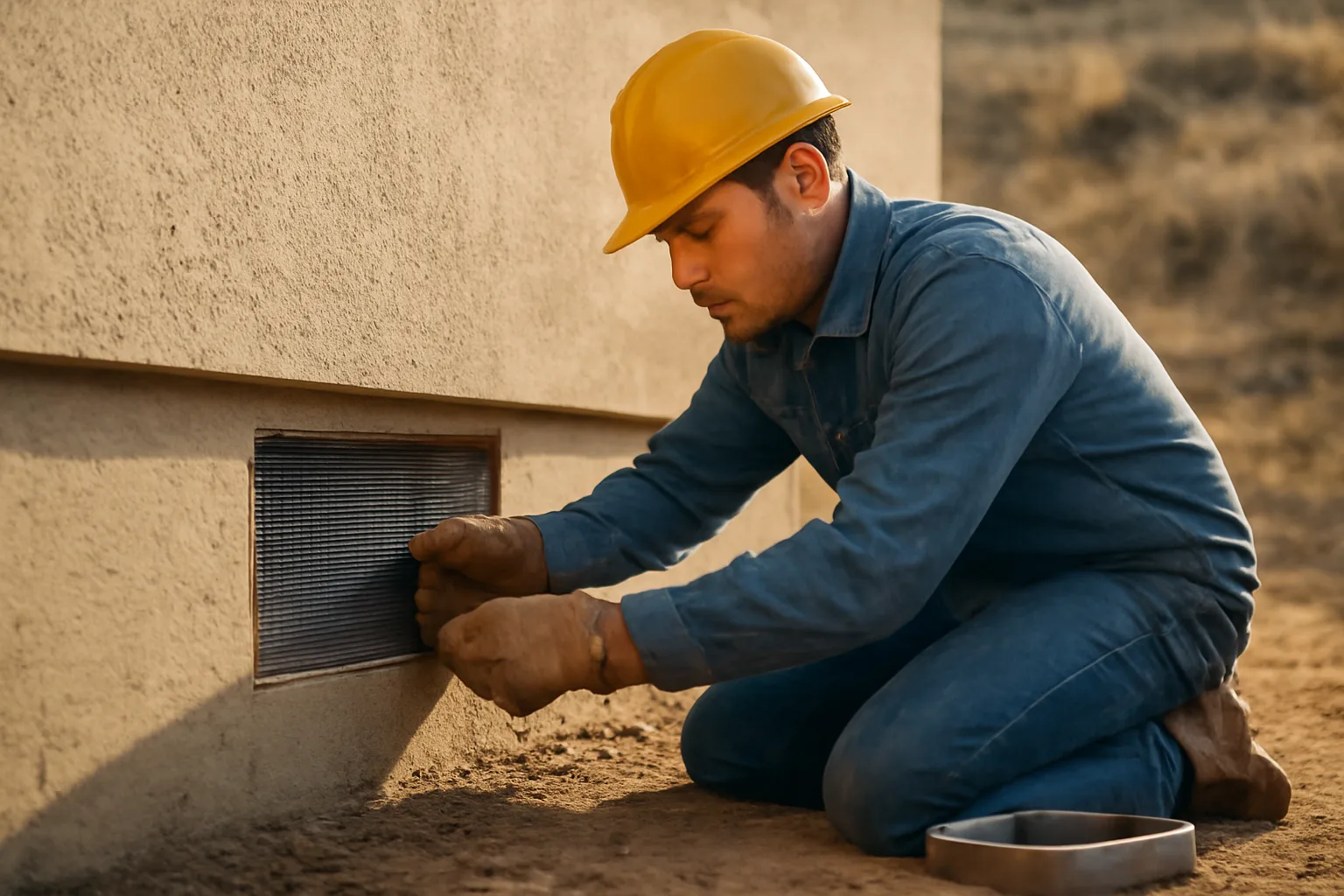
Vents first, roof edges second, then siding gaps and decks. That's the order almost every wildfire mitigation specialist will give you, because it follows the ember intrusion research, not aesthetics or convenience. Attic and foundation vents are cheap to fix and catastrophically dangerous if ignored. Standard vent screens are 1/4-inch mesh, which does nothing to stop embers. Retrofitting with 1/8-inch or smaller corrosion-resistant metal mesh, or installing ember- and flame-resistant vents rated for wildfire exposure, is one of the lowest-cost, highest-value jobs on this list. Expect $150 to $400 per vent installed, and a typical house has 4 to 12 vents. Roof valleys, edges, and the gutter line come next. Roofing material matters (Class A assemblies are best), but the bigger overlooked risk is debris. A dry-leaf-packed gutter is basically kindling bolted to your roofline. Metal gutter guards plus periodic clearing cost far less than a full reroof. Siding gaps, especially where siding meets the ground, deck, or trim, let embers work behind the cladding into wall cavities. Sealing these gaps and maintaining a noncombustible zone at the base of exterior walls is cheap relative to what a wall-cavity ember fire costs. Decks and fences attached to the house are functionally an extension of the house for ignition purposes. If your deck is old wood and touches your siding, it's a wick. See our full breakdown of fire safe landscaping in California next to the house for how the defensible space rules interact with deck and fence placement.
what does a full fireproofing retrofit cost
| Ember-resistant vent screens (per vent) | $150 - $400 | Highest | |
|---|---|---|---|
| Metal gutter guards (whole house) | $1,000 - $3,000 | Highest | |
| Sealing siding/foundation gaps | $500 - $2,500 | High | |
| Ignition-resistant deck rebuild | $8,000 - $25,000 | Medium-high | |
| Dual-pane/tempered window replacement | $400 - $1,200 per window | Medium | |
| Class A roof replacement (comp shingle to metal/tile) | $15,000 - $60,000+ | Medium (do when roof is due anyway) | |
| Fiber cement or stucco siding replacement | $10,000 - $40,000+ | Lower priority unless siding is failing | A homeowner doing only the top three items (vents, gutters, gap sealing) can often spend under $6,000 and address most of the highest-probability ember entry points. Full-house retrofits including roof and siding easily run $60,000 to $150,000. There's no single number that's "right," and any contractor who quotes you a flat "fireproofing package" price without walking your specific property should get a second opinion. |
Costs vary enormously by scope, region, and how much of the house already meets code. Realistic ranges, based on typical contractor pricing reported by wildfire mitigation programs and building material cost data, look like this. | Retrofit item | Typical cost range | Priority |
when does the california defensible space law go into effect
California's core defensible space requirement, the 100-foot clearance rule under Public Resources Code Section 4291, has been in effect since it was expanded by legislation in 2004 and amended since. It is not a future date you're waiting on. If you're in a State Responsibility Area or a designated Very High Fire Hazard Severity Zone, the requirement already applies to you right now. What's newer and still rolling out is the "ember-resistant zone" (Zone 0) requirement, the 0-to-5-foot zone immediately around structures. The California legislature authorized the Board of Forestry and Fire Protection to develop this regulation under SB 63 (2021) and AB 1516, and CAL FIRE's Board of Forestry has been working through the regulatory process since. As of this writing, Zone 0 regulations have gone through rulemaking but the enforceable statewide effective date has moved multiple times; homeowners in high-risk zones should check the current status directly on the Board of Forestry's defensible space page [1] rather than rely on a fixed date, because the timeline has shifted as the rulemaking process continues. The practical takeaway: the 100-foot defensible space law is not new and is already enforceable. The Zone 0 ember-resistant zone rule is the piece still being finalized, and specific compliance dates depend on your local fire district's adoption timeline. Guided fill-in: confirm your county's current Zone 0 enforcement date with your local fire marshal or CAL FIRE unit office, since this varies by jurisdiction.
what fire safe requirements for homes take effect in 2026
This is genuinely unsettled, and anyone giving you a confident single answer for all of California, Colorado, Oregon, and Arizona is guessing. Different states and even different counties within a state are moving at different speeds. In California, the Zone 0 ember-resistant zone rule (the 5-foot noncombustible buffer around structures) has been discussed with a target implementation for higher-risk zones, but as of the most recent Board of Forestry updates, the applicability date and enforcement mechanism are still being finalized through rulemaking, not guaranteed for a specific 2026 date across the whole state [1]. Oregon's wildfire hazard map and defensible space code requirements under Senate Bill 762 have also gone through revision cycles after public pushback led to the state pausing and reworking its hazard map process. Rather than anchor to a single date that may shift again, the reliable approach is: check your specific fire district's current requirements directly, because mitigation rules vary by fire district and by state, and this article can't tell you your exact local deadline. Guided fill-in: your county's fire safe council website or your local CAL FIRE unit (in California), your county sheriff's office of emergency management (in Colorado), the Oregon Department of Forestry's defensible space page, or the Arizona State Forestry Division are the right first calls.
why won't people follow the defensible space law in california
Cost, labor, aesthetics, and enforcement gaps are the honest four reasons, and none of them are irrational on their own even though the combined effect is dangerous. Cost is real. Clearing 100 feet of vegetation around a rural home, especially on steep terrain, can run into the thousands of dollars, and that's before any structural hardening. Labor is a second barrier: many of the counties with the highest wildfire risk also have older or lower-income populations who physically can't do the brush clearing themselves and can't easily afford to hire it out. Aesthetics matter more than people admit. A lot of homeowners moved to wooded properties specifically for the tree cover, and clearing defensible space feels like undoing the reason they bought the house. Enforcement is inconsistent. CAL FIRE and local fire departments do conduct defensible space inspections, but capacity is limited, and in many rural areas actual citations or fines for noncompliance are rare compared to the number of properties that are technically out of compliance. Research and after-action reports following major California fires (including CAL FIRE's own post-fire assessments) have repeatedly found that structures with adequate defensible space and hardening survived at meaningfully higher rates than those without, which is part of why the state keeps tightening the rule instead of loosening it. The honest fix isn't just "enforce harder." It's making compliance cheaper and easier, which is part of why programs offering cost-share for clearing and hardening exist in several counties. If you're weighing your own risk of noncompliance, our guide on wildfire defensible space clearing contracts through Washington State DNR covers how one state structures cost assistance, which is a useful comparison point even if you're not in Washington.
how to prevent wildfires and forest fires from starting near your home
Most wildfires near homes start from human activity, not lightning. The National Interagency Fire Center and Ready.gov both point to debris burning, equipment sparks, vehicle exhaust on dry grass, unattended campfires, and downed power lines as the dominant causes in populated areas. Ready.gov's wildfire preparedness guidance is direct: "Wildfires can happen anywhere, though risk varies throughout the country depending on climate" and recommends creating defensible space and using fire-resistant building materials as the two primary household actions. Practical steps that actually move the needle: never burn debris on windy or dry days, keep vehicles and equipment off dry grass (a hot catalytic converter can ignite grass in seconds), maintain outdoor equipment like mowers and chainsaws to prevent sparking, and report downed power lines immediately instead of assuming someone else will. At the property level, "preventing" a wildfire from destroying your specific house is really about reducing what's flammable within 100 feet, per CAL FIRE's defensible space guidance, and making the structure itself ember-resistant. That's the fireproofing installation work described above. Community-level prevention (reporting fires early, following local burn bans, supporting fuel reduction projects) matters too, but a homeowner's highest-leverage action is still hardening their own structure and immediate surroundings, because that's the variable they fully control.
how to prepare for a wildfire before it happens
Preparation splits into three buckets: property hardening, an evacuation plan, and a documentation kit, and most homeowners only do the first one, if that. Property hardening is everything covered above: vents, roof, siding, decks, and the 100-foot defensible space zones. Ready.gov recommends assembling this work well before fire season, not during a red flag warning, since contractors and materials get harder to find once fire activity picks up. Evacuation planning means knowing two routes out (not one), having a go-bag with medications, documents, and pet supplies, and setting a family meeting point outside the immediate area. CAL FIRE's "Ready, Set, Go" program structures this into three stages: get ready, be set to leave, and go early rather than waiting. Documentation is the piece homeowners skip and regret. Before a fire, that means photos and video of every room, your roof, your exterior, and your hardening upgrades, plus copies of your insurance policy declarations page. After a fire (or after a non-renewal notice), that documentation is what supports your own records if you ever need to show an insurer or adjuster what condition your home was in and what mitigation work you completed. This isn't about negotiating with your insurer or filing a claim for you; it's about having your own paper trail ready before you need it. This is the exact gap the $99 Wildfire Insurance Survival Kit is built to close: a structured way to document your hardening work and home condition before a fire or non-renewal letter forces the issue.
how can we prevent forest fires at the community level
Individual home hardening only goes so far if the house next door is untouched. Wildfires spread structure-to-structure in dense neighborhoods almost as much as they spread through wildland fuel, which is part of why community-wide defensible space compliance matters more than any single home's retrofit. Fuel breaks, prescribed burns, and fuel reduction projects on public land near residential areas are managed by the U.S. Forest Service and state forestry agencies, and homeowners can support these through local Firewise USA groups (a National Fire Protection Association program) or county fire safe councils. Firewise USA is specifically designed as a neighborhood-level recognition and action program, distinct from individual home hardening, and many insurers and some county programs give credit for active Firewise participation. Reporting fires immediately, following local burn permit rules, and maintaining roadway clearance for fire apparatus access are unglamorous but genuinely effective community actions. A neighborhood where every driveway is clear enough for a fire engine to turn around is a neighborhood firefighters can actually defend. One where driveways are choked with brush often gets skipped during active fire response, and that's not a policy failure, it's a physics and staffing reality.
is santa barbara safe from fire
No California coastal or foothill community, including Santa Barbara, is "safe" from fire risk in an absolute sense, and the record backs that up. Santa Barbara County has experienced several major destructive fires in recent decades, including the 2017 Thomas Fire, which at the time was the largest wildfire in modern California history by acreage, and the resulting 2018 Montecito debris flow that killed 23 people, a disaster directly triggered by the burned, denuded hillsides from that fire. Much of Santa Barbara County, particularly the foothill and wildland-urban interface communities like Montecito, Mission Canyon, and the Santa Ynez foothills, sits within CAL FIRE-designated Very High Fire Hazard Severity Zones. You can check your specific address against CAL FIRE's official Fire Hazard Severity Zone maps [2], which is the authoritative source rather than general reputation or news coverage. So the honest answer is: parts of the city closer to the coast and away from wildland vegetation carry meaningfully lower risk than the foothill neighborhoods, but "Santa Barbara" as a whole is not a low-risk designation, and homeowners there should treat defensible space and home hardening as standard maintenance, not optional extras. If you've received a non-renewal notice specifically because of your Santa Barbara County address, that's consistent with what insurers have been doing statewide in high fire hazard severity zones since around 2019, when non-renewal rates spiked sharply in these areas.
which fireproofing materials and installations matter most for insurance
Insurers and their inspectors, when they do send someone out, tend to look at the same short list: roof material and condition, vent screening, defensible space clearance, deck materials, and proximity of vegetation to the structure. That list maps almost exactly to the fireproofing installation priorities covered above, which isn't a coincidence. Class A roof assemblies, ember-resistant vents, noncombustible siding within the first few feet of the ground, and cleared gutters are the items most likely to show up on an inspection checklist or a wildfire mitigation discount questionnaire in California, Colorado, Oregon, and Arizona. Some states have moved toward requiring insurers to at least disclose or consider mitigation credits; California's SB 824 and related Department of Insurance regulations pushed insurers toward recognizing wildfire mitigation actions, though the specific discount amounts and qualifying criteria vary by carrier and are not standardized statewide. Here's the honest caveat: doing the hardening work does not guarantee reinstatement, a discount, or a new policy offer. It's not a coupon. What it does is give you real, dated documentation that your property's risk profile has changed, which is useful information you can present yourself when shopping for coverage or responding to an inspection. We're not a public adjuster and don't file claims or negotiate coverage on your behalf; the value here is in having your own record straight before you need it. For homes that have already had a fire event or partial loss, our guide on what happens after a house fire walks through the documentation trail that matters most afterward, and fire at a house covers immediate post-incident steps.
how do I know what my local fire district actually requires
Mitigation rules vary by fire district, county, and state, sometimes significantly, so nothing in this article should be treated as your specific local code. The 100-foot defensible space standard, vent mesh sizing, roof class requirements, and inspection frequency are all set at the state or local level and enforced by your county fire marshal, local fire protection district, or in some cases your city. Guided fill-in: contact your local fire marshal's office or county fire protection district directly to confirm current defensible space zone widths, vent screening requirements, and any Zone 0 ember-resistant zone rules that apply to your specific parcel. CAL FIRE maintains a directory of local unit offices for California residents; Oregon Department of Forestry, Colorado's county sheriff offices of emergency management, and the Arizona State Forestry Division serve similar roles in their states. Don't rely on a neighbor's experience or a contractor's general claim about "what the code requires." Codes get updated, sometimes mid-year, and the version that applied when your neighbor did their retrofit five years ago may not be current.
Frequently asked questions
When does the California defensible space law go into effect?
The core 100-foot defensible space requirement under Public Resources Code Section 4291 is already in effect and has been enforceable for years in State Responsibility Areas and Very High Fire Hazard Severity Zones. The newer Zone 0 ember-resistant zone rule is still going through rulemaking, so check the Board of Forestry's current status for your county rather than assume a fixed date.
Why won't people follow the defensible space law in California?
Cost, physical labor demands, attachment to tree cover for privacy and aesthetics, and inconsistent enforcement all contribute. Clearing 100 feet on steep or wooded terrain can cost thousands, and many high-risk counties have older or lower-income residents who can't easily do or afford the work, while citations for noncompliance remain relatively rare.
How do I prevent wildfires from starting near my property?
Avoid burning debris on dry or windy days, keep vehicles off dry grass, maintain outdoor power equipment to prevent sparking, and report downed power lines immediately. Ready.gov identifies human activity as a leading cause of wildfire ignition in populated areas, making these everyday precautions more impactful than most people assume.
How do I prepare for a wildfire?
Harden your home (vents, roof, siding, decks), maintain 100 feet of defensible space, plan two evacuation routes with a go-bag ready, and document your home's condition and mitigation upgrades with photos before fire season starts. CAL FIRE's Ready, Set, Go program structures the evacuation-planning piece into three clear stages.
What fire-safe requirements for homes take effect in 2026?
This is still unsettled and varies by state. California's Zone 0 ember-resistant zone rule has been in active rulemaking with shifting timelines, and Oregon's wildfire hazard map and code requirements have also been revised after public pushback. Confirm current effective dates directly with your county fire marshal or state forestry agency rather than relying on a fixed 2026 date.
Is Santa Barbara safe from fire?
No community is fully safe. Santa Barbara County experienced the 2017 Thomas Fire, one of California's largest wildfires at the time, followed by the deadly 2018 Montecito debris flow. Much of the county's foothill area is a CAL FIRE-designated Very High Fire Hazard Severity Zone, so check your specific address on CAL FIRE's official maps.
How can we prevent forest fires at a neighborhood level?
Join or start a Firewise USA group through the National Fire Protection Association, keep shared roadway access clear for fire apparatus, follow local burn permit rules, and support county fuel reduction and prescribed burn projects. Community-wide compliance matters because fire spreads structure-to-structure in dense neighborhoods even when individual homes are hardened.
What's the cheapest fireproofing installation that actually helps?
Ember-resistant vent screens (1/8-inch metal mesh or smaller) and metal gutter guards. Both typically run under $3,000 combined for a whole house and directly address the top ember entry points CAL FIRE identifies as the leading cause of home ignition during wildfires, making them the best return on a limited budget.
Does fireproofing my house guarantee my insurance gets reinstated?
No. Hardening work changes your home's actual risk profile and gives you documentation to present, but it doesn't guarantee reinstatement, a discount, or a new policy offer from any specific carrier. Underwriting decisions vary by insurer and state, and no contractor or article can promise coverage outcomes.
What's the difference between defensible space and home hardening?
Defensible space is vegetation and fuel management around your house, typically measured in zones out to 100 feet under CAL FIRE guidance. Home hardening is retrofitting the structure itself, vents, roofing, siding, windows, and decks, with ignition-resistant materials. You need both; each addresses a different ember-entry pathway.
How much does a full fireproofing retrofit cost?
Costs range widely: under $6,000 for vent screening, gutter guards, and gap sealing alone, up to $60,000-$150,000+ for a full retrofit including Class A roofing and noncombustible siding. Doing the roof and siding work when they're already due for replacement is far more cost-effective than a standalone retrofit.
Who enforces defensible space and fireproofing rules where I live?
Enforcement rests with your local fire marshal, county fire protection district, or in some cases city fire department, not a single statewide agency. Because mitigation rules vary by fire district, always confirm current vent, roofing, and clearance requirements directly with your local office rather than relying on general guidance.
Sources
- California Board of Forestry and Fire Protection, Defensible Space / Zone 0 rulemaking: Status and timeline of the Zone 0 ember-resistant zone regulation
- CAL FIRE, Fire Hazard Severity Zone Maps: Official designation of Very High Fire Hazard Severity Zones including Santa Barbara County foothill areas
- California Public Resources Code Section 4291: Statutory basis for the 100-foot defensible space clearance requirement
- California SB 63 (2021): Legislative authorization for the Board of Forestry to develop the ember-resistant Zone 0 regulation
- NFPA, Firewise USA Program: Community-level wildfire risk reduction recognition program for neighborhoods
- Oregon Senate Bill 762 (2021): Oregon's wildfire hazard mapping and defensible space code framework
- CAL FIRE, Thomas Fire Incident Information: Thomas Fire size and status as largest California wildfire on record at time of occurrence