Last updated 2026-07-25
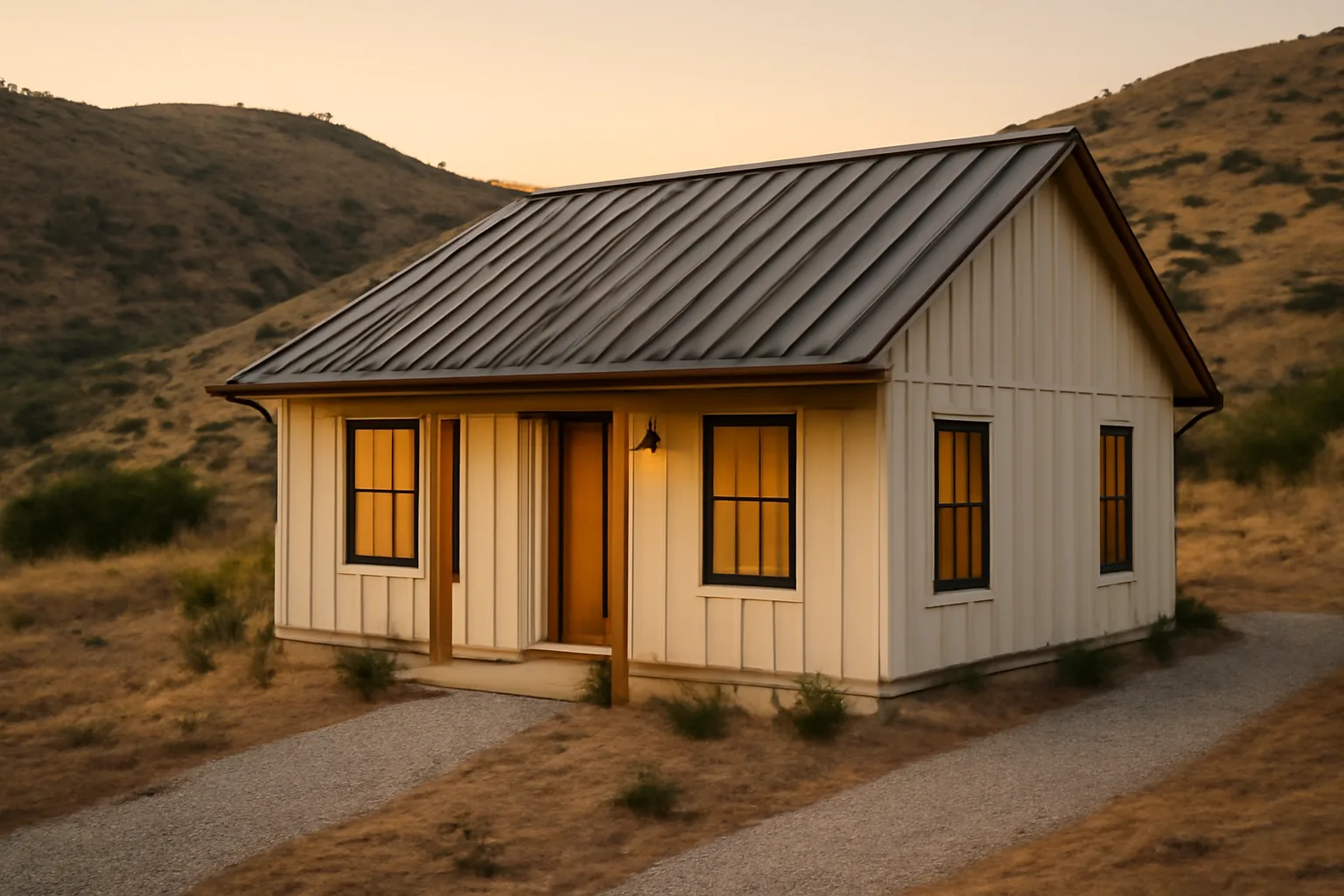
TL;DR
No home is 100% fireproof, but you can build one that resists embers, the cause of most home losses. Focus on a Class A roof, ember-resistant vents, non-combustible siding within 5 feet, and 100 feet of managed defensible space. California's updated defensible space rules (SB 63/AB 3074, Zone 0) are still working through state fire marshal regulations as of mid-2026.
Can a home actually be made fireproof?
No. "Fireproof" is marketing language, not a building standard. What you can build is a home that resists ignition from the thing that actually destroys most structures in a wildfire: wind-driven embers, not the flame front itself. Research from the Insurance Institute for Business & Home Safety (IBHS) and CAL FIRE's own analysis of post-fire studies consistently point to embers and small flames as the dominant ignition pathway, entering through vents, landing on debris in gutters, or igniting mulch pressed against siding. A 2008 study by fire scientist Jack Cohen at the USDA Forest Service found that home ignitions are driven primarily by the condition of the home and its immediate surroundings, not the intensity of the approaching fire [1]. That's actually good news. It means hardening work, the boring stuff like mesh screens, gutter guards, and gravel instead of bark mulch, matters more than most homeowners assume. CAL FIRE's Wildfire Mitigation program frames this as building "structures that can better withstand ember attack and radiant heat", which is a more honest goal than "fireproof." So when someone asks how to build a fireproof home, the honest answer is: you build an ember-resistant, defensible home, and you accept that in a direct, sustained flame contact scenario (like a home right up against un-thinned forest), nothing is guaranteed. That framing changes your whole project list.
What actually causes homes to burn down in a wildfire?
Embers cause the majority of home ignitions, landing in vents, gutters, roof valleys, and on flammable landscaping, then igniting the structure directly or through a secondary fuel source close to the house. Radiant heat and direct flame contact from nearby vegetation are the second and third biggest factors. Embers can travel over a mile ahead of a fire front in high wind conditions, according to CAL FIRE's home hardening guidance. That means a house doesn't need to be near a raging fire to catch. It needs one unscreened vent, one pile of dry leaves in a gutter, or one wood fence running straight into the siding. The practical order of priority most fire scientists and CAL FIRE materials converge on: 1. Roof (Class A rated, no gaps, clean of debris) 2. Vents (ember-resistant, 1/8 inch mesh or listed ember-rated vents) 3. Zone 0 (the first 5 feet around the structure, ideally free of anything combustible) 4. Windows and siding (dual-pane tempered glass, non-combustible siding material) 5. Decks and fences (non-combustible or ignition-resistant material, especially where they attach to the house) This is also why insurers and state programs increasingly ask for photo documentation of these specific items rather than a general "my yard is clean" statement. If you're assembling records for an insurer or your own peace of mind, understanding defensible space requirements zone by zone helps you document the right things in the right order.
What building materials and upgrades matter most?
| Class A roof covering (asphalt shingle, metal, tile) | Resists ignition from ember showers and radiant heat | $8,000-$25,000 for a full re-roof, varies hugely by material and home size | Highest | |
|---|---|---|---|---|
| Ember-resistant vents (1/8 inch mesh minimum, or WUI-listed vents) | Blocks embers from entering attic and crawlspace | $50-$300 per vent installed | Highest | |
| Zone 0 non-combustible clearance (first 5 ft) | Removes the fuel embers need right at the wall | $500-$3,000 for gravel, pavers, removal of mulch/plants | Highest | |
| Dual-pane tempered windows | Resists breaking from radiant heat, which lets embers/flame inside | $600-$1,500 per window | High | |
| Non-combustible siding (fiber cement, stucco, metal) | Removes a large ignitable surface | $10,000-$40,000+ for full re-side | Medium-High | |
| Metal gutter guards | Stops ember-catching leaf litter | $1,000-$3,000 whole house | Medium | |
| Non-combustible or ignition-resistant deck | Removes a major ember/fuel attachment point to the house | $15-$40 per sq ft | Medium | A lot of homeowners want to start with siding because it's visible and feels like "the house." I'd push back on that instinct. If your roof and vents are still original 1990s builder-grade with open eave gaps, that's where embers get in regardless of what your walls are made of. Do the roof and vents first, even if it means living with old siding a while longer. For landscaping specifically, gravel or hardscape in the first 5 feet, then irrigated low-growing plants from 5 to 30 feet, is the pattern most state guidance converges on. Details on fire safe landscaping in California near a house go deeper on plant selection and spacing if you're rebuilding a yard from scratch. |
Roof material, vent screening, and the 5-foot noncombustible zone around your foundation matter more than almost anything else. After that: siding, windows, decks, and gutters, roughly in that order of ember-catching risk. Here's a comparison of common upgrade categories, roughly ordered by ember-resistance impact per dollar spent. Actual costs vary a lot by region, contractor, and home size; treat these as planning ranges, not quotes. | Upgrade | What it does | Rough cost range | Priority |
When does the California defensible space law go into effect?
California's Zone 0 ember-resistant zone requirement, created under AB 3074 (2020) and continued through subsequent legislation including SB 63 (2025), does not yet have a hard statewide enforcement date as of mid-2026 because the implementing regulations from the Office of the State Fire Marshal are still being finalized. AB 3074, chaptered in 2020, amended California Public Resources Code Section 4291 to require an ember-resistant zone within 5 feet of a structure (Zone 0), but explicitly directs the State Fire Marshal to develop regulations before the requirement becomes enforceable [2]. The State Fire Marshal's Wildfire Mitigation Advisory Committee has been drafting those Zone 0 regulations for several years, with public workshops and draft language released in stages. SB 63, signed in 2025, extended and adjusted parts of the defensible space framework, including expanding the general defensible space perimeter from 100 to 200 feet for certain qualifying structures in the highest-risk zones, but again ties specific enforcement mechanics to forthcoming state fire marshal regulations rather than an immediate hard deadline [3]. What this means practically: as of this writing, Zone 0 is not yet a statewide enforced mandate with fines attached in most areas, but state guidance strongly recommends homeowners implement it now, because (a) it will likely become mandatory, (b) insurers are already asking about it, and (c) it demonstrably reduces ignition risk regardless of the legal timeline. Check your specific fire district's current requirements because some local jurisdictions (parts of the Bay Area, for example) have already adopted their own Zone 0 ordinances ahead of the state timeline. [Enter your fire district's current defensible space deadline here.]
What fire-safe home requirements take effect in 2026?
As of mid-2026, no single nationwide "fire-safe home" mandate takes effect; changes are a patchwork of state-specific rulemaking, mostly in California, Oregon, and Colorado, tied to defensible space, Zone 0 ember zones, and updated building codes for homes in wildfire hazard severity zones. In California, the State Fire Marshal has continued working through the Zone 0 regulation package originally required by AB 3074, with the goal of formal regulations that fire districts and CAL FIRE can enforce. Watch for updates directly from the CAL FIRE Wildfire Mitigation program page rather than secondhand summaries, since draft dates have shifted multiple times already. Oregon's Senate Bill 762 (2021) created a statewide wildfire risk map and defensible space/home hardening code framework administered by the Oregon Department of Forestry and the State Fire Marshal, with implementation phased over several years and revised after public pushback over the risk map itself [4]. Colorado has moved more through insurance-side regulation (its FAIR Plan and wildfire mitigation discount requirements) than a single hardening mandate; check the Colorado Division of Insurance for current bulletins. The honest summary for a homeowner: don't wait for a specific 2026 mandate to act. Insurers in CA, CO, OR, and AZ are already tightening underwriting standards on their own timeline, often faster than state regulations. [Note your local fire district's 2026 code adoption status here, since building codes are amended and enforced county by county.]
Why won't people follow the defensible space law in California?
Cost, labor shortages, confusion over exact requirements, and skepticism that clearing vegetation actually helps are the most commonly cited reasons homeowners cite for not complying with California's defensible space law, according to CAL FIRE inspection data and state legislative analyses. CAL FIRE's own defensible space inspection reports have repeatedly found compliance rates well under 100% in high-hazard zones, though exact figures vary by county and year; some county inspection summaries have found roughly half of inspected properties needing follow-up corrections on their first pass. This isn't laziness in most cases. Clearing 100 feet of vegetation on a sloped, wooded lot is physically hard work, and hiring a contractor to do it can run into the thousands of dollars, repeated annually as vegetation regrows. There's also a real trust gap. Some homeowners have told local reporters and researchers they don't believe defensible space actually stops a fast-moving, wind-driven fire, and post-fire survey work (including interviews conducted after the 2018 Camp Fire and other major CA fires) has found genuine disagreement among residents about whether individual-property mitigation matters when a whole neighborhood burns. The science actually supports mitigation quite strongly at the individual structure level, per Cohen's ember-ignition research [1], but that finding doesn't always reach homeowners in a form that changes behavior. Finally, enforcement has historically been inconsistent. Some fire districts do active inspections with follow-up citations; others rely on self-certification or complaint-driven inspections only. [Confirm your local fire district's enforcement approach and inspection frequency here.] Inconsistent enforcement understandably breeds the sense that the rule is optional.
How to prepare for a wildfire before it happens
Preparing for a wildfire means doing the hardening and defensible space work months or years before fire season, then having a go-bag, evacuation plan, and documentation ready so you're not improvising during an actual red flag warning. Ready.gov's wildfire preparedness guidance breaks this into three buckets: prepare your home, prepare your family, and prepare your documents. On the home side, that's everything covered above (roof, vents, Zone 0, gutters). On the family side, Ready.gov recommends every household have an evacuation plan with at least two routes out of the neighborhood, a meeting point, and a go-bag with medications, copies of ID, and pet supplies packed before fire season, not during an evacuation warning. On documentation, this is where most homeowners are weakest. Before a fire, walk your property with your phone and film a full video inventory: every room, closets open, drawers open, the garage, any sheds. Photograph your roof, vents, and defensible space specifically, dated, because this is exactly what an insurer or a public adjuster will ask for if you ever need to demonstrate you maintained the property. This is also the moment where the $99 Wildfire Insurance Survival Kit is genuinely useful. It's not insurance, it's a structured way to organize the photos, inventory, and hardening records you'd want on hand either for your own renewal conversations or simply for peace of mind. It doesn't replace your own judgment or a public adjuster, and it doesn't act on your behalf with your carrier; you still send your own documentation to your insurer. Check your specific evacuation zone and local alert system (many CA counties use Genasys or CodeRED, some CO and OR counties use different platforms) and sign up before fire season starts, not after a warning is issued. [Note your county's specific alert system sign-up here.]
How to prevent wildfires and forest fires from starting
Roughly 85 to 90% of wildfires in the U.S. are human-caused, according to the National Interagency Fire Center's cause data reviewed by the National Park Service, meaning most wildfire prevention comes down to individual behavior around debris burning, equipment use, and campfires, more than forest conditions [5]. The most common human causes, per NPS and Forest Service reporting, include unattended or improperly extinguished campfires, debris burning that escapes control, downed power lines and equipment sparks, and discarded cigarettes. Smokey Bear's long-running "Only You Can Prevent Wildfires" campaign, run by the USDA Forest Service since 1944, exists specifically because individual caution (drowning campfires completely, avoiding outdoor burning on red flag days, keeping vehicles off dry grass) prevents a meaningful share of ignitions [6]. If you want the deeper history and specific dos-and-don'ts behind that campaign, Only You Can Prevent Wildfires covers it directly. At the community level, prevention also means supporting prescribed burns and fuel reduction projects near your area, even though they can be smoky and disruptive short-term. CAL FIRE and the U.S. Forest Service both use prescribed fire specifically to reduce the fuel load that turns a small ignition into a catastrophic run. On your own property, the prevention list is short and unglamorous: never burn debris on windy or dry days, keep chainsaws and mowers off dry grass during hot afternoons, make sure trailer chains aren't dragging sparks on the highway, and fully extinguish (more than douse, actually stir and feel for heat) any outdoor fire before leaving it.
How to avoid forest fires when you're outdoors or camping
Avoiding forest fires as an individual mainly means following local fire restrictions, fully extinguishing campfires, and checking conditions before any activity involving heat, sparks, or flame, especially during red flag warning days. Most forest fires tied to recreation come from three sources: campfires left smoldering, campfires built during burn bans, and vehicles or equipment (chainsaws, ATVs, even catalytic converters) contacting dry vegetation. Ready.gov and the U.S. Forest Service both recommend checking current fire restrictions for the specific forest or park you're in before your trip, since restrictions change week to week based on drought conditions. A properly extinguished campfire should be cool to the touch. The Forest Service's standard method is drown, stir, and drown again, adding water, stirring the ashes to expose hidden embers, and repeating until nothing hisses or feels warm. This single step, done properly, would prevent a large share of escaped-campfire wildfires. On red flag warning days (issued by the National Weather Service when wind, low humidity, and dry fuels combine), avoid outdoor burning entirely, avoid parking on dry grass, and postpone anything involving grinding, welding, or mower use outdoors.
How can we prevent forest fires at a community and policy level?
Community-level prevention combines fuel reduction (prescribed burns, mechanical thinning), coordinated defensible space enforcement across a whole neighborhood, and utility infrastructure hardening, since a single unmaintained property or one arcing power line can undo hundreds of individually hardened homes nearby. This is the uncomfortable truth defensible space skeptics are partly right about: your own hardening work matters enormously for whether your specific house ignites, but a fire's overall behavior in a neighborhood depends on collective conditions. CAL FIRE and many county fire safe councils now push for "Firewise" community-level certification (a National Fire Protection Association program) specifically because coordinated, block-by-block mitigation outperforms isolated individual effort [7]. Utility-caused fires are a major, and often overlooked, part of prevention. California's 2018 Camp Fire, the deadliest wildfire in state history, was determined by CAL FIRE investigators to have been caused by PG&E electrical transmission equipment [8]. That single event pushed California utilities into aggressive vegetation management and public safety power shutoff programs, which are themselves a form of forest fire prevention, if an imperfect and disruptive one. At the policy level, prevention also means funding for prescribed burns (which remains chronically underfunded relative to the scale of fuel buildup across Western forests, according to multiple U.S. Forest Service and GAO reports on wildland fire management) and consistent, well-funded defensible space inspection programs rather than complaint-driven enforcement.
Is Santa Barbara safe from fire?
No coastal California community, including Santa Barbara, is safe from fire in an absolute sense; the region has burned repeatedly and severely, including the 1990 Painted Cave Fire and the 2017 Thomas Fire, which was at the time the largest wildfire in modern California history at over 281,000 acres [9]. Santa Barbara County sits at the interface of dry chaparral hillsides, seasonal Santa Ana/sundowner wind events, and dense residential development, which is close to a textbook wildland-urban interface risk profile. The Thomas Fire burned into December 2017 and was followed within weeks by the Montecito debris flow, a reminder that fire risk in this specific geography compounds into post-fire flood and mudslide risk on burn scars, a secondary danger many homeowners don't plan for. That said, "safe" isn't binary. Santa Barbara has invested in defensible space enforcement, brush clearance programs, and community wildfire protection planning more than many California communities, and specific properties with strong hardening and defensible space genuinely do fare better than unmaintained neighbors in the same fire, exactly the pattern Cohen's ignition research would predict [1]. If you live in or near Santa Barbara's wildland-urban interface (the foothills above the 101, the San Marcos Pass area, parts of Montecito and Summerland), treat the fire risk as real and ongoing, and check your specific fire district's current defensible space and evacuation requirements rather than relying on the region's general reputation.
What does an insurer actually want to see after you've hardened your home?
Insurers and state FAIR Plans generally want dated photo or video documentation of your roof condition, vent screening, the 5-foot zone around your structure, and any recent brush clearance, organized in a way that's easy to review, not a pile of unlabeled photos from your phone. This is separate from, and shouldn't be confused with, filing a claim or disputing coverage. You are not a public adjuster and this article isn't insurance advice. What you can control is having clean, dated, organized proof of your own mitigation work ready to send, whether that's for a renewal application, a wildfire mitigation discount program, or simply your own records if you're ever disputed on coverage. A reasonable documentation set: wide shots of all four sides of the house showing roofline and Zone 0 clearance, close-ups of vent screens, a shot down each gutter, a photo of your address numbers (visible from the street, which some fire districts also require), and a dated receipt or before/after photo set from any brush clearance or hardening contractor work. Keep copies somewhere other than the house itself, cloud storage or a family member's place, since a phone destroyed in the same fire is useless as evidence. If you'd rather not build this system from scratch, that's exactly the gap the $99 Wildfire Insurance Survival Kit is built to fill: a structured way to capture and organize this documentation before you need it. It doesn't file claims or promise reinstatement of coverage; you still handle those conversations yourself, with your own documentation in hand.
Frequently asked questions
When does the California defensible space law go into effect?
The general 100-foot defensible space requirement under Public Resources Code 4291 is already in effect and has been for years. The newer Zone 0 (5-foot ember-resistant zone) requirement from AB 3074 and SB 63 does not yet have a hard statewide enforcement date because the State Fire Marshal's implementing regulations are still being finalized as of mid-2026. Check your local fire district for earlier adoption.
Why won't people follow the defensible space law in California?
Cost, physical labor demands on sloped or large lots, inconsistent local enforcement, and skepticism about whether clearing vegetation actually stops a fast-moving fire are the main reasons cited in CAL FIRE inspection reports and post-fire resident surveys. Compliance also drops when the rules aren't clearly communicated by the local fire district.
How to prevent wildfires from starting on my own property?
Never burn debris on windy or dry days, fully extinguish outdoor fires (drown, stir, drown again), keep equipment like mowers and chainsaws off dry grass, and avoid parking or dragging chains over dry vegetation. About 85-90% of U.S. wildfires are human-caused, per National Interagency Fire Center data, so individual caution genuinely matters.
How do I prepare for a wildfire if I live in a high-risk zone?
Harden your home (roof, vents, Zone 0 clearance), build a go-bag with medications and documents, plan two evacuation routes, sign up for your county's alert system, and create a dated video inventory of your home and property before fire season starts, per Ready.gov's wildfire guidance.
How to prevent forest fires when camping or hiking?
Check current fire restrictions for the specific forest before you go, never build a fire during a burn ban, and fully extinguish any campfire using the drown-stir-drown method until it's cool to the touch. Avoid parking on dry grass and postpone any spark-producing activity on red flag warning days.
What fire-safe home requirements take effect in 2026?
There's no single nationwide 2026 mandate. California's Zone 0 regulations are still being finalized by the State Fire Marshal, Oregon continues phasing in its SB 762 wildfire risk map and code framework, and Colorado has focused more on insurance-side mitigation credit rules. Check your specific state fire marshal and local fire district for confirmed dates.
Is Santa Barbara safe from fire?
No. Santa Barbara County sits in a high wildfire-risk wildland-urban interface and has burned repeatedly, including the 2017 Thomas Fire (over 281,000 acres) and the 1990 Painted Cave Fire. Individual property risk varies a lot based on hardening and defensible space, but the region overall carries real, ongoing fire risk.
How can we prevent forest fires as a community, more than individually?
Support prescribed burn programs, fuel reduction projects, and Firewise-certified neighborhood coordination, since a fire's behavior in a community depends on collective conditions, more than one household's mitigation. Utility vegetation management also matters; California's Camp Fire was caused by utility equipment, not human recreation.
Can any home actually be made fireproof?
No home is truly fireproof. What's achievable is an ember-resistant, hardened home with a Class A roof, screened vents, and a clean 5-foot zone around the structure. This dramatically reduces ignition risk from embers, the cause of most home losses, but doesn't guarantee survival against direct, sustained flame contact.
What's the single most important upgrade for wildfire resistance?
A Class A rated roof combined with ember-resistant vents, since embers entering through roof gaps and vents cause the majority of home ignitions according to Forest Service ignition research. After that, a non-combustible 5-foot zone around the foundation matters most.
Does defensible space actually work if my neighbors don't clear their property?
Your individual mitigation still measurably reduces your own home's ignition risk, per Jack Cohen's Forest Service ember-ignition research, but a fire's overall intensity and spread through a neighborhood depends on collective conditions. This is why community-level programs like Firewise certification exist alongside individual defensible space rules.
What should I photograph for insurance purposes after hardening my home?
All four sides of the house showing roofline and 5-foot clearance, close-ups of vent screens, gutters, and visible address numbers, plus dated receipts or before/after photos from any brush clearance work. Store copies off-site or in cloud storage, not only on a phone that could be lost in the same fire.
Sources
- USDA Forest Service, Jack Cohen research on home ignition from wildland fire: Home ignitions are driven primarily by the condition of the home and its immediate surroundings, not fire intensity
- California Legislature, AB 3074 (2020), amending Public Resources Code Section 4291: Creates the ember-resistant Zone 0 requirement within 5 feet of a structure, subject to State Fire Marshal regulations
- California Legislature, SB 63 (2025): Extends and adjusts California's defensible space framework, including expanding perimeter requirements for certain high-risk structures
- Oregon Legislature, Senate Bill 762 (2021): Created Oregon's statewide wildfire risk map and defensible space/home hardening code framework
- National Park Service, wildfire causes summary citing NIFC data: Roughly 85-90% of wildfires in the U.S. are human-caused
- USDA Forest Service, Smokey Bear campaign history: The Only You Can Prevent Wildfires campaign has run since 1944 to reduce human-caused ignitions
- National Fire Protection Association, Firewise USA program: Firewise USA is a community-level wildfire risk reduction certification program coordinating neighborhood-scale mitigation
- CAL FIRE, Camp Fire cause investigation announcement: CAL FIRE investigators determined the 2018 Camp Fire was caused by PG&E electrical transmission equipment
- CAL FIRE, Thomas Fire incident record: The 2017 Thomas Fire burned over 281,000 acres and was the largest wildfire in modern California history at the time