Last updated 2026-07-25
TL;DR
Wildfire-proofing means hardening your home's structure (roof, vents, siding) and clearing defensible space in the zones nearest your house, since embers, not flame walls, ignite most homes. California's defensible space law (PRC 4291) is already in effect; the added 5-foot ember-resistant zone rule takes effect once CAL FIRE finalizes it, expected 2026. Start with vents and the first 5 feet.
What does it actually mean to wildfire-proof a home?
Wildfire-proofing is not one thing. It is two separate jobs that people often confuse: hardening the structure itself, and managing the vegetation and fuel around it. Both matter, and doing only one leaves you exposed. Structure hardening means the roof, vents, siding, windows, and decking are built or retrofitted so embers can't get in and flames can't get a foothold. Defensible space means the plants, mulch, woodpiles, and debris around the house are managed in zones so a fire on the ground slows down before it reaches your walls. Here's the part most homeowners get wrong: they assume a wall of flame is what destroys a house. It's usually not. Research from the Insurance Institute for Business & Home Safety (IBHS) and CAL FIRE both point to embers, wind-blown sparks that can travel over a mile ahead of a fire front, as the dominant cause of home ignition. Embers land in gutters, under decks, in vent openings, and on flammable mulch pressed against siding. A house can survive a nearby fire and still burn down two hours later because an ember caught in a pine-needle-choked gutter. So wildfire-proofing, done right, starts at the house and works outward: seal the vents, clear the first 5 feet, then widen out from there. Not the other way around. If you want a structured way to work through this, our defensible space clearing guide breaks the zone system down further.
When does the California defensible space law go into effect?
California's core defensible space law, Public Resources Code 4291, is already in effect and has been since it was last substantially amended in 2020 [1]. It requires 100 feet of defensible space (or to the property line, whichever is closer) around homes in State Responsibility Areas and many Local Responsibility Areas with a Very High Fire Hazard Severity Zone designation. The law splits that 100 feet into two zones. Zone 1 is the first 30 feet, where you remove dead vegetation, keep tree canopies spaced, and clear flammable material off the roof and gutters. Zone 2 runs from 30 to 100 feet, where the standard relaxes to reducing fuel volume rather than clearing it bare [1]. What's newer, and still moving, is the "Zone 0" or ember-resistant zone rule. Assembly Bill 3074 (2020) directed the Board of Forestry and Fire Protection to develop regulations for an ember-resistant zone within 5 feet of structures [2]. As of this writing, CAL FIRE and the Board have been working through rulemaking, and the agency's own timeline has slipped past its original 2023 target. Current guidance from the Board of Forestry points to a 2026 effective date, though exact implementation dates vary by local jurisdiction and this is a fill-in-the-blank you should confirm with your local fire district before you rely on it: [confirm with your local fire authority/AHJ]. Until the formal Zone 0 regulation is enforceable, CAL FIRE already recommends treating the 5 feet nearest your home as noncombustible now: no bark mulch, no shrubs touching siding, no stored firewood against the wall. Waiting for the regulation to become mandatory before doing this is exactly the wrong instinct.
What fire-safe home rules take effect in 2026?
The honest answer is: it depends which state and which specific rule, and several are still in draft or phased rollout. Here's what's known as of now. California's Zone 0 ember-resistant zone regulation, described above, is the most-watched 2026 rule. It would require the 5 feet immediately around a home to be hardscape, gravel, or otherwise noncombustible, with no combustible mulch, no attached wood fencing without a noncombustible transition, and careful placement of any plants [2]. Separately, California's WUI (Wildland-Urban Interface) building code, Chapter 7A of the California Building Code, already requires ember- and flame-resistant materials (Class A roofing, dual-pane tempered windows, ignition-resistant siding, vent screening) for new construction and major remodels in Fire Hazard Severity Zones [3]. This isn't new for 2026, but enforcement and local adoption keep tightening, so if you're planning a remodel, check with your building department before you assume older materials are still allowed. Oregon has its own newer framework: Senate Bill 762 (2021) created a statewide wildfire risk map and directed the state fire marshal to develop defensible space and home hardening standards for high-risk areas, with a phased rollout that has already faced political pushback and a paused, then redone, mapping process [4]. If you're in Oregon, don't assume the map or rule set from 2022 still applies; check the Oregon Department of Forestry's current wildfire risk explorer. Colorado and Arizona don't have a single statewide defensible-space statute like California's PRC 4291. Instead, rules come through county and fire-district codes, which is why this article can't give you one universal date. [Check your county wildfire mitigation ordinance] is not a cop-out, it's the actual answer in those states.
Why won't people follow the defensible space law in California?
Compliance with PRC 4291 is nowhere near universal, and it's worth being honest about why, because the reasons matter for what actually gets homeowners to act. Cost is the biggest one. Removing mature trees, thinning brush on a slope, or replacing a wood fence with noncombustible material easily runs into thousands of dollars, and CAL FIRE inspections don't come with a subsidy attached. For lower-income and older homeowners, especially those on fixed incomes in rural SRA parcels, the math doesn't work without a grant. Enforcement is inconsistent. Defensible space inspections are done by local fire agencies and CAL FIRE units, and capacity varies wildly. Some counties inspect a large share of parcels annually; others get to a small fraction. A property owner in a rarely-inspected area can go years without a citation even if they're out of compliance. There's also a genuine disagreement about what 'compliant' means on the ground. Zone 2's standard, 'reduce fuel volume,' is vaguer than Zone 1's, and homeowners on wooded lots often feel like removing trees to satisfy an inspector conflicts with erosion control, shade, or just not wanting to cut down a tree they've had for 30 years. And some people simply don't believe it will happen to them, or believe their neighbor's non-compliance cancels out their own effort, which isn't wrong: defensible space works best at a neighborhood scale, since embers and radiant heat from one uncleared lot can ignite the house next door regardless of what you did on your own property. That collective-action problem is real and it's a big reason state and local governments have started pushing community-level cost-share programs rather than relying purely on individual-parcel fines.
How do I prepare for a wildfire, step by step?
Preparing for a wildfire has three tracks that run in parallel: harden the structure, manage the zones around it, and get your evacuation and documentation ready. None of these are quick weekend projects if you're starting from zero, so prioritize. Start with the cheapest, highest-impact items: clear gutters and roof valleys of leaves and needles, screen or replace vents with 1/8-inch metal mesh, move firewood and propane tanks at least 30 feet from the house, and clear the first 5 feet down to gravel or hardscape. These are mostly labor, not big-ticket purchases. Next, tackle Zone 1 (5 to 30 feet): space tree canopies so they're not touching, remove ladder fuels (shrubs under trees that let fire climb into the canopy), and mow dry grass to under 4 inches, which is CAL FIRE's specific Zone 1 guidance. Then the bigger investments: Class A roofing if you don't have it, ember-resistant vents, tempered dual-pane windows, and non-combustible siding or a 6-inch noncombustible zone at the base of existing siding. These cost real money, often $5,000 to $20,000+ depending on scope, but they're the items that determine whether the house survives an ember storm when nobody's there to fight it. Finally, prepare your documentation and go-bag: photos and video of your home's exterior and interior for insurance purposes, copies of your policy, a list of hardening work you've done (contractor invoices, receipts, before/after photos), and a written evacuation plan with two routes out. This documentation step is the one people skip and regret, because when a claim or a non-renewal appeal happens, having dated proof of defensible space work and hardening upgrades is the difference between an insurer taking your word for it and having something in writing. Our wildfire defensible space clearing contracts piece covers what a paper trail from contracted clearing work should include, useful even outside Washington State.
How can we prevent wildfires from starting in the first place?
Most wildfires in the U.S. are human-caused, not lightning-caused. The National Interagency Fire Center and USDA Forest Service research put the human-caused share at around 85 to 90 percent nationally in a given year, driven by things like unattended campfires, equipment sparks, downed power lines, fireworks, and arson [5]. At the individual level, wildfire prevention looks unglamorous: fully extinguish campfires (drown, stir, feel for heat, repeat), don't park or drive vehicles on dry grass where a hot exhaust or catalytic converter can ignite it, avoid mowing or using power tools on dry vegetation during red flag warnings, and follow local burn permit rules for debris burning. Ready.gov's wildfire prevention guidance specifically flags vehicle and equipment sparks and debris burning as common ignition sources homeowners can control. At the community level, prevention looks like utility infrastructure hardening (undergrounding or insulating power lines in high-risk corridors), coordinated fuel reduction across adjoining properties rather than isolated parcels, and public alert systems that catch small fires before they spread. None of this is something one homeowner controls, but it's worth knowing, because a lot of "how do we prevent forest fires" answers focus only on the individual side and skip the fact that utility equipment failures have caused some of the largest and most destructive wildfires in California history, including the 2018 Camp Fire, per Cal Fire's own investigation findings [6].
How do I avoid forest fires when I'm out camping or hiking?
Avoiding forest fires as a visitor is mostly about ignition control and situational awareness, not gear. Check current fire restrictions before you go. National forests and BLM land regularly impose Stage 1 or Stage 2 fire restrictions during dry periods that ban campfires, charcoal grills, or even smoking outside vehicles; these change week to week and are posted on the specific forest's InciWeb or forest service page, not a general site. When you do have a legal campfire, keep it small, in an existing ring, away from overhanging branches and dry grass, and never leave it unattended, even for ten minutes. Ready.gov and the Forest Service both list the drown-stir-feel method as the standard for full extinguishment, more than dousing until the flames go out. If you're driving or riding through dry grass or brush areas, know that a hot muffler or dragging trailer chain can ignite dry vegetation in seconds; this is a documented cause of roadside wildfire starts, especially along rural highways during fire season. And if you see a fire starting, call 911 immediately rather than trying to handle it yourself unless it's genuinely small and you have water or a shovel on hand.
Is Santa Barbara safe from fire, and how do I check my own area?
No area in California's wildland-urban interface can be called "safe" from fire risk, and Santa Barbara County is not an exception. The county has a long history of major fires, including the 1990 Painted Cave Fire, the 2008 Tea Fire, and the 2017 Thomas Fire, which at the time was the largest wildfire in modern California history and was followed by the deadly Montecito debris flow in January 2018 [7]. Parts of the county, especially the foothill communities along the Santa Ynez range, sit in CAL FIRE-designated Very High Fire Hazard Severity Zones [8]. That said, "safe" is relative and depends heavily on specific parcel location, terrain, and vegetation, more than the county name. A home on flat, irrigated land in a dense urban tract has meaningfully lower wildfire exposure than a home on a canyon-adjacent lot with chaparral upslope, even within the same zip code. The way to check your own address, wherever you live, is CAL FIRE's Fire Hazard Severity Zone Viewer, which maps Moderate, High, and Very High zones down to the parcel level for both State and Local Responsibility Areas [8]. If your address falls in a High or Very High zone, PRC 4291's defensible space requirements almost certainly apply to you, and it's also the single biggest factor insurers cite in non-renewal decisions.
What actually reduces your wildfire risk the most, ranked by cost and impact?
| Clear gutters/roof of debris | $0-150 (DIY) | Very high, stops #1 ember ignition point | |
|---|---|---|---|
| Screen vents with 1/8" metal mesh | $50-300 | Very high, blocks ember entry into attic/crawlspace | |
| Clear first 5 ft to noncombustible | $200-2,000 | Very high, matches upcoming Zone 0 rule | |
| Move firewood/propane 30 ft from house | $0 | High, removes a fuel source next to structure | |
| Zone 1 vegetation thinning (5-30 ft) | $500-5,000 | High, slows fire spread and radiant heat | |
| Class A roof replacement | $8,000-25,000+ | High, but only if roof is already due | |
| Ember-resistant vents (retrofit) | $500-2,500 | High | |
| Dual-pane tempered windows | $3,000-15,000+ | Medium-high, windows fail from radiant heat, more than embers | |
| Noncombustible siding retrofit | $10,000-40,000+ | Medium-high, big spend, big house-survival factor | |
| Zone 2 fuel reduction (30-100 ft) | Varies widely by acreage | Medium, required by law but lower marginal ember-risk reduction than Zone 0/1 | The pattern is obvious once you see it laid out: the cheapest actions (gutters, vents, the first 5 feet) address the dominant ignition mechanism, embers, while the expensive structural retrofits matter most when you're already replacing something (a roof at end of life, siding that needs work anyway). If your budget is limited, do the top four rows this month. They cost under $2,500 combined in most cases and address the majority of documented ember ignition pathways. |
Not all wildfire-proofing spending delivers equal value. Here's a rough ranking based on IBHS ember-vulnerability research and CAL FIRE's own hardening priorities, from cheapest-and-highest-impact to expensive-and-still-important. | Action | Rough cost | Impact |
How do I document my hardening work for insurance purposes?
Insurers and FAIR Plan administrators in wildfire states increasingly ask for proof of mitigation work, more than a claim that you did it, especially after a non-renewal notice or during a re-inspection. Take dated, timestamped photos of every hardening step: before and after gutter clearing, vent screens installed, the 5-foot zone cleared, defensible space at 30 and 100 feet. Keep contractor invoices and any permit paperwork for roofing or siding work. If you did the work yourself, a simple dated log with photos holds up better than nothing, though a contractor's invoice with a business license number carries more weight in most reviews. This is where a lot of homeowners get stuck: they do the work, but never build a file, and then a non-renewal letter arrives and they're scrambling to reconstruct six months of yard work from memory. Building that packet as you go, not after the fact, is the whole point. This is genuinely where our $99 Wildfire Insurance Survival Kit is built for: it's a structured way to organize the photos, dates, and documentation of hardening and defensible space work into the packet format insurers and FAIR Plans actually want to see. To be clear about what it isn't: we don't file claims on your behalf or promise coverage, discounts, or reinstatement. You prepare and send your own documentation; we just help you build it right the first time. For a broader look at what triggers non-renewals in the first place, see house fire risk factors insurers screen for, and fire at a house incident patterns that show up in claims data.
What should my landscaping look like if I want to reduce wildfire risk?
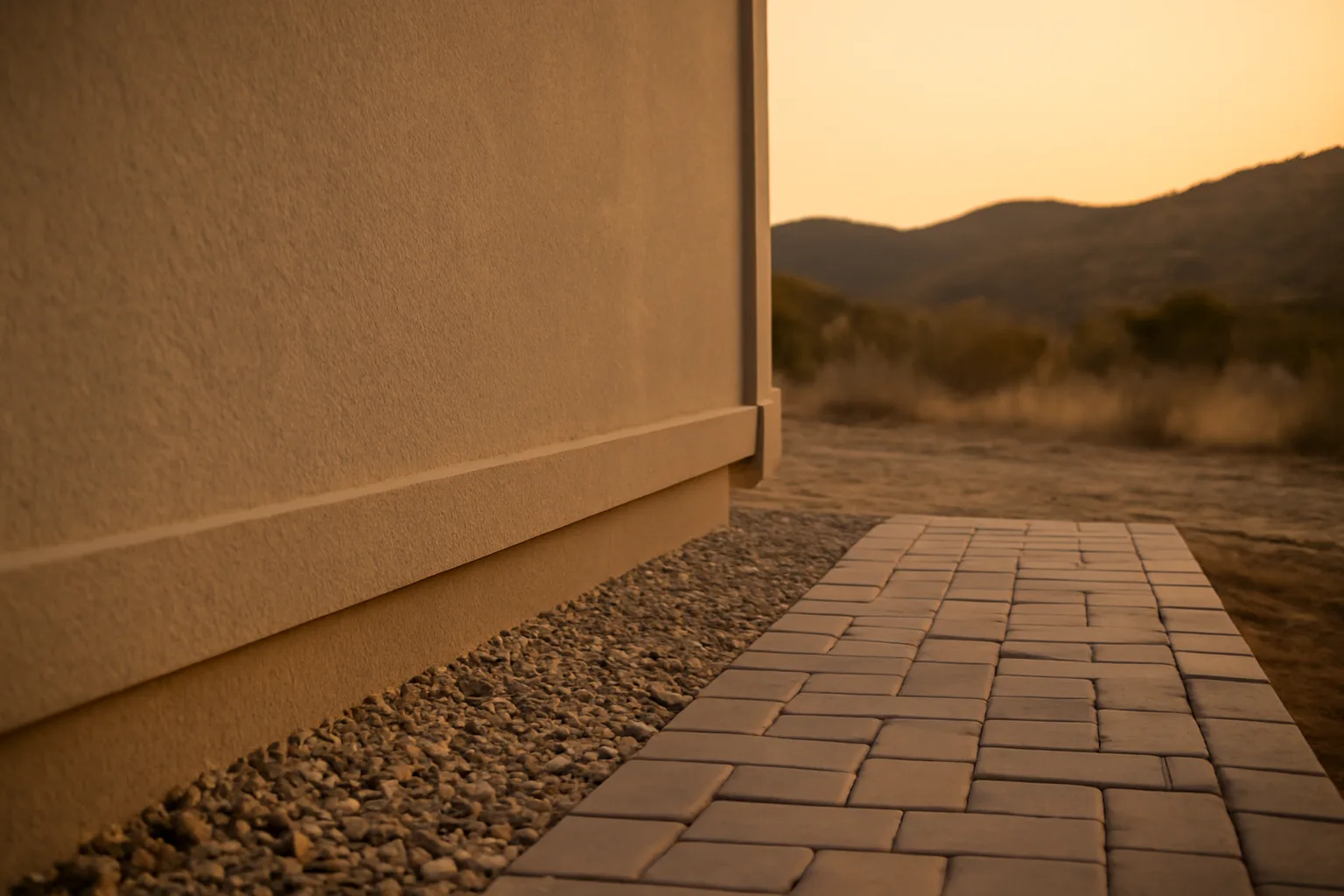
Landscaping for wildfire resistance isn't about ripping out every plant, it's about spacing, moisture, and material choice. In Zone 0 (0-5 feet), CAL FIRE's current guidance is essentially bare ground or hardscape: gravel, pavers, concrete. No bark or wood mulch, no shrubs against the foundation, no wood fencing directly attached to the house without a noncombustible break. In Zone 1 (5-30 feet), you can have plants, but space them so mature canopies don't touch (this is called "crown spacing"), remove dead branches and dry leaf litter regularly, and avoid dense evergreen shrubs planted in a continuous line along the house, sometimes called a "fuel ladder" when combined with nearby trees. Choice of plant species matters less than most people assume, contrary to popular "fire-resistant plant list" marketing. CAL FIRE's own guidance notes that all plants will burn under the right conditions; what matters more is moisture content, maintenance, and spacing. A well-watered, well-spaced, regularly-pruned landscape of ordinary plants beats a neglected "fire-resistant" plant list any day. For a deeper walkthrough of species selection and zone-by-zone planting plans, see fire safe landscaping California next to house.
What's the difference between preparing for a wildfire and preventing one?
These get conflated constantly, but they're different jobs aimed at different risks, and mixing them up leads to wasted effort. Preventing a wildfire is about stopping ignition in the first place: extinguishing campfires properly, maintaining vehicles and equipment so they don't spark dry grass, following burn permit rules, and supporting utility infrastructure hardening. This is mostly about behavior and community-level systems, and it's the answer to "how to prevent forest fires" as a general public-safety question. Preparing for a wildfire assumes one is already possible or underway nearby, and is about surviving it: hardening your specific structure, managing defensible space, having an evacuation plan, and keeping documentation ready. This is the individual homeowner's real lever, and it's the part you actually control regardless of what your neighbors do or don't do. Both matter, but if you're reading this because you got a non-renewal letter or watched a fire move through your region, preparation and hardening are where your next dollar and next weekend should go, not general prevention messaging, which is aimed more at the broader public than at your specific parcel.
Where do I start this weekend if I can only do one thing?
If you do exactly one thing this weekend, clean your gutters, roof valleys, and under-deck area of dead leaves, pine needles, and debris, then screen any open vents with 1/8-inch metal mesh. This single afternoon of work addresses the most commonly documented ember ignition pathway into homes, according to IBHS post-fire damage assessments, costs close to nothing if you do it yourself, and doesn't require a permit, a contractor, or a state rulemaking to finish before you can act. After that, move to the first 5 feet around your foundation: clear combustible mulch, move any firewood stacks, and check that nothing flammable is touching the siding. Then work outward through Zone 1 and toward your documentation file. For a broader campaign-level answer to "only you can prevent wildfires," including how individual action connects to the larger prevention picture, see our piece on only you can prevent wildfires.
Frequently asked questions
When does the California defensible space law go into effect?
PRC 4291's 100-foot defensible space requirement is already in effect and has been enforced since its last major update in 2020. The newer 5-foot ember-resistant "Zone 0" regulation, created by Assembly Bill 3074, is still in rulemaking with the Board of Forestry and Fire Protection and is currently expected around 2026; confirm the exact enforcement date with your local fire authority.
Why won't people follow California's defensible space law?
Cost, inconsistent local enforcement, ambiguity in the Zone 2 fuel-reduction standard, and a real collective-action problem (one neighbor's cleared lot doesn't help if the next lot over is untouched) are the main documented reasons. Some counties also lack inspection capacity to reach every parcel annually, so compliance varies a lot by jurisdiction.
How do I prevent wildfires from starting?
Fully extinguish campfires using the drown-stir-feel method, avoid driving or parking on dry grass, follow local burn permit rules, and maintain vehicles and equipment so they don't spark. Roughly 85-90% of wildfires nationally are human-caused according to federal fire agency data, so behavior around ignition sources is the single biggest lever.
How do I prepare for a wildfire if I own a home in a high-risk zone?
Clear gutters and screen vents first, clear the first 5 feet to noncombustible material, then work through Zone 1 (5-30 ft) and Zone 2 (30-100 ft) vegetation management per CAL FIRE guidance. Build a documented, dated file of the work with photos and invoices for insurance purposes, and prepare an evacuation plan with two routes.
How do I prevent forest fires when camping or hiking?
Check current fire restrictions for the specific forest before you go, keep any legal campfire small and attended, and fully extinguish it using drown-stir-feel, more than dousing until flames stop. Avoid driving on dry grass, since hot exhaust systems are a documented roadside wildfire ignition source.
What fire safe home rules take effect in 2026?
California's Zone 0 ember-resistant zone rule (5 feet of noncombustible material around structures) is the most-watched 2026 change, though the exact effective date depends on final Board of Forestry rulemaking. Oregon's SB 762 framework is also phasing in defensible space standards on a separate timeline; check your state fire marshal's current page.
Is Santa Barbara safe from fire?
No, Santa Barbara County has a documented history of major wildfires including the 2017 Thomas Fire and sits partly within CAL FIRE Very High Fire Hazard Severity Zones, especially in foothill communities. Risk varies significantly by specific parcel and terrain, so check CAL FIRE's Fire Hazard Severity Zone Viewer for your exact address rather than relying on the county's general reputation.
How can we prevent forest fires as a community, more than individually?
Community-level prevention includes utility infrastructure hardening (undergrounding or insulating power lines), coordinated fuel reduction across adjoining properties rather than isolated parcels, and public alert systems. Individual actions like campfire safety matter, but utility equipment failures have caused some of the largest wildfires in California history, so infrastructure investment matters at scale too.
What is the single cheapest thing I can do to reduce my home's wildfire risk?
Clear gutters, roof valleys, and under-deck debris, then screen any open attic or foundation vents with 1/8-inch metal mesh. This costs close to nothing if done yourself and addresses the most commonly documented ember-ignition pathway into homes.
Do fire-resistant plants actually make my landscaping safer?
Somewhat, but spacing, moisture, and maintenance matter more than species choice. CAL FIRE guidance notes that all plants will burn under the right conditions, so a well-watered, well-pruned yard of ordinary plants generally outperforms a neglected 'fire-resistant' plant list.
What's the difference between Zone 0, Zone 1, and Zone 2 defensible space?
Zone 0 is the 5 feet nearest your home, meant to be noncombustible (gravel, hardscape). Zone 1 runs 5 to 30 feet and allows plants with spacing and maintenance requirements. Zone 2 runs 30 to 100 feet and requires fuel volume reduction rather than bare clearing, per CAL FIRE's PRC 4291 guidance.
Does clearing defensible space guarantee my house won't burn?
No, nothing guarantees that. Defensible space and structure hardening substantially reduce ignition probability by addressing the dominant ember and radiant-heat pathways documented by IBHS and CAL FIRE, but extreme fire behavior, embers from a mile away, and neighboring uncleared lots all remain factors outside a single homeowner's control.
How much does it cost to fully wildfire-harden a home?
Costs vary enormously by scope. Gutter clearing and vent screening run under a few hundred dollars, while full retrofits (Class A roof, ember-resistant vents, noncombustible siding, tempered windows) commonly run $20,000 to $60,000+ combined. Prioritize the low-cost, high-impact items first, then fold bigger retrofits into planned roof or siding replacements.
Sources
- California Public Resources Code Section 4291: 100-foot defensible space requirement and Zone 1/Zone 2 split around structures in SRA/VHFHSZ
- California Assembly Bill 3074 (2020): Directed the Board of Forestry and Fire Protection to develop an ember-resistant zone (Zone 0) regulation within 5 feet of structures
- California Building Code Chapter 7A (WUI construction standards): Ember- and flame-resistant material requirements (Class A roofing, tempered windows, vent screening) for construction in Fire Hazard Severity Zones
- Oregon Senate Bill 762 (2021): Created Oregon's statewide wildfire risk mapping and defensible space/home hardening standards framework
- National Interagency Fire Center, statistics: The large majority of U.S. wildfires are human-caused rather than lightning-caused
- CAL FIRE, Camp Fire Investigation Report: CAL FIRE's investigation findings on the cause of the 2018 Camp Fire
- CAL FIRE, Thomas Fire incident page: The 2017 Thomas Fire in Santa Barbara/Ventura counties was, at the time, the largest wildfire in modern California history
- CAL FIRE, Fire Hazard Severity Zone Viewer/Maps: Parcel-level mapping of Moderate, High, and Very High Fire Hazard Severity Zones used to determine PRC 4291 applicability