Last updated 2026-07-25
TL;DR
A wildfire mitigation assessment is a structured inspection of your home and property against defensible-space and hardening standards, usually done by a fire department, insurer, or private consultant. It scores things like vegetation clearance, roof material, vent screening, and siding. Costs range from free (public agencies) to $300-$800 for private assessments. Insurers increasingly require one before renewal.
What is a wildfire mitigation assessment, exactly?
A wildfire mitigation assessment is a walk-through inspection of your home and the land around it, scored against known wildfire risk factors: vegetation density, roof and vent material, defensible space zones, and access for fire crews. Some are free and done by your local fire district. Others are paid, done by a private consultant or an insurance company's own inspector, and the results decide whether you keep your policy. The assessment usually produces a report with a checklist or point score, sometimes tied to a state standard like California's Wildfire Prepared Home certification through the State Fire Marshal, sometimes tied to an insurer's own proprietary model (State Farm, Farmers, and others use their own wildfire risk scoring tools that are not public). If your assessment comes from a public agency, you'll typically get a copy of what needs fixing. If it comes from an insurer, you may only get a yes/no on renewal, which is part of why homeowners feel blindsided. The practical difference that matters: a fire department assessment is educational and free. An insurer assessment is a gatekeeping decision, and you often don't see the underlying score.
When does the California defensible space law go into effect?
California's defensible space requirement out to 100 feet (Public Resources Code 4291) has been in effect since 2005, not something new. What's changing is the zero-to-5-foot ember-resistant zone rule, which the California Board of Forestry and Fire Protection has been developing through rulemaking for years. That zone bans combustible mulch, stored firewood, and most plants within 5 feet of the structure. As of the 2025-2026 rulemaking cycle, the Board of Forestry has not finalized a statewide enforcement date for the Zone 0 regulation; the statute authorizing it (SB 63, 2020, and later AB 3074) directed the Board to adopt regulations, and implementation has slipped past earlier target dates discussed in board meetings. Homeowners in State Responsibility Areas and some Very High Fire Hazard Severity Zones in local jurisdictions should check current status directly with CAL FIRE's defensible space page rather than assume a hard 2025 or 2026 date, because the timeline has moved before. What is settled and enforceable right now: the broader 100-foot defensible space law (PRC 4291), which requires clearing in two zones (0-30 feet and 30-100 feet) around structures in State Responsibility Areas. Local fire districts often layer their own stricter rules on top, so check with your fire district using the fill-in below.
What fire-safe home rules take effect in 2026?
Nothing at the federal level sets a single 2026 fire-safe home mandate; rules vary by state and even by fire district, so "2026" claims floating around online mostly refer to California's pending Zone 0 ember-resistant zone regulation, which has been delayed multiple times. Separately, the International Wildland-Urban Interface Code (2024 edition) is being adopted piecemeal by states and counties on their own schedules, not a single national date. Colorado, for instance, does not have a statewide WUI building code; it's handled county by county, and several counties (Boulder, El Paso, Douglas) have adopted their own wildfire mitigation ordinances with different effective dates. The honest answer: there is no single "2026 fire-safe home law." What exists is a patchwork of state statutes, board regulations still in progress (California Zone 0), and local ordinances. Check your specific fire district or building department, because a rule that applies in Sonoma County may not apply in Riverside County.
Why won't people follow the defensible space law in California?
Cost, labor, and confusion are the three real reasons compliance lags, based on what CAL FIRE inspection data and county reports consistently show. Clearing 100 feet of vegetation on a sloped, wooded lot can run into the thousands of dollars, and elderly or physically limited homeowners often can't do the labor themselves. CAL FIRE's own defensible space inspection results are telling: in state-audited inspections, a meaningful share of properties fail on first pass, largely due to accumulated dead vegetation, wood piles against the house, and roof/gutter debris, the same issues year after year, according to CAL FIRE's Defensible Space program materials. It's not that people don't know the 100-foot rule exists; PRC 4291 has been law since 2005. It's that maintaining it every single year, especially zones 0-30 feet closest to the house, competes with every other household priority and expense. There's also a real information gap. Many homeowners assume one clearing effort is permanent. It isn't. Grass regrows, leaf litter accumulates, and a compliant yard in April can be a fire hazard by September in a dry year. Assessments exist precisely to catch that seasonal drift, more than judge a one-time clearing job.
How do you prevent wildfires around your own home?
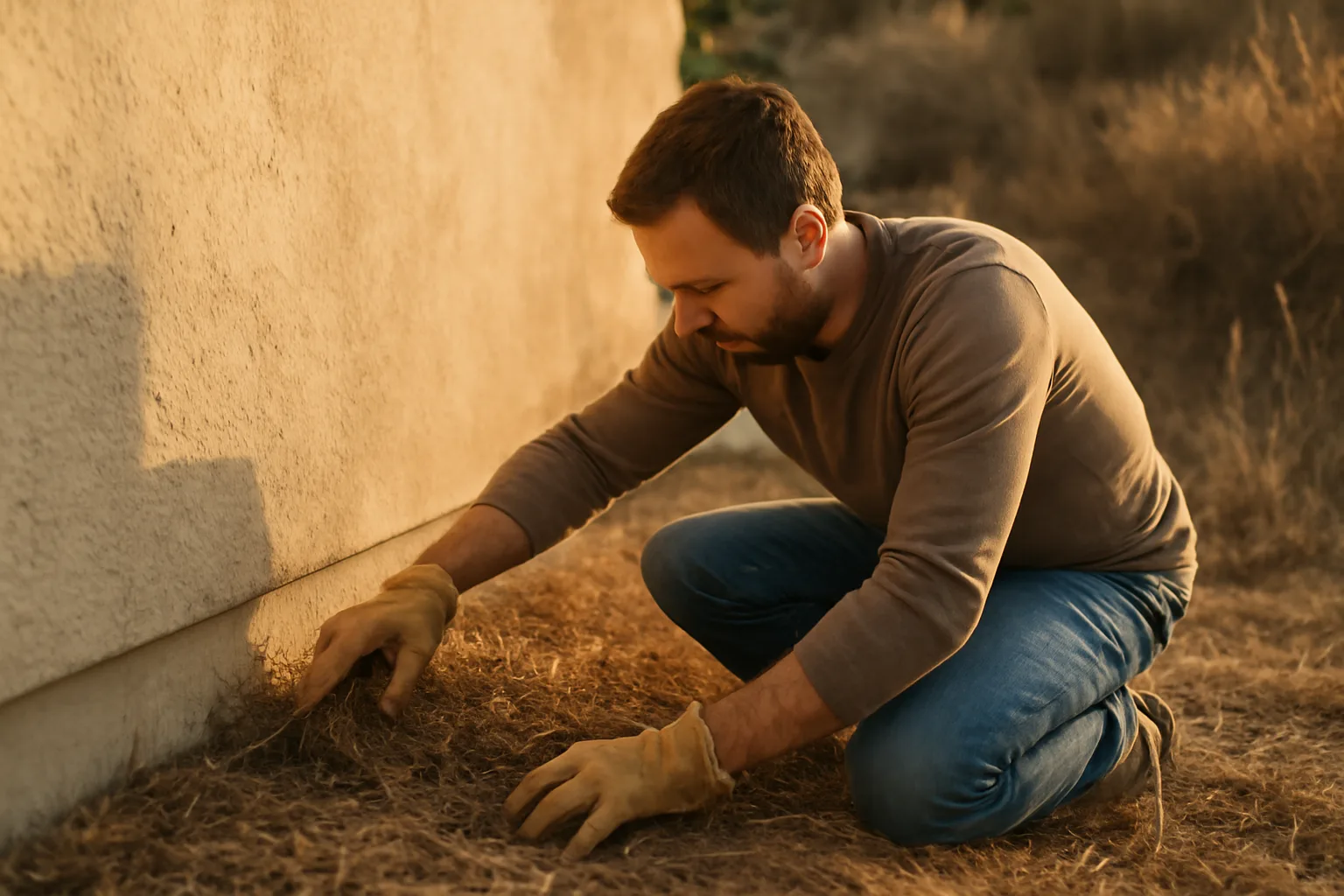
You can't prevent wildfires from starting in the wilderness, but you can dramatically cut the odds your specific structure ignites, which is what defensible space and home hardening actually do. CAL FIRE's research (echoed by the Insurance Institute for Business & Home Safety, IBHS) shows most home losses in wildfires come from embers landing on or near the structure, not a wall of flame arriving. The highest-leverage moves, in rough order of ember-risk reduction: clear anything combustible within 5 feet of the foundation (the future Zone 0 standard, but smart to do now regardless of when it's enforced), screen attic and foundation vents with 1/8-inch metal mesh, clean gutters and roof valleys of leaf litter, and keep a fire-resistant roof (Class A rated) in good repair. Most human-caused wildfire ignition, per the National Interagency Fire Center, stems from equipment use, debris burning, and unattended campfires, not homeowner landscaping. So "preventing wildfires" at the ignition-source level is mostly about outdoor burning practices and equipment maintenance (mower blades striking rock, dragging trailer chains, etc.), while defensible space is about preventing your home from becoming fuel once a fire is already burning nearby. Both matter, but they're different problems. For structure-specific hardening detail, see fire safe landscaping California next to house and defensible.
How do you prevent forest fires and avoid forest fires when you're outdoors?
Nearly 9 out of 10 wildfires in the U.S. are caused by people, according to the National Park Service, which cites unattended campfires, debris burning, discarded cigarettes, equipment sparks, and arson as the dominant human causes. Preventing forest fires, practically, means controlling those specific behaviors. Drown campfires completely, stir the ashes, and drown again until they're cold to the touch, per Smokey Bear/USDA Forest Service guidance. Never burn debris on windy or Red Flag Warning days; check your county's burn-day status before any outdoor burning. Keep vehicles and equipment off dry grass (catalytic converters can hit 1,000+ degrees F and ignite dry vegetation on contact). Don't tow chains that drag and spark. "Only you can prevent wildfires" isn't just a slogan; it's a genuinely accurate summary of ignition data, since lightning accounts for a minority of fires nationally and almost none of the fires near populated areas. See only you can prevent wildfires for the fuller history and campaign detail.
How do you prepare for a wildfire (and for forest fires generally) as a homeowner?
Preparing for a wildfire means doing the defensible space and hardening work before fire season, plus having an evacuation plan you've actually practiced, more than written down. Ready.gov's wildfire page recommends assembling a go-bag, identifying two evacuation routes, and signing up for local emergency alerts well before any fire threat. Here's a realistic prep sequence, not a wish list: (1) clear the 5-foot zone around your structure, (2) screen vents with metal mesh, (3) clean the roof and gutters, (4) trim tree branches to 10 feet from the roofline and chimney, (5) store an emergency kit with water, medications, documents, and a battery radio, (6) know your evacuation zone and sign up for county alerts (CodeRED, Genasys/Zonehaven, etc., depending on your county). Document your home's condition before fire season, not after a loss. Photos and video of hardening work, receipts for vent screens or roofing, and dated defensible space clearing all help if you ever need to show an insurer what you did. This is exactly the gap a $99 one-time Wildfire Insurance Survival Kit is built to close: it walks you through documenting your home's defensible space and hardening status in an insurer-readable format, so you're not scrambling for photos after a non-renewal letter arrives. It doesn't file claims or contact your insurer for you; it just gets your own documentation organized before you need it.
Is Santa Barbara safe from fire?
No coastal California city is "safe" from wildfire risk, and Santa Barbara County has a documented history of major fires, including the 1990 Painted Cave Fire and the 2017 Thomas Fire, at the time the largest wildfire in modern California history at over 281,000 acres, per CAL FIRE's incident archive. The Thomas Fire was followed by the Montecito debris flow in January 2018, which killed 23 people, a reminder that wildfire risk and post-fire flood/debris risk are linked. Much of Santa Barbara County's foothill and interface communities (Montecito, Mission Canyon, upper State Street areas) fall within CAL FIRE-mapped Very High Fire Hazard Severity Zones, viewable on CAL FIRE's FHSZ viewer. Homeowners there should treat defensible space and hardening as an ongoing requirement, not a one-time task, and check their specific parcel's zone designation directly, since risk varies block by block depending on slope, vegetation, and wind exposure.
What does a wildfire mitigation assessment actually check, item by item?
| Zone 0 (0-5 ft) | Combustible mulch, firewood stacks, plants against walls | Bark mulch touching siding | |
|---|---|---|---|
| Zone 1 (5-30 ft) | Spacing between shrubs/trees, dead vegetation, grass height | Overgrown grass, ladder fuels | |
| Zone 2 (30-100 ft) | Tree canopy spacing, brush density | Unmanaged wildland edge | |
| Roof | Class A rating, debris in valleys/gutters | Pine needle buildup | |
| Vents | 1/8-inch metal mesh screening | Unscreened or plastic vents | |
| Siding/eaves | Non-combustible material, no gaps | Wood siding, open eaves | |
| Windows | Dual-pane or tempered glass | Single-pane in high-risk zones | |
| Access | Driveway width, address visibility, water source | Address not visible from road | Inspectors doing formal state or insurer assessments typically use a standardized form; California's Wildfire Prepared Home program, for example, requires a checklist covering roof, vents, eaves, gutters, decks, windows, and the 0-5 foot zone before certification, per the State Fire Marshal's standard. |
Most assessments, whether from CAL FIRE, a county fire district, or a private consultant, walk through the same core categories, though the exact scoring differs. | Category | What's checked | Common failure point |
Who does wildfire mitigation assessments, and what do they cost?
Three types of assessors exist, and they serve different purposes, so knowing which one you're dealing with matters. Public fire department or CAL FIRE unit inspections are free and typically educational; you get a checklist of what to fix, sometimes with a re-inspection deadline before a citation, especially in State Responsibility Areas under PRC 4291. Insurer inspections are done by adjusters or third-party contractors the insurance company hires; they're free to you but you often don't see the raw score, only the renewal decision. Private wildfire consultants charge roughly $150-$500 for a basic property assessment and $300-$800+ for one that includes photo documentation and a certification-track report (prices vary widely by region and scope; there's no single national fee schedule). Some California counties and fire safe councils offer free or subsidized assessments through Firewise USA chapters, a National Fire Protection Association program; check the NFPA Firewise USA site for a participating community near you. If your goal is insurance retention specifically, a private assessment that produces dated photos and a written report tends to be more useful than a free fire department checklist, because you can hand it directly to an insurer or agent as evidence, which a verbal fire department walk-through often doesn't produce on its own.
What does your local fire district actually require? (check before you assume)
Defensible space and hardening rules vary meaningfully by fire district, county, and state, so don't rely on a statewide summary alone. Use this as a guided checklist to fill in with your own department: - Fire district name: ______________________ ecies list ___
- Defensible space zone distances required: Zone 1 ___ ft, Zone 2 ___ ft
- Is a permit or inspection required before a real estate sale? ___
- Roof material requirements (Class A required? Y/N): ___
- Vent screening mesh size required: ___
- Re-inspection frequency: ___
- Local ordinance number (if any): ______________________
- Contact for scheduling a free assessment: ______________________ Call your fire district's prevention office directly, most post defensible space brochures or ordinance text on their own website, and cross-check against your county's Fire Hazard Severity Zone designation on CAL FIRE's viewer if you're in California. Rules change; a district that required 30 feet last year may now require 100 feet if it was reclassified into a Very High zone.
What should you do with the assessment report once you have it?
Treat the report as a to-do list with a paper trail, more than a pass/fail grade. Photograph every item before and after you fix it, date-stamp the photos (most phones do this automatically), and keep receipts for any contractor work, vent screens, or roofing repairs. If your insurer sent the assessment or triggered a non-renewal, you generally cannot dispute the underlying score directly. What you can do is document that you've addressed the specific items cited, in writing, with photos, and send that documentation yourself when you shop for new coverage or request reconsideration from your current carrier. Some states' FAIR Plans and admitted insurers do factor recent mitigation work into pricing, though policies and underwriting rules vary by carrier and state, so ask specifically rather than assuming credit will apply. This is the exact gap the Wildfire Insurance Survival Kit is built for: a $99 one-time tool to organize your own defensible space and hardening documentation into a format insurers and agents can actually use, without pretending to file claims or speak to your insurer on your behalf. You do the work and the documentation; the kit just organizes it. For the underlying hardening work itself, see wildfire defensible space clearing contracts washington state dnr if you're in the Pacific Northwest, or house fire and fire at a house for post-incident context.
Frequently asked questions
When does the California defensible space law go into effect?
The core 100-foot defensible space law (Public Resources Code 4291) has been in effect since 2005. The newer Zone 0 (0-5 foot ember-resistant zone) regulation is still moving through California Board of Forestry rulemaking and has no confirmed statewide enforcement date as of this writing; check CAL FIRE's defensible space page for current status.
Why won't people follow the defensible space law in California?
Cost, physical labor, and the fact that clearing isn't a one-time job are the main reasons. Vegetation regrows every year, elderly or disabled homeowners often can't do the clearing themselves, and hiring it out can cost thousands on wooded or sloped lots, so compliance lags even though the law has existed since 2005.
How do you prevent wildfires from starting near your home?
Keep equipment and vehicles off dry grass, never burn debris on windy days, fully drown campfires and stir the ashes, and maintain a 5-foot ember-resistant zone around your house. Most wildfires near populated areas are human-caused, per the National Park Service, so controlling ignition sources matters as much as clearing vegetation.
How do you prepare for a wildfire as a homeowner?
Clear the 5-foot zone around your home, screen vents with 1/8-inch metal mesh, clean gutters and roof valleys, trim branches back from the roofline, assemble an emergency kit, and know two evacuation routes. Ready.gov recommends signing up for local emergency alerts before fire season starts, not after a fire is already threatening your area.
How do you prevent forest fires when camping or working outdoors?
Drown campfires completely and stir the ashes until cold, check local burn-day restrictions before any debris burning, keep vehicles off dry grass, and avoid dragging chains or equipment that can spark. The National Park Service attributes roughly 85-90% of U.S. wildfires to human causes, mostly from these preventable behaviors.
What fire-safe home rules take effect in 2026?
There's no single national 2026 fire-safe home law. What's often referenced is California's pending Zone 0 ember-resistant zone regulation, still in Board of Forestry rulemaking with no confirmed date, plus scattered county-level Wildland-Urban Interface code adoptions that vary by jurisdiction. Check your specific state fire marshal and county building department rather than assuming one date applies everywhere.
Is Santa Barbara safe from fire?
No. Much of Santa Barbara County's foothill communities sit in CAL FIRE-mapped Very High Fire Hazard Severity Zones. The county has a documented history of major fires, including the 2017 Thomas Fire, which burned over 281,000 acres and was followed by a deadly Montecito debris flow in January 2018.
How much does a wildfire mitigation assessment cost?
Public fire department and CAL FIRE inspections are free. Private wildfire consultant assessments typically run $150-$500 for a basic property review and $300-$800 or more for one with full photo documentation and certification-track reporting. Prices vary by region and scope; there's no fixed national fee schedule.
What is Zone 0 in California wildfire defensible space rules?
Zone 0 is the 0-5 foot ember-resistant zone immediately surrounding a structure. It requires removing combustible mulch, stored firewood, and most plantings directly against the home. It's part of pending California Board of Forestry regulation (authorized by SB 63 and AB 3074) and is not yet fully finalized statewide.
Can an insurance company require its own wildfire mitigation assessment?
Yes. Insurers commonly send their own adjusters or hire third-party inspectors to assess wildfire risk before renewal, separate from any fire department inspection. These assessments use proprietary scoring models that are generally not shared in detail with homeowners, and a poor score can trigger non-renewal even if you're compliant with local defensible space law.
Does a wildfire mitigation assessment guarantee I'll keep my insurance?
No. A good assessment and completed mitigation work can support your case with an insurer, but no assessment guarantees renewal, a discount, or reinstated coverage. Insurers make underwriting decisions based on their own criteria; documenting your mitigation work improves your position but doesn't bind the insurer to any outcome.
What's the difference between defensible space and home hardening?
Defensible space is vegetation and fuel management on the land around your home (measured in feet, out to 100). Home hardening is upgrading the structure itself: Class A roofing, ember-resistant vents, non-combustible siding, dual-pane windows. Both reduce ignition risk, but they address different parts of the property.
Sources
- California State Fire Marshal, Wildfire Prepared Home Standard: Certification checklist covers roof, vents, eaves, gutters, decks, windows, and the 0-5 foot zone
- California Board of Forestry and Fire Protection, Ember-Resistant Zone (Zone 0) rulemaking: Zone 0 regulation status and rulemaking timeline
- USDA Forest Service / Smokey Bear, Campfire Safety: Proper procedure to fully extinguish a campfire
- CAL FIRE, Thomas Fire incident page: Thomas Fire burned over 281,000 acres, largest in California history at the time
- California State Fire Marshal, Fire Hazard Severity Zones viewer: Santa Barbara County foothill communities mapped as Very High Fire Hazard Severity Zones
- National Fire Protection Association, Firewise USA: Firewise USA program offers community-level wildfire risk assessments