Last updated 2026-07-25
TL;DR
"CSFD wildfire mitigation" usually means your local Fire District's wildfire rules (Colorado Springs Fire Department, or a similarly-named County/City Fire District). Requirements differ by district, but nearly all follow the same core: 5 feet of noncombustible material touching the house, cleared brush out to 30-100 feet, and roof/vent hardening. Check your specific district's code before you spend a dollar.
What does CSFD wildfire mitigation actually require?
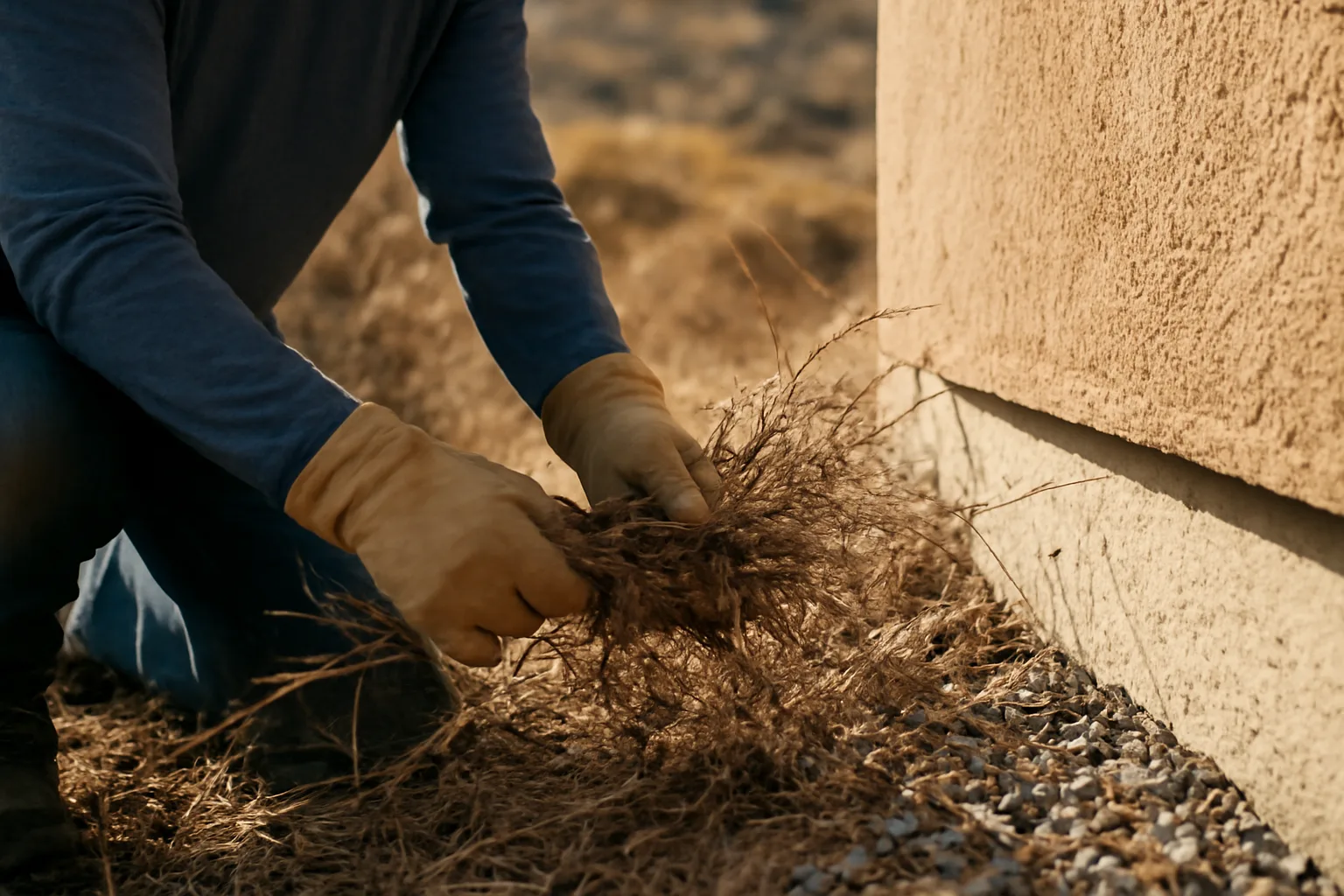
"CSFD" gets searched a lot because a lot of fire districts share that abbreviation pattern (County/City/Community Fire District), and Colorado Springs Fire Department is one of the more visible ones publishing wildfire mitigation guidance. There's no single national "CSFD standard." What exists instead is a patchwork. Each fire district, county, or state sets its own defensible space and home-hardening rules, and they can differ on distances, materials, and inspection triggers even between two towns twenty minutes apart. That's frustrating if you just got a non-renewal letter and want a checklist. But the good news is that almost every district's rules trace back to the same underlying science: the National Fire Protection Association's Firewise principles and CAL FIRE's defensible space zone system, which splits the property into an Ember-Resistant Zone (0-5 feet), Zone 1 (5-30 feet), and Zone 2 (30-100 feet). If your district uses different numbers, it's usually a local adaptation of this same three-zone logic. Fill in your district's specifics here: ______________ (Fire District name), ______________ (defensible space distance required), ______________ (inspection frequency), ______________ (permit or fee required for clearing). Before doing any work, call your local fire marshal's office or check their website directly. Don't assume a rule from a CAL FIRE PDF or a neighboring county applies to your parcel.
When does the California defensible space law go into effect?
California's core defensible space law, Public Resources Code Section 4291, has been in effect for years and currently requires 100 feet of defensible space clearance around structures in State Responsibility Areas and designated Wildland-Urban Interface zones, or to the property line if it's closer [1]. That part isn't new. What's changing is the enforcement layer around it. In 2020, California adopted a new "Zone 0" concept (0-5 feet from structures, ember-resistant materials only) through Assembly Bill 3074, but the actual regulation implementing Zone 0 has been delayed multiple times. As of the most recent CAL FIRE Board of Forestry timeline, the Zone 0 regulations were still moving through rulemaking, with a target of the regulation taking effect in 2026 for existing homes in high fire severity zones, though the exact date has shifted before and could shift again [2]. The honest answer: 4291's 100-foot clearance is already law today. The stricter Zone 0 ember-zone rule is the one still catching up to a 2026 timeline, and homeowners in Very High Fire Hazard Severity Zones should watch CAL FIRE's Board of Forestry and Fire Protection updates directly rather than trust a fixed date from a blog post, including ours.
What fire-safe rules for homes take effect in 2026?
The most talked-about 2026 change is California's Zone 0 ember-resistant zone rule, which would require homes in Very High Fire Hazard Severity Zones to keep the 5 feet closest to the structure clear of combustible mulch, wood fencing attached to the house, and stored items, replacing them with gravel, pavers, or bare mineral soil [2]. The Board of Forestry has proposed phased compliance, with newer construction facing earlier deadlines than existing homes. Separately, insurers operating under California's "Safer from Wildfires" regulation (10 CCR Section 2644.9) are required to give homeowners a premium discount or credit for completing specific mitigation actions, like maintaining defensible space and hardening a roof, and that regulation has been in force since 2022, with insurers continuing to roll out compliant scoring models through 2025 and into 2026 [3]. If you're outside California, check whether your state fire marshal has adopted anything similar. Oregon's Department of Forestry maintains its own defensible space code tied to the state's wildfire risk map program, and Colorado's rules are set at the county and fire-district level rather than statewide, which is exactly why a searchable term like "CSFD wildfire mitigation" returns different answers depending on where you live.
Why won't people follow the defensible space law in California?
Cost, confusion, and enforcement gaps are the three real reasons, not laziness. A 2020 Legislative Analyst's Office review of state wildfire programs found that defensible space compliance is inconsistently inspected, with many local governments lacking the staff to inspect every parcel annually, meaning a chunk of noncompliant properties simply never get checked [4]. Cost is real too. Removing mature trees, regrading slopes, or replacing wood fencing near a house can run from a few hundred dollars for a small lot cleanup to well over $10,000 for larger parcels with heavy vegetation, according to typical vegetation management estimates cited by CAL FIRE's Ready for Wildfire program [5]. For homeowners already facing a rate hike or non-renewal, spending thousands more on brush removal feels like throwing money at a problem insurers might still walk away from anyway. There's also a genuine information gap. Many homeowners don't know their parcel sits in a State Responsibility Area or a Very High Fire Hazard Severity Zone until a letter arrives. CAL FIRE publishes searchable fire hazard severity zone maps by address, and checking yours takes about five minutes [6]. If you haven't looked yours up, that's the first move, before any clearing work. Finally, some non-compliance is just deferred maintenance from prior owners or renters who never got a walkthrough. If you just bought a home in a fire zone, don't assume the defensible space work was ever done. Ask for records, or start from zero.
How to prevent wildfires from starting on your property
Most wildfires near homes aren't caused by lightning, they're caused by people: downed power lines, unattended debris burns, dragging trailer chains, mower sparks in dry grass, and unextinguished campfires account for the overwhelming majority of ignitions nationally, according to the National Interagency Fire Center's annual ignition cause reporting [7]. On your own property, the highest-leverage prevention steps are boring but effective: don't mow dry grass midday, keep a shovel and hose nearby when doing any spark-producing yard work, and store gas cans and propane away from vegetation. Check spark arrestors on chimneys and outdoor equipment. If you burn debris at all, follow your local burn permit rules, since many counties suspend burn permits entirely during red flag warnings. The only you can prevent wildfires message from Smokey Bear isn't just a slogan, it reflects real data: the U.S. Forest Service estimates that roughly 85% of wildland fires in the U.S. are human-caused [8]. That means most of the prevention work that matters happens before a fire ever starts, not during evacuation.
How to prepare for a wildfire (a working checklist)
Preparing for a wildfire happens in three timeframes: year-round hardening, seasonal readiness, and the 72 hours before a known threat. Ready.gov's wildfire preparedness guidance recommends building a go-bag, planning two evacuation routes out of your neighborhood, and signing up for local emergency alerts well before fire season starts. Year-round, this means the defensible space work covered above, plus roof and vent hardening (covered next), and keeping important documents (insurance policy, property deed, ID copies) somewhere you can grab in five minutes or stored digitally offsite. Seasonally, before your area's typical fire season, walk your property and clear any new debris, check that hoses reach all sides of the house, and confirm your address numbers are visible from the street for responding crews. When a fire is actually reported nearby, close all windows and doors, move flammable furniture away from windows, turn on exterior lights so your house is visible in smoke, and leave early rather than waiting for a mandatory evacuation order. Ready.gov is blunt about this: "Do not wait to be ordered by local officials to leave if you feel it is unsafe to remain in your home". This is also where good documentation pays off later. Photograph your home's exterior, defensible space work, and any hardening upgrades before fire season, dated and time-stamped. If you ever need to show an insurer or adjuster what mitigation work was actually completed, a dated photo record is worth more than a memory of "we cleared that a while back."
How to prevent forest fires and avoid forest fires while recreating
Preventing forest fires away from your own property comes down to campfire discipline and vehicle care. The Forest Service's "Drown, Stir, Feel" method (drown the fire, stir the ashes, feel for heat with the back of your hand before leaving) is the standard verified method for making sure a campfire is fully out, and skipping the final "feel" step is one of the most common ways smoldering campfires reignite hours later [9]. On the vehicle side, dragging chains, driving through tall dry grass, or parking a hot exhaust over dry vegetation are common, avoidable ignition sources. Many national forests post seasonal fire restrictions that ban campfires and off-road driving entirely during high-risk periods, so checking current restrictions before a trip is worth the two minutes it takes. If you're asking how to avoid forest fires as a hiker or camper rather than a homeowner, the short list is: check current fire restrictions for the specific forest or district, never leave a campfire unattended even for a few minutes, avoid fireworks and exploding targets entirely in wildland areas (illegal in most forests during fire season regardless of state), and report any unattended fire or smoke immediately rather than assuming someone else already has.
Is Santa Barbara safe from fire?
No coastal California community, including Santa Barbara, is "safe" from wildfire in the sense of being exempt from risk, and the area's own history argues against that framing. The Thomas Fire (2017) burned over 281,000 acres and was, at the time, the largest wildfire in modern California history, followed within weeks by the Montecito debris flow that killed 23 people, driven partly by burned, denuded hillsides above the town [10]. Santa Barbara County has significant portions mapped as Very High Fire Hazard Severity Zone by CAL FIRE, particularly in the foothill communities like Montecito, Mission Canyon, and the Riviera, where homes back directly onto chaparral-covered slopes [6]. That terrain, steep, brush-covered, and prone to strong sundowner winds, is part of why the region has repeatedly seen fast-moving fires. That doesn't mean every Santa Barbara property carries identical risk. A home in a Zone 0-compliant defensible space setup on a gentle slope with irrigated landscaping is meaningfully safer than a home backing onto unmanaged chaparral on a steep grade, even a few blocks away. Checking your specific parcel against CAL FIRE's fire hazard severity zone maps [6] gives you a real answer, rather than a general one about the whole town.
How can we prevent forest fires at the community level?
Individual defensible space work matters, but fire doesn't respect property lines, so community-level mitigation multiplies individual efforts. Firewise USA, the National Fire Protection Association's community recognition program, requires neighborhoods to complete an annual community wildfire risk assessment and log volunteer mitigation hours to maintain their designation, and there are now several thousand recognized Firewise sites across the U.S. [11]. The practical version of this at a neighborhood scale: shared chipper days to deal with cleared brush, coordinated fuel breaks along shared property lines or greenbelts, and pushing local utilities on vegetation clearance around power lines, since utility equipment remains a leading cause of the largest, most destructive wildfires in California specifically [10]. If your HOA or neighborhood association hasn't looked into Firewise USA designation, it's free to join and can sometimes factor into insurer mitigation credit programs. At the policy level, supporting local fire district budgets for defensible space inspection staff addresses the enforcement gap the LAO identified [4]. A rule nobody checks doesn't change behavior. Voting for or against local fire district funding measures is, in a very direct way, a wildfire mitigation decision.
What does home hardening actually involve, beyond clearing brush?
Home hardening means changing the building itself so embers, which travel far ahead of a fire front, can't find a way in. CAL FIRE's guidance identifies Class A fire-rated roofing, ember-resistant vents (1/8 inch mesh or listed ember-resistant vent products), and enclosed eaves as the three highest-priority hardening upgrades, since roofs and vents are the most common entry points for ember ignition of homes. Other hardening items, roughly in priority order for cost-effectiveness: replacing single-pane windows with dual-pane tempered glass (radiant heat can crack single-pane glass, letting embers in), removing wood fencing and gates within 5 feet of the house (a burning fence is a direct fuel line to your siding), and clearing gutters of leaf litter, since ember-ignited gutter debris is a documented ignition pathway. A rough cost hierarchy, based on typical contractor ranges reported through CAL FIRE's and insurer mitigation program materials: gutter guards and vent screens run in the low hundreds of dollars; a full ember-resistant vent retrofit for a house runs into the low thousands; a full Class A roof replacement is the most expensive single item, often $10,000-$30,000+ depending on size and material, and usually only makes sense to do as part of a roof that needs replacing anyway rather than as a standalone mitigation purchase. For the landscaping side of hardening specifically, fire safe landscaping California next to house covers plant selection and spacing in more depth than fits here.
How do I document mitigation work for my insurer or a non-renewal appeal?
Insurers and state programs increasingly want proof of mitigation, more than a claim that it happened. California's Safer from Wildfires regulation requires insurers to recognize specific completed mitigations for discount purposes, but the burden of showing what was done sits with the homeowner [3]. A solid documentation packet includes dated, wide-angle photos of all four sides of the house showing the 0-5 foot zone, receipts or contracts for any brush clearing, vent replacement, or roofing work, and a simple written log of ongoing maintenance (mowing dates, gutter cleaning dates). If your fire district conducts inspections, keep any inspection report or compliance letter they issue. We're not a public adjuster and don't negotiate with insurers, file claims on your behalf, or promise a discount or reinstated coverage. What we do build is the organizing structure: DefensibleHome's $99 Wildfire Insurance Survival Kit gives you a guided framework to compile your own defensible space photos, receipts, and inspection records into a single packet you send yourself, in the format insurers and fire marshals actually ask for. You do the sending; we just make sure you're not scrambling to remember what you did three years ago. If you've already had a fire event, or want to understand what happens structurally to a home during one, house fire and fire at a house cover the mechanics of ignition and spread that make defensible space and hardening effective in the first place.
Where does the term "defensible space" actually come from, and does it work?
"Defensible space" is the specific legal and technical term, defined in California's Public Resources Code 4291 as the area around a structure where vegetation is modified to reduce fire intensity and give firefighters a safer place to work [1]. It's not a metaphor. It's a legal clearance requirement with distances attached. Does it actually work? The best available evidence says yes, substantially. CAL FIRE and multiple post-fire damage assessments (including analysis after the 2007 Witch Fire and the 2018 Camp Fire) found that homes with adequate defensible space and hardened construction survived at dramatically higher rates than homes without either, though CAL FIRE's own materials are careful to note that no single measure guarantees survival in extreme wind-driven fire conditions. For a broader definition and the underlying zone system, defensible walks through the term itself in more depth. If you're in Washington state specifically, note that requirements and contractor programs differ again: wildfire defensible space clearing contracts Washington State DNR covers that state's separate system.
Frequently asked questions
When does the California defensible space law go into effect?
California's core defensible space law, Public Resources Code 4291, requiring 100 feet of clearance, is already in effect. The newer Zone 0 ember-resistant zone rule (0-5 feet from structures) is targeted for a 2026 rollout for existing homes in Very High Fire Hazard Severity Zones, though the Board of Forestry has shifted this timeline before, so confirm current status directly with CAL FIRE.
Why won't people follow the defensible space law in California?
Mostly cost, inconsistent inspection, and not knowing they're in a mapped fire hazard zone at all. A 2020 Legislative Analyst's Office review found many local governments lack staff to inspect every parcel, so noncompliance often goes unchecked, and clearing costs can run from a few hundred to over $10,000 depending on lot size and vegetation.
How do I prevent wildfires from starting on my own property?
Avoid mowing dry grass midday, keep spark-producing yard equipment away from vegetation, store fuel containers clear of brush, and follow local burn permit rules. Roughly 85% of wildland fires in the U.S. are human-caused according to U.S. Forest Service estimates, so most prevention is about controlling ignition sources, not fighting fire itself.
How do I prepare for a wildfire if I live in a high-risk zone?
Build a go-bag, plan two evacuation routes, sign up for local emergency alerts, and complete defensible space and home hardening before fire season starts. Ready.gov advises leaving early rather than waiting for a mandatory order if conditions feel unsafe, since roads can become unsafe well before an official evacuation is called.
How do I prevent forest fires while camping or hiking?
Never leave a campfire unattended, use the "drown, stir, feel" method to confirm it's fully out, check current fire restrictions before your trip, and avoid fireworks or exploding targets in wildland areas entirely. Vehicle sparks from dragging chains or driving through dry grass are also common, avoidable ignition sources.
How can we prevent forest fires at a community or neighborhood level?
Join or start a Firewise USA recognized community, which requires an annual risk assessment and logged mitigation hours through the National Fire Protection Association's program. Coordinate shared brush chipper days, push utilities on power line vegetation clearance, and support local fire district funding for inspection staffing.
Is Santa Barbara safe from fire?
No California community is exempt from wildfire risk, and Santa Barbara County has significant Very High Fire Hazard Severity Zone areas, especially foothill communities like Montecito. The 2017 Thomas Fire burned over 281,000 acres nearby. Risk varies sharply by specific parcel, slope, and defensible space condition, so check CAL FIRE's mapping tool for your address.
What fire-safe rules for homes take effect in 2026?
California's proposed Zone 0 rule, requiring ember-resistant materials in the 5 feet closest to structures in Very High Fire Hazard Severity Zones, is targeted for 2026 implementation, though the exact date has moved before. Separately, insurer wildfire discount rules under the state's Safer from Wildfires regulation continue rolling out through 2025 into 2026.
What is CSFD wildfire mitigation and does it apply to me?
"CSFD" typically refers to a local fire district (City, County, or Community Fire District), and requirements vary significantly by district. There's no single national CSFD standard. Check your specific fire district's published wildfire mitigation code directly, since distances and material rules can differ even between neighboring jurisdictions.
What's the difference between defensible space and home hardening?
Defensible space refers to vegetation clearance around a structure (typically zones from 0-100 feet), while home hardening means modifying the building itself, such as Class A roofing, ember-resistant vents, and dual-pane windows. CAL FIRE recommends doing both, since defensible space slows fire approach while hardening stops ember entry.
How much does defensible space clearing typically cost?
Costs vary widely by lot size and vegetation density, ranging from a few hundred dollars for a small, lightly vegetated lot to over $10,000 for larger parcels with heavy brush or trees, based on typical vegetation management estimates referenced in CAL FIRE's Ready for Wildfire materials. Get local quotes since regional labor costs vary.
Do I need a permit to clear brush for defensible space?
Sometimes. Some fire districts and counties require a permit for vegetation removal, especially for tree removal or work near creeks and slopes with erosion concerns. Check with your local fire marshal or planning department before major clearing work, since rules differ by jurisdiction and permit requirements aren't standardized statewide.
What percentage of wildfires are caused by humans?
The U.S. Forest Service estimates roughly 85% of wildland fires nationally are human-caused, through sources like unattended campfires, downed power lines, debris burning, and equipment sparks. That figure is a big part of why prevention behavior, more than suppression capacity, is the highest-leverage lever for reducing total wildfire ignitions.
Sources
- California Public Resources Code Section 4291: 100 feet of defensible space clearance required around structures in State Responsibility Areas
- California Board of Forestry and Fire Protection, Zone 0 Rulemaking: Zone 0 ember-resistant zone regulation status and proposed 2026 implementation timeline
- California Department of Insurance, 10 CCR Section 2644.9: Safer from Wildfires regulation requiring insurer discounts for completed mitigation actions
- California Legislative Analyst's Office, Improving California's Forest and Watershed Management (2020): Inconsistent local enforcement and inspection capacity for defensible space compliance
- CAL FIRE, Ready for Wildfire Defensible Space Guide: Typical costs and process for vegetation clearance and defensible space maintenance
- CAL FIRE, Fire Hazard Severity Zone Maps: Address-searchable fire hazard severity zone mapping including Very High Fire Hazard Severity Zone designations
- National Interagency Fire Center, Wildfire Statistics: Human-caused ignition sources including debris burning, equipment use, and campfires
- USDA Forest Service, Preventing Wildfires: Approximately 85% of wildland fires in the U.S. are human-caused
- USDA Forest Service, Campfire Safety: Drown, stir, feel method for fully extinguishing campfires
- Cal OES / CAL FIRE, Thomas Fire and Montecito Debris Flow Incident Summaries: Thomas Fire burned over 281,000 acres in 2017, followed by the Montecito debris flow
- National Fire Protection Association, Firewise USA Program: Firewise USA requires annual community risk assessments and logged mitigation hours for recognition