Last updated 2026-07-23
TL;DR
No material is truly "fireproof," but Class A roofing (metal, tile, treated composite), ignition-resistant siding (fiber cement, stucco), and dual-pane tempered windows cut ember and radiant-heat ignition risk the most. Combine them with 5 feet of noncombustible clearance (California's coming Zone 0 rule) for the biggest real-world reduction in home loss.
is there such a thing as truly fireproof building material
No. Every material used in home construction will fail at some temperature or exposure time, so the industry term is "fire-resistant" or "ignition-resistant," not fireproof. What matters is how long a material resists ignition and how it performs against the three ways wildfire actually attacks a house: embers, radiant heat, and direct flame contact. CAL FIRE and most state fire marshals grade roofing and some assemblies using the Class A/B/C system from the standard testing methods (ASTM E108 or UL 790). Class A materials, things like concrete tile, metal panels, and treated fiber-cement shakes, resist severe fire exposure in lab tests. Class C barely passes a light exposure test. Untreated wood shakes aren't rated at all in most jurisdictions anymore. So when people search for "fireproof siding" or "fireproof roofing," what they actually want is the highest ignition-resistance rating available for that building component, installed correctly, with the surrounding 5 feet kept clear of anything that burns. Materials alone don't save houses. Materials plus clearance do. That's the whole game. For a breakdown of how these principles apply specifically to the area right against your walls, see fire safe landscaping California next to house.
what roofing material is actually fire resistant
Class A rated roofing is the standard to ask for: concrete or clay tile, metal (standing seam or shingle-profile), asphalt fiberglass shingles rated Class A, and certain treated or composite shake products. These pass the most severe of the three ASTM E108 test tiers (intermittent flame, spread of flame, and burning brand tests). Untreated wood shake and shingle roofs are the worst performer in wildfire-prone areas and several jurisdictions restrict or ban new installations of them in high fire hazard severity zones. California's Building Code (Chapter 7A) requires Class A roof assemblies for new construction and roof replacement in State Responsibility Areas and Very High Fire Hazard Severity Zones. Cost ranges vary a lot by region and roof complexity, but rough national averages run: asphalt Class A shingles $4 to $7 per square foot installed, standing seam metal $9 to $14 per square foot, concrete tile $10 to $18 per square foot. Metal and tile also tend to last 40 to 50+ years versus 20 to 25 for asphalt, so the lifetime cost gap is smaller than the sticker price suggests. The roof-to-wall junction, ridge vents, and any skylight flashing are where embers actually get in, not usually the field of the roof itself. A Class A roof with an unscreened vent gap is still a vulnerable house.
what siding material resists fire the best
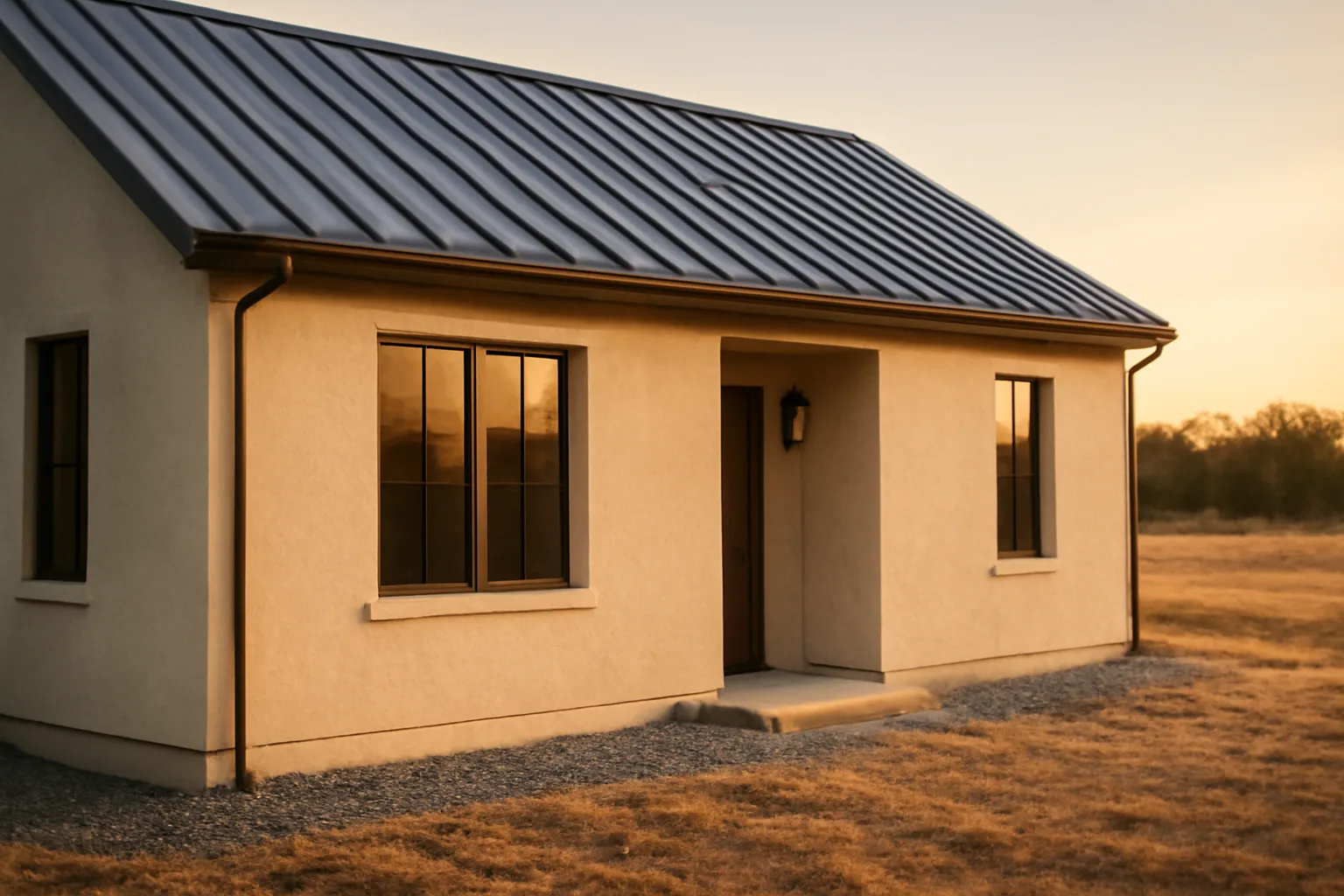
Fiber cement siding, stucco (traditional or synthetic with a noncombustible base), and metal panel siding all outperform vinyl and wood in direct flame and radiant heat exposure. Vinyl siding melts and can deform or ignite at relatively low temperatures, which lets flame reach the wall sheathing behind it. CAL FIRE's home hardening guidance lists ignition-resistant building materials for exterior walls as a core retrofit priority, specifically calling out noncombustible or ignition-resistant siding within the first 5 feet of the structure (Zone 0). Stucco costs roughly $6 to $9 per square foot installed on new construction, fiber cement lap siding runs $5 to $10 per square foot, and vinyl is cheaper at $3 to $6 per square foot but performs the worst in wildfire exposure. If you're re-siding anyway ahead of an insurance inspection, fiber cement or stucco is the upgrade worth paying for. Don't bother re-siding a whole house just to swap vinyl for fiber cement in a low-risk zone; put that money into vent screens and gutter clearing first, since those are cheaper and stop more actual ignitions.
do fire resistant windows and doors matter
Yes, and they're one of the most overlooked upgrades. Single-pane windows can crack from radiant heat alone, well before flame ever touches the glass, creating an opening for embers and superheated air. Dual-pane windows with at least one tempered glass pane resist heat-induced cracking far longer and are specifically recommended in CAL FIRE's building material guidance. Metal or fiberglass window frames outperform vinyl frames, which can soften and pull away from the glass under heat. For exterior doors, solid-core wood or metal doors with weatherstripping and no gaps beat hollow-core doors, and garage doors deserve real attention too since many are not rated for ember or heat exposure at all and are a documented point of home loss in post-fire investigations. Replacing all windows in a house purely for wildfire resistance is a $15,000 to $40,000+ project depending on house size, so most homeowners are better off doing it opportunistically (when windows need replacement anyway) rather than as a standalone wildfire retrofit, unless an insurer's inspection letter specifically flags single-pane glazing as a nonrenewal reason.
what about deck and fence materials
Decks and fences are one of the most common paths fire takes into a house, because they're often built from ordinary lumber, attach directly to the structure, and sit close to landscaping. CAL FIRE's Zone 0 guidance (the 0 to 5 foot zone around the structure) calls for noncombustible decking materials and recommends that any attached fence within 5 feet of the home be noncombustible for at least that first 5-foot section. Fire-resistant decking options include composite decking rated for wildfire exposure (check for ICC-ES evaluation reports specific to wildfire performance, more than general durability), metal-frame decks, and concrete or paver patios instead of wood decking entirely. A wood fence that runs straight into a wood deck that runs straight into wood siding is effectively a fuse. Breaking that continuous fuel path, even just replacing the last 5 feet of fence closest to the house with metal, is one of the cheapest, highest-value retrofits available, often a few hundred dollars in materials. See defensible for how deck and fence placement interacts with the broader defensible space zones.
when does the california defensible space law go into effect
California's existing defensible space law (Public Resources Code 4291) is already in effect and requires 100 feet of defensible space clearance around structures in State Responsibility Areas, split into an ember-resistant Zone 0 (0 to 5 feet) and reduced-fuel Zones 1 and 2 out to 100 feet. The part still pending is the specific Zone 0 regulation, which would make the 5-foot ember-resistant zone legally enforceable with defined material and vegetation rules rather than general guidance. The California Board of Forestry and Fire Protection has been developing this regulation for several years; it was directed by AB 3074 (2020) and, as of the state's most recent public timelines, CAL FIRE and the Board have targeted 2025 to 2026 for finalizing and phasing in enforcement, though exact effective dates have shifted more than once and homeowners should check the Board of Forestry's current rulemaking page rather than rely on any fixed date printed elsewhere. Because the exact enforcement date depends on your local fire district's adoption schedule, treat any specific 2026 date you see as provisional. Your local fire district enforces the specific timeline: [fill in your fire district's Zone 0 adoption date and enforcement start here].
what fire safe home rules take effect in 2026
The most commonly cited 2026 change is California's Zone 0 ember-resistant zone regulation, which would require noncombustible surfaces, mulch, and materials within 5 feet of the home, replacing today's guidance-only recommendation with an enforceable standard tied to PRC 4291. Other states are moving on separate but related tracks. Colorado's legislature and Division of Insurance have been working on wildfire mitigation and insurance-related measures, including funding for mitigation grants and requirements around insurer use of wildfire risk models, though Colorado doesn't currently have a statewide Zone 0-style building material mandate; that authority sits mostly at the local and county level. Oregon's statewide wildfire risk map and defensible space code (informed by the 2021 Senate Bill 762) continues to phase in county by county, with specific defensible space standards tied to risk classification rather than a single fixed date. Because "what takes effect in 2026" genuinely depends on your state, county, and fire district, the honest answer is: check your state fire marshal's site directly before budgeting for a specific compliance deadline. Local fire district specifics: [fill in your jurisdiction's 2026 rule changes and enforcement contact here].
why won't people follow the defensible space law in california
Cost, labor, and enforcement gaps are the three biggest reasons compliance lags. Clearing 100 feet of defensible space on a sloped, brush-covered lot can run into thousands of dollars in contractor fees, and many homeowners, especially older residents on fixed incomes, simply can't absorb that cost even when they know the risk. Enforcement is also inconsistent. PRC 4291 gives CAL FIRE and local fire agencies authority to inspect and cite noncompliant properties, but inspection capacity varies enormously by county, and many areas rely on self-certification or complaint-driven inspections rather than routine sweeps. A property can go years without an actual inspection. There's also a real disagreement, sometimes reasonable, about what "clearance" means. Some homeowners worry that removing vegetation increases erosion on steep lots, or conflicts with local tree protection ordinances, or simply changes the look of a property they've maintained a certain way for decades. None of that removes the wildfire risk, but it explains why compliance isn't universal even where the law is clear. If you've gotten an insurance nonrenewal or inspection letter citing defensible space, treat it as the forcing function: document what you clear, photograph before and after, and keep dated records, since insurers increasingly want to see evidence, more than a claim that work was done.
how to prevent wildfires and forest fires around your home
Roughly 85% of wildfires in the U.S. are human-caused, according to the National Interagency Fire Center's long-standing estimate cited by federal agencies including the Department of the Interior. That means the highest-leverage prevention work is behavioral, not structural: properly extinguishing campfires, not parking hot vehicles on dry grass, maintaining equipment that can throw sparks (mowers, chainsaws, grinders), and following local burn-ban and red-flag warning restrictions. At the home and property level, prevention layers on top of that: keeping gutters and roof valleys free of dry leaves and needles, clearing dead vegetation within 5 feet of the structure, storing firewood and propane tanks well away from the house, and screening attic and foundation vents with 1/8-inch metal mesh to block ember entry (a documented major cause of home ignition in wildfire investigations by the Insurance Institute for Business & Home Safety). Ready.gov's wildfire guidance breaks prevention and preparedness into three buckets: reduce the fuel around your home, prepare an evacuation plan and go-kit, and know your community's alert systems in advance. None of these steps individually stops a wildfire from starting, but together they change whether a wildfire that does start turns into a home loss.
how to prepare for a wildfire before it starts
Preparation splits into three timelines: year-round hardening, seasonal (pre-fire-season) prep, and imminent-threat (red flag warning or evacuation order) actions. Year-round work includes the material upgrades covered above (roofing, siding, vents, windows) plus maintaining defensible space zones. Seasonal prep, ideally done before your region's fire season ramps up, includes clearing gutters, mowing dry grass down to 4 inches or less as CAL FIRE recommends for Zone 1, trimming tree limbs up 6 feet from the ground and away from the roofline, and checking that your address is visible from the road for responding crews. When a red flag warning or evacuation order is issued, Ready.gov recommends closing all windows and doors, removing flammable curtains, shutting off gas at the meter if instructed, moving flammable furniture away from windows and doors, and leaving early rather than waiting for a mandatory order if conditions look dangerous. Having a packed go-kit and a documented home inventory before that moment, not during it, is what separates a calm evacuation from a chaotic one. This is where having your documentation already organized, photos of your roof material and defensible space work, receipts for hardening upgrades, a home inventory, matters most, because insurers and disaster assistance programs both ask for exactly this kind of evidence after a loss. A $99 one-time Wildfire Insurance Survival Kit (/survival-kit-builder) is built around exactly that: helping you organize the photos, receipts, and inventory records before you need them, not after. It doesn't file claims or contact your insurer on your behalf; you send your own documentation.
is santa barbara safe from fire, and how do i check my own area's risk
No area in California's wildland-urban interface is "safe" in an absolute sense, and Santa Barbara County has significant wildfire history, including the 1990 Painted Cave Fire and the 2017 Thomas Fire, which was at the time the largest wildfire in modern California history by acreage before being surpassed by later fires. Much of the Santa Barbara foothills and mountain-adjacent neighborhoods sit within CAL FIRE-designated Very High Fire Hazard Severity Zones. The honest way to answer "is my area safe" is to look up your specific parcel on CAL FIRE's Fire Hazard Severity Zone viewer, which maps zones as Moderate, High, or Very High based on fuel, topography, and weather modeling [1]. Your risk also depends heavily on micro-location: slope direction, prevailing wind corridors, and neighboring vegetation density can make two houses a quarter mile apart have very different real risk, even within the same official zone. Rather than treating "is [my city] safe" as a yes/no question, check your specific zone designation, then look at your property's specific defensible space and hardening status against that zone's requirements. That's the actionable version of the question.
what does an insurer actually want to see in your documentation
Insurers and their inspectors, particularly under California's FAIR Plan and standard-market nonrenewal reviews, generally want photographic and dated evidence of three things: roof material and condition, defensible space clearance within 5 and 30 feet, and any structural hardening upgrades (vents, siding, windows) completed since the last inspection. Keep records simple but specific: photos with visible dates (most phone cameras embed this automatically), contractor invoices naming the specific material installed (more than "new roof" but "Class A asphalt shingle, [manufacturer/model]"), and a running list of defensible space maintenance dates. If you get a nonrenewal or inspection letter, respond with exactly what it asks for, nothing more, nothing less, and keep a copy of everything you send. We don't contact insurers on your behalf, file claims, or promise coverage, discounts, or reinstatement. What we do help with is getting your own documentation organized so you can send it yourself, whether that's for an insurance inspection response, a FAIR Plan application, or your own peace of mind. This isn't legal, insurance, or claims advice; check with your insurer or a licensed professional for anything specific to your policy. For the broader material and clearance context an inspector is likely checking against, see only you can prevent wildfires and fire at a house.
Frequently asked questions
When does the California defensible space law go into effect?
The 100-foot defensible space requirement under PRC 4291 is already active in State Responsibility Areas. The newer Zone 0 (5-foot ember-resistant zone) regulation is still being finalized by the Board of Forestry and Fire Protection, with 2025 to 2026 targeted for adoption; check the Board's current rulemaking page since dates have shifted before.
Why won't people follow the defensible space law in California?
Mainly cost, labor availability, and inconsistent enforcement. Clearing 100 feet of vegetation on a sloped lot can cost thousands of dollars, inspection capacity varies by county, and some homeowners worry clearing increases erosion or conflicts with local tree ordinances. None of that removes the underlying wildfire risk.
How can we prevent forest fires and wildfires generally?
About 85% of U.S. wildfires are human-caused, per the National Interagency Fire Center, so extinguishing campfires fully, avoiding parking on dry grass, maintaining spark-prone equipment, and following local burn bans prevent the most fires. At the property level, clearing dead vegetation and screening vents blocks embers from starting home fires.
How do I prepare for a wildfire if I live in a high-risk zone?
Harden your home year-round (Class A roof, ember-resistant vents, cleared gutters), maintain seasonal defensible space before fire season, and have an evacuation go-kit and documented home inventory ready before a red flag warning. Ready.gov recommends leaving early rather than waiting for a mandatory evacuation order if conditions look dangerous.
Is Santa Barbara safe from wildfire?
No California wildland-urban interface area is fully safe. Santa Barbara County has significant fire history, including the 2017 Thomas Fire, and much of its foothill terrain is in CAL FIRE Very High Fire Hazard Severity Zones. Check your specific parcel on CAL FIRE's zone viewer rather than treating the whole city as one risk level.
What fire-safe home rules take effect in 2026?
The most-cited 2026 change is California's Zone 0 ember-resistant zone rule requiring noncombustible materials within 5 feet of structures, though the exact effective date depends on Board of Forestry rulemaking timelines. Other states like Oregon are phasing in county-level defensible space codes on separate schedules; check your state fire marshal's site for confirmed dates.
What roofing material is truly fireproof?
None is truly fireproof, but Class A rated materials (concrete tile, metal panels, and some treated composite shakes) resist the most severe standardized fire exposure tests (ASTM E108/UL 790). California's Building Code Chapter 7A requires Class A roofing on new construction and replacements in high fire hazard zones.
Is vinyl siding safe in a wildfire zone?
Vinyl siding is the weakest common option because it softens and can melt at relatively low temperatures, exposing wall sheathing behind it. Fiber cement siding and stucco perform significantly better against radiant heat and direct flame and are what CAL FIRE's hardening guidance recommends instead.
Do I need to replace all my windows for wildfire protection?
Not urgently in most cases. Dual-pane windows with at least one tempered glass pane resist heat-cracking far better than single-pane, but full replacement is a $15,000 to $40,000+ project. Most homeowners are better off replacing opportunistically or prioritizing cheaper fixes like vent screens first, unless an insurer specifically flags single-pane glass.
What is Zone 0 in California wildfire defensible space rules?
Zone 0 is the 0 to 5 foot ember-resistant zone immediately around a structure. CAL FIRE guidance already recommends noncombustible surfaces, mulch, and materials here, and a pending Board of Forestry regulation aims to make these requirements legally enforceable, likely in 2025 to 2026.
How much does it cost to make a house fire-resistant?
Costs vary widely by scope. Vent screening and gutter clearing can cost a few hundred dollars. A Class A roof replacement runs roughly $4 to $18 per square foot depending on material. Full siding replacement with fiber cement or stucco runs $5 to $10 per square foot. Prioritize cheap, high-impact fixes (vents, clearance) before expensive full-material swaps.
What is the single most overlooked fire vulnerability in most homes?
Unscreened attic and foundation vents. Embers, not direct flame, cause most home ignitions in wildfires according to Insurance Institute for Business & Home Safety research, and open vents let embers directly into attics and crawlspaces. Screening vents with 1/8-inch metal mesh is one of the cheapest, highest-value retrofits available.
Sources
- CAL FIRE, Fire Hazard Severity Zone Viewer: Parcel-level Moderate/High/Very High Fire Hazard Severity Zone designations
- CAL FIRE: California's defensible space law (PRC 4291) requires 100 feet of defensible space clearance around homes in wildfire-prone areas
- California Legislative Information: Government Code Section 51182 outlines defensible space requirements for property owners in State Responsibility Areas
- National Fire Protection Association: NFPA 1144 provides standards for reducing structure ignition hazards from wildland fire
- CAL FIRE Ready for Wildfire: Fire-resistant landscaping and defensible space zones help protect homes from wildfire ignition
- County of Santa Barbara: Residents can check their local fire hazard severity zone designation to assess wildfire risk in Santa Barbara County