Last updated 2026-07-25
TL;DR
Searching "fire risk assessment companies near me" is a good first move, but the most useful assessment for insurance purposes is often the one you document yourself using your state's defensible space checklist, then supplement with a licensed inspector or CAL FIRE defensible space checklist for the report an underwriter will actually read.
What does a fire risk assessment company actually do?
A fire risk assessment company sends someone (sometimes an arborist, sometimes a former fire marshal, sometimes a general contractor who added "wildfire consulting" to their services) to walk your property and rate it against defensible space and home hardening standards. Good ones measure the actual distances in your defensible space zones, check your roof material, vent screening, deck construction, and give you a written report with photos. The honest range for a private residential assessment runs from about $150 for a basic walk-through checklist to $800 or more for a full report with a burn-risk score, satellite imagery overlay, and prioritized repair list. Some companies bundle it with a home inspection. Some are actually insurance-adjacent firms hired by carriers, which means their report belongs to the insurer, not you. Before you pay anyone, know that CAL FIRE publishes a free defensible space checklist you can walk yourself in about 45 minutes. It won't have a company logo on it, but it covers the same three zones (0-5 feet, 5-30 feet, 30-100 feet) that a paid assessor is grading you against. If you're in California, that checklist plus your own photos is often the actual document you'll send an insurer or a Safer From Wildfires program application. For a Colorado, Oregon, or Arizona property, check whether your state forestry division or fire marshal publishes an equivalent free tool before paying for a private one. Many do.
How do I find a legitimate fire risk assessment company near me?
Start with your county fire department or local fire district. Many maintain a list of vetted vegetation management contractors and defensible space inspectors, sometimes for free through a Firewise USA chapter or a county-run chipper/inspection program. Ask your fire district directly: [guided fill-in: contact your local fire district for its approved contractor list]. Second, check whether the company or inspector holds a state contractor license if they're also proposing to do the work (tree removal, roof replacement, vent retrofits). A license number you can verify on your state contractor licensing board's site is a minimum bar. A report from someone with no license, no insurance, and no references is worth what you paid for the search. Third, ask two questions before hiring: does the report follow a recognized standard (CAL FIRE's defensible space zones, NFPA's Firewise structure ignition zone model, or your state's own checklist), and will you get raw photos and measurements, more than a risk score? A score of "moderate risk" with nothing behind it is useless when you're trying to satisfy an underwriter or a non-renewal appeal.
When does the California defensible space law go into effect?
California's core defensible space requirement, Public Resources Code 4291, has been in effect since it was last substantially amended in 2020, requiring 100 feet of defensible space (or to the property line) around structures in State Responsibility Areas and designated Wildland-Urban Interface areas [1]. This isn't a future date, it's current law and has been enforced through inspections for years. What is genuinely still pending is the "Zone 0" ember-resistant zone rule (0 to 5 feet from structures), authorized under AB 3074 (2020) and Government Code 51182. CAL FIRE's Board of Forestry has been developing the Zone 0 regulations, and as of the most recent Board of Forestry updates, an effective date and enforcement start have been proposed but pushed back multiple times; check the Board of Forestry's current regulatory status page for the latest timeline before assuming a hard date. Don't rely on a specific year you saw on a forum. Confirm directly with the Board of Forestry's rulemaking page.
What fire safety rules for homes take effect in 2026?
There is no single nationwide "2026 fire safe homes" law. What's real: California's Zone 0 ember-resistant zone regulation has been through multiple proposed implementation dates, and some Insurance Department Safer From Wildfires discount programs have added new home-hardening documentation requirements on their own schedules [2]. Oregon's wildfire risk map and defensible space code work (tied to SB 762) has also gone through revisions after a 2022 rollback and relaunch, with county-level applicability phased in over several years rather than a single flip date [3]. The practical answer for a homeowner: instead of chasing a specific year, check three things right now. First, your state fire marshal's current wildfire building code page. Second, your county or fire district's local defensible space ordinance, since some cities layer stricter rules on top of state minimums. Third, your insurer's own hardening requirements, which often move faster than any statute. [guided fill-in: check your local fire district's current defensible space and hardening requirements, since they vary by jurisdiction].
Why won't people follow the defensible space law in California?
CAL FIRE's own inspection data gives a partial answer: even with a legal requirement in place since 2020, a meaningful share of properties inspected fail their first defensible space check. Statewide compliance-and-education campaigns exist precisely because voluntary compliance has been inconsistent, which is part of why CAL FIRE runs annual "Wildfire Preparedness" outreach rather than relying on the statute alone. The reasons aren't mysterious. Cost is the biggest one: clearing 100 feet of vegetation on a sloped, oak-covered lot can run into the thousands of dollars, and many owners, especially older or fixed-income residents, can't absorb that in one season. Some genuinely don't know the rule applies to them, especially newer residents in a State Responsibility Area who never got a notice. Some disagree aesthetically, since a defensible space yard looks starkly different from the shaded, densely planted landscaping they bought the house for. And some assume enforcement is toothless, which historically had some truth to it since violation notices often led to a correction period rather than a fine. None of that changes the insurance math. An insurer or FAIR Plan inspector doesn't care why the brush wasn't cleared. They care whether it was cleared by the date on the letter. If you're facing a non-renewal notice, defensible space work is the fastest lever you actually control.
How do I prevent wildfires around my own property?
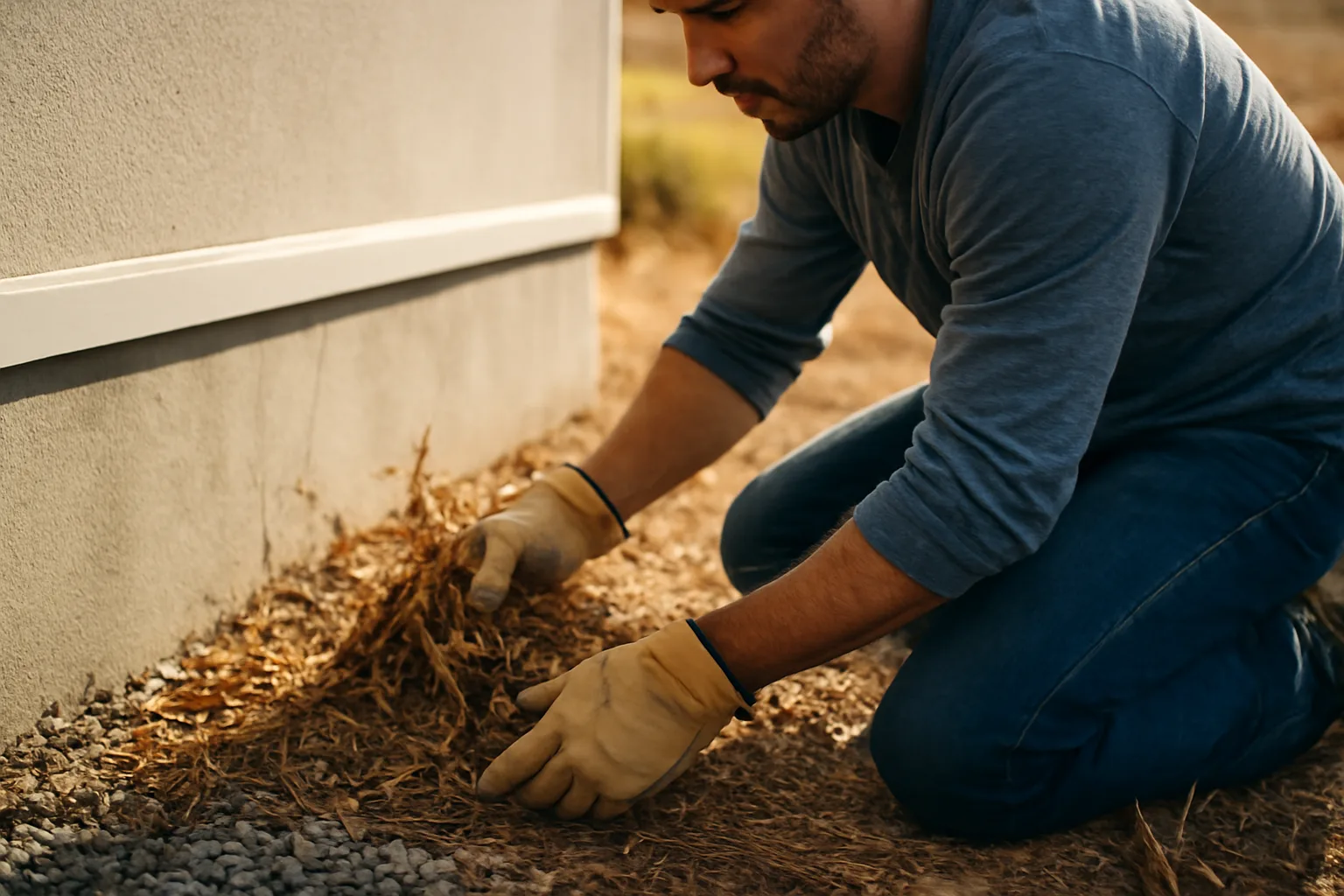
You can't prevent wildfires from starting in the wilderness, but you can dramatically cut the odds your specific home catches fire from one. Ready.gov and CAL FIRE both frame this around ember exposure, since embers, not the flame front, ignite most homes in a wildfire. The highest-leverage moves, in rough order of cost-effectiveness: clear anything flammable within 5 feet of your foundation (mulch, stored firewood, dry plants, that pile of cardboard in the garage doorway), screen attic and foundation vents with 1/8-inch metal mesh to block embers, and clean gutters and roof valleys of pine needles and leaves before fire season. These three cost under $500 total for most homes and address the most common ignition points. After that: replace or seal wood fencing where it attaches to the house (a fence is basically a fuse straight to your siding), move firewood and propane tanks 30 feet out, and thin vegetation in the 5-30 foot zone so no single shrub touches another in a continuous line. fire safe landscaping California next to house covers plant spacing and species choices in more depth.
How do I prepare for a wildfire (evacuation and documentation)?
Preparing for a wildfire has two tracks that people mix up: getting your property ready to survive, and getting your household ready to leave fast. Ready.gov's wildfire guidance recommends having a go-bag, a written evacuation plan with two routes, and a way to receive local alerts, since cell networks and even landline notification can lag during fast-moving fires [4]. The overlooked piece is documentation. Before fire season, photograph or video every room, your roof, your defensible space clearing, and any hardening upgrades (new vents, gutter guards, ember-resistant siding). Store it somewhere off-property, cloud storage or a family member's house works. This isn't paranoia, it's the exact material an insurer or a FAIR Plan asks for after a loss, and it's the same material you'd want ready if you're trying to prove compliance to avoid a non-renewal in the first place. A structured version of this, organized the way carriers actually request it, is what our $99 Wildfire Insurance Survival Kit walks you through: a one-time document package covering your defensible space photos, hardening upgrades, and property inventory in the order an adjuster or underwriter expects to see it. We don't file claims or deal with your insurer on your behalf; you assemble and send your own file, we just make sure nothing's missing.
How do I prevent forest fires and avoid forest fires from starting?
Most forest fires that threaten homes start from human activity, not lightning. The U.S. Forest Service and CAL FIRE both point to unattended campfires, dragging trailer chains that spark on pavement, mowing dry grass with metal blades, and discarded cigarettes as leading human-caused ignition sources [5]. Preventing forest fires at the individual level means controlling those specific behaviors: fully drown and stir campfires until they're cold to the touch, don't park hot vehicles on dry grass, avoid outdoor equipment use during red flag warnings, and follow local burn permit rules for debris piles. "Only you can prevent wildfires" isn't just a slogan, it's a genuine statistical point: the Forest Service estimates roughly 85-90% of wildland fires nationally are human-caused, which is exactly why individual behavior during high-risk weather windows matters more than most people assume [6]. Our only you can prevent wildfires piece goes through the specific red flag warning behaviors worth changing.
How do I prepare for forest fires if I live near wildland?
If your home backs up to forest or open wildland, preparation means treating the wildland edge itself as part of your defensible space, not a boundary you stop at. CAL FIRE's Zone 2 (30-100 feet) guidance calls for reducing continuous fuel, removing dead vegetation, and creating "fuel breaks" through spacing between tree canopies rather than clear-cutting everything. Beyond vegetation, prepare your structure for the ember storm that typically arrives well before any visible flame front. That means Class A fire-rated roofing where you can afford the upgrade, ember-resistant vents, and non-combustible material in the first 5 feet around the house (gravel, pavers, concrete, not mulch or bark). If you're on a shared driveway or private road, confirm it's wide enough and clear enough for a fire engine, since narrow or overgrown access roads are a documented reason firefighters have to bypass structures during active incidents. If you're in Washington State specifically, defensible space clearing sometimes requires a contract through DNR cost-share programs rather than doing it solo; see wildfire defensible space clearing contracts Washington State DNR for how that process works.
Is Santa Barbara safe from fire?
No coastal California community is "safe" from fire in an absolute sense, and Santa Barbara County has a documented history that argues against complacency: the 2017 Thomas Fire (at the time one of the largest in modern California history) burned into Santa Barbara County and was followed within weeks by the January 2018 Montecito debris flow, which killed 23 people, a disaster directly triggered by fire-denuded hillsides unable to hold heavy rain . Large sections of Santa Barbara County sit in State Responsibility Areas or Very High Fire Hazard Severity Zones under CAL FIRE's hazard mapping, meaning defensible space law under PRC 4291 applies directly to many hillside and foothill properties, more than remote mountain parcels [1]. If your property is in Montecito, the Riviera, upper State Street, or similar foothill-adjacent neighborhoods, you can check your specific parcel's hazard zone designation on CAL FIRE's FHSZ viewer rather than guessing based on distance from downtown. The honest framing: Santa Barbara city proper, close to the ocean and away from steep chaparral slopes, carries meaningfully lower wildfire risk than the foothill and canyon neighborhoods a few miles inland. Insurers increasingly price it that way too, which is part of why non-renewals in this region often cluster by specific hillside zip codes rather than the county as a whole.
What should a good fire risk assessment report include?
| Zone 0-5 ft photos and measurements | Matches the highest-scrutiny zone for both CAL FIRE and insurers | |
|---|---|---|
| Roof material and condition | Class A roofing is the single biggest hardening factor insurers ask about | |
| Vent screening spec (mesh size) | 1/8-inch mesh is the commonly cited ember-blocking standard | |
| Access road/driveway width note | Affects fire engine access, sometimes a separate local code issue | |
| Ranked repair list with rough costs | Turns the report into a work plan, more than a score | If a company hands you a single-page score with no photos or measurements, ask for the underlying data before you pay the invoice. That single page won't satisfy an underwriter reviewing a non-renewal appeal, and it won't tell you what to fix first. |
A useful report gives you something you can act on and something you can hand to an insurer, more than a letter grade. At minimum it should include dated, geotagged photos of all three defensible space zones, exact measurements (not estimates) of clearance distances, a roof and vent material assessment, and a written punch list ranked by cost and urgency. |Report element|Why it matters|
What should I fix before I even call an assessor?
A handful of fixes are cheap, fast, and make any assessment result better immediately, which means doing them first can save you a re-inspection fee. Clear the 5-foot zone around your foundation of mulch, dry leaves, and stored items. Move firewood stacks at least 30 feet from the house. Clean pine needles and leaf litter out of gutters and roof valleys. Trim tree limbs so nothing overhangs the roof or chimney. None of that requires a contractor. It requires an afternoon and a pair of gloves. Do this before you pay $300-800 for an assessment, because a company grading a property that's already done the easy 20% will spend its time (and your money) on the harder, more expensive recommendations that actually move the needle, rather than writing up the obvious stuff you could have fixed yourself. For homes that have already had a fire event nearby or on the property, house fire and fire at a house cover documentation and rebuild-adjacent considerations that intersect with insurance timelines.
Frequently asked questions
When does the California defensible space law go into effect?
The core 100-foot defensible space requirement under Public Resources Code 4291 has been in effect since its 2020 amendment, it's current law now, not a future date. The newer Zone 0 (0-5 foot) ember-resistant zone rule is still in rulemaking; check CAL FIRE's Board of Forestry site for the current proposed effective date before assuming a specific year.
Why won't people follow the defensible space law in California?
Cost is the biggest reason, clearing 100 feet on a wooded slope can run into the thousands of dollars. Others don't know the rule applies to their parcel, disagree with how it changes their landscaping aesthetically, or assume enforcement historically ends with a warning letter rather than a real penalty.
How do I prevent wildfires around my house?
Clear flammable material within 5 feet of your foundation, screen vents with 1/8-inch metal mesh, keep gutters and roofs free of dry leaves and needles, and space out vegetation in the 5-30 foot zone so fire can't jump plant to plant toward your home.
How do I prepare for a wildfire?
Build a go-bag, write an evacuation plan with two routes, sign up for local emergency alerts, and photograph your property (rooms, roof, defensible space) and store the images off-property so you have documentation ready if you need to file a claim or prove hardening work.
How do I prevent forest fires?
Fully extinguish campfires until cold, avoid parking or dragging equipment over dry grass, don't use outdoor power tools during red flag warnings, and follow local burn permit rules. The U.S. Forest Service attributes roughly 85-90% of wildland fires nationally to human causes.
How can we prevent forest fires as a community?
Community-level prevention means enforcing local burn bans during red flag conditions, funding chipper and vegetation removal programs, maintaining fuel breaks on shared open space, and supporting Firewise USA chapters, which coordinate neighborhood-wide defensible space work rather than relying on individual compliance alone.
What fire safety rules for homes take effect in 2026?
There's no single confirmed 2026 nationwide rule. California's Zone 0 ember-resistant zone regulation has had multiple proposed effective dates and hasn't landed on a final one as of the most recent Board of Forestry updates. Check your state fire marshal's page directly rather than relying on a rumored year.
Is Santa Barbara safe from fire?
No, especially in foothill and canyon neighborhoods. The 2017 Thomas Fire burned into Santa Barbara County and was followed by the deadly 2018 Montecito debris flow. Many hillside parcels sit in Very High Fire Hazard Severity Zones under CAL FIRE mapping, while coastal, flatter areas carry meaningfully lower risk.
How much does a fire risk assessment company charge?
Expect roughly $150 for a basic checklist walk-through up to $800 or more for a full report with measurements, photos, and a prioritized repair list. Some carriers send their own inspector for free, but that report typically belongs to the insurer, not you.
How do I find a legitimate fire risk assessment company near me?
Start with your county fire department or local fire district, many keep a vetted contractor list. Verify any state contractor license if they'll also do repair work, and confirm the report follows a recognized standard like CAL FIRE's defensible space zones rather than a vague proprietary score.
What should I fix before hiring a fire risk assessor?
Clear the 5-foot zone around your foundation, move firewood 30 feet away, clean gutters and roof valleys, and trim overhanging branches. These cost nothing but time and mean the paid assessment focuses on the harder, higher-value recommendations instead of the obvious stuff.
Does a fire risk assessment help with an insurance non-renewal?
It can, if it's documented well: measurements, dated photos, and a clear repair list. Insurers and FAIR Plans generally respond to evidence of specific work done, not a generic risk score. You still send your own documentation; an assessment doesn't secure coverage for you on its own.
Sources
- California Legislature, Public Resources Code 4291: 100-foot defensible space requirement around structures in State Responsibility Areas
- California Department of Insurance, Safer from Wildfires: Insurer discount program requirements tied to home hardening documentation
- CAL FIRE, Wildfire Preparedness: Statewide compliance and education campaign addressing inconsistent defensible space compliance
- USDA Forest Service, Wildfire Causes and Evaluations: Human activities as leading sources of forest fire ignition
- National Interagency Fire Center / USDA Forest Service: Approximately 85-90% of wildland fires nationally are human-caused
- CAL FIRE, Fire Hazard Severity Zone Maps: Very High Fire Hazard Severity Zone designations applicable to Santa Barbara County hillside parcels