Last updated 2026-07-25
TL;DR
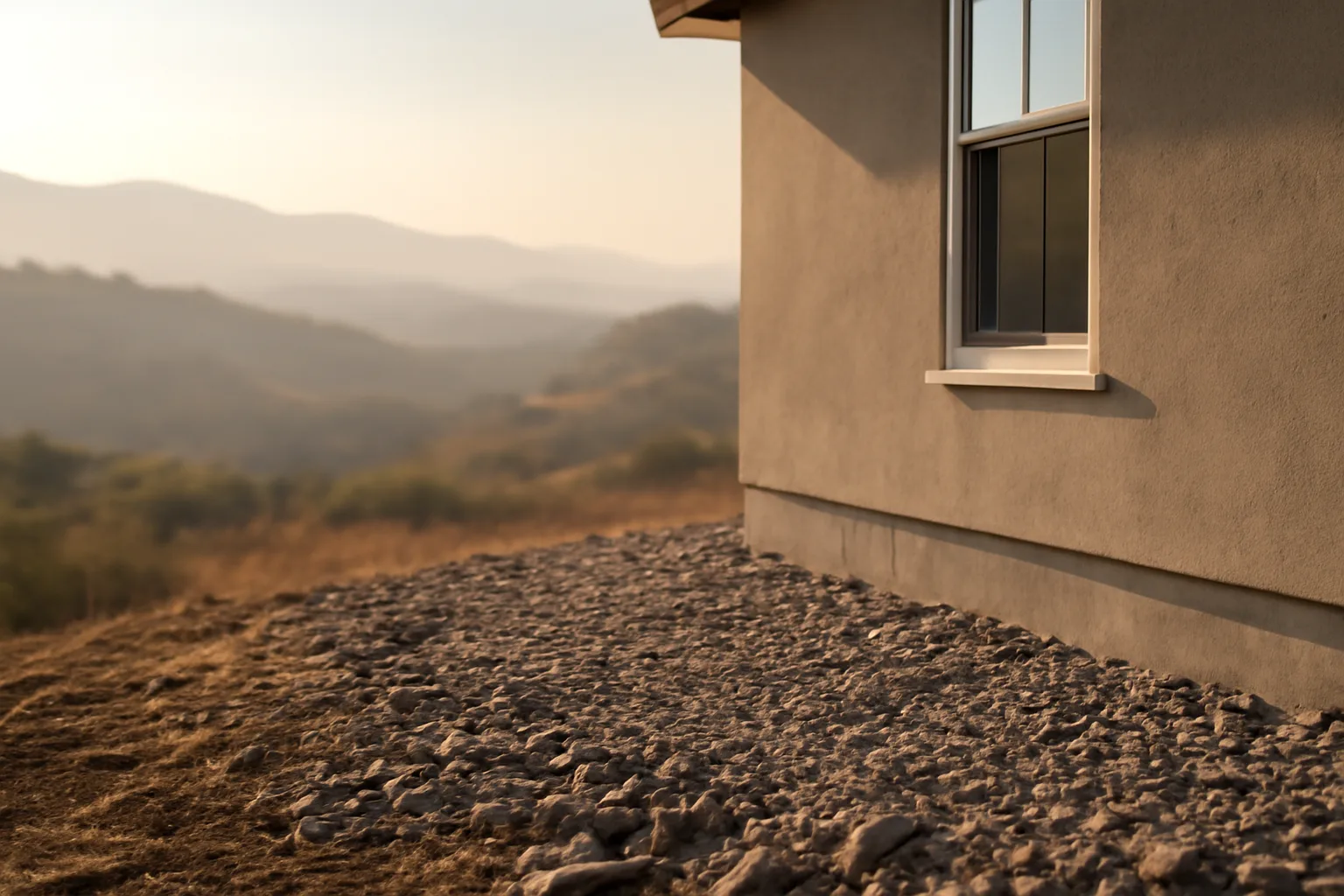
Home fires in wildfire zones are driven by embers landing on roofs, gutters, and vents, not walls of flame. Clearing 5 feet of nothing-combustible around the foundation, cleaning gutters and roofs, and screening vents with 1/8-inch mesh cuts structure ignition risk more than almost anything else, according to CAL FIRE and the Insurance Institute for Business & Home Safety.
why do homes actually catch fire in a wildfire
Most homes that burn in wildfires aren't hit by a wall of flame rolling through the yard. They ignite from embers, sometimes landing 30 minutes to an hour before the main fire front arrives, sometimes carried a mile or more ahead of it. The Insurance Institute for Business & Home Safety (IBHS) has documented that embers entering through vents, landing in gutters full of dry leaves, or igniting mulch pressed against siding account for the majority of home losses in wildfire events. That's the uncomfortable part for homeowners: your house can survive the fire and still burn down because a neighbor's fence caught, or because pine needles in your gutter smoldered for twenty minutes before anyone noticed. CAL FIRE's own research arm has pushed this point for years. Defensible space isn't really about stopping a wall of flame at your property line. It's about denying embers fuel once they land. This is why insurance companies now send inspectors who photograph your roof valleys, your under-deck storage, and the mulch touching your foundation, more than the brush 100 feet out. If you got a non-renewal letter, there's a decent chance it wasn't the forest behind your house that triggered it. It was the wood pile against the garage wall.
when does the california defensible space law take effect
| Zone 0 (ember-resistant, pending final rule) | 0-5 ft | No combustible mulch, no stored fuel, minimal plantings | |
|---|---|---|---|
| Zone 1 | 5-30 ft | Remove dead vegetation, space plants, keep grass under 4 inches [1] | |
| Zone 2 | 30-100 ft | Reduce fuel volume, space tree canopies, mow dry grass | Your local fire district may layer stricter rules on top of the state minimum. [Check your specific fire district's mitigation requirements here, since some counties add tree-spacing or roof-material mandates beyond state law.] |
California's core defensible space law, Public Resources Code 4291, has been in effect since 2005 and requires 100 feet of defensible space clearance around structures in State Responsibility Areas (and now also in Very High Fire Hazard Severity Zones inside local jurisdictions) [1]. That part isn't new and isn't changing in 2026. What is newer and still working through rulemaking is the "Zone 0" ember-resistant zone, the 0-to-5-foot area immediately touching your home. California passed AB 3074 in 2020, directing the Board of Forestry and Fire Protection to develop regulations for this zone, banning combustible mulch, storage, and vegetation within 5 feet of structures [2]. As of early 2025 the Board had not finalized the Zone 0 regulation text; CAL FIRE's public materials describe it as still in development, with enforcement timing to be set once the regulation is adopted [3]. If you're in California, don't wait for the final rule. Treat the 0-5 foot zone as nothing-combustible now, because insurers are already grading it that way whether or not the statute has caught up. For the standard 100-foot zones, the structure is: | Zone | Distance from structure | What's required |
why won't people follow the defensible space law in california
Compliance rates are genuinely low in a lot of high-risk counties, and it's not usually because people don't know the rule exists. Cost, labor, and trust are the three real barriers. Clearing 100 feet of brush on a sloped, forested lot can run into the thousands of dollars if you hire it out, and a lot of homeowners in these zones are older, on fixed incomes, or dealing with properties too large to clear by hand in a weekend. CAL FIRE's own defensible space inspection data has repeatedly shown large shares of inspected parcels failing on first visit, often on fixable items like debris on roofs or unmaintained clearance rather than total non-compliance. There's also a trust gap. Some homeowners have told local reporters and county officials they don't believe clearing vegetation actually helps, especially after watching neighbors comply and still lose homes to ember storms that jumped defensible space entirely. That's a fair, if incomplete, read of a bad experience. Defensible space reduces risk, it doesn't eliminate it, and in extreme wind-driven events (the kind that destroyed thousands of structures in the 2018 Camp Fire and 2023 Lahaina fire) even well-prepared homes can be lost. Enforcement is also inconsistent: many counties rely on self-certification or infrequent inspection cycles, so there's little practical consequence for skipping it until a red-tag inspection or an insurance non-renewal forces the issue. If you're skeptical clearing brush matters, look at it from the insurer's side instead of the fire's side. Underwriters aren't grading your yard because they think it will stop a megafire. They're grading it because it changes the odds their payout is a full rebuild versus a partial loss.
how to prevent wildfires from starting near your home
Most wildfires near homes aren't lightning strikes. They're human-caused: unattended campfires, dragging trailer chains, mowing dry grass with metal blades that spark, and downed power lines. Ready.gov and the U.S. Forest Service both note that a large share of wildfires nationally are human-caused, and around home ignition sources specifically, equipment sparks and debris burning are common culprits [4]. A few things actually move the needle: Don't mow or use trimmers on dry grass during red flag warning days, especially with metal blades hitting rocks. Keep any debris burning inside a fire district's approved burn window and never during wind advisories; check your county's burn permit rules before lighting anything. Keep vehicles and equipment off dry grass; catalytic converters and exhaust systems run hot enough to ignite it. Maintain defensible space so a spark that does start doesn't have a fuel path straight to your house. None of this is about heroics. It's about removing the easy ignition points that turn a five-minute grass fire into a structure loss.
how to prepare for a wildfire before it happens
Preparation splits into two tracks: hardening the structure, and having your documentation and evacuation plan ready before you need it. Both matter, and homeowners tend to only do one. For the structure, prioritize in this order, because this is roughly the order embers exploit: roof and gutters first (clear debris, screen or box in vents with 1/8-inch metal mesh), then the 0-5 foot zone around the foundation (remove mulch, move firewood and propane tanks at least 30 feet away), then decks and fences (nothing combustible touching the house), then the broader defensible space zones. Ready.gov's wildfire preparedness guidance recommends keeping gutters and roofs clear of leaves and debris and covering vents with metal mesh no larger than 1/8 inch, specifically because embers exploit these gaps. For documentation, this is the part people skip until it's too late. Insurers and FEMA both ask for proof of what you owned and what condition your home was in before a loss. A simple, dated video walkthrough of every room, closet, and the exterior, stored somewhere other than your house (cloud backup or a family member's place), does more for a claim than people expect. This is the gap our $99 Wildfire Insurance Survival Kit is built around: a structured way to document your home's condition and mitigation work before an inspector or adjuster ever shows up, so you're not reconstructing your life from memory after a loss. We don't file claims for you; you send your own documentation, you keep control of the record. Also build a go-bag and a written evacuation plan with two routes out, since fire can close one direction fast. Ready.gov's guidance suggests practicing the evacuation route with everyone in the household, more than having it written down.
how to prevent forest fires and avoid forest fires in your area
"Preventing forest fires" at a personal level really means removing the human ignition sources, since natural ignition (lightning) is largely out of your control. The National Interagency Fire Center and U.S. Forest Service attribute a majority of wildfires nationally to human causes including unattended campfires, arson, equipment use, and debris burning [5]. Practical steps that apply to homeowners, campers, and anyone managing land near wildfire risk: Fully drown and stir campfires, don't just let them smolder; "drown, stir, feel" (dead out to the touch) is the standard USFS guidance [5]. Avoid parking or idling vehicles on dry grass. Check local fire restrictions and Red Flag Warning status before any outdoor burning, chainsaw work, or grinding. Keep chains and equipment maintained so metal-on-metal sparking doesn't happen while towing. At the community level, supporting local fuel reduction programs and defensible space cost-share programs (many counties and some utilities offer these) does more collectively than any single household's effort, because fire doesn't respect property lines. If your neighbor's overgrown lot is 20 feet from your fence, your own defensible space work is worth less.
how to prepare for forest fires if you live near wildland
If your property backs up to wildland or a National Forest boundary, the prep list above still applies, with a few additions specific to being closer to fuel-heavy terrain. Check whether your area has a Community Wildfire Protection Plan (CWPP), a locally developed plan under the Healthy Forests Restoration Act of 2003 that identifies priority fuel reduction areas and can affect how quickly your area gets served by fuel crews [6]. Sign up for your county's emergency alert system directly (don't rely on push notifications alone; cell service degrades near fire fronts). Know your zone's evacuation designation if your county uses a zone-based system (many California and Colorado counties do post-2018). For the physical work, coordinate with neighbors on shared fuel breaks where possible. A 100-foot defensible space that ends at a property line next to unmanaged fuel is a smaller improvement than the same clearance mirrored on both sides. Some fire districts and state forestry agencies offer chipper day programs or cost-share grants for exactly this reason. [Check with your specific fire district for current chipper day schedules and cost-share eligibility.]
what fire safety rules for homes take effect in 2026
There isn't one single national "2026 fire code" everyone should watch for. Instead there are several state-level tracks moving toward stricter enforcement or rulemaking around that window, and homeowners in different states are watching different things. In California, the Zone 0 ember-resistant zone rule under AB 3074 remains the biggest pending change; CAL FIRE and the Board of Forestry have indicated regulations are in development, with no finalized statewide enforcement date publicly confirmed as of the most recent CAL FIRE materials [3]. Homeowners should watch Board of Forestry and Fire Protection meeting agendas directly rather than relying on secondhand deadline claims. Separately, California's Chapter 7A building code (fire-resistant construction standards for new construction and remodels in Wildland-Urban Interface Fire Areas) already applies to qualifying new builds and major renovations, and local jurisdictions periodically update adoption of the state building code on the standard three-year cycle set by the California Building Standards Commission [7]. If you're planning a rebuild or major remodel in a WUI zone, check with your local building department on which code cycle currently applies, since adoption dates and amendments vary by jurisdiction. Colorado, Oregon, and Arizona each have their own separate frameworks (Oregon's SB 762 wildfire risk map and defensible space code process being the most active one outside California), so a homeowner in Ashland, Oregon is tracking a different rulemaking timeline than one in Boulder, Colorado. [Check your state fire marshal's office for the specific rule or code cycle applicable to your address.]
is santa barbara safe from fire
No California coastal community, including Santa Barbara, is "safe" from wildfire in any absolute sense, and the area's own history argues against that framing. Santa Barbara County has been hit by several major fires in the last two decades, including the 2017 Thomas Fire, which burned roughly 281,893 acres and was, at the time, the largest wildfire in modern California history, followed by deadly post-fire debris flows in Montecito in January 2018 that killed 23 people [8]. The city and county sit against the Santa Ynez Mountains with dense chaparral fuel, seasonal Sundowner winds that can push fire downslope toward neighborhoods fast, and a long dry season. Cal Fire designates significant portions of the surrounding hillside communities as Very High Fire Hazard Severity Zones, which triggers the state's defensible space and building code requirements [1]. That doesn't mean living there is reckless. It means homeowners in Santa Barbara, Montecito, and similar coastal-adjacent foothill communities should treat defensible space compliance and structure hardening as non-optional, not as a box-checking exercise, and should expect insurers to scrutinize these addresses closely given the claims history. If you're house-hunting there, pull the property's VHFHSZ status and fire history before you fall in love with the view.
how can we prevent forest fires at the community level
Individual prep matters, but fire doesn't stop at your fence line, so community-level prevention compounds individual effort in a way that's easy to underrate. Things that work at the neighborhood or community scale: coordinated fuel breaks along shared boundaries, HOA or community chipper days that make debris disposal free or cheap (removing the main excuse people give for not clearing brush), Firewise USA recognition through the National Fire Protection Association, which structures a community-wide risk reduction plan and can sometimes factor into insurance discussions, and local Community Wildfire Protection Plans that direct where limited fuel-reduction funding actually gets spent [6]. None of this replaces your own home hardening. But a single hardened home surrounded by unmanaged fuel is still exposed, both to direct flame contact and to the radiant heat of a large fire burning close by. If you want your individual work to actually hold, get your street or HOA involved, more than your own lot.
what to do right now if you got a non-renewal or inspection letter
If you're holding a non-renewal letter or a scheduled inspection notice, the order of operations matters. Panic-clearing your whole lot in one weekend before documenting anything wastes the best evidence you have. First, photograph and video everything as it currently stands, dated and geotagged if possible, before you do any mitigation work. This gives you a documented before-state. Second, work the priority list: roof and gutters, then the 0-5 foot zone, then vents, then defensible space zones outward. Third, re-document after each phase of work, since insurers and inspectors respond better to dated evidence of specific completed items than a general claim that "we cleared the property." Fourth, keep receipts for any contractor work (chipping, tree removal, vent screening), since some insurers and some state programs consider mitigation investment in underwriting decisions. We're not a public adjuster and we don't file claims on your behalf or promise reinstatement or discounts. What we do build is a structured way to document your home's condition and mitigation work so you're the one holding organized, dated proof when you need it, whether that's for an insurer, an inspector, or your own peace of mind. That's the $99 Wildfire Insurance Survival Kit: a one-time toolkit, not a subscription, not a claims service. For the underlying hardening work itself, see our breakdowns on home hardening priorities and rebuild code compliance, fire-safe landscaping directly against the house, and defensible space zone-by-zone requirements.
Frequently asked questions
When does the California defensible space law go into effect?
The core 100-foot defensible space requirement under Public Resources Code 4291 has been in effect since 2005. The newer Zone 0 (0-5 foot ember-resistant zone) rule under AB 3074 was still in regulatory development as of CAL FIRE's most recent public materials, with no finalized statewide enforcement date confirmed. Check Board of Forestry meeting agendas for updates.
Why won't people follow the defensible space law in California?
Cost of clearing large or sloped lots, physical labor limits (especially for older or fixed-income homeowners), inconsistent enforcement, and skepticism after seeing compliant homes lost in extreme ember-driven fires are the main reasons. CAL FIRE inspection data shows many failures are fixable items like roof debris, not total non-compliance.
How do I prevent wildfires from starting on my property?
Avoid mowing dry grass with metal blades on hot windy days, keep vehicles and equipment off dry vegetation, follow local burn permit rules, maintain equipment to prevent sparking, and check Red Flag Warning status before any outdoor work involving heat, sparks, or flame.
How do I prepare for a wildfire if I live in a high-risk zone?
Harden your roof, gutters, and vents first, clear the 0-5 foot zone around your foundation, build defensible space outward through 100 feet, document your home's condition and belongings on video before any loss occurs, and have a written evacuation plan with two routes practiced with your household.
How can we prevent forest fires as a community, more than individually?
Coordinate fuel breaks with neighbors, organize chipper days to make debris removal free or cheap, pursue Firewise USA recognition through the NFPA, and support your county's Community Wildfire Protection Plan, since fire doesn't respect property lines and one hardened home surrounded by unmanaged fuel is still exposed.
Is Santa Barbara safe from wildfire?
No, not in any absolute sense. Santa Barbara County has a documented history of major fires, including the 2017 Thomas Fire (roughly 281,893 acres) and the deadly 2018 Montecito debris flows that followed it. Much of the surrounding hillside area is a Cal Fire-designated Very High Fire Hazard Severity Zone requiring defensible space compliance.
What fire safety rules for homes take effect in 2026?
There's no single national 2026 fire code. California's pending Zone 0 ember-resistant zone regulation under AB 3074 is the most significant homeowner-facing rule in development. Colorado, Oregon, and Arizona have separate state-level frameworks and timelines; check your state fire marshal's office for the rule cycle that applies to your address.
How do embers cause homes to burn during wildfires?
Embers can travel a mile or more ahead of a fire front and ignite homes through gaps like uncovered vents, debris-filled gutters, and combustible mulch touching siding, often 30 minutes to an hour before the main fire arrives. IBHS research identifies ember intrusion, not direct flame contact, as the leading cause of home ignition in wildfires.
What is Zone 0 in California's defensible space rules?
Zone 0 is the 0-to-5-foot area immediately surrounding a structure, targeted by AB 3074 for an ember-resistant standard: no combustible mulch, no stored fuel or firewood, and minimal, well-spaced plantings. As of the most recent CAL FIRE materials, the Board of Forestry and Fire Protection had not finalized enforcement regulations for this zone.
Does clearing defensible space guarantee my house won't burn?
No. Defensible space reduces the odds embers and radiant heat ignite your structure, but it doesn't guarantee survival in extreme, wind-driven fires like the 2018 Camp Fire. It's risk reduction, not risk elimination, which is part of why some homeowners who comply and still lose homes become skeptical of the requirement.
What should I document before a home inspection or insurance non-renewal review?
Take dated photos and video of your roof, gutters, vents, the 0-5 foot zone around your foundation, and your defensible space clearance before doing mitigation work, then re-document after each phase. Keep contractor receipts for chipping, tree removal, or vent screening as proof of completed mitigation.
How do I prevent forest fires when camping or working near wildland?
Fully drown and stir campfires until they're cold to the touch (the US Forest Service's 'drown, stir, feel' method), avoid parking or idling vehicles on dry grass, check local fire restrictions and Red Flag Warning status before burning debris, and keep towing chains and equipment maintained to prevent sparking.
Sources
- California Public Resources Code Section 4291: 100 feet of defensible space clearance is required around structures in State Responsibility Areas and VHFHSZs
- California Legislature, AB 3074 (2020): AB 3074 directs the Board of Forestry and Fire Protection to develop an ember-resistant zone regulation within 5 feet of structures
- California Board of Forestry and Fire Protection, Zone 0 rulemaking materials: Zone 0 regulations remain in development with no finalized statewide enforcement date publicly confirmed
- USDA Forest Service, Wildfire causes and evaluation: A majority of U.S. wildfires are human-caused, including debris burning, equipment use, and unattended campfires
- USDA Forest Service, Campfire safety guidance: Campfires should be drowned, stirred, and felt to confirm they are fully out (drown, stir, feel method)
- Healthy Forests Restoration Act of 2003 and Community Wildfire Protection Plans: Community Wildfire Protection Plans, established under the Healthy Forests Restoration Act, direct local fuel reduction priorities
- California Building Standards Commission, Code adoption cycle: California building code, including Chapter 7A wildfire construction standards, is updated on a periodic adoption cycle set by the Building Standards Commission
- CAL FIRE, Thomas Fire incident information: The 2017 Thomas Fire burned approximately 281,893 acres and was the largest wildfire in modern California history at the time