Last updated 2026-07-25
TL;DR
California's expanded defensible space Zone 0 (ember-resistant zone within 5 feet of structures) is expected to become enforceable in 2026 for many high-fire-severity zones, per CAL FIRE and SB 63/AB 3074 rulemaking. Until then, home hardening (Class A roofing, ember-resistant vents, cleared vegetation to 100 feet) is the best-documented way to cut structure loss risk, according to CAL FIRE and Insurance Institute for Business & Home Safety research.
When does the California defensible space Zone 0 law actually go into effect?
Short answer: it's still being finalized, and the honest answer depends on which part of the law you mean. California's Assembly Bill 3074 (2020) directed the Board of Forestry and Fire Protection to develop regulations for an ember-resistant "Zone 0" within 5 feet of a home, and Senate Bill 63 (2025) pushed the timeline and expanded which structures fall under it. [1] [2] As of this writing, CAL FIRE and the Board of Forestry have not finalized the Zone 0 regulation text into enforceable code. The Board's public materials describe a phased approach, with the ember-resistant zone rule expected to move through rulemaking with an eye toward 2026 enforcement in Very High Fire Hazard Severity Zones and some State Responsibility Area parcels, but the exact effective date has shifted more than once already. [3] If you own property in a mapped high-severity zone, don't wait for the final gavel. Treat 2026 as the planning deadline, not the day you start. What we know for certain right now: California Public Resources Code 4291 already requires 100 feet of defensible space clearance around structures in State Responsibility Areas (or to the property line, whichever is less), and this has been law since it was last amended in 2005. [4] That's the baseline every homeowner in a wildland-adjacent area should already meet. Zone 0 is an addition on top of that, not a replacement. Your local fire district may also have stricter timelines than the state minimum. [Guided fill-in: check with ______ fire district / county fire marshal for local defensible space deadlines and inspection schedules specific to your parcel.]
What is Zone 0 and what will it require?
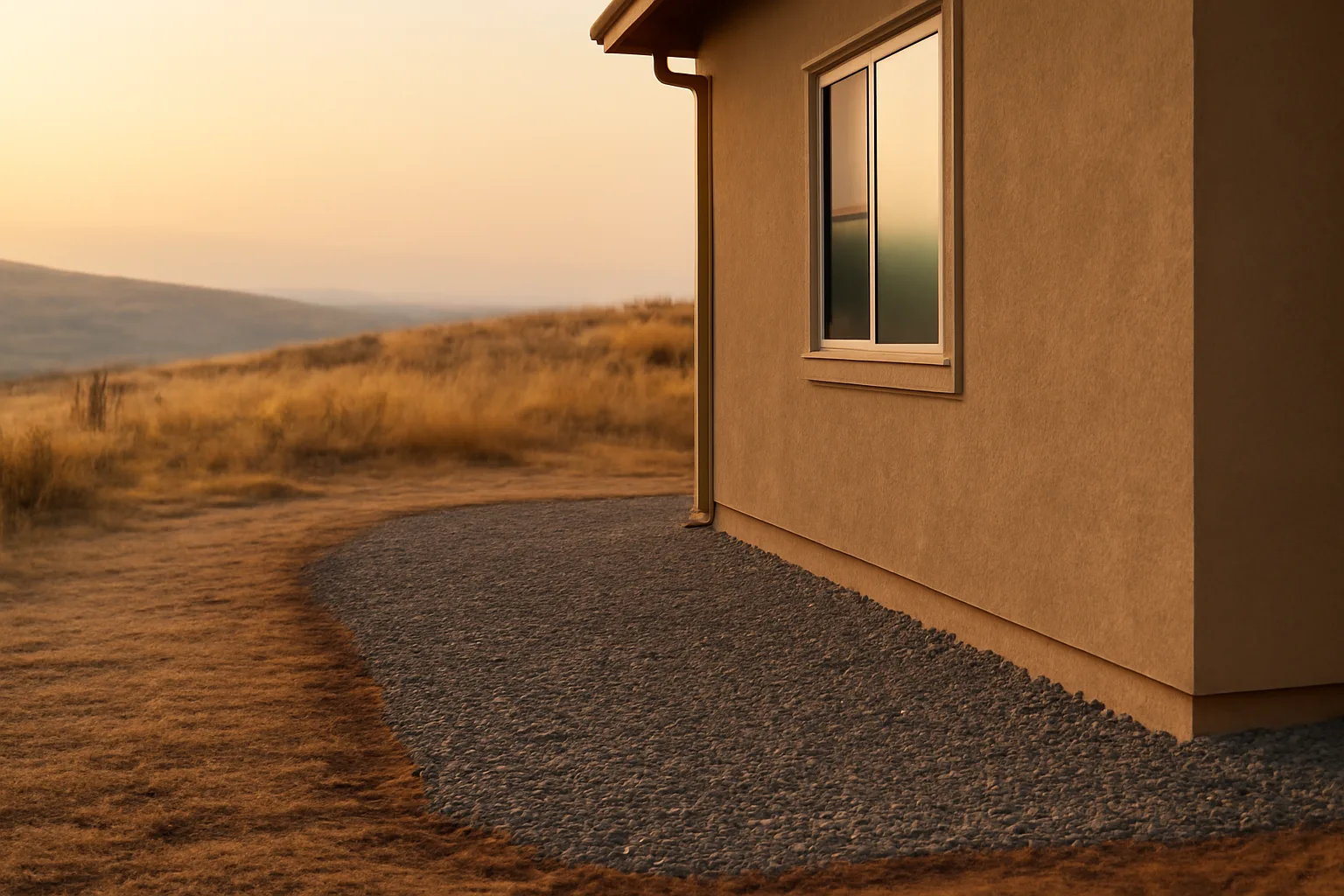
Zone 0 is the 5-foot ember-resistant zone immediately touching your house, deck, and attached structures. Under the framework the Board of Forestry has been developing, it generally means: no combustible mulch, no stored firewood, no combustible fencing or gates attached to the house, and no plants except isolated, well-spaced, low-growing green vegetation. [3] Think gravel, pavers, concrete, or bare mineral soil right against your foundation, not bark mulch or dry ornamental grasses. Embers, not flame fronts, destroy the majority of homes in wildfires. A 2020 review by the Insurance Institute for Business & Home Safety found that ember intrusion and ignition of materials adjacent to the home are the dominant failure mode in wildland-urban interface fires, which is exactly why Zone 0 targets that 5-foot ring so specifically. This is also the cheapest zone to fix. Swapping bark mulch for gravel in a 5-foot perimeter and moving your firewood stack 30 feet away costs a few hundred dollars in most cases, not tens of thousands. Compare that to reroofing or replacing siding, and Zone 0 compliance is the highest-return, lowest-cost item on your list.
Why won't people follow the defensible space law in California?
Cost, confusion, and inconsistent enforcement are the three real reasons, and none of them are irrational. Cost is real for lower-income and older homeowners. Clearing 100 feet of vegetation on a sloped, wooded lot can run from a few hundred dollars for a small flat yard to several thousand dollars for steep, heavily forested acreage, and that's before you touch home hardening items like vents or roofing. CAL FIRE doesn't publish a statewide average cost because parcel conditions vary too much to make one honest number meaningful. Confusion is also legitimate. Zone 0 rules have changed timelines multiple times through the legislative and regulatory process (AB 3074 in 2020, then SB 63 amendments in 2025), and different counties interpret PRC 4291 clearance requirements differently depending on vegetation type and slope. [1] [2] [4] Homeowners reasonably ask: which rule applies to me, my county, or my HOA, and when? Enforcement is uneven. Some California counties do annual defensible space inspections and issue citations for non-compliance; others rely mostly on self-certification or don't have the staff to inspect every parcel every year. When the perceived odds of an inspection are low, some homeowners deprioritize the work, especially if they're also dealing with a fixed income or a home that just got hit with a non-renewal notice and rate shock. None of that changes the underlying physics. Vegetation and embers are still what burn homes down, whether or not anyone shows up to check your yard this year.
How to prevent wildfires from starting near your home
Most wildfires near homes start from something specific and preventable: equipment sparks, unattended debris burns, dragging trailer chains, and downed power lines are recurring causes CAL FIRE tracks every year. You control more of this than you'd think. Don't mow dry grass in the afternoon heat. A lawnmower blade striking a rock is a documented ignition source, and CAL FIRE's "Fire Prevention" guidance recommends mowing before 10am and avoiding it entirely on Red Flag Warning days. Check your vehicle and trailer chains before towing anything off pavement; a dragging chain throwing sparks onto dry roadside grass has started real fires. Keep debris burning to permitted days only and check your county's burn permit status before lighting anything, since permit suspensions during dry season are common and enforced. Maintain defensible space so that if a fire does start nearby (from a neighbor, a car crash, a lightning strike), it has less fuel to reach your structure. This is where prevention and hardening blend together: fire safe landscaping around your house reduces both the odds a fire starts on your property and the odds one that starts elsewhere reaches your house.
How to prepare for a wildfire before it happens
Preparation splits into three buckets: documentation, a go-bag, and a communication plan. Do all three now, not when you smell smoke. Documentation is the piece most homeowners skip and most regret skipping. Photograph every room, your roof, your attic vents, and the outside of your home from all four sides, dated and time-stamped. If you're facing a non-renewal or trying to get reinstated with a new carrier, this documentation is what proves you did the mitigation work; insurers and FAIR Plans increasingly ask for photo evidence of defensible space and hardening features before they'll write or renew a policy. Ready.gov recommends assembling an emergency kit with water (one gallon per person per day for several days), non-perishable food, a battery or hand-crank radio, medications, and copies of important documents in a waterproof container. Add your insurance policy number, a home inventory list, and those dated defensible-space photos to that same folder. Build a family communication and evacuation plan before an order comes, not during one. Ready.gov's guidance specifically recommends identifying two exit routes from your neighborhood in case one is blocked by fire or traffic. Sign up for your county's emergency alert system now (most California counties run one) rather than waiting to figure out how during an evacuation. This is also where a structured kit helps rather than a scattered pile of photos. The Wildfire Insurance Survival Kit ($99 one-time, at /survival-kit-builder) walks you through the specific photo angles, document list, and dated-evidence format insurers and FAIR Plans actually want to see, so you're not improvising this during a red flag warning.
How to prevent forest fires (and how it differs from preventing a house fire)
Forest fire prevention is mostly about ignition source control across a landscape (campfires, fireworks, vehicles, equipment), while home fire prevention is about hardening a single structure against embers that travel from a fire someone else started. Both matter, but they're different jobs with different tools. For forest and wildland fire prevention broadly, the U.S. Forest Service and CAL FIRE point to the same handful of causes over and over: unattended or improperly extinguished campfires, fireworks (illegal in most wildland areas of California, illegal or restricted in much of Colorado, Oregon, and Arizona during fire season), and vehicle or equipment sparks. If you camp, drown your fire, stir the ashes, and drown it again until it's cold to the touch, more than cold to the eye. For your house specifically, prevention means home hardening: Class A fire-rated roofing, ember-resistant (1/8-inch mesh, non-combustible) vent screens, enclosed eaves, and dual-pane or tempered glass windows. CAL FIRE's Fire Hazard Severity Zone guidance and its Ready for Wildfire program treat these four items as the highest-impact hardening upgrades a homeowner can make, because they close the specific pathways embers use to get into a structure. [5] If you're not sure whether your roof, vents, and eaves qualify, read our breakdown of what actually causes a house fire in wildfire conditions and cross-check against your own roof and vent material.
How to avoid forest fires when you're the one at risk of starting one
If you live at the edge of a forest or wildland area, the fires most likely to threaten your home don't start in some distant forest. They start in your yard, your neighbor's yard, or the roadside near your driveway. Avoid outdoor burning on any day with elevated fire weather, even if you have a valid permit; conditions can change faster than a permit gets revoked. Keep your vehicle off dry grass; catalytic converters run over 500°F and are a documented ignition source for roadside and field fires. Store gasoline, propane, and other flammables away from any ignition source and away from your home's Zone 0 perimeter. If you have a wood-burning fire pit or chiminea, keep it inside a cleared, non-combustible area (concrete, gravel, or pavers) with at least 10 feet of clearance to any structure or combustible material, and never use it on a Red Flag Warning day. This single habit prevents more accidental structure fires than almost any other single behavior change.
How to prepare for forest fires if you live at the wildland-urban interface
Preparing for a forest fire near your home means preparing for both an evacuation and, potentially, days of smoke exposure and road closures before or after. Plan for a minimum three-day self-sufficiency window, which is Ready.gov's baseline recommendation for general disaster preparedness. Know your evacuation zone and route before fire season starts. Many California counties now use Genasys or similar zone-based evacuation notification systems; find your zone number and register for alerts now. Keep your car's gas tank at least half full during fire season; you don't want to be searching for an open gas station while a fire is moving toward your neighborhood. Have a defensible space maintenance schedule, not a one-time cleanup. PRC 4291's 100-foot clearance requirement isn't a box you check once; grass regrows, leaves accumulate in gutters, and pine needles pile up under decks every single season. [4] Put it on a calendar: spring clearance before fire season starts, then a mid-summer check in high-growth regions.
What fire-safe rules for homes take effect in 2026?
The single biggest 2026 milestone to watch is the Zone 0 ember-resistant zone regulation, which the California Board of Forestry and Fire Protection has been developing since AB 3074 passed in 2020 and which SB 63 (2025) further shaped. [1] [2] [3] Multiple past target dates for enforcement have slipped, so treat any specific 2026 date you see online as provisional until CAL FIRE or the Board of Forestry publishes final adopted regulation text. Separately, some individual California counties and fire districts have been moving ahead of the state on their own defensible space and vegetation management ordinances, with local effective dates that don't wait for the state Zone 0 rule. [Guided fill-in: check ______ county fire code or local ordinance number for defensible space requirements that may already be in effect ahead of the state Zone 0 timeline.] Outside California, Colorado, Oregon, and Arizona each handle wildfire-related building and defensible space requirements at the state or local level differently, generally through state forestry agencies or, in Oregon's case, a statewide wildfire risk map program tied to building code requirements in mapped high-risk areas. If you're in one of these states, check your state forester's office or state fire marshal's office directly, since there's no single national wildfire building code that applies uniformly. Whatever the exact 2026 date turns out to be, the underlying items it will require (non-combustible material in the 5-foot zone, no attached combustible fencing, no stored firewood against the house) are all things you can and should do right now, law or no law.
Is Santa Barbara safe from fire?
No California city near wildland vegetation is "safe" from fire in an absolute sense, and Santa Barbara County has a documented history of major wildfires, including the 1990 Painted Cave Fire and the 2017 Thomas Fire, which at the time was the largest wildfire in modern California history by acreage before being surpassed by later fires. [6] Much of Santa Barbara's hillside and foothill area is mapped by CAL FIRE within Very High Fire Hazard Severity Zones. That said, "safe" is the wrong frame. The better question is whether a specific property is in a mapped high-severity zone and whether it's been hardened accordingly. You can check any California address against CAL FIRE's Fire Hazard Severity Zone viewer, which is the same map insurers and building departments reference. [7] If your Santa Barbara (or any California) property sits in a Very High or High severity zone, PRC 4291's 100-foot defensible space requirement and the state's home hardening recommendations apply to you specifically, regardless of how the surrounding neighborhood looks. [4] [5] A house on a lot with irrigated landscaping and a hardened roofline in a high-severity zone can be meaningfully safer than a house in a moderate zone with a wood shake roof and gutters full of dry leaves.
How can we prevent forest fires as a community, more than a household?
Individual home hardening only goes so far if your neighbor's cedar-shake roof or overgrown lot sits 30 feet away; fire moves structure to structure in dense wildland-urban interface neighborhoods, more than from wildland into a single home. Community-level defensible space, sometimes organized through Firewise USA (a National Fire Protection Association program) or similar CAL FIRE-recognized community programs, coordinates clearance and hardening across an entire block or subdivision rather than parcel by parcel. Practical community-level steps: coordinate a shared chipper day so neighbors actually clear brush instead of letting it sit (cost is the most common reason people skip clearance, and shared equipment rental cuts that cost significantly). Push your HOA or local fire safe council to inventory which homes in the neighborhood still have wood shake roofs or unscreened vents, since those are the properties most likely to ignite first and then spread fire to neighbors. Review our guidance on defensible space zone requirements and on contracting help for clearing larger or wooded lots if your property (or your neighborhood) needs professional clearing rather than a weekend DIY effort.
What should you document for insurance before wildfire season, not after?
Insurers and state FAIR Plans are increasingly asking homeowners to prove mitigation work, more than claim it happened. Dated, geotagged photos of your roof material, vent screens, gutter condition, and defensible space zones are the baseline; a written contractor invoice for any hardening work adds credibility. We are not a public adjuster, we don't negotiate with insurers, file claims on your behalf, or promise coverage, reinstatement, or discounts. What we do is help you assemble the documentation so you, the homeowner, can present your own case clearly to your carrier or the state FAIR Plan. That distinction matters legally and practically: only you or a licensed adjuster you hire can negotiate a claim. If you got a non-renewal letter or an inspection notice, the fastest way to build a complete, insurer-ready packet is a structured checklist rather than a folder of random photos. That's the entire premise behind the $99 Wildfire Insurance Survival Kit: a one-time purchase that gives you the specific photo list, document checklist, and format insurers actually request, so you're not guessing what to send.
Frequently asked questions
When does the California defensible space law go into effect?
California's baseline 100-foot defensible space requirement (PRC 4291) has been law since 2005. The newer Zone 0 ember-resistant zone rule, from AB 3074 (2020) and SB 63 (2025), is still in rulemaking; CAL FIRE and the Board of Forestry have targeted 2026 for enforcement in high-severity zones, but the exact date hasn't been finalized as of this writing.
Why won't people follow the defensible space law in California?
Mainly cost, confusion over which rules apply to their county or lot, and inconsistent enforcement. Clearing steep, wooded lots can cost thousands of dollars, timelines have shifted through several legislative changes, and not every county inspects every parcel every year, so some homeowners deprioritize work they'd otherwise do.
How do I prevent wildfires from starting on my own property?
Avoid mowing dry grass in afternoon heat, check trailer chains before towing off-pavement, keep debris burning to permitted low-fire-risk days, and maintain defensible space so a nearby ignition has less fuel to reach your home. Most wildfires near homes trace back to equipment sparks, debris burns, or vehicle contact with dry vegetation.
What's the single most important thing to do to prepare for a wildfire?
Build a documented defensible space and hardened structure combination: clear the 100-foot zone required under PRC 4291, harden your roof and vents, and photograph everything with dates. Preparation without documentation leaves you exposed with insurers later; documentation without actual mitigation leaves your home exposed to the fire itself.
How can we prevent forest fires as individuals?
Drown campfires completely and stir the ashes, follow local burn permit rules and Red Flag Warning restrictions, keep vehicles off dry grass, and avoid fireworks in wildland areas where they're restricted or illegal. Most forest fire ignitions are human-caused and traceable to one of these specific behaviors, according to CAL FIRE.
What fire-safe home rules take effect in 2026 in California?
The expected major change is enforcement of the Zone 0 ember-resistant zone within 5 feet of structures in Very High Fire Hazard Severity Zones, developed under AB 3074 and SB 63. The exact 2026 effective date isn't finalized; check CAL FIRE's Board of Forestry rulemaking page for the current status before assuming a specific date.
Is Santa Barbara safe from wildfire?
No California hillside community is fully safe from wildfire. Santa Barbara County has had major fires including the 1990 Painted Cave Fire and 2017 Thomas Fire, and much of its foothill area is CAL FIRE-mapped as Very High Fire Hazard Severity Zone. Check your specific address on CAL FIRE's severity zone map rather than judging safety by neighborhood reputation.
What is Zone 0 and is it different from the 100-foot defensible space rule?
Zone 0 is the 5-foot ember-resistant zone immediately against your house, requiring non-combustible material and no stored firewood or combustible fencing there. It sits inside, not instead of, the broader 100-foot defensible space clearance already required under PRC 4291 for State Responsibility Area properties.
How much does defensible space clearing cost?
Costs vary enormously by lot size, slope, and vegetation density; a small flat yard might cost a few hundred dollars while a steep, heavily wooded acre-plus lot can run several thousand. CAL FIRE doesn't publish a statewide average because parcel conditions differ too much for one number to be meaningful.
Do I need a permit to burn debris or have a campfire near my property?
In most California counties, yes, you need an active burn permit for outdoor debris burning, and permits are frequently suspended during dry, high-wind conditions. Check your county's current burn status before lighting anything; a valid permit from last month doesn't guarantee conditions still allow burning today.
What roofing material is required for wildfire-prone homes in California?
CAL FIRE's Ready for Wildfire home hardening guidance recommends Class A fire-rated roofing as the top-priority upgrade for homes in Fire Hazard Severity Zones, since roofs are a primary ember-ignition point. Wood shake and shingle roofs are the highest-risk material and the first thing insurers and inspectors flag.
How do I know if my house is in a Fire Hazard Severity Zone?
CAL FIRE maintains a public Fire Hazard Severity Zone viewer where you can search by address to see whether your property falls in Moderate, High, or Very High zones. This is the same map insurers, county building departments, and defensible space enforcement programs use to determine which rules apply to you.
Does documenting defensible space work actually help with insurance?
Dated photos and contractor invoices proving you cleared vegetation, upgraded vents, or replaced roofing give insurers and state FAIR Plans concrete evidence to evaluate, which can matter for renewal decisions. We don't negotiate claims or promise outcomes; the homeowner still submits and represents their own documentation to the carrier.
Sources
- California Legislative Information, AB-3074 (2020): AB 3074 (2020) directed development of an ember-resistant Zone 0 defensible space standard within 5 feet of structures
- California Legislative Information, SB-63 (2025): SB 63 (2025) amended timelines and scope for California's ember-resistant zone (Zone 0) defensible space regulation
- California Board of Forestry and Fire Protection, Defensible Space Zone 0 rulemaking: Zone 0 ember-resistant zone regulation is in active rulemaking with a phased approach targeting high-severity zones
- California Public Resources Code Section 4291: California requires 100 feet of defensible space clearance around structures in State Responsibility Areas
- CAL FIRE, Ready for Wildfire, Home Hardening: Class A fire-rated roofing, ember-resistant vents, and enclosed eaves are top-priority home hardening upgrades
- National Interagency Fire Center / CAL FIRE, Thomas Fire incident records: The 2017 Thomas Fire was the largest wildfire in modern California history by acreage at the time
- CAL FIRE, Fire Hazard Severity Zone Viewer: CAL FIRE maintains a public map showing Moderate, High, and Very High Fire Hazard Severity Zone designations by address