Last updated 2026-07-25
TL;DR
You can't make a house fireproof, but you can make it ember-resistant: a Class A roof, metal gutters, 1/8-inch mesh vents, tempered dual-pane windows, and 5 feet of noncombustible clearance around the foundation cut ignition risk more than almost anything else. Pair that with defensible space to 100 feet and you address most of what CAL FIRE and insurers actually check.
What does it actually mean to fireproof a home?
Nobody can make a house literally fireproof. What you're really doing is reducing the chance that embers, radiant heat, or direct flame contact ignite something on or near your structure. Fire scientists call this "home hardening," and CAL FIRE defines it as building and retrofitting with ignition-resistant materials and design details in the zone right around your house. The research backing this is blunt about where fires actually start. The Insurance Institute for Business & Home Safety (IBHS) and multiple post-fire studies have found that most homes lost in wildland-urban interface fires ignite from wind-driven embers landing on vulnerable spots, not from a wall of flame rolling through. Embers can travel a mile or more ahead of a fire front. That means your roof, vents, gutters, and the mulch bed against your foundation matter more than how far you are from the tree line, though that matters too. So "fireproofing" in practice means two overlapping jobs: harden the structure itself (roof, vents, siding, windows, decks) and manage the space around it (the defensible space zones). Skip either one and embers find the gap. This matters for your insurance file too. Underwriters and state-run FAIR Plans increasingly want to see both, documented with photos and receipts, more than described in a phone call.
How to prevent wildfires from destroying your specific house
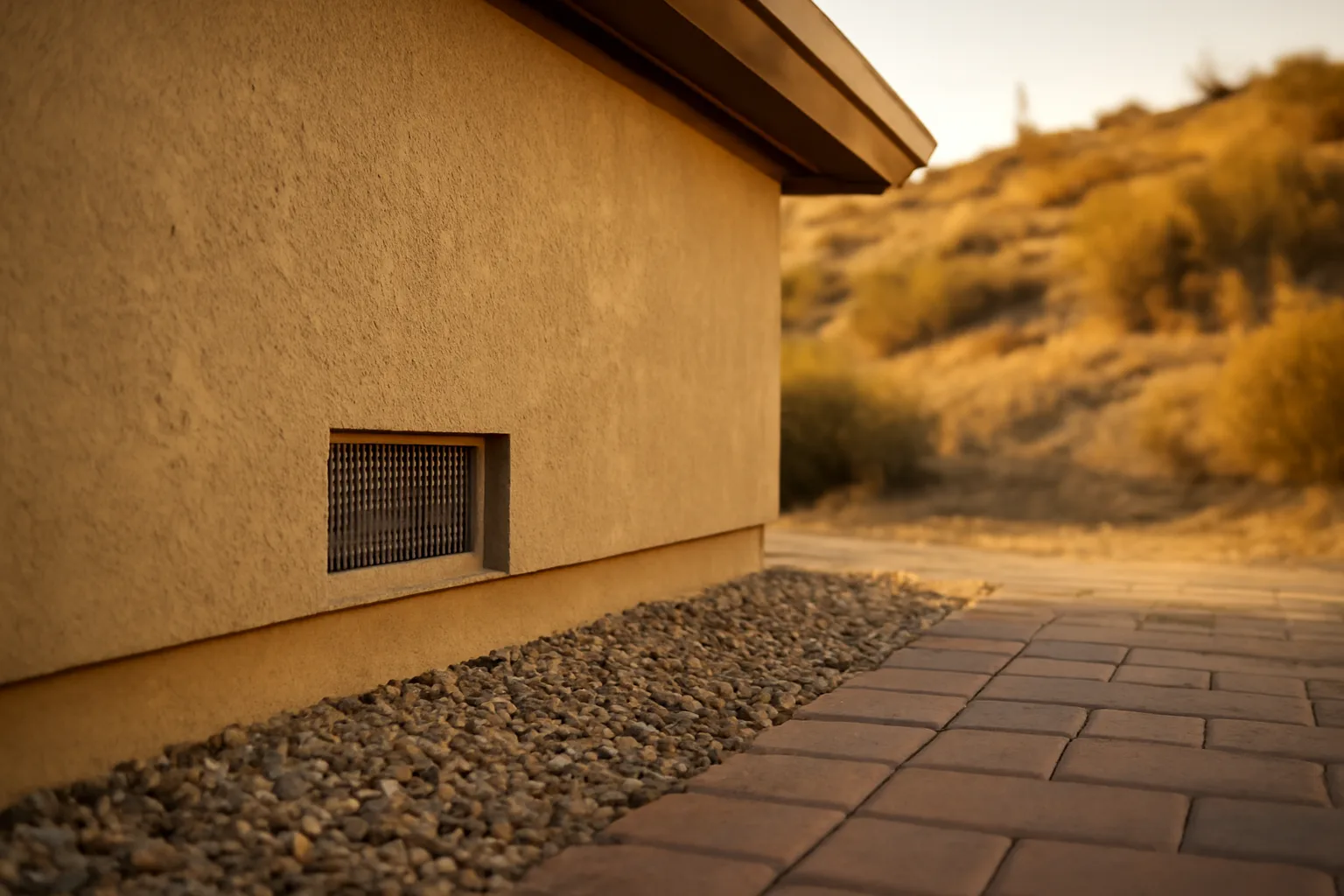
Start with the roof and vents, because that's where most ignitions happen, then work outward. CAL FIRE's home hardening guidance lists Class A fire-rated roofing, ember-resistant vents (1/8 inch metal mesh, no larger), and enclosed eaves as the top structural priorities. Here's a practical order of operations, roughly matched to ignition risk and cost: 1. Roof: Confirm it's Class A rated (asphalt composition shingle, metal, tile, or Class A-rated wood shake). Clear debris from valleys and behind chimneys. A roof in good repair with no missing shingles or moss buildup is doing half the job already. 2. Vents: Attic, crawlspace, and foundation vents are the classic weak point. Retrofit to 1/8 inch noncombustible corrosion-resistant mesh, or better, use WUI-listed ember-resistant vents. 3. Gutters: Metal gutters, kept clear of leaf litter, with gutter guards if you have overhanging trees. 4. Eaves and soffits: Box in open eaves; embers love the swirling air pocket under an overhang. 5. Windows: Dual-pane with at least one tempered pane. Single-pane glass can crack from radiant heat alone, opening a path for embers straight into the house. 6. Siding: Ignition-resistant materials (fiber cement, stucco, treated wood) instead of vinyl or untreated wood, especially in the bottom 6 feet near grade. 7. Decks: Noncombustible or ignition-resistant decking, and nothing combustible stored underneath. Ever. 8. The 5-foot zone: gravel, pavers, or bare soil against the foundation, not mulch, not shrubs, not stacked firewood. If you do only three things this year, do the vents, the 5-foot zone, and gutter cleaning. They're cheap relative to a full roof or siding replacement and they close the most common ember entry points. For a fuller room-by-room and material-by-material breakdown, see house fire and defensible.
How to prepare for a wildfire before it starts
Preparing for a wildfire is a checklist you build once and then rehearse, not a one-time purchase. Ready.gov's wildfire guidance centers on three things: know your evacuation routes, have a go-bag ready, and harden your home and property before fire season, not during it. Ready.gov recommends practicing your evacuation plan and identifying at least two ways out of your neighborhood, since a single blocked route during a fast-moving fire is a common failure point in evacuation studies. Sign up for your county's emergency alert system now; don't wait for a red flag warning to find out it exists. A basic pre-fire checklist: - Photograph and inventory your home's exterior, roof, and defensible space zones (useful for insurance later, more on that below)
- Assemble a go-bag: medications, copies of ID and insurance documents, chargers, a change of clothes, cash
- Know your community's evacuation zone designation and check it during red flag warnings
- Have a fire-resistant document box or cloud backup for deeds, policies, and photos
- Test that your address is visible from the street (reflective, non-combustible house numbers)
- Coordinate with neighbors; a single un-hardened house on a block can radiate heat onto neighbors' homes None of this replaces defensible space work, but it's the difference between a stressful evacuation and a chaotic one.
How to prevent forest fires and how to avoid forest fires near your property
Preventing forest fires is mostly about controlling ignition sources, since the overwhelming majority of wildfires in the U.S. are human-caused, not lightning-caused. The National Park Service and USDA Forest Service both cite that roughly 85-90% of wildfires in the U.S. are started by people, through unattended campfires, debris burning, equipment sparks, and discarded cigarettes [1]. On your own property and in the surrounding wildland, the practical prevention list looks like this: - Never leave a campfire or burn pile unattended, and drown, stir, and feel it cold before walking away
- Check local burn day restrictions before any debris burning; most fire districts suspend burning during red flag conditions
- Keep equipment (mowers, chainsaws, ATVs) off dry grass; a hot muffler or spark from a blade hitting a rock is a common ignition source
- Maintain spark arrestors on chainsaws, generators, and off-road vehicles as required by your state forestry agency
- Report unattended fires or suspicious smoke immediately rather than assuming someone else has The "how to avoid forest fires" question usually really means "how do I avoid being the cause," and the answer is almost entirely about ignition source discipline: fire, sparks, and heat kept away from cured grass and duff, especially between late spring and first fall rain in most western states.
How to prepare for forest fires as a homeowner near wildland
If you live at the edge of forest or wildland, preparation means treating the 100 feet around your house as three distinct work zones, not one uniform yard. CAL FIRE's defensible space standard, required under California Public Resources Code 4291, breaks this into Zone 0 (0-5 feet, ember-resistant zone), Zone 1 (5-30 feet, lean and clean), and Zone 2 (30-100 feet, reduced fuel) [2]. Zone 0 (0-5 feet from structures): No combustible mulch, no wood piles, no dense shrubs touching the house. Gravel, pavers, or bare mineral soil. This zone got its own regulatory push in 2020 through California SB 63 and later refined in state fire agency guidance, because post-fire damage assessments kept showing ignition starting in this exact ring [3]. Zone 1 (5-30 feet): Lean, clean, and green. Space trees so canopies don't touch, remove ladder fuels (shrubs under trees that let fire climb from ground to canopy), keep grass mowed to 4 inches or less. Zone 2 (30-100 feet): Reduced fuel load, spacing between larger trees, dead and downed material cleared periodically. Homeowners in forested lots often ask what fire-safe landscaping actually looks like in practice; see fire safe landscaping california next to house for plant lists and spacing diagrams specific to that question. Outside California, similar defensible space frameworks exist through state forestry agencies; Washington State DNR, for instance, runs cost-share and clearing programs that residents in wildfire-prone counties can apply for, detailed at wildfire defensible space clearing contracts washington state dnr.
When does the California defensible space law go into effect?
California's core defensible space requirement, Public Resources Code 4291, has been in effect since well before the recent Zone 0 update; it currently requires 100 feet of defensible space (or to the property line, whichever is nearer) around structures in State Responsibility Areas and some Very High Fire Hazard Severity Zones [2]. The law text states that a person who owns a building or structure in specified zones must "maintain defensible space of 100 feet from each side and from the front and rear of the structure" [2]. The newer piece homeowners are watching is Zone 0, the ember-resistant 0-5 foot zone. SB 63 (2020) directed the Board of Forestry and Fire Protection to develop Zone 0 regulations, but the actual enforceable regulation has moved through a multi-year rulemaking process rather than one hard effective date. CAL FIRE's public materials describe Zone 0 regulations as being developed for phased implementation, with the Board of Forestry continuing rulemaking into 2025 and beyond; homeowners should check CAL FIRE's defensible space page directly for the current status in their county, since the regulation had not been finalized and made statewide-enforceable as of the state's latest public rulemaking updates. Because the exact enforcement date depends on where the rulemaking process stands when you're reading this, and because individual fire districts and counties can have their own local ordinances layered on top, treat this as a guided fill-in: check your county fire department or CAL FIRE unit's current defensible space bulletin before assuming a specific date applies to your property. Some local jurisdictions have already adopted stricter local Zone 0 rules ahead of the state timeline.
What fire-safe home rules take effect in 2026?
There's real regulatory movement across western states for 2026, but the specifics vary sharply by state and even by fire district, so verify locally rather than assuming a single national rule. In California, expect continued rollout of Zone 0 ember-resistant zone requirements and updated Wildland-Urban Interface (WUI) building code provisions under Chapter 7A of the California Building Code, which already governs ignition-resistant construction materials for new builds and major remodels in Fire Hazard Severity Zones [4]. Oregon has its own structural ignition zone framework under Senate Bill 762 (2021), which directed the creation of a statewide wildfire risk map and defensible space code requirements; implementation timelines have shifted since the map's contentious 2022 rollout and re-issue, so Oregon homeowners should check the Oregon Department of Forestry's current defensible space guidance rather than relying on older news coverage [5]. Colorado and Arizona don't have a single statewide defensible space mandate comparable to California's PRC 4291; instead, rules are set at the county or fire-district level, often tied to the Colorado State Forest Service's Wildfire Risk Reduction grant program or local wildland-urban interface codes. That means the honest answer for "what takes effect in 2026" in those states is: check your specific fire district or county planning department, because there is no single statewide clock ticking the way there is in California. Given how fragmented this is, the safest move for any homeowner is to call your local fire marshal's office or check your state forestry agency's page directly before a renewal or inspection deadline, rather than relying on a national article (including this one) for your exact local date.
Why won't people follow the defensible space law in California?
Compliance gaps are well documented, and they come down to cost, labor availability, and enforcement inconsistency more than ignorance of the law. CAL FIRE inspection data collected across multiple years has repeatedly found significant portions of inspected parcels out of full compliance with PRC 4291, particularly around the Zone 0 five-foot perimeter, which requires removing things homeowners are emotionally attached to: mature shrubs, mulch beds, and wood fencing that touches the house. A few recurring reasons show up across CAL FIRE and academic wildfire policy research: - Cost: Removing large trees, replacing wood fencing, or hauling brush isn't cheap, and low-income and elderly homeowners on fixed budgets are disproportionately represented in noncompliance data.
- Labor and equipment access: Rural parcels, especially large or steep lots, often need contractors or heavy equipment that may be backlogged for months during peak season.
- Enforcement is complaint-driven or inspection-cycle-driven in many counties, not continuous, so violations can persist for a full year between inspections.
- Aesthetic and shade loss: Homeowners often resist removing mature trees and landscaping they've maintained for decades, even when it's the exact fuel CAL FIRE flags.
- Confusion about what's actually required: Zone boundaries, allowed plant spacing, and mulch rules are more detailed than most residents realize until an inspector walks the property with them. None of these are excuses that hold up in a claims dispute or a non-renewal letter, but they explain the pattern. If you're behind on compliance, the fastest unlock is usually calling your local fire department's prevention office directly; many offer a walkthrough that tells you exactly what's flagged, in plain language, before your formal inspection.
Is Santa Barbara safe from fire?
No coastal California community, including Santa Barbara, is meaningfully safe from wildfire risk, and Santa Barbara County has direct, recent history proving it: the 2017 Thomas Fire burned over 281,000 acres and was followed within weeks by the Montecito debris flow that killed 23 people, driven by rainfall on the fire-scarred hillside [6]. Parts of Santa Barbara and the surrounding foothill communities sit directly in California's Very High Fire Hazard Severity Zone mapping [7]. What's true is that risk varies enormously block by block within the county. Downtown Santa Barbara near the ocean has different exposure than homes in the foothills bordering Los Padres National Forest or the areas above Montecito and Santa Barbara that back up to chaparral. CAL FIRE's Fire Hazard Severity Zone maps, viewable through the state's mapping tool, show this variation precinct by precinct rather than treating the whole county as one risk level [7]. If you're asking this question because you're house-hunting or evaluating a non-renewal notice, the honest move is to look up the specific parcel's Fire Hazard Severity Zone designation rather than relying on the city or county's general reputation. A home three blocks apart can carry very different official risk classifications.
How can we prevent forest fires as a community, more than a household?
Individual home hardening only goes so far when the house next door is untouched, since radiant heat and ember showers don't respect property lines. Community-scale prevention works through a few concrete mechanisms that have real track records. Firewise USA, run through the National Fire Protection Association in partnership with the USDA Forest Service and state forestry agencies, organizes neighborhoods into recognized programs that coordinate shared defensible space work, chipper days, and fuel reduction across adjoining properties rather than leaving it to each household [8]. As of NFPA's own program reporting, there are thousands of recognized Firewise USA sites across the country, concentrated heavily in California, Colorado, and other WUI states. Community Wildfire Protection Plans (CWPPs), authorized under the federal Healthy Forests Restoration Act of 2003, let counties and fire districts prioritize fuel treatment funding and set shared standards across a watershed or fire district rather than parcel by parcel . Practical community-level actions: - Organize a neighborhood chipper day or green waste collection during peak fuel season
- Push for a Firewise USA designation, which can factor into some insurers' risk assessments
- Support local CWPP fuel treatment priorities at county meetings; funding often follows documented community plans
- Coordinate defensible space compliance with immediate neighbors, since a shared fence line or tree canopy connects two properties' fire risk whether either owner acknowledges it or not This is also where the only you can prevent wildfires framing (the old Smokey Bear message) still holds up: most ignitions are human-caused, and most catastrophic home losses in WUI fires trace back to ember-scale details that a coordinated neighborhood can actually fix together.
How do you document hardening work for your insurer or FAIR Plan?
Insurers and state FAIR Plans want dated photo evidence and receipts, not a verbal description of what you did. Before you start any hardening or clearing work, photograph every zone from multiple angles with a visible date stamp or timestamped phone metadata intact. Do it again after the work, from the same angles. Keep every receipt: roofing contractor invoices, vent replacement parts, tree removal permits, brush hauling receipts. If a fire district or CAL FIRE unit inspector signs off on a defensible space inspection, keep that documentation indefinitely, more than until renewal. A basic documentation folder should include: - Before and after photos of each defensible space zone (0-5, 5-30, 30-100 feet)
- Roof material spec sheet or contractor invoice showing Class A rating
- Vent retrofit receipts and product specs (1/8 inch mesh or WUI-listed)
- Any local fire department inspection report or checklist
- A running log of maintenance dates (gutter cleaning, brush clearing, mowing) This is the exact gap the Wildfire Insurance Survival Kit is built to close: a $99 one-time structured template for organizing this documentation into something an underwriter can actually review quickly, before a non-renewal notice forces you to assemble it under deadline pressure. To be direct about what that kit is not: it doesn't file a claim on your behalf or promise reinstatement or a discount. You prepare the file and send it yourself; the kit just makes sure you have the right pieces in the right order.
What should you prioritize first if you're on a budget?
If money and time are both tight, the ember-entry fixes beat the big structural projects on cost-per-risk-reduction, based on where post-fire damage assessments consistently find ignition starting. Do these first, roughly in order: 1. Clear the 5-foot zone around the foundation (labor cost only if you DIY) 2. Clean gutters and roof valleys of debris 3. Retrofit vents to 1/8 inch metal mesh 4. Remove anything combustible stored under decks or against siding 5. Trim tree limbs 10 feet from the roofline and chimney Only after those are done should you budget for the expensive items: full roof replacement, whole-house siding swap, or window replacement. Those matter, but they're the second wave, not the first move, for a homeowner working with a limited budget and a looming inspection deadline.
Quick comparison: defensible space zones at a glance
| Zone | Distance from structure | Core requirement | Governing standard | |
|---|---|---|---|---|
| Zone 0 | 0-5 feet | Noncombustible surface, no mulch or dense shrubs | CAL FIRE / SB 63 rulemaking [3] | |
| Zone 1 | 5-30 feet | Lean, clean, and green; space out plants, remove ladder fuels | PRC 4291 [2] | |
| Zone 2 | 30-100 feet | Reduced fuel load, tree spacing, cleared dead material | PRC 4291 [2] | Check with your local fire district for any local ordinance that extends or modifies these state minimums; some high-risk counties require more than the state floor. |
Frequently asked questions
When does the California defensible space law go into effect?
The core 100-foot defensible space requirement under Public Resources Code 4291 is already in effect and has been for years. The newer Zone 0 (0-5 foot) ember-resistant rule is still moving through Board of Forestry rulemaking, so there's no single fixed statewide date yet; check CAL FIRE's current defensible space page for your county's status.
Why won't people follow the defensible space law in California?
Cost, contractor availability, and attachment to mature landscaping are the main drivers. Removing shrubs and trees near a house isn't cheap, rural properties often need equipment that's backlogged in peak season, and enforcement is often complaint- or inspection-cycle-driven rather than continuous, so gaps persist between checks.
How to prevent wildfires from starting near my property?
Keep ignition sources away from dry vegetation: no unattended campfires or burn piles, maintain spark arrestors on equipment, avoid mowing dry grass during peak heat, and check local burn restrictions before any debris burning. Roughly 85-90% of U.S. wildfires are human-caused, so ignition discipline matters more than most people assume.
How to prepare for a wildfire if I get an evacuation warning?
Have a go-bag ready with medications, ID, insurance documents, and chargers before fire season starts. Know at least two evacuation routes, sign up for your county's alert system, and photograph your home's exterior and defensible space zones now, since that documentation matters later for insurance claims.
How can we prevent forest fires as a community?
Coordinate defensible space work across property lines instead of doing it house by house, since embers and radiant heat don't respect fences. Firewise USA (run by NFPA with USDA Forest Service support) organizes neighborhoods for shared chipper days and fuel reduction, and Community Wildfire Protection Plans direct county-level fuel treatment funding.
What fire-safe home rules take effect in 2026?
It varies by state and district. California is rolling out Zone 0 ember-resistant zone rules and enforcing Chapter 7A building code for new construction in fire hazard zones. Oregon has its own SB 762 framework. Colorado and Arizona mostly regulate at the county or fire-district level, so check locally rather than assuming one national rule.
Is Santa Barbara safe from fire?
No part of Santa Barbara County is fully safe from wildfire; the 2017 Thomas Fire burned over 281,000 acres there and was followed by a fatal debris flow. Risk varies sharply by specific parcel and its Fire Hazard Severity Zone designation, so check the address directly rather than judging by the city's general reputation.
What's the single most cost-effective home hardening upgrade?
Retrofitting vents to 1/8 inch noncombustible metal mesh and clearing the 5-foot zone around your foundation. Both are low-cost compared to roof or siding replacement, and both target where post-fire damage assessments most often find ignition actually starting: ember entry points, not direct flame contact.
Do I need a Class A roof if I already have defensible space?
Yes. Defensible space reduces flame contact and radiant heat exposure, but wind-driven embers can travel over a mile ahead of a fire front and land directly on your roof regardless of how clear your yard is. CAL FIRE lists Class A roofing as a core home hardening requirement independent of landscaping work.
How often do I need to redo defensible space clearing?
Most fire districts expect annual maintenance, since grass, brush, and dead material regrow every season. Some California counties require proof of compliance before each fire season through self-certification or inspection. Check your specific fire district's schedule, as timing and enforcement frequency vary by jurisdiction.
Can home hardening actually lower my insurance premium?
Some insurers and state FAIR Plans consider documented hardening and defensible space work in underwriting, but there's no universal discount amount, and rules vary by carrier and state. Document everything with dated photos and receipts regardless, since that's what underwriters actually ask to see during review or appeal.
What is Zone 0 and why is it getting so much attention?
Zone 0 is the 0-5 foot ring immediately around a structure, the area CAL FIRE and post-fire researchers have found most linked to ember ignition. California's SB 63 directed the Board of Forestry to write enforceable ember-resistant standards for this zone, though the exact statewide enforcement date is still moving through rulemaking.
How to avoid forest fires when camping or working on rural land?
Never leave a campfire, burn pile, or equipment engine running unattended near dry vegetation. Fully drown and stir campfires until cold before leaving. Keep chainsaws, mowers, and ATVs off cured grass, maintain spark arrestors, and check your local fire district's burn day restrictions before any outdoor burning.
Sources
- California Public Resources Code Section 4291: 100-foot defensible space requirement text and zone structure around structures in State Responsibility Areas
- California SB 63 (2020): Directed the Board of Forestry and Fire Protection to develop Zone 0 ember-resistant zone regulations
- California Building Code, Chapter 7A (WUI provisions): Governs ignition-resistant construction materials for new builds in Fire Hazard Severity Zones
- Oregon Senate Bill 762 (2021): Directed creation of Oregon's statewide wildfire risk map and defensible space code framework
- CAL FIRE, Thomas Fire Incident Archive: 2017 Thomas Fire burned over 281,000 acres in Santa Barbara and Ventura Counties
- CAL FIRE, Fire Hazard Severity Zone Viewer: Maps Very High Fire Hazard Severity Zone designations parcel by parcel across California, including Santa Barbara County
- NFPA, Firewise USA Program: Firewise USA organizes neighborhood-level wildfire risk reduction with USDA Forest Service and state forestry partners
- Healthy Forests Restoration Act of 2003 (Public Law 108-148): Authorizes Community Wildfire Protection Plans that direct county-level fuel treatment funding priorities