Last updated 2026-07-25
TL;DR
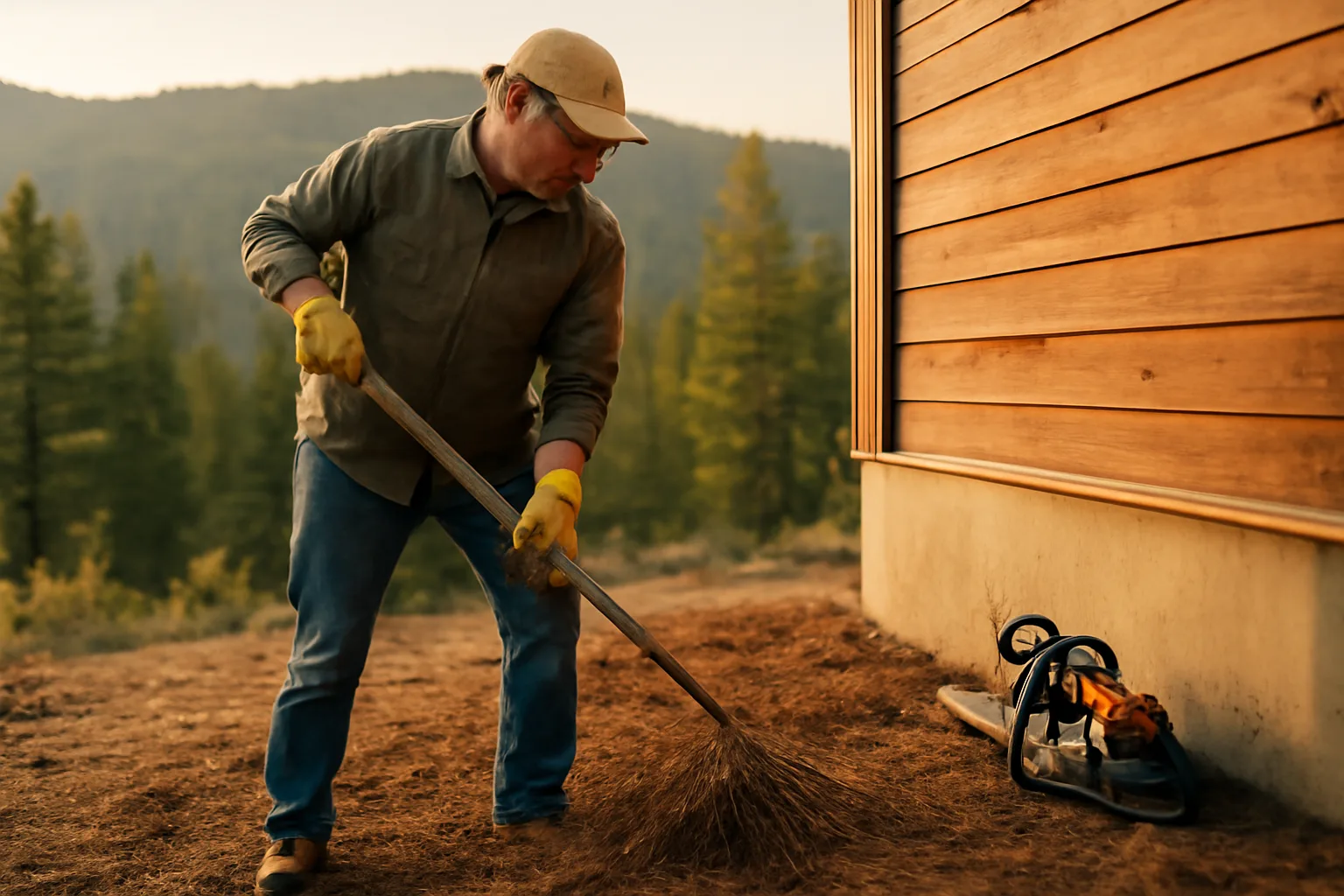
The Routt County Wildfire Mitigation Council coordinates local defensible space assistance, chipper days, and fuel-reduction projects for Routt County, Colorado homeowners. It doesn't inspect or enforce, but it connects residents to free assessments and cost-share programs. If you got a non-renewal notice, use council resources alongside your own documentation, because insurers want proof of work, more than intent.
What is the Routt County Wildfire Mitigation Council and what does it actually do?
The Routt County Wildfire Mitigation Council is a local coordinating body (organized through county emergency management and partner fire districts) that helps homeowners get access to defensible space education, chipper programs, and fuel-reduction projects around Steamboat Springs and the rest of Routt County, Colorado. It is not a permitting agency and it doesn't issue citations. Think of it as the connective tissue between homeowners, local fire districts, the Colorado State Forest Service, and county wildfire planning documents like the Community Wildfire Protection Plan (CWPP). If you're dealing with a non-renewal letter, the council itself won't fix your insurance problem. What it can do is point you toward a free or low-cost defensible space assessment, seasonal slash/chipper drop-off days, and neighborhood-scale mitigation grants that some HOAs and subdivisions have used to fund shared fuel breaks. Contact your county's Office of Emergency Management or wildfire mitigation coordinator page directly for the current program calendar, because chipper days and grant cycles change year to year and are best confirmed locally rather than assumed from an old flyer. Routt County's approach mirrors what a lot of mountain-west counties do: local fire districts (Steamboat Springs Fire Rescue, Oak Creek, Hayden, others) handle actual inspections and code enforcement, while the mitigation council handles outreach, funding coordination, and matching homeowners to contractors or volunteer crews. [Local fire district rules vary; confirm your specific district's defensible space ordinance and inspection contact before relying on any general description.]
How do I get a defensible space assessment through the county or my fire district?
Call your local fire district first, then ask if the county wildfire mitigation coordinator has an overlapping program. Most Colorado fire protection districts near wildland-urban interface zones will send someone out (often a seasonal mitigation technician, not a full-time inspector) to walk your property and note what's within 5, 30, and 100 feet of the structure. Bring a notepad. Ask for the assessment in writing, even if it's just a checklist with handwritten notes, because that document becomes part of your file if an insurer later asks for proof of mitigation work. Colorado doesn't have a single statewide defensible space law with a specific effective date the way California does; instead, defensible space standards get set at the local government or fire district level, often referencing Colorado State Forest Service guidance and the Firewise USA framework. That's a real structural difference from California, and it means your neighbor's rules and yours can differ even within the same county. If your district doesn't have capacity for assessments during peak season, the Colorado State Forest Service publishes a Home Ignition Zone guide with the same 0-5, 5-30, 30-100 foot zone breakdown used nationally, and you can self-assess against it while waiting for an official visit [1].
When does the California defensible space law go into effect?
California's core defensible space law, requiring vegetation clearance within 100 feet of structures in State Responsibility Areas, has been in effect since 2005 under Public Resources Code 4291 [2]. What's newer and often confused with a 'new law' is the ember-resistant zone rule for the first 5 feet around structures (Zone 0), which the California Board of Forestry and Fire Protection has been developing regulations for under SB 63 (2021) and earlier authorizing legislation AB 3074 (2020). As of this writing, CAL FIRE and the Board of Forestry have not finalized statewide enforceable Zone 0 regulations; the Board's rulemaking process has been ongoing, with draft language circulating but no confirmed universal enforcement date. If you're in California and got a letter referencing 'new 2026 defensible space rules,' that's almost certainly about proposed Zone 0 ember-resistant zone requirements, not a currently enforced statewide mandate. Check the CAL FIRE defensible space page directly for the current regulatory status before assuming a specific date applies to you. This matters for Routt County readers too, because Colorado officials and insurers watching California's Zone 0 approach have discussed similar concepts (noncombustible zones immediately next to the house) even without an identical statute. The underlying physics, embers landing in mulch or under decks within 5 feet of the wall, is the same regardless of which state's letterhead is on the rule.
What fire-safe home rules take effect in 2026?
No single nationwide '2026 fire-safe home' law exists; what's changing is a patchwork of state and local rules, and the honest answer depends on which state you're in. California's Zone 0 ember-resistant zone regulation remains in the rulemaking pipeline through the Board of Forestry and Fire Protection, and homeowners should check the Board's official rulemaking page for the current status rather than relying on secondhand summaries. Oregon's wildfire risk map and defensible space code work, tied to Senate Bill 762 (2021), has gone through multiple revisions after public pushback on the original hazard map; check the Oregon Department of Forestry's wildfire risk map page for the current status. Colorado has no equivalent statewide code as of this writing; mitigation requirements stay local, set by county or fire district. If you own property in more than one of these states, or you're comparing notes with a friend in a different state, don't assume the rules transfer. A state-rules comparison page is worth bookmarking so you're not relying on a neighbor's secondhand version of what applies to you.
Why won't people follow the defensible space law in California, even though it's required?
Cost and labor are the two most-cited reasons, and they're not excuses, they're real barriers. Clearing 100 feet of defensible space on a sloped, brush-heavy lot can run into thousands of dollars in contractor fees, and CAL FIRE's own guidance acknowledges the work needs to be redone annually as vegetation regrows. There's also a trust and awareness gap. A 2021 study published by the USDA Forest Service's Rocky Mountain Research Station found that homeowner adoption of defensible space recommendations is strongly tied to whether people believe their individual action will actually reduce risk, more than whether they know the rule exists [3]. In plain language: some homeowners don't do the work because they've watched houses next door burn anyway, embers jumping fences and fuel breaks, and they conclude the work is pointless. That belief is wrong for the aggregate neighborhood (defensible space measurably improves survival odds for individual structures), but it's an understandable reaction to watching a fire behave unpredictably. Enforcement capacity is the third piece. CAL FIRE and local fire departments in State Responsibility Areas conduct inspections, but staffing hasn't kept pace with the scale of SRA and Local Responsibility Area land needing checks, so a lot of noncompliant properties simply don't get flagged in a given year.
How do I prevent wildfires around my own property?
You can't prevent wildfire from starting somewhere in the landscape, but you can meaningfully reduce the odds your specific structure ignites once a fire arrives. Ready.gov's wildfire preparedness guidance breaks this into defensible space work (clearing flammable vegetation in rings around the house) and home hardening (upgrading the materials the fire actually touches, vents, roofing, siding, decking) [4]. The practical order of operations, cheapest and highest-impact first: clear the 5-foot zone immediately touching your foundation and walls (remove mulch, dead leaves, stored firewood, anything that can smolder and throw embers against siding), screen or box in vents with 1/8-inch metal mesh to stop ember intrusion, and clear gutters of pine needles and leaf litter before fire season. None of that requires a contractor. The more expensive tier, ember-resistant vents, Class A fire-rated roofing, non-combustible siding, tempered dual-pane windows, matters more in the long run but costs real money, often $5,000 to $30,000+ depending on how much of the house needs retrofitting. If you're prioritizing, do the free and cheap ember-intrusion fixes this season and budget for the structural retrofits over the next two to three years.
How do I prepare for a wildfire if evacuation becomes likely?
Prepare a go-bag and a documented home inventory before you ever get an evacuation notice, not after. Ready.gov recommends assembling supplies for at least three days, including copies of insurance documents, medications, and a battery-powered radio, stored somewhere you can grab in under ten minutes [4]. Separately, and this is the part most people skip, photograph and video every room of your house, your roof, your defensible space work, and your outbuildings, dated and time-stamped, before fire season starts. If your home survives and you later face a coverage dispute, or if you're rebuilding after a loss, that documentation is what an adjuster or a rebuild estimator actually wants to see. This isn't insurance advice or a claims strategy, it's just basic paper-trail hygiene that costs nothing and takes an afternoon. A Wildfire Insurance Survival Kit ($99, one-time) is built around exactly this gap: a structured way to document your home's mitigation work and current condition so you have something concrete to hand an insurer or adjuster, rather than scrambling to remember what you did three years ago. We don't file claims on your behalf or promise any specific coverage outcome; you prepare the documentation and you send it.
How do I prevent forest fires from starting in the first place?
Most wildfires are human-caused, not lightning-caused, and the prevention math is mostly about controlling ignition sources. The National Interagency Fire Center and USDA Forest Service data consistently show human activity, unattended campfires, equipment sparks, discarded cigarettes, fireworks, as the dominant cause of wildfire ignitions nationally, though the exact percentage varies by year and region [5]. Simple habits actually move the needle: fully drown and stir campfires until they're cold to the touch (more than smoking), avoid mowing dry grass midday when equipment sparks are most likely to catch, don't park hot vehicles on dry grass, and follow local burn ban announcements during red flag warning days. Smokey Bear's long-running 'Only You Can Prevent Wildfires' campaign, run jointly by the Forest Service, the Ad Council, and state foresters, exists specifically because individual behavior change is one of the most effective prevention tools available, alongside any single piece of legislation [6]. If you want the deeper history and current campaign resources, the Smokey Bear prevention campaign page covers it. At the community level, Routt County's own mitigation council work (chipper days, fuel breaks, defensible space outreach) is a form of forest fire prevention too, it just targets the fuel side of the equation rather than the ignition side.
How do I prepare for forest fires if I live near wildland-urban interface land?
Living in the wildland-urban interface (WUI) means treating fire season prep as an annual task, not a one-time project. Start with the CAL FIRE or Colorado State Forest Service Home Ignition Zone checklist and walk your property each spring: check that your 5-foot zone is still clear, that vents haven't been damaged over winter, and that your address is visible from the road for responding crews [1]. Coordinate with neighbors if you can. Fire doesn't respect property lines, and a single house with a cluttered, overgrown lot next door can undermine your own mitigation work by acting as a fuel bridge. This is exactly the kind of problem a county wildfire mitigation council is built to help with, organizing neighborhood-scale chipper days or shared fuel-break projects that no single homeowner could justify paying for alone. Keep your evacuation plan current: two routes out, a rally point if your household gets split up, and a plan for pets and livestock. Ready.gov's family emergency communication plan template is a genuinely useful free tool for this, even though it's generic to all disasters, not wildfire-specific [4].
Is Santa Barbara safe from fire, and how does that compare to Routt County's risk?
No area with wildland vegetation nearby is 'safe' from fire in an absolute sense, and Santa Barbara County has a documented history of major, damaging wildfires, the 1990 Painted Cave Fire, the 2008 Tea Fire, and the 2017 Thomas Fire among them, the last of which burned over 280,000 acres and was, at the time, the largest wildfire in modern California history [7]. Santa Barbara's combination of steep chaparral terrain, seasonal Santa Ana/sundowner winds, and dense wildland-urban interface development puts it in a genuinely high-risk category by CAL FIRE's Fire Hazard Severity Zone maps, not a low-risk one [8]. Routt County's risk profile is different in character, more forested, higher elevation, shorter historic fire return intervals in some fuel types, but not lower in kind. Both places require the same fundamentals: defensible space, ember-resistant construction details, and an evacuation plan you've actually rehearsed. If you're comparing risk across regions because you're deciding where to buy or how urgently to mitigate, check the specific county's Fire Hazard Severity Zone designation or Community Wildfire Protection Plan rather than relying on a place's general reputation. Reputation lags reality; Paradise, California wasn't considered the state's highest-risk town before the 2018 Camp Fire either.
Should I get my own defensible space work documented before contacting my insurer?
Yes, and do it before you call anyone, not after. Insurers reviewing wildfire risk want to see specifics: photos of your cleared 5-foot zone, receipts for any ember-resistant vent upgrades, dates of chipper program participation, and ideally a written assessment from your fire district or a Firewise USA coordinator. A verbal claim of 'I cleared my property' means nothing to an underwriter; a dated photo set and a contractor invoice means something. If your property went through a Routt County-coordinated chipper day or council-facilitated fuel reduction project, ask whoever ran it for a completion letter or work order copy, even an informal one, because that's the kind of third-party corroboration insurers respond to. We want to be direct about what this article and the associated Wildfire Insurance Survival Kit can and can't do: we help you organize and document your own mitigation work and home condition. We do not file claims on your behalf, or promise reinstatement, a discount, or any specific coverage outcome. That's on you and your agent or a licensed public adjuster if you choose to hire one. This is not legal, insurance, or claims advice.
How can we prevent forest fires at a community or policy level, beyond individual homeowners?
Individual defensible space work matters, but fire doesn't stop at a property line, so community-level coordination is where the bigger gains happen. Community Wildfire Protection Plans (CWPPs), required under the Healthy Forests Restoration Act of 2003 for communities seeking certain federal fuel-reduction funding priority, are the formal mechanism counties like Routt use to map risk and prioritize shared fuel-break projects . Firewise USA, run by the National Fire Protection Association, is the other major community-level structure: neighborhoods that organize and complete an annual mitigation plan can earn Firewise recognition, which some insurers reportedly consider favorably, though coverage decisions vary by carrier and aren't guaranteed by Firewise status alone . Ask your HOA or neighborhood association whether it's pursuing Firewise recognition; if not, that's a concrete, low-cost project to propose at the next meeting. At the policy level, funding for fuels reduction, prescribed burns, and forest thinning on adjacent public land (Forest Service, BLM) affects your risk even if you never set foot on that land. Showing up to county wildfire mitigation council meetings, or at minimum reading their published minutes, is one of the few ways an individual homeowner gets visibility into what's actually planned nearby.
Frequently asked questions
When does the California defensible space law go into effect?
The core 100-foot defensible space clearance law (Public Resources Code 4291) has been in effect since 2005. The newer Zone 0 ember-resistant zone rule (within 5 feet of structures) is still in the Board of Forestry's rulemaking process as of this writing, with no confirmed universal enforcement date yet; check CAL FIRE's defensible space page for current status.
Why won't people follow the defensible space law in California?
Cost, labor, and doubt about individual impact are the main reasons. Clearing 100 feet on a brushy or sloped lot can cost thousands of dollars annually, and Forest Service research shows compliance correlates with whether homeowners believe the work will actually help, more than whether they know the rule exists.
What fire-safe home rules take effect in 2026?
There's no single nationwide 2026 rule. California's Zone 0 ember-resistant zone regulation remains in rulemaking through the Board of Forestry; Oregon's wildfire map and code work under SB 762 has been revised multiple times; Colorado has no statewide code, leaving requirements to local fire districts. Check your specific state agency page for current status.
Is Santa Barbara safe from fire?
No. Santa Barbara County has a documented history of major wildfires, including the 2017 Thomas Fire, and CAL FIRE's Fire Hazard Severity Zone maps classify much of its wildland-urban interface as high or very high hazard. Steep chaparral terrain and seasonal wind events make it one of California's higher-risk regions, not a safe zone.
How do I prevent wildfires around my house?
Clear the 5-foot zone against your foundation of mulch, dead leaves, and firewood, screen vents with 1/8-inch metal mesh, keep gutters clear, and maintain the 5-30-100 foot defensible space zones. These are the cheapest, highest-impact steps; structural upgrades like Class A roofing matter but cost more and take longer to plan.
How do I prepare for a wildfire evacuation?
Build a three-day go-bag with medications, documents, and a battery radio per Ready.gov guidance, plan two evacuation routes, and photograph your home and defensible space work before fire season so you have dated records if you need them later for insurance or rebuilding purposes.
How do I prevent forest fires from starting?
Most wildfires are human-caused. Fully drown and stir campfires until cold, avoid mowing dry grass in the heat of the day, don't park hot vehicles on dry grass, and follow local burn bans during red flag warnings. The Smokey Bear campaign exists because individual behavior is one of the most effective prevention tools available.
How do I prepare for forest fires if I live in the wildland-urban interface?
Walk your property every spring using the Home Ignition Zone checklist, keep your 5-foot zone clear, coordinate with neighbors since fire crosses property lines, and keep an evacuation plan with two routes and a family communication plan, ideally using Ready.gov's free template.
How can we prevent forest fires at the community level?
Community Wildfire Protection Plans, Firewise USA neighborhood recognition, and coordinated fuel-reduction or chipper programs (the kind a county wildfire mitigation council organizes) reduce shared risk in ways individual homeowners can't achieve alone. Showing up to local council meetings is a practical way to track what's planned near you.
What does the Routt County Wildfire Mitigation Council actually do?
It coordinates defensible space education, chipper days, and fuel-reduction funding across Routt County, Colorado, connecting homeowners to fire districts and the Colorado State Forest Service. It doesn't inspect properties or issue citations; individual fire districts handle enforcement.
Does Colorado have a statewide defensible space law like California?
No. Colorado has no single statewide defensible space statute with penalties comparable to California's PRC 4291. Requirements are set locally by county governments and individual fire protection districts, so rules can differ even between neighboring towns in the same county.
Will completing defensible space work guarantee my insurance gets reinstated?
No, and no reputable source can promise that. Documenting your mitigation work with photos, receipts, and completion letters improves your position when communicating with an insurer, but reinstatement decisions are made by the carrier. This article and related tools help you prepare documentation, not negotiate coverage.
How much does defensible space work typically cost?
It varies widely by lot size, slope, and vegetation density, from a few hundred dollars in DIY labor and dump fees to several thousand dollars for contractor-cleared brush on steep or heavily wooded acreage. Structural hardening (vents, roofing, siding) typically adds another $5,000 to $30,000+ depending on scope.
Sources
- California Public Resources Code Section 4291: California's 100-foot defensible space clearance requirement in State Responsibility Areas, in effect since 2005
- California Board of Forestry and Fire Protection, Zone 0 rulemaking: Status of the ember-resistant Zone 0 regulation rulemaking process under SB 63 and AB 3074
- National Interagency Fire Center, wildfire statistics: Human activity is a dominant cause of wildfire ignitions nationally
- USDA Forest Service, Smokey Bear campaign history: The Smokey Bear 'Only You Can Prevent Wildfires' campaign is run jointly by the Forest Service, Ad Council, and state foresters
- CAL FIRE, Thomas Fire incident information: The 2017 Thomas Fire burned over 280,000 acres and was the largest wildfire in modern California history at the time
- CAL FIRE, Fire Hazard Severity Zone Maps: CAL FIRE's official hazard severity zone classifications used to assess regional wildfire risk including Santa Barbara County
- Healthy Forests Restoration Act of 2003: Community Wildfire Protection Plans are the formal mechanism established under this act for federal fuel-reduction funding priority
- National Fire Protection Association, Firewise USA program: Firewise USA recognition process for neighborhoods completing annual mitigation plans