Last updated 2026-07-25
TL;DR
CAL FIRE's Zone 0 ember-resistant zone rule (0-5 feet from structures) was approved in 2023 but the State Fire Marshal has not yet set a final effective date; expect 2026 or later, with local adoption varying by fire district. Existing 100-foot defensible space and home-hardening rules under California Public Resources Code 4291 are already in force and enforced today.
When does the California defensible space law go into effect?
California already has a defensible space law in force right now. Public Resources Code section 4291 requires 100 feet of defensible space clearance around homes in State Responsibility Areas and has been law, in various forms, since the 1960s, with major updates in 2005 that expanded the requirement from 30 feet to 100 feet. If you got a non-renewal notice or an inspection letter, this is almost certainly the rule your inspector is citing. The part everyone is confused about is Zone 0, the ember-resistant zone within 0 to 5 feet of a structure. The California legislature passed AB 3074 back in 2020, directing the Board of Forestry and Fire Protection to develop Zone 0 regulations [1]. The Board finalized draft regulations in 2023, but as of this writing the regulations still have to go through the Office of Administrative Law and get a confirmed operative date from the State Fire Marshal. CAL FIRE's own public messaging has pointed to 2026 as the likely rollout year, but nobody should treat that as locked in. Effective dates for state fire regulations get pushed. If you're in a high fire hazard severity zone, don't wait for the ink to dry. Start planning Zone 0 work now, because contractors and gravel suppliers are going to get slammed once the deadline is finalized. For a walkthrough of what actually goes in that zone, see defensible space clearing standards. One more wrinkle: Zone 0 will apply to homes in a Fire Hazard Severity Zone (as mapped by CAL FIRE) or a State Responsibility Area, not to every property in California. Rural areas of Los Angeles, Sonoma, and San Diego counties are near-certain to be covered. Suburban infill in some cities may not be.
What fire-safe rules for homes take effect in 2026?
| Zone 0 | 0-5 ft | Ember-resistant, noncombustible materials | Approved 2023, pending final operative date, expected 2026 [1] |
|---|---|---|---|
| Zone 1 | 5-30 ft | Lean, clean, and green; remove ladder fuels | In force under PRC 4291 |
| Zone 2 | 30-100 ft | Reduced fuel volume, spacing between trees/shrubs | In force under PRC 4291 |
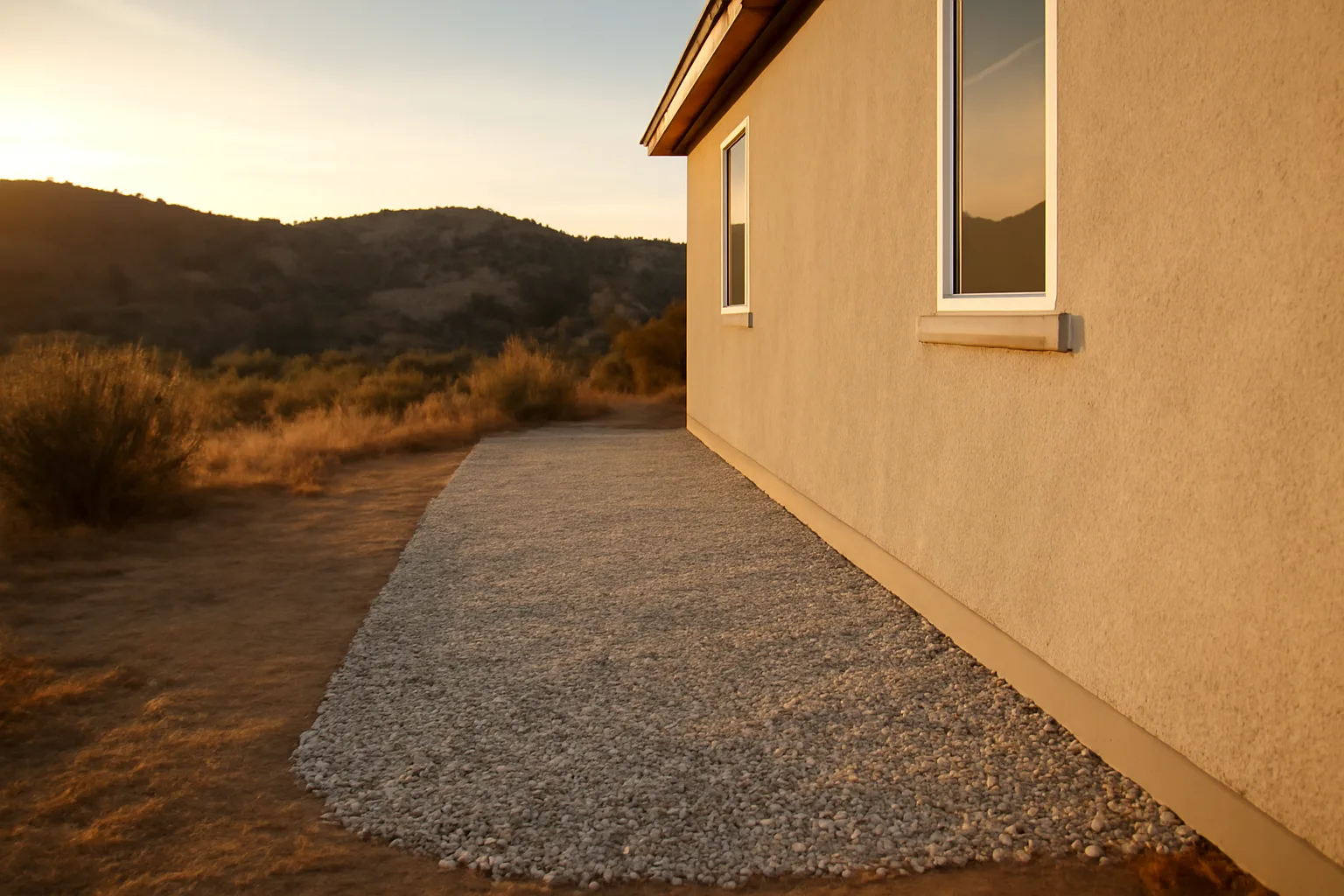
The headline 2026 rule is CAL FIRE's Zone 0 ember-resistant zone standard, which will require homeowners in Fire Hazard Severity Zones to remove combustible material within 5 feet of the structure, meaning no bark mulch, no wood fencing attached to the house, no combustible furniture, and no vegetation touching the wall [1]. The Board of Forestry's regulatory text describes this as the "ember-resistant zone" and it is meant to stop the single biggest cause of home ignition: wind-blown embers landing in debris right against the wall, not the wall of flame from a distant fire front. Separately, some jurisdictions are moving on their own home-hardening ordinances ahead of the state rule. Local building departments in high-risk counties (Marin, Napa, San Diego) have added defensible space and vent-screening requirements to point-of-sale inspections. This varies by fire district, so check with your local fire marshal or building department for the exact local trigger date and enforcement mechanism before you assume the state timeline applies to you. What's NOT arriving in 2026, despite some confusion online: there is no statewide mandate (yet) forcing homeowners to replace wood siding, wood decks, or existing roofing on a fixed calendar. Zone 0 is about clearing the 5-foot perimeter, not gutting your house. If your home has wood shake roofing or single-pane windows, insurers may still flag it independently, but that's a underwriting decision, not a state law deadline. A table of the current defensible space zone structure, since these get mixed up constantly: | Zone | Distance from structure | Core requirement | Status |
Why won't people follow the defensible space law in California?
Cost and confusion are the two biggest reasons, and both are legitimate, more than excuses. A 2022 analysis from the Public Policy Institute of California found that defensible space compliance rates in high-hazard areas are inconsistent, with CAL FIRE inspection data showing meaningful shares of properties failing initial inspections in many counties [2]. Homeowners aren't ignoring the law out of stubbornness in most cases; they don't know what "lean, clean, and green" actually means for their specific lot, or they can't afford $3,000 to $8,000 in tree removal and brush clearing that a full 100-foot compliance job can run. There's also a real trust problem. Many homeowners have watched insurers non-renew them anyway, even after spending real money on defensible space work, which understandably makes people ask why they should bother. CAL FIRE's position, and it's a fair one, is that defensible space and hardening reduce the chance your home survives an ember storm regardless of what your insurer decides to do. The Insurance Institute for Business & Home Safety (IBHS) has published research showing home survival is driven heavily by the first 5 feet around the structure and by roof and vent conditions, not by whether a wildfire technically reached the property. Enforcement is uneven too. CAL FIRE and local fire agencies do inspections, but PRC 4291 gives local jurisdictions discretion in how aggressively they cite noncompliance, and rural counties with fewer inspectors simply can't get to every parcel every year. That inconsistency breeds a sense that the rule is optional. It isn't, legally, but the odds of a citation depend heavily on where you live.
How to prevent wildfires around your home
Preventing a wildfire from starting is a different problem than preventing your house from burning once one starts nearby, and both matter. On the ignition-prevention side, CAL FIRE's numbers are blunt: roughly 95 percent of wildfires in California are human-caused, from things like unattended campfires, dragging trailer chains, mowing dry grass with metal blades, and faulty equipment [3]. The Smokey Bear campaign line "Only you can prevent wildfires" isn't a slogan invented for nostalgia; it reflects the actual statistical reality that most fires start from preventable human activity, a topic covered in more depth at only you can prevent wildfires. Practical steps that matter more than people think: don't mow or use trimmers on dry grass after 10 a.m. in fire season, keep chains secured on trailers so they don't drag sparks on pavement, make sure any outdoor equipment with a spark arrestor actually has one installed and functional, and fully drown campfires (more than douse, stir the ashes and check for heat with your hand near the pile). On the structure side, the concept CAL FIRE and researchers use is "home ignition zone," a term from US Forest Service research showing that ember exposure, not direct flame contact, causes most home losses in wildfires. That means gutter guards, ember-resistant vents, noncombustible roofing, and a clean 5-foot perimeter do more for your specific house than clearing brush a quarter mile away.
How to prepare for a wildfire
Preparation splits into three buckets: documentation, physical hardening, and an evacuation plan, and most homeowners only do one of the three. Start with documentation, because if your home is damaged or lost, having pre-loss photos and an inventory dramatically speeds up any claims process you file yourself. Ready.gov recommends taking video walkthroughs of every room, including closets and garages, and storing that video somewhere off-property (cloud storage, more than your phone) [4]. Second, do the physical work: clear Zone 0 and Zone 1 as described above, install ember-resistant vents, clean gutters and roof valleys of debris, and move firewood stacks at least 30 feet from the house. If you have propane tanks, CAL FIRE recommends clearing vegetation at least 10 feet around them. Third, build an evacuation plan before you need one. Ready.gov's checklist includes a "go bag" with medications, copies of insurance documents, chargers, and a battery radio, plus a pre-agreed meeting point if household members get separated [4]. Sign up for your county's emergency alert system now, not during a red flag warning, because sign-up portals get overloaded when fires are actively burning nearby. This is also where documentation ties back to insurance. If you've already gotten a non-renewal letter, the smartest move is building a mitigation record you can hand to any new insurer or FAIR Plan underwriter: dated photos of your cleared defensible space zones, receipts for vent upgrades, and a copy of any CAL FIRE inspection results. We built the $99 Wildfire Insurance Survival Kit around exactly this gap: a structured way to document the mitigation work you've already done so you're not starting from a blank page when an underwriter asks for proof. To be clear, we don't negotiate with insurers, file claims on your behalf, or promise any discount or reinstatement; you assemble and send your own documentation, we just make sure it's organized in the format insurers actually ask for.
How to prevent forest fires (and how it differs from home defense)
Preventing forest fires at a landscape level is largely a fuel-management and ignition-source problem, handled through prescribed burns, fuel breaks, and public education, and it's mostly outside an individual homeowner's control. CAL FIRE and the US Forest Service run prescribed burn programs specifically to reduce the dense undergrowth that turns a small ignition into a running crown fire [5]. If you own forested acreage, the same agencies offer cost-share programs for fuel reduction work through programs like the California Forest Improvement Program. What you can control: reporting suspicious smoke immediately (call 911, don't wait to see if it grows), following local burn permit rules exactly (permits specify wind speed, humidity, and time-of-day restrictions for a reason), and keeping any equipment you use in dry vegetation (chainsaws, mowers, ATVs) properly maintained with working spark arrestors, since CAL FIRE lists equipment use as one of the leading human-caused ignition categories [3]. The overlap between "forest fire prevention" and "home protection" is defensible space. Clearing the 100 feet around your structure doesn't stop a forest fire from starting, but it changes whether that fire, once it arrives, has the fuel continuity to reach your walls. Both matter; they're just different problems solved by different actions.
How to avoid forest fires as an individual
If you're asking this because you camp, hike, or own rural land, the answer is mostly about controlling ignition sources during red flag conditions. Check your local Red Flag Warning status before any outdoor burning, mowing, or equipment use; the National Weather Service issues these when wind, low humidity, and dry fuels combine into extreme fire risk. CAL FIRE and most counties suspend all burn permits automatically during Red Flag Warnings. Specific habits that actually reduce risk: never park a hot vehicle on dry grass (catalytic converters routinely start roadside fires), fully extinguish cigarettes in a metal container rather than the ground, and avoid target shooting with steel-core or tracer ammunition in dry wildland areas, which CAL FIRE and the US Forest Service both cite as a recurring ignition source. If you manage land, mowing before 10 a.m. and stopping mowing operations once winds pick up in the afternoon meaningfully cuts spark-ignition risk, since dry grass fires overwhelmingly start from mechanical sparks hitting rock or metal during hot, breezy afternoons.
How to prepare for forest fires if you live near wildland
If your property backs up to wildland or open space, preparation looks like defensible space plus a serious look at your evacuation routes, since wildland-adjacent homes often have only one road out. Map at least two evacuation routes if your neighborhood has them, and know which direction prevailing winds typically push fire in your specific canyon or ridge, since local topography matters more than statewide averages. CAL FIRE's Ready for Wildfire program breaks preparation into the same defensible space zones covered above, plus a specific recommendation to have exterior sprinklers or a garden hose long enough to reach your roofline, not because you should ever try to fight a wildfire yourself, but because wetting down your immediate structure before evacuating (if time allows, and only if authorities haven't ordered immediate evacuation) can reduce ember ignition risk. If you've had a recent fire near your property, even one that didn't reach your home, that's the moment to document everything. Photograph scorched vegetation lines, note how close the fire got, and keep any post-fire inspection notices; insurers use post-fire proximity data heavily in non-renewal decisions even when your home was untouched. See fire at a house for what documentation actually holds up.
Is Santa Barbara safe from fire?
No part of Santa Barbara County should be considered "safe" from wildfire in the sense of being exempt from risk; large sections of the county, especially the foothill communities along the Santa Ynez range and areas near Montecito, sit inside CAL FIRE-mapped Very High Fire Hazard Severity Zones [6]. The Thomas Fire in December 2017 burned over 281,000 acres across Ventura and Santa Barbara counties and was, at the time, the largest wildfire in modern California history, followed weeks later by the Montecito debris flow that killed 23 people, a disaster directly tied to the burned, destabilized hillsides above town [7]. Santa Barbara city itself, closer to the coast and with more urban density, carries lower wildfire risk than the foothill and canyon communities (Montecito, Mission Canyon, the San Roque area), but "lower" isn't "none." Wind-driven fires in this region, especially during sundowner wind events, have historically moved fast enough that evacuation timing became the deciding factor in survival, more than structure hardening. If you own property anywhere in the Santa Barbara foothills, check your parcel's specific Fire Hazard Severity Zone designation on CAL FIRE's FHSZ viewer rather than relying on a neighborhood's general reputation, since risk varies block by block based on slope, vegetation, and prevailing wind exposure.
How can we prevent forest fires as a community, more than individually?
Community-level prevention works through coordinated fuel breaks, shared defensible space compliance, and Firewise USA style neighborhood programs, since a single unhardened property can put an entire block at risk from ember cast during a wind event. The National Fire Protection Association's Firewise USA program organizes neighborhoods to do collective fuel reduction and hazard assessment, and CAL FIRE partners with many California communities on exactly this model . The practical argument for going neighborhood-wide instead of house-by-house: wildfire research consistently shows that home-to-home ignition (one burning structure igniting the next through radiant heat or ember cast) is a major loss driver in urban conflagrations, meaning your defensible space work partly protects your neighbor, and theirs protects you. A single noncompliant property with dry brush against the fence line can undermine an otherwise well-prepared block. Practical community steps: organize a shared chipper day (many fire districts subsidize green waste chipping specifically to reduce the cost barrier to compliance), push your HOA or fire safe council to apply for CAL FIRE grant funding for fuel breaks, and get your neighborhood registered with Firewire USA or your county's local Fire Safe Council, which often unlocks state grant eligibility that individual homeowners can't access alone.
What should you actually do this year, given the 2026 uncertainty?
Don't wait for the Zone 0 effective date to be finalized before doing the work, because the underlying fire physics don't care about regulatory timelines and insurers are already scoring homes on ember-zone conditions today. Clear the 5-foot perimeter now: gravel, pavers, or bare soil instead of mulch, no combustible furniture cushions left out, and vegetation pulled back from siding and under decks. Get your current Zone 1 and Zone 2 compliance documented with dated photos, since PRC 4291 inspections happen on a rolling basis in most State Responsibility Areas and you want evidence ready, not scrambled together after a citation. For a landscaping approach that satisfies both zones without turning your yard into gravel, see fire safe landscaping next to your house. Check your specific local fire district's rules directly rather than assuming the state minimum is all that applies; mitigation requirements vary by fire district, and some counties (Marin, San Diego, parts of LA County) have added stricter local ordinances on top of the state baseline. [Guided fill-in: confirm your local fire district's current defensible space ordinance and inspection cycle before assuming state rules alone govern your property.] Finally, if you've received a non-renewal letter, the fastest path forward isn't arguing with the insurer, it's assembling clean, dated proof of every mitigation step you've taken. That's the gap our $99 Wildfire Insurance Survival Kit is built to close: a structured documentation packet you fill in yourself and send to any new carrier or the FAIR Plan. We don't file claims or negotiate coverage; we help you get organized fast.
Frequently asked questions
When does the California defensible space law go into effect?
The 100-foot defensible space requirement under Public Resources Code 4291 is already in force and has been since 2005. The new Zone 0 ember-resistant zone rule (0-5 feet from structures) was approved by the Board of Forestry in 2023 but still awaits a final operative date from the State Fire Marshal, widely expected around 2026.
Why won't people follow the defensible space law in California?
Cost (often $3,000-$8,000 for full compliance), confusion about the specific zone requirements, and uneven enforcement across counties are the main reasons. Some homeowners also lose trust after complying and still getting non-renewed, though defensible space still measurably improves structure survival odds regardless of insurer decisions.
What fire-safe rules for homes take effect in 2026?
CAL FIRE's Zone 0 ember-resistant zone standard is expected to take effect around 2026, requiring noncombustible materials within 5 feet of structures in Fire Hazard Severity Zones. The exact operative date is still pending final State Fire Marshal confirmation, and local fire districts may set their own earlier or stricter deadlines.
How to prevent wildfires from starting near my property?
About 95% of California wildfires are human-caused, per CAL FIRE. Secure trailer chains, keep spark arrestors on equipment, avoid mowing dry grass in afternoon heat, fully drown campfires, and follow local burn permit restrictions, especially during Red Flag Warnings when permits are typically suspended.
How do I prepare for a wildfire if I get an evacuation warning?
Have a go bag ready with medications, chargers, and copies of insurance documents, per Ready.gov guidance. Know two evacuation routes, have a household meeting point, and make sure your defensible space zones and ember-resistant vents are already done, since prep during an active warning is too late for physical hardening.
How can we prevent forest fires at the community level?
Neighborhood-wide programs like Firewise USA coordinate fuel breaks, shared chipper days, and collective defensible space compliance. Because ember cast and radiant heat can spread fire structure-to-structure, one property's hardening partly protects neighbors, so community fuel reduction outperforms isolated individual efforts.
Is Santa Barbara safe from fire?
No. Much of Santa Barbara County, especially foothill communities like Montecito and Mission Canyon, sits in CAL FIRE-mapped Very High Fire Hazard Severity Zones. The 2017 Thomas Fire burned over 281,000 acres in the region, followed by a deadly debris flow. Coastal city areas carry lower but nonzero risk.
What is Zone 0 and how is it different from Zone 1 and Zone 2?
Zone 0 is the 0-5 foot ember-resistant zone around a structure, requiring noncombustible materials. Zone 1 (5-30 feet) requires lean, clean, and green landscaping with ladder fuels removed. Zone 2 (30-100 feet) allows more vegetation but requires reduced fuel volume and spacing between plants.
Does the Zone 0 rule apply to every home in California?
No. It applies to homes in State Responsibility Areas or CAL FIRE-mapped Fire Hazard Severity Zones, not every property statewide. Check your parcel's specific designation on CAL FIRE's Fire Hazard Severity Zone viewer, since risk and applicability vary by location, not county-wide averages.
What happens if I don't comply with defensible space law in California?
Local fire agencies can issue citations and fines under PRC 4291, and inspectors can require corrective work within a set timeframe. Enforcement intensity varies significantly by county due to inspector staffing. Non-compliance also commonly triggers insurance non-renewal, independent of any government citation.
How much does defensible space compliance typically cost?
Costs vary widely by lot size and vegetation density, but full 100-foot compliance often runs $3,000 to $8,000 for brush removal, tree limbing, and hauling, based on typical contractor pricing in high-risk counties. Zone 0 work (gravel, noncombustible edging) usually adds a smaller, separate cost.
Can I do defensible space work myself or do I need a contractor?
Much of Zone 1 and Zone 2 work (clearing brush, spacing shrubs, removing ladder fuels) is doable yourself with basic tools. Zone 0 conversion (removing combustible mulch, installing gravel or pavers) is also DIY-friendly. Large tree removal or work on steep slopes is safer left to licensed contractors.
Sources
- California Board of Forestry and Fire Protection, Zone 0 ember-resistant zone regulations: Zone 0 ember-resistant zone rule for 0-5 feet from structures, approved 2023
- Insurance Institute for Business & Home Safety, Wildfire Prepared Home standard: Home survival driven by conditions in the 0-5 foot zone and roof/vent details
- USDA Forest Service, home ignition zone research (Jack Cohen): Ember exposure rather than direct flame contact is the primary cause of home loss
- CAL FIRE, prescribed fire and fuel reduction program: Prescribed burns and fuel breaks used to reduce forest fire risk at landscape scale
- CAL FIRE, Ready for Wildfire defensible space and structure prep guidance: Recommendation for exterior water sources and structure wetting before evacuation if time allows
- CAL FIRE, Thomas Fire incident information: Thomas Fire burned over 281,000 acres in Ventura and Santa Barbara counties in 2017
- National Fire Protection Association, Firewise USA program: Firewise USA organizes community-level wildfire fuel reduction and hazard assessment