Last updated 2026-07-25
TL;DR
A $3 million fire-resistant home is not about square footage. It is a Class A roof, ignition-resistant siding, dual-pane tempered windows, ember-blocking vents, and a graded, cleared 100-foot buffer, usually $150,000 to $400,000 in hardening layered onto the build, matching CAL FIRE's Zone 0-2 defensible space rules and California's Chapter 7A construction code.
What actually makes a $3 million home fire-resistant?
It is not the price tag. A $3 million home in Malibu with cedar shake shingles and juniper hedges against the wall burns just as fast as a $400,000 tract house with the same mistakes. What separates a genuinely fire-resistant home is a specific, boring list: a Class A fire-rated roof, noncombustible or ignition-resistant siding, dual-pane windows with tempered outer glass, ember-resistant vents, and enclosed eaves. Then, outside the walls, a managed 100-foot defensible space zone with almost nothing that burns easily in the first 5 feet. CAL FIRE calls this the "Zone 0" to "Zone 2" system, and it is now written into California code, more than a suggestion. Zone 0 is 0 to 5 feet from any structure, and the state's direction is blunt: "nothing that burns" belongs there. Zone 1 runs 5 to 30 feet, Zone 2 runs 30 to 100 feet, and each has different rules for spacing, ladder fuels, and vegetation type. The expensive part isn't the architecture. It's the redundancy. A $3M fire-hardened build usually has three or four overlapping defenses (roof, vents, glass, defensible space) so that if embers get past one layer, they hit another. Most home losses in wildland-urban interface fires come from embers landing on or in a vulnerable spot, not from a wall of flame marching up and torching the house directly. The Institute for Business & Home Safety's post-fire investigations keep finding the same failure points: open vents, wood decks, mulch beds against the foundation, and single-pane windows.
What does the roof and exterior actually cost to harden?
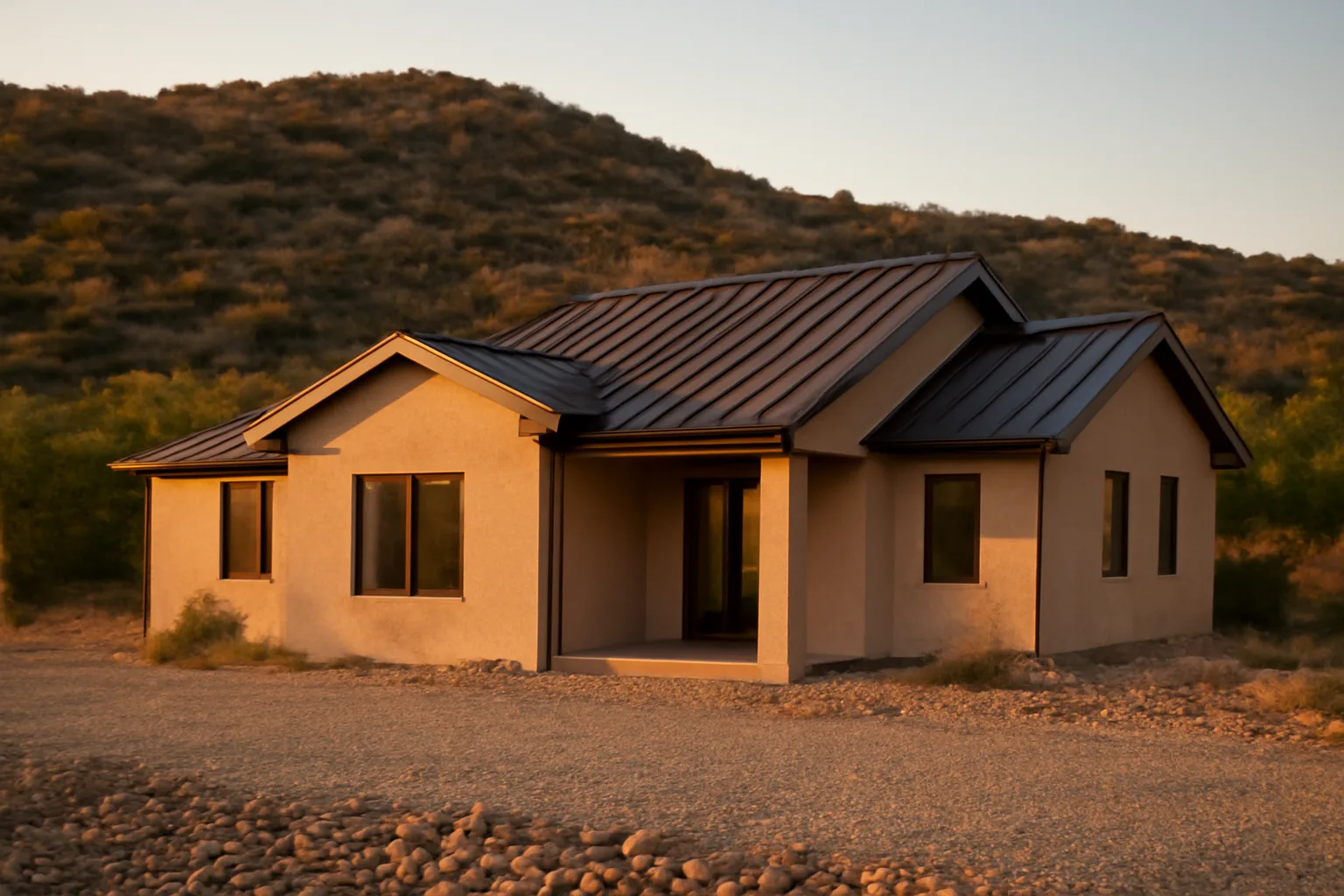
Expect $40,000 to $120,000 for roofing, siding, and eave work on a large custom home, depending on square footage and whether you're doing new construction or a retrofit. A Class A asphalt shingle roof rated to the highest fire-resistance standard runs closer to standard cost, but a standing-seam metal or clay tile roof, both Class A rated, adds real money, often $15 to $30 per square foot installed versus $6 to $12 for asphalt shingle. Siding matters just as much as the roof. Stucco, fiber cement board, and treated heavy timber are the common ignition-resistant choices under California's Chapter 7A building standards for homes in Fire Hazard Severity Zones [1]. Chapter 7A doesn't ban wood siding outright, but it requires ignition-resistant construction methods and materials tested to specific standards (like SFM 12-7A-1 for siding materials) for anything in a designated Wildland-Urban Interface Fire Area [1]. Eaves and vents are the cheap fix everyone skips. Open, unscreened attic and foundation vents are one of the most common ember entry points identified in post-fire home loss studies. Ember-resistant vents with 1/8 inch mesh, or vents rated to the SFM 12-7A-1 standard, cost maybe $150 to $400 each installed, versus $100,000+ if the attic catches. Enclosing eaves (boxing them in so there's no open soffit gap) is standard on any serious fire-hardened build now. Windows are the other big line item. Dual-pane windows with tempered glass on at least the exterior pane resist radiant heat and thermal breakage far better than single-pane. On a large home with a lot of glass, this alone can run $30,000 to $60,000 more than standard windows. For a full walkthrough of what "defensible" actually requires zone by zone, see defensible.
What does the landscaping and defensible space cost?
Budget $15,000 to $60,000 for the outdoor hardening, and that's before ongoing maintenance. This covers regrading slopes for fuel breaks, removing or thinning trees within 100 feet, installing hardscape (gravel, pavers, stone) in Zone 0, and replacing flammable mulch and ornamental grasses with low-fuel, well-spaced plantings. Zone 0 (0-5 feet from the structure) is where California's rules have tightened the most. As of the current regulatory direction, CAL FIRE recommends removing all combustible mulch, dead vegetation, stored firewood, and anything flammable within that 5-foot ring, and using noncombustible ground cover like rock or concrete instead. This zone is deliberately called "the ember-resistant zone" in CAL FIRE's own materials. Zone 1 (5-30 feet) allows plants but with real spacing rules: horizontal spacing between shrub clusters, vertical spacing so lower branches don't act as a ladder into tree canopies, and no continuous line of flammable vegetation touching the house. A $3M property often has more of this work to do, not less, because bigger lots mean bigger trees closer to the structure and more expensive vegetation to remove or relocate. If you're planning what to plant instead, fire safe landscaping California next to house covers species selection and spacing in more detail.
When does the California defensible space law go into effect?
The core defensible space requirement (100 feet of clearance around structures in State Responsibility Areas) has been law since 2005, under California Public Resources Code Section 4291 [2]. What's changing is Zone 0. California passed SB 63 in 2024, which directs the State Fire Marshal to adopt regulations for a mandatory ember-resistant zone within 5 feet of structures in high and very high fire hazard severity zones [3]. As of the most recent guidance, the State Fire Marshal has not yet finalized the formal Zone 0 regulation as an enforceable statewide mandate; CAL FIRE has published recommended Zone 0 guidance in the meantime, and homeowners in fire-prone areas should treat it as the practical standard even before it's codified as an enforcement requirement. Because the exact enforcement date and specifics depend on final rulemaking, and because local fire districts can adopt stricter timelines, check your county or local fire district's current defensible space ordinance for the enforceable date in your area. [Guided fill-in: contact your local fire district or county fire marshal's office for the specific Zone 0 compliance deadline that applies to your parcel.]
What fire-safe home rules take effect in 2026?
There's real uncertainty here, and homeowners should verify directly with their local building department, because rule adoption timing varies by jurisdiction. What's confirmed: SB 63 set California on a path toward mandatory Zone 0 ember-resistant zone rules, with the State Fire Marshal responsible for adopting the specific regulatory standard [3]. Some public reporting and legislative summaries have referenced a 2026 compliance horizon for existing homes once the regulation is finalized, but as of this writing that date has not been confirmed as locked by a final adopted regulation. What you can do now, regardless of the exact effective date: get ahead of it. Clear combustible mulch, stored wood, and dead vegetation from the 5 feet nearest your home. Replace flammable fencing that touches the house with noncombustible material for at least the first 5 feet of the fence run. These are the changes CAL FIRE is already recommending under its Zone 0 guidance, so doing them early doesn't cost you anything if the rule shifts, and it may help with insurance underwriting regardless of the legal deadline. [Guided fill-in: check your county's building and fire code amendments for the specific local adoption date, since some jurisdictions have moved faster than the state timeline.]
Why won't people follow the defensible space law in California?
Cost, confusion, and enforcement gaps are the honest answer. Clearing 100 feet of defensible space on a sloped, tree-heavy lot can run several thousand dollars in labor alone, and it has to be redone every year as vegetation grows back. For a lot of homeowners, especially those on fixed incomes or with large forested parcels, that's a real recurring expense, not a one-time fix. There's also a gap between what the law says and what actually gets inspected. California Public Resources Code 4291 requires the 100-foot clearance in State Responsibility Areas, but enforcement is largely complaint-driven or tied to periodic inspections that don't happen on every parcel every year [2]. Homeowners sometimes assume no citation means compliance, which isn't the same thing. Some people genuinely don't understand what's required. "Defensible space" sounds like it means clear-cutting the yard, and nobody wants to do that to a property they've spent years landscaping. In practice, CAL FIRE's guidance allows for plants and trees, just with spacing and species choices that reduce continuous fuel. That nuance gets lost. And some people have simply watched a neighbor do the work, spend the money, and still see it dismissed by an insurer at renewal time. That erodes the incentive fast, even though defensible space is one of the few mitigation steps with actual survivability data behind it (see the IBHS ember research below).
How do you prevent wildfires from starting near your home?
Most human-caused wildfires start from a small number of preventable sources: unattended debris burns, equipment sparks (mowers, chainsaws, grinders), dragging trailer chains, campfires, and vehicles parked on dry grass. Ready.gov's wildfire preparedness guidance emphasizes checking local burn restrictions before any outdoor burning and keeping equipment away from dry vegetation during fire season. On your own property, the highest-value prevention steps are: keep gutters and roof valleys clear of dry leaves and needles, don't store firewood or propane tanks against the house, mow dry grass before it cures out in early summer, and never park a hot vehicle over dry grass. CAL FIRE's defensible space guidance treats these as part of the same system as vegetation clearing, because an ember ignition inside your own gutter behaves the same way as one blown in from a wildfire two miles away. If you're near a fire district with strict local burn permit rules, check with them directly. [Guided fill-in: confirm your local fire district's current burn permit requirements and seasonal restrictions before doing any outdoor debris burning.]
How can we prevent forest fires more broadly?
At the community and landscape level, prevention looks different than the home-by-home version. Fuel breaks, prescribed burns, and forest thinning done by agencies (US Forest Service, CAL FIRE, and state forestry departments) reduce the amount of continuous fuel available to carry a fire across large areas. CAL FIRE's official position, echoed in its "One Less Spark" public messaging, is that roughly 95 percent of wildfires in California are human-caused, meaning the majority of forest fire risk is theoretically preventable through behavior change: proper campfire management, equipment maintenance, and following local burn bans. That statistic gets cited a lot, and it lines up with the long-standing Smokey Bear message, "Only you can prevent wildfires," which is one of the most recognized public safety campaigns in US history and still forms the backbone of federal wildfire prevention messaging [4]. For homeowners specifically, the most useful lever isn't stopping every ignition (you can't), it's making sure that when a fire does start nearby, your home isn't an easy ember target. That's what defensible space and home hardening are actually for. For more on how ignitions spread structure to structure once a fire reaches a neighborhood, see house fire and fire at a house.
How do you prepare for a wildfire if you live in a high-risk zone?
Start with a go-bag and an evacuation plan, then work outward to the house. Ready.gov recommends preparing an emergency supply kit with at least a few days of water, medications, important documents, and a battery-powered radio, and having a family communication plan established before fire season starts, not during an evacuation order. On the home side, prioritize in this order: clear Zone 0 (0-5 feet) first, since that's the highest-return, lowest-cost step; check and repair any gaps in roof and vent screening; move firewood stacks and propane tanks away from structures; and clear dead vegetation in Zone 1 and Zone 2 out to 100 feet. Document everything before a fire happens, not after. Photos and video of your home's exterior, interior, and any hardening upgrades (new roof, vents, defensible space work) give you a record for insurance purposes regardless of what happens later. This is the kind of documentation homeowners often wish they'd done only after receiving a non-renewal notice or after a loss. A prebuilt version of this record-keeping is what the $99 Wildfire Insurance Survival Kit at /survival-kit-builder is built to help you assemble; it's a documentation tool, not a claims or coverage service, and it doesn't negotiate with insurers or promise reinstatement. For a state-by-state comparison of what "prepared" looks like on paper, see wildfire defensible space clearing contracts washington state dnr.
How do you prepare for forest fires when you live near wildland, more than in a subdivision?
If your property backs up to actual forest or open wildland, rather than a suburban lot, the 100-foot defensible space rule under California Public Resources Code 4291 still applies, but the fuel load you're managing is heavier: mature trees, dense understory, and often steep terrain that lets fire move uphill faster [2]. The added steps that matter most here: create a fuel break between your defensible space zone and the wildland edge, remove ladder fuels (low branches, shrubs, and small trees that let fire climb from ground level into tree canopy), and space tree canopies so they aren't touching each other within Zone 2. CAL FIRE's Zone 2 guidance specifically calls for reduced fuel volume and horizontal spacing between trees, scaled to slope steepness, since steeper slopes need wider spacing to slow fire spread. If you're on a rural parcel with acreage, this work is genuinely bigger than a weekend project. Many homeowners in these situations contract with local vegetation management crews annually. Costs vary enormously by acreage and terrain, so get a local quote rather than relying on a national average.
Is Santa Barbara safe from fire?
No area in California's foothill and chaparral zones, Santa Barbara included, is "safe" from fire in an absolute sense, and the area's own history makes that clear. The Thomas Fire (2017) burned over 281,000 acres across Ventura and Santa Barbara counties and was, at the time, the largest wildfire in modern California history [5]. The subsequent Montecito debris flow in January 2018, triggered by rain falling on the Thomas Fire burn scar, killed 23 people . Santa Barbara County sits in a landscape of steep coastal mountains, dense chaparral, and strong offshore Santa Ana-type wind events, all of which are classic wildfire risk factors, not protective ones. Parts of the county are mapped by CAL FIRE within Very High Fire Hazard Severity Zones, which triggers the same defensible space and Chapter 7A construction requirements as other high-risk parts of the state [1]. What homeowners in Santa Barbara (or any similarly situated coastal-chaparral community) can control is preparation: defensible space compliance, home hardening to Chapter 7A standards, and having an evacuation plan given how fast wind-driven fires there have moved historically. "Safe" isn't really the right frame; "prepared" is.
What does insurer-ready documentation for a hardened home actually include?
Insurers increasingly want proof, more than a description, that hardening work was done. That means dated photos of the roof material and label, receipts or contracts for vent replacement, before-and-after photos of defensible space clearing, and any inspection reports from a local fire department's voluntary defensible space check. California's Low Cost Fire Insurance and the FAIR Plan process, along with the state's broader Safer from Wildfires framework, have started tying discounts and eligibility to documented mitigation, more than self-reported checkboxes. If your home has Class A roofing, ember-resistant vents, and maintained Zone 0-2 clearance, having a paper and photo trail makes it far easier to demonstrate that to an insurer or FAIR Plan underwriter during renewal review. This is documentation you prepare and send yourself. Nobody should represent this as claims filing, insurance negotiation, or a guarantee of coverage or discount, because none of those outcomes are things a documentation kit can promise. What it can do is put your evidence in one organized, dated place so you're not scrambling to reconstruct it after a non-renewal letter arrives.
Frequently asked questions
When does the California defensible space law go into effect?
The core 100-foot defensible space requirement under Public Resources Code 4291 has been law since 2005. The newer Zone 0 (0-5 foot) ember-resistant zone rule was directed by SB 63 (2024), but the State Fire Marshal's final enforceable regulation and compliance date were still being finalized as of this writing. Check your county fire district for the current local deadline.
Why won't people follow the defensible space law in California?
Mainly cost, confusion, and inconsistent enforcement. Clearing and maintaining 100 feet of defensible space every year is expensive on large or forested lots, enforcement is often complaint-driven rather than universal, and some homeowners don't realize the rules allow plants with proper spacing rather than requiring a bare yard.
How do I prevent wildfires from starting on my own property?
Keep gutters and roof valleys clear of dead leaves and needles, never store firewood or propane against the house, mow dry grass before it cures in early summer, and don't park hot vehicles over dry grass. CAL FIRE and Ready.gov both flag equipment sparks and unattended debris burns as leading ignition sources.
How do I prepare for a wildfire if I get a non-renewal letter?
Start with Zone 0 clearance (0-5 feet from the house), check roof and vent condition, move flammable storage away from structures, then document everything with dated photos and receipts. Ready.gov also recommends a family evacuation plan and emergency kit regardless of insurance status.
How can we prevent forest fires at a landscape level, more than at home?
Agency-led prescribed burns, forest thinning, and fuel breaks reduce continuous fuel across large wildland areas. CAL FIRE estimates roughly 95 percent of California wildfires are human-caused, so public behavior (campfire management, following burn bans, equipment maintenance) is the largest preventable factor.
What fire-safe home rules take effect in 2026?
This is unconfirmed as of this writing. SB 63 (2024) set California toward a mandatory Zone 0 ember-resistant zone regulation, and some reporting has referenced a 2026 horizon, but the State Fire Marshal had not finalized the specific regulation and date. Check your local building department for confirmed local adoption timing.
Is Santa Barbara safe from fire?
No. Santa Barbara County has steep chaparral terrain and strong wind events that historically drive fast-moving fires, including the 2017 Thomas Fire, which burned over 281,000 acres. Parts of the county are mapped in CAL FIRE's Very High Fire Hazard Severity Zones, which triggers defensible space and Chapter 7A construction requirements.
What is Zone 0 and why does it matter so much for a $3 million home?
Zone 0 is the 0-5 foot ring around a structure. CAL FIRE's guidance calls for removing all combustible material there, including mulch and stored wood, since embers landing in this zone are a leading cause of home ignition. It matters most on expensive homes because that's often where landscaping budgets get spent on flammable ornamental plantings right against the foundation.
What roofing material counts as fire-resistant under California code?
Class A rated roofing, which includes asphalt shingles rated Class A, clay or concrete tile, and standing-seam metal, meets the highest fire-resistance rating under building code. California's Chapter 7A building standards require ignition-resistant construction, including roofing, for homes in designated Wildland-Urban Interface Fire Areas.
Does defensible space actually reduce home loss in a wildfire?
Post-fire investigations by the Institute for Business & Home Safety consistently find that embers landing on vulnerable materials (open vents, wood decks, mulch against foundations, single-pane windows) are leading causes of structure loss, not direct flame contact. Defensible space and ignition-resistant materials address exactly these failure points.
How much does it cost to fully fire-harden a large home?
Realistically $150,000 to $400,000 for a full retrofit of roof, siding, vents, windows, and defensible space landscaping on a large custom home, though costs vary hugely by square footage, terrain, and whether it's new construction versus retrofit. Individual items like ember-resistant vents cost far less ($150-$400 each) and offer outsized protection per dollar.
Can I still have plants and trees near my house under defensible space rules?
Yes. CAL FIRE's Zone 1 (5-30 feet) and Zone 2 (30-100 feet) guidance allows vegetation, with rules on spacing between shrub clusters and vertical clearance so low branches don't act as ladder fuel into tree canopies. Zone 0 (0-5 feet) is the strictest zone and calls for removing combustible material entirely.
Sources
- California Office of the State Fire Marshal, Building Materials Listing / Chapter 7A: Chapter 7A ignition-resistant construction standards for Wildland-Urban Interface Fire Areas
- California Public Resources Code Section 4291: 100-foot defensible space clearance requirement in State Responsibility Areas since 2005
- California Senate Bill 63 (2024): Directs State Fire Marshal to adopt Zone 0 ember-resistant zone regulations
- USDA Forest Service / Smokey Bear campaign history: "Only you can prevent wildfires" campaign history and its role in national wildfire prevention messaging
- CAL FIRE, Thomas Fire incident information: Thomas Fire (2017) burned over 281,000 acres across Ventura and Santa Barbara counties