Last updated 2026-07-25
TL;DR
A wildfire mitigation discount is a reduction some insurers apply to your premium when you complete defensible space clearing, roof or vent upgrades, or other hardening work they recognize. Availability, amount, and required proof vary by insurer and state. You document the work yourself and submit it; nobody guarantees the insurer approves it or reinstates a canceled policy.
what is a wildfire mitigation discount, exactly
A wildfire mitigation discount is a premium reduction some homeowners insurers offer when you complete specific fire-hardening or defensible space work on your property. It is not a rebate, not a tax credit, and not automatic. You do the work, you document it, you send the paperwork to your insurer or agent, and the insurer decides whether it changes your rate or your eligibility to stay insured at all. The catch that trips people up: these discounts are set insurer by insurer, and in a lot of high-risk ZIP codes, insurers have stopped writing new policies entirely, discount or not. California's FAIR Plan enrollment nearly doubled between 2020 and 2023 as standard carriers pulled back from wildfire-exposed areas [1]. A mitigation discount only matters if you have a standard-market policy, or a carrier willing to write one, in the first place. Some states have gone further than "ask your insurer nicely." Colorado passed a law requiring insurers to give meaningful premium credit for wildfire mitigation actions homeowners actually complete, tied to a state-recognized certification system [2]. California's Safer from Wildfires regulation, adopted by the Department of Insurance, requires insurers to recognize specific mitigation actions, including compliance with defensible space law and the Wildfire Prepared Home or Wildfire Prepared Neighborhood standards from the Insurance Institute for Business & Home Safety, in their rating and underwriting [3]. So the honest answer: a wildfire mitigation discount is real, it is required by regulation in at least two states, and it still depends entirely on your specific insurer, your specific address, and what you can prove you did.
how do i know if my insurer offers a wildfire mitigation discount
Call your agent or carrier directly and ask two things: do they offer a wildfire mitigation credit, and what specific documentation triggers it. There is no national list, because every state regulates this differently and every carrier's rating plan is filed separately with the state insurance department. In California, ask specifically about Safer from Wildfires compliance. The regulation requires insurers to give discounts, or otherwise reflect lower risk in pricing, for a defined set of actions: maintaining defensible space per Public Resources Code 4291, using ember-resistant vents, having a Class A fire-rated roof, and community-level programs like Firewise USA recognition [3] [4]. If your carrier says they don't do this in California, that's worth escalating to the Department of Insurance, since it's a regulatory requirement, not an optional perk. In Colorado, the mitigation credit requirement runs through the Division of Insurance and ties to actions verified under the state's wildfire mitigation programs [2]. Ask your Colorado agent whether your carrier participates in the state's recognized certification process, since that's often the fastest path to a documented credit. Oregon and Arizona don't currently have a statewide mandated discount law comparable to California's or Colorado's. That doesn't mean discounts don't exist there. Some regional and surplus-lines carriers offer their own mitigation credits, but you have to ask, because there's no regulatory floor forcing it. [Fill in: your fire district name] may also have its own recognized hardening standard that your insurer references. Ask your local fire department or fire protection district whether they issue any kind of defensible space compliance letter or inspection certificate, because insurers often want third-party verification, more than your own photos.
when does the california defensible space law go into effect
California's core defensible space law, Public Resources Code 4291, has been in effect for decades and currently requires 100 feet of defensible space clearance around structures in State Responsibility Areas and some Very High Fire Hazard Severity Zones (or to the property line, whichever is less) [5]. That part isn't new. What's newer and still rolling out is the "ember-resistant zone" (Zone 0) requirement, the 0-to-5-foot zone immediately around the structure. The state passed Assembly Bill 3074 (2020) directing the Board of Forestry and Fire Protection to develop specific Zone 0 regulations [6]. As of this writing, CAL FIRE and the Board of Forestry have been working through the rulemaking process, and the effective date for mandatory enforcement has been delayed multiple times. Check the current status directly on the Board of Forestry's defensible space page before assuming a specific date applies to your property, because this has shifted more than once [7]. The practical answer for homeowners: the 100-foot defensible space requirement under PRC 4291 is already law and already enforced through local inspections. The stricter Zone 0 ember-resistant zone rule is the one still being finalized. Don't wait for the final Zone 0 date to start that work anyway. Insurers rewarding mitigation credit almost universally recognize the 0-to-5-foot zone as the highest-value area to harden first, regardless of when it becomes mandatory.
why won't people follow the defensible space law in california
Cost, labor, and disagreement about what the rules actually require are the three real reasons, not laziness. Clearing 100 feet of defensible space on a wooded acre lot can run into the thousands of dollars in tree trimming, brush removal, and disposal fees, and that's before you touch the house itself. There's also a genuine information gap. A lot of homeowners in State Responsibility Areas don't know the 100-foot rule applies to them until a fire inspector shows up or a mortgage lender flags it. Local fire agencies conduct defensible space inspections, and CAL FIRE's own reporting on inspection compliance rates shows a meaningful share of properties fail on first inspection, often for correctable things like woodpiles against the house or overhanging tree limbs rather than wholesale neglect [8]. And some resistance is aesthetic or emotional. People move to fire country partly for the trees and the privacy screening. Being told to remove vegetation within 5 feet of the house, or thin a forest they've watched grow for 20 years, feels like a loss, not a safety upgrade, even when the science backs the requirement. None of that changes the enforcement reality. Local fire officials can issue correction notices, and in persistent noncompliance cases, some jurisdictions can fine homeowners or, in extreme cases, complete the work and bill the property owner. It's cheaper and less disruptive to just do the work on your own timeline. For a structured way to work through the zones, see defensible space clearing priorities by zone.
how to prevent wildfires (what actually works at the home level)
You can't prevent wildfire ignition in a forest, but you have real control over whether a wildfire becomes a structure fire at your address. The research on this is fairly consistent: embers, not walls of flame, cause most home losses in wildfires, sometimes landing on a roof or in a gutter miles ahead of the actual fire front. The highest-leverage prevention actions, in rough order of return on effort: - Clear the 0-to-5-foot zone around the foundation of anything combustible: mulch, dry plants, stored firewood, and furniture cushions.
- Install or verify ember-resistant vents on attics and foundation crawlspaces.
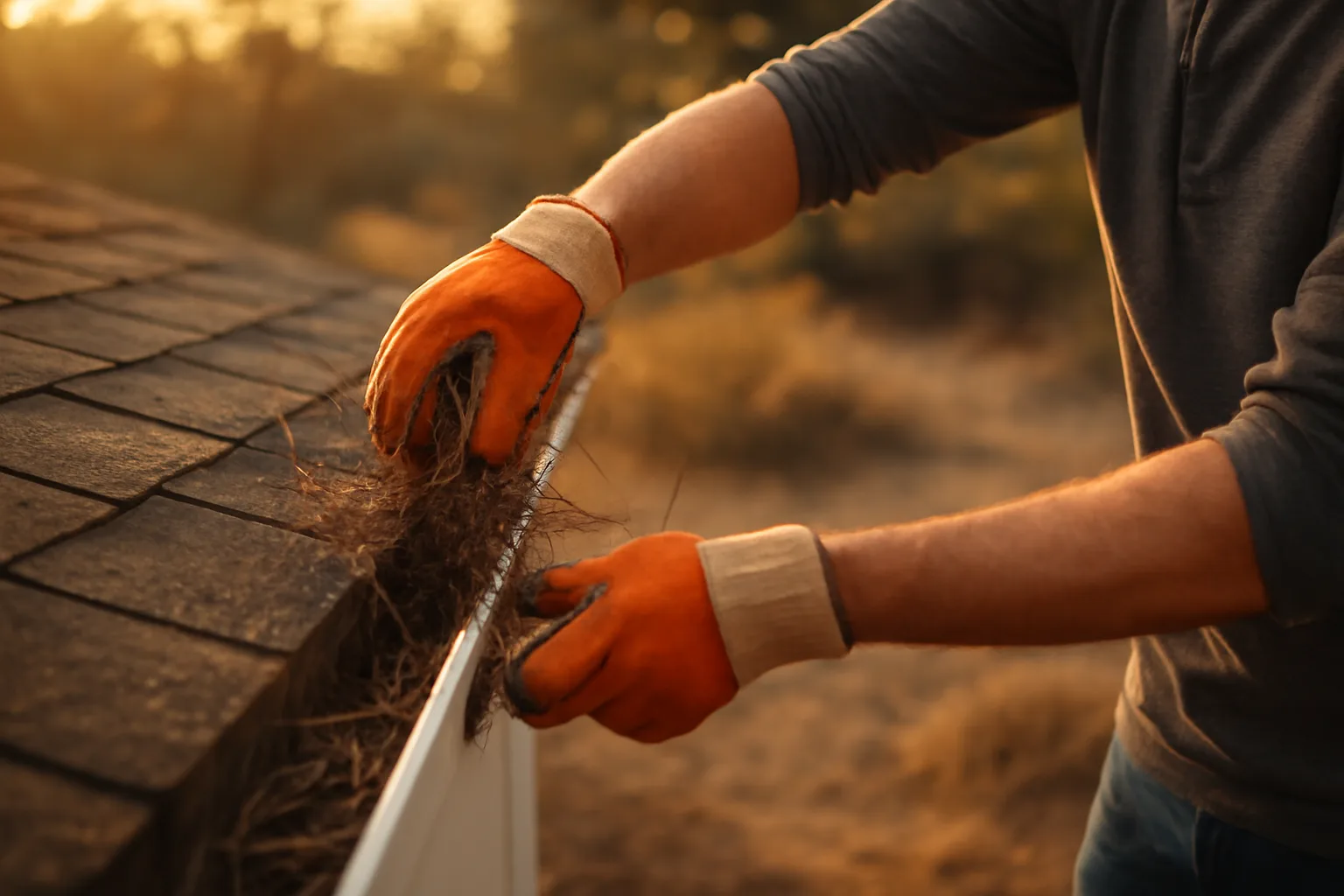
- Clean roof valleys and gutters of pine needles and leaf litter before fire season.
- Keep grass and low vegetation mowed short in the 5-to-30-foot zone.
- Remove tree limbs overhanging or within 10 feet of the roofline. Outside your own lot line, community-level prevention matters too. Roughly 85% of wildfires in the U.S. are human-caused, according to National Park Service and Forest Service data compiled across recent fire seasons, meaning debris burns, unattended campfires, equipment sparks, and discarded cigarettes start most fires, not lightning. That's the "only you" part of fire prevention messaging you've probably seen for decades, and it's still statistically accurate. See only you can prevent wildfires for more on the human-ignition side of this.
how to prevent forest fires and how to avoid forest fires
Forest fire prevention at the individual level comes down to fire-source discipline: campfires fully extinguished (drown, stir, feel for heat), no debris burning on windy or red-flag-warning days, spark arrestors on off-road vehicles and chainsaws, and no dragging trailer chains on dry roadsides. The U.S. Forest Service and CAL FIRE both list these as the top preventable ignition sources during peak season. If you're a landowner near forested land, avoiding forest fire spread onto your property overlaps heavily with defensible space work: the same 100-foot clearance, the same ember-resistant construction details, applies whether the ignition source is a lightning-struck tree a mile away or a neighbor's escaped burn pile. Check local burn permit rules before any outdoor debris burn. Most fire districts require permits and suspend them entirely during declared red-flag conditions. [Fill in: your county] burn permit office or fire district office can confirm current restrictions, since these change week to week during fire season, more than season to season.
how to prepare for a wildfire (and how to prepare for forest fires)
Preparing for a wildfire means having your evacuation plan, your home hardening, and your documentation done before a red-flag warning, not during one. Ready.gov's wildfire preparedness guidance recommends creating a family communication plan, knowing at least two evacuation routes out of your neighborhood, and assembling a go-bag with medications, documents, and supplies for at least three days [9]. On the home side, preparation splits into two buckets: things you do once (roof material, vent screens, gutter guards) and things you repeat every season (clearing debris, mowing dry grass, moving firewood away from the house). Both matter for survival and both matter for insurance documentation. Before fire season starts each year: 1. Photograph your defensible space zones (0-5 ft, 5-30 ft, 30-100 ft) with a timestamp. 2. Confirm your address is legible from the road for responding fire crews. 3. Test that outdoor water spigots and any hoses reach all sides of the house. 4. Store a copy of your insurance policy and a home inventory somewhere off-site or cloud-based. 5. Check that your HOA or fire district hasn't updated local clearance requirements. This is also where a lot of homeowners get stuck, not because the steps are hard, but because organizing proof of what you did is tedious and easy to put off. That's the exact gap our $99 Wildfire Insurance Survival Kit is built to close: a structured way to document defensible space work, hardening upgrades, and dates completed, so you have something concrete to hand your insurer or agent instead of a phone full of random photos. You still do the work and you still submit it yourself; we don't file claims or negotiate with insurers on your behalf. Start at /survival-kit-builder.
what fire safe home rules take effect in 2026
The clearest 2026 date to track is tied to California's Zone 0 ember-resistant zone rulemaking. The Board of Forestry and Fire Protection has been developing regulations under AB 3074 that would require the 0-to-5-foot zone around structures to be free of combustible materials, and enforcement timelines have moved as the rulemaking process continues [6] [7]. Rather than quote a specific 2026 enforcement date that may shift again, check the Board of Forestry's current defensible space regulation page directly, and separately check with your local building department, since some jurisdictions have already adopted Zone 0-style local ordinances ahead of the state timeline [7]. Outside California, some states and counties are updating wildland-urban interface building codes on their own schedules. [Fill in: your state fire marshal's office] can confirm whether a new WUI code cycle, ember-resistant vent requirement, or roofing material rule takes effect in your jurisdiction in 2026. These get adopted county by county in states like Colorado and Oregon, so a rule active in one county may not yet apply two counties over. The safest approach if you're planning renovation or new construction: ask your local building department directly which WUI code edition (2021 or 2024 International Wildland-Urban Interface Code, or a state amendment) is currently adopted, and whether a newer edition is scheduled to take effect before your permit would be finalized.
is santa barbara safe from fire
No area in California's wildland-urban interface is "safe" from fire risk, and Santa Barbara County has direct experience with this: the 2017 Thomas Fire burned over 280,000 acres across Ventura and Santa Barbara counties and was followed by the deadly Montecito debris flow in January 2018 after the burned hillsides couldn't hold heavy rain [10]. Much of the county sits in or adjacent to a State Responsibility Area, meaning CAL FIRE has primary fire protection responsibility and PRC 4291 defensible space rules apply directly to many properties. CAL FIRE's Fire Hazard Severity Zone maps classify specific parcels within Santa Barbara County as Moderate, High, or Very High, and that classification, not the city's general reputation, is what determines your defensible space obligations and often your insurance underwriting risk [11]. Two houses a half mile apart can carry very different zone classifications depending on slope, vegetation, and wind exposure. If you own property in or near Santa Barbara, look up your specific parcel on CAL FIRE's Fire Hazard Severity Zone viewer rather than relying on the town's general safety reputation. That single lookup tells you more about your actual insurance and mitigation obligations than any broad statement about the region.
how can we prevent forest fires as a community, more than a homeowner
Community-level prevention works because embers travel between properties, so one hardened home next to five unmaintained ones doesn't fully protect the hardened one. This is the logic behind the Firewise USA program run through the National Fire Protection Association, which organizes neighborhoods to coordinate defensible space work and gives insurers a recognized designation to credit collectively [12]. California's Safer from Wildfires regulation explicitly folds Firewise USA recognition and the Wildfire Prepared Neighborhood standard into required insurer mitigation credit, meaning your individual discount can sometimes be larger if your whole neighborhood is certified, more than your own lot [3] [4]. Practical community steps that move the needle: shared chipper days to reduce individual disposal costs, coordinated roadside brush clearance (since narrow, overgrown roads block both evacuation and fire engine access), and a single point of contact who tracks the neighborhood's Firewise or equivalent renewal paperwork so it doesn't lapse. None of this requires an HOA, just a few organized neighbors and a shared spreadsheet. If your neighborhood already has a fire safe council or Firewise committee, ask them directly whether local insurers recognize the designation for individual discounts, since some carriers apply it automatically and others still require each homeowner to submit their own proof.
what documentation do insurers actually want for the discount
| Defensible space clearing | Dated wide-angle photos of all three zones | Shows compliance with PRC 4291 clearance distances | |
|---|---|---|---|
| Roof/vent upgrades | Contractor invoice + material spec sheet | Proves Class A rating or ember-resistant vent install | |
| Vegetation removal | Before/after photos, disposal receipt | Confirms fuel reduction, more than trimming | |
| Local inspection | Copy of fire district inspection report | Third-party verification carriers weight heavily | |
| Ongoing maintenance | Annual photo log, same angles each year | Shows the work wasn't a one-time stunt | Keep copies somewhere that survives a fire, meaning cloud storage or a family member's house outside the fire zone, more than a folder on a computer inside the house you're trying to protect. |
Insurers generally want dated, specific proof, not a general statement that you "did the work." That typically means photos with visible timestamps, receipts or contractor invoices for hardening upgrades (Class A roofing, ember-resistant vents, gutter guards), and, where available, a signed inspection or compliance form from a fire department or fire protection district. California's Safer from Wildfires framework specifically references the Wildfire Prepared Home certification from IBHS as one accepted standard, which involves a structured checklist and, in some cases, third-party verification [4]. If your insurer references that standard, ask whether they accept self-certification or require the formal IBHS designation, since the answer changes how much work and cost is involved. A simple documentation approach that holds up well: | Item | What to keep | Why it matters |
what to do if you already got a non-renewal notice
A non-renewal notice usually gives you a window, often 60 to 75 days depending on your state's notice requirements, before coverage actually ends, and that window is your best chance to act. California requires insurers to give at least 75 days' notice of non-renewal in most cases under California Insurance Code 678 and related provisions, though exact timing depends on policy type. First, read the notice for the stated reason. If it cites wildfire risk or defensible space specifically, that's your target list. Complete and document the highest-value items (Zone 0 clearance, roof and vent condition, gutter debris) and send your documentation to your current carrier before the notice period ends, since some insurers will reconsider non-renewal if mitigation is completed in time, though this is entirely at the insurer's discretion and never guaranteed. Second, start shopping the standard market in parallel. Ask any new agent directly whether they recognize Safer from Wildfires-qualifying mitigation, since some carriers actively seek out mitigated homes non-renewal notices from competitors. Third, if you can't secure standard coverage in time, most wildfire-exposed states have a residual market: California's FAIR Plan, Oregon's FAIR Plan, and similar programs elsewhere, which exist specifically as coverage of last resort when the standard market won't write your address . We don't file claims, negotiate with insurers, or promise reinstatement or a specific discount amount. What we do build is a structured way to document what you've actually completed, so whichever carrier you end up with has real evidence to evaluate. If you're staring down a stack of forms and don't know where to start, our $99 Wildfire Insurance Survival Kit at /survival-kit-builder organizes exactly that. For hardening specifics by zone, see fire safe landscaping California next to house, and for broader context on losing a home to fire, house fire and fire at a house cover recovery steps.
Frequently asked questions
What is a wildfire mitigation discount on homeowners insurance?
It's a premium reduction some insurers give when you complete and document specific fire-hardening or defensible space work, like Zone 0 clearance, ember-resistant vents, or a Class A roof. It's not automatic. You request it, submit proof, and the insurer decides whether and how much to apply, based on their own filed rating plan.
When does the California defensible space law go into effect?
The core 100-foot defensible space requirement under Public Resources Code 4291 is already in effect and enforced. The newer Zone 0 (0-5 foot) ember-resistant zone rule from AB 3074 is still in rulemaking through the Board of Forestry and Fire Protection, with the enforcement date having shifted more than once. Check the Board's current defensible space page for the latest status.
Why won't people follow the defensible space law in California?
Mostly cost, labor, and unfamiliarity with the rule, not defiance. Clearing 100 feet of brush and trees can cost thousands, and many homeowners don't learn the requirement applies to them until a fire inspector or lender flags it. Some resistance is also about not wanting to remove mature trees or privacy screening near the house.
How can I prevent wildfires from destroying my home?
Focus on embers, since they cause most home losses, not direct flame contact. Clear the 0-5 foot zone around your foundation, install ember-resistant attic and crawlspace vents, keep gutters and roof valleys clear of debris, and maintain 100 feet of defensible space where required under state or local rules.
How do I prepare for a wildfire if I get an evacuation warning?
Have a go-bag ready with medications, documents, and 3+ days of supplies, know at least two evacuation routes, and confirm your family communication plan, per Ready.gov guidance. On the home side, make sure defensible space is current and photograph it for your own records before fire season peaks.
What fire-safe home rules take effect in 2026?
The main one to watch is California's Zone 0 ember-resistant zone regulation, still moving through Board of Forestry rulemaking under AB 3074, with dates that have shifted before. Other states adopt WUI building code updates county by county. Check your state fire marshal or local building department for the specific edition currently enforced in your area.
Is Santa Barbara safe from wildfire?
No part of Santa Barbara County's wildland-urban interface is fully safe from fire; the 2017 Thomas Fire burned over 280,000 acres there and led to the deadly Montecito debris flow. Risk varies sharply by parcel. Check CAL FIRE's Fire Hazard Severity Zone viewer for your specific address rather than relying on the area's general reputation.
How can communities prevent forest fires together?
Programs like Firewise USA through the National Fire Protection Association organize neighborhoods to coordinate defensible space work, shared brush disposal, and roadside clearing for evacuation access. California's insurance regulation gives extra credit weight to Firewise-recognized neighborhoods, since one hardened home surrounded by unmaintained lots still faces ember risk from neighbors.
Does clearing defensible space guarantee I'll get an insurance discount?
No. It makes you eligible to ask for one and gives your insurer documented reason to apply it, but the amount and approval are set by each carrier's own filed rating plan. California and Colorado require insurers to give some credit for recognized mitigation, but neither guarantees a specific dollar amount or reinstatement of a canceled policy.
What documents do I need to submit for a mitigation discount?
Dated photos of all three defensible space zones, contractor invoices for roofing or vent upgrades, vegetation removal receipts, and, if available, a signed fire department inspection report. Third-party verification, like an official inspection or an IBHS Wildfire Prepared Home certification, tends to carry more weight than self-reported photos alone.
What's the difference between defensible space and home hardening?
Defensible space is vegetation and fuel management around your house, typically split into the 0-5, 5-30, and 30-100 foot zones under California's PRC 4291. Home hardening is upgrading the structure itself, roofing material, vents, siding, windows, so embers and radiant heat can't ignite it even with defensible space in place.
How long does a wildfire insurance non-renewal notice give me?
It depends on your state and policy type, but California generally requires at least 75 days' notice before non-renewal under state insurance code provisions. Use that window to complete and document mitigation work and to start shopping the standard market or your state's FAIR Plan in parallel.
Sources
- California Department of Insurance, FAIR Plan policy count data: FAIR Plan enrollment grew sharply as standard carriers pulled back from wildfire-exposed areas
- Colorado Division of Insurance, wildfire mitigation legislation: Colorado requires insurers to give premium credit for verified wildfire mitigation actions
- California Department of Insurance, Safer from Wildfires regulation: California requires insurers to recognize specific mitigation actions including defensible space compliance and IBHS standards in rating
- Insurance Institute for Business & Home Safety, Wildfire Prepared Home: IBHS Wildfire Prepared Home standard is referenced as an accepted mitigation certification
- California Public Resources Code Section 4291: 100 feet of defensible space clearance is required around structures in State Responsibility Areas
- California Assembly Bill 3074 (2020): AB 3074 directs the Board of Forestry and Fire Protection to develop Zone 0 ember-resistant zone regulations
- California Board of Forestry and Fire Protection, defensible space regulations: Zone 0 rulemaking status and enforcement timeline are tracked through the Board of Forestry's regulatory proposals page
- CAL FIRE, defensible space inspections: CAL FIRE conducts defensible space inspections and tracks compliance under PRC 4291
- CAL FIRE, Thomas Fire incident archive: The 2017 Thomas Fire burned over 280,000 acres across Ventura and Santa Barbara counties
- CAL FIRE, Fire Hazard Severity Zone viewer: Parcels are individually classified Moderate, High, or Very High fire hazard severity zone
- National Fire Protection Association, Firewise USA program: Firewise USA organizes neighborhoods to coordinate wildfire mitigation and is recognized by some insurers
- California Insurance Code Section 678: California requires insurers to give advance notice, generally at least 75 days, before non-renewing a policy