Last updated 2026-07-25
TL;DR
Architect Oscar Newman coined "defensible space" in his 1972 book on crime and urban design, not wildfire. CAL FIRE and the U.S. Forest Service borrowed the term in the late 1970s-80s for the buffer zone that slows fire spread. California's 100-foot defensible space law (PRC 4291) builds on that borrowed concept.[1][2] Not legal, insurance, or claims advice. This explains a term's origin and general prep steps; it doesn't replace your local fire code or insurer's requirements.
Who actually proposed the concept of defensible space?
The term "defensible space" comes from Oscar Newman, an architect and urban planner, in his 1972 book "Defensible Space: Crime Prevention Through Urban Design." Newman's idea had nothing to do with wildfire. He was studying public housing crime rates and argued that building layouts, sightlines, and clear ownership of shared space made residents safer from criminals by letting them see and control the territory around their homes. [1] Fire agencies picked up the phrase later and repurposed it. By the late 1970s and through the 1980s, the U.S. Forest Service and state fire agencies including CAL FIRE started using "defensible space" to describe the cleared, modified area around a structure that slows or stops an advancing wildfire and gives firefighters room to safely defend the home. It's a borrowed term applied to a completely different problem, which is a little unusual for fire science vocabulary, but it stuck because it's intuitive: space you can defend. So if someone asks "who invented defensible space for wildfire," the honest answer is nobody single-handedly did. Newman gave the world the phrase for a different purpose. Fire researchers and agency staff over the following two decades adapted it into the zone-based clearance standards states use today. CAL FIRE's current guidance describes defensible space as "the buffer you create between a building on your property and the grass, trees, shrubs, or any wildland area that surrounds it", which is a direct descendant of Newman's territorial framing, just applied to flame and radiant heat instead of intruders.
When did defensible space become required by law in California?
California has required defensible space clearance around homes in wildland areas since 1965, but the modern 100-foot standard came later. Public Resources Code 4291 was amended in 2004 to expand the requirement from 30 feet to 100 feet of defensible space around habitable structures in State Responsibility Areas and certain Local Responsibility Areas classified as Very High Fire Hazard Severity Zones. [2] The law breaks that 100 feet into two zones. Zone 0, the 0-5 foot ember-resistant zone immediately touching the home, was added through Assembly Bill 3074 (2020) and is being implemented through Board of Forestry regulation. As of publication, CAL FIRE and the Board of Forestry and Fire Protection have been working through the formal rulemaking process for Zone 0, with regulations expected to take effect for existing homes sometime after 2025 depending on the final rulemaking timeline. Check CAL FIRE's defensible space page directly for the current effective date before you assume anything, because this is a moving target and enforcement dates have shifted before. Zone 1 (5 to 30 feet) and Zone 2 (30 to 100 feet) have been enforceable under PRC 4291 for years already, with different vegetation spacing and fuel reduction rules for each ring. [2] Local fire districts can also add their own stricter requirements on top of the state minimum, so what's legally required on your specific parcel depends on your fire district's local ordinance. [Check with your local fire district or county fire marshal for the exact requirement on your parcel.]
What fire-safe home rules take effect in 2026?
This is genuinely unsettled as of this writing, and any source that gives you a firm nationwide date for 2026 is guessing. The most concrete near-term change is California's Zone 0 ember-resistant zone rule under PRC 4291.5, which the legislature directed the Board of Forestry to adopt by regulation. The Board has been through multiple draft cycles; the statute itself set a target for regulations to be developed, but the applicability date for existing homes (versus new construction) has been pushed back before and remains subject to final rulemaking. [2] Separately, California's building code has required ignition-resistant construction (Chapter 7A of the California Building Code) for new construction in Wildland-Urban Interface fire areas since 2008, and that requirement doesn't need a new 2026 trigger; it's already active for anything built or substantially remodeled in a designated WUI zone. [3] If you've seen headlines about "2026 fire safe home rules," they're almost certainly referring to the Zone 0 rollout for existing homes. Don't take a blog's word for the exact date. Go to CAL FIRE's Zone 0 page or your county building department directly, because the rulemaking calendar has slipped multiple times and enforcement is likely to be phased rather than a single hard cutover date for every home in the state.
Why won't people comply with California's defensible space law?
A few honest reasons keep coming up, and none of them are stupidity. Cost is the biggest one: clearing brush, limbing trees, replacing wood mulch, and removing dead vegetation on a large rural parcel can run from a few hundred dollars for a small suburban lot to several thousand for acreage with heavy fuel load, and low-income and elderly homeowners on fixed incomes often can't absorb that on top of everything else. CAL FIRE and Cal OES have run defensible space assistance grant programs specifically because cost is a documented barrier, not an excuse. Second, people genuinely don't know the rule applies to them. Defensible space law applies in State Responsibility Areas and Very High Fire Hazard Severity Zones, and a lot of homeowners in what feels like a suburban neighborhood don't realize their parcel is mapped into one of those zones until a notice or a non-renewal letter shows up. Third, there's a real tension between defensible space clearing and landscaping people love. Removing mature trees close to a house, or thinning a hedge row that took fifteen years to grow, feels like giving something up for a risk that might not materialize this year. That's a psychological discounting problem, not a knowledge problem, and it's common in every hazard mitigation field, more than fire. Fourth, enforcement has historically been inconsistent. Some fire districts do annual inspections and follow up with citations; others are stretched thin and only inspect after a complaint or a fire event nearby. Uneven enforcement sends the signal that compliance is optional, which it legally isn't, but human behavior tracks incentives more than statutes.
How do you actually prepare for a wildfire, step by step?
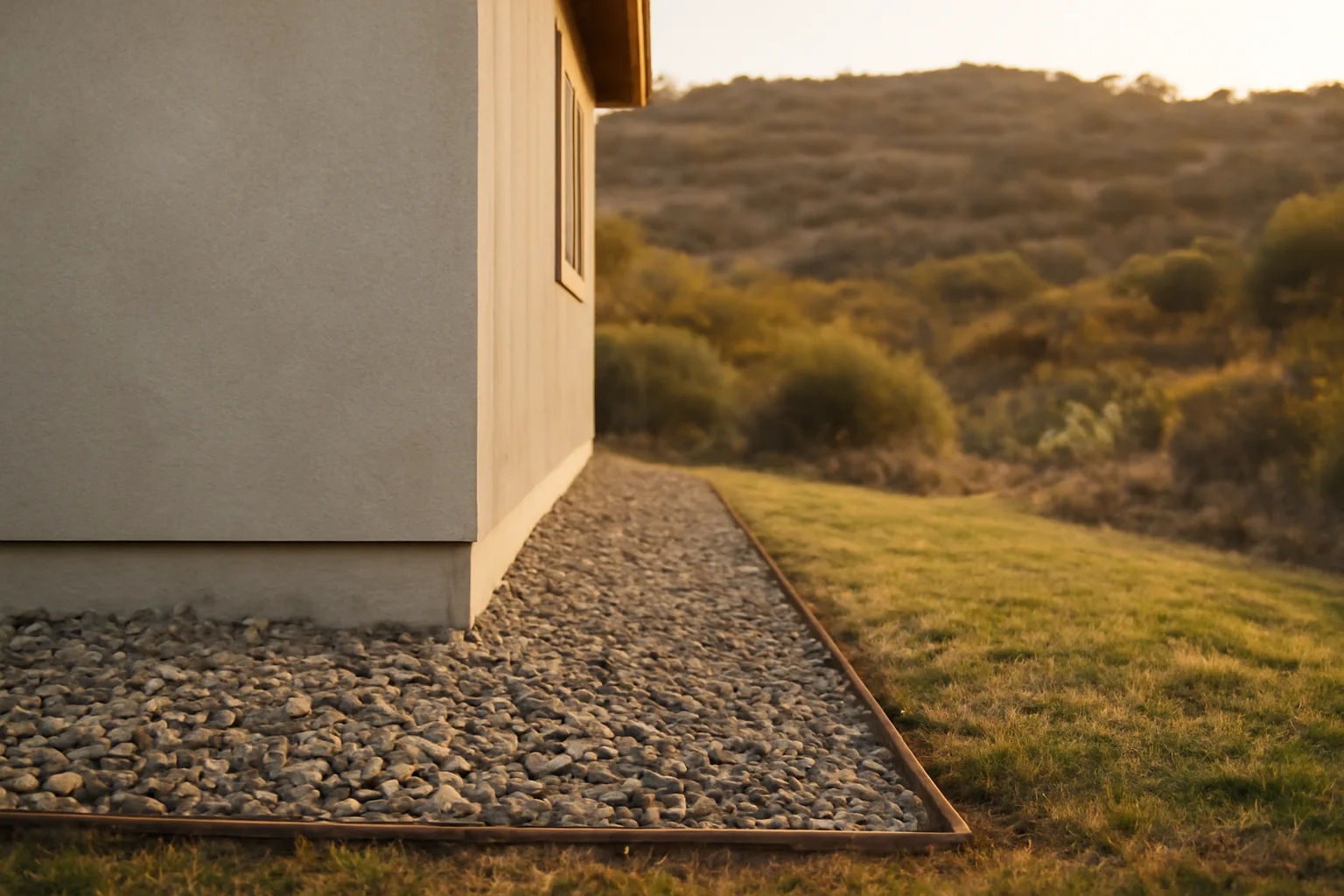
Start with the three defensible space zones, then layer in home hardening and an evacuation plan. Ready.gov and CAL FIRE both structure their guidance this way because it maps to how fire actually attacks a structure: embers first, radiant heat second, direct flame contact third. Zone 0 (0-5 feet from the structure): remove all combustible material. No mulch, no wood piles, no plants directly against the foundation, no debris in gutters. This is the zone most likely to catch from wind-blown embers, which is how most homes are lost in wildfires, not from a wall of flame marching up to the door. Zone 1 (5-30 feet): keep grass mowed to under 4 inches, space trees and shrubs so their canopies don't touch, remove low tree branches up to 6 feet off the ground ("limbing up"), and keep roof and gutters clear of leaf litter. [2] Zone 2 (30-100 feet): thin trees and brush enough that fire can't easily climb from ground fuel into tree canopy. Ready.gov recommends clearing dead vegetation seasonally, since dried grass and leaf litter are the primary carrier of ground fire onto your property. On the home hardening side: use ember-resistant vents, Class A fire-rated roofing, dual-pane tempered glass windows, and keep a hose long enough to reach every side of the house. Build a go-bag with medications, documents, and a battery radio. Ready.gov's wildfire action guide has a specific checklist for this. For documentation you'll want on hand regardless of whether a claim ever happens, a lot of homeowners build a simple survival kit covering photos of cleared zones, receipts for hardening work, and a home inventory, since insurers increasingly ask for proof of defensible space compliance before renewal, more than a verbal assurance.
How can homeowners help prevent wildfires from starting in the first place?
Roughly 85% of wildfires in the U.S. are human-caused, according to the National Interagency Fire Center's data cited by the U.S. Forest Service, which means prevention is mostly about behavior, not luck. [4] Debris burning, unattended campfires, equipment sparks (mowers, chainsaws, off-road vehicles), and downed or arcing power lines account for most ignitions. Practical prevention steps: never mow dry grass in the heat of the day, since a lawnmower blade striking a rock can throw a spark hot enough to ignite cured grass; check local burn permit status before any debris burning, because many counties suspend burn permits entirely during red flag warnings; maintain vehicle spark arrestors if you drive off-road in wildland areas, which is legally required on public land in many Western states; and douse and stir campfires until they're cold to the touch, more than smoking. The Smokey Bear "Only You Can Prevent Wildfires" campaign, run by the Forest Service since 1944, exists because human ignition is the dominant cause and it's the one variable individuals can actually control. If you want the fuller list of ignition sources and prevention behaviors, see only you can prevent wildfires.
Is Santa Barbara safe from wildfire risk?
No area in California's foothill or WUI zones is "safe" in an absolute sense, and Santa Barbara County has a documented history that argues against complacency. The 2017 Thomas Fire burned over 281,000 acres and was, at the time, the largest wildfire in modern California history, directly threatening Santa Barbara and Ventura communities and triggering the Montecito debris flow that killed 23 people in January 2018. [5] Much of Santa Barbara's urban core sits adjacent to steep, chaparral-covered foothills, which is exactly the fuel and topography combination CAL FIRE flags as high risk: dense brush, steep slopes that let fire preheat uphill fuel, and homes built directly against wildland. CAL FIRE's Fire Hazard Severity Zone maps place large portions of the Santa Barbara foothills and adjacent unincorporated areas in Very High Fire Hazard Severity Zones, which is the same classification tier that triggers the 100-foot defensible space requirement under PRC 4291. [2] The honest answer for anyone asking "is my neighborhood safe" is to check your specific parcel against your county's Fire Hazard Severity Zone map, not to rely on a city's general reputation. Santa Barbara has invested heavily in fuel breaks and community wildfire protection planning since the Thomas Fire, but the underlying terrain and fuel load haven't changed, and neither has the wind pattern that drove that fire.
How do you prevent forest fires versus fires near your home?
The mechanics overlap but the priorities differ. Forest fire prevention, in the sense land managers use it (Forest Service, BLM, state forestry agencies), focuses on fuel management at landscape scale: prescribed burns, mechanical thinning, and fuel breaks across thousands of acres, plus enforcement of fire restrictions during high-risk periods. Home-adjacent fire prevention is about the 100 feet (or less) around your structure, which is the scale an individual homeowner actually controls. You can't thin a national forest, but you can make sure your own defensible space zones are clear, your vents are ember-resistant, and your roof is a Class A assembly. The connection matters because most homes lost in wildfires aren't destroyed by a wall of flame from the forest; they're destroyed by embers that travel a mile or more ahead of the main fire front and ignite something flammable on or near the structure. That's why CAL FIRE and the Forest Service both emphasize defensible space and home hardening as the individual homeowner's highest-leverage actions, even when the fire itself started miles away in wildland fuel you'll never touch. [4]
What's the difference between defensible space, home hardening, and fuel breaks?
| Defensible space | Vegetation clearance and spacing in Zones 0/1/2 around a structure | Individual homeowner | 0-100 feet from structure | |
|---|---|---|---|---|
| Home hardening | Ignition-resistant building materials: roof, vents, siding, windows | Individual homeowner (retrofits) / builder (new construction) | The structure itself | |
| Fuel breaks | Strips of reduced vegetation cutting across a landscape to slow fire spread | Fire agencies, land managers, sometimes HOAs | Miles, across jurisdictions | Defensible space and home hardening work together: clearing brush without upgrading vents just means embers can still get into your attic through an unscreened vent. CAL FIRE's guidance treats them as a paired strategy, not alternatives. For a deeper look at the specific materials and retrofits that count as hardening, see defensible and fire at a house. |
These three terms get used interchangeably by homeowners but they mean distinct things to fire agencies, and insurers increasingly check all three separately during inspections. | Term | What it covers | Who's responsible | Typical scale |
What should you do if you got a non-renewal or inspection letter?
Read the letter closely for the specific deficiency cited, whether it's overgrown vegetation, roof condition, or proximity of fuel to the structure, because insurers in California are required under recent regulatory reform to give homeowners specific, actionable reasons, not a vague denial. Document your current condition immediately with dated photos from multiple angles before you touch anything, since that baseline matters if you dispute the assessment or need to show progress later. Then work through the defensible space zones systematically: clear Zone 0 first since it's cheapest and fastest, then move outward. Keep every receipt for tree removal, brush clearing, and any hardening work like vent replacement or roof repair. Many homeowners find it easier to organize this into a single packet: before/after photos, contractor invoices, a copy of the specific code section (PRC 4291) they're complying with, and a simple property diagram marking the three zones. That's the exact structure behind DefensibleHome's $99 Wildfire Insurance Survival Kit, a one-time-purchase template built so a homeowner can assemble their own compliance and documentation packet without paying for an ongoing service. We don't negotiate with insurers, file claims on your behalf, or promise reinstatement or a discount; you prepare and send your own documentation, and the insurer makes the coverage decision.
For related planning, see these guides
If you're working through defensible space compliance for the first time, a few related topics come up almost immediately. Landscaping choices matter as much as clearance distance, since the wrong plant right at your foundation can undo an otherwise compliant Zone 0; see fire safe landscaping California next to house for species and placement guidance. If you're outside California and dealing with a different state's program, Washington's Department of Natural Resources runs its own defensible space clearing contract system distinct from CAL FIRE's approach; see wildfire defensible space clearing contracts Washington State DNR. And if your immediate concern is what happens after ignition rather than before it, whether that's a structure fire from an ember intrusion or a full loss, house fire and fire at a house cover response and documentation steps specific to that stage.
Frequently asked questions
Who proposed the concept of defensible space?
Architect Oscar Newman coined "defensible space" in his 1972 book about crime prevention through urban design, not wildfire. Fire agencies including CAL FIRE and the U.S. Forest Service adopted the term in the late 1970s and 1980s to describe the vegetation-clearance buffer around a home that slows wildfire spread and protects firefighters working the property.[1][3]
When does the California defensible space law go into effect?
California's core defensible space requirement (100 feet, PRC 4291) has been law since 2004, expanded from the original 30-foot requirement dating to 1965. The newer Zone 0 (0-5 foot ember-resistant zone) rule is still in rulemaking through the Board of Forestry; check CAL FIRE's site directly for the current effective date on existing homes.[1][2]
Why won't people follow the defensible space law in California?
Cost, unfamiliarity with whether the rule applies to their parcel, reluctance to remove mature landscaping, and inconsistent local enforcement are the main documented reasons. It's rarely willful defiance; CAL FIRE and Cal OES run defensible space assistance grants specifically because cost is a real barrier for many homeowners.[1]
What fire-safe home rules take effect in 2026?
No single confirmed nationwide 2026 rule exists yet. The most relevant pending change is California's Zone 0 ember-resistant zone regulation under PRC 4291.5, still moving through Board of Forestry rulemaking with a shifting timeline. Check CAL FIRE's Zone 0 page directly rather than relying on a fixed date from any secondary source.[1][2]
How can we prevent forest fires?
About 85% of U.S. wildfires are human-caused, per National Interagency Fire Center data cited by the Forest Service. Preventing them means avoiding debris burning during burn bans, maintaining spark arrestors on off-road equipment, fully extinguishing campfires, and following local fire restrictions during red flag warnings.[6]
How do you prepare for a wildfire as a homeowner?
Clear defensible space in the three zones (0-5, 5-30, 30-100 feet), harden your home with ember-resistant vents and Class A roofing, build a go-bag with medications and documents, and know two evacuation routes out of your neighborhood. Ready.gov's wildfire action guide covers the full checklist.[5]
Is Santa Barbara safe from wildfire?
No, not in any absolute sense. The 2017 Thomas Fire burned over 281,000 acres near Santa Barbara and Ventura, and much of the Santa Barbara foothills sit in CAL FIRE-designated Very High Fire Hazard Severity Zones, the same classification that triggers the state's 100-foot defensible space law.[1][2][7]
How do you avoid forest fires when camping or working outdoors?
Check current burn restrictions before any fire, keep campfires small and attended, drown and stir ashes until cold to the touch (more than smoking), avoid parking hot vehicles on dry grass, and never operate equipment like mowers or chainsaws on dry vegetation during red flag warning days.
What is Zone 0 in California's defensible space law?
Zone 0 is the 0-5 foot ember-resistant zone immediately surrounding a structure, added to California law through PRC 4291.5. It requires removing combustible material like mulch, wood piles, and plants touching the foundation, since this zone is most vulnerable to wind-blown embers, the main way homes ignite in wildfires.[2]
Does defensible space actually work to save homes?
CAL FIRE describes defensible space as the buffer that gives a home a fighting chance against both direct flame contact and radiant heat, and gives firefighters safe room to defend the structure.[1] It doesn't guarantee survival, especially in extreme wind-driven fires, but it measurably reduces ignition risk from embers and ground fuel.
What's the difference between defensible space and home hardening?
Defensible space is vegetation and fuel clearance around your property (Zones 0 through 2, up to 100 feet). Home hardening is upgrading the structure itself, meaning ember-resistant vents, Class A roofing, and dual-pane windows. Both matter; clearing brush without hardening vents still leaves an ember-entry path into your attic.[1]
What should I do first after getting an insurance non-renewal letter?
Read the letter for the specific deficiency cited, photograph your property's current condition with dates, then address the cheapest and highest-impact items first (usually Zone 0 clearance) before moving outward. Keep every receipt. You send your own documentation to the insurer; this isn't a substitute for legal or insurance advice.
Who enforces defensible space requirements in California?
Local fire districts, county fire departments, and CAL FIRE (in State Responsibility Areas) conduct defensible space inspections and can issue notices of violation under PRC 4291. Enforcement intensity varies significantly by district, since some do annual inspections and others respond mainly to complaints or after nearby fire events.
Sources
- California Legislature, Public Resources Code Section 4291: 100-foot defensible space requirement, its 2004 expansion, and Zone 1/Zone 2 clearance rules
- Oscar Newman, Defensible Space: Crime Prevention Through Urban Design (1972): Origin of the term 'defensible space' in crime prevention and urban design, coined by Oscar Newman
- California Building Standards Commission, California Building Code Chapter 7A: Ignition-resistant construction requirements for new construction in Wildland-Urban Interface fire areas since 2008
- USDA Forest Service, Wildfire Causes and Evaluations: Approximately 85 percent of U.S. wildfires are human-caused
- CAL FIRE, Thomas Fire Incident Information: The 2017 Thomas Fire burned over 281,000 acres near Santa Barbara and Ventura counties