Last updated 2026-07-24
TL;DR
Wildfire management for homeowners means three things done in order: clear defensible space in the zones your local fire district defines, harden the parts of your home most likely to catch embers, then document everything for insurers. California's expanded defensible space enforcement and Zone 0 ember-resistant zone rules are phasing in through 2026, but most home losses trace back to embers, not flame fronts, landing on unmanaged debris near the house.
what does wildfire management actually mean for a homeowner
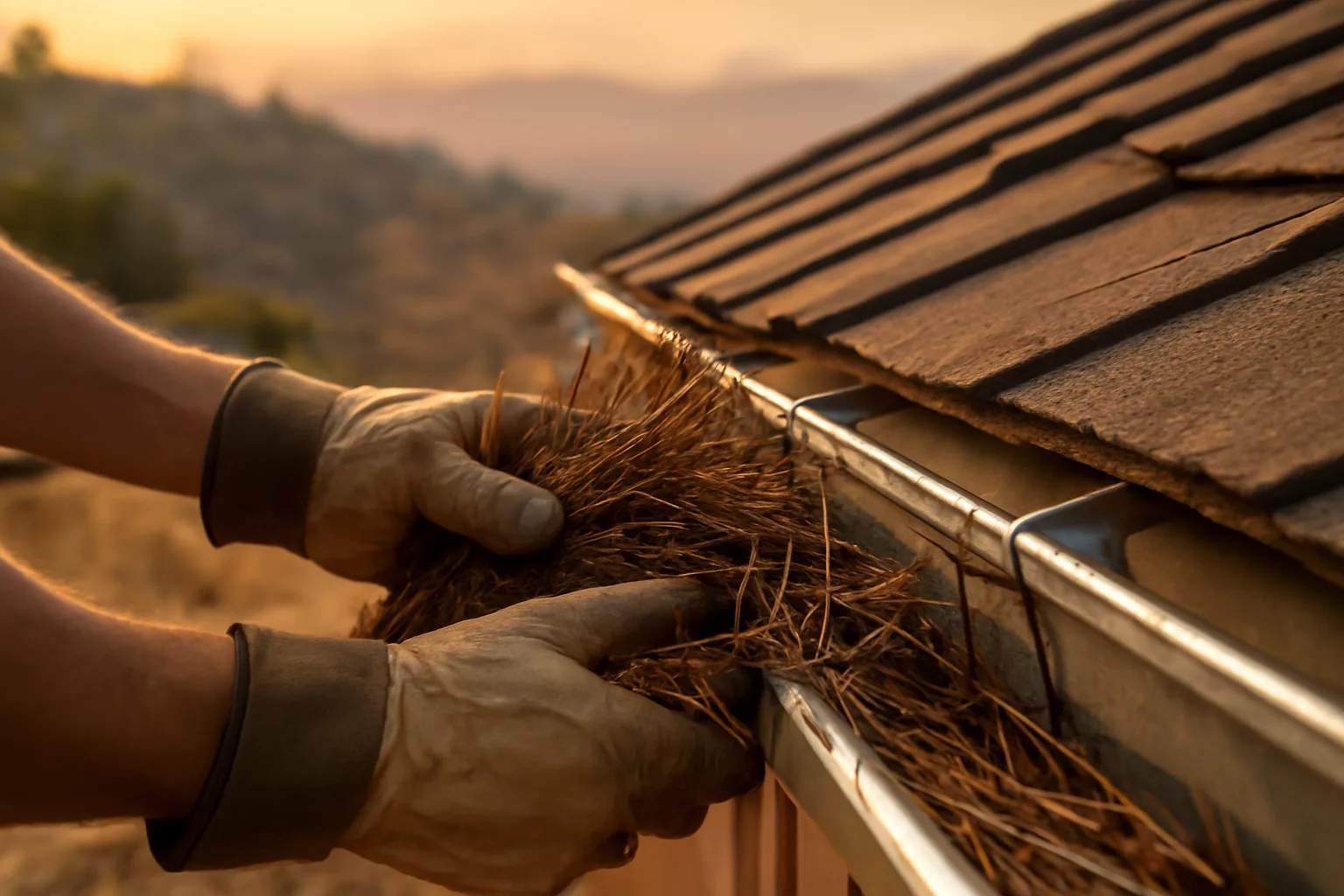
Wildfire management, at the scale of your property, is really three separate jobs that get lumped together: reducing fuel around the structure (defensible space), reducing the home's own ignitability (hardening), and keeping proof of both for your insurer and your own peace of mind. Federal and state agencies manage wildfire at the landscape level through fuel breaks, prescribed burns, and suppression. You manage it at the parcel level, and the two systems don't always talk to each other well. CAL FIRE frames it simply: "Defensible space is the buffer you create between a building on your property and the grass, trees, shrubs, or any wildland area that surrounds it". That buffer is what gives firefighters a place to work and slows a fire's approach long enough for your home to survive without a truck on scene at all, which is the more common scenario. Most homes that burn in wildfires aren't consumed by a wall of flame. They ignite from wind-blown embers that travel a mile or more ahead of the fire front, land in gutters, vents, mulch beds, or on a wood deck, and smolder until they catch. So the honest framing is: wildfire management at the home level is ember management. Everything downstream, the zone clearing, the vent screens, the deck material, exists to reduce the odds that a stray ember finds fuel next to your walls.
when does the california defensible space law go into effect
California's core defensible space statute (Public Resources Code 4291) isn't new. It has required 100 feet of defensible space around structures in State Responsibility Areas since amendments in 2005, and CAL FIRE and local fire agencies already inspect for it every year. What's changing is enforcement intensity and a new middle zone. The part homeowners are actually asking about is Zone 0, the ember-resistant zone within 5 feet of a structure. The California Board of Forestry and Fire Protection has been developing Zone 0 regulations under SB 63 (2020) and related legislation, and the target effective date, after delays, is now set for regulations to take effect no earlier than January 1, 2026, pending the Board's rulemaking process. That date has moved before. If you're in a State Responsibility Area or a Very High Fire Hazard Severity Zone, don't wait for the final rule text; the draft standards already circulating (no combustible mulch, no combustible fencing attached to the house, nothing stored under decks) are close enough to final that acting now saves you a redo later. Until Zone 0 is codified, your enforceable baseline is still PRC 4291's three-zone structure: Zone 1 (0-30 feet, lean and clean), Zone 2 (30-100 feet, reduced and separated fuel), and now the emerging Zone 0 concept layered inside Zone 1. Local fire districts can and do add stricter requirements on top of the state minimum, so check your specific district's defensible space ordinance before you assume the state number is the whole story. For a breakdown of what belongs in each ring, see defensible space zones.
what fire-safe home rules take effect in 2026
Two separate 2026 dates matter, and people conflate them. First is the Zone 0 ember-resistant zone rule discussed above, targeted for adoption in 2026 by the Board of Forestry and Fire Protection for homes in State Responsibility Areas and some Very High Fire Hazard Severity Zones in local jurisdictions. Second, and separate, is the ongoing rollout of Chapter 7A of the California Building Code, which governs ignition-resistant construction (roofing, vents, siding, windows) for new construction and major remodels in Wildland-Urban Interface fire areas. Chapter 7A isn't a single 2026 event; it's been in force in stages since 2008 and gets updated with each California Building Code cycle, the current one running 2022-2025 with the next triennial update expected in 2026. What this means practically: if you're building new or doing a significant remodel in a WUI zone in 2026, you're already required to meet Chapter 7A ignition-resistant standards for the exterior envelope. If you own an existing home, Zone 0 is the rule to watch, because it's the first that could require retrofits (removing bark mulch, moving woodpiles, changing fence material at the house connection) on homes that were built and landscaped years ago. Oregon and Colorado don't have a direct Zone 0 equivalent yet, but both states have been tightening WUI building codes and defensible space guidance at the county level; Oregon's statewide wildfire risk map and defensible space rules under SB 762 have gone through multiple revisions since 2021 after public pushback, so check your county assessor's site for the current version rather than relying on the original 2022 map.
why won't people follow the defensible space law in california
This is worth answering honestly instead of moralizing about it, because the reasons are mostly rational, not lazy. Cost is the biggest one: clearing 100 feet of brush on a hillside lot, especially where a homeowner can't reach it with a mower, routinely runs into thousands of dollars when hiring a licensed contractor, and CAL FIRE doesn't subsidize the labor, only sometimes the chipping or debris disposal through local programs. Second is confusion about what's actually required. PRC 4291 sets a state floor, but county and local fire district rules layer on top, and homeowners often get conflicting information from a CAL FIRE inspector, a county fire marshal, and their insurer's own wildfire risk model, none of which necessarily agree on the specifics for a given parcel. Third, some homeowners genuinely believe defensible space won't matter if a truly catastrophic, wind-driven fire (a Santa Ana or sundowner event) comes through, and there's a kernel of truth in that for the most extreme fire behavior, but it ignores that most home losses even in major fires come from ember ignition on properties that had no defensible space, not direct flame contact that no amount of clearing would stop. Fourth, and this doesn't get said enough: enforcement has historically been inconsistent. CAL FIRE's own inspection data has shown compliance rates well under 100% in surveyed areas for years, and until non-renewal letters started arriving en masse, there was little immediate consequence for skipping the work. That's changed. Insurers increasingly use aerial and satellite imagery to check defensible space compliance before renewal, which means neglect now shows up as a policy cancellation, more than a hypothetical risk. If you've already gotten that letter, our guide on what happens after a house fire walks through the aftermath most people are trying to avoid.
how to prevent wildfires
Preventing wildfires from starting is a different task than protecting your home once one is burning nearby, and both matter. Nationally, roughly 85-90% of wildfires are human-caused, according to the National Park Service and USDA Forest Service analysis of ignition sources, meaning equipment sparks, unattended campfires, downed power lines, arson, and debris burning account for the large majority of fire starts, with lightning responsible for the rest [1]. At the personal level, that means: never leave a campfire unattended and drown it cold before leaving (Ready.gov and the US Forest Service both stress "drown, stir, feel" before assuming a fire is out). Don't tow chains that can drag and spark on pavement. Avoid mowing dry grass in the heat of the day, since a mower blade hitting a rock is a documented ignition source for roadside and field fires. Check with your utility about vegetation clearance around power lines on your property, since utility equipment failure has caused some of the largest and most destructive California fires on record, including the 2018 Camp Fire. Defensible space and home hardening don't prevent ignition elsewhere; they determine whether an ignition that's already happening a mile away becomes your problem. Both halves matter, and confusing them is how people end up doing only one.
how to prevent forest fires and how to avoid forest fires
These questions get asked separately online but the answer is the same set of behaviors, mostly tied to recreation and land use rather than home protection. The Smokey Bear program, run by the USDA Forest Service since 1944, still frames the baseline correctly: check local fire restrictions before building any outdoor fire, use only designated fire rings, keep a shovel and water nearby, and never leave a fire unattended. Beyond campfires, the highest-frequency preventable causes in forested and wildland areas are: dragging trailer chains, parking vehicles on dry grass (a hot catalytic converter can ignite grass in under a minute), fireworks in wildland-adjacent areas, and unpermitted debris burning during dry, windy conditions. Most state forestry agencies, including CAL FIRE, issue burn permits with specific weather and seasonal windows for a reason; burning outside a permitted window during a Red Flag Warning is one of the more common causes of escaped fires that end up as full incident names. If you manage actual forested acreage, more than a home lot, prevention also means fuel management: thinning overstocked stands, removing ladder fuels (the shrubs and small trees that let ground fire climb into the canopy), and coordinating with your state forestry agency on prescribed burn windows where legal. That's a landscape-scale answer though, and most readers here are managing a quarter-acre to five-acre home site, where the defensible space and hardening work covered elsewhere in this guide matters more than forestry-scale fuel treatment.
how to prepare for a wildfire and how to prepare for forest fires
Preparation splits into three timelines: what you do year-round, what you do when a Red Flag Warning or fire is reported nearby, and what you grab if evacuation is ordered. Ready.gov's wildfire preparedness guidance centers on the same structure: build defensible space, harden your home, and have a go-bag and evacuation plan ready before you need it, not after. Year-round: maintain your defensible space zones per your local fire district's rules, clean gutters and roof valleys of needles and leaves at least twice a year, and keep a 6-inch noncombustible strip between siding and any mulch or plants. Store firewood and propane tanks at least 30 feet from structures, more than tucked against the garage. When a Red Flag Warning is issued or a fire starts within your region: move patio furniture cushions and doormats inside (they're common ember-catchers), close all windows and vents you can safely close, move vehicles to face the direction you'd evacuate, and put your go-bag by the door. A basic go-bag should cover medications, copies of ID and insurance documents, a change of clothes, water, and a phone charger, at minimum, per Ready.gov's checklist. When evacuation is ordered: leave immediately. Don't wait to see if it's serious, since the fires that kill people are almost always the ones where residents delayed. Turn on all interior and exterior lights so firefighters can see your home in smoke, and leave doors unlocked but windows closed if local guidance says to. For landscaping choices that reduce ember risk before any of this becomes urgent, see fire-safe landscaping next to the house.
is santa barbara safe from fire
No coastal California city is "safe" from wildfire in an absolute sense, and Santa Barbara County has a documented history that argues against complacency: the 1990 Painted Cave Fire destroyed over 400 structures in a matter of hours, driven by sundowner winds, and the 2017 Thomas Fire (at the time the largest wildfire in modern California history) burned into the county and was followed within weeks by the Montecito debris flow, which killed 23 people, a disaster directly tied to the burned, denuded slopes above town. Santa Barbara's specific risk driver is sundowner winds, a local downslope wind pattern that reverses in the evening and can push fire toward the coast with unusual speed, different from the more familiar Santa Ana pattern further south. Much of the city and county sits directly against the Santa Ynez foothills, which is textbook Wildland-Urban Interface, meaning dense fuel loads sit immediately uphill from dense housing. That said, "safe" isn't the right frame for any WUI community; "how prepared" is. Santa Barbara has some of the state's more established defensible space enforcement given its fire history, and CAL FIRE and county fire maintain updated Fire Hazard Severity Zone maps you can check by address through the state's mapping tool [2]. If your parcel falls in a Very High or High zone, which much of the foothill area does, the defensible space and hardening standards in this guide apply to you at full strength, not as optional extras.
how can we prevent forest fires (community-level actions)
Individual behavior matters, but community-scale prevention adds a layer most homeowners underrate: coordinated fuel breaks and neighborhood-wide defensible space compliance. A single well-hardened home surrounded by neglected lots is still at elevated risk, because embers and radiant heat from a burning neighboring structure can ignite a compliant home next door. Fire researchers at institutions like the Insurance Institute for Business & Home Safety have documented "structure-to-structure" ignition as a major driver of loss in dense WUI fires, meaning your neighbor's defensible space is partly your problem too. Practical community-level steps: organize or join a Firewise USA site through the National Fire Protection Association, which formalizes neighborhood-level risk reduction and is increasingly referenced by insurers as a mitigation credit. Support local vegetation management districts and prescribed burn programs run by your state forestry agency, since these reduce large-scale fuel loads that no amount of individual defensible space can offset. Push your HOA, if you have one, to align covenants with fire-safe landscaping rather than against it (some older HOA rules mandating cedar shake roofs or wood fencing directly conflict with fire-safe building codes and need updating). Report downed power lines and unattended fires immediately rather than assuming someone else will. Given that the large majority of wildfires are human-caused [1], community vigilance genuinely reduces ignition frequency, more than fire severity once one starts.
defensible space zones explained (quick reference)
| Zone 0 (ember-resistant, pending 2026 rule) | 0-5 ft | No combustible mulch, no attached combustible fencing, nothing stored under decks | |
|---|---|---|---|
| Zone 1 (lean, clean, green) | 5-30 ft | Remove dead vegetation, space plants, keep grass mowed under 4 inches | |
| Zone 2 (reduced fuel) | 30-100 ft | Thin trees and shrubs, remove ladder fuels, maintain horizontal/vertical spacing | Your actual required distances and specific plant/material rules depend on your fire district, slope, and Fire Hazard Severity Zone designation, so use this as a starting framework, not a substitute for checking your local ordinance. For a full zone-by-zone walkthrough with plant lists and spacing math, see defensible space zones. One detail that trips people up: Zone 1 and Zone 2 requirements apply even if your neighbor's property extends into your 100-foot radius. PRC 4291 allows fire agencies to require cooperative clearance across property lines in some cases, so a fence line isn't automatically a clearance boundary. |
Because zone requirements vary by fire district, treat the table below as the general California state-level structure and confirm specifics with your local fire authority before doing the work. | Zone | Distance from structure | General requirement (confirm locally) |
what to actually prioritize with a limited budget
If you've gotten a non-renewal letter and have $2,000-$5,000 to spend before your next inspection or insurer review, here's the honest priority order based on where ember ignition risk concentrates: gutters and roof valleys first (clear debris, add metal gutter guards), then the 0-5 foot zone around the foundation (remove mulch, move firewood, clear under decks), then vents (install 1/8-inch metal mesh screens on all attic and foundation vents, since standard fiberglass screens melt and let embers through), then the defensible space zones outward from there. Skip the expensive stuff first if your budget forces a choice: a full roof replacement to a Class A assembly matters enormously but costs far more than vent screening and gutter clearing, which address a comparable share of ember ignition risk for a fraction of the cost. Do the cheap, high-leverage work now and plan the roof and siding upgrades over a longer horizon. Whatever you do, document it. Take dated photos of cleared zones, vent screens, and any hardening work, and keep receipts for contractor work. Insurers reviewing wildfire risk increasingly want to see proof, more than a claim that the work is done, and a well-organized packet is the difference between a productive conversation with your carrier and a form letter. This is the exact gap our $99 Wildfire Insurance Survival Kit is built to close: it's a structured way to document your defensible space, hardening upgrades, and property condition in the format insurers actually want to see, so you're not scrambling to assemble proof after a denial or non-renewal notice. To be clear, we don't file claims on your behalf or promise any discount or reinstatement; you send your own documentation to your own carrier. We just help you build it correctly the first time.
what happens if you skip defensible space work entirely
Two separate consequences stack on top of each other, and people often only think about one. First, the fire risk itself: homes without defensible space have measurably higher ignition rates in wildfire events, because unmanaged vegetation and debris give embers fuel right at the structure, which is the mechanism behind most home losses. Second, the insurance and legal consequence: California fire agencies can issue citations and, in some cases, fines for PRC 4291 non-compliance, and inspection failures are increasingly shared with or independently verified by insurers doing wildfire risk underwriting. In practice, most homeowners don't get fined; they get non-renewed. Insurers pulling out of high-risk ZIP codes across California, Colorado, and parts of Oregon and Arizona over the past several years have leaned on defensible space and roof/vent hardening as a primary underwriting signal, sometimes using aerial imagery rather than an in-person inspection. If a homeowner ends up on California's FAIR Plan as a last resort, premiums are typically substantially higher than a standard admitted-market policy for comparable coverage, and FAIR Plan coverage is historically narrower. Skipping the work also just doesn't hold up against the base rate of fire behavior. Even in extreme, wind-driven events, defensible space and hardening measurably improve survival odds for a structure, which is why the practice persists as policy across every western fire state despite the labor and cost involved.
who enforces these rules and where to check your specific requirements
In California, defensible space under PRC 4291 is enforced by CAL FIRE in State Responsibility Areas and by local fire departments or fire districts within their jurisdictions; Local Responsibility Area rules can differ from state minimums, sometimes substantially. Chapter 7A building code enforcement runs through your local building department at permit and inspection time. Oregon's wildfire-related defensible space and building rules run through the Oregon Department of Forestry and county-level implementation of SB 762, with significant local variation since the statewide risk map revisions in 2022-2023. Colorado doesn't have a single statewide defensible space statute comparable to California's; it's largely handled at the county and fire district level, so Colorado homeowners need to check with their specific county wildfire mitigation office. Arizona similarly manages this through the Arizona Department of Forestry and Fire Management and local jurisdictions rather than one uniform statute. Because of this variation, the single most useful thing you can do this week, regardless of state, is call your local fire district's prevention office (more than CAL FIRE's statewide line) and ask for their current defensible space and Fire Hazard Severity Zone requirements for your specific parcel. Requirements genuinely differ by slope, vegetation type, and local ordinance amendments, and a five-minute phone call beats guessing from a state-level guide, including this one.
Frequently asked questions
When does the California defensible space law go into effect?
PRC 4291's core 100-foot defensible space requirement has been in effect since 2005 and is enforced annually. The newer Zone 0 ember-resistant zone rule, covering the 0-5 foot area around structures, is targeted for adoption by the Board of Forestry and Fire Protection with an effective date no earlier than January 1, 2026, though that date has shifted before.
Why won't people follow the defensible space law in California?
Mostly cost, confusion, and inconsistent enforcement. Clearing brush on a large or hillside lot can cost thousands of dollars, requirements vary by county and fire district on top of the state floor, and until recently there was little immediate consequence for non-compliance beyond rare citations, though insurance non-renewals have changed that calculus.
How do I prevent wildfires from starting?
Roughly 85-90% of wildfires are human-caused, per federal fire agency data. Fully extinguish campfires (drown, stir, feel), avoid mowing dry grass midday, don't drag tow chains on pavement, follow local burn permit windows, and report downed power lines immediately, since equipment failure has caused some of the largest fires on record.
How do I prepare for a wildfire if I live in a fire-prone area?
Build and maintain defensible space, harden vulnerable points like vents and gutters, and keep a go-bag with medications, ID and insurance copies, and water ready before fire season starts. Ready.gov's wildfire checklist is a solid baseline, and evacuating immediately when ordered matters more than any single preparation step.
What's the difference between preventing forest fires and preparing for one?
Prevention targets ignition sources, like campfires, equipment sparks, and debris burning, and mostly happens away from your home. Preparation targets what happens once a fire exists nearby: defensible space, home hardening, and evacuation readiness. Both matter, but they're different tasks with different timelines.
Is Santa Barbara safe from fire?
No coastal California community is fully safe from wildfire. Santa Barbara has a documented fire history including the 1990 Painted Cave Fire and 2017 Thomas Fire, driven partly by local sundowner winds. Much of the area sits in High or Very High Fire Hazard Severity Zones, so defensible space and hardening apply at full strength.
What fire-safe home rules take effect in 2026?
California's Zone 0 ember-resistant zone regulation, requiring noncombustible conditions within 5 feet of structures, is targeted for 2026 adoption. Separately, Chapter 7A building code updates for new construction in Wildland-Urban Interface zones continue on their regular triennial cycle, with the next update also expected around 2026.
How can communities prevent forest fires, more than individual homeowners?
Join or form a Firewise USA site, support local prescribed burn and fuel break programs run by your state forestry agency, and push HOAs to update covenants that conflict with fire-safe codes. Structure-to-structure ignition means a neighbor's neglected lot puts compliant homes at risk too.
What's the single most cost-effective wildfire prep step for an existing home?
Installing 1/8-inch metal mesh screens over attic and foundation vents and clearing gutters of debris. Both address major ember-entry points for a few hundred dollars, far less than a full roof or siding replacement, and can be done in a weekend.
Does defensible space actually work in extreme, wind-driven fires?
It measurably improves survival odds even in extreme events, though nothing guarantees a home's survival in the worst wind-driven fires. Most home losses, even in major fires, trace back to ember ignition on properties without defensible space, not direct flame contact that clearing couldn't have stopped.
Do Oregon, Colorado, and Arizona have the same defensible space laws as California?
No. Oregon manages this through the Department of Forestry and county implementation of SB 762. Colorado and Arizona largely handle it at the county and local fire district level rather than one statewide statute. Always confirm requirements with your specific county or fire district.
What happens if I don't do defensible space work and get inspected?
You may receive a citation from CAL FIRE or your local fire authority, though fines are relatively rare in practice. The more common consequence now is insurance non-renewal, since carriers increasingly use aerial imagery to verify defensible space compliance before deciding whether to renew a policy.
How do I find my property's Fire Hazard Severity Zone?
CAL FIRE maintains an online Fire Hazard Severity Zone viewer where you can search by address to see whether your parcel falls in a Moderate, High, or Very High zone. This designation determines which defensible space and building code requirements apply to your property.
Sources
- USDA Forest Service / National Park Service, wildfire causes: Roughly 85-90% of wildfires are human-caused
- CAL FIRE, Fire Hazard Severity Zone Viewer: Address-level Fire Hazard Severity Zone designations for California parcels
- CAL FIRE: California's defensible space law requires clearance around homes under PRC 4291.
- CAL FIRE: New ember-resistant Zone 0 (0-5 feet) home hardening rules are set to take effect.
- California Legislative Information: Public Resources Code 4291 establishes the legal basis for defensible space requirements in California.
- Cal Fire Ready for Wildfire: Defensible space is divided into zones with specific clearance requirements around a home.
- National Fire Protection Association: Home hardening measures can reduce wildfire risk to structures.
- Santa Barbara County Fire Department: Santa Barbara County has specific fire risk and preparedness resources for local residents.
- U.S. Environmental Protection Agency: Wildfire smoke and environmental impacts are addressed in federal wildfire resources.