Last updated 2026-07-25
TL;DR
Wildfire mitigation inspection software helps homeowners and contractors document defensible space, home-hardening features, and Zone 0-2 compliance with photos, GPS timestamps, and checklists insurers can review. It doesn't replace state law compliance or guarantee coverage. The real value is organized, dated proof you did the work, which matters more than the app itself.
what is wildfire mitigation inspection software and do you actually need it
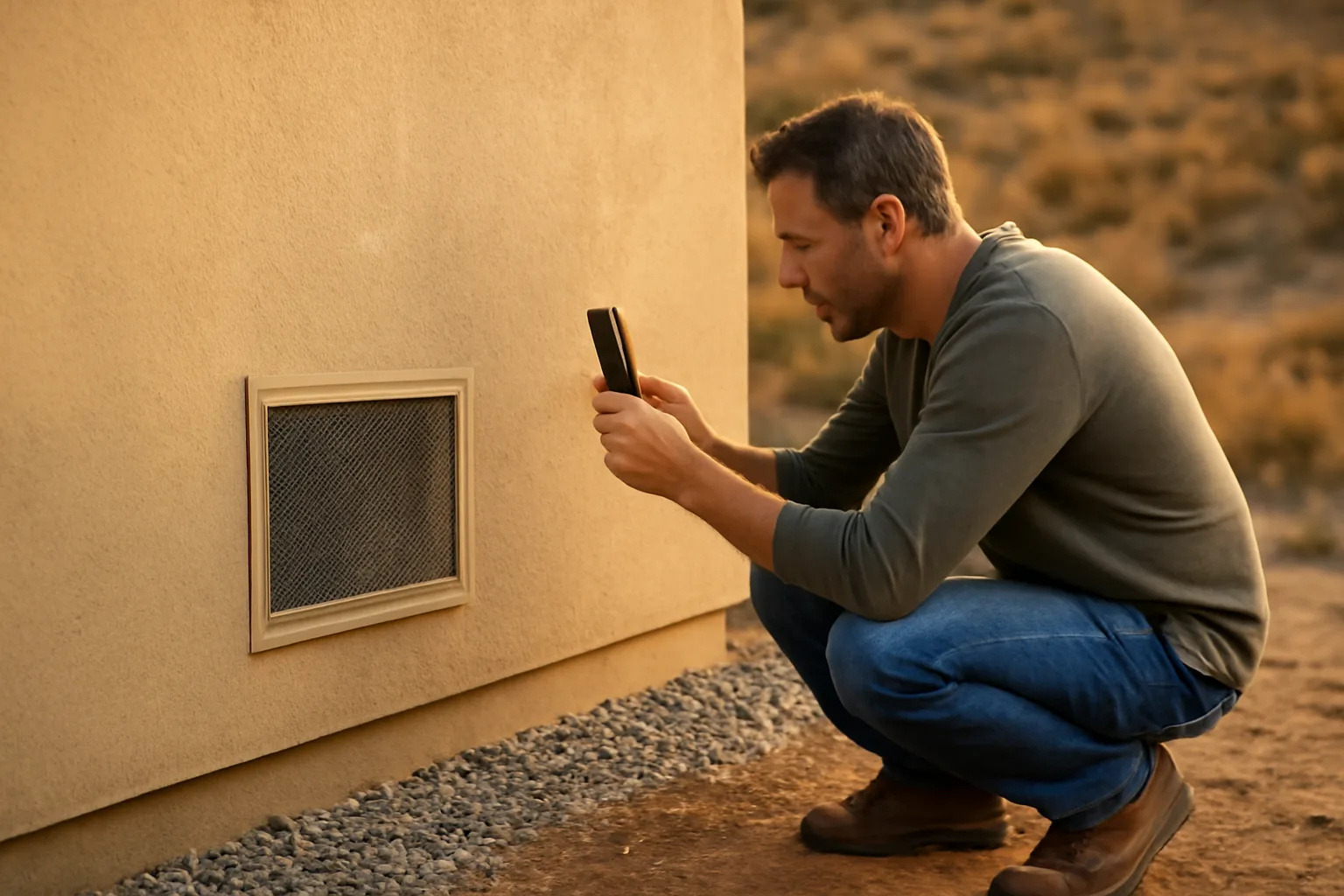
Wildfire mitigation inspection software is any app or platform that helps you document defensible space work, home-hardening features, and fire district compliance with photos, GPS location data, timestamps, and structured checklists. Some versions are built for professional inspectors and fire departments running community risk assessments. Others are built for homeowners who just need proof they cleared brush and vented their eaves before an insurer's non-renewal deadline. Do you need dedicated software? Honestly, not always. If you're comfortable with a spreadsheet, a folder of dated photos, and a simple checklist, you can build the same documentation package for free. What the paid tools add is structure: pre-built checklists mapped to your state's requirements, automatic GPS tagging so a photo of your roof vents proves it's actually your house, and export formats that look clean when you send them to an insurance agent or underwriter. The bigger point people miss: software doesn't do the mitigation work. Clearing your Zone 0 (the first 5 feet around your structure) or replacing a wood shake roof still takes your money and your weekend. The software just proves it happened, in a format someone else can trust without driving out to look. If you're facing a non-renewal letter right now, the priority order is clear: do the physical mitigation first, using defensible space zone guidance for your zone, then document it. A polished PDF of work you never did helps nobody, and insurers increasingly send their own inspectors anyway.
when does the california defensible space law go into effect
California's defensible space requirements aren't new, but the ember-resistant "Zone 0" rule (the 0-5 foot zone immediately around a structure) has a specific and still-shifting timeline. Public Resources Code section 4291 has required 100 feet of defensible space clearance around structures in State Responsibility Areas and designated Wildland-Urban Interface areas since 2005 [1]. The Zone 0 ember-resistant zone regulation, created by Assembly Bill 3074 (2020), directs the State Board of Forestry and Fire Protection to adopt specific regulations for that innermost 5-foot zone [2]. As of early 2026, the Board has been working through the regulatory process, and CAL FIRE's own guidance has repeatedly pushed back the effective date for mandatory enforcement while keeping the recommendation in place voluntarily. Homeowners should check the Board of Forestry's current rulemaking status directly rather than trust any fixed date circulating online, because it has moved before. What's not delayed: the underlying 100-foot defensible space requirement under PRC 4291 has been enforceable for two decades. Local fire agencies conduct inspections, and failure to comply can result in citations or, in some jurisdictions, the fire department clearing the property and billing the owner. Check your specific fire district's current enforcement timeline: [GUIDED FILL-IN: contact your local fire district or CAL FIRE unit for the current Zone 0 compliance date in your area]. Rules and deadlines vary by county and by whether you're in a State Responsibility Area versus a Local Responsibility Area, so don't assume a statewide date applies uniformly.
why won't people follow the defensible space law in california
This isn't a mystery covered by a single explanation. Cost is the biggest one. Removing mature trees, regrading slopes, or replacing landscaping near a home can run from a few hundred dollars for a small lot to $10,000 or more for larger, heavily wooded properties, and many homeowners simply don't have that available, especially after paying rising insurance premiums or a non-renewal forced them into the FAIR Plan. Second, enforcement is inconsistent. CAL FIRE and local fire departments are supposed to inspect properties in State Responsibility Areas, but staffing is limited relative to the number of parcels. A 2021 California State Auditor report found significant gaps in how consistently defensible space inspections were conducted and tracked across responsible agencies [3]. When the odds of getting cited are low, some homeowners deprioritize the work. Third, there's a knowledge gap. People don't always know which zone rules apply to their specific slope, vegetation type, and structure, and "clear 100 feet" sounds different depending on whether you're on flat ground or a steep hillside where fire behavior changes dramatically. Fourth, older or lower-income homeowners sometimes physically can't do the labor themselves and can't afford a contractor. And some people genuinely believe it won't happen to them, a bias every fire scientist and insurance actuary will tell you costs communities dearly when a fast-moving fire finally arrives.
how to prevent wildfires
You can't personally prevent every wildfire, but human activity causes the vast majority of them. Roughly 85% of wildfires in the United States are started by people, according to the National Interagency Fire Center's historical wildfire cause data referenced by the U.S. Forest Service [4]. That means individual behavior matters more than most people assume. The practical steps: never leave a campfire unattended and fully extinguish it (drown, stir, feel for heat) before leaving. Don't park or drive vehicles over dry grass, since hot exhaust systems are a documented ignition source. Follow local burn bans and check for red flag warnings before any outdoor burning. Maintain equipment like chainsaws and mowers to avoid sparking, and avoid using them during high-wind, low-humidity conditions. Properly dispose of cigarettes, and never discharge fireworks in dry vegetation or during burn bans. At the home level, prevention blends into hardening. Ember-resistant vents, Class A fire-rated roofing, and enclosed eaves reduce the chance a nearby fire ignites your specific structure, which is a different (and more controllable) problem than stopping wildfire ignition broadly. Ready.gov's wildfire preparedness guidance emphasizes that most home losses in wildfires come from embers landing on or near the structure, not direct flame contact, which is why hardening your own home matters even if you can't control ignition sources in the broader landscape.
how to prepare for a wildfire
Preparation splits into three buckets: your home, your evacuation plan, and your documentation. Miss any one of these and you're exposed in a different way. For the home: create and maintain defensible space zones (0-5 feet, 5-30 feet, 30-100 feet), harden vulnerable points like vents, eaves, and roof-wall intersections, and clear gutters of debris regularly. Ready.gov recommends keeping vegetation trimmed and maintaining a fire-resistant zone as core wildfire preparedness actions. For evacuation: know at least two routes out of your neighborhood, keep your vehicle fueled during fire season, and pack a go-bag with medications, documents, and essentials you can grab in five minutes. Sign up for your county's emergency alert system; most California, Colorado, Oregon, and Arizona counties run free reverse-911 style alert programs. For documentation, which is the piece most homeowners skip: photograph your defensible space work, roof material, vent upgrades, and any hardening improvements, dated and organized, before fire season starts. If you're dealing with a non-renewal letter or trying to get reinstated with a new carrier, this documentation is what you'll need to show. This is also where the $99 Wildfire Insurance Survival Kit fits: it's a one-time toolkit built specifically to help homeowners organize this proof into an insurer-ready format, without pretending to negotiate your claim or promise coverage. You still do the work and send your own documentation; the kit just gives it structure.
how to prevent forest fires and how to avoid forest fires
"Forest fire" and "wildfire" prevention overlap almost entirely once you're talking about what individuals control. The U.S. Forest Service's long-running Smokey Bear campaign exists precisely because most forest fire ignitions are preventable human-caused events, not lightning [4]. If you're recreating in or near forested land: check current fire restrictions before you go (many national forests post seasonal restriction levels), use designated fire rings only, keep campfires small, and never leave one burning. Avoid parking on dry grass or brush. If towing equipment with chains, secure them so they don't drag and spark on pavement, a surprisingly common ignition source documented by CAL FIRE incident reports. If you live adjacent to forest land (the classic wildland-urban interface situation), the prevention question becomes a hardening and clearance question. Maintain your defensible space per your local requirements, use fire-safe landscaping choices near your house, and coordinate with neighbors, since a fire doesn't stop at your property line and one unmitigated lot can compromise a whole block's defensible space strategy.
how to prepare for forest fires
Preparing for forest fire risk specifically (as opposed to general wildfire risk near your home) means thinking about access, water, and structural vulnerability in more remote or heavily treed settings. Access: if you live down a long private road or driveway, make sure it's wide enough and clear enough for fire engines, and that your address is clearly visible from the road. Many rural fire departments report delayed response specifically because they can't find or reach a structure in time. Water: know where your nearest water source is, whether that's a hydrant, pond, or your own tank or pool, and make sure fire crews can access it. Some jurisdictions require rural properties to maintain a minimum water storage capacity for firefighting use; check your county's specific requirement. Vegetation management around a forest-adjacent home needs more aggressive thinning than a suburban lot, often extending to the full 100 feet or beyond required under PRC 4291 in California [1], with particular attention to "ladder fuels," the shrubs and low branches that let ground fire climb into tree canopies. If you've had a close call already, read through what a house fire near wildland actually does to structures, since it changes how people prioritize hardening afterward.
what fire safe rules for homes take effect in 2026
This is one of the most searched and most confused questions right now, because there isn't one single national "2026 fire code" that applies everywhere. What's actually happening is a patchwork of state and local rule updates, some targeting 2025, some 2026, some without a firm date yet. In California, the Zone 0 ember-resistant zone regulation under AB 3074 remains the most anticipated update, and its effective date has shifted multiple times since the bill passed in 2020 [2]. Check the Board of Forestry and Fire Protection's current regulatory status directly, since any date you read online (including this one) may be outdated by the time you're reading it. At the model code level, the International Wildland-Urban Interface Code (IWUIC), published by the International Code Council, gets updated on a roughly three-year cycle, and individual states and counties adopt versions of it on their own timelines, not automatically [5]. Colorado, Oregon, and Arizona each have their own state fire marshal offices issuing separate WUI building code guidance, and none of them are synchronized with California's calendar. Guided fill-in: [check your specific fire district's 2026 code adoption status, since local jurisdictions in CA, CO, OR, and AZ adopt WUI code updates on different schedules]. The safest move is to call your county building department or state fire marshal's office directly rather than rely on a single blog post's date, including this one.
is santa barbara safe from fire, and how does that apply to your own area
No area in California's wildland-urban interface is "safe" from fire in an absolute sense, and Santa Barbara County has direct history proving it: the 2017 Thomas Fire burned over 281,000 acres and was, at the time, the largest wildfire in modern California history, followed almost immediately by the deadly Montecito debris flow in January 2018 [6]. The 1990 Painted Cave Fire and 2009 Jesusita Fire also burned through Santa Barbara foothill neighborhoods. What makes Santa Barbara (and similar foothill communities in CO, OR, and AZ) higher risk isn't bad luck. It's the combination of steep terrain, chaparral vegetation that burns hot and fast, seasonal offshore wind events (Santa Ana-type winds), and dense development pushed into the wildland-urban interface. These are the same structural risk factors present in the Colorado Front Range foothills, Oregon's Rogue Valley, and Arizona's high country communities. The useful reframe for any homeowner asking "is my area safe": check your specific parcel's Fire Hazard Severity Zone designation through CAL FIRE's mapping tool (or your state's equivalent), because risk varies block by block, more than county by county [7]. A home in a Very High severity zone one street over from a Moderate zone home faces meaningfully different exposure, insurance treatment, and mitigation requirements, even in the same city.
how can we prevent forest fires at the community level
Individual mitigation only goes so far if your neighbors haven't done theirs. Fire moves through a neighborhood via the weakest links: the one untrimmed lot, the one wood-shake roof, the one pile of debris against a fence line. Firewise USA, a program run by the National Fire Protection Association in partnership with the U.S. Forest Service and state forestry agencies, organizes neighborhoods into recognized "Firewise Sites" that coordinate mitigation work collectively, often unlocking group discounts on chipping services or coordinated contractor scheduling [8]. There are thousands of recognized Firewise sites across the U.S., concentrated heavily in California, Colorado, and Oregon. Community-level prevention also includes supporting local fuel reduction projects on adjacent public land, since CAL FIRE and the U.S. Forest Service both run prescribed burn and mechanical thinning programs that reduce the fuel load feeding fires before they reach neighborhoods [4]. Attending your county's wildfire protection plan meetings and pushing for consistent code enforcement matters too. If you're the one household that mitigates while five neighbors don't, you've reduced your own risk somewhat, but you haven't changed the neighborhood's fundamental exposure. This is genuinely a collective action problem, more than a personal responsibility one, and it's part of why insurers evaluate wildfire risk at the community and zone level, not purely on individual parcels.
how wildfire mitigation inspection software fits into your insurance documentation strategy
If you've received a non-renewal or inspection letter, the software question becomes practical fast: what tool actually helps you get reinstated or find new coverage? The honest answer is that no software guarantees coverage, and you should be skeptical of any product that implies otherwise. What good documentation tools do is organize proof: dated, geotagged photos of your defensible space zones, your roof material, your vents, your gutters, matched against whatever checklist your specific fire district or insurer requests. Some insurers now use their own third-party inspection vendors (companies like ZestyAI or Verisk build wildfire risk models insurers use for underwriting), so your own documentation is a counter-narrative you can present, not the only data point in play. Build your own package if you're budget-conscious: a shared folder organized by zone (0-5 ft, 5-30 ft, 30-100 ft), dated photos with your phone's GPS metadata intact, a copy of any professional inspection reports, receipts for hardening work (new vents, roof replacement, gutter guards), and a cover letter summarizing what you did and when. This is essentially what a $99 kit like ours automates into a template, saving you the layout work, not replacing the underlying documentation you still have to gather yourself. Whatever you use, remember this isn't insurance advice or a guarantee. Nobody can promise reinstatement or a discount, and you should treat any tool, including ours, as a way to prepare your own file, not as a substitute for direct communication with your carrier or agent. For the underlying zone work itself, see our breakdown of defensible space zone requirements and how they map to what inspectors actually check.
Frequently asked questions
When does the California defensible space law go into effect?
The core 100-foot defensible space requirement under PRC 4291 has been enforceable since 2005. The newer Zone 0 ember-resistant zone rule (AB 3074) is still in the regulatory process as of early 2026, with its effective date shifted multiple times. Check CAL FIRE's Board of Forestry site or your local fire district for the current status.
Why won't people follow the defensible space law in California?
Cost, inconsistent enforcement, confusion over zone-specific requirements, physical inability to do the labor, and normalcy bias all contribute. A 2021 California State Auditor report found gaps in how consistently defensible space inspections were tracked across responsible agencies, which reduces the practical pressure to comply.
How do I prevent wildfires as an individual?
Fully extinguish campfires, avoid driving or parking on dry grass, follow local burn bans, maintain outdoor equipment to prevent sparking, and properly dispose of cigarettes. About 85% of U.S. wildfires are human-caused according to National Interagency Fire Center data, so individual behavior meaningfully reduces ignition risk.
How do I prepare for a wildfire if I live in a fire-prone area?
Maintain defensible space zones around your home, harden vulnerable points like vents and eaves, know two evacuation routes, keep a go-bag ready, and sign up for county emergency alerts. Also photograph and document your mitigation work before fire season, since that documentation matters for insurance conversations later.
What's the difference between preventing wildfires and preventing forest fires?
Practically, none. Both mean stopping human-caused ignitions (campfires, sparks, equipment) and reducing fuel loads. "Forest fire" prevention often emphasizes recreation-area behavior (campfire safety, fire restrictions), while "wildfire" prevention includes home hardening for structures near wildland.
What fire-safe rules for homes take effect in 2026?
There's no single national 2026 fire code. California's Zone 0 ember-resistant zone rule (AB 3074) is the most anticipated update but its date has moved repeatedly. States and counties adopt International Wildland-Urban Interface Code updates on separate timelines, so check your specific jurisdiction rather than assume a fixed date.
Is Santa Barbara safe from fire?
No area in Santa Barbara's wildland-urban interface is fully safe. The 2017 Thomas Fire burned over 281,000 acres there, and the area has burned repeatedly (1990 Painted Cave Fire, 2009 Jesusita Fire). Risk varies by parcel; check your specific address against CAL FIRE's Fire Hazard Severity Zone maps.
How can communities prevent forest fires together?
Programs like Firewise USA, run by the National Fire Protection Association, organize neighborhoods to coordinate mitigation work, often at lower cost than individual contracts. Supporting local fuel reduction and prescribed burn projects on adjacent public land also reduces the fuel that feeds fires before they reach homes.
Does wildfire mitigation inspection software help get my insurance reinstated?
It can help you organize proof of your mitigation work (dated photos, GPS location, checklists matched to zone requirements), but no software guarantees reinstatement or coverage. Insurers make underwriting decisions using their own models and inspectors; your documentation is supporting evidence, not a guarantee.
What should I photograph for insurer documentation after a non-renewal letter?
Photograph your defensible space zones (0-5 ft, 5-30 ft, 30-100 ft), roof material and condition, vent types, gutter cleanliness, and any recent hardening upgrades. Keep photos dated with GPS metadata intact and organize them by zone so an underwriter can review them quickly.
Can a fire department clear my property if I don't comply with defensible space law?
In some California jurisdictions, yes. Under PRC 4291 enforcement, local fire agencies can issue citations for non-compliance, and in certain cases the agency can perform the clearance work itself and bill the property owner. Requirements and enforcement practices vary by fire district.
What is Zone 0 and why does it matter more than the other defensible space zones?
Zone 0 is the 0-5 foot ember-resistant zone immediately around a structure, created under California's AB 3074. It matters because most home ignitions during wildfires come from wind-blown embers landing near the structure, not direct flame contact, per Ready.gov wildfire guidance.
Sources
- California Public Resources Code Section 4291: 100 feet of defensible space clearance has been required around structures in State Responsibility Areas since 2005
- California Assembly Bill 3074 (2020): AB 3074 directs the Board of Forestry to adopt ember-resistant Zone 0 regulations for the 0-5 foot zone
- California State Auditor, Report 2021: Gaps exist in how consistently defensible space inspections are conducted and tracked across responsible agencies
- USDA Forest Service, wildfire cause statistics: Roughly 85% of wildfires in the U.S. are human-caused
- International Code Council, International Wildland-Urban Interface Code: The IWUIC is updated on a roughly three-year cycle and adopted separately by states and counties
- CAL FIRE, Thomas Fire incident information: The 2017 Thomas Fire burned over 281,000 acres, the largest California wildfire on record at the time
- CAL FIRE, Fire Hazard Severity Zones: Fire risk and mitigation requirements vary by parcel-level Fire Hazard Severity Zone designation
- National Fire Protection Association, Firewise USA program: Firewise USA organizes neighborhoods into recognized sites that coordinate wildfire mitigation work collectively