Last updated 2026-07-25
TL;DR
A wildfire mitigation matrix ranks home-hardening and defensible-space tasks by zone (0-5, 5-30, 30-100 ft) and cost, so you fix the highest-risk items first. Roof and vent work matters most; California's ember-resistant Zone 0 rule targets 2026 rulemaking, not a hard 2025 deadline, per CAL FIRE and the Board of Forestry.
What is a wildfire mitigation matrix, and why rank tasks instead of just doing them all?
| 1 | Clear dead vegetation, needles, leaves within 5 ft of structure | Zone 0 | $0-300 (DIY) | Very high | |
|---|---|---|---|---|---|
| 2 | Replace/seal open vents with 1/8-inch ember-resistant mesh | Structure | $150-1,500 | Very high | |
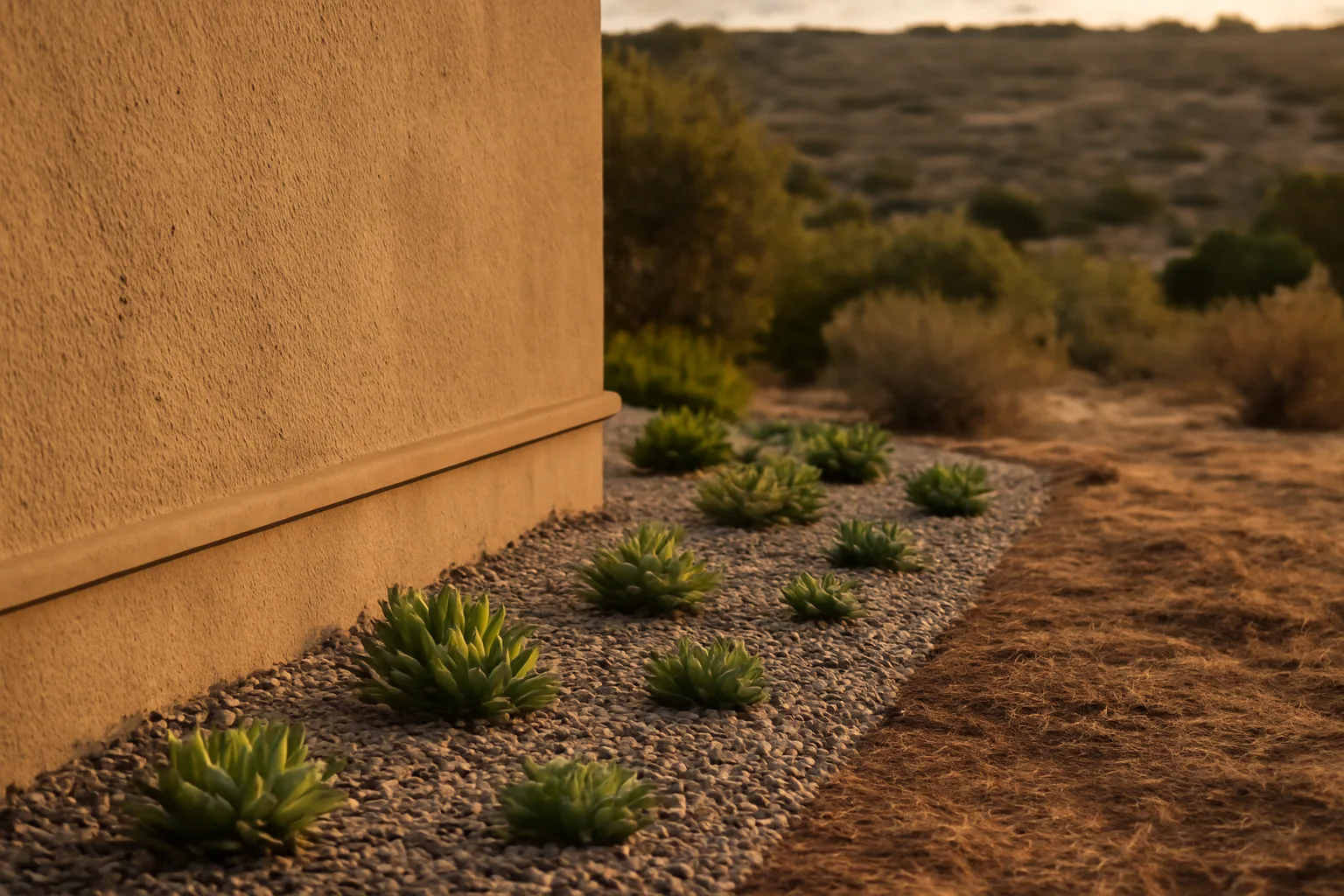
| 3 | Remove combustible mulch/bark within 5 ft, swap for gravel or pavers | Zone 0 | $200-1,000 | High | |
| 4 | Clean roof and gutters of debris | Structure | $0-300 | High | |
| 5 | Trim tree limbs 6-10 ft from ground, remove ladder fuels | Zone 1 (5-30 ft) | $300-2,000 | High | |
| 6 | Replace single-pane windows with dual-pane/tempered glass | Structure | $2,000-8,000+ | Medium-high | |
| 7 | Enclose eaves, box in exposed rafter tails | Structure | $1,000-5,000 | Medium | |
| 8 | Re-roof with Class A rated material | Structure | $8,000-25,000+ | High (long-term) | |
| 9 | Space and thin trees/shrubs 30-100 ft (Zone 2) | Zone 2 | $500-5,000 | Medium | |
| 10 | Move firewood stacks, propane tanks 30+ ft from structure | Zone 1/2 | $0-200 | Medium | Costs are rough national ranges pulled from home-hardening cost guidance and vary a lot by region and labor market. Nobody publishes a single authoritative national price list, so treat these as planning figures, not quotes. |
A wildfire mitigation matrix is just a prioritized checklist that sorts home-hardening and defensible-space work by two things: how much it reduces ignition risk, and how much it costs. You've got a limited budget and maybe a 30-day inspection deadline. You don't have time to redo your whole yard and re-roof the house before your insurer's re-inspection date. So you triage. The research behind this triage is pretty consistent. Homes ignite during wildfires mostly from embers landing on or near the structure, not from a wall of flame rolling through. CAL FIRE and the Insurance Institute for Business & Home Safety (IBHS) both point to embers and small flames as the dominant ignition pathway, which is why the first 5 feet around your house (Zone 0) gets outsized attention in every serious mitigation framework. A matrix format works because it forces you to compare unlike things: a $40 ember-resistant vent versus a $12,000 re-roof versus three weekends pulling ivy off the fence. Ranked by risk-reduction-per-dollar, the vent usually wins. That's the whole exercise. Below is a simplified version of the kind of matrix a home-hardening consultant or CAL FIRE defensible space inspector would use, adapted from CAL FIRE's Ready for Wildfire home hardening guidance and the Zone 0 concept in Assembly Bill 3074 (2020) [1]. | Priority | Task | Zone | Typical cost | Risk reduction |
How do I prevent wildfires from starting near my property?
Most wildfires near homes aren't started by lightning. Roughly 85 percent of wildfires in the U.S. are human-caused, according to the National Interagency Fire Center's cause data cited by Ready.gov, and that includes unattended campfires, equipment sparks, downed power lines, and debris burning. Prevention starts with cutting off ignition sources on your own property before you even get to defensible space. Don't burn debris on red flag warning days. Check your county's burn ban status before any outdoor fire, including small yard debris piles. Keep mowers, chainsaws, and trimmers away from dry grass in the afternoon heat; a mower blade hitting a rock throws sparks hot enough to ignite cured grass. Maintain spark arrestors on any equipment with a combustion engine used near vegetation. If you have a chimney or wood stove, keep it swept and use a spark arrestor screen on the flue. Store gas and propane away from structures. Report downed lines to your utility immediately rather than waiting; utility-caused ignitions are a growing share of catastrophic fires in California and Colorado. None of this replaces defensible space work, but it closes the gap between "my house is hardened" and "nothing on my property can start a fire in the first place."
How do I prepare for a wildfire if I'm already in a high-risk zone?
Preparing for a wildfire means having a go-bag, an evacuation plan, and your documentation ready before a red flag warning, not during one. Ready.gov's wildfire preparedness guidance recommends a household emergency plan with two evacuation routes, a designated meeting point, and a go-kit with medications, copies of insurance documents, and chargers packed and ready year-round. Here's a practical prep sequence, roughly in order. First, sign up for your county's emergency alert system (most CA, CO, OR, and AZ counties run a reverse-911 or Everbridge-based system). Second, photograph and video every room of your house, your roof, your defensible space zones, and your attic/crawlspace access, dated and time-stamped, twice a year. This is the single most useful thing you can do before a non-renewal fight or a claim; adjusters and insurers respond to dated visual proof, not memory. Third, build a document folder (digital and physical) with your policy declarations page, an inventory of major possessions, and any mitigation receipts (roof replacement invoices, vent upgrades, contractor work orders). Fourth, know your zone status: check whether your address is in a state-designated Fire Hazard Severity Zone (California) or Wildland-Urban Interface Code area (Colorado, Oregon), since insurers pull this exact designation when deciding renewal. A lot of homeowners in fire country build a version of this kit for their own peace of mind, and that instinct is exactly right. A $99 Wildfire Insurance Survival Kit is built around that same photograph-plus-document workflow so you're not assembling it from scratch during an evacuation.
When does the California defensible space law go into effect?
California's core defensible space requirement (100 feet of clearance around structures) is already in effect and has been since Public Resources Code Section 4291 was expanded in 2005 [2]. What's *not* fully in effect yet is the stricter "Zone 0" ember-resistant zone rule. Assembly Bill 3074, signed in 2020, directs the Board of Forestry and Fire Protection to adopt regulations requiring an ember-resistant zone within 5 feet of a structure in State Responsibility Areas and designated wildland-urban interface areas. As of the most recent Board of Forestry rulemaking updates, this regulation has not been finalized into enforceable code; CAL FIRE's public materials describe Zone 0 as a recommended best practice for homeowners now, with formal regulations still moving through the rulemaking process [1] [3]. So if you've heard "the California defensible space law changes in 2025" or "2026," the honest answer is: the 100-foot, two-zone system (Zone 1: 0-30 ft, Zone 2: 30-100 ft) under PRC 4291 is already law and has been enforced for two decades. The new Zone 0 ember-resistant rule is in active rulemaking and hasn't been locked into a statewide enforcement date as of this writing. Check CAL FIRE's Board of Forestry rulemaking page directly before you assume a hard deadline, because this is the part of the law most likely to shift [3].
What fire-safe home rules take effect in 2026?
No single nationwide "2026 fire-safe homes law" exists; what's changing is a patchwork of state and local rules, and California's Zone 0 ember-resistant zone regulation is the one most homeowners are asking about. The Board of Forestry has been working through the AB 3074 rulemaking process, and CAL FIRE's own guidance describes an anticipated framework where new construction and existing homes in high-risk zones would eventually need to maintain a 5-foot zone free of combustible mulch, vegetation touching the structure, and storage of flammable items [1] [3]. Separately, California's insurance market has its own 2025-2026 shifts worth tracking. The California Department of Insurance's Sustainable Insurance Strategy, finalized through regulatory action in 2024, requires insurers writing in the state to expand coverage in high-risk wildfire areas in exchange for being allowed to use catastrophe modeling (rather than only historical losses) in rate-setting, with insurer compliance and reporting phasing in through 2025 and 2026 [4]. Colorado's WUI Code (Senate Bill 21-258 framework and subsequent building code updates) has pushed several mountain counties toward adopting the 2021 International Wildland-Urban Interface Code, with local jurisdictions setting their own effective dates. Oregon's statewide wildfire risk map and defensible space rules, tied to Senate Bill 762 (2021), have gone through revisions after backlash over the original hazard map; check Oregon Department of Forestry's current map status before assuming your zone designation, since this has changed more than once [5]. Bottom line: don't trust a blanket "2026 rule" claim you see online. Check your specific state fire marshal's page and your county's building department for the actual effective date in your jurisdiction. Rules genuinely vary by fire district, so treat any date you read (including in this article) as a starting point to verify locally, not a final answer.
Why won't people follow the defensible space law in California?
Compliance with PRC 4291 has been a known problem for CAL FIRE for years, and the reasons are pretty practical: cost, labor availability, and enforcement gaps. A 2019 CAL FIRE-commissioned survey and subsequent state auditor reviews found that defensible space compliance rates in inspected areas often ran well below universal compliance, with cost of vegetation removal and lack of contractor availability cited as leading barriers in state assessments of the program [6]. There's also a real information gap. Many homeowners genuinely don't know their property is in a State Responsibility Area subject to PRC 4291, especially if they bought the home years before a Fire Hazard Severity Zone map update pulled their area into a higher-risk classification. Others assume defensible space means clear-cutting their whole lot, which isn't true (the law allows spaced, low-fuel landscaping, not bare dirt) and the misconception itself becomes a reason to avoid the work. Enforcement matters too. CAL FIRE conducts inspections primarily in State Responsibility Areas, and Local Responsibility Areas depend on local fire departments, which have wildly uneven staffing to do proactive inspections. A homeowner in a rural LRA with no active inspection program can go years without any check, which means the law exists on paper without a mechanism pushing compliance in practice. And frankly, some people just weigh the risk wrong. A defensible space project that costs $2,000-$5,000 feels optional until a wildfire actually threatens the neighborhood, or until an insurer sends a non-renewal letter citing exactly this gap.
How can we prevent forest fires as individuals, more than homeowners?
Preventing forest fires as an individual comes down to eliminating human ignition sources in wildland areas: campfires, vehicles, equipment, and debris burning, since these account for the vast majority of fire starts according to national cause statistics. If you camp, hike, or drive off-road in fire country, a few habits matter more than any single gadget. Always fully extinguish campfires: drown, stir, and feel for heat before leaving, more than until the flames look out. Never park a hot vehicle over dry grass; catalytic converters can exceed 1,000°F and are a documented cause of roadside ignitions. Follow local burn permit rules and check for red flag warnings before any outdoor burning, and avoid towing chains that drag and spark on pavement near dry vegetation. Report smoke immediately rather than assuming someone else has called it in; early detection is one of the few prevention levers an individual fully controls once a fire has already started nearby. CAL FIRE's "Ready, Set, Go!" framework and the classic "Only You Can Prevent Wildfires" Smokey Bear campaign both exist because human behavior, more than fuel and weather, is the variable people can actually change. For more on how that campaign message translates into home-level action, see only you can prevent wildfires.
Is Santa Barbara safe from fire, and how do I check my own area's risk?
No area in California's wildland-urban interface, including Santa Barbara County, is "safe" from fire risk in an absolute sense. Santa Barbara has experienced multiple destructive fires (Thomas Fire, 2017; the Montecito debris flow that followed), and large portions of the county are mapped in Very High or High Fire Hazard Severity Zones by CAL FIRE [6]. The honest answer to "is X city safe from fire" is always: check the specific parcel, not the city name. CAL FIRE maintains an online Fire Hazard Severity Zone (FHSZ) viewer where you can enter any California address and get the exact zone designation (Moderate, High, or Very High) for that parcel, which is the same data insurers and building departments use. This matters more than a city's general reputation, because risk varies block by block depending on slope, vegetation, wind corridors, and distance from wildland fuel. Same logic applies if you're asking about Santa Barbara, Boulder, Ashland, or Flagstaff. Look up the parcel-level hazard map for your state (CAL FIRE for California, the relevant state forestry or fire marshal office for CO/OR/AZ), and treat that as your starting risk number, not a news headline about a fire that happened ten miles away.
What's the difference between defensible space zones and home hardening, and do I need both?
Defensible space is what you do to the land around your house; home hardening is what you do to the house itself, and you need both because embers can travel over well-cleared land and still ignite a vulnerable structure. CAL FIRE splits defensible space into two zones under PRC 4291: Zone 1 (0-30 feet, "lean, clean, and green") and Zone 2 (30-100 feet, reduced fuel and spacing) [2]. Home hardening covers the physical building: roof material, vent screening, siding, window glazing, deck construction, and eave design. IBHS research on the 2018 Camp Fire and other WUI fires found that homes with Class A roofs, ember-resistant vents, and noncombustible zones immediately adjacent to the foundation survived at meaningfully higher rates than similar homes without those features, even in the same fire. That's the core finding driving the whole "Zone 0" push: defensible space alone doesn't stop embers from finding a gap in your vent screen or a pile of dry leaves against your siding. See our related breakdowns for the parcel-level version of this: fire safe landscaping California next to house for the planting side, and defensible for the zone-by-zone clearance specifics.
What does a wildfire mitigation matrix look like for insurance purposes specifically?
| ___ (e.g., Zone 1 clearance) | ___ | Not started / In progress / Done | Photo, contractor invoice, self-cert form | |
|---|---|---|---|---|
| ___ (e.g., vent replacement) | ___ | |||
| ___ (e.g., roof certification) | ___ | |||
| ___ (e.g., gutter/eave debris removal) | ___ | Whatever you use, keep dated photos and receipts for every line. If you get a non-renewal notice citing defensible space or roof condition, that documentation is what you send back, not a phone argument. This process is about you organizing and sending your own proof; it isn't a substitute for a public adjuster or attorney, and nothing here negotiates with an insurer on your behalf. |
For insurance, your mitigation matrix should map directly to what your specific insurer or state FAIR Plan actually checks during inspection, since generic "good practice" lists don't always match underwriting checklists. Insurers writing in California increasingly reference the Wildfire Prepared Home standard from IBHS, which has specific certification tiers (Wildfire Prepared Home and Wildfire Prepared Home Plus) with published requirements around roofing, vents, gutters, and a 5-foot noncombustible zone . The practical move: get your specific fire district's or insurer's checklist before you spend money, because requirements vary by fire district and by carrier. Some insurers accept a self-certified defensible space inspection; others require a licensed contractor's sign-off or an official fire department inspection report. Below is a guided fill-in template you can use with your own paperwork: | Requirement (fill in from your notice) | Deadline (fill in) | Status | Documentation type needed |
How do I actually prepare for a forest fire evacuation, step by step?
Preparing for a forest fire evacuation means having your route, your kit, and your home's last-minute checklist decided in advance, because you won't have time to think clearly once a mandatory evacuation order hits your phone. Ready.gov recommends practicing your evacuation route at least twice a year and keeping a battery-powered or hand-crank radio in your kit in case cell towers go down. Your go-kit should include at minimum: medications (7-day supply), copies of ID and insurance documents, a phone charger and battery pack, sturdy shoes, N95 masks for smoke, cash, and pet supplies if applicable. Keep it in your car trunk during fire season, not in a closet you'd have to dig through. Before you leave, if time allows: close all windows and doors, remove flammable curtains, move patio furniture and doormats away from the house, turn on exterior lights so firefighters can see the structure in smoke, and shut off gas at the meter if instructed by officials. Don't linger for any of this if an officer is telling you to go; the checklist is for the extra ten minutes you have, not for delaying evacuation.
Frequently asked questions
When does the California defensible space law go into effect?
The core 100-foot defensible space law (PRC 4291) is already in effect and has been enforced since 2005. The stricter 5-foot ember-resistant "Zone 0" rule from AB 3074 (2020) is still in Board of Forestry rulemaking as of this writing, with CAL FIRE currently treating it as recommended best practice rather than an enforced statewide deadline.
Why won't people follow the defensible space law in California?
State assessments cite cost, contractor shortages, and inconsistent enforcement (especially in Local Responsibility Areas without active inspection programs) as the main reasons. Many homeowners also don't realize their property falls in a State Responsibility Area, or wrongly assume compliance means clearing their entire yard.
How do I prevent wildfires from starting on or near my property?
Avoid outdoor burning on red flag warning days, keep equipment with spark arrestors maintained, don't mow dry grass in afternoon heat, store propane and gas away from structures, and report downed power lines immediately. Roughly 85% of U.S. wildfires are human-caused, per National Interagency Fire Center data cited by Ready.gov.
How do I prepare for a wildfire if I live in a high-risk zone?
Sign up for county emergency alerts, photograph your home and defensible space zones twice a year, build a document folder with your insurance policy and mitigation receipts, and check your parcel's Fire Hazard Severity Zone designation. Have a go-kit and two evacuation routes ready before fire season starts, not during a red flag warning.
How do I prevent forest fires when camping or hiking?
Fully extinguish campfires by drowning and stirring until cold to the touch, never park hot vehicles over dry grass, follow local burn permits, and check red flag warnings before any outdoor fire. Report smoke immediately rather than assuming someone else already called it in.
How can we prevent forest fires as a community, more than individually?
Community-level prevention includes supporting local fuel-reduction projects, reporting unattended campfires or illegal burning, following local burn bans, and pushing for defensible space enforcement in shared spaces like HOA common areas and roadside vegetation, which affect every home nearby regardless of individual compliance.
What fire-safe home rules take effect in 2026?
There's no single nationwide 2026 law. California's Zone 0 ember-resistant zone rule is in active Board of Forestry rulemaking without a locked statewide date. California's insurer Sustainable Insurance Strategy reforms phase in through 2025-2026. Colorado and Oregon have their own WUI code and hazard-map timelines set at the state/county level; verify locally.
Is Santa Barbara safe from fire?
No California WUI area is fully safe from fire risk, and Santa Barbara County has significant land mapped in CAL FIRE's High and Very High Fire Hazard Severity Zones, plus a history of major fires like the 2017 Thomas Fire. Check the parcel-specific hazard zone on CAL FIRE's FHSZ viewer rather than relying on the city's general reputation.
What's the difference between Zone 0, Zone 1, and Zone 2 in defensible space?
Zone 0 (0-5 ft) is the ember-resistant zone under proposed CAL FIRE rulemaking, focused on removing all combustibles touching the house. Zone 1 (5-30 ft) requires lean, clean, and green landscaping with spacing between plants. Zone 2 (30-100 ft) allows more vegetation but requires reduced fuel loads and tree spacing.
How much does defensible space and home hardening typically cost?
Basic defensible space cleanup can run $0-2,000 in DIY labor and disposal fees; ember-resistant vents run $150-1,500; full Class A roof replacement runs $8,000-25,000+ depending on material and home size. There's no single authoritative national price list, so get local contractor quotes for your specific home.
Does clearing defensible space guarantee my insurance won't be cancelled?
No. Defensible space and home hardening reduce risk and can support a renewal appeal or new coverage application, but no mitigation work guarantees an insurer's decision. Insurers weigh your Fire Hazard Severity Zone, claims history, and statewide underwriting rules together, and documentation of your work is what you can control and submit.
What should I do first if I got a non-renewal letter citing defensible space?
Read the letter for the exact cited deficiency and deadline, photograph the current condition of your property, fix the highest-risk items first (vents, Zone 0 debris, dead vegetation), get dated proof of every fix, and send documentation back through your insurer's stated process before the deadline. This is paperwork you assemble yourself; it isn't a negotiation with the insurer.
Sources
- CAL FIRE, Zone 0 Ember-Resistant Zone Guidance: Zone 0 is currently recommended best practice pending Board of Forestry rulemaking under AB 3074
- California Public Resources Code Section 4291: The statutory basis for California's 100-foot defensible space clearance requirement, in effect since the 2005 expansion
- California Board of Forestry and Fire Protection, Rulemaking: Zone 0 ember-resistant zone regulation under AB 3074 is in active rulemaking, not yet finalized statewide
- California Department of Insurance, Sustainable Insurance Strategy: California's 2024 regulatory reforms requiring expanded wildfire-area coverage in exchange for catastrophe modeling use, phasing in 2025-2026
- California State Auditor, Wildfire Prevention and Defensible Space report: State assessment findings on defensible space compliance barriers including cost and inconsistent local enforcement
- CAL FIRE, Fire Hazard Severity Zone Viewer: Parcel-level Fire Hazard Severity Zone designations for California, including Santa Barbara County areas mapped High/Very High