Last updated 2026-07-25
TL;DR
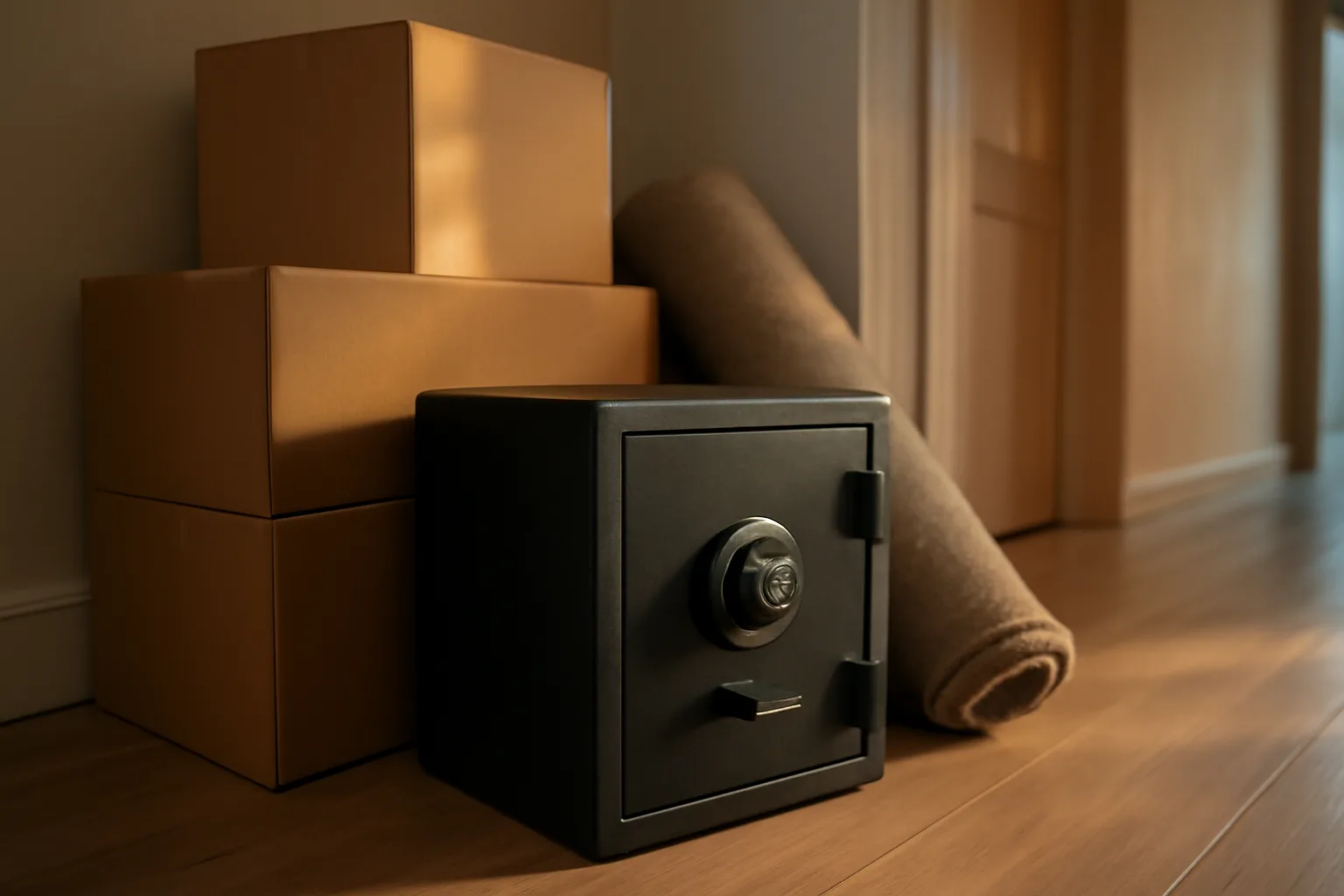
The Brinks Home Security 5054 is a 30-minute, 1,700°F-rated fire safe good for protecting paper documents and small valuables during a house fire. It is not rated for wildfire structure fires, which burn longer and hotter, so pair it with off-site digital backups of your insurance and inspection paperwork, not reliance on the safe alone.
what is the brinks home security 5054 fire safe rated for
The Brinks 5054 is a compact fire-resistant safe sold under the Brinks Home Security brand, commonly through big box retailers, with an electronic lock and a published fire rating of 30 minutes at up to 1,700°F. That rating comes from a UL-style verification test where the interior contents are kept below 350°F, the temperature at which paper starts to char, for the stated duration. It's built for a residential house fire scenario: fire starts in a room, someone calls 911, fire crews arrive and knock it down within roughly 20 to 30 minutes. That's a very different scenario than a wildfire. A structure fire test assumes a single-room fire that peaks and gets suppressed. A wildfire that reaches a house often means the whole structure is fully involved, sometimes for hours, with no fire department response at all because crews are stretched across a fire perimeter. The National Fire Protection Association and UL both test consumer fire safes against standardized office/room fire curves, not wildland-urban interface conditions. So the honest answer: the 5054 will likely protect papers and small valuables in a typical accidental house fire. In a wildfire that fully consumes a home, a 30-minute-rated safe is a coin flip depending on how long the structure burns and where the safe sits relative to the worst heat. If you want a serious rundown on what actually stops a structure from igniting in the first place, read our guide on house fire risk factors and what changes the odds.
does a fire safe protect documents in a wildfire, more than a house fire
A fire safe helps, but it's not a guarantee, and treating it as your only backup is a mistake a lot of people make right before they need the documents most. Wildfire structure fires in California have been documented burning at temperatures exceeding 1,800°F to 2,000°F in fully involved structures, and duration matters as much as peak temperature. A safe rated for 1,700°F/30 minutes is tested against a specific heat curve; if your house burns for 90 minutes because no engine can reach it, that safe is now outside its tested envelope. The practical fix isn't a better safe, it's redundancy. Keep the paper originals of anything irreplaceable (deed, marriage certificate, passports) in the fire safe. But scan or photograph everything insurance-related (your policy declarations page, your CAL FIRE defensible space inspection results, your fuel modification records, contractor invoices for hardening work) and store digital copies somewhere off-property: cloud storage, email-to-self, or a drive at a relative's house outside the fire zone. This matters more than usual right now because insurers in California, Colorado, Oregon, and Arizona are increasingly requiring proof of mitigation work before renewal, and if your only copy of a defensible space clearance certificate burns with the house, you've lost your strongest evidence exactly when you need it most.
when does the california defensible space law go into effect
California's defensible space requirements aren't new; Public Resources Code 4291 has required 100 feet of defensible space clearance around structures in State Responsibility Areas since it was amended in 2005, and that baseline is already in effect today [1]. What's changing is the enforcement layer and a newer, more granular "zone 0" ember-resistant zone requirement. CAL FIRE and the Board of Forestry have been developing regulations for a 0-to-5-foot ember-resistant zone around structures (often called "Zone 0") under SB 63 (2020) and related statute. As of this writing, the Zone 0 regulation has gone through public comment and rulemaking but implementation timing has shifted; check the Board of Forestry's current rulemaking page for the exact effective date in your area, because it has been delayed at least once and enforcement details vary by county [2]. [Fill in: confirm current Zone 0 effective date and any local fire district enforcement timeline with your county fire marshal or local CAL FIRE unit, since SRA vs. LRA jurisdiction changes who enforces this.] The 100-foot, two-zone system (0-30 feet lean/clean/green, 30-100 feet reduced fuel) has been law for two decades. If you got a defensible space inspection notice, it's almost certainly citing PRC 4291, not a brand-new 2026 rule.
what fire safe rules take effect in 2026
There isn't a new federal or California "fire safe" building product mandate specifically dated for 2026 that changes fire-safe (as in, the metal box) requirements; that phrase gets searched a lot but conflates a few different things. What is genuinely shifting around 2025-2026 in wildfire states is building code, not personal safes. California's Chapter 7A of the Building Code (wildland-urban interface construction standards, ignition-resistant materials, ember-resistant vents) applies to new construction and additions in Fire Hazard Severity Zones, and it gets updated on the state's normal 3-year Title 24 code cycle; the 2025 California Building Code took effect January 1, 2026 for most jurisdictions, carrying forward and tightening Chapter 7A provisions [3]. That's likely what people mean when they search "fire safe rules 2026," not a change to home fire safes. Separately, the Zone 0 ember-resistant zone rule discussed above is the other thing landing around this window. Check your county's building department for your jurisdiction's actual adoption date, since local amendments can push effective dates earlier or later than the state default. [Fill in: confirm your specific fire district's Chapter 7A and Zone 0 adoption/enforcement date with your local building department.]
why won't people follow the defensible space law in california
Compliance with PRC 4291 defensible space rules is inconsistent, and the reasons aren't mysterious: cost, labor availability, and a widespread underestimate of personal risk. CAL FIRE inspection data has repeatedly found large shares of properties in Fire Hazard Severity Zones failing initial defensible space inspections, often for fixable things like woodpiles against the house, overgrown brush within 30 feet, or dead vegetation in gutters [4]. The honest reasons people skip it: Cost is real. Clearing brush, limbing trees to the required height, and removing flammable landscaping on a large rural lot can run into thousands of dollars, and homeowners on fixed incomes or with large parcels feel that hardest. Contractor availability is also a bottleneck; in high-demand fire seasons, defensible space contractors book out weeks or months, which is a big part of why Washington State DNR and other agencies now run structured wildfire defensible space clearing contracts programs to organize the work. There's also a psychological piece: a lot of homeowners have lived on a property for decades without a fire reaching them and assume that pattern holds. It doesn't account for how fuel loads and drought conditions have shifted. And some homeowners genuinely don't know the rule applies to them; PRC 4291 applies in State Responsibility Areas and some Local Responsibility Area "Very High" zones, and boundary confusion is common. Enforcement has teeth on paper: local fire officials can issue notices requiring compliance within 30 days, and after that, either the agency abates the hazard and bills the owner, or refers it for citation, per PRC 4291's abatement provisions [1]. In practice, enforcement intensity varies a lot by county and by how stretched the local fire department is.
how to prevent wildfires around your own home
You can't stop a wildfire from starting somewhere else, but you can dramatically cut the odds that it reaches and ignites your specific structure, and that distinction matters. Roughly 90% of wildfires in the U.S. are human-caused, according to the National Park Service, from things like unattended campfires, equipment sparks, and debris burning, which means a lot of ignition prevention is about behavior in fire-prone areas, more than home hardening. At the home level, the two things that matter most are ember-resistant construction and defensible space, in that order of importance for actual structure survival, based on post-fire damage assessments. Embers, not the flame front, ignite most homes in wildfires; they get into vents, land on wood-shake roofs, and ignite mulch and dead leaves right against siding. Practical steps in rough priority order: 1. Clear the 5 feet immediately around your foundation of anything combustible (mulch, wood fencing attachment points, dry plants). 2. Screen or replace vents with ember-resistant mesh (1/8 inch or finer). 3. Clean gutters and roof valleys of dead leaves and needles. 4. Maintain the 30-foot lean/clean/green zone and the 30-100 foot reduced fuel zone per PRC 4291 [1]. 5. Move firewood stacks and propane tanks at least 30 feet from structures. For a deeper walkthrough on what plants actually make this worse right next to a house, see fire safe landscaping California next to house.
how to prepare for a wildfire before it happens
Preparation splits into three buckets: documentation, a go-bag, and an evacuation plan, and most people only do the third one, which is backwards for insurance purposes. Ready.gov's wildfire guidance recommends assembling an emergency supply kit, having an evacuation plan with two routes out, and signing up for local emergency alerts before fire season starts, not during an active incident [5]. The documentation piece is the one homeowners in non-renewal situations get wrong most often. Before any inspection or insurance renewal deadline, you want dated photos of your defensible space zones, receipts for any hardening work (roof replacement, vent screens, brush clearing), and a copy of any CAL FIRE or local fire department inspection results. Store all of it digitally, off-property, more than in a home fire safe, per the reasoning in the section above. A basic go-bag should include copies of ID, medications, a phone charger, cash, and a printed list of your policy number and insurer claims phone number, because cell service and power often fail first in a fast-moving fire. If you've already received a non-renewal or inspection letter, the practical move is building a documentation packet you can hand to a new insurer or your current one during appeal: before/after photos of defensible space work, contractor invoices, and your local fire district's compliance letter if you have one. This is the kind of packet a $99 one-time Wildfire Insurance Survival Kit is built around: a structured way to organize photos, receipts, and inspection paperwork into something an underwriter can actually use, without anyone filing claims or negotiating coverage on your behalf. You send your own documentation; nobody here promises reinstatement or a discount.
how to prevent forest fires and avoid forest fires as an individual
Preventing forest fires and preventing fires from reaching your specific home are related but different problems, and the actions differ. At the forest/wildland level, individual prevention is mostly about eliminating ignition sources: fully extinguishing campfires (drown, stir, drown again, per the U.S. Forest Service's standard guidance), not parking hot vehicles on dry grass, avoiding outdoor debris burning during red flag warnings, and maintaining spark arrestors on chainsaws and off-road vehicles [6]. CAL FIRE's own prevention messaging centers on defensible space and ignition-source control as the two levers individuals actually control, since weather and terrain aren't things a homeowner can change. The "how to avoid forest fires" framing usually means personal safety while recreating or living near wildland: check local fire restrictions before camping or burning anything, keep a shovel and water nearby for any outdoor fire, and know your area's fire danger rating (posted at most Forest Service and CAL FIRE unit entrances) before doing anything with an open flame. At a policy level, "how can we prevent forest fires" as a broader question is answered partly by fuel reduction programs (prescribed burns, mechanical thinning) run by the Forest Service and CAL FIRE, and partly by the human-ignition-source reduction above, since human causes account for the large majority of wildfire starts nationally.
is santa barbara safe from fire
No coastal California city is "safe" from wildfire in an absolute sense, and Santa Barbara County has direct experience with this: the 2017 Thomas Fire burned over 281,000 acres and was, at the time, the largest wildfire in modern California history, followed days later by the Montecito debris flow that killed 23 people, a disaster directly tied to the burned, denuded hillsides above town [7]. The 2018 Thomas Fire and the earlier 2009 Jesusita Fire (over 8,700 acres, destroyed roughly 80 homes) both burned directly into Santa Barbara's urban edge [4]. Santa Barbara sits against the Santa Ynez Mountains with dense chaparral fuel, seasonal Santa Ana/sundowner wind events, and a long dry season, which is close to a textbook wildfire-urban-interface risk profile. Much of the city and surrounding foothill communities (Montecito, Mission Canyon, the Riviera) fall within CAL FIRE-designated Very High Fire Hazard Severity Zones, which you can check parcel-by-parcel on CAL FIRE's FHSZ viewer. So the honest answer: Santa Barbara is not exempt from wildfire risk, and its geography (steep terrain, wind corridors, chaparral) makes it more exposed than a lot of comparable coastal cities. If you own property there, defensible space compliance and Chapter 7A-style hardening aren't optional extras, they're the difference documented in post-fire damage surveys between homes that survived Thomas and Jesusita and ones that didn't.
what actually determines whether your house survives a wildfire
| Vents without ember-resistant mesh | Embers enter attic/crawlspace and ignite from inside | 1/8-inch or finer mesh screens | |
|---|---|---|---|
| Combustible material within 5 ft of walls | Direct flame contact ignites siding | Zone 0 clearance, gravel/hardscape | |
| Wood shake or shingle roof | High ignition, high flame spread | Class A rated roofing | |
| Overgrown vegetation in 30-100 ft zone | Fuels flame front approach | PRC 4291 clearance | |
| Dead leaves/needles in gutters | Ember catch point at roofline | Regular seasonal cleaning | Notice a fire safe isn't on that list. A 5054 or similar safe protects what's inside it after the fact; it does nothing to change whether the structure itself ignites. For a broader view of what's actually driving structure loss patterns nationally, fire at a house covers ignition sequences in more depth, and defensible covers the zone-by-zone clearance logic. |
Post-fire structure damage assessments consistently point to the same handful of factors, and none of them is luck. Insurance Institute for Business & Home Safety (IBHS) research and CAL FIRE post-fire analyses both identify ember intrusion through vents, ignition of combustible material within 5 feet of the structure, and roof material as the top three predictors of home survival in a wildfire. Here's a rough comparison of what matters, based on post-fire damage pattern studies: | Risk factor | Why it matters | Fix |
what should you actually store in a fire safe versus off-site
Split your protection strategy into three tiers, because no single safe or backup method covers everything, and treating the 5054 as a complete solution is the mistake that costs people the most during a claim dispute. Tier one, in the fire safe: original paper documents you legally need the physical copy of (birth certificates, passports, property deed, vehicle titles, wills). A 30-minute/1,700°F-rated safe like the 5054 gives these a real shot in a typical house fire and a partial shot in a wildfire scenario. Tier two, digital and off-property: scanned copies of everything insurance-related. Your policy declarations page, your defensible space inspection results, dated before/after photos of hardening work, contractor invoices, and appraisal or home inventory documentation. Store these in cloud storage or emailed to an out-of-area contact. This tier is what actually protects you during an insurance dispute or non-renewal appeal, because it survives even if the safe doesn't. Tier three, physical and portable: a go-bag copy of the absolute essentials (ID, medication list, insurance contact info) that leaves the house with you during evacuation, per Ready.gov's go-bag guidance [5]. A fire safe is genuinely useful. It's just tier one of three, not the whole plan. If you're organizing this kind of documentation specifically for an insurance non-renewal fight, a structured approach (the kind our $99 Wildfire Insurance Survival Kit walks through at /survival-kit-builder) beats scattered folders and a single safe, because underwriters want dated, organized proof, not a shoebox.
how can we prevent forest fires at the community level
Individual home hardening matters, but forest fire prevention at scale is a community and agency-level problem, and it's worth understanding both layers so you know what you can and can't control. The Forest Service and CAL FIRE run prescribed burn and mechanical thinning programs specifically to reduce fuel loads before fire season, and California's 2021 wildfire and forest resilience budget package funded expanded fuel reduction work across state and federal land [8]. At the neighborhood level, coordinated defensible space (your whole street clearing brush, more than your own lot) measurably reduces risk more than any single property doing it alone, because fire spreads structure-to-structure through radiant heat and embers once it's in a neighborhood. Firewise USA, a National Fire Protection Association program, organizes exactly this kind of neighborhood-level coordination and is free to join for qualifying communities . The honest gap: most of this depends on collective action and public funding, which individual homeowners don't control. What you do control is your own property's compliance with PRC 4291, your own ignition sources, and whether your documentation is in order before the next inspection letter arrives. For a broader look at why "only I did my part" isn't enough, only you can prevent wildfires covers the Smokey Bear campaign's actual scope and limits.
Frequently asked questions
When does the California defensible space law go into effect?
PRC 4291's 100-foot defensible space requirement has been law since 2005 and is already in effect. The newer Zone 0 ember-resistant zone rule (0-5 feet from structures) is in active rulemaking through the Board of Forestry; check their current rulemaking page for your county's specific effective date, since it has been delayed before.
Why won't people follow the defensible space law in California?
Mostly cost, contractor availability, and underestimating personal risk. Clearing large parcels can cost thousands of dollars, contractors book out during peak season, and many homeowners assume decades without a fire means they're safe. Enforcement also varies significantly by county depending on local fire department capacity.
How do I prevent wildfires from reaching my house?
Maintain PRC 4291 defensible space (30-foot lean/clean/green zone, 100-foot reduced fuel zone), screen vents with 1/8-inch ember-resistant mesh, clear combustibles within 5 feet of your foundation, and keep gutters free of dead leaves. Embers, not flame fronts, ignite most homes, so ember intrusion points matter most.
How do I prepare for a wildfire if I've received a non-renewal letter?
Document everything: dated photos of defensible space zones, receipts for hardening work, and any fire department inspection results, stored digitally off-property. Build a go-bag with ID copies and your policy number. This documentation is what you'd use in an appeal or new insurer application, more than evacuation.
What fire safe rules take effect in 2026?
There's no new personal fire-safe product mandate for 2026. What's changing is California's building code: the 2025 California Building Code (including Chapter 7A wildland-urban interface standards) took effect January 1, 2026 in most jurisdictions. Confirm your local adoption date with your county building department.
Is Santa Barbara safe from fire?
No. Santa Barbara County has burned repeatedly, including the 2017 Thomas Fire (over 281,000 acres) and the 2009 Jesusita Fire (over 8,700 acres, roughly 80 homes destroyed). Much of the city's foothill area sits in CAL FIRE Very High Fire Hazard Severity Zones, so defensible space and hardening are essential, not optional.
Does the Brinks 5054 fire safe protect documents in a wildfire?
It helps for a typical house fire (rated 30 minutes at 1,700°F) but wildfire structure fires can burn longer and hotter with no fire department response. Treat it as one layer: keep irreplaceable originals inside, but back up insurance and inspection documents digitally, off-property, as your primary protection.
How can we prevent forest fires as individuals?
About 90% of wildfires are human-caused, per the National Park Service, so fully extinguishing campfires, avoiding debris burning on red flag days, and maintaining spark arrestors on equipment prevent most ignitions. At the community level, prescribed burns and fuel thinning programs run by CAL FIRE and the Forest Service reduce fuel loads before fire season.
What's the difference between defensible space Zone 0, the 30-foot zone, and the 100-foot zone?
Zone 0 (0-5 feet from structures) is an ember-resistant zone under active CAL FIRE rulemaking. The 30-foot zone requires lean, clean, and green landscaping. The 30-100 foot zone requires reduced, not eliminated, fuel. All three come from PRC 4291's structure protection framework.
How do I prepare for forest fires if I live in a high-risk zone?
Sign up for local emergency alerts, keep a go-bag with ID, medications, and insurance info ready per Ready.gov guidance, know two evacuation routes out of your area, and complete defensible space clearance before fire season starts, not during a red flag warning.
What temperature and duration is the Brinks 5054 rated for?
The Brinks 5054 is rated to keep interior contents below 350°F (the point paper starts to char) for 30 minutes when exterior temperatures reach up to 1,700°F, based on standardized fire-safe verification testing methodology used across the consumer fire safe industry.
Should I rely on a fire safe instead of digital backups for insurance documents?
No. A fire safe is one layer, not a complete backup plan. Scan or photograph your policy, defensible space inspection results, and hardening work receipts, then store copies in cloud storage or with an out-of-area contact so they survive even if the safe or house doesn't.
How do I know if my property is in a CAL FIRE Fire Hazard Severity Zone?
CAL FIRE publishes a parcel-level Fire Hazard Severity Zone viewer online covering Moderate, High, and Very High designations in both State and Local Responsibility Areas. Checking your specific address there confirms whether PRC 4291 defensible space requirements legally apply to your property.
Sources
- California Public Resources Code Section 4291: 100-foot defensible space requirement and abatement/enforcement provisions
- California Board of Forestry and Fire Protection, Zone 0 Rulemaking: Ember-resistant Zone 0 regulation status and rulemaking timeline
- California Department of General Services, 2025 California Building Code adoption: 2025 California Building Code, including Chapter 7A wildland-urban interface standards, effective January 1, 2026
- CAL FIRE, Fire Hazard Severity Zone Viewer: Fire Hazard Severity Zone designations and parcel-level lookup covering Moderate, High, and Very High zones
- USDA Forest Service, Campfire Safety: Drown, stir, drown campfire extinguishing guidance and equipment spark arrestor maintenance
- CAL FIRE, Thomas Fire Incident Archive: 2017 Thomas Fire burned over 281,000 acres in Santa Barbara and Ventura counties
- CAL FIRE, Jesusita Fire Incident Archive: 2009 Jesusita Fire burned over 8,700 acres and destroyed roughly 80 homes near Santa Barbara
- National Fire Protection Association, Firewise USA: Neighborhood-level defensible space coordination program available free to qualifying communities