Last updated 2026-07-25
TL;DR
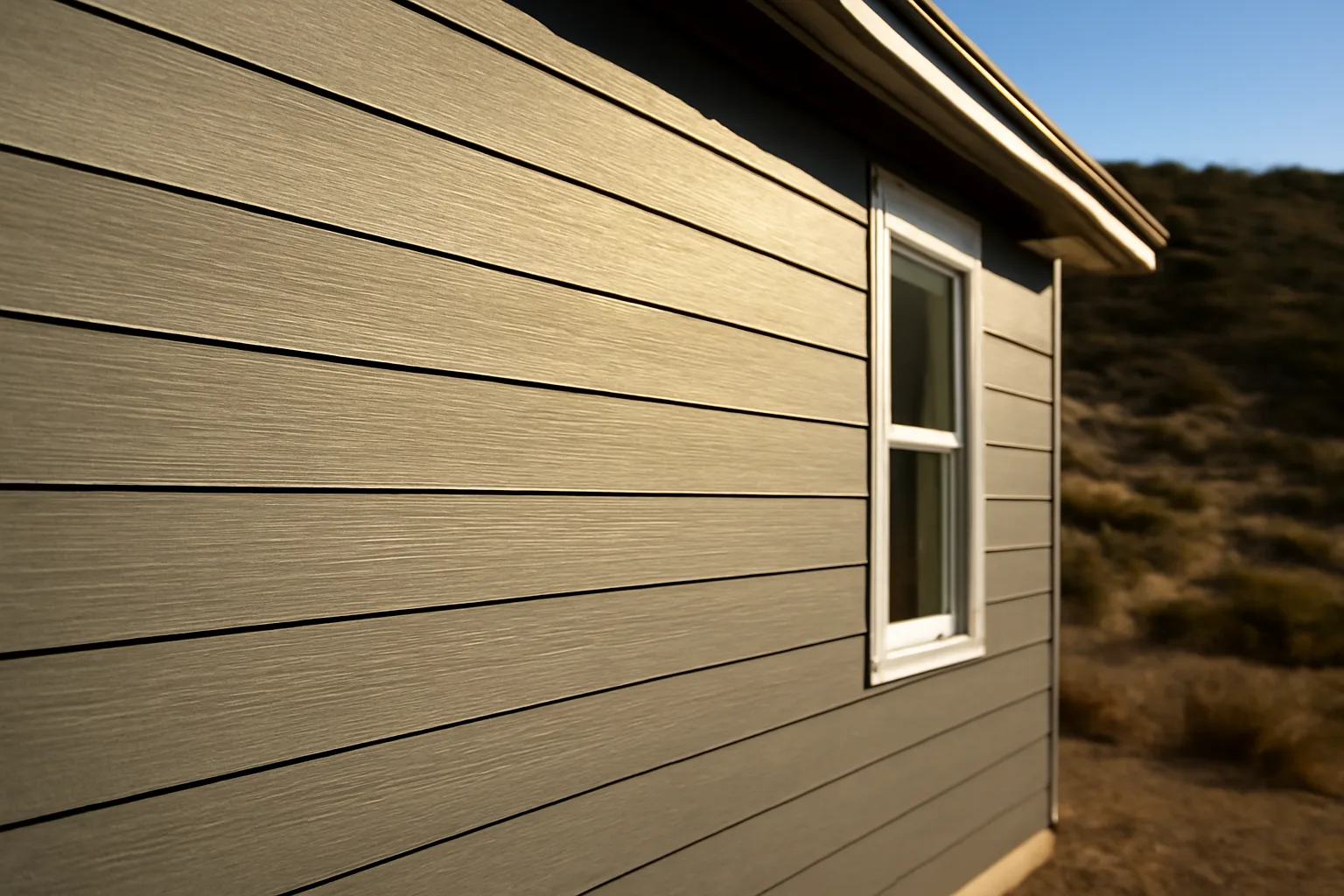
Class A fire rated siding is exterior wall material that passes ASTM E84 or NFPA 268 flame spread and ignition testing at the highest tier. Fiber cement, stucco, brick, and treated wood products can qualify. Expect $4 to $14 per square foot installed, and check your local building code before assuming any product is automatically approved for a Wildland Urban Interface zone.
what does class A fire rated siding actually mean
Class A is the highest of three flame spread ratings (A, B, C) used in building codes to describe how a material performs when exposed to fire. For siding and other exterior finishes, the relevant standard most jurisdictions cite is ASTM E84 (surface burning characteristics) combined with the ignition-resistance testing in ASTM E2707 or NFPA 268, which specifically tests how a material responds to radiant heat exposure typical of a wildfire, more than an open flame in a lab hallway. A Class A flame spread rating under ASTM E84 means the material has a flame spread index of 25 or less and a smoke developed index of 450 or less. That test was originally built for interior finish materials, which is why wildfire-specific codes increasingly point to NFPA 268 instead, since it measures ignition resistance from radiant heat, the actual mechanism that ignites siding during a wildfire when embers and heat radiate off burning vegetation or a neighbor's structure before the fire front even arrives. Here's the part that trips people up: a product labeled 'Class A fire rated' on a spec sheet might be Class A for flame spread only, tested as an interior ceiling tile assembly, and not actually validated under the ignition-resistance protocol your local Wildland Urban Interface (WUI) code requires. California's Chapter 7A of the California Building Code is explicit about which test methods apply to exterior wall coverings in a WUI fire hazard severity zone, and it is not the same as generic ASTM E84 signage you'll see on some marketing pages [1]. Always ask for the specific test report number, more than the letter grade.
which siding materials qualify as class A
| Fiber cement (e.g. James Hardie panel/lap siding) | Yes, most product lines | Noncombustible core; check specific SKU test reports | |||||||||||||||||
|---|---|---|---|---|---|---|---|---|---|---|---|---|---|---|---|---|---|---|---|
| Stucco (three-coat or one-coat) | Yes | Must be applied over noncombustible or ignition-resistant sheathing | |||||||||||||||||
| Brick veneer | Yes | Mortar joints and flashing details still matter for ember intrusion | |||||||||||||||||
| Fire-retardant treated wood (FRTW) | Sometimes | Only specific treated and tested products, not all FRTW claims equal Class A | Vinyl siding | No | Melts and can propagate flame; generally not accepted in WUI zones | Untreated wood/cedar shakes | No | High flame spread, common source of ember ignition in past wildfires | Metal siding (steel, aluminum) | Yes, noncombustible | Excellent ignition resistance but can transfer heat if not detailed properly | Engineered wood (OSB-based lap siding) | Varies | Some newer products carry ignition-resistant treatments and pass; verify per product | CAL FIRE's Wildfire Prevention guidance for homeowners recommends 'ignition-resistant building materials' for the exterior wall covering as one of the core home hardening priorities, alongside vents, roofing, and windows. It does not endorse specific brands, so any contractor claiming a product is 'CAL FIRE approved' is overstating it; what exists is compliance with the state's Building Materials Listing under Chapter 7A testing protocols, verified through the State Fire Marshal's approved products list [2]. |
Several common exterior materials can achieve Class A ignition resistance, but not every version of each product does, and installation details (like gaps, backing, and trim) matter as much as the material itself. | Material | Typically Class A? | Notes |
how much does class A fire rated siding cost
Installed cost runs roughly $4 to $14 per square foot depending on material, with fiber cement toward the lower end and brick veneer or high-end stucco systems toward the top. For a typical 2,000 square foot single-story home with about 1,800 square feet of exterior wall area, that puts a full re-side somewhere between $7,200 and $25,000 in material and labor, before you add costs for removing old siding, upgrading sheathing, or replacing trim and soffits to match. Fiber cement lap siding (James Hardie, Nichiha, and similar) typically runs $6 to $9 per square foot installed. Traditional three-coat stucco runs $7 to $10 per square foot, one-coat stucco systems can come in a bit cheaper. Brick veneer is the priciest common option, often $10 to $14 per square foot given the labor intensity. These are national ranges; labor costs in California and Colorado wildfire-prone counties often run higher than the national average because of demand and permitting requirements, so get at least three local quotes before budgeting. Don't forget: if your insurer flagged your home for a non-renewal or sent an inspection letter citing combustible siding, the total project cost matters less than documentation. Photograph the old siding, keep every receipt and product data sheet for the new material's ignition-resistance rating, and keep the contractor's install specs. That paperwork is what you'll want on hand if you ever need to show an underwriter or adjuster what changed, though remember: sending documentation yourself is different from having someone negotiate or file a claim on your behalf.
when does the california defensible space law go into effect
California's core defensible space statute, Public Resources Code 4291, already requires 100 feet of defensible space clearance around structures in State Responsibility Areas and has been in effect in some form since 1965, with the 100-foot standard set by amendment in 2005 [3]. The more relevant question for homeowners right now is the newer 'ember-resistant zone' rule (often called Zone 0), which requires a 5-foot noncombustible buffer immediately next to structures. CAL FIRE and the Board of Forestry have been developing the Zone 0 regulation under SB 63 (2021) and earlier authorizing legislation, but as of this writing the formal ember-resistant zone regulation has not been finalized into an enforceable statewide rule with a hard compliance date; CAL FIRE's own defensible space page describes the zone concept and its goals but directs homeowners to check for updates on adoption timing. Local jurisdictions can and do adopt their own stricter timelines in the meantime, so check with your local fire district or county fire marshal for a guided answer specific to your address: [insert local fire district defensible space deadline here]. Don't wait for the state deadline to do the work. Insurers reviewing wildfire risk are already asking about noncombustible zones immediately next to the house, siding material, and roof type well ahead of any regulatory enforcement date.
what fire safe home rules take effect in 2026
Several California wildfire-related building and disclosure requirements have staggered effective dates, and 2026 is a real inflection point for a few of them, though the details depend on which specific rule you mean. Assembly Bill 38 (2019) requires that home sellers in high or very high fire hazard severity zones disclose whether the home complies with defensible space and home hardening requirements at time of sale, and requires local governments to adopt compliance disclosure programs; enforcement and phase-in timelines have varied by jurisdiction, so confirm with your county assessor or local building department for your specific timeline: [insert county AB 38 compliance date here]. Separately, the state's model wildfire mitigation building standards under Chapter 7A of the California Building Code are updated on the standard triennial code cycle (the 2025 California Building Code cycle takes effect January 1, 2026 for most jurisdictions) [1], so any new construction or major remodel permitted after that date in a WUI zone needs to meet the newest version of those standards, including exterior wall covering ignition-resistance requirements. Because code adoption dates and local ordinance timelines vary by county and even by fire district within a county, the honest answer is: there is no single universal 'fire safe home law' with one national 2026 start date. Check your specific county building department and local fire district for the guided answer: [insert local 2026 code adoption date here].
why won't people follow the defensible space law in california
Cost, confusion about what's actually required, and enforcement gaps are the three biggest reasons compliance lags, based on CAL FIRE's own inspection data and reporting. CAL FIRE conducts defensible space inspections in State Responsibility Areas and has historically found significant non-compliance rates in initial inspections, with many property owners needing a follow-up notice before achieving compliance. A lot of it isn't defiance, it's logistics. Clearing 100 feet of defensible space on a sloped, wooded half-acre lot takes real labor, and hiring a vegetation management crew can run into the thousands of dollars depending on terrain and vegetation density. Elderly homeowners or those on fixed incomes often can't physically do the clearing themselves and can't afford to pay for it either. Add to that genuine confusion: many homeowners don't know the difference between Zone 1 (0-30 feet, lean and green) and Zone 2 (30-100 feet, reduced fuel), or think a single yard cleanup satisfies an ongoing maintenance requirement rather than an annual one. There's also an enforcement reality. CAL FIRE inspectors issue notices to comply before citations in most cases, and criminal or civil penalties are rarely the first step, so some property owners treat the initial notice as low urgency. That's a mistake for two reasons: insurers are now cross-referencing defensible space compliance with underwriting decisions independent of any CAL FIRE citation, and a wildfire doesn't wait for your compliance deadline. For a walkthrough of what each defensible space zone actually requires, see defensible space zones and what they require.
how to prevent wildfires and reduce ignition risk near your home
You can't prevent every wildfire, but you can dramatically cut the odds that your specific structure ignites, and that's the more useful frame. Roughly 90% of wildfires nationally are human-caused according to the National Park Service's fire ecology data, from unattended campfires, equipment sparks, and discarded cigarettes to arson and power line failures, which means prevention at the community level is mostly about eliminating avoidable ignition sources. At the property level, prevention means reducing what firefighters call the 'home ignition zone', the area within 100 to 200 feet of your structure where embers, radiant heat, or direct flame contact can start a fire. That includes clearing dead vegetation, maintaining the defensible space zones described above, upgrading vents with 1/8-inch metal mesh to block ember intrusion, and yes, choosing Class A ignition-resistant siding over combustible cladding. Community-level prevention matters too: following local burn ban rules, properly extinguishing campfires (drown, stir, drown again, until it's cool to the touch, per Smokey Bear/USDA Forest Service guidance), maintaining equipment that could throw sparks, and reporting unattended fires immediately. Only you can prevent wildfires isn't just a slogan, it's a reasonably accurate statistic given how many fires start from human activity; see only you can prevent wildfires for more on the campaign's origin and what it actually asks of you.
how to prepare for a wildfire before it happens
Preparation splits into three buckets: hardening the structure, maintaining defensible space, and having an evacuation plan ready before you need it. Ready.gov's wildfire preparedness guidance recommends assembling a go-bag with essential documents, medications, and supplies for at least three days, and having a family communication plan established in advance since cell networks can be overloaded or down during an active fire [4]. On the structure side, prioritize in this order if you're working with limited budget: Zone 0 (the 5 feet immediately around the house, keep it noncombustible), roof and gutters (clear of debris, ember-resistant venting), then siding and windows, then broader defensible space out to 100 feet. This mirrors CAL FIRE's own home hardening priority list. If you've received an insurance non-renewal letter citing specific deficiencies, address those named items first and document each fix with dated photos. Have an evacuation plan with at least two routes out of your neighborhood, since wildfire can block a single road quickly. Know your local emergency alert system (many counties use a specific app or reverse-911 system) and sign up ahead of time rather than during an evacuation order. For a broader walkthrough of prioritizing hardening work on a budget, our Wildfire Insurance Survival Kit is a $99 one-time toolkit that helps homeowners organize documentation and hardening priorities in the order insurers actually look for them; it does not file claims or negotiate with insurers on your behalf, it just helps you get organized to do that yourself.
how to prevent forest fires and avoid forest fires as an individual
Preventing forest fires as an individual mostly comes down to fire-safe behavior in the outdoors: fully extinguish campfires, never leave a fire unattended, check local and seasonal burn restrictions before any outdoor burning, and avoid parking vehicles on dry grass where a hot exhaust system can ignite vegetation (a genuinely common ignition source in the West). The U.S. Forest Service and CAL FIRE both cite equipment use, campfires, and debris burning among the top human-caused ignition categories. If you're a landowner near forested land, avoiding forest fires also means fuel management: removing dead and downed material, spacing trees so crown fires can't easily jump canopy to canopy, and maintaining a buffer around structures. This overlaps heavily with defensible space work, which is why the same vegetation management principles apply whether you're worried about a wildland fire reaching your subdivision or a forest fire on adjacent public land. Report smoke or unattended fires immediately rather than assuming someone else already called it in. Early detection dramatically changes outcomes; a fire caught in its first fifteen minutes is a very different problem than one that has run for two hours in dry, windy conditions.
how to prepare for forest fires if you live near wildland
Preparing for a forest fire near your property means treating your home like an island that has to survive on its own for a period of time, because during a major wildfire, firefighting resources get triaged and your house may not get individual attention. That's the blunt reality behind why home hardening and defensible space matter so much: they're what determines whether a structure survives an ember storm with nobody standing there defending it. Specific steps: clear needles and leaves from gutters and roof valleys regularly (more than once a year), store firewood and propane tanks at least 30 feet from the structure, keep a garden hose long enough to reach all sides of the house, and know where your gas and water shutoffs are located. If you're in a fire district with specific forest fire mitigation ordinances, check for local requirements here: [insert local forest fire mitigation ordinance here]. Insurance carriers underwriting properties near wildland-urban interface zones increasingly ask about these exact details on renewal questionnaires. If you've gotten a non-renewal notice, cross-reference every item it cites against what you've actually completed, and keep dated photo documentation; that's the single most useful thing a homeowner can do to prepare a paper trail, short of the mitigation work itself.
is santa barbara safe from fire
No California coastal community, including Santa Barbara, is 'safe' from wildfire risk in any absolute sense; the region has a documented history of major fires, including the 1990 Painted Cave Fire and the 2017 Thomas Fire, which at the time was the largest wildfire in modern California history by acreage before being surpassed by later fires, followed by the deadly Montecito debris flow in January 2018 [5]. CAL FIRE's Fire Hazard Severity Zone maps classify significant portions of the Santa Barbara foothills and surrounding unincorporated areas as Very High severity zones, meaning the state considers wildfire risk there elevated enough to trigger specific building and defensible space requirements . That said, risk varies enormously block by block. A home in downtown Santa Barbara near the beach faces a fundamentally different exposure than a home in the foothills near Montecito or in the San Marcos Pass area, where chaparral fuel loads and wind-driven fire behavior (particularly during Sundowner wind events, a local downslope wind pattern that has driven several major fires) create much higher risk. Check your specific address against CAL FIRE's Fire Hazard Severity Zone Viewer for a precise answer rather than relying on the city's general reputation . If your home sits in or near a Very High or High severity zone, the same home hardening and defensible space priorities discussed throughout this piece apply directly to you, and insurers are already treating Santa Barbara County zip codes with real scrutiny during underwriting.
what class A siding won't fix on its own
Class A siding addresses one ignition pathway (direct flame and radiant heat contact with the wall) but does nothing for embers entering through vents, windows breaking from radiant heat, or fuel accumulating in Zone 0 right against the noncombustible wall. Post-fire investigations by the Insurance Institute for Business & Home Safety and CAL FIRE consistently find that ember intrusion through vents and eave gaps, not wall ignition, causes a large share of home losses in wildfire events. Think of siding as one piece of a system, not a fix by itself. A Class A fiber cement wall with an unscreened attic vent, wood mulch piled against the foundation, and a wood fence attached directly to the house still burns. That's why CAL FIRE's home hardening checklist treats siding as one line item among roofing, venting, windows, gutters, and defensible space, all addressed together. If your budget only covers one upgrade this year, the honest advice from most fire-hardening research is to prioritize venting and the 5-foot noncombustible zone before a full re-side, since those tend to be cheaper and address the most common ignition pathways first. Re-siding matters most as part of a full package, especially if your existing siding is wood shake, vinyl, or another combustible material explicitly named in an insurer's non-renewal letter. For more on how siding fits into the larger picture of hardening a home against wildfire, see defensible space and home hardening basics and fire-safe landscaping right next to the house.
Frequently asked questions
When does the California defensible space law go into effect?
The 100-foot defensible space requirement under Public Resources Code 4291 has been law since amendments in 2005 and applies now in State Responsibility Areas. A newer 5-foot 'ember-resistant zone' (Zone 0) rule is still being finalized by CAL FIRE and the Board of Forestry; no statewide enforceable date has been confirmed as of this writing, so check your local fire district for interim requirements.
Why won't people follow the defensible space law in California?
Cost of clearing (often thousands of dollars for larger or sloped lots), confusion between Zone 1 and Zone 2 requirements, and weak initial enforcement (a notice to comply rather than a citation) all contribute. CAL FIRE inspection data shows meaningful non-compliance on first inspection, often resolved only after follow-up notices.
How to prevent wildfires from starting near my property?
Fully extinguish campfires, keep equipment that could spark away from dry vegetation, follow local burn restrictions, maintain defensible space, and report unattended fires or smoke immediately. About 90% of wildfires nationally are human-caused according to National Park Service fire ecology data, so behavior changes matter as much as vegetation management.
How do I prepare for a wildfire if I get an evacuation warning?
Have a go-bag ready with documents, medications, and supplies for at least three days, per Ready.gov guidance. Know two evacuation routes, sign up for local emergency alerts in advance, and complete home hardening priorities (Zone 0, roof, vents, siding) before fire season, not during an active warning.
How can we prevent forest fires as individuals and communities?
Individually: extinguish campfires fully, avoid parking on dry grass, follow burn bans, and report fires early. As communities: support fuel management on shared land, maintain defensible space on private property, and coordinate with local fire districts on vegetation management programs that reduce fuel continuity across a neighborhood.
What fire-safe home rules take effect in 2026 in California?
The 2025 California Building Code cycle, including Chapter 7A wildfire construction standards, generally takes effect January 1, 2026 for new construction and major remodels in Wildland Urban Interface zones. Local AB 38 disclosure program timelines vary by county. Check your county building department for the specific date that applies to you.
Is Santa Barbara safe from fire?
No area of Santa Barbara County is fully safe from wildfire risk; the region has a documented history including the 1990 Painted Cave Fire and 2017 Thomas Fire. CAL FIRE's Fire Hazard Severity Zone maps classify large parts of the foothills as Very High severity. Risk varies block by block, so check your specific address.
Is vinyl siding acceptable in a wildfire hazard zone?
Generally no. Vinyl siding melts and can propagate flame, and most Wildland Urban Interface building codes, including California's Chapter 7A, do not accept it as an ignition-resistant exterior wall covering. Fiber cement, stucco, brick veneer, and some treated wood or engineered products are the common Class A alternatives.
How much does Class A fire rated siding cost per square foot?
Installed cost typically runs $4 to $14 per square foot depending on material. Fiber cement lap siding runs about $6 to $9 per square foot, stucco $7 to $10, and brick veneer $10 to $14. Labor costs in high-demand wildfire-prone counties often run above national averages.
Does Class A siding alone satisfy insurance non-renewal requirements?
Not usually. Insurers and inspection letters typically look at siding as one item among several, including roof material, vent screening, defensible space, and window type. Re-siding without addressing vents, Zone 0 clearance, and roof gaps often doesn't resolve the full list of deficiencies cited in a non-renewal letter.
What is the difference between ASTM E84 and NFPA 268 for siding?
ASTM E84 measures flame spread and smoke development, originally designed for interior finish materials. NFPA 268 measures a material's ignition resistance under radiant heat exposure, which better simulates wildfire conditions. Wildfire-specific building codes, including California's Chapter 7A, increasingly rely on NFPA 268 or ASTM E2707 for exterior wall coverings.
Can I get a discount on homeowners insurance for installing Class A siding?
Some insurers offer wildfire mitigation credits, but availability and amount vary by carrier and state, and none guarantee reinstatement or a discount for any single upgrade. Document the work with photos and product data sheets and send that documentation directly to your insurer yourself; a public adjuster or third party can't promise coverage outcomes on your behalf.
Sources
- California Building Standards Commission, California Building Code Chapter 7A: Chapter 7A governs wildfire-related building material requirements including exterior wall coverings in WUI zones
- California State Fire Marshal, Building Materials Listing Program: State Fire Marshal maintains an approved products list for WUI-compliant building materials tested under Chapter 7A protocols
- California Public Resources Code Section 4291: State law requires 100 feet of defensible space clearance around structures in State Responsibility Areas
- National Weather Service / InciWeb historical fire records, Thomas Fire: The 2017 Thomas Fire in Santa Barbara and Ventura counties was at the time the largest wildfire in modern California history by acreage
- CAL FIRE, Fire Hazard Severity Zone Viewer: CAL FIRE's Fire Hazard Severity Zone maps classify parts of Santa Barbara County foothill areas as Very High severity