Last updated 2026-07-25
TL;DR
Home Depot carries Class A fire-rated ceiling tiles (mostly mineral fiber, some armstrong lines), but interior ceiling tiles do almost nothing for wildfire defense. Wildfire home-hardening focuses on roofing, vents, eaves, and siding, the parts embers actually attack. Class A tiles matter more for code compliance and structure-fire slowdown than for wildfire ignition resistance.
do fire resistant ceiling tiles from home depot actually protect against wildfire?
Mostly no. It's worth saying that plainly before you spend money in the wrong aisle. Fire-rated ceiling tiles sold at Home Depot (mineral fiber panels, some Armstrong Ceilings product lines) carry a Class A fire rating under ASTM E84, which measures how fast flame spreads across a surface and how much smoke it produces. That's a real, useful rating for interior structure fires: a grease fire in the kitchen, an electrical short in the garage ceiling. It is not the rating that determines whether your house survives an ember storm rolling through from a wildfire a quarter mile away. Wildfire home destruction studies from the Insurance Institute for Business & Home Safety (IBHS) and CAL FIRE both point to the same failure points, repeatedly: roofs, vents, eaves, and the zero-to-five-foot zone right against the foundation. Embers get into attics through unscreened vents, ignite roof debris, or catch on combustible siding and decking. A fire-rated interior ceiling tile in a drop ceiling does nothing to stop an ember from entering an attic vent above it. If your inspection letter or non-renewal notice mentioned the interior of your home at all, that's unusual. Most wildfire risk models used by CAL FIRE and insurers score the exterior: roof material, vent screening, eave enclosure, defensible space clearance. Chapter 7A of the California Building Code, which governs "materials and construction methods for exterior wildfire exposure," doesn't reference ceiling tiles at all [1]. It's an exterior-envelope code. Where ceiling tiles do matter: if you're finishing a garage, workshop, or accessory structure and want better fire-spread behavior for an interior structure fire, or if your local fire code requires Class A ceiling assemblies in a commercial or multi-family space. That's a different problem than wildfire hardening, and it's fine to solve it with a Home Depot cart.
what fire-rated ceiling products does home depot actually sell?
Home Depot's ceiling tile selection runs mostly mineral fiber acoustic panels, most of them rated Class A per ASTM E84, plus some fiberglass and PVC options at lower fire ratings (Class C is common in cheaper decorative tiles). Mineral fiber tiles from Armstrong Ceilings (the USG and Armstrong lines are the two big commercial brands carried at most Home Depot locations) typically run somewhere in the $1 to $4 per square foot range for standard 2x2 or 2x4 drop-ceiling panels, though pricing varies by store and by finish. A few things to check before you buy, if you're doing this for code reasons rather than wildfire reasons: - Confirm the ASTM E84 Class A rating is printed on the product page or box, not assumed from "fire-resistant" marketing language. Some tiles marketed loosely as "fire resistant" are only Class C.
- Check whether your local building or fire code requires a specific hourly fire-resistance rating (like a 1-hour rated ceiling assembly) rather than just a flame-spread class. Those are different tests (ASTM E119 for hourly ratings vs. E84 for flame spread) and a Class A tile alone doesn't give you an hourly rating without the full assembly (framing, insulation, drywall layers) tested together.
- If the space is a garage separating living space from an attached structure, many jurisdictions require a 1-hour fire-rated ceiling/wall assembly regardless of wildfire concerns. That's a different code requirement (International Residential Code Section R302.6 in most adopting states) and worth confirming with your local building department. None of this substitutes for the exterior hardening work that actually shows up on a wildfire risk score.
what actually determines whether my home survives a wildfire?
| 1 | Roof covering (Class A) | Primary ember catch point | $8,000-$25,000+ full replace | |
|---|---|---|---|---|
| 2 | Vent screening (1/8-inch mesh) | Embers enter attics/crawlspaces | $300-$1,500 | |
| 3 | Zone 0 (0-5 ft) noncombustible | Direct flame contact zone | $500-$3,000 | |
| 4 | Siding/soffit material | Radiant heat and ember contact | Varies widely | |
| 5 | Gutter guards, deck material | Ember accumulation points | $200-$2,000 | Cost ranges above are general contractor estimates compiled from IBHS and CAL FIRE program guidance, not fixed prices; get local quotes. Interior ceiling tile replacement doesn't appear on any of these lists because it isn't part of the wildfire exposure pathway. |
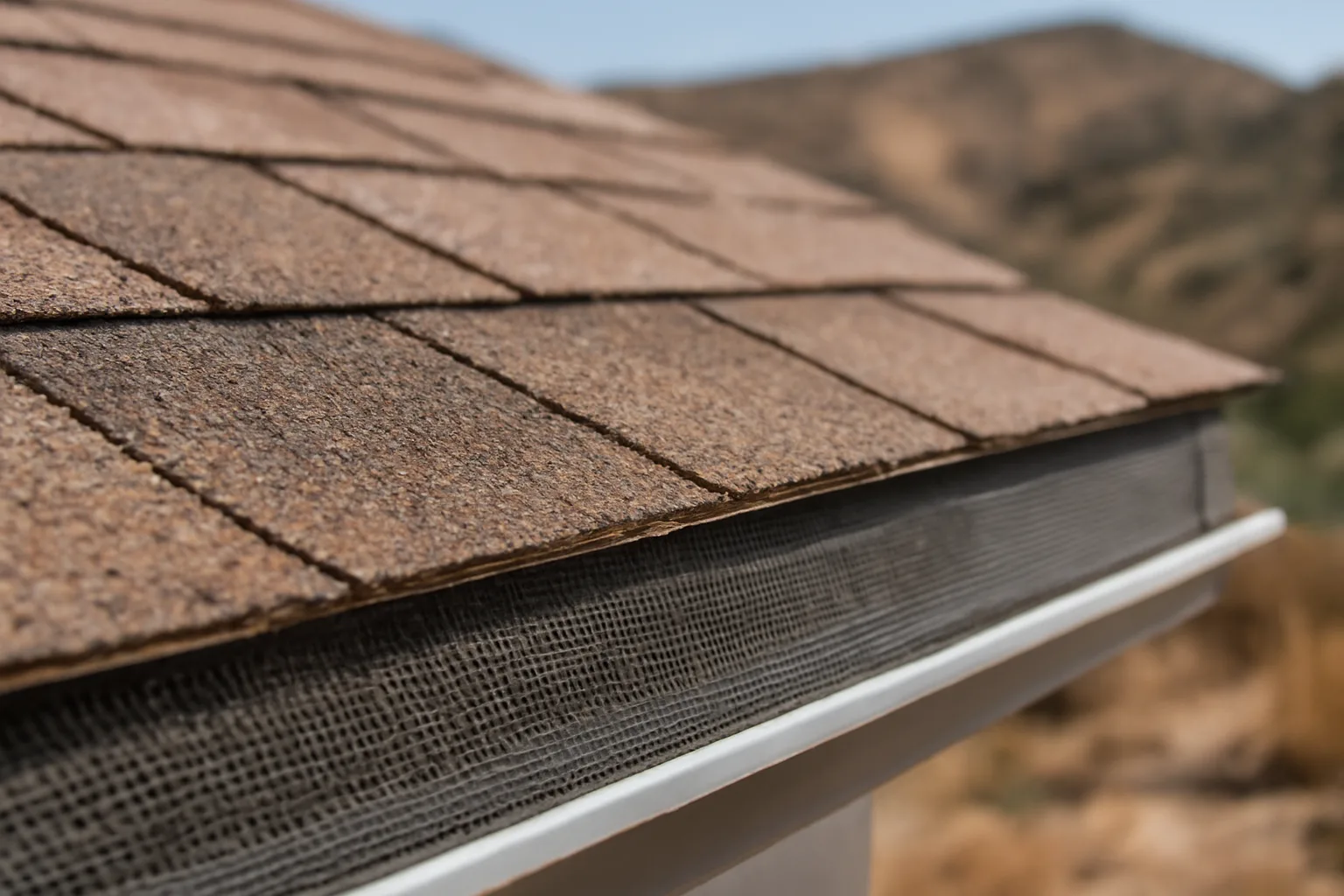
Roof covering, vent screening, eave design, and the zero-to-five-foot zone around the foundation, in roughly that order of documented importance. CAL FIRE's home hardening guidance lists roofs and vents as the two most common ignition points from ember exposure, calling embers "the leading cause of home ignition during wildfires". IBHS field research after major wildfires (Camp Fire, Waldo Canyon Fire) found that homes surviving fires that destroyed neighboring homes usually shared three traits: Class A fire-rated roofing, ember-resistant vents (mesh no larger than 1/8 inch, ideally with a baffle), and noncombustible material in the five feet immediately touching the house. IBHS's Wildfire Prepared Home standard, launched in 2022, formalizes this into a checklist insurers and some state programs now recognize. Here's a rough priority order, based on where fire agencies and insurers put their attention: | Priority | Component | Why it matters | Typical cost range |
when does the california defensible space law go into effect?
California's defensible space requirement (100 feet of clearance around structures, or to the property line if closer) has been law since 2005 under Public Resources Code Section 4291, and it already applies statewide in State Responsibility Areas and in Very High Fire Hazard Severity Zones designated by local jurisdictions [2]. It's not a future law, it's current and enforced now through CAL FIRE and local fire agency inspections. What's newer is the "ember-resistant zone" (Zone 0) requirement, the zero-to-five-foot ring immediately around structures that must stay clear of combustible material. Assembly Bill 3074 (2020) directed the Board of Forestry and Fire Protection to develop Zone 0 regulations, but as of this writing those regulations are still in the rulemaking process and have been delayed multiple times past their original 2023 target. Check CAL FIRE's defensible space page directly for the current status in your area, because the effective date has moved before and enforcement timing varies by county [3]. Because fire district rules layer on top of the state baseline, always confirm your specific requirements with your local fire district or county fire marshal before doing clearance work. State law sets a floor; some high-risk districts require more.
why won't people follow the defensible space law in california?
Cost, labor, and disagreement about what "clearance" actually requires are the three reasons that show up most often in state and county surveys and reporting. Removing brush, thinning trees, and maintaining 100 feet of defensible space on a sloped, oak-covered lot can run into the thousands of dollars a year, and it's recurring work, not a one-time project. For retirees and lower-income homeowners on fixed incomes, that's a real barrier, not a matter of ignoring the rule. There's also a genuine information gap. CAL FIRE's own defensible space guidance breaks the 100 feet into two zones (0-30 feet: "lean, clean, and green"; 30-100 feet: "reduce fuel") with different vegetation spacing rules for each, and many homeowners simply haven't seen the specific zone requirements for their parcel. Some also worry, not unreasonably, that clearing trees near a home reduces shade, privacy, or property value, and they weigh that against a wildfire risk that feels abstract until a neighbor's house burns. Enforcement matters too. Defensible space inspections are often complaint-driven or done on a multi-year rotation depending on the fire district's staffing, so noncompliance can go unnoticed for years in some counties and get flagged immediately in others. That inconsistency doesn't help compliance rates.
what fire safe home requirements take effect in 2026?
As of this writing, there is no single nationwide "2026 fire-safe home" mandate; requirements vary by state, and several relevant California rules (notably the Zone 0 ember-resistant zone standard) have been in extended rulemaking rather than locked to a fixed date. If you've seen a specific 2026 date referenced somewhere, check the source directly, because proposed effective dates for Zone 0 and related Board of Forestry regulations have shifted more than once. What is confirmed and worth tracking: - California's Board of Forestry and Fire Protection continues rulemaking on Zone 0 (the ember-resistant zone) under authority from AB 3074; check the Board's current regulatory status page for the live timeline rather than relying on a remembered date [3].
- Existing Chapter 7A wildfire-urban interface building code requirements already apply to new construction and some remodels in California's Fire Hazard Severity Zones, and those requirements don't need a new 2026 trigger; they're active now [1].
- Other wildfire states (Oregon, Colorado, Arizona) have their own timelines. Oregon's statewide wildfire risk map and defensible space code work, tied to Senate Bill 762 (2021), has had its own delayed rollout; check the Oregon Department of Forestry directly for current status. Because this changes by legislative session, treat any specific "2026" date you see (including this one) as something to verify against the state agency's current page before you plan around it, not something to bank on.
how to prepare for a wildfire (a working checklist)
Preparing for a wildfire has two tracks that run in parallel: hardening the structure so it's less likely to ignite, and preparing documentation and an evacuation plan for when it doesn't matter how hardened the house is and you need to leave. Ready.gov's wildfire preparedness guidance frames it as "before, during, and after" planning, and recommends creating a family emergency communication plan, gathering an emergency supply kit, and knowing at least two evacuation routes out of your neighborhood before fire season starts . On the hardening side, work through this rough order: 1. Confirm your roof is Class A rated (or plan the replacement; this is the highest-leverage single fix). 2. Screen or replace attic and foundation vents with 1/8-inch metal mesh. 3. Clear the zero-to-five-foot zone against your house of mulch, plants, and stored items. 4. Clean gutters and roof valleys of pine needles and leaf litter before and during fire season. 5. Move firewood stacks and propane tanks at least 30 feet from structures. 6. Confirm your defensible space zones (0-30 ft, 30-100 ft) match your local fire district's specific standard, since some districts add requirements beyond the state minimum. On the documentation side (relevant if you've already gotten a non-renewal letter): photograph your roof, vents, siding, and defensible space clearance from multiple angles, dated, before any inspection. Insurers and CAL FIRE inspectors are looking at exactly these items, and having your own dated record matters if you're disputing an inspection finding or reapplying for coverage. This is where a structured kit helps some homeowners get organized faster; the Wildfire Insurance Survival Kit is a $99 one-time tool built around exactly this documentation process. We don't file claims or handle your insurer communications for you; you assemble and send your own documentation.
how to prevent wildfires (and forest fires) as a homeowner
Roughly 85% of wildfires in the United States are human-caused, according to the National Park Service and reinforced in Congressional Research Service reporting on wildfire statistics, which means individual behavior around ignition sources genuinely moves the needle at a population level, even though a single homeowner can't control lightning-caused fires or fires starting on neighboring land . The most common human ignition sources are debris burning, equipment and vehicle sparks, campfires, and electrical/powerline failures. Practical prevention steps that are within a homeowner's control: - Never burn debris on red flag warning days; check your local fire weather forecast before any outdoor burning, and confirm burn permits are current if your county requires them.
- Keep mower and trimmer use to early morning on hot, dry, windy days; a single rock strike from a mower blade on dry grass has started real fires.
- Maintain spark arrestors on chainsaws, generators, and off-road vehicles used near dry vegetation.
- Fully extinguish campfires (drown, stir, drown again) and never leave one unattended, even briefly.
- Report downed power lines or sparking equipment immediately rather than assuming someone else has. This is the "how to avoid forest fires" and "how can we prevent forest fires" question from the individual-behavior side. At the community level, CAL FIRE and the U.S. Forest Service run public education campaigns (the long-running Smokey Bear program is the most visible one) precisely because ignition prevention is one of the few wildfire variables people can actually control, compared to weather, terrain, and fuel load.
is santa barbara safe from fire?
No. No location in California's chaparral and coastal foothill terrain is "safe" from wildfire risk in an absolute sense, and Santa Barbara County has direct, recent history that makes this concrete: the 2017 Thomas Fire (at the time the largest wildfire in modern California history) burned into Santa Barbara County and was followed weeks later by the Montecito debris flow, which killed 23 people when rain hit the burn scar . The 2018 Whittier Fire and 2016 Sherpa Fire also burned in the same general region. Santa Barbara County sits within CAL FIRE's mapped Fire Hazard Severity Zones, with substantial areas in the foothills and wildland-urban interface rated Very High, particularly in Montecito, the Santa Ynez foothills, and areas along Highway 154 . Coastal areas immediately along the water tend to carry lower direct wildfire hazard ratings than the foothill communities a few miles inland, because of vegetation type, terrain steepness, and wind exposure, but "lower" isn't "zero," and ember transport during Sundowner wind events can carry risk well beyond a property's immediate fuel load. If you own property in or near Santa Barbara County, the practical move is checking your specific parcel against CAL FIRE's Fire Hazard Severity Zone viewer rather than relying on general reputation about the area. Insurance non-renewal patterns in the county have followed the FHSZ maps fairly closely in recent years, consistent with statewide trends reported by the California Department of Insurance.
so should I still buy fire-rated ceiling tiles at home depot?
If you're finishing a garage that needs a 1-hour fire-rated assembly under local building code, or replacing a drop ceiling in a workshop where you want better flame-spread behavior in an interior fire, yes, and Home Depot's Class A mineral fiber tiles are a reasonable, inexpensive way to meet that. That's a legitimate structure-fire safety upgrade. If you're buying them because you got a wildfire non-renewal letter and you're hoping interior ceiling work will help your risk score or your reinspection, no. That money is better spent on the roof, vents, and Zone 0 clearance. None of the wildfire risk scoring models used by CAL FIRE, IBHS, or the insurers writing (or declining) policies in your area weight interior ceiling material at all. It's simply not part of the wildfire ignition pathway the way roof and vent material is. The honest version of this article, if it had to be one sentence: fire-rated ceiling tiles are a real product that solves a real, different problem, and the wildfire-specific hardening work happens outside the house, not on the ceiling above your head.
what should I document before and after hardening work?
Whatever hardening work you do, whether it's a full Class A roof replacement or just vent screening, photograph it before, during, and after with dates visible (most phone cameras timestamp automatically in the file metadata, but a printed date or a dated notepad in frame is a belt-and-suspenders move). Insurers reconsidering a non-renewal, and CAL FIRE inspectors doing a defensible space recheck, both respond better to dated visual documentation than to a verbal description of what you did. Keep receipts and material spec sheets too. A roofing contractor's invoice that specifies "Class A fire-rated asphalt shingle, [manufacturer], [product line]" is worth more in a coverage conversation than a general description of "new roof." Same logic applies to vent products (keep the packaging or spec sheet showing 1/8-inch mesh) and to any defensible space clearing (before/after photos of the zero-to-30-foot zone specifically, since that's the zone most inspections focus on first). This kind of documentation is exactly what a public adjuster or claims process asks for after the fact, except you're doing it proactively, before there's a claim, to support a coverage decision instead of a damage claim. We're not a public adjuster and don't file claims on your behalf; the value here is having your own organized, dated record ready when you need it, whether that's for a reinspection, a new carrier application, or an appeal of a non-renewal.
Frequently asked questions
When does the California defensible space law go into effect?
It's already in effect. California's 100-foot defensible space requirement has been law since 2005 under Public Resources Code Section 4291. What's still pending is the Zone 0 (zero-to-five-foot ember-resistant zone) regulation directed by Assembly Bill 3074, which is still in rulemaking; check CAL FIRE's current page for status before assuming a specific date.
Why won't people follow the defensible space law in California?
Mostly cost and recurring labor. Clearing 100 feet of brush on a sloped, vegetated lot isn't a one-time job, it's annual maintenance, and that's expensive for homeowners on fixed incomes. Some also lack clear information about their specific zone requirements, and enforcement is inconsistent, complaint-driven in some counties, routine in others.
How to prevent wildfires as an individual homeowner?
Avoid outdoor burning on red flag warning days, keep mower and equipment use to cool, calm mornings, maintain spark arrestors on chainsaws and generators, fully drown campfires, and report sparking power lines immediately. Roughly 85% of U.S. wildfires are human-caused, per National Park Service data, so ignition-source behavior genuinely matters.
How do I prepare for a wildfire if I've already gotten a non-renewal letter?
Prioritize roof condition, vent screening, and zero-to-five-foot clearance first, since those drive most insurer risk scores. Photograph everything with dates. Build an evacuation plan per Ready.gov guidance. Document your hardening work as you go rather than after the fact; that record matters if you're reapplying for coverage or appealing an inspection finding.
How to prevent forest fires versus preventing home ignition, is it different?
Yes. Preventing forest fires is about ignition-source behavior (debris burning, equipment sparks, campfires) across wildland areas generally. Preventing your specific home from igniting during a wildfire that's already burning nearby is a separate problem, solved by roof material, vent screening, and defensible space, not by reducing ignition sources.
What fire-safe home requirements take effect in 2026?
There's no confirmed single nationwide 2026 mandate. California's Zone 0 ember-resistant zone rule has been in extended Board of Forestry rulemaking with shifting timelines, and other states (Oregon under SB 762, for example) have their own separate, also-delayed schedules. Check the specific state agency's current page rather than relying on a remembered date.
Is Santa Barbara safe from fire?
No, not in an absolute sense. Santa Barbara County has direct wildfire history, including the 2017 Thomas Fire and the fatal 2018 Montecito debris flow that followed it. Much of the county's foothill and wildland-urban interface area is mapped Very High in CAL FIRE's Fire Hazard Severity Zones, though risk varies significantly by specific location within the county.
Do fire-resistant ceiling tiles from Home Depot help with wildfire insurance non-renewal?
No. Wildfire risk scores used by insurers focus on roof covering, vent screening, siding, and defensible space clearance, not interior ceiling material. Class A ceiling tiles are useful for interior structure-fire code compliance (like a garage separation wall) but they aren't part of any wildfire ignition risk model insurers use.
What's the difference between Class A fire rating and a fire-resistance hourly rating?
Class A (tested under ASTM E84) measures how fast flame spreads across a material's surface and how much smoke it produces. An hourly fire-resistance rating (tested under ASTM E119) measures how long a full wall or ceiling assembly holds back fire and heat. A Class A ceiling tile alone doesn't give you an hourly-rated assembly.
What roof material is best for wildfire-prone homes?
Class A-rated roofing, which includes most asphalt composition shingles, metal roofing, concrete or clay tile, and some treated wood products with a Class A assembly rating. IBHS and CAL FIRE both identify the roof as the single most common ember ignition point on homes destroyed in wildfires.
How much does defensible space clearance cost in California?
Costs vary widely by lot size, slope, and vegetation density, and no single statewide figure applies; a small flat suburban lot might run a few hundred dollars for annual maintenance, while a large sloped, heavily wooded parcel can run into several thousand dollars a year for professional clearing. Get local contractor quotes for your specific parcel.
What vent mesh size do fire agencies recommend for ember resistance?
1/8-inch (0.125 inch) noncombustible metal mesh is the standard most fire agencies and IBHS recommend for attic, foundation, and crawlspace vents, small enough to block most embers while still allowing airflow. Larger mesh sizes let embers through; some newer ember-resistant vent products add a baffle for extra protection.
Can I prevent forest fires by clearing brush on my own property alone?
Clearing your own defensible space reduces your home's ignition risk but doesn't prevent forest fires broadly, since most large wildfires start on public land, roadside vegetation, or neighboring parcels you don't control. It's still worth doing: homes with proper defensible space and hardening measurably survive at higher rates in documented wildfire events.
Sources
- California Building Standards Commission, California Building Code Chapter 7A: Chapter 7A governs materials and construction methods for exterior wildfire exposure and does not address interior ceiling tiles
- California Public Resources Code Section 4291: California's defensible space requirement of 100 feet around structures has been law since 2005
- California Board of Forestry and Fire Protection, Zone 0 rulemaking: Zone 0 ember-resistant zone regulations under AB 3074 remain in active rulemaking with no fixed final effective date confirmed
- Office of the State Fire Marshal: Defensible space law details and enforcement responsibilities for California homeowners
- CAL FIRE Ready for Wildfire: Checklist guidance for preparing a home and property for wildfire including defensible space zones
- National Fire Protection Association: Firewise USA program provides community-level wildfire risk reduction guidance for homeowners
- ASTM International: ASTM E84 standard test method for surface burning characteristics of building materials relevant to fire-rated ceiling tile ratings
- FEMA: FEMA guidance on constructing wildfire-resistant homes including roofing and building material recommendations
- Santa Barbara County: Local wildfire risk information and preparedness resources for Santa Barbara County residents