Last updated 2026-07-25
TL;DR
Booz Allen Hamilton isn't building your defensible space, it's working federal contracts on wildfire detection, modeling, and disaster tech. Homeowners still need to handle their own clearance, hardening, and documentation. California's new defensible space enforcement rules and the 2026 Zone 0 ember-resistant standard are the parts that actually affect you this year.
What is Booz Allen Hamilton actually doing on wildfire in 2025?
Booz Allen Hamilton is a federal consulting and technology contractor headquartered in McLean, Virginia. It doesn't clear brush, harden roofs, or write homeowners insurance. Its wildfire-related work in 2025 sits mostly in the federal contracting space: data analytics, AI-assisted detection systems, and disaster response technology built for government clients like the U.S. Forest Service, FEMA, and Department of Defense components that respond to large fires. If you searched this term hoping to find a homeowner program or a mitigation grant tied to the company's name, there isn't one. Booz Allen's public sector work generally focuses on things like satellite and sensor data fusion for early fire detection, predictive modeling for fire behavior, and infrastructure resilience consulting for federal agencies. None of that changes what your local fire district requires of your property, and none of it substitutes for the defensible space work you're responsible for as a homeowner. The honest takeaway: federal contractors building better detection and modeling tools is good news for regional response times long-term, but it does nothing for your inspection letter due next month. That work is still yours. [Guided fill-in: if you want to check whether any federal wildfire tech initiative applies to your specific county or fire district, your state fire marshal's office or CAL FIRE unit is the place to verify, not a contractor's press page.]
When does the California defensible space law go into effect?
California's defensible space requirements aren't new, they're already in force under Public Resources Code Section 4291, which requires 100 feet of defensible space clearance around structures in State Responsibility Areas and some Very High Fire Hazard Severity Zones in local jurisdictions [1]. What's changing is enforcement and a new ember-resistant zone rule. CAL FIRE's own guidance states the requirement plainly: "A person that owns, leases, controls, operates, or maintains a building or structure in a State Responsibility Area... is required to maintain defensible space of 100 feet" [1]. That's been law since amendments in the early 2000s and it applies today, not at some future date. The part actually shifting in 2025-2026 is Zone 0, the ember-resistant zone within 5 feet of structures. The California Board of Forestry and Fire Protection has been developing regulations under SB 63 (2023) to define specific requirements for that zone, with the enforcement timeline tied to state rulemaking that has been delayed past its original target dates [2]. As of mid-2025, the Zone 0 regulation had not been finalized into an enforceable statewide standard, though the Office of the State Fire Marshal and Board of Forestry continued rulemaking work through 2025 [2]. Bottom line: the 100-foot defensible space law is already in effect and has been for two decades. The Zone 0 ember-resistant zone rule is the piece still working through the regulatory process, and homeowners in high-severity zones should assume it's coming rather than wait for a final effective date.
What fire-safe standards for homes take effect in 2026?
The most concrete 2026-adjacent standard homeowners should track is California's Zone 0 ember-resistant zone requirement, developed under SB 63, which directs the Board of Forestry and Fire Protection to adopt regulations for the 5-foot zone immediately around a structure in high fire hazard areas. The intent, per the bill text, is to require homeowners to remove combustible materials (mulch, dry vegetation, wood fencing attached to the house, stored items) within that 5-foot band. As of 2025, exact enforcement dates and inspection mechanisms were still being finalized through Board of Forestry rulemaking, and multiple legislative and regulatory delays have pushed the timeline past earlier targets [2]. Homeowners in Very High Fire Hazard Severity Zones should not wait for a final compliance deadline. Removing bark mulch, resin-heavy plants, and stored firewood from the 5 feet nearest your walls costs little and matches where the rule is clearly headed regardless of the exact date it becomes enforceable. Outside California, other western states are moving on parallel tracks but with different mechanisms. Oregon's wildfire hazard map and defensible space code work (under SB 762) has gone through multiple revisions and delays since 2021, with statewide standards tied to hazard mapping that has been re-done after public pushback. Colorado and Arizona largely leave defensible space specifics to county and fire district code rather than a single statewide mandate, which is why this article treats local rules as a guided fill-in rather than a fixed number. [Guided fill-in: check your specific fire district's current defensible space ordinance and any 2026 effective dates directly with your county fire marshal or local fire protection district, since requirements and timelines vary by jurisdiction even within the same state.]
Why won't people follow the defensible space law in California?
Compliance data isn't flattering. CAL FIRE and legislative reporting have repeatedly found that a large share of inspected properties fail to fully meet the 100-foot standard, and enforcement has historically been inconsistent because most inspections are complaint-driven or tied to a home sale or insurance renewal rather than routine. The reasons people skip it aren't usually defiance. Cost is the biggest one: removing mature trees, regrading slopes, or replacing wood fencing near a house can run into thousands of dollars, and low and middle-income homeowners in rural WUI areas often can't absorb that on top of a mortgage. Time is another: proper defensible space work isn't a weekend project on a lot with dense native brush, it's an annual maintenance commitment. There's also confusion about what the zones actually require. The 100-foot rule isn't a bare-dirt mandate, it's a graduated set of requirements (Zone 1 from 0-30 feet needs the most aggressive clearance, Zone 2 from 30-100 feet allows more vegetation with spacing requirements) and a lot of homeowners either over-clear (killing property value and erosion control) or under-clear because they never got a clear explanation of the zones from an inspector. Finally, enforcement teeth are limited. Violating Section 4291 can result in a notice to comply and, if ignored, a misdemeanor and potential fines, but many local fire agencies don't have staffing to do proactive parcel-by-parcel enforcement across large SRA footprints [1]. The law exists; the boots on the ground to check every property every year mostly doesn't.
How do you prevent wildfires around your own home?
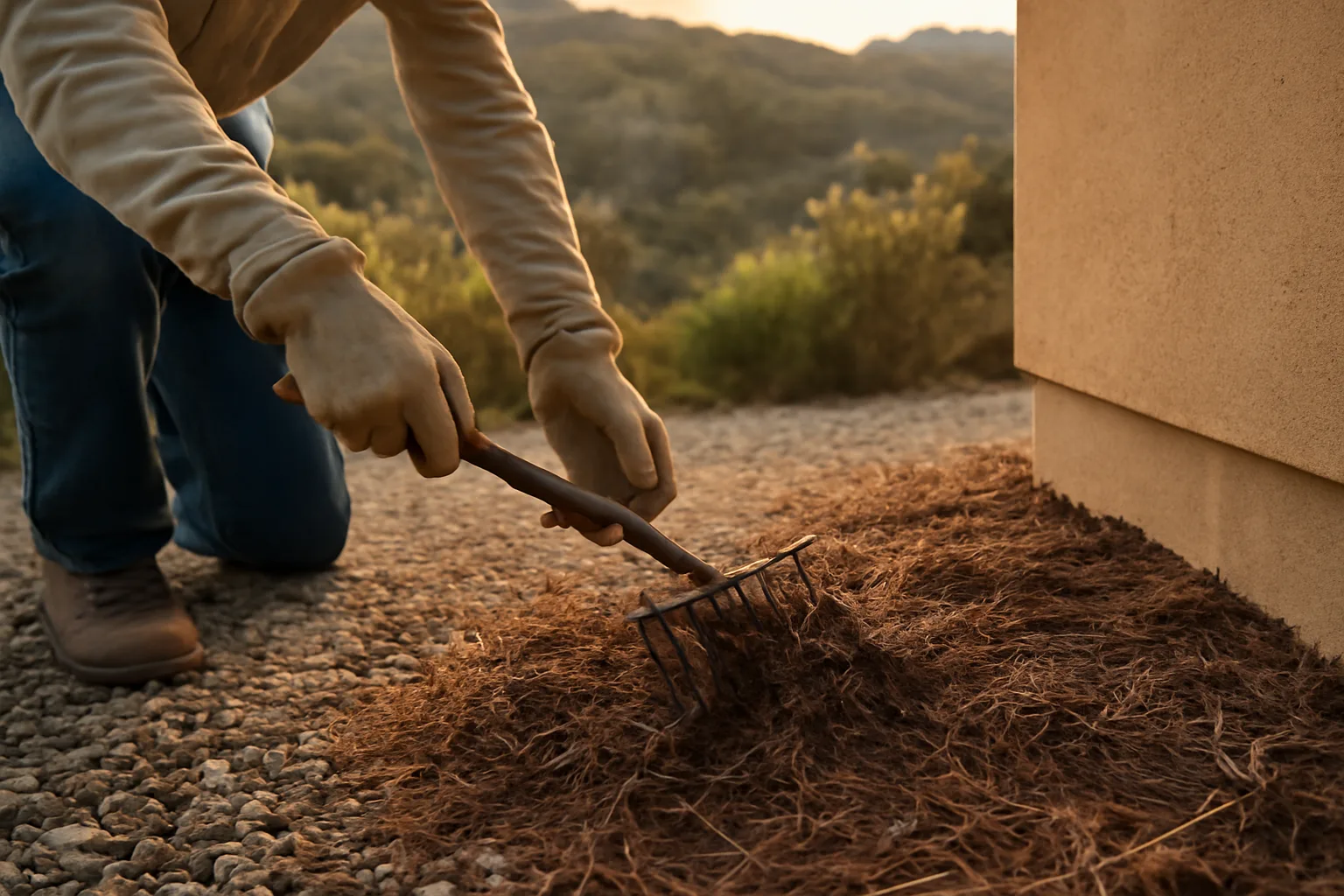
You can't control lightning strikes or a downed power line two ridges over, but you can control the things that turn a nearby fire into a structure fire. CAL FIRE's defensible space framework breaks your property into zones, and the work in each zone is different [1]. Zone 0 (0-5 feet from structures): remove all combustible material. That means bark mulch, dry leaves, stored firewood, wood fencing that touches the house, and resinous plants like junipers directly against the wall. Gravel or hardscape here is your friend. Zone 1 (5-30 feet): remove dead vegetation, keep tree canopies spaced at least 10 feet apart, prune tree branches up 6 feet from the ground, and keep grass mowed to under 4 inches [1]. Zone 2 (30-100 feet): thin vegetation to reduce continuous fuel, remove dead and downed material, and maintain wider spacing between tree crowns as slope increases (steeper slopes need more spacing because fire moves faster uphill). Outside your defensible space zones, the single biggest thing you can do to prevent a wildfire from starting is manage ignition sources. Ready.gov's wildfire preparedness guidance emphasizes clearing dry brush from equipment use areas, never mowing dry grass midday in high wind, and maintaining spark arrestors on chainsaws and generators [3]. Most human-caused wildfires start from equipment, debris burns, and vehicle sparks, not arson, so the prevention work that actually moves the needle is boring: mow before 10am, keep a shovel and water nearby when using power equipment, and skip outdoor burning on red flag days. For landscaping specifically, matching plant choice and placement to your zone matters more than any single "fireproof plant" myth. See our guide on fire safe landscaping California next to house for zone-specific plant spacing.
How do you prepare for a wildfire before it happens?
Preparation has two tracks: the property and the people. Ready.gov's wildfire page lays out both, and the property side overlaps heavily with defensible space work: clear gutters of leaves and needles, screen vents with 1/8-inch metal mesh to stop ember entry, and store propane tanks and firewood at least 30 feet from structures [3]. The people side is the part homeowners skip. Ready.gov recommends building a go-bag with medications, copies of insurance documents, and a family communication plan before you need it, not during an evacuation order [3]. If you've never actually timed how long it takes to load your car and leave, do it once on a calm day. Most people are shocked it takes 25 minutes instead of the 10 they assumed. Document your home before fire season, not after a loss. Photos and video of every room, your roof, your defensible space clearance, and any hardening upgrades (ember-resistant vents, Class A roofing, dual-pane windows) give you a record if you ever need to show an insurer or adjuster what condition your property was in. This is also where a lot of non-renewal appeals get won or lost: insurers increasingly want evidence of mitigation work, more than a claim that you did it. This is the one place we'll mention our own tool: DefensibleHome's $99 one-time Wildfire Insurance Survival Kit is built for exactly this documentation gap. It's a guided way to photograph, log, and organize your defensible space and hardening work into a packet you can send to your insurer yourself. We don't file claims on your behalf or promise reinstatement or discounts. What we help you do is show up with your own paperwork already in order.
How do you prevent forest fires more broadly, more than around your house?
Forest fire prevention at the landscape level is mostly a public land management question, but individual behavior still matters a lot, especially in the wildland-urban interface where most homes at risk actually sit. The U.S. Forest Service's Smokey Bear program (yes, still active) puts the human-caused share of wildfires at roughly 85% nationally in recent Forest Service reporting, driven by things like unattended campfires, debris burning, and equipment sparks [4]. The practical prevention list is short and unglamorous: fully drown and stir campfires until they're cold to the touch, don't park hot vehicles on dry grass (catalytic converters routinely start roadside fires), avoid using power tools like chainsaws and mowers during red flag warnings, and check local burn permit rules before any outdoor debris burning. At a community level, prevention also means supporting fuel breaks and prescribed burn programs on adjacent public land, which is genuinely one of the more effective tools land managers have, though it's politically and logistically hard to scale given air quality rules and staffing shortages at agencies like the Forest Service and CAL FIRE. If you live adjacent to national forest or BLM land, check whether your state or county has a defensible space clearing cost-share or contractor program, similar to what wildfire defensible space clearing contracts through Washington State DNR offers, since several western states run versions of cost-assistance for fuel reduction work on private land bordering public forest.
How do you avoid forest fires when recreating or working outdoors?
Avoiding forest fires as an individual mostly comes down to fire behavior around three things: heat sources, dry fuel, and wind. Ready.gov and most state forestry agencies converge on the same core practices: check current fire restrictions before camping or burning anything, keep campfires small and in a cleared ring, and never leave a fire unattended even for a few minutes [3]. For equipment work (chainsaws, welding, grinding, target shooting), the highest-risk hours are typically the hottest, driest part of the day, usually late morning through early evening. Many states legally restrict outdoor burning and certain equipment use during red flag warnings, and violating those restrictions can carry real fines, separate from any wildfire liability if a fire actually starts. If you're a landowner doing your own brush clearing, the irony is real: clearing debris the wrong way (piling and burning on a dry, windy day) is itself a common ignition source. Chip or haul debris instead of burning it when you're in a high fire hazard zone, or time any permitted burn for cool, damp, low-wind conditions with your local fire department aware.
How do you prepare for forest fires as a rural property owner?
Rural and semi-rural property owners near forest land face a version of the defensible space problem, but at a bigger scale. The same 100-foot Zone 1/Zone 2 framework applies, but rural parcels often have more acreage, steeper terrain, and less access for fire equipment, all of which push actual recommended clearance wider than the legal minimum [1]. Access matters as much as clearance. Fire engines need road width, turnaround space, and address visibility to defend a structure at all. If your driveway is a single narrow lane with no turnout, many rural fire departments will not risk sending an engine down it during an active fire, regardless of how well you've cleared vegetation. Check your local fire district's access standards (driveway width, grade, and turnaround requirements) as part of your preparation, more than your vegetation clearance. Water access is the other rural-specific piece. If you're not on a municipal hydrant system, confirm whether your fire district can identify and access your pond, cistern, or dry hydrant on your property, and mark it clearly. None of this is exotic engineering. It's paperwork and signage. But it's the kind of thing that gets skipped because it's not as visible as clearing brush.
Is Santa Barbara safe from fire?
No California coastal community, including Santa Barbara, is "safe" from wildfire in any absolute sense, and the region's history says otherwise directly. The Thomas Fire (2017) burned more than 281,000 acres across Ventura and Santa Barbara counties and was followed within weeks by the Montecito debris flow, which killed 23 people when rain hit the Thomas Fire's denuded slopes [5]. The 2009 Jesusita Fire and 2008 Tea Fire both burned into Santa Barbara's foothill neighborhoods directly. Much of the city and surrounding foothill area sits in or adjacent to a CAL FIRE-designated Very High Fire Hazard Severity Zone, particularly the areas along the base of the Santa Ynez Mountains where chaparral fuel and wind-driven sundowner conditions combine [1]. Sundowner winds, a local downslope wind pattern specific to the Santa Barbara south coast, are part of why fire behavior there can escalate faster than in many other California WUI areas. That doesn't mean every Santa Barbara property faces equal risk. Homes right against open hillside chaparral carry meaningfully more exposure than homes several blocks into denser urban fabric near the coast. If you own property in or near the foothill zones, check your parcel's specific hazard severity zone designation on CAL FIRE's FHSZ viewer rather than relying on the city's general reputation either way.
How can we prevent forest fires as a community, more than individually?
Individual defensible space work only goes so far if your neighbor's overgrown lot sits 20 feet from your fence line. Community-level prevention works best when it's coordinated: neighborhood Firewise USA programs (run through the National Fire Protection Association) organize shared chipper days, group vegetation assessments, and collective fuel reduction that individual homeowners rarely tackle alone. Local fire safe councils, common in California's WUI counties, often coordinate grant-funded fuel breaks and roadside clearance that benefit an entire neighborhood rather than a single parcel. If your area doesn't have one, starting with your HOA or a handful of neighbors and contacting your county fire department about group chipper programs is usually the fastest path to real fuel reduction at scale, since equipment and disposal costs drop a lot when spread across multiple properties. Reporting matters too. Fast reporting of smoke, downed power lines, or unattended fires shortens response time more than almost anything else a community can do. CAL FIRE and most state agencies still rely heavily on public reports for initial detection, even as federal agencies invest in satellite and sensor-based detection systems (the kind of work companies like Booz Allen support on the federal contracting side).
What should you actually do this year if you got a non-renewal letter?
Start with documentation, not disputes. Insurers pulling back from wildfire zones in California, Colorado, Oregon, and Arizona are generally responding to catastrophe modeling and reinsurance costs at a portfolio level, not your specific behavior, but the appeal process (where one exists) almost always asks for evidence of mitigation. Photograph your defensible space zones, any ember-resistant vents or Class A roofing, and your address/access signage. Get dated photos, more than current ones, since some insurers and state programs (like California's Safer from Wildfires framework tied to FAIR Plan mitigation credits) want to see maintained compliance over time, not a one-time cleanup . Keep receipts for any hardening work: new roofing, vent screens, gutter guards, and defensible space contractor invoices all count as evidence. If you're weighing whether to fight a non-renewal, appeal to a state program, or shop for new coverage, understanding your realistic options starts with knowing what actually happened to your policy and why. Our guide on house fire insurance aftermath and defensible space basics cover the mechanics in more depth than we can fit here. We'll say this plainly since it matters: DefensibleHome doesn't file claims for you or promise coverage, discounts, or reinstatement. What we do is help you build the documentation packet, our $99 Wildfire Insurance Survival Kit, so you're the one walking into that conversation prepared instead of empty-handed. The letter and the decision stay yours.
Frequently asked questions
When does the California defensible space law go into effect?
The core 100-foot defensible space requirement under Public Resources Code Section 4291 has been in effect for two decades and applies now, not at a future date [1]. The newer Zone 0 ember-resistant zone rule under SB 63 was still in rulemaking as of 2025, with no finalized statewide enforcement date yet set [2].
Why won't people follow California's defensible space law?
Mostly cost, time, and confusion. Clearing mature vegetation near a home can cost thousands of dollars, maintaining it is an annual task, and many homeowners were never clearly walked through what Zone 1 versus Zone 2 actually requires. Enforcement is also inconsistent since most fire agencies inspect on complaint or sale, not proactively across every parcel [1].
What fire-safe standards for homes take effect in 2026?
The most likely near-term standard is California's Zone 0 rule (SB 63), requiring removal of combustible material within 5 feet of a structure in high fire hazard zones. As of 2025 the Board of Forestry hadn't finalized enforcement dates, so homeowners in Very High Fire Hazard Severity Zones should start Zone 0 cleanup now regardless of the exact deadline [2][3].
Is Santa Barbara safe from fire?
No. Santa Barbara has burned repeatedly, including the 2017 Thomas Fire (over 281,000 acres) and the 2009 Jesusita and 2008 Tea Fires, and much of the foothill area sits in a CAL FIRE Very High Fire Hazard Severity Zone [1][6]. Risk varies sharply by exact address, so check your parcel's hazard zone designation directly.
How can we prevent forest fires as individuals?
Drown campfires completely, avoid mowing or using power tools on dry, windy days, don't park hot vehicles on dry grass, and follow local burn restrictions. Nationally, roughly 85% of wildfires are human-caused according to U.S. Forest Service reporting tied to the Smokey Bear program, so individual ignition prevention matters a lot [5].
How do I prepare for a wildfire evacuation?
Build a go-bag with medications, copies of insurance and identity documents, and a family communication plan before fire season, per Ready.gov guidance [4]. Time an actual practice evacuation on a calm day, document your home's condition with dated photos, and know two evacuation routes in case one is blocked.
What is Booz Allen Hamilton's role in wildfire mitigation?
Booz Allen Hamilton is a federal contractor working on data analytics, detection technology, and disaster response systems for agencies like the U.S. Forest Service and FEMA. It has no homeowner program, grant, or defensible space service. Its 2025 wildfire work doesn't change local fire code requirements or your individual mitigation obligations.
What is Zone 0 in California's defensible space rules?
Zone 0 is the 5-foot ember-resistant zone immediately surrounding a structure, created under SB 63, where homeowners must remove combustible material like mulch, dry vegetation, and stored items. As of 2025 the statewide enforcement regulation was still in development by the Board of Forestry and Fire Protection [2][3].
How wide does defensible space need to be around my house?
California law (PRC 4291) requires 100 feet of defensible space in State Responsibility Areas, split into Zone 1 (0-30 feet, aggressive clearance) and Zone 2 (30-100 feet, thinned and spaced vegetation) [1]. Rural properties with steep terrain or poor fire truck access often benefit from clearing wider than the legal minimum.
Do I need defensible space if my insurer already non-renewed me?
Yes. Defensible space work still protects your home physically regardless of your insurance status, and it's often required to qualify for California FAIR Plan coverage or to strengthen an appeal for reinstatement with a standard carrier under mitigation-credit programs [7].
What's the fastest way to reduce wildfire risk to my home this month?
Clear Zone 0 first: remove mulch, dead leaves, and stored items within 5 feet of your walls, screen attic and foundation vents with 1/8-inch metal mesh, and clean gutters and roof valleys of debris. These are the cheapest, fastest changes that address the single biggest home-loss mechanism, ember intrusion.
Are prescribed burns effective at preventing wildfires?
Land managers and fire researchers generally consider prescribed burns an effective fuel reduction tool on public land, though scaling them is limited by air quality permitting, staffing, and narrow weather windows. They reduce continuous fuel loads that make wildfires larger and harder to control, but they don't eliminate wildfire risk on adjacent private property.
How do I know if my house is in a Very High Fire Hazard Severity Zone?
CAL FIRE maintains Fire Hazard Severity Zone maps by county and jurisdiction, viewable through its FHSZ mapping tool, which is the authoritative source for your parcel's designation [1]. Your local fire department or county planning office can also confirm your zone and any local ordinance requirements tied to it.
Sources
- CAL FIRE, Defensible Space (PRC 4291): 100-foot defensible space requirement, zone definitions, and legal basis under Public Resources Code Section 4291
- California Legislative Information, SB 63 (2023): Text and intent of SB 63 directing Board of Forestry to adopt Zone 0 ember-resistant zone regulations
- CAL FIRE, Thomas Fire Incident Archive: Thomas Fire (2017) acreage and location in Ventura/Santa Barbara counties
- California Department of Insurance, Safer from Wildfires: State framework tying mitigation actions to insurance discount/credit eligibility
- CAL FIRE, Fire Hazard Severity Zone Maps: Authoritative source for parcel-level Fire Hazard Severity Zone designations, including Santa Barbara foothill areas