Last updated 2026-07-25
TL;DR
Fireproofing your home means combining an ember-resistant structure (Zone 0, class-A roof, vent screens) with 100 feet of managed defensible space, and documenting both. California's defensible space law is already in effect (PRC 4291); the state's new Zone 0 ember-resistant zone regulation is expected to take effect in 2026 for many areas. No home is fireproof, but most are far more survivable with this work done.
What does it actually mean to fireproof a home against wildfire?
Nobody can make a house fireproof. What you can do is make it ember-resistant and low-fuel, which is what fire scientists actually mean when they talk about "hardening" a home. The Insurance Institute for Business & Home Safety (IBHS) and CAL FIRE both frame it the same way: most homes in wildfires don't burn from a wall of flame rolling through. They ignite from wind-blown embers landing on roofs, in gutters, under decks, or against wood fences that carry fire to the structure. That reframes the whole project. Fireproofing isn't one product you buy. It's a combination of a hardened structure (roof, vents, siding, windows) and a managed landscape around it (the "defensible space" zones), plus keeping records of what you did. CAL FIRE's own guidance puts it plainly: "Embers are the leading cause of home ignitions during wildfires". If you're starting from zero, prioritize in this order: (1) the roof and any roof-adjacent gaps, (2) vents and eaves, (3) the five feet closest to the house (Zone 0), (4) windows and decks, (5) the broader defensible space out to 100 feet. Everything after the roof and Zone 0 is damage control if embers get past the first line.
How to prevent wildfires from starting near your home
Most wildfires near homes are human-caused, not lightning-caused. Nationally, roughly 85-90% of wildfires are started by people, according to the U.S. Forest Service, through things like unattended campfires, debris burning, equipment sparks, and downed power lines [1]. Preventing ignition on your own property means controlling the small stuff: no debris burning on red flag days, no mowing dry grass with metal blades midday, no parking a hot car on dry grass, and keeping propane tanks and generators clear of vegetation. Read.gov and CAL FIRE both recommend checking local burn permit and red flag warning status before doing any outdoor work involving sparks or open flame, since these are set locally and change daily during fire season. If you live somewhere with a defined "wildland-urban interface" designation, your fire district may also require permits for debris burning year-round, more than during red flag conditions. That's a local ordinance question, so check with your fire district or county fire marshal. A quick, honest note on power equipment: dry vegetation ignites easily from a mower blade hitting a rock, from a weed trimmer's metal line, or from a chainsaw's spark arrestor being missing or clogged. If you're clearing brush yourself as part of defensible space work, do it in the morning when humidity is higher and wind is lower, and keep a shovel and water source nearby.
How to prepare for a wildfire before it reaches your area
Preparing for a wildfire has three parts that need to happen well before smoke is visible: harden the structure, clear defensible space, and build an evacuation plan with your documents ready to go. Ready.gov recommends assembling a go-bag with medications, copies of insurance policies, identification, and a list of belongings before wildfire season starts, not during an evacuation order. CAL FIRE's "Ready, Set, Go!" program is the most widely used framework in the West. "Ready" means your home is hardened and defensible space is maintained year-round. "Set" means you're packed and monitoring conditions when fire risk is elevated in your area. "Go" means you leave early, before roads are jammed and visibility drops. The program exists because late evacuations are one of the most common causes of civilian deaths and injuries in wildfire events. On the insurance side, preparation also means paperwork. Before a fire season starts, photograph your home's exterior (all four sides), the roof, the vents, the yard, and any defensible space work you've done. Save receipts for tree removal, roof replacement, and brush clearing. If your insurer nonrenews you or requires a re-inspection, this documentation is what you'll want on hand. This is the kind of packet a Wildfire Insurance Survival Kit is built to organize, though you can absolutely assemble it yourself with a folder and a phone camera.
What are CAL FIRE's defensible space zones and how do they work?
| Zone 0 | 0-5 ft | Ember-resistant, noncombustible materials only | |
|---|---|---|---|
| Zone 1 | 5-30 ft | Lean, clean, green; limb up trees 6 ft | |
| Zone 2 | 30-100 ft | Reduced and thinned fuel, no dead debris | Source: CAL FIRE, Defensible Space 100 Feet For plant-by-plant guidance on what actually survives inspection in Zone 1 and Zone 2, see fire safe landscaping California next to house. |
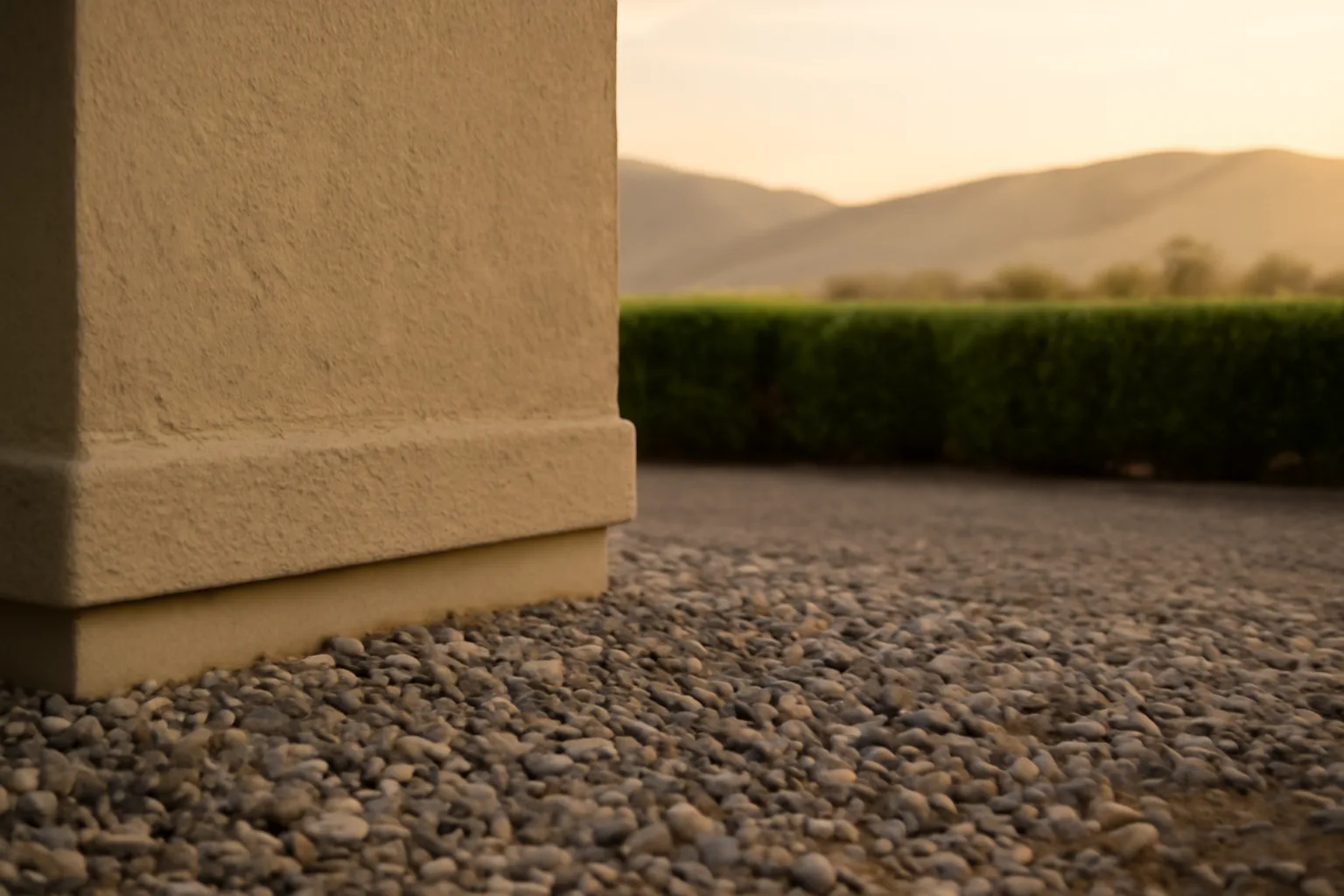
California law (Public Resources Code 4291) requires 100 feet of defensible space around structures in State Responsibility Area and some Local Responsibility Area wildland-urban interface zones, broken into distance-based zones [2]. CAL FIRE's guidance divides that 100 feet into three zones, each with different rules. Zone 0 (0-5 feet from structure): the ember-resistant zone. No combustible mulch, no flammable plants, no stored firewood, nothing that can ignite from a landed ember touching the house directly. Zone 1 (5-30 feet): lean, clean, and green. Remove dead vegetation, space out shrubs, keep grass mowed to under 4 inches, and prune tree limbs up 6 feet from the ground. Zone 2 (30-100 feet): reduced fuel. Thin trees and brush so fire can't easily jump from plant to plant; remove dead wood and debris. | Zone | Distance from structure | Core rule |
When does the California defensible space law go into effect?
California's core defensible space law, Public Resources Code 4291, is already in effect and has been since it was substantially amended in 2005 to expand the requirement from 30 feet to 100 feet [2]. This isn't a future rule; if you own a home in a State Responsibility Area, you are required to maintain 100 feet of defensible space right now, and CAL FIRE and local fire agencies conduct inspections and can issue notices of violation. What's newer, and where a lot of the "2026" confusion comes from, is the Zone 0 ember-resistant zone regulation. California Senate Bill 63 (2020) directed the Board of Forestry and Fire Protection to develop specific, enforceable standards for the 0-5 foot zone around structures, separate from the general "lean, clean, green" guidance that already applied to Zone 1 [3]. The Board has been through a formal rulemaking process to define exactly what's allowed within five feet of a home (materials, spacing, specific prohibited items). As of this writing, the Board of Forestry's Zone 0 regulations are moving through adoption with an anticipated effective date that has been targeted for 2026 in Sacramento hearings and Board of Forestry meeting materials, but exact effective dates for specific regions and building types should be confirmed directly with the Board of Forestry and Fire Protection or your local CAL FIRE unit, since implementation timing has shifted before [3]. Don't wait for the deadline. Everything Zone 0 asks for (noncombustible ground cover, no wood mulch against the house, spaced-out plantings) is worth doing today regardless of the exact enforcement date.
What new fire-safe home rules take effect in 2026?
The most consequential 2026-adjacent change for California homeowners is the Zone 0 ember-resistant zone standard described above, which the Board of Forestry and Fire Protection has targeted for adoption around 2026, following the direction set by SB 63 [3]. This would make the 0-5 foot zone rules enforceable in the same way the broader 100-foot defensible space law already is. Separately, California's building code has required ignition-resistant construction in Wildland-Urban Interface Fire Areas since Chapter 7A of the California Building Code took effect for new construction in 2008, covering things like ember-resistant vents, Class A roofing, and multi-pane tempered windows [4]. That's not new for 2026, but it's routinely confused with defensible space rules because both get triggered by the same WUI designation. Outside California, other Western states are moving on similar timelines but with their own statutes and agencies; Oregon's Senate Bill 762 (2021) created a statewide wildfire risk map and defensible space code framework administered through the Oregon Department of Forestry, and Colorado and Arizona largely leave defensible space requirements to county and local fire district ordinances rather than a single statewide law. If you're outside California, check with your state fire marshal's office directly, because "2026 rules" reported in the news often refer specifically to California's Zone 0 timeline and don't automatically apply elsewhere.
Why won't people follow the defensible space law in California?
Compliance with PRC 4291 is inconsistent, and the reasons aren't mysterious: cost, labor, aesthetics, and enforcement gaps all play a part. Clearing 100 feet of defensible space on a sloped, brush-covered lot can run from a few hundred dollars for a small flat yard to several thousand dollars for a large or steep property, and many homeowners, especially older residents on fixed incomes, simply can't afford annual clearing contractors. There's also a real disagreement about aesthetics and shade. Removing trees and shrubs within 5 feet of a house, especially older landscaping that was planted decades before the current rules, feels like a loss to a lot of homeowners, and mature shade trees also cut cooling costs, so the incentives pull in different directions. Enforcement is uneven too. CAL FIRE and local fire agencies do inspections, but capacity varies by county, and a lot of properties simply never get inspected in a given year. Insurance is increasingly filling that enforcement gap: insurers are now requiring defensible space photos and inspections as a condition of renewal, which is pushing compliance faster than the statute's own enforcement mechanism has. Some homeowners also distrust the guidance itself, especially in wooded communities where removing trees near a home feels contrary to decades of "protect the forest" messaging, even though CAL FIRE and university extension research are clear that vegetation immediately touching a structure is the highest-risk fuel, not distant forest cover.
How to prevent forest fires and avoid contributing to one
Preventing forest fires at the individual level comes down to controlling ignition sources on your own land and reporting hazards you see on others'. The U.S. Forest Service's Smokey Bear program has run for decades on one message: "Only you can prevent wildfires," and the data backs the framing, since the vast majority of wildfires nationally are human-caused rather than natural [1]. For more on what that campaign actually asks of individuals, see only you can prevent wildfires. Practical steps: fully extinguish campfires (drown, stir, drown again, check for heat with the back of your hand before leaving), never burn debris on windy or red flag days, keep vehicles off dry grass, maintain spark arrestors on chainsaws and off-road vehicles, and report downed power lines immediately rather than assuming someone else will. If you're near wildland, avoiding forest fires also means not creating fuel connections between your property and the wildland edge. A wood fence that runs from your Zone 0 area straight into dry brush is a fire highway; CAL FIRE recommends breaking fence lines with a noncombustible gate section near the house for exactly this reason.
How to prepare for forest fires when you live near wildland
If your property backs up to national forest, state land, or undeveloped brush, treat your Zone 2 (30-100 feet) work as the most important defensible space investment you'll make, since that's the buffer between wildland fuel and your home. Thin trees so canopies don't touch, remove ladder fuels (low branches and shrubs that let fire climb from ground level into tree crowns), and clear dead and downed wood every year, more than once. Check whether your property falls under a Community Wildfire Protection Plan (CWPP); many counties in California, Colorado, and Oregon have adopted these plans, which sometimes come with cost-share programs or free chipping days for residents doing defensible space work. Your county fire department or local Fire Safe Council chapter can tell you what's available in your area; this varies enormously by county and year, so there's no single national program to point to. Finally, if you're in a state that mandates defensible space clearing contracts as part of a permit or program (Washington State's Department of Natural Resources runs cost-share and contractor programs in some counties), get quotes in writing and confirm what's actually included before hiring; see wildfire defensible space clearing contracts Washington State DNR for what to expect from that process.
How can we prevent forest fires at the community level?
Individual defensible space work matters, but wildfire behavior in dense neighborhoods is a group problem: a single neglected lot with a wood shake roof or unmanaged brush can ignite and spread to well-hardened neighbors. IBHS research on the 2018 Camp Fire in Paradise, California and other WUI fires found that structure-to-structure ignition, more than wildland-to-structure, was a major driver of total losses [5]. That means community-level prevention looks like: neighborhood chipper days, shared brush clearing along shared property lines and easements, HOA rules that don't conflict with defensible space law (some older HOA covenants technically require the kind of dense hedge landscaping that Zone 0 now prohibits), and pushing for local fire district inspections rather than assuming your neighbor's overgrown lot isn't your problem. Fire Safe Councils, which exist in many California counties, and similar volunteer groups in Oregon and Colorado, organize exactly this kind of coordinated work, often with grant funding for lower-income residents who can't afford contractor clearing costs on their own.
Is Santa Barbara safe from fire, and how do coastal California areas fare?
No coastal California community, including Santa Barbara, is "safe" from wildfire in an absolute sense, and the area has a documented history that says otherwise. The Thomas Fire (2017) burned over 281,000 acres and was, at the time, the largest wildfire in modern California history, directly threatening Santa Barbara and Montecito and triggering evacuations across the region [6]. The Jesusita Fire (2009) and the Tea Fire (2008) both burned into Santa Barbara's foothill neighborhoods directly. What made the Thomas Fire's aftermath especially deadly wasn't the fire itself in Santa Barbara proper, but the debris flow that followed in January 2018, when rain hit the burned, denuded hillsides above Montecito and caused flows that killed 23 people, according to Santa Barbara County's own after-action reporting [6]. That's a reminder that fire risk in hillside coastal communities doesn't end when the flames are out; burned watersheds create flood and debris-flow risk for years afterward. Santa Barbara County is classified with significant State Responsibility Area and Very High Fire Hazard Severity Zone acreage in the foothill and interface communities (Montecito, Mission Canyon, the Riviera, parts of Goleta), per CAL FIRE's Fire Hazard Severity Zone maps, which any resident can look up by address . If you live in one of these zones, defensible space law and insurer inspection requirements apply to you the same as anywhere else in the state; coastal proximity and ocean breezes don't exempt a property from Santa Ana or sundowner wind-driven fire risk, and sundowner winds specifically have been implicated in the rapid spread of several Santa Barbara-area fires.
What should you document for insurers when you fireproof your home?
If you've received a non-renewal notice or a re-inspection request, documentation is the difference between a productive conversation with your insurer and a shrug. Photograph the roof from ground level and, if safely possible, from a ladder or drone, showing material and condition. Photograph all vents, showing mesh screening (CAL FIRE and the Building Code both call for 1/8 inch mesh, not standard window screen, to block ember intrusion) [4]. Photograph Zone 0 out to 5 feet, Zone 1 out to 30 feet, and note anything you've removed, thinned, or replaced with receipts and dates attached. Keep this as an ongoing file, not a one-time packet, since defensible space needs annual maintenance and insurers may ask for updated proof year over year. We don't negotiate with insurers, file claims on your behalf, or promise coverage, discounts, or reinstatement; that's public adjuster and licensed insurance agent territory. What we do is help you organize the photos, receipts, and inspection notes you'll want on hand if your insurer, CAL FIRE, or a mortgage lender asks for them. The Wildfire Insurance Survival Kit is a $99 one-time tool built around exactly that folder structure, but a labeled folder on your own phone works too, as long as you actually update it. For what a full-structure hardening checklist looks like beyond documentation, see defensible, and for what happens structurally when hardening fails, house fire and fire at a house walk through common post-fire failure points.
Frequently asked questions
When does the California defensible space law go into effect?
California's 100-foot defensible space law (Public Resources Code 4291) is already in effect and has applied since a 2005 amendment expanded it from 30 to 100 feet. What's newer is the Zone 0 ember-resistant zone regulation from SB 63, which the Board of Forestry and Fire Protection has targeted for adoption around 2026; confirm exact dates with your local CAL FIRE unit.
Why won't people follow the defensible space law in California?
Cost, labor, and enforcement gaps are the main reasons. Clearing brush on a large or sloped lot can cost thousands of dollars, capacity for inspections varies by county, and some homeowners disagree with removing mature trees near their homes. Insurance requirements are increasingly pushing compliance faster than the law's own enforcement does.
How do I prevent wildfires from starting on my own property?
Avoid debris burning on windy or red flag days, keep mowers and equipment away from dry grass during midday heat, maintain spark arrestors on chainsaws and off-road vehicles, and report downed power lines immediately. About 85-90% of U.S. wildfires are human-caused, according to the U.S. Forest Service, so controlling small ignition sources matters.
How do I prepare for a wildfire if I live in a high-risk zone?
Harden your structure (Class A roof, ember-resistant vents, Zone 0 clearing), maintain defensible space out to 100 feet, and follow CAL FIRE's Ready-Set-Go framework: be ready year-round, get set (packed and monitoring) when risk rises, and go early rather than waiting for a mandatory evacuation order.
What fire-safe home rules take effect in 2026?
California's Zone 0 ember-resistant zone regulation, developed under SB 63, has been targeted by the Board of Forestry and Fire Protection for adoption around 2026, adding enforceable standards for the 0-5 foot area around structures. Confirm the exact effective date and applicability for your property with the Board of Forestry or your local CAL FIRE unit.
Is Santa Barbara safe from wildfire?
No. Santa Barbara County has significant Very High Fire Hazard Severity Zone acreage in foothill communities and has a documented history including the Thomas Fire (2017, over 281,000 acres) and the deadly Montecito debris flow that followed in January 2018. Residents in interface neighborhoods should treat wildfire risk as real and ongoing, not theoretical.
How can we prevent forest fires as a community, more than individually?
Organize neighborhood chipper days, coordinate brush clearing along shared property lines, push for consistent local fire district inspections, and update HOA rules that conflict with current defensible space standards. Studies of major WUI fires show structure-to-structure ignition spreads losses even where individual homes were hardened.
What is Zone 0 and why does it matter more than the other zones?
Zone 0 is the 0-5 foot ember-resistant zone directly around a structure, defined under California's SB 63 rulemaking. It matters most because embers, not flame fronts, ignite most homes in wildfires; anything combustible touching the house in this zone (mulch, dry plants, stored wood) is a direct ignition path.
How much does it cost to clear defensible space around a home?
Costs vary widely by lot size, slope, and vegetation density, ranging from a few hundred dollars for a small flat yard to several thousand dollars for a large, steep, brush-heavy property. Get written quotes from local licensed contractors, and check if your county's Fire Safe Council offers cost-share programs.
Does defensible space work guarantee my insurance won't be cancelled?
No. Defensible space and home hardening reduce risk and give you documentation to show insurers, but no contractor, article, or product can promise coverage, discounts, or reinstatement. Insurers set their own underwriting criteria; document your work and provide it directly, or work with a licensed agent.
What roofing material counts as fire-safe under California code?
California's building code (Chapter 7A) requires Class A fire-rated roofing in Wildland-Urban Interface Fire Areas for new construction, which includes materials like asphalt fiberglass shingles, concrete or clay tile, and metal roofing systems tested and rated Class A. Wood shake roofs without fire-retardant treatment generally do not qualify.
What vent mesh size do I need for ember resistance?
CAL FIRE and California's building code call for 1/8 inch noncombustible mesh screening on attic, eave, and foundation vents in Wildland-Urban Interface Fire Areas, which blocks embers while standard window screen mesh does not. Retrofitting vent screens is one of the lowest-cost, highest-impact hardening steps a homeowner can do.
How to prevent forest fires when hiking or camping nearby?
Fully extinguish campfires by drowning, stirring, and drowning again until cold to the touch, never leave a fire unattended, check local burn restrictions before any open flame, and avoid parking vehicles on dry grass where a hot exhaust or catalytic converter can ignite vegetation.
Sources
- USDA Forest Service, wildfire causes: Roughly 85-90% of U.S. wildfires are human-caused
- California Public Resources Code Section 4291: 100-foot defensible space requirement around structures in State Responsibility Areas
- California Senate Bill 63 (2020): Directed Board of Forestry to develop Zone 0 ember-resistant zone standards
- California Building Code, Chapter 7A: Ignition-resistant construction requirements including Class A roofing and 1/8 inch vent mesh in WUI Fire Areas
- Santa Barbara County, Thomas Fire and Montecito Debris Flow after-action information: Thomas Fire burned over 281,000 acres in 2017; the January 2018 Montecito debris flow killed 23 people
- CAL FIRE, Fire Hazard Severity Zone Maps: Santa Barbara County foothill communities are mapped as Very High Fire Hazard Severity Zones