Last updated 2026-07-25
TL;DR
You prevent fire by cutting ignition sources near your home, keeping 100 feet of defensible space, hardening your roof and vents, and following your state's fire code. California requires defensible space year-round under Public Resources Code 4291, and a proposed Zone 0 ember-resistant zone rule (0-5 feet) is still pending as of 2026.
How can you prevent fire from starting at your home in the first place
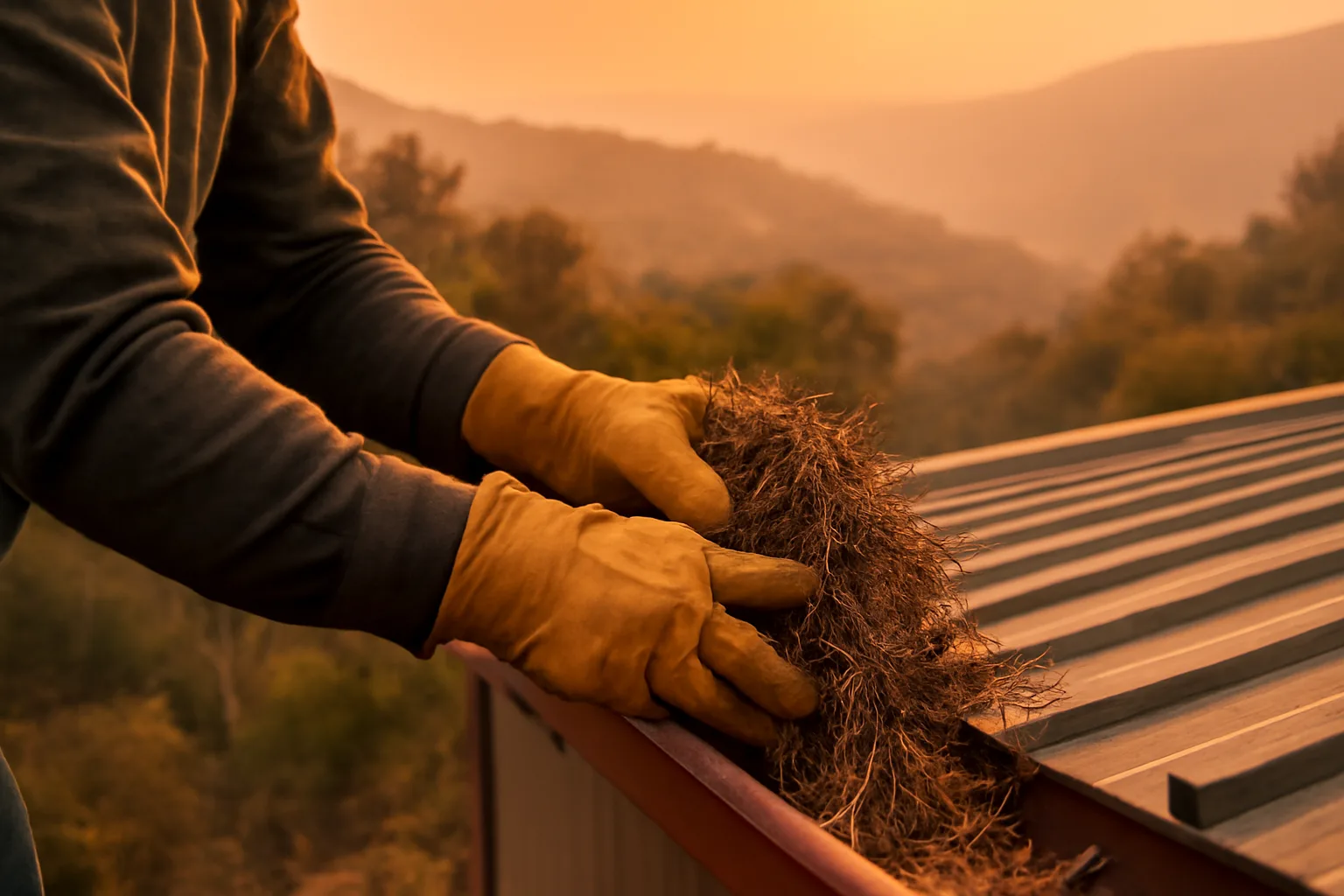
Most home fires and most home losses in wildfire events trace back to a small number of predictable causes: embers landing in gutters or on roofs, flammable material touching the house, and unmaintained vegetation within a few feet of exterior walls. CAL FIRE's research arm and outside fire scientists have found that ember exposure, not direct flame contact, causes most structure losses during wildfires, sometimes arriving in showers minutes to hours ahead of the main fire front. That means the highest-value prevention work is close to the house, not out in the woods. Clear the first five feet around your foundation of bark mulch, dry leaves, and stored firewood. Screen attic and foundation vents with 1/8-inch metal mesh so embers can't get inside. Clean gutters and roof valleys of needles and leaves at least twice a year, more if you have conifers overhead. Inside the home, standard fire prevention still matters and it's not redundant with wildfire prep. Test smoke alarms monthly, replace batteries twice a year, and keep a fire extinguisher rated for kitchen and electrical fires within reach. The National Fire Protection Association and most state fire marshal offices recommend interconnected smoke alarms on every level of the home and in every bedroom. If you want a structured way to work through both hardening tasks and the paperwork insurers ask for, the Wildfire Insurance Survival Kit walks through this room by room and zone by zone for a one-time $99 fee. You do the work and keep your own records; we don't file claims or negotiate with your carrier for you.
When does the California defensible space law go into effect
California's core defensible space law, Public Resources Code Section 4291, isn't a single start date you're waiting on. It has been in force for years and applies year-round to anyone with a home in a State Responsibility Area or a Very High Fire Hazard Severity Zone within a Local Responsibility Area [1]. The law requires 100 feet of defensible space around structures (or to the property line, whichever is closer), split into two zones: 0 to 30 feet (lean, clean, and green) and 30 to 100 feet (reduced fuel). What's actually pending, and where the confusion about "2026" comes from, is a newer rule: an ember-resistant Zone 0 requirement for the 0-to-5-foot band immediately around structures. The California Board of Forestry and Fire Protection has been developing this regulation for several years under SB 63 (2021) and AB 3074 (2020), and as of early 2026 it has not been finalized into an enforceable statewide regulation with a firm compliance date [2]. Homeowners in high-risk zones should not wait for a final rule; CAL FIRE's own guidance already recommends noncombustible material in that 5-foot zone now. Check your local fire district's defensible space ordinance too. Cities and counties can adopt stricter timelines and inspection schedules than the state minimum, and your annual defensible space inspection notice (if you get one) will spell out your specific deadline. [Fill in: your local fire district's inspection cycle and enforcement deadline here.]
What fire-safe home rules take effect in 2026
No single nationwide "2026 fire code" flips on for every homeowner, but several California-specific changes are converging around this window. The Zone 0 ember-resistant zone regulation discussed above remains the biggest one to watch; the Board of Forestry has held public comment periods on draft language multiple times since 2023, with implementation timing still unsettled as of this writing [2]. Separately, California's Chapter 7A building code (the wildland-urban interface fire code within Title 24) already requires ignition-resistant construction, ember-resistant vents, and Class A roofing for new construction and major remodels in high-risk zones, and updates to the state building code cycle on a roughly three-year schedule [3]. If you're rebuilding after a fire loss or doing a significant renovation, Chapter 7A almost certainly applies to you now, regardless of what happens with Zone 0. Oregon and Colorado have their own trajectories. Oregon's wildfire risk map and defensible space code (Senate Bill 762) went through a rocky rollout, with the original statewide risk map withdrawn in 2022 after public pushback and a revised version reissued later [4]. Colorado has no single statewide defensible space mandate; requirements are set county by county, which is part of why coverage and enforcement look so different if you cross from Boulder County into Jefferson County. [Fill in: your county or fire district's current defensible space and building code requirements here.]
Why won't people follow the defensible space law in California
Compliance with Section 4291 is inconsistent, and the reasons aren't mysterious: cost, labor, disagreement about what counts as "compliant," and simple lack of enforcement capacity. A property owner with a half-acre lot on a slope can easily face several thousand dollars in vegetation removal, tree limbing, and debris hauling to meet the 100-foot standard, and that's before ongoing annual maintenance. CAL FIRE inspects a fraction of eligible parcels each year, not all of them, and enforcement varies heavily by county and by whether a Local Responsibility Area fire department has its own inspection program. Some homeowners genuinely don't know the law applies to them because they never received an inspection notice. Others disagree with specific requirements, especially around removing trees or shrubs they value aesthetically or for privacy and shade. There's also a real financial tension: some of the most effective defensible space work (removing large trees near the house, replacing wood fencing that touches the structure) costs real money, and not every homeowner has it sitting available, especially if they're already paying more for insurance or self-insuring after a non-renewal. None of that removes the legal obligation, and non-compliance can result in citations or, in some jurisdictions, the county doing the work and billing the owner. But it explains why compliance rates aren't 100 percent even in a state that has had this law on the books since the 1960s (with major amendments since, including SB 1189 in 2020 clarifying inspection standards) [1]. If you got a defensible space violation notice, treat the 30-to-100-foot zone thinning as the highest priority after the 5-foot noncombustible zone; that's usually the fastest way to get an inspector to sign off. See our guide on defensible space work planning for a zone-by-zone breakdown.
How to prevent wildfires from starting near your property
Roughly 85 to 90 percent of wildfires in the U.S. are human-caused, according to National Park Service and Congressional Research Service figures drawing on federal wildfire statistics, with the remainder from lightning [5]. That means most wildfire prevention is really about controlling ignition sources you have some influence over: debris burns, equipment sparks, dragging trailer chains, cigarettes, and unattended campfires. On your own property, the highest-risk habits are burning yard debris on dry, windy days, using gas or landscaping equipment (mowers, trimmers, chainsaws) during red flag warning conditions, and parking vehicles on dry grass where a hot catalytic converter can ignite it. Check local burn permit rules before doing any pile burning; most California counties suspend burn permits entirely during fire season, and violating a burn ban carries real fines. Utility and equipment sparks are a bigger factor than most people assume. CAL FIRE's own incident data has attributed several of the state's most destructive fires, including portions of the 2018 Camp Fire, to power line and utility equipment failures. You can't control utility infrastructure, but you can keep vegetation clear of the service line running to your house and report sagging lines or exposed equipment to your utility. Ready.gov's wildfire preparedness guidance also flags outdoor grills, fire pits, and chimineas as common ignition points when placed too close to dry vegetation or wood fencing; keeping a 10-foot clearance around any open flame source is a simple, low-cost habit [6].
How to prevent forest fires and how to avoid forest fires when you're outdoors
Forest fire prevention mostly comes down to fire behavior around three things: heat sources, dry fuel, and wind. The U.S. Forest Service and Smokey Bear campaign (in partnership with the Ad Council since 1944) built an entire public education program around the same handful of rules, because they work: fully extinguish campfires by dousing, stirring, and feeling for heat before leaving; never leave a fire unattended; check local fire restrictions before building any fire at all [7]. If you're camping or hiking in wildfire-prone forest, avoid parking on dry grass, don't discharge fireworks (illegal in most national forests year-round), and be careful with anything that can throw a spark: chainsaws, generators, even dragging a trailer safety chain on pavement. Off-road vehicles are a documented ignition source too; hot exhaust components contacting dry vegetation has started fires in multiple Western states. One of the more overlooked prevention steps is simply checking current fire danger and restriction levels before you go, through your national forest's website or Inciweb, rather than assuming last year's rules still apply. Restrictions change fast during drought years, sometimes daily. If you already live at the edge of forested land, this overlaps heavily with defensible space work. See our fire-safe landscaping guide for California properties next to a house for what to plant, what to remove, and spacing rules that satisfy most local fire codes.
How can we prevent forest fires at a community or policy level
Individual prevention only goes so far; a lot of forest fire risk is structural, tied to a century of fire suppression policy that let fuel loads build up in Western forests. The U.S. Forest Service and academic fire ecologists have documented that decades of aggressive fire suppression, starting roughly after the 1910 Big Burn, left many forests with far denser understory fuel than existed historically, making modern fires burn hotter and faster once they start [8]. At a community level, prevention now leans heavily on prescribed burning, mechanical thinning, and Firewise USA-style neighborhood coordination, where whole subdivisions organize communal defensible space and evacuation planning rather than leaving it to individual homeowners. The National Fire Protection Association's Firewise USA program has enrolled thousands of communities nationwide specifically to coordinate this kind of collective mitigation work. Public agencies also run active ignition-prevention campaigns: fire weather watches, red flag warnings, public utility power shutoffs during extreme wind events, and seasonal burn bans. None of these are perfect, and power shutoffs in particular are controversial because of the hardship they cause, but they're a direct response to utility-caused ignition risk. At the household level, joining or starting a Firewise-style neighborhood group is genuinely one of the higher-leverage things you can do, because coordinated defensible space across adjoining properties matters more than any single lot's compliance. A neighbor's untreated fuel load 20 feet from your fence line undermines your own work.
How to prepare for a wildfire before it reaches your area
Wildfire preparation has two tracks that both matter: hardening the structure so it survives, and having an evacuation and documentation plan so you and your family get out safely and can support any insurance claim afterward. On the structure side, Ready.gov and CAL FIRE both recommend the same core steps: clear the 5-foot zone around the house of anything combustible, keep gutters and roof clear of debris, screen vents with metal mesh, and store firewood at least 30 feet from structures [9]. If you're due for a roof replacement, Class A fire-rated roofing materials (asphalt shingle, metal, or tile) meet the highest fire-resistance rating under building code testing standards. On the evacuation side, build a go-bag with medications, copies of ID and insurance documents, chargers, and a few days of clothing, and know two routes out of your neighborhood in case one is blocked. Ready.gov's wildfire action guide specifically recommends signing up for local emergency alerts and knowing your community's evacuation zone designation before fire season starts, not during an active evacuation order [9]. Documentation matters more than most people realize until they're filing a claim. Photograph and video every room, your roof, your defensible space work, and any hardening upgrades (vent screens, ember-resistant siding) before fire season, and store copies somewhere other than the house itself, ideally cloud storage or with a family member out of the area. This is the exact gap the Wildfire Insurance Survival Kit is built to close: a $99 one-time framework for organizing that documentation before you ever need it, so you're not reconstructing your home's condition from memory after a non-renewal notice or a loss. You do the documenting and keep the records; we don't file claims or negotiate with insurers on your behalf.
How to prepare for forest fires if you live at the wildland edge
If your property backs directly onto forest or wildland, preparation looks a bit different from a suburban defensible space checklist, mostly because your fuel load and access constraints are bigger. Start with the 100-foot defensible space standard from Section 4291 even if you're outside California, since it's a reasonable baseline most fire scientists agree on: thin and space trees so crowns don't touch, remove ladder fuels (shrubs and low branches that let ground fire climb into tree canopies), and keep dead and downed material cleared [1]. Driveway and access road width matters more at the wildland edge than people expect. Many rural fire departments won't send an engine down a driveway narrower than 12 feet or with overhead clearance under 13.5 feet, because their apparatus literally can't fit. Check your local fire district's access standard and clear branches accordingly. [Fill in: your fire district's minimum driveway width and clearance standard here.] Water access is another edge-of-forest specific concern: if you're on a well or have no hydrant nearby, some fire departments recommend a dedicated water storage tank (2,500 to 5,000 gallons is a common rural recommendation) with a standard fire department connection, so crews can draft water even if you've evacuated and the power is out. Finally, plan your evacuation route assuming the primary road out could be blocked by fire or falling trees. Rural properties often have only one way in and out; know it, and know a secondary option if one exists, before you need it.
Is Santa Barbara safe from fire
No coastal California city is "safe" from fire risk in an absolute sense, and Santa Barbara County has a documented history of major wildfires, including the 1990 Painted Cave Fire, the 2008 Tea Fire, and the 2017 Thomas Fire, which at the time was the largest wildfire in modern California history by acreage before being surpassed by later fires [10]. Much of the county's foothill and canyon terrain, chaparral vegetation, and seasonal Santa Ana/sundowner wind events combine to create genuinely elevated fire risk, and CAL FIRE's Fire Hazard Severity Zone maps classify significant portions of unincorporated Santa Barbara County as Very High Hazard . That said, risk varies enormously by specific location within the county. A condo in flat, urbanized downtown Santa Barbara faces meaningfully lower direct wildfire exposure than a home in the foothills of Montecito or the San Marcos Pass area, even though both share a county and a zip code culture of "Santa Barbara." Check your specific parcel against the CAL FIRE Fire Hazard Severity Zone viewer rather than relying on the city's general reputation either way . Insurance non-renewals in the area have followed this same pattern: homeowners in Very High Hazard zones in the foothills have seen far more non-renewal notices in recent years than those in flatter, lower-vegetation parts of town, consistent with how California's FAIR Plan and admitted carriers assess wildfire risk by specific property location, not by city name.
How does defensible space actually reduce fire risk
| Zone 0 (proposed) | 0-5 ft | Ember ignition resistance | Noncombustible surfacing, no mulch or plants touching wall | |
|---|---|---|---|---|
| Zone 1 | 0-30 ft | Remove direct flame contact | Lean, clean, green; remove dead plants, limb trees up 6 ft | |
| Zone 2 | 30-100 ft | Reduce fuel continuity | Thin vegetation, space tree canopies, mow dry grass | Studies from the Insurance Institute for Business & Home Safety and CAL FIRE's own post-fire damage assessments consistently find that homes with maintained defensible space and hardened construction (Class A roofs, ember-resistant vents, noncombustible siding within 5 feet) survive wildfire exposure at meaningfully higher rates than homes without either measure. Neither element alone is as effective as doing both together. |
Defensible space works by breaking the chain of ignition, radiant heat, and ember transport that lets a wildfire become a house fire. It's not about stopping the fire itself; it's about giving your structure a fighting chance and giving firefighters a safe place to work if they're able to defend the property. The two-zone system under California law reflects this directly. Zone 1 (0-30 feet) focuses on removing anything that could carry flame directly to the structure: dead vegetation, low tree limbs, wood piles against the house. Zone 2 (30-100 feet) focuses on reducing fuel continuity so a ground fire slows down and loses intensity before it reaches Zone 1 [1]. | Zone | Distance from structure | Primary goal | Typical work required |
What actually reduces house fire risk day to day, wildfire or not
Fire prevention isn't only a wildfire-season topic; ordinary house fires kill more people annually than wildfires do, and most are preventable with basic habits. The National Fire Protection Association's cooking equipment data consistently identifies cooking as the leading cause of home fires nationwide, followed by heating equipment and electrical failures. Never leave cooking unattended on the stovetop, keep space heaters at least 3 feet from anything flammable and unplugged when not in use, and have electrical work done by a licensed electrician rather than DIY on anything beyond swapping an outlet cover. Test smoke alarms monthly and replace units themselves every 10 years, since the sensors degrade over time even if the battery works. Dryer lint is an underrated one: clean the lint trap after every load and have the vent duct itself professionally cleaned periodically, since lint buildup in the duct (more than the trap) is a documented ignition source, especially in longer or improperly routed vent runs. If you want the full mechanics of how a house fire spreads and what actually stops it once it starts, see our guide on house fire causes and prevention, and our companion piece on fire at a house response basics.
What should you do right now if you got a non-renewal or inspection letter
If you're reading this because you got a non-renewal notice or a defensible space inspection letter, the order of operations matters. First, read the letter carefully for a specific deadline and a specific list of cited deficiencies; don't assume it's generic boilerplate. Second, prioritize the 5-foot zone around your structure even before the 30-to-100-foot thinning, since that's the cheapest, fastest work and directly addresses ember ignition, the leading cause of structure loss in wildfires. Photograph the work as you do it, dated, from multiple angles, because that documentation matters for both a defensible space re-inspection and any future insurance conversation. Third, look into your state's FAIR Plan or a wildfire-focused mitigation discount program if your carrier non-renewed you; several states, including California, Oregon, and Colorado, have insurer of last resort programs, though they typically cost more and cover less than standard admitted market policies. That's an insurance decision worth discussing with a licensed agent or broker directly; we don't file claims, negotiate settlements, or promise coverage outcomes. Fourth, check whether your neighbors got similar letters. Community-level compliance (through a Firewise USA group or informal neighborhood coordination) genuinely improves everyone's outcome, since fire doesn't respect property lines. For a broader look at coordinated community defensible space, our article on why only you can prevent wildfires covers the individual-versus-collective responsibility question directly.
Frequently asked questions
When does the California defensible space law go into effect?
Public Resources Code Section 4291 is already in effect and has been for years; it applies year-round in State Responsibility Areas and Very High Fire Hazard Severity Zones. A newer Zone 0 (0-5 foot) ember-resistant rule has been in development by the Board of Forestry since 2020-2021 but had no finalized statewide compliance date as of early 2026.
Why won't people follow the defensible space law in California?
Cost, inconsistent enforcement, and low inspection rates are the main reasons. Vegetation removal across 100 feet can run into thousands of dollars, many parcels never get inspected in a given year, and some homeowners disagree with specific requirements around removing trees they value. Noncompliance can still result in citations or county-billed abatement.
How to prevent wildfires from starting on your own property?
Avoid burning debris or using spark-producing equipment on dry, windy days, check local burn permit status before any pile burn, keep vehicles off dry grass, and maintain a 10-foot clearance around grills and fire pits. Most human-caused wildfire ignitions trace to preventable equipment, debris burning, or campfire mistakes, per NPS and CRS data.
How to prepare for a wildfire if you live in a high-risk zone?
Clear the 5-foot zone around your home of anything combustible, screen vents with 1/8-inch metal mesh, build a go-bag with documents and medications, and know two evacuation routes. Photograph your home and defensible space work before fire season so you have documentation ready if you need to file an insurance claim later.
How to prevent forest fires when hiking or camping?
Fully extinguish campfires (douse, stir, feel for heat) before leaving, never leave a fire unattended, check current fire restrictions before building any fire, and avoid parking on dry grass. The Smokey Bear program, run with the U.S. Forest Service since 1944, built its entire messaging around these same core rules because they address the leading causes of human-started fires.
How to avoid forest fires caused by vehicles or equipment?
Keep vehicles off dry vegetation since hot exhaust and catalytic converters are documented ignition sources, avoid dragging trailer safety chains on pavement, and don't run chainsaws or generators in dry grass during red flag warning conditions. Check your destination's current fire restriction level before you go rather than assuming prior-year rules still apply.
What fire-safe home rules take effect in 2026?
No single national rule takes effect in 2026. California's proposed Zone 0 ember-resistant zone regulation remains under Board of Forestry development with no finalized date as of early 2026. Chapter 7A of the state building code already requires ignition-resistant construction and Class A roofing for new builds and major remodels in high-risk zones, regardless of Zone 0's status.
Is Santa Barbara safe from fire?
Not uniformly. Santa Barbara County has a documented history of major wildfires including the 1990 Painted Cave Fire and 2017 Thomas Fire, and CAL FIRE classifies much of the county's foothill terrain as Very High Fire Hazard Severity Zone. Risk varies sharply by specific location; check CAL FIRE's Fire Hazard Severity Zone viewer for your exact parcel.
How can we prevent forest fires at a neighborhood level?
Join or start a Firewise USA-style group so defensible space gets coordinated across adjoining properties, since one neighbor's untreated fuel load undermines everyone's work. Community programs also support prescribed burning, mechanical thinning, and shared evacuation planning, addressing fuel buildup left by a century of fire suppression policy documented by the U.S. Forest Service.
How much does defensible space work typically cost?
There's no single reliable national figure; costs depend heavily on lot size, slope, and vegetation density. Removing dead trees, thinning brush across 100 feet, and hauling debris commonly runs from several hundred to several thousand dollars per property, with steep or heavily forested lots at the high end. Get local quotes rather than relying on national averages.
What's the single most effective thing a homeowner can do to prevent structure loss?
Clear the 5 feet immediately around your home of anything combustible and screen vents with metal mesh. Ember ignition, not direct flame contact, causes most wildfire structure losses, so eliminating combustible material and entry points in that closest zone addresses the leading cause directly, according to fire behavior research cited by CAL FIRE and IBHS.
Do I need a permit to burn yard debris in California?
In most California counties, yes, and burn permits are commonly suspended entirely during fire season regardless of permit status. Check with your local air district and county fire department before any debris burn; requirements and seasonal bans vary by jurisdiction, so confirm current rules rather than assuming last year's permit still applies.
Sources
- California Legislative Information, Public Resources Code Section 4291: 100 feet of defensible space required around structures in SRA/VHFHSZ, two-zone structure
- California Board of Forestry and Fire Protection, Defensible Space Zone 0 rulemaking: Zone 0 ember-resistant zone regulation under development, no finalized statewide compliance date as of early 2026
- California Department of General Services, California Building Code Title 24 Chapter 7A: Chapter 7A requires ignition-resistant construction and Class A roofing for new construction in wildfire high-risk zones
- Congressional Research Service, Wildfire Statistics: Roughly 85-90 percent of wildfires in the U.S. are human-caused
- CAL FIRE, Camp Fire Incident Investigation Report: CAL FIRE investigation attributed the 2018 Camp Fire's ignition to utility electrical transmission equipment
- USDA Forest Service and Ad Council, Smokey Bear campfire safety guidance: Campfires should be fully doused, stirred, and checked cold before leaving them unattended
- USDA Forest Service, Fire Exclusion and Fuel Buildup research: Decades of fire suppression policy increased forest fuel loads, contributing to more intense modern wildfires
- National Fire Protection Association, Firewise USA program: Firewise USA program coordinates neighborhood-level wildfire mitigation across thousands of enrolled communities
- CAL FIRE, Thomas Fire Incident Archive: The 2017 Thomas Fire was the largest wildfire in modern California history by acreage at the time
- CAL FIRE, Fire Hazard Severity Zone Viewer: CAL FIRE classifies portions of unincorporated Santa Barbara County as Very High Fire Hazard Severity Zone